
 Download PDF
 Download PDF
Market Overview
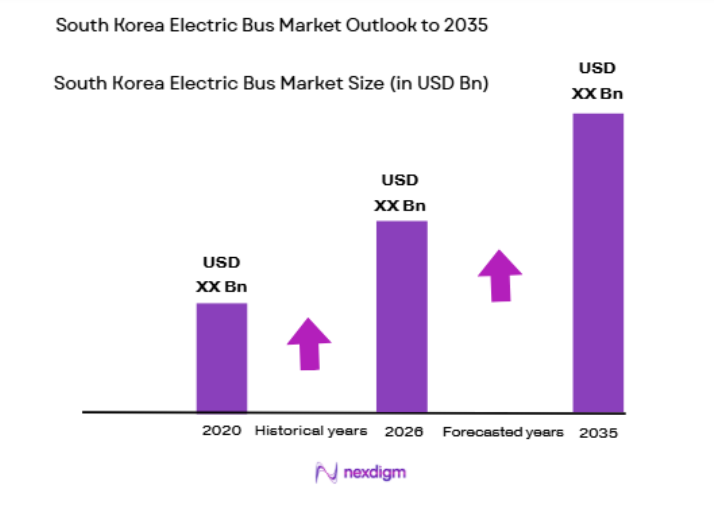
The South Korea electric bus market is expected to reach USD ~ billion based on a recent historical assessment. This growth is driven by strong government initiatives supporting the transition to electric public transportation, aiming to reduce carbon emissions and promote sustainable mobility. South Korea’s push for cleaner air and energy-efficient solutions, along with advancements in battery technology, has accelerated the demand for electric buses. Additionally, government subsidies and investments in electric vehicle infrastructure are fueling market growth.
Seoul, Busan, and Incheon are key cities leading the adoption of electric buses, driven by the urbanization of South Korea’s population, the government’s green policies, and the development of the necessary infrastructure. These cities, with their highly developed public transportation systems, are at the forefront of efforts to modernize fleets and reduce urban air pollution. The government’s focus on electrifying public transport networks has also played a critical role in shaping the market dynamics in these regions.
 Market Segmentation
By Bus Type
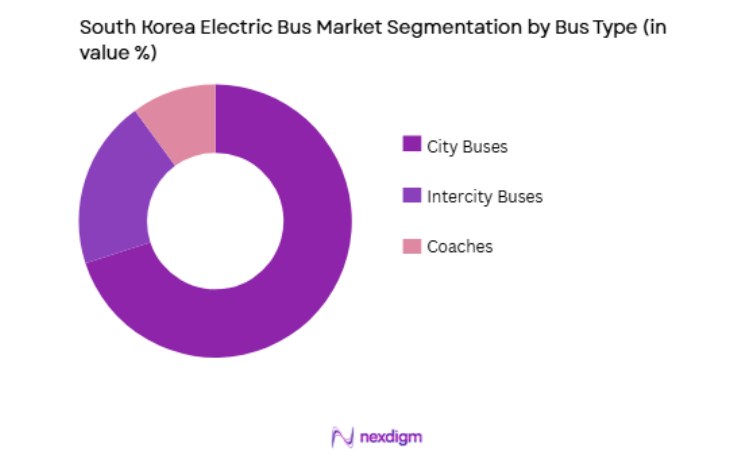
The South Korea electric bus market is segmented by bus type into city buses, intercity buses, and coaches. City buses dominate the market, driven by South Korea’s focus on reducing urban air pollution and its extensive public transport network. With the government’s emphasis on transitioning to electric buses in urban areas, city buses are being prioritized for electrification. The adoption of electric city buses has been fueled by subsidies, incentives, and the need for environmentally friendly solutions in high-traffic cities. As a result, city buses have emerged as the dominant segment in the South Korean electric bus market.
By Application
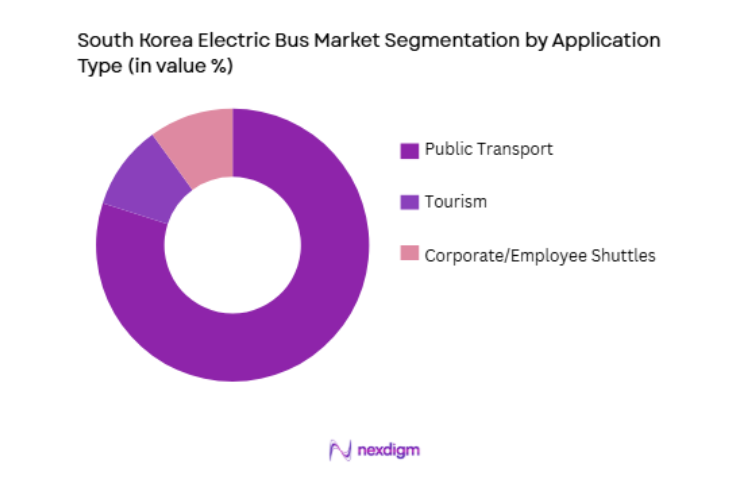
The South Korea electric bus market is also segmented by application into public transport, tourism, and corporate/employee shuttles. Public transport dominates the market due to South Korea’s extensive network of urban and suburban public transportation systems. The government’s strong push for electrifying fleets to meet sustainability goals has contributed to the dominance of public transport. The adoption of electric buses in public transport systems in cities like Seoul is supported by significant investments in infrastructure and the desire to improve air quality in densely populated areas.
Competitive Landscape
The South Korea electric bus market is highly competitive, with several major players operating in both the domestic and international markets. The government’s aggressive push for green energy solutions, combined with the increasing demand for electric buses in public transport, has attracted both local and global manufacturers. Key local manufacturers like Hyundai and Daewoo have been at the forefront of this transition, while international players such as BYD and Volvo have also entered the market. These players are engaged in continuous innovation and collaboration with government agencies to develop more efficient electric bus models. The competitive landscape is marked by the ongoing efforts to reduce the cost of electric buses, improve battery technology, and meet the evolving needs of the public transport sector.
| Company Name | Establishment Year | Headquarters | Technology Focus | Market Reach | Key Products | Revenue | Market-Specific Parameter |
| Hyundai Motor | 1967 | Seoul, South Korea | ~ | ~ | ~ | ~ | ~ |
| Daewoo Bus | 1983 | Seoul, South Korea | ~ | ~ | ~ | ~ | ~ |
| BYD | 1995 | Shenzhen, China | ~ | ~ | ~ | ~ | ~ |
| Volvo | 1927 | Gothenburg, Sweden | ~ | ~ | ~ | ~ | ~ |
| New Flyer | 1930 | Winnipeg, Canada | ~ | ~ | ~ | ~ | ~ |
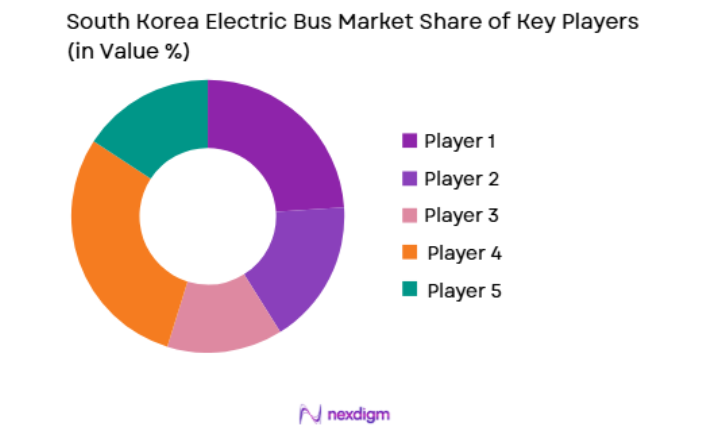
South Korea Electric Bus Market Analysis
Growth Drivers
Government Support for Sustainable Mobility
The South Korean government has been a key driver in the growth of the electric bus market, providing incentives and subsidies to accelerate the adoption of clean energy technologies in public transportation. The “Green New Deal” initiative and the government’s investment in EV infrastructure are helping to make electric buses more affordable for municipalities and public transportation companies. By offering financial support to replace traditional diesel buses with electric ones, South Korea is positioning itself as a leader in the global push for sustainable transport solutions. These policies and subsidies will continue to be a major factor in the market’s growth, especially as urban areas look to reduce air pollution and carbon emissions.
Technological Advancements in Battery and Charging Infrastructure
The continuous improvement in battery technology and the expansion of EV charging infrastructure are driving the South Korea electric bus market. The development of high-capacity batteries that allow for longer driving ranges and faster charging times has enhanced the viability of electric buses for city transit systems. In addition, South Korea’s ongoing efforts to enhance charging infrastructure, including the installation of fast-charging stations at key bus depots and transit points, have alleviated concerns about the convenience of operating electric buses. As technology advances and the cost of batteries decreases, the adoption of electric buses in public transit will continue to expand, contributing to a greener transportation system.
Market Challenges
High Initial Investment Costs
Despite the government’s incentives and growing environmental concerns, the high initial costs of electric buses compared to traditional buses remain a major challenge. Although the total cost of ownership for electric buses is lower due to reduced maintenance and fuel costs, the upfront investment required to purchase electric buses and install the necessary charging infrastructure is still significant. This barrier to entry limits the ability of smaller municipalities and companies to fully transition to electric fleets. Further reductions in battery costs and additional financial incentives from the government are necessary to make electric buses more accessible to all segments of the market.
Battery Supply Chain and Raw Material Availability
The increasing demand for electric buses has highlighted the challenges surrounding the supply of key raw materials for batteries, such as lithium, cobalt, and nickel. These materials are essential for the production of lithium-ion batteries, which power electric buses. The limited supply of these materials, coupled with the geopolitical risks associated with their extraction, can lead to price volatility and supply chain disruptions. In South Korea, where battery production is a vital industry, securing a stable supply of these critical materials is crucial to ensuring the growth of the electric bus market. This challenge is compounded by the global competition for these materials, which could slow down the pace of electric bus adoption.
Opportunities
Integration with Smart Cities and IoT
The development of smart cities and the increasing deployment of Internet of Things (IoT) technologies present a unique opportunity for the electric bus market in South Korea. As urban areas evolve, the integration of electric buses with smart city infrastructure can optimize traffic management, reduce emissions, and enhance public transport efficiency. Electric buses equipped with IoT sensors can communicate with city traffic management systems, enabling better scheduling, route optimization, and real-time monitoring. This integration will allow electric buses to be seamlessly integrated into the growing smart city ecosystem, enhancing their appeal and increasing their adoption.
Growing Demand for Clean Public Transportation
With South Korea’s growing emphasis on environmental sustainability, the demand for clean public transportation options is expected to increase. South Korean consumers are becoming more environmentally conscious, and there is rising demand for low-emission and zero-emission transport solutions. As electric buses are a cleaner alternative to traditional diesel-powered buses, this demand for greener public transport will continue to drive market growth. Furthermore, the expansion of the country’s electric vehicle infrastructure and government incentives will help accelerate the transition to a fully electric public transport system.
Future Outlook
The South Korea electric bus market is poised for significant growth over the next five years, with ongoing advancements in battery technology, increased government support, and a growing push toward sustainability. The integration of electric buses into South Korea’s smart cities and transportation networks will play a central role in reducing urban pollution and meeting carbon neutrality goals. As the infrastructure for electric vehicles continues to expand, the demand for electric buses will increase, ensuring that the market remains on a positive trajectory.
Major Players
- Hyundai Motor
- Daewoo Bus
- BYD
- Volvo
- New Flyer
- MAN Truck & Bus
- Proterra
- GreenPower Motor
- Solaris Bus & Coach
- NFI Group
- Alexander Dennis
- Daimler AG
- Iveco
- Electric Bus Company
- Lion Electric
Key Target Audience
- Investments and venture capitalist firms
- Government and regulatory bodies
- Public transportation companies
- Electric vehicle manufacturers
- Bus manufacturers
- Environmental organizations
- Municipalities and urban planners
- Automotive OEMs
Research Methodology
Step 1: Identification of Key Variables
Define market drivers, challenges, and growth opportunities through primary and secondary research focused on government policies, technological innovations, and consumer trends.
Step 2: Market Analysis and Construction
Analyze market demand, competitive dynamics, and technological developments to construct a comprehensive market model based on recent data and trends.
Step 3: Hypothesis Validation and Expert Consultation
Engage with industry experts, government bodies, and key market participants to validate research hypotheses and refine projections for future growth.
Step 4: Research Synthesis and Final Output
Synthesize research findings into actionable insights, providing strategic recommendations to stakeholders in the electric bus industry.

- Executive Summary
- Research Methodology (Definitions, Scope, Industry Assumptions, Market Sizing Approach, Primary & Secondary Research Framework, Data Collection & Verification Protocol, Analytic Models & Forecast Methodology, Limitations & Research Validity Checks)

- Market Definition and Scope
- Value Chain & Stakeholder Ecosystem
- Regulatory / Certification Landscape
- Sector Dynamics Affecting Demand

- Growth Drivers
Government Public Transport Modernization Programs
Rising Urban Air Pollution Concerns
Expansion of Electric Mobility Infrastructure - Market Challenges
High Initial Procurement Cost of Electric Buses
Limited Nationwide Charging Infrastructure
Battery Replacement and Maintenance Costs - Market Opportunities
Public Transport Fleet Electrification Initiatives
Partnerships with Global Electric Bus Manufacturers
Development of Local Electric Vehicle Manufacturing - Trends
Adoption of Fast Charging Electric Bus Systems
Integration of Smart Fleet Management Technologies - Government Regulations
Electric Vehicle Industry Development Act Implementation
Public Utility Vehicle Modernization Program Compliance
Emission Reduction Targets for Public Transport - SWOT Analysis
- Porter’s Five Forces

- By Market Value, 2020-2025
- By Installed Units, 2020-2025
- By Average System Price, 2020-2025
- By System Complexity Tier, 2020-2025

- By System Type (In Value%)
Battery Electric Buses
Plug-in Hybrid Electric Buses
Fuel Cell Electric Buses
Hybrid Electric Buses
Electric Minibuses - By Platform Type (In Value%)
City Transit Buses
Intercity Electric Buses
School Electric Buses
Airport Shuttle Electric Buses
Tourism and Charter Electric Buses - By Fitment Type (In Value%)
Fully Built Electric Buses
Chassis-based Electric Bus Platforms
Retrofitted Diesel-to-Electric Buses
Modular Electric Bus Platforms - By End User Segment (In Value%)
Public Transportation Authorities
Private Bus Operators
Corporate Shuttle Service Providers

- Market Share Analysis
- Cross Comparison Parameters (Bus Type, Battery Capacity, Driving Range, Charging Technology, End User Segment)
- SWOT Analysis of Key Competitors
- Pricing & Procurement Analysis
- Key Players
BYD Company
Yutong Bus
King Long United Automotive Industry
Hyundai Motor Group
Kia Motors
POSCO Energy
LG Electronics
EVgo
Proterra Inc
NFI Group
Solaris Bus & Coach
Ankai Bus
Foton Motor Group
Ashok Leyland
Golden Dragon Bus

- Public Transport Agencies Transitioning to Electric Fleets
- Private Operators Exploring Electric Bus Leasing Models
- Corporate Mobility Programs Adopting Sustainable Transport
- Tourism Sector Investing in Low-Emission Transport Services

- Forecast Market Value, 2026-2035
- Forecast Installed Units, 2026-2035
- Price Forecast by System Tier, 2026-2035
- Future Demand by Platform, 2026-2035


 Request a Sample
 Ask for Customization
 Get a Quote
 Enquire Now