
 Download PDF
 Download PDF
Market Overview
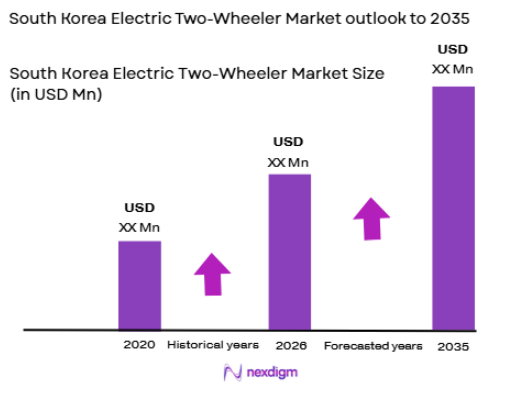
The South Korea electric two-wheeler market is projected to reach USD ~ million based on a recent historical assessment. Driven by government policies supporting green transportation and technological advancements in battery solutions, the electric two-wheeler market is experiencing significant growth. This growth is further bolstered by the increasing awareness of environmental concerns, the rising demand for urban mobility solutions, and the affordability of electric two-wheelers for consumers seeking efficient and eco-friendly transportation.
Seoul, Incheon, and Busan are the dominant cities in the South Korea electric two-wheeler market, benefiting from government initiatives aimed at improving urban air quality and reducing carbon emissions. These cities offer supportive infrastructures, such as charging stations and incentives for electric vehicle adoption, helping propel the transition to electric mobility. Their dense population and high levels of traffic make them ideal locations for the increased adoption of electric two-wheelers.
Market Segmentation
By Product Type:
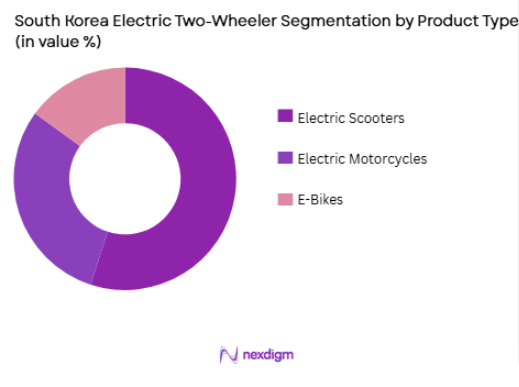
The South Korea electric two-wheeler market is segmented by product type into electric scooters, electric motorcycles, and e-bikes. Recently, electric scooters have a dominant market share due to their affordability, practicality, and popularity among urban commuters. These scooters are widely used for short-distance travel, providing an environmentally friendly and cost-effective solution for individuals in cities. Additionally, advancements in battery technology, along with government incentives, have contributed to the adoption of electric scooters, which are ideal for navigating congested urban areas.
By Application:
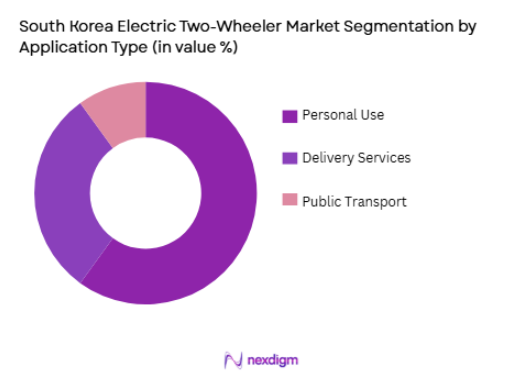
The South Korea electric two-wheeler market is also segmented by application into personal use, delivery services, and public transport solutions. Recently, personal use has been the dominant segment due to the increasing number of urban commuters looking for affordable and eco-friendly transportation options. As cities become more congested and environmental concerns rise, electric two-wheelers have emerged as an attractive alternative to traditional vehicles. This shift is further supported by government policies promoting sustainable transportation solutions for individual users in urban areas.
Competitive Landscape
The South Korea electric two-wheeler market is competitive, with local and international players competing for market share. Key domestic manufacturers like Hyundai and Samsung, along with global players like Yamaha and Gogoro, are continuously innovating to meet the growing demand for electric two-wheelers. Local companies benefit from government support and partnerships that facilitate access to the domestic market, while international players bring advanced technology and global expertise to South Korea’s rapidly evolving electric vehicle landscape. As the market grows, there is increasing consolidation, with key players expanding their portfolios and production capacities to meet rising demand.
| Company Name | Establishment Year | Headquarters | Technology Focus | Market Reach | Key Products | Revenue | Market-Specific Parameter |
| Hyundai Motor | 1967 | Seoul, South Korea | ~ | ~ | ~ | ~ | ~ |
| Gogoro | 2011 | Taipei, Taiwan | ~ | ~ | ~ | ~ | ~ |
| Yamaha | 1953 | Iwata, Japan | ~ | ~ | ~ | ~ | ~ |
| Samsung SDI | 1970 | Seoul, South Korea | ~ | ~ | ~ | ~ | ~ |
| NIU Technologies | 2014 | Beijing, China | ~ | ~ | ~ | ~ | ~ |
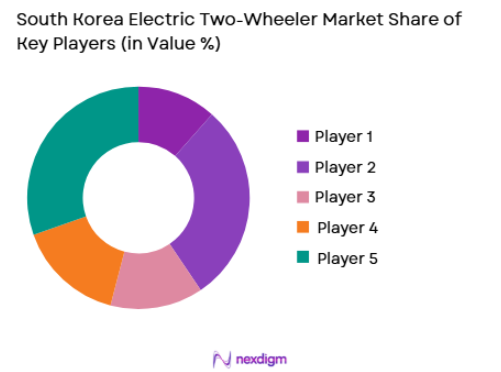
South Korea Electric Two-Wheeler Market Analysis
Growth Drivers
Government Support for Electric Mobility:
The South Korean government has been a driving force behind the growth of the electric two-wheeler market through policy initiatives, subsidies, and infrastructure development. The government’s Green New Deal, which focuses on carbon neutrality and eco-friendly transportation, has allocated significant resources to support the transition to electric vehicles. The promotion of electric two-wheelers as a means to reduce air pollution and alleviate traffic congestion in urban areas has resulted in tax incentives, rebates, and the installation of charging infrastructure across major cities. This governmental support not only makes electric two-wheelers more affordable but also creates an ecosystem conducive to their widespread adoption.
Advancements in Battery Technology:
The ongoing improvements in battery technology are a major growth driver in the South Korean electric two-wheeler market. Battery life, energy density, and charging speed have all seen substantial progress, making electric two-wheelers more viable for everyday use. Additionally, advancements in fast-charging technologies and battery swapping stations are reducing the downtime for users and improving the overall user experience. The reduction in battery costs is another critical factor making electric two-wheelers more accessible to a wider range of consumers. As battery technology continues to evolve, the market for electric two-wheelers will grow exponentially.
Market Challenges
High Initial Purchase Costs:
Despite the government’s incentives and technological advancements, the initial cost of electric two-wheelers remains a significant barrier to entry for many consumers. The price of electric scooters and motorcycles is often higher than that of traditional gasoline-powered counterparts due to the cost of high-performance batteries and advanced electric drivetrains. Although the total cost of ownership for electric two-wheelers is lower in the long term due to reduced fuel and maintenance costs, the upfront investment is still prohibitive for many potential buyers. This challenge is particularly evident in the lower-income segment of the market, where consumers are less likely to make the switch to electric vehicles without more affordable options.
Charging Infrastructure Limitations:
One of the major challenges facing the widespread adoption of electric two-wheelers in South Korea is the availability and convenience of charging infrastructure. Although urban areas have seen improvements in charging stations, the availability of public charging facilities for electric two-wheelers is still limited compared to other types of electric vehicles, such as electric cars. Additionally, the lack of a standardized charging system creates inconvenience for consumers. For electric two-wheelers to reach their full market potential, there needs to be a more extensive network of charging stations and a standardized approach to charging technology that ensures compatibility across different models.
Opportunities
Increasing Demand for Sustainable Urban Transport:
As South Korea’s urban centers continue to grow, there is an increasing demand for sustainable, cost-effective, and efficient transportation solutions. Electric two-wheelers, especially electric scooters, offer a practical solution for short-distance commuting and help alleviate traffic congestion in cities. The growing preference for environmentally friendly transport options among the population, coupled with the South Korean government’s commitment to reducing emissions and promoting green transport, creates significant opportunities for the electric two-wheeler market. Furthermore, as consumer awareness of environmental issues grows, the demand for electric two-wheelers is likely to increase, particularly in densely populated urban areas.
Expansion of Battery Swapping Technology:
The growing adoption of battery swapping technology presents a unique opportunity for the South Korea electric two-wheeler market. Battery swapping allows users to quickly exchange a depleted battery for a fully charged one, eliminating long charging times and increasing the convenience of using electric two-wheelers for daily commuting. Companies like Gogoro have pioneered this technology, and it has the potential to transform the electric two-wheeler market in South Korea by addressing one of the key challenges of battery charging. As infrastructure for battery swapping expands and becomes more accessible, it will further accelerate the adoption of electric two-wheelers.
Future Outlook
The South Korea electric two-wheeler market is poised for significant growth, driven by government support, technological advancements in battery and charging infrastructure, and increasing consumer demand for sustainable urban mobility solutions. Over the next five years, we expect continued adoption of electric two-wheelers in urban areas, spurred by the expansion of charging infrastructure and the introduction of more affordable models. As South Korea works toward its environmental goals, electric two-wheelers will play an essential role in transforming the country’s transportation landscape.
Major Players
- Hyundai Motor
- Gogoro
- Yamaha
- Samsung SDI
- NIU Technologies
- BMW Motorrad
- Harley-Davidson
- KTM AG
- Honda Motor
- Vespa
- Super Soco
- Electric Motion
- Zero Motorcycles
- Rad Power Bikes
- Taiga Motors
Key Target Audience
- Investments and venture capitalist firms
- Government and regulatory bodies
- Electric vehicle manufacturers
- Urban mobility planners
- Two-wheeler manufacturers
- Charging infrastructure developers
- Environmental organizations
- Public transport companies
Research Methodology
Step 1: Identification of Key Variables
Define the major drivers, challenges, and opportunities within the South Korean electric two-wheeler market, focusing on policy trends, technological innovations, and consumer preferences.
Step 2: Market Analysis and Construction
Analyze market size, demand, growth patterns, and technological developments based on primary and secondary research to create a comprehensive market framework.
Step 3: Hypothesis Validation and Expert Consultation
Consult with industry experts, manufacturers, and government officials to validate research assumptions and refine growth projections for the market.
Step 4: Research Synthesis and Final Output
Consolidate findings into a well-structured report, offering actionable insights and strategic recommendations to stakeholders in the electric two-wheeler industry.

- Executive Summary
- Research Methodology (Definitions, Scope, Industry Assumptions, Market Sizing Approach, Primary & Secondary Research Framework, Data Collection & Verification Protocol, Analytic Models & Forecast Methodology, Limitations & Research Validity Checks)

- Market Definition and Scope
- Value Chain & Stakeholder Ecosystem
- Regulatory / Certification Landscape
- Sector Dynamics Affecting Demand
- Strategic Initiatives & Infrastructure Growth

- Growth Drivers
Government Policies and Incentives for EV Adoption
Growing Urbanization and Traffic Congestion
Increasing Environmental Awareness - Market Challenges
Limited Charging Infrastructure
High Initial Purchase Costs
Battery Life and Charging Time Constraints - Market Opportunities
Government Initiatives to Promote EV Infrastructure
Expanding Demand in Delivery & Logistics Sectors
Technological Advancements in Battery Technology - Trends
Rise in E-scooter Sharing Programs
Adoption of Smart Charging Stations - Government Regulations
Incentives for EV Purchases and Tax Reliefs
Government Standards for Charging Infrastructure
EV Emission Reduction Targets - SWOT Analysis
- Porter’s Five Forces

- By Market Value, 2020-2025
- By Installed Units, 2020-2025
- By Average System Price, 2020-2025
- By System Complexity Tier, 2020-2025

- By System Type (In Value%)
Battery Electric Scooters
Electric Motorcycles
Electric Mopeds
High-performance Electric Two-Wheelers
Electric Delivery Vehicles - By Platform Type (In Value%)
Urban Platforms
Suburban Platforms
Off-road Platforms
Delivery & Logistics Platforms
Highway Platforms - By Fitment Type (In Value%)
On-premise Solutions
Battery Swap Solutions
Integrated Charging Solutions
Mobile Charging Solutions - By End User Segment (In Value%)
Private Consumers
Fleet Operators
Delivery & Logistics Providers
Public Transport Agencies

- Market Share Analysis
- Cross Comparison Parameters (System Type, Platform Type, End User Segment, Charging Infrastructure, Vehicle Range, Battery Capacity, Cost per Unit, Charging Speed, Maintenance Cost, Battery Replacement Cycle))
- SWOT Analysis of Key Competitors
- Pricing & Procurement Analysis
- Key Players
NIU Technologies
Gogoro
Yadea
Hero Electric
Ather Energy
Vespa
Okinawa Autotech
Ampere Vehicles
Vogo Mobility
Jiangsu Xinri E-Vehicle
Yamaha Motor Co.
Honda Motor Co.
Sym Motors
Zongshen Industrial Group
Giant Manufacturing Co.

- Private Consumers’ Growing Interest in Electric Mobility
- Fleet Operators’ Transition to Electric Fleets
- Delivery & Logistics Providers’ Adoption of EVs
- Public Sector’s Role in EV Infrastructure Development

- Forecast Market Value, 2026-2035
- Forecast Installed Units, 2026-2035
- Price Forecast by System Tier, 2026-2035
- Future Demand by Platform, 2026-2035


 Request a Sample
 Ask for Customization
 Get a Quote
 Enquire Now