
 Download PDF
 Download PDF
Market Overview
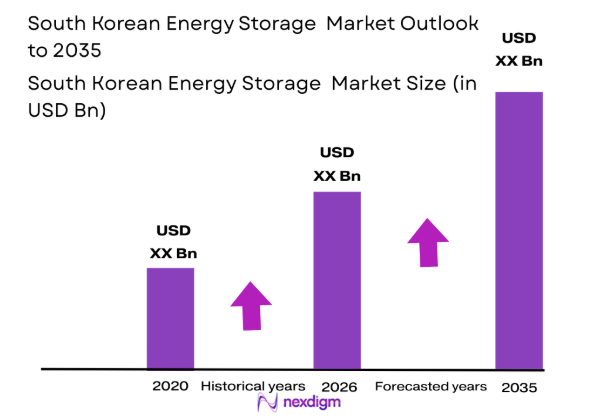
The South Korea energy storage market has witnessed robust growth, driven by the increasing need for reliable and sustainable energy solutions. Based on a recent historical assessment, the market size stands at USD ~ billion. The expansion is fueled by the country’s investments in renewable energy infrastructure, such as solar and wind power, and the integration of energy storage technologies to support grid stability and reduce reliance on fossil fuels. Government incentives and advancements in energy storage systems have further accelerated the market’s growth.
Cities such as Seoul, Busan, and Incheon are leading the charge in energy storage adoption. These urban areas benefit from advanced infrastructure and a high concentration of renewable energy projects, which necessitate efficient energy storage solutions. The strong government push for a clean energy transition, coupled with the country’s technological expertise, positions South Korea as a global leader in energy storage technologies. These regions are central to both innovation and policy implementation, reinforcing the country’s dominance in the market.
Market Segmentation
By System Type
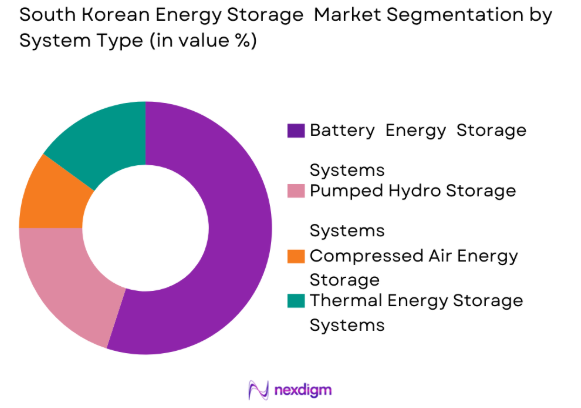
The South Korea energy storage market is segmented by system type into battery energy storage systems (BESS), pumped hydro storage systems (PHES), and compressed air energy storage systems (CAES). Recently, battery energy storage systems have captured the dominant market share due to their high efficiency, scalability, and growing demand in both residential and commercial sectors. With advancements in lithium-ion technology and government-backed incentives, BESS is the preferred choice for grid-connected energy storage, contributing to South Korea’s shift towards a more sustainable and resilient energy infrastructure.
By Platform Type
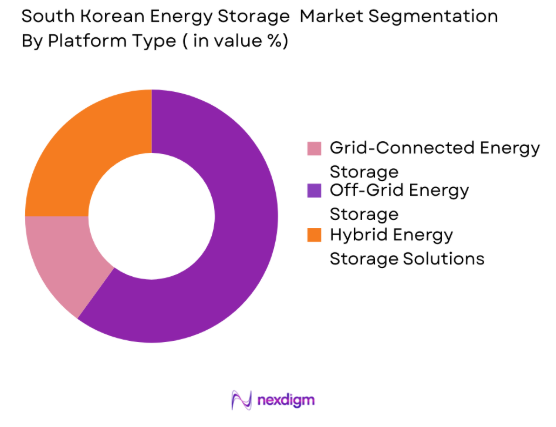
The South Korea energy storage market is segmented by platform type into grid-connected energy storage, off-grid energy storage, and hybrid energy storage solutions. Grid-connected energy storage systems dominate the market as they facilitate seamless integration of renewable energy into the grid, ensuring a stable and reliable energy supply. The growing reliance on wind and solar energy has made grid-connected storage solutions increasingly vital to maintaining grid balance, thereby driving demand for these systems across South Korea’s energy infrastructure.
Competitive Landscape
The South Korea energy storage market is highly competitive, with several leading global and local companies vying for market share. The industry is characterized by a growing trend of mergers and acquisitions, as well as strategic partnerships aimed at enhancing technological capabilities. Key players are focusing on the development of high-capacity and cost-effective storage solutions. Innovations in lithium-ion battery technology and energy management systems are helping companies solidify their positions in both domestic and international markets. As government regulations evolve, companies are increasingly aligning their business strategies to meet sustainability goals.
| Company Name | Establishment Year | Headquarters | Technology Focus | Market Reach | Key Products | Revenue (USD Million) | Additional Parameter |
| LG Chem | 1947 | Seoul, South Korea | ~ | ~ | ~ | ~ | ~ |
| Samsung SDI | 1970 | Seoul, South Korea | ~ | ~ | ~ | ~ | ~ |
| Hyundai Electric | 1947 | Seoul, South Korea | ~ | ~ | ~ | ~ | ~ |
| Doosan Heavy Industries | 1962 | Seoul, South Korea | ~ | ~ | ~ | ~ | ~ |
| SK Innovation | 1953 | Seoul, South Korea | ~ | ~ | ~ | ~ | ~ |
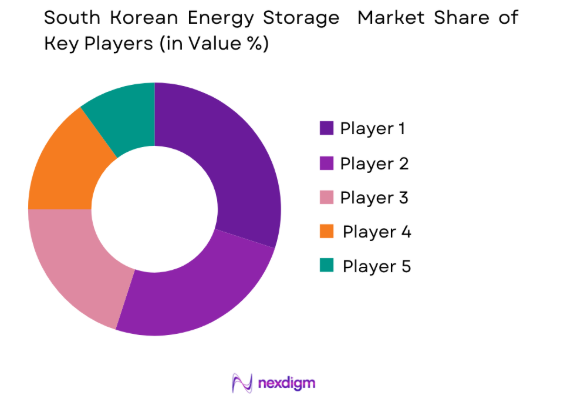
South Korean Energy Storage Market Analysis
Growth Drivers
Government Investment in Renewable Energy
The South Korean government’s substantial investment in renewable energy projects, particularly solar and wind, has driven a growing demand for energy storage solutions. These investments aim to meet the country’s ambitious renewable energy goals and address grid stability challenges. Energy storage systems play a vital role in integrating intermittent renewable sources, such as wind and solar, into the grid, ensuring a stable and reliable energy supply. Additionally, government incentives, including tax rebates and subsidies, have lowered financial barriers for both businesses and consumers, making energy storage systems more accessible and affordable. This strong governmental support accelerates the transition to a clean, sustainable energy future for South Korea.
Technological Advancements in Energy Storage
Technological innovations in energy storage, particularly in battery technology, have been essential for the growth of the South Korean market. Advances in lithium-ion and solid-state batteries have improved energy density, efficiency, and reduced the cost of storage solutions. These developments make energy storage more accessible for various applications, including residential, commercial, and industrial sectors. As South Korea continues to expand its energy storage capabilities, emerging technologies are expected to further enhance the efficiency of energy management systems. This will also support the seamless integration of renewable energy sources, driving the continued transition to clean energy and reinforcing South Korea’s position as a leader in energy storage innovation.
Market Challenges
High Initial Capital Costs
A major challenge for the South Korean energy storage market is the high initial cost of implementing storage systems. While technological advancements have made energy storage more efficient and cost-effective, the upfront capital required for purchasing, installing, and maintaining these systems remains a significant hurdle, especially for small and medium-sized enterprises. Though government subsidies and incentives help reduce some of these costs, the overall capital investment still poses a barrier to widespread adoption. This high financial barrier slows down the market’s growth and limits the accessibility of energy storage solutions, particularly for smaller businesses and residential customers looking to adopt cleaner energy technologies.
Regulatory and Policy Uncertainty
A significant challenge in the South Korean energy storage market is the regulatory uncertainty surrounding energy storage systems. While the government has introduced incentives for energy storage projects, the regulatory framework remains in flux. The absence of standardized certification processes and complex approval procedures complicates market navigation for companies. Furthermore, fluctuations in government policies can introduce risks to long-term planning, making it difficult for businesses to make consistent investments in energy storage infrastructure. This regulatory uncertainty hinders market expansion and increases the difficulty of aligning business strategies with evolving policies. A clearer and more stable regulatory environment would help foster growth and attract further investments in energy storage solutions.
Opportunities
Renewable Energy Integration
As South Korea grows its renewable energy capacity, the need for efficient energy storage systems becomes crucial for maintaining grid stability. The integration of large-scale renewable sources like wind and solar requires reliable storage solutions to address fluctuations in energy supply and demand. This presents a valuable opportunity for energy storage providers to increase their market presence by offering scalable and efficient systems. By complementing renewable energy infrastructure, these storage solutions can enhance energy reliability and ensure a smoother transition to clean energy. As South Korea focuses on renewable integration, energy storage systems will play a pivotal role in supporting this growth and ensuring grid resilience.
Advancements in Battery Technology
Advancements in battery technologies, particularly in lithium-ion, solid-state, and flow batteries, present significant opportunities for the South Korean energy storage market. These innovations are enhancing the performance and efficiency of energy storage systems, while simultaneously reducing maintenance costs over the long term. The improved energy density and longer lifespan of these batteries make them more cost-effective for various applications, including residential, commercial, and utility-scale projects. As these technologies continue to evolve, they will drive further adoption of energy storage solutions, supporting South Korea’s transition to a sustainable energy future. This technological progress also positions South Korea as a key player in the global energy storage market.
Future Outlook
The future outlook of the South Korean energy storage market is promising, driven by ongoing advancements in battery technologies, supportive government policies, and the continued growth of renewable energy projects. Over the next few years, energy storage systems are expected to become more affordable and efficient, further encouraging adoption across various sectors. With strong government support and technological innovation, South Korea is poised to solidify its position as a global leader in energy storage solutions, ensuring a sustainable and resilient energy future.
Major Players
- LG Chem
- Samsung SDI
- Hyundai Electric
- Doosan Heavy Industries
- SK Innovation
- LG Electronics
- Hyundai Heavy Industries
- GS Energy
- POSCO Energy
- Hanwha Q Cells
- Enersys
- Fluence Energy
- BYD
- ABB
- Siemens
Key Target Audience
- Investments and venture capitalist firms
- Government and regulatory bodies
- Utility providers
- Renewable energy developers
- Commercial enterprises
- Industrial manufacturers
- Residential customers
- System integrators
Research Methodology
Step 1: Identification of Key Variables
The identification of key variables involves understanding the scope of the market, defining the relevant technology types, and determining the factors influencing energy storage adoption, such as government incentives and technological advancements.
Step 2: Market Analysis and Construction
This step focuses on constructing the market model, analyzing historical data, and segmenting the market by system type, platform, and application. The data is aggregated from credible sources such as government publications and industry reports.
Step 3: Hypothesis Validation and Expert Consultation
Industry experts and stakeholders are consulted to validate assumptions made in the market model. This step involves gathering insights on market trends, technological developments, and regulatory frameworks.
Step 4: Research Synthesis and Final Output
In this step, the collected data is synthesized to create a comprehensive report. The analysis is finalized with actionable insights and recommendations for stakeholders in the South Korea energy storage market.

- Executive Summary
- Research Methodology (Definitions, Scope, Industry Assumptions, Market Sizing Approach, Primary & Secondary Research Framework, Data Collection & Verification Protocol, Analytic Models & Forecast Methodology, Limitations & Research Validity Checks)

- Market Definition and Scope
- Value Chain & Stakeholder Ecosystem
- Regulatory / Certification Landscape
- Sector Dynamics Affecting Demand
- Strategic Initiatives & Infrastructure Growth

- Growth Drivers
Increased Government Investment in Renewable Energy
Technological Advancements in Energy Storage Solutions
Rising Energy Demand and Grid Stability Concerns - Market Challenges
High Initial Capital Expenditure
Regulatory and Policy Uncertainty
Energy Storage Technology Integration Issues - Market Opportunities
Expansion of Renewable Energy Integration
Government Incentives for Clean Energy Storage
Advancements in Battery Technology - Trends
Increase in Demand for Residential Energy Storage
Emerging Interest in Off-Grid Energy Solutions
Development of Long-duration Energy Storage Systems - Government Regulations
- SWOT Analysis of Key Competitors
- Porter’s Five Forces

- By Market Value, 2020-2025
- By Installed Units, 2020-2025
- By Average System Price, 2020-2025
- By System Complexity Tier, 2020-2025

- By System Type (In Value%)
Battery Energy Storage Systems
Flywheel Energy Storage Systems
Pumped Hydro Storage Systems
Compressed Air Energy Storage Systems
Thermal Energy Storage Systems - By Platform Type (In Value%)
Grid-Connected Energy Storage
Off-Grid Energy Storage
Commercial Energy Storage
Industrial Energy Storage
Residential Energy Storage - By Fitment Type (In Value%)
On-Premise Solutions
Cloud-based Solutions
Hybrid Solutions
Modular Solutions
Integrated Solutions - By End User Segment (In Value%)
Utility Providers
Commercial Enterprises
Residential Customers
Government Entities
Industrial Manufacturers - By Procurement Channel (In Value%)
Direct Procurement
Government Tenders
Private Sector Procurement
Online Bidding Platforms
Third-party Distributors

- Market Share Analysis
- Cross Comparison Parameters (System Type, Platform Type, End User Segment, Procurement Channel, Fitment Type, Technology Type, Storage Capacity, Installation Region, Application Scope, System Efficiency)
- SWOT Analysis of Key Competitors
- Pricing & Procurement Analysis
- Key Players
LG Chem
Samsung SDI
Hyundai Electric
SK Innovation
Doosan Heavy Industries
POSCO Energy
Hyundai Energy Solutions
Korea Electric Power Corporation (KEPCO)
Hanwha Q Cells
Solvay
VARTA AG
Fluence
Panasonic
Siemens Energy
General Electric

- Growing Demand from Utility Providers
- Government Support for Industrial Energy Storage
- Rising Interest from Residential Customers
- Increased Focus on Energy Storage for Commercial Enterprises

- Forecast Market Value, 2026-2035
- Forecast Installed Units, 2026-2035
- Price Forecast by System Tier, 2026-2035
- Future Demand by Platform, 2026-2035


 Request a Sample
 Ask for Customization
 Get a Quote
 Enquire Now