
 Download PDF
 Download PDF
Market Overview
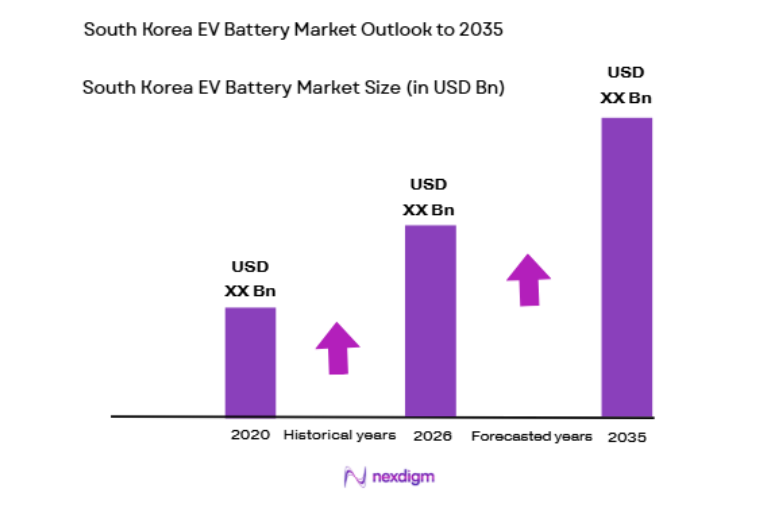
The South Korea EV battery market is projected to reach USD ~ billion based on a recent historical assessment. The market growth is primarily driven by the growing demand for electric vehicles (EVs) in South Korea, spurred by government incentives, advancements in battery technology, and the shift toward sustainable transportation. South Korea’s major players, including LG Chem and Samsung SDI, continue to enhance their production capacities, fueling growth in the domestic EV market and contributing to global supply chains.
Seoul, Ulsan, and Incheon are key cities driving the demand for EV batteries, owing to their strong industrial bases, infrastructure development, and high adoption rates of electric vehicles. These cities are home to South Korea’s largest automotive manufacturers and are the hubs for the nation’s growing electric vehicle market. The concentration of manufacturing facilities and the government’s green energy policies in these areas have played a significant role in promoting the adoption of electric vehicles and EV batteries, helping South Korea maintain its position as a leader in the global EV market.
Market Segmentation
By Battery Type
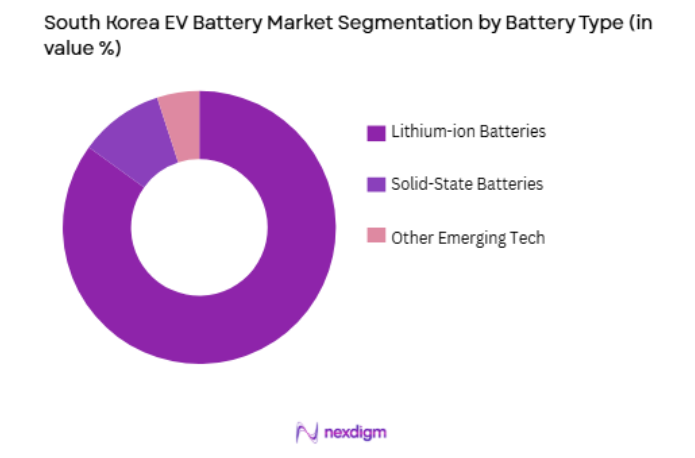
The South Korea EV battery market is segmented by battery type into lithium-ion batteries (Li-ion), solid-state batteries, and other emerging technologies. Recently, lithium-ion batteries have dominated the market share due to their high energy density, long lifespan, and lower cost compared to emerging technologies. Li-ion batteries are the preferred choice for electric vehicles, owing to their reliability and established manufacturing processes. With major players such as LG Chem, Samsung SDI, and SK Innovation focused on enhancing lithium-ion battery technology, this segment continues to lead the market as the most widely used battery type in electric vehicles.
By End-Use Application
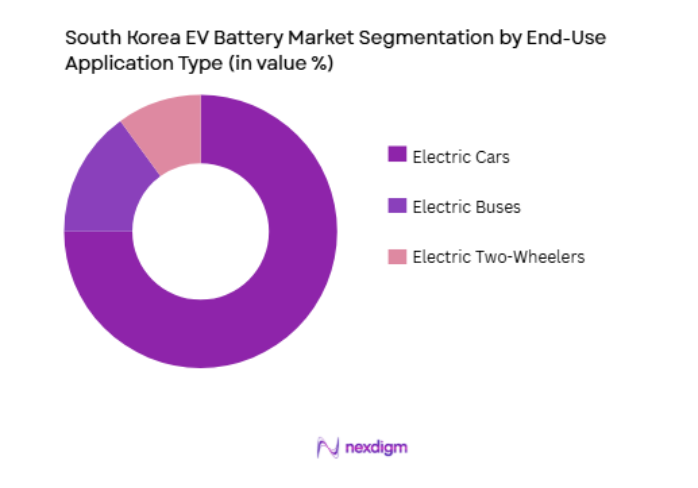
The South Korea EV battery market is segmented by end-use application into electric cars, electric buses, and electric two-wheelers. The electric car segment holds the dominant market share, driven by the growing demand for personal electric vehicles. As South Korea’s automotive manufacturers like Hyundai and Kia ramp up production of electric cars, the need for high-performance batteries increases, making electric cars the largest consumer of EV batteries. The increasing number of government incentives and consumer preference for sustainable transportation further supports the dominance of electric cars in the market.
Competitive Landscape
The South Korea EV battery market is highly competitive, with both domestic and international players vying for market share. South Korea is home to major battery manufacturers like LG Chem, Samsung SDI, and SK Innovation, which are globally recognized for their cutting-edge battery technology and strong market presence. These companies are continuously investing in research and development to improve battery efficiency, reduce costs, and increase the overall performance of their products. The increasing demand for electric vehicles in South Korea, combined with the nation’s leadership in battery technology, has led to a growing number of partnerships between automotive manufacturers and battery producers. The competitive environment is intensifying as the demand for EV batteries grows both domestically and internationally, driving continuous innovation in the sector.
| Company Name | Establishment Year | Headquarters | Technology Focus | Market Reach | Key Products | Revenue | Market-Specific Parameter |
| LG Chem | 1947 | Seoul, South Korea | ~ | ~ | ~ | ~ | ~ |
| Samsung SDI | 1970 | Seoul, South Korea | ~ | ~ | ~ | ~ | ~ |
| SK Innovation | 1962 | Seoul, South Korea | ~ | ~ | ~ | ~ | ~ |
| BYD | 1995 | Shenzhen, China | ~ | ~ | ~ | ~ | ~ |
| Panasonic | 1918 | Osaka, Japan | ~ | ~ | ~ | ~ | ~ |
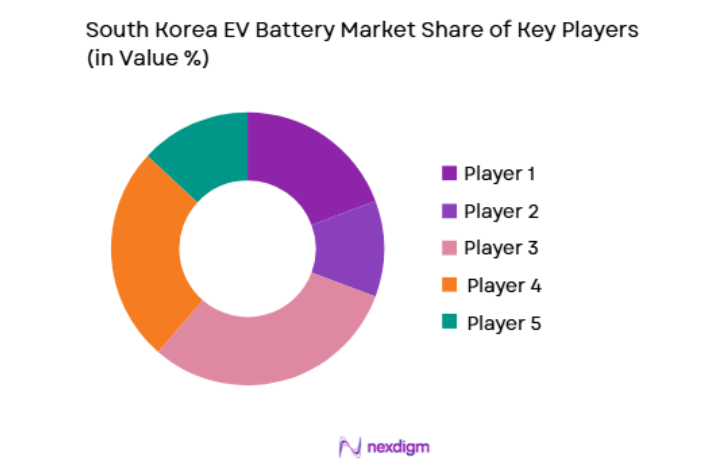
South Korea EV Battery Market Analysis
Growth Drivers
Government Incentives for Electric Vehicles
The South Korean government has introduced a range of incentives to encourage the adoption of electric vehicles and the development of EV battery technologies. The government’s “Green New Deal” includes plans to invest in green energy infrastructure, including EV charging networks and battery production. Subsidies for consumers purchasing electric vehicles, along with incentives for manufacturers producing EVs and batteries, have played a significant role in boosting the market. The government’s long-term goal of reducing carbon emissions and creating a sustainable transportation system ensures that the demand for electric vehicles and EV batteries will continue to grow. These policy measures, alongside the growing global push for sustainability, are driving the growth of the EV battery market in South Korea.
Technological Advancements in Battery Chemistry and Performance
The development of new and more efficient battery technologies has been a key driver for the South Korea EV battery market. Lithium-ion batteries continue to dominate the market, but ongoing innovations in battery chemistry, such as improvements in energy density and charging speed, are contributing to the rapid evolution of EV battery technology. Solid-state batteries, with their higher energy densities and safety features, are also emerging as a viable alternative. These technological advancements not only improve the performance of electric vehicles but also help reduce their cost, making EVs more affordable for a wider audience. As South Korea’s leading battery manufacturers, including LG Chem and Samsung SDI, continue to push the boundaries of battery innovation, the market is expected to see greater efficiency and performance, which will contribute to further adoption of electric vehicles.
Market Challenges
High Battery Costs
Despite significant advancements in battery technology, the high cost of EV batteries remains a major challenge for the market. Although the prices of lithium-ion batteries have fallen in recent years, they still account for a significant portion of the overall cost of an electric vehicle. As battery technology continues to improve, the price of manufacturing batteries will decrease, but high upfront costs continue to deter many consumers from purchasing electric vehicles. Reducing battery costs is crucial for making electric vehicles more affordable, particularly in price-sensitive segments of the market. Government incentives and continued technological innovation in battery production are essential to overcome this challenge and make electric vehicles more accessible to a larger population.
Supply Chain Constraints
The rapid growth of the electric vehicle market and the increasing demand for EV batteries have highlighted supply chain constraints, particularly in the availability of key raw materials such as lithium, cobalt, and nickel. These materials are essential for the production of lithium-ion batteries, and their supply is limited and concentrated in a few countries. Any disruption in the supply of these raw materials, whether due to geopolitical issues or fluctuations in mining operations, could negatively impact the EV battery market. In addition, the reliance on international supply chains for raw materials increases the risk of price volatility, further complicating the cost structure of battery production. Addressing these supply chain constraints by diversifying sourcing strategies and investing in recycling technologies for batteries will be important for the continued growth of the EV battery market.
Opportunities
Expansion of Second-Life Battery Applications
As electric vehicle adoption increases, so does the number of batteries reaching the end of their useful life in vehicles. These used batteries, known as second-life batteries, can be repurposed for energy storage applications, providing a cost-effective solution for renewable energy storage. Second-life batteries can help balance the energy grid by storing surplus electricity generated by renewable sources such as solar and wind. South Korea’s growing focus on renewable energy and energy storage systems presents a significant opportunity for the EV battery market. By developing second-life applications, battery manufacturers can create a new revenue stream, while simultaneously contributing to the country’s sustainability goals. The market for second-life batteries in South Korea is expected to grow as the country focuses on circular economy solutions and sustainable energy.
Integration of EV Batteries with Smart Grids
Integration of electric vehicle batteries with smart grids presents an exciting opportunity for the EV battery market in South Korea. By connecting EV batteries to smart grids, South Korea can optimize energy distribution and use electric vehicles as mobile energy storage devices. This integration could allow EVs to provide power back to the grid during peak demand periods, helping to stabilize energy systems. The use of EV batteries as part of a broader smart grid system will be instrumental in reducing energy consumption, supporting the integration of renewable energy, and improving the overall efficiency of the electricity grid. As South Korea advances its smart grid infrastructure and works towards carbon neutrality, the integration of EV batteries into this system will contribute to market growth and innovation.
Future Outlook
The future outlook for the South Korean EV battery market is highly positive, driven by the increasing adoption of electric vehicles, technological advancements, and government support for sustainable energy. The continued development of battery technologies, such as solid-state and second-life batteries, alongside the expansion of smart grids and charging infrastructure, will be key enablers of growth. As South Korea aims to become a global leader in green mobility, the EV battery market will continue to play a central role in the country’s transition to a low-carbon economy.
Major Players
- LG Chem
- Samsung SDI
- SK Innovation
- BYD
- Panasonic
- CATL
- Tesla
- A123 Systems
- CALB
- Farasis Energy
- Toshiba
- EVE Energy
- VARTA AG
- Northvolt
- Hitachi Chemical
Key Target Audience
- Investments and venture capitalist firms
- Government and regulatory bodies
- Electric vehicle manufacturers
- Battery manufacturers
- Charging infrastructure providers
- Renewable energy companies
- Environmental organizations
- Automotive OEMs
Research Methodology
Step 1: Identification of Key Variables
Identify and define key market drivers, challenges, and opportunities affecting the South Korea EV battery market, such as government policies, technological advancements, and consumer preferences.
Step 2: Market Analysis and Construction
Analyze market demand, growth patterns, and technology development through primary and secondary research to create an accurate market model.
Step 3: Hypothesis Validation and Expert Consultation
Consult with industry experts, government representatives, and market participants to validate assumptions and refine growth projections.
Step 4: Research Synthesis and Final Output
Synthesize the findings into a comprehensive report, providing insights, analysis, and actionable recommendations for stakeholders in the EV battery market.

- Executive Summary
- Research Methodology (Definitions, Scope, Industry Assumptions, Market Sizing Approach, Primary & Secondary Research Framework, Data Collection & Verification Protocol, Analytic Models & Forecast Methodology, Limitations & Research Validity Checks)

- Market Definition and Scope
- Value Chain & Stakeholder Ecosystem
- Regulatory / Certification Landscape
- Sector Dynamics Affecting Demand

- Growth Drivers
Government Incentives for EV Adoption
Technological Advancements in Battery Chemistry
Rising Adoption of Electric Commercial Vehicles - Market Challenges
High Initial Costs of EV Batteries
Supply Chain Disruptions for Raw Materials
Battery Disposal and Recycling Issues - Market Opportunities
Battery Recycling and Repurposing
Growth in Electric Commercial Vehicles
Technological Innovations in Battery Efficiency - Trends
Advancements in Solid-State Battery Technology
Increased Demand for Long-Range EV Batteries - Government Regulations
EV Battery Certification Standards
Incentive Programs for Electric Vehicle Purchases
Battery Recycling and Disposal Regulations - SWOT Analysis
- Porter’s Five Forces

- By Market Value, 2020-2025
- By Installed Units, 2020-2025
- By Average System Price, 2020-2025
- By System Complexity Tier, 2020-2025

- By System Type (In Value%)
Lithium-Ion Batteries
Solid-State Batteries
Nickel-Metal Hydride Batteries
Lead-Acid Batteries
Lithium Iron Phosphate (LFP) Batteries - By Platform Type (In Value%)
Passenger Vehicles
Commercial Vehicles
Electric Two-Wheelers
Energy Storage Systems
Off-grid Applications - By Fitment Type (In Value%)
OEM Batteries
Aftermarket Batteries
Battery Leasing Models
Integrated Battery Solutions - By End User Segment (In Value%)
Private Consumers
Fleet Operators
OEM Manufacturers

- Market Share Analysis
- Cross Comparison Parameters (System Type, Platform Type, End User Segment, Battery Life, Charging Speed, Energy Density, Cost per kWh, Battery Chemistry, Recycling Processes, Maintenance Requirements)
- SWOT Analysis of Key Competitors
- Pricing & Procurement Analysis
- Key Players
Samsung SDI
LG Chem
SK Innovation
BYD
Panasonic
Tesla
CATL
AESC
LG Electronics
Samsung Electronics
Hitachi Chemical
Mitsubishi Electric
Toshiba
VARTA
Saft

- Increased Demand for EV Batteries in Public Transportation
- Private Consumers’ Interest in EV Adoption
- Fleet Operators’ Need for High-Performance Batteries
- Battery Recycling Demand from Government Initiatives

- Forecast Market Value, 2026-2035
- Forecast Installed Units, 2026-2035
- Price Forecast by System Tier, 2026-2035
- Future Demand by Platform, 2026-2035


 Request a Sample
 Ask for Customization
 Get a Quote
 Enquire Now