
 Download PDF
 Download PDF
Market Overview
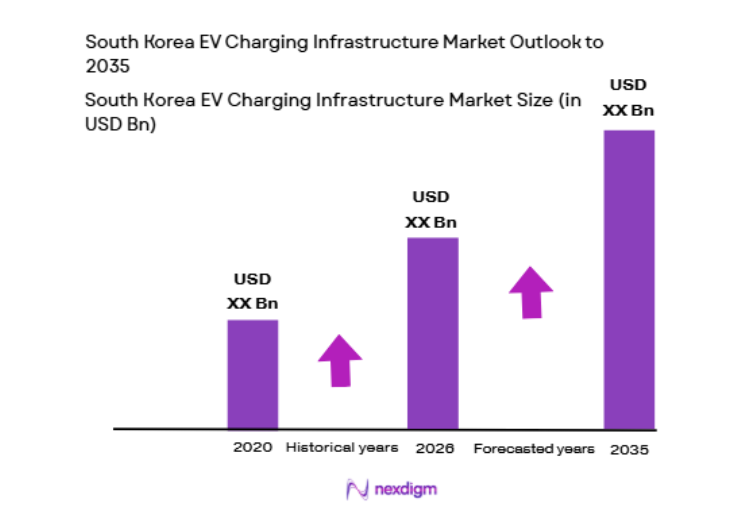
The South Korea EV charging infrastructure market is projected to reach USD ~ billion based on a recent historical assessment. The market is driven by the government’s strong commitment to expanding electric vehicle adoption and reducing carbon emissions. Public and private sector investments are fostering the growth of EV charging networks across the country, with plans to install an extensive network of charging stations to cater to the increasing demand for electric vehicles. The rising adoption of EVs, fueled by government incentives and the growing focus on sustainability, continues to drive infrastructure development.
Seoul, Busan, and Incheon are the leading cities in South Korea’s EV charging infrastructure due to their high population densities, large vehicle fleets, and government-backed initiatives. These urban centers are the focal points for the country’s EV transition, with extensive plans to deploy charging stations at high-traffic areas such as commercial zones, highways, and residential areas. The government’s policy initiatives and investments in infrastructure, along with South Korea’s strong manufacturing base for electric vehicles and charging equipment, make these cities critical to the expansion of EV charging networks.
Market Segmentation
By Charging Type
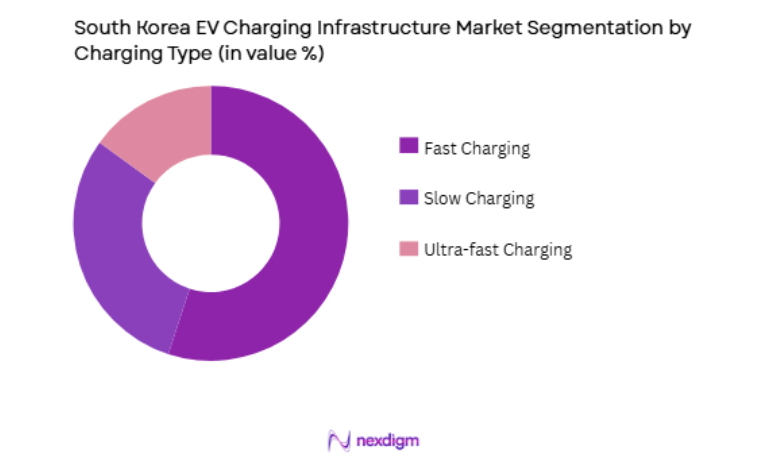
The South Korea EV charging infrastructure market is segmented by charging type into slow charging, fast charging, and ultra-fast charging. Fast charging has recently gained a dominant market share due to its ability to meet the increasing demand for quicker charging solutions, particularly in urban areas with high vehicle turnover. Fast chargers allow electric vehicle owners to recharge their vehicles in a matter of minutes, enhancing the practicality of electric cars for long-distance travel and day-to-day commuting. The expansion of fast-charging networks along highways and in key cities ensures convenience and reduces range anxiety, fueling their dominance in the South Korean market.
By Installation Type
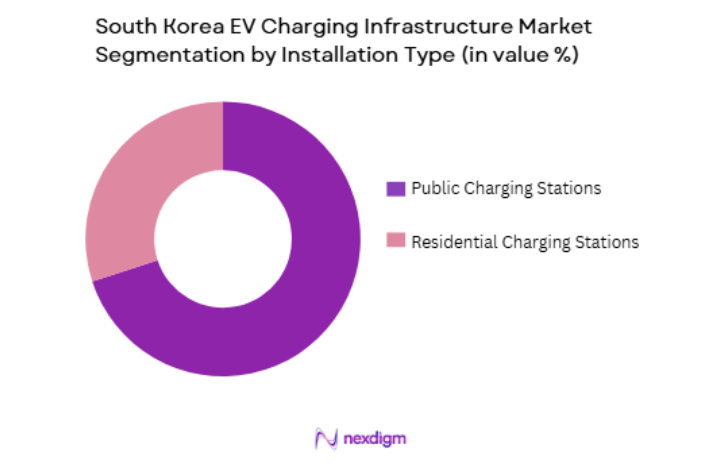
The South Korea EV charging infrastructure market is also segmented by installation type into residential charging stations and public charging stations. Public charging stations dominate the market due to their wide accessibility in high-traffic areas such as shopping malls, office buildings, and public transport hubs. The need for readily available public charging stations is amplified by the growing number of electric vehicles in cities like Seoul, where urban mobility solutions are increasingly focused on green energy. The government’s support for public charging infrastructure, along with private sector investments in charging networks, has propelled the growth of public charging stations in key areas, facilitating the rapid adoption of electric vehicles.
Competitive Landscape
The competitive landscape of South Korea’s EV charging infrastructure market is characterized by a combination of local and global players. Companies like SK Innovation, Hyundai Motor Group, and LG Electronics are leading the charge with investments in both charging equipment and networks. These companies are focused on scaling the deployment of fast-charging and ultra-fast charging stations across major cities and highways. In addition to domestic players, international companies such as Tesla and ABB are expanding their operations in South Korea. The market is witnessing significant consolidation as large corporations partner with government bodies to enhance the charging infrastructure and contribute to the country’s green initiatives. Competition is intensifying as more players enter the market, focusing on offering charging stations with faster charging capabilities, lower costs, and greater convenience for users.
| Company Name | Establishment Year | Headquarters | Technology Focus | Market Reach | Key Products | Revenue | Market-Specific Parameter |
| SK Innovation | 1999 | Seoul, South Korea | ~ | ~ | ~ | ~ | ~ |
| Hyundai Motor Group | 1967 | Seoul, South Korea | ~ | ~ | ~ | ~ | ~ |
| LG Electronics | 1958 | Seoul, South Korea | ~ | ~ | ~ | ~ | ~ |
| Tesla | 2003 | Palo Alto, USA | ~ | ~ | ~ | ~ | ~ |
| ABB | 1988 | Zurich, Switzerland | ~ | ~ | ~ | ~ | ~ |
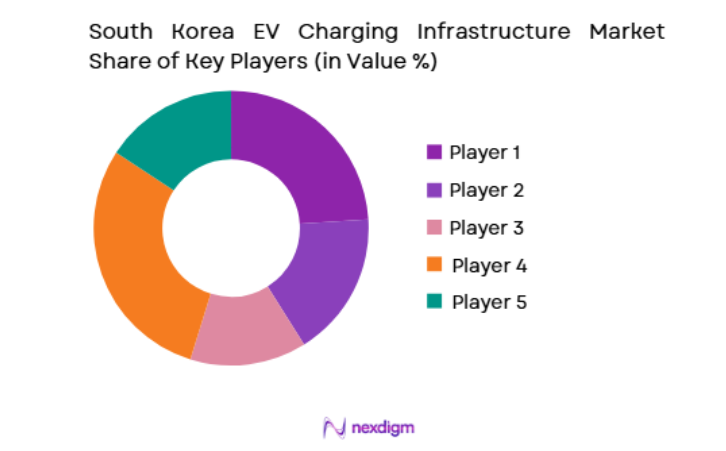
South Korea EV Charging Infrastructure Market Analysis
Growth Drivers
Government Initiatives for EV Infrastructure Development
The South Korean government has played a significant role in driving the growth of EV charging infrastructure through comprehensive policy initiatives. The government aims to increase the adoption of electric vehicles by investing heavily in the development of public and private charging stations. The South Korean government’s “Green New Deal,” which includes plans to install 200,000 public charging stations by 2025, is a key driver for the market. Government subsidies, incentives for infrastructure investments, and a regulatory framework that encourages the installation of charging stations in public and residential areas are helping to expand the charging network. These policies are directly contributing to the growth of the EV charging infrastructure market by ensuring that charging stations are more widely accessible and affordable to consumers. The continued support for green mobility and the goal of reducing carbon emissions are expected to fuel the growth of the EV charging market in South Korea.
Technological Advancements in Charging Systems
The South Korean EV charging infrastructure market is also driven by advancements in charging technologies. The development of fast-charging and ultra-fast charging stations is reducing charging times significantly, addressing consumer concerns about long waiting periods. Innovations in smart charging, which allow for dynamic charging based on demand, and wireless charging are also contributing to market growth. As battery technology continues to improve, charging systems will become more efficient, leading to faster and more cost-effective solutions for EV owners. Moreover, the integration of charging stations with renewable energy sources like solar power enhances the sustainability of the charging infrastructure, making it more attractive to both consumers and operators. These technological advancements are expected to improve the overall user experience and drive the adoption of electric vehicles.
Market Challenges
High Initial Infrastructure Costs
Despite the growing demand for electric vehicles, the high initial investment required to establish a widespread charging network remains a significant challenge. Setting up charging stations, especially ultra-fast chargers, involves substantial capital expenditures for both equipment and installation. The cost of land for setting up charging stations, particularly in urban areas, can also be a barrier. While the government is providing incentives to mitigate some of these costs, the financial burden on private companies and investors may hinder the rapid expansion of the charging infrastructure. The initial high costs of building and maintaining charging networks could slow down the deployment of charging stations, particularly in rural or less economically developed regions. Addressing this challenge requires continued government support, as well as innovative business models that can reduce costs and encourage private sector involvement.
Limited Charging Infrastructure Outside Urban Areas
The lack of sufficient charging infrastructure in rural areas poses a challenge to the widespread adoption of electric vehicles in South Korea. While major cities like Seoul and Busan have relatively well-developed charging networks, rural regions are still underserved, making it difficult for EV owners to access charging stations. As the number of electric vehicles increases, the need for a more comprehensive charging network that covers both urban and rural areas becomes critical. Expanding the charging infrastructure in less densely populated areas requires significant investment, and the financial viability of setting up stations in rural areas remains a challenge. Overcoming this challenge will be essential for ensuring that electric vehicles can be adopted nationwide, not just in urban centers.
Opportunities
Integration of EV Charging with Renewable Energy
The integration of electric vehicle charging stations with renewable energy sources presents a significant opportunity for the EV charging infrastructure market. South Korea’s government is committed to reducing its carbon emissions and increasing the use of renewable energy, and this is aligned with the growing adoption of electric vehicles. By powering charging stations with solar or wind energy, South Korea can make its electric vehicle ecosystem more sustainable and reduce reliance on the grid. This integration also presents an opportunity for charging station operators to reduce their operating costs and attract environmentally conscious consumers. The growing trend of combining clean energy with EV infrastructure presents a long-term growth opportunity, enabling the development of green charging stations that cater to the increasing demand for sustainable solutions.
Expansion of Charging Networks Along Highways and Major Routes
The expansion of EV charging infrastructure along highways and major transportation routes presents an opportunity for market growth. South Korea’s high population density and widespread urbanization have created a significant demand for electric vehicles, especially in major cities like Seoul and Busan. However, for EV adoption to expand beyond urban areas, there needs to be a more extensive network of charging stations along highways and long-distance routes. The government’s investment in this infrastructure will help increase the feasibility of owning and operating electric vehicles in more remote regions of South Korea. This expansion will also alleviate range anxiety, making electric vehicles more practical for consumers who need to travel longer distances. As a result, the market for EV charging stations will continue to grow, providing new opportunities for both public and private investments.
Future Outlook
The future outlook for the South Korean EV charging infrastructure market is highly promising. With the continued expansion of the government’s green mobility initiatives, technological advancements in fast-charging solutions, and increasing consumer demand for electric vehicles, the market is poised for rapid growth. The integration of renewable energy sources into the charging network, along with the ongoing development of ultra-fast charging stations, will further boost the market’s expansion. As South Korea works toward its ambitious carbon-neutral goals, the EV charging infrastructure market will play a critical role in supporting the country’s transition to a greener, more sustainable transportation system.
Major Players
- SK Innovation
- Hyundai Motor Group
- LG Electronics
- Tesla
- ABB
- Siemens
- BP Chargemaster
- ChargePoint
- Nio
- Shell
- EVgo
- Fastned
- ChargePoint
- Siemens
- Chademo Association
Key Target Audience
- Investments and venture capitalist firms
- Government and regulatory bodies
- Electric vehicle manufacturers
- Charging infrastructure providers
- Automotive OEMs
- Energy and utilities companies
- Environmental organizations
- Fleet operators
Research Methodology
Step 1: Identification of Key Variables
Identify key market drivers, challenges, and opportunities impacting the South Korean EV charging infrastructure market, including government policies, technological advancements, and consumer trends.
Step 2: Market Analysis and Construction
Analyze market demand, growth patterns, and charging infrastructure development through primary and secondary research, leveraging both quantitative and qualitative data.
Step 3: Hypothesis Validation and Expert Consultation
Consult with industry experts, government officials, and market participants to validate assumptions and refine growth projections.
Step 4: Research Synthesis and Final Output
Synthesize the findings into a comprehensive report, providing insights, analysis, and actionable recommendations for stakeholders in the EV charging infrastructure market.

- Executive Summary
- Research Methodology (Definitions, Scope, Industry Assumptions, Market Sizing Approach, Primary & Secondary Research Framework, Data Collection & Verification Protocol, Analytic Models & Forecast Methodology, Limitations & Research Validity Checks)

- Market Definition and Scope
- Value Chain & Stakeholder Ecosystem
- Regulatory / Certification Landscape
- Sector Dynamics Affecting Demand

- Growth Drivers
Government Policies Supporting EV Adoption
Expansion of Electric Vehicle Fleets
Technological Advancements in Charging Solutions - Market Challenges
High Infrastructure Costs
Limited Charging Infrastructure Coverage
Energy Supply and Grid Stability Concerns - Market Opportunities
Integration of Renewable Energy with Charging Stations
Smart Charging Solutions and Grid Integration
Government Incentives for Charging Infrastructure Development - Trends
Deployment of Ultra-Fast Charging Networks
Adoption of Smart Charging Stations and IoT Integration - Government Regulations
EV Charging Infrastructure Standards
Government Funding and Subsidies for Charging Stations
Regulations on Grid Integration and Energy Management - SWOT Analysis
- Porter’s Five Forces

- By Market Value, 2020-2025
- By Installed Units, 2020-2025
- By Average System Price, 2020-2025
- By System Complexity Tier, 2020-2025

- By System Type (In Value%)
Level 1 Charging Stations
Level 2 Charging Stations
DC Fast Charging Stations
Ultra-fast Charging Stations
Wireless Charging Systems - By Platform Type (In Value%)
Public Charging Stations
Private Charging Stations
Workplace Charging Solutions
Residential Charging Solutions
Fleet Charging Solutions - By Fitment Type (In Value%)
Standalone Charging Units
Integrated Charging Units
Mobile Charging Solutions
On-demand Charging Solutions - By End User Segment (In Value%)
Private Consumers
Fleet Operators
Government & Public Sector
Commercial Sector

- Market Share Analysis
- Cross Comparison Parameters (System Type, Platform Type, End User Segment, Charging Speed, Charging Density, Cost per Charging Session, Payment Integration, Government Incentives, Energy Source, Maintenance Requirements)
- SWOT Analysis of Key Competitors
- Pricing & Procurement Analysis
- Key Players
SK Networks
GS Caltex
Samsung SDI
Hyundai Motor Group
Kia Motors
POSCO Energy
LG Electronics
EVgo
Sungrow Power Supply
ChargePoint
Hanwa Q Cells
ABB
Siemens
Siemens Mobility
Shell Recharge

- Private Consumers’ Increasing Demand for Charging Solutions
- Fleet Operators’ Shift Toward EVs and Charging Integration
- Government & Public Sector Adoption of Green Mobility
- Commercial Sector’s Growing Investment in Charging Stations

- Forecast Market Value, 2026-2035
- Forecast Installed Units, 2026-2035
- Price Forecast by System Tier, 2026-2035
- Future Demand by Platform, 2026-2035


 Request a Sample
 Ask for Customization
 Get a Quote
 Enquire Now