

 Download PDF
 Download PDF
Market Overview
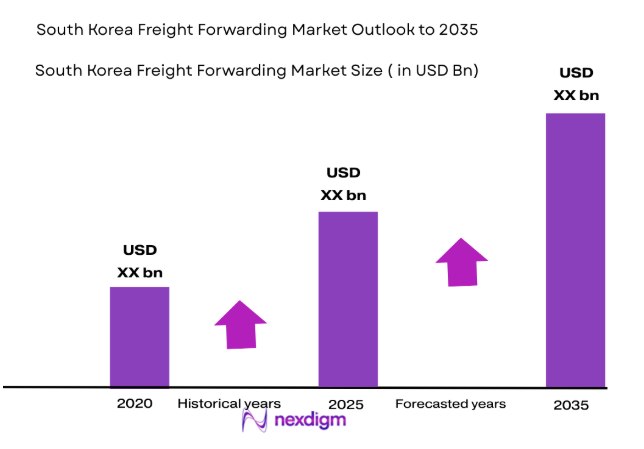
South Korea Freight Forwarding Market generated approximately USD ~ billion based on a recent historical assessment, supported by the country’s strong export-oriented manufacturing ecosystem and global trade connectivity. Freight forwarding services coordinate multimodal cargo transportation, customs documentation, and supply chain integration for industries such as electronics, automotive, chemicals, and machinery. High cargo throughput through major seaports and international airports strengthens demand for logistics coordination services. Government investments in smart port infrastructure and digital logistics platforms further improve shipment visibility, customs clearance efficiency, and cargo handling capacity across international trade routes.
Major logistics activity is concentrated around Seoul, Busan, and Incheon where large ports, airports, and industrial clusters support high cargo throughput. Busan operates one of the busiest container ports globally, facilitating large volumes of export shipments from manufacturing hubs across the country. Incheon International Airport functions as a critical air cargo gateway connecting East Asian supply chains with global markets. Seoul serves as a commercial and logistics management hub hosting freight forwarding headquarters and technology driven logistics service providers coordinating domestic and international cargo operations.
Market Segmentation
By Product Type
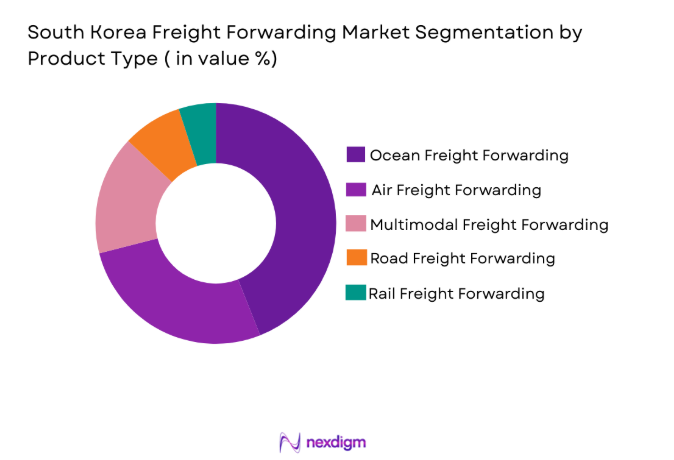
South Korea Freight Forwarding Market is segmented by product type into air freight forwarding, ocean freight forwarding, road freight forwarding, rail freight forwarding, and multimodal freight forwarding. Recently, ocean freight forwarding has a dominant market share due to factors such as strong export manufacturing activity, extensive port infrastructure, and high containerized cargo volumes handled through major maritime gateways. The country’s electronics, automotive, and industrial equipment exports rely heavily on maritime logistics networks connecting Asia with North America and Europe. Freight forwarders therefore prioritize container shipping coordination, port handling services, and international maritime trade routes.
By Platform Type
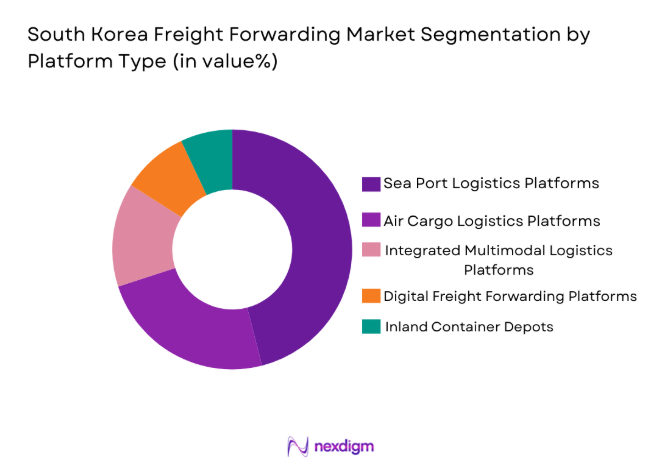
South Korea Freight Forwarding Market is segmented by platform type into sea port logistics platforms, air cargo logistics platforms, inland container depots, digital freight forwarding platforms, and integrated multimodal logistics platforms. Recently, sea port logistics platforms have a dominant market share due to factors such as extensive maritime trade volumes, large container terminal capacity, and established global shipping networks. Major export industries depend heavily on container shipping routes handled through large maritime ports. Advanced port automation systems, container tracking platforms, and logistics integration technologies further strengthen operational efficiency and support high shipment throughput.
Competitive Landscape
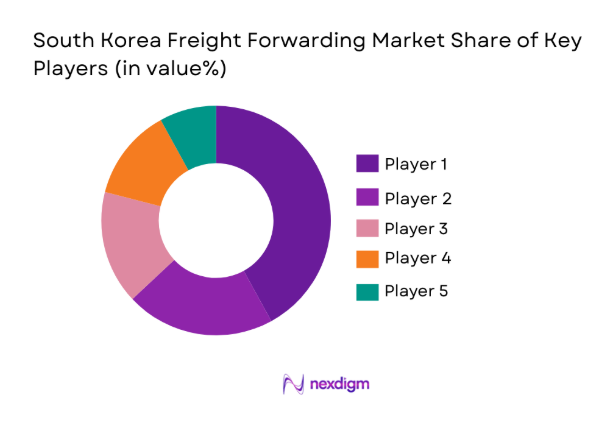
South Korea Freight Forwarding Market demonstrates a moderately consolidated competitive structure where several large domestic logistics companies operate alongside international freight forwarding corporations. Major logistics providers maintain extensive global transportation networks, warehousing infrastructure, and digital freight management systems to manage cross-border cargo flows. Domestic companies leverage strong regional distribution networks and port infrastructure relationships, while multinational players bring advanced logistics technologies and global shipping partnerships. Competitive intensity is shaped by service integration capabilities, multimodal transport solutions, and technological innovation in digital freight management platforms.
| Company Name | Establishment Year | Headquarters | Technology Focus | Market Reach | Key Products | Revenue | Logistics Infrastructure |
| CJ Logistics | 1930 | Seoul, South Korea | ~ | ~ | ~ | ~ | |
| Hyundai Glovis | 2001 | Seoul, South Korea | ~ | ~ | ~ | ~ | ~ |
| Pantos Logistics | 1977 | Seoul, South Korea | ~ | ~ | ~ | ~ | ~ |
| Hanjin Transportation | 1945 | Seoul, South Korea | ~ | ~ | ~ | ~ | ~ |
| DHL Global Forwarding Korea | 1815 | Bonn, Germany | ~ | ~ | ~ | ~ | ~ |
South Korea Freight Forwarding Market Analysis
Growth Drivers
Expansion of Export Oriented Manufacturing and Global Trade Networks
South Korea’s globally competitive manufacturing sector significantly strengthens demand for freight forwarding services responsible for coordinating international cargo transportation and supply chain operations. Electronics, semiconductors, automotive components, and industrial machinery are among the largest export categories shipped to markets across North America, Europe, and Southeast Asia. Freight forwarding companies play a central role in organizing containerized shipments, managing international documentation requirements, and coordinating multimodal transportation routes. Manufacturers rely on logistics providers to ensure timely delivery of export goods while maintaining strict quality and packaging standards required for global distribution. Industrial production clusters located across Ulsan, Busan, and Incheon generate high cargo volumes that require sophisticated freight coordination services connecting ports, airports, and inland logistics facilities. Logistics providers invest in digital freight management platforms that enable shipment tracking, documentation automation, and route optimization across complex international supply chains. Global trade agreements and regional economic partnerships also facilitate cross-border cargo movement, creating consistent demand for professional freight forwarding services. As international manufacturing supply chains continue expanding, freight forwarders remain essential intermediaries connecting exporters with international shipping networks and transportation infrastructure.
Growth of Cross Border E Commerce and International Parcel Logistics
Rapid expansion of cross-border e-commerce significantly increases demand for freight forwarding services responsible for managing international parcel shipments and commercial cargo distribution networks. Online retail platforms enable domestic manufacturers and small businesses to access overseas consumer markets through digital storefronts and international shipping channels. Freight forwarding companies coordinate cargo consolidation, customs clearance documentation, and last-mile delivery integration to ensure smooth international parcel transportation. Logistics providers also develop dedicated air cargo services designed to support high-value consumer electronics and fashion products sold through international e-commerce platforms. Consumers increasingly expect faster delivery times and transparent shipment tracking systems, which encourages freight forwarders to implement digital logistics management technologies. Airports such as Incheon serve as major air cargo gateways handling large volumes of international e-commerce shipments transported between Asian manufacturing hubs and global consumer markets. Logistics companies expand automated sorting facilities and digital customs processing systems to handle growing shipment volumes efficiently. As global online retail continues expanding, freight forwarding providers play a crucial role in enabling international e-commerce logistics networks and facilitating international trade connectivity.
Market Challenges
Volatility in Global Shipping Rates and Freight Capacity Constraints
Freight forwarding companies operating in South Korea frequently face significant operational uncertainty caused by fluctuations in global shipping rates and cargo capacity availability. Ocean freight prices often experience rapid changes due to vessel shortages, container imbalances, and shifting global trade demand. These conditions complicate logistics planning for freight forwarders responsible for securing shipping capacity and negotiating competitive transportation rates for their clients. Export-oriented industries rely on predictable shipping costs to maintain supply chain efficiency and product pricing stability across international markets. Sudden increases in freight costs can reduce trade profitability and disrupt shipment scheduling decisions made by exporters. Freight forwarders must continuously monitor carrier capacity levels and transportation costs across multiple shipping routes while maintaining service commitments to customers. Logistics companies increasingly rely on digital analytics platforms that track shipping rate fluctuations and optimize cargo routing decisions in response to market volatility. However, persistent unpredictability in shipping markets continues to challenge logistics providers attempting to maintain cost efficiency and reliable cargo delivery schedules across international supply chains.
Complex Customs Compliance and International Trade Documentation Requirements
explanation continues in the same sentence. Freight forwarding operations require extensive expertise in customs compliance procedures and international trade documentation regulations that vary significantly between countries and shipping routes. Exporters must submit accurate shipping documentation including commercial invoices, packing lists, certificates of origin, and customs declarations before cargo can cross international borders. Freight forwarding companies therefore employ specialized customs brokerage teams responsible for verifying regulatory compliance and coordinating documentation with government authorities. Errors or incomplete documentation can result in shipment delays, additional inspection procedures, and increased logistics costs for exporters. Regulatory requirements often change due to trade agreements, tariff policies, or international sanctions, requiring logistics providers to continuously update compliance processes and documentation systems. Freight forwarders invest heavily in digital customs management platforms designed to automate documentation preparation and regulatory verification. Despite technological improvements, international logistics operations remain vulnerable to delays caused by regulatory inspections and customs clearance bottlenecks. Navigating complex regulatory environments therefore remains a persistent operational challenge for freight forwarding providers managing cross-border cargo transportation.
Opportunities
Expansion of Digital Freight Platforms and Smart Logistics Technologies
Digital transformation within the logistics sector presents significant opportunities for freight forwarding companies to enhance operational efficiency and service transparency across international cargo transportation networks. Logistics providers increasingly implement cloud-based freight management platforms capable of automating shipment booking, documentation processing, and cargo tracking. These systems allow exporters and importers to monitor shipment progress in real time while improving communication between shipping carriers, customs authorities, and logistics operators. Artificial intelligence technologies also enable predictive analytics that optimize cargo routing decisions and reduce transportation delays caused by port congestion or weather disruptions. Freight forwarders deploying digital logistics platforms can streamline administrative workflows and reduce operational costs associated with manual documentation processing. Technology adoption also improves service reliability by providing customers with accurate delivery timelines and shipment visibility across global trade routes. Logistics companies that successfully integrate advanced digital tools gain a competitive advantage by offering faster service delivery and more transparent supply chain management solutions. As global trade networks become increasingly digitized, freight forwarding providers capable of deploying advanced logistics technologies will benefit from stronger customer demand and improved operational scalability.
Development of Sustainable and Green Logistics Transportation Networks
Growing environmental awareness across global supply chains creates new opportunities for freight forwarding companies to develop sustainable logistics solutions that reduce carbon emissions from transportation activities. International corporations increasingly prioritize environmentally responsible shipping practices as part of broader corporate sustainability strategies. Freight forwarders respond by implementing fuel-efficient transportation technologies, optimizing cargo routes to reduce travel distances, and expanding the use of low-emission logistics vehicles. Ports and logistics hubs across South Korea also invest in electrified cargo handling equipment and energy-efficient infrastructure designed to reduce environmental impact from freight operations. Shipping carriers introduce greener vessels powered by alternative fuels such as liquefied natural gas and hydrogen-based propulsion systems. Freight forwarding companies that collaborate with environmentally responsible carriers can offer sustainable logistics services to global exporters seeking lower carbon transportation options. Environmental certification programs and regulatory incentives further encourage logistics providers to invest in green transportation technologies. As sustainability requirements become increasingly important within international trade networks, freight forwarding companies capable of delivering environmentally responsible logistics solutions will benefit from new market opportunities and stronger long-term customer relationships.
Future Outlook
The South Korea Freight Forwarding Market is expected to experience steady expansion as international trade flows, e-commerce logistics, and manufacturing exports continue strengthening cargo transportation demand. Logistics providers are increasingly investing in digital freight management technologies that improve shipment visibility and operational efficiency across global supply chains. Government initiatives supporting smart ports, automated cargo terminals, and integrated logistics infrastructure further enhance transportation capacity. Growing cross-border e-commerce shipments and sustainability-focused logistics innovations are also expected to reshape freight forwarding operations over the coming years.
Major Players
- CJ Logistics
- Pantos Logistics
- Hanjin Transportation
- Hyundai Glovis
- Korea Express
- DHL Global Forwarding Korea
- DB Schenker Korea
- Kuehne + Nagel Korea
- Maersk Logistics Korea
- Expeditors Korea
- Nippon Express Korea
- Yusen Logistics Korea
- Bollore Logistics Korea
- DSV Air & Sea Korea
- Kerry Logistics Korea
Key Target Audience
- Logistics and supply chain companies
- Export manufacturing companies
- E-commerce retail platforms
- Automotive and electronics manufacturers
- Logistics infrastructure developers
- Investments and venture capitalist firms
- Government and regulatory bodies
Research Methodology
Step 1: Identification of Key Variables
Key variables influencing the South Korea Freight Forwarding Market were identified through analysis of international trade flows, cargo transportation demand, logistics infrastructure capacity, and global shipping network connectivity. Primary market drivers and operational constraints affecting freight forwarding services were carefully evaluated to establish foundational research parameters.
Step 2: Market Analysis and Construction
Comprehensive secondary research was conducted through trade databases, logistics industry reports, and government publications related to international trade and transportation infrastructure. Market segmentation was constructed by evaluating service categories, logistics platforms, and end-user industries contributing to freight forwarding demand.
Step 3: Hypothesis Validation and Expert Consultation
Industry insights were validated through consultations with logistics professionals, supply chain analysts, and freight forwarding specialists operating across international cargo networks. Expert feedback was used to refine market assumptions, validate operational trends, and confirm competitive dynamics across logistics providers.
Step 4: Research Synthesis and Final Output
Collected research insights were synthesized using structured analytical frameworks designed to evaluate supply chain dynamics, logistics infrastructure development, and technological innovations within the freight forwarding industry. The final report integrates verified industry insights, market segmentation analysis, and strategic outlooks to deliver a comprehensive assessment of the South Korea Freight Forwarding Market.

- Executive Summary
- Research Methodology (Definitions, Scope, Industry Assumptions, Market Sizing Approach, Primary & Secondary Research Framework, Data Collection & Verification Protocol, Analytic Models & Forecast Methodology, Limitations & Research Validity Checks)

- Market Definition and Scope
- Value Chain & Stakeholder Ecosystem
- Regulatory / Certification Landscape
- Sector Dynamics Affecting Demand
- Strategic Initiatives & Infrastructure Growth

- Growth Drivers
Expansion of Export Oriented Manufacturing and Global Trade Networks
Growth of Cross Border E commerce and International Parcel Logistics
Strategic Development of Smart Ports and Logistics Infrastructure - Market Challenges
Volatility in Global Shipping Rates and Freight Capacity Constraints
Port Congestion and Supply Chain Disruptions
Complex Customs Compliance and International Trade Regulations - Market Opportunities
Adoption of Digital Freight Platforms and Automated Logistics Management
Expansion of Cold Chain Freight Services for Pharmaceuticals and Food Exports
Growth of Multimodal Transport Corridors Connecting Northeast Asia - Trends
Integration of Artificial Intelligence and Real Time Shipment Tracking Systems
Expansion of Green Logistics and Sustainable Freight Transportation - Government Regulations
- SWOT Analysis
- Porter’s Five Forces

- By Market Value, 2020-2025
- By Installed Units, 2020-2025
- By Average System Price, 2020-2025
- By System Complexity Tier, 2020-2025

- By System Type (In Value%)
Air Freight Forwarding
Ocean Freight Forwarding
Rail Freight Forwarding
Road Freight Forwarding
Multimodal Freight Forwarding - By Platform Type (In Value%)
Sea Port Logistics Platforms
Air Cargo Logistics Platforms
Inland Container Depots
Digital Freight Forwarding Platforms
Integrated Multimodal Logistics Platforms - By Fitment Type (In Value%)
Asset Based Freight Forwarding
Non Asset Based Freight Forwarding
Digital Freight Brokerage
Integrated Logistics Service Providers - By End User Segment (In Value%)
Manufacturing and Industrial Exporters
Retail and E commerce Companies
Automotive and Electronics Manufacturers

- Market Share Analysis
- Cross Comparison Parameters (Service Portfolio, Global Network Coverage, Digital Freight Platform Capability, Multimodal Transport Integration, Customs Brokerage Capability, Warehousing Infrastructure, Cold Chain Logistics Capability)
- SWOT Analysis of Key Competitors
- Pricing & Procurement Analysis
- Key Players
CJ Logistics
Pantos Logistics
Hanjin Transportation
Hyundai Glovis
Korea Express
Kerry Logistics Korea
DHL Global Forwarding Korea
DB Schenker Korea
Kuehne + Nagel Korea
Maersk Logistics Korea
Expeditors Korea
Nippon Express Korea
Yusen Logistics Korea
Bollore Logistics Korea
DSV Air & Sea Korea

- Electronics and Semiconductor Exporters Driving High Air Cargo Volumes
- Automotive Manufacturers Requiring Integrated Multimodal Transport Solutions
- Retail and E commerce Companies Increasing Cross Border Shipment Volumes
- Pharmaceutical and Biotech Firms Expanding Temperature Controlled Logistics

- Forecast Market Value, 2026-2035
- Forecast Installed Units, 2026-2035
- Price Forecast by System Tier, 2026-2035
- Future Demand by Platform, 2026-2035


 Request a Sample
 Ask for Customization
 Get a Quote
 Enquire Now