

 Download PDF
 Download PDF
Market Overview
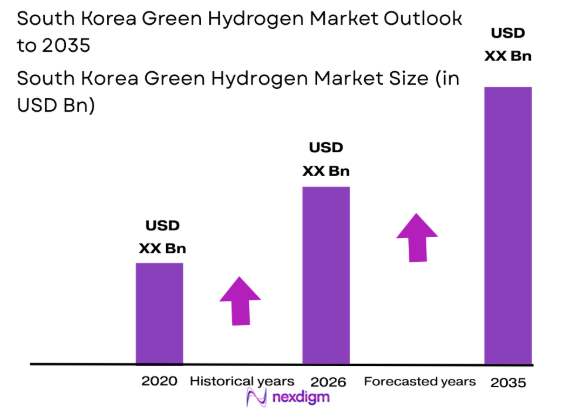
The South Korea Green Hydrogen market is expanding rapidly due to government initiatives promoting renewable energy and a commitment to net-zero emissions. The market size is projected to reach approximately USD ~ billion, driven by robust infrastructure investments, technological advancements, and rising environmental awareness. The country’s transition to clean energy sources has played a pivotal role in shaping the green hydrogen landscape, with the government aiming to establish large-scale production facilities to meet the growing demand.
Dominant players in the South Korea Green Hydrogen market are based in urban centers such as Seoul, where government-backed projects and industry collaborations are concentrated. South Korea’s dominance in this sector is propelled by strong policies aimed at reducing greenhouse gas emissions, coupled with the rapid adoption of hydrogen fuel cell technologies. These regions benefit from superior technological infrastructure, innovation, and international partnerships, positioning them as key players in the global green hydrogen economy.
Market Segmentation
By Product Type
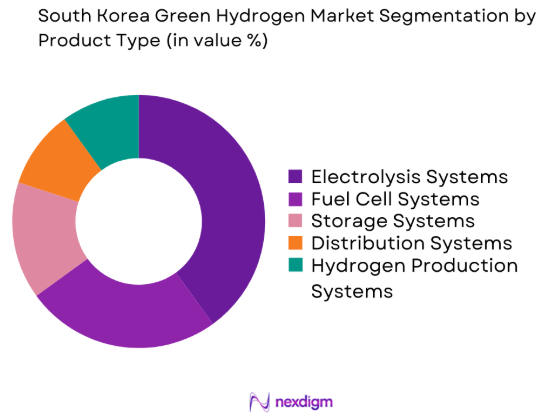
The South Korea Green Hydrogen market is segmented by product type into electrolysis systems, fuel cell systems, storage systems, distribution systems, and hydrogen production systems. Recently, electrolysis systems have dominated the market due to their efficiency and scalability. These systems offer a sustainable method of producing hydrogen by using renewable electricity, making them highly favored for large-scale production. As demand for green hydrogen rises, electrolysis is seen as the backbone of South Korea’s hydrogen economy.
By Platform Type
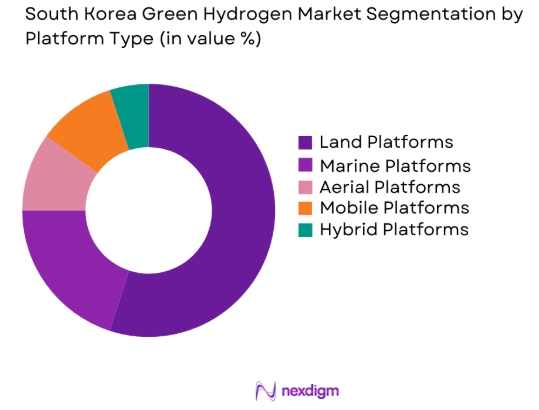
The South Korea Green Hydrogen market is also segmented by platform type into land platforms, marine platforms, aerial platforms, mobile platforms, and hybrid platforms. Among these, land platforms dominate the market, largely due to their cost-effectiveness and ease of implementation. Land-based hydrogen production and storage systems are integral to industrial and transportation applications. These platforms benefit from existing infrastructure, making them the most common choice for large-scale operations across the nation.
Competitive Landscape
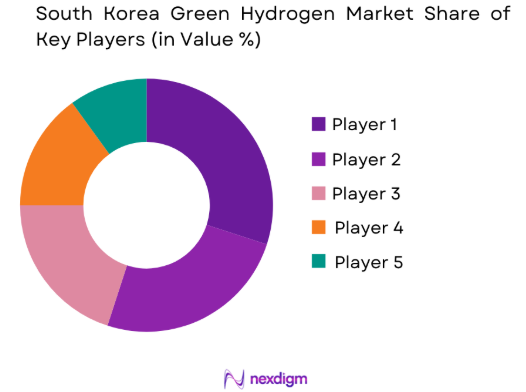
The South Korea Green Hydrogen market is highly competitive, with major players driving innovation and expanding their market presence. Companies such as Hyundai Motor, POSCO, and SK Innovation lead the way with advanced technologies and large-scale production capabilities. The market is expected to experience consolidation as these players form strategic partnerships with local and global entities to leverage resources and expand their operational capabilities. These companies are poised to influence market dynamics and drive the growth of green hydrogen across Asia.
| Company Name | Establishment Year | Headquarters | Technology Focus | Market Reach | Key Products | Revenue (USD) | Additional Parameter |
| Hyundai Motor Company | 1967 | Seoul, South Korea | ~ | ~ | ~ | ~ | ~ |
| POSCO | 1968 | Pohang, South Korea | ~ | ~ | ~ | ~ | ~ |
| SK Innovation | 1962 | Seoul, South Korea | ~ | ~ | ~ | ~ | ~ |
| Doosan Heavy Industries | 1937 | Seoul, South Korea | ~ | ~ | ~ | ~ | ~ |
| Hanwha Q Cells | 2010 | Seoul, South Korea | ~ | ~ | ~ | ~ | ~ |
South Korea Green Hydrogen Market Analysis
Growth Drivers
Technological Advancements
Technological advancements in hydrogen production and storage systems have been a key driver of the South Korea Green Hydrogen market. Improvements in electrolysis efficiency and fuel cell technologies have made hydrogen production more cost-effective and scalable. Companies like Hyundai Motor and SK Innovation are heavily investing in research and development, which helps lower production costs and make green hydrogen a more viable alternative to traditional fuels. These technological breakthroughs are also enabling the integration of hydrogen solutions across industries such as transportation and energy, supporting the market’s growth and positioning hydrogen as a critical component of the country’s clean energy transition.
Government Support
The South Korean government plays a vital role in driving the growth of the green hydrogen market by offering incentives, subsidies, and a supportive policy framework. Key initiatives, such as the Hydrogen Economy Roadmap, aim to establish South Korea as a global leader in hydrogen production and use. These efforts encourage private sector investment and foster collaboration through public-private partnerships. Additionally, the government’s substantial investments in hydrogen infrastructure are helping to accelerate the market’s development. These initiatives are aligned with South Korea’s broader carbon neutrality goals, aiming to reduce dependence on fossil fuels and strengthen the nation’s position in the global clean energy transition.
Market Challenges
High Production Costs
A significant challenge for the South Korea Green Hydrogen market is the high production cost. The infrastructure needed for hydrogen production, such as electrolyzers and fuel cells, remains costly. Moreover, the reliance on renewable energy sources for electrolysis means that green hydrogen costs are directly impacted by electricity prices, which can fluctuate. While technological advancements and economies of scale are expected to reduce production costs in the long term, these initial barriers still hinder broader market adoption. The high capital expenditure for infrastructure, coupled with the price volatility of renewable energy, continues to pose obstacles to the widespread deployment of green hydrogen in South Korea.
Regulatory Hurdles
Although the South Korean government has shown strong support for green hydrogen, regulatory and certification challenges remain significant. The complexity of certification standards and safety protocols often causes delays, increasing the time required for project development. Despite South Korea’s commitment to a hydrogen economy, its regulatory framework needs to evolve to keep up with technological advancements and global standards. These outdated or rigid regulations may slow the market’s progress, preventing faster integration of hydrogen technologies. The need for updated regulatory policies to align with emerging trends is crucial to accelerating the deployment of green hydrogen solutions and fully unlocking their potential in the country.
Opportunities
Integration with Renewable Energy
The integration of green hydrogen with renewable energy sources offers substantial opportunities for South Korea. As the country increases its renewable energy capacity, green hydrogen can serve as an effective storage solution for surplus electricity generated from wind and solar power. This integration will help stabilize the energy grid and reduce reliance on fossil fuels for power generation. By optimizing hydrogen production using renewable energy, South Korea can strengthen its clean energy objectives, enhance energy security, and contribute significantly to global decarbonization efforts. This synergy between green hydrogen and renewable energy is a key step in South Korea’s transition to a sustainable, low-carbon economy.
International Collaborations
South Korea’s green hydrogen market presents significant opportunities for international collaborations. The country’s advanced technological infrastructure positions it well to partner with nations like Japan, Australia, and countries in the European Union, all of which are making substantial investments in hydrogen technologies. These partnerships can facilitate the transfer of technology, increase market access, and drive competitive pricing through shared expertise and resources. By focusing on hydrogen export, South Korea can strengthen its presence in the global green hydrogen market. These collaborations not only enhance the country’s position in the hydrogen economy but also contribute to the global shift toward clean energy solutions, providing long-term growth prospects for South Korea in the renewable energy sector.
Future Outlook
The South Korea Green Hydrogen market is poised for substantial growth in the next five years, driven by technological innovation, increasing government investments, and a robust regulatory environment. The integration of green hydrogen with renewable energy sources is expected to become a key factor in enhancing energy security. As the government continues to support hydrogen infrastructure development, South Korea is likely to solidify its position as a leading player in the global green hydrogen market.
Major Players
- Hyundai Motor Company
- POSCO
- SK Innovation
- Doosan Heavy Industries
- Hanwha Q Cells
- LG Chem
- Samsung Engineering
- GS Caltex
- Hyundai Engineering
- Korea Gas Corporation
- Daewoo Shipbuilding & Marine Engineering
- Lotte Chemical
- Korea Electric Power Corporation (KEPCO)
- S-Oil Corporation
- Mitsubishi Heavy Industries
Key Target Audience
- Investments and venture capitalist firms
- Government and regulatory bodies
- Hydrogen fuel cell manufacturers
- Green energy companies
- Industrial manufacturers using hydrogen
- Energy producers and distributors
- Hydrogen infrastructure developers
- Private sector companies focused on clean technologies
Research Methodology
Step 1: Identification of Key Variables
Identify the key drivers, challenges, and trends that influence the South Korea Green Hydrogen market, considering technology, government policy, and market demand.
Step 2: Market Analysis and Construction
Analyze existing data and construct a comprehensive model of the market using market size, segmentation, and growth factors.
Step 3: Hypothesis Validation and Expert Consultation
Validate market assumptions through expert consultations, interviews with industry stakeholders, and secondary research from reliable sources.
Step 4: Research Synthesis and Final Output
Consolidate findings into a final report, ensuring the inclusion of market insights, forecasts, and actionable recommendations for stakeholders.

- Executive Summary
- Research Methodology (Definitions, Scope, Industry Assumptions, Market Sizing Approach, Primary & Secondary Research Framework, Data Collection & Verification Protocol, Analytic Models & Forecast Methodology, Limitations & Research Validity Checks)

- Market Definition and Scope
- Value Chain & Stakeholder Ecosystem
- Regulatory / Certification Landscape
- Sector Dynamics Affecting Demand
- Strategic Initiatives & Infrastructure Growth

- Growth Drivers
Increased Government Investment in Renewable Energy
Technological Advancements in Hydrogen Production
Expansion of Green Hydrogen Infrastructure - Market Challenges
High Capital Expenditure for Infrastructure
Technological Integration and Scalability
Regulatory and Policy Uncertainty - Market Opportunities
Growing Demand for Clean Energy Solutions
Strategic Partnerships with Private Sector
Expansion into Export Markets - Trends
Shift Towards Decarbonization in Industrial Sectors
Adoption of Hydrogen as an Alternative Fuel
Technological Innovations in Hydrogen Storage - Government Regulations
- SWOT Analysis of Key Competitors
- Porter’s Five Forces

- By Market Value, 2020-2025
- By Installed Units, 2020-2025
- By Average System Price, 2020-2025
- By System Complexity Tier, 2020-2025

- By System Type (In Value%)
Electrolysis Systems
Fuel Cell Systems
Storage Systems
Distribution Systems
Hydrogen Production Systems - By Platform Type (In Value%)
Land Platforms
Marine Platforms
Aerial Platforms
Mobile Platforms
Hybrid Platforms - By Fitment Type (In Value%)
On-premise Solutions
Cloud-based Solutions
Hybrid Solutions
Modular Solutions
Integrated Solutions - By End User Segment (In Value%)
Industrial Sector
Transportation Sector
Energy Sector
Commercial Sector
Residential Sector - By Procurement Channel (In Value%)
Direct Procurement
Government Tenders
Private Sector Procurement
Online Bidding Platforms
Third-party Distributors

- Growth Drivers
Increased Government Investment in Renewable Energy
Technological Advancements in Hydrogen Production
Expansion of Green Hydrogen Infrastructure - Market Challenges
High Capital Expenditure for Infrastructure
Technological Integration and Scalability
Regulatory and Policy Uncertainty - Market Opportunities
Growing Demand for Clean Energy Solutions
Strategic Partnerships with Private Sector
Expansion into Export Markets - Trends
Shift Towards Decarbonization in Industrial Sectors
Adoption of Hydrogen as an Alternative Fuel
Technological Innovations in Hydrogen Storage - Government Regulations
- SWOT Analysis of Key Competitors
- Porter’s Five Forces

- Increasing Adoption of Hydrogen in Transportation
- Growing Industrial Demand for Clean Energy
- Government-driven Green Hydrogen Projects
- Rising Investments in Renewable Energy Infrastructure

- Forecast Market Value, 2026-2035
- Forecast Installed Units, 2026-2035
- Price Forecast by System Tier, 2026-2035
- Future Demand by Platform, 2026-2035


 Request a Sample
 Ask for Customization
 Get a Quote
 Enquire Now