
 Download PDF
 Download PDF
Market Overview
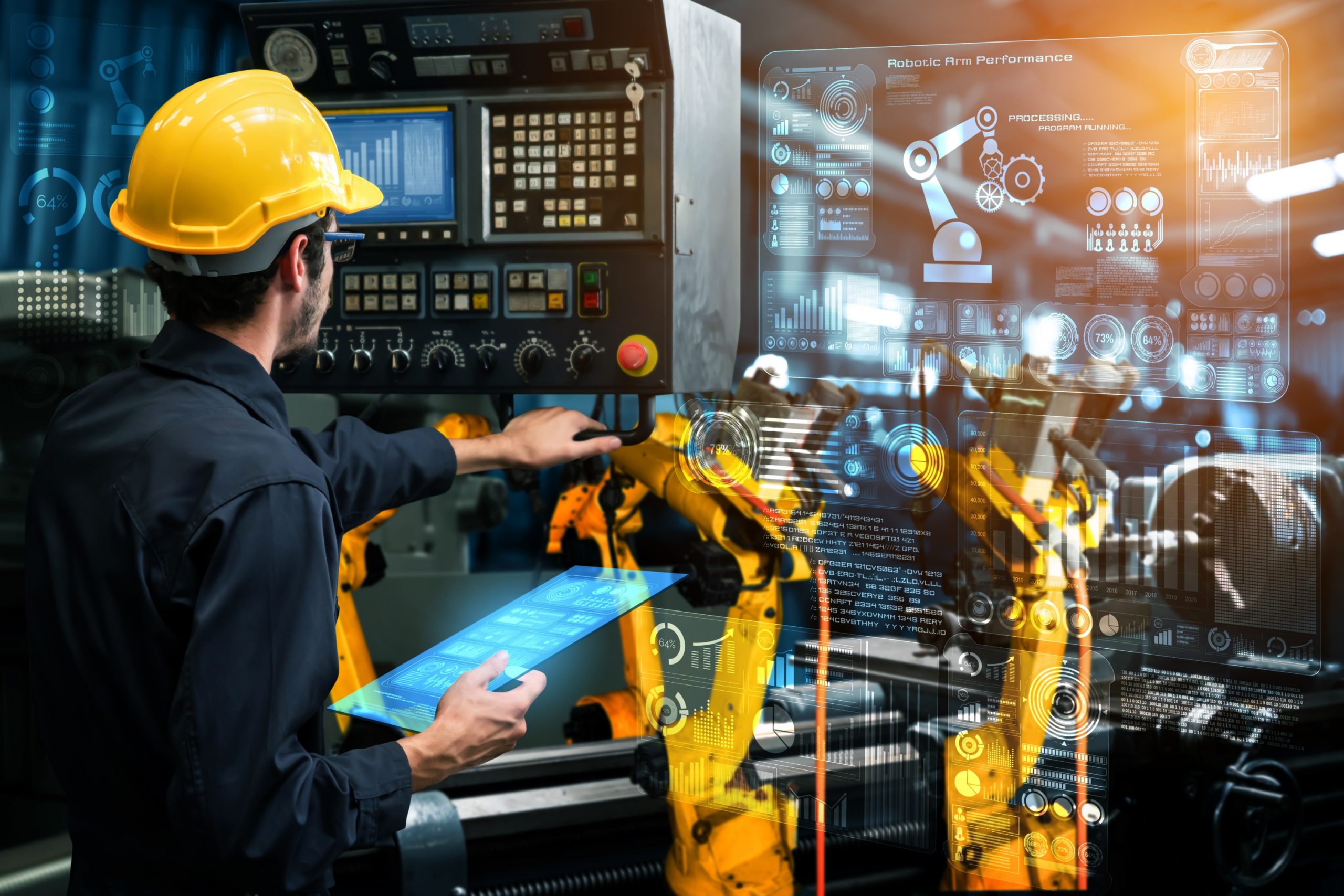
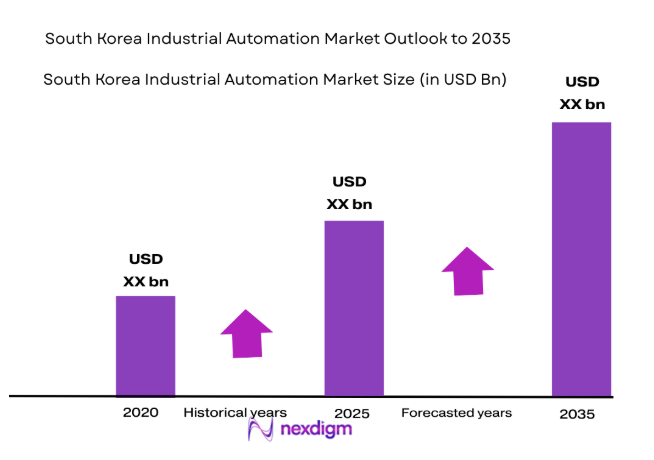
The South Korea industrial automation market is currently valued in billions ~ USD and continues to experience significant growth due to advancements in automation technologies. The demand for industrial robots, control systems, and AI-driven solutions is propelling the market forward, as industries focus on enhancing operational efficiency and reducing production costs. According to recent reports, the market size is driven by strong government support for automation and Industry 4.0 initiatives, increasing investments in smart manufacturing, and a growing adoption of digital transformation solutions across various sectors.
South Korea remains a dominant player in the industrial automation landscape, with cities like Seoul and Busan leading the way due to their strong technological infrastructure and concentration of manufacturing industries. The country’s industrial automation growth is largely supported by its robust semiconductor, automotive, and electronics sectors, which demand cutting-edge automation systems for enhanced productivity. Additionally, government programs and incentives designed to promote digital manufacturing and smart factory initiatives further solidify South Korea’s position as a leader in the industrial automation sector.
Market Segmentation
By Product Type
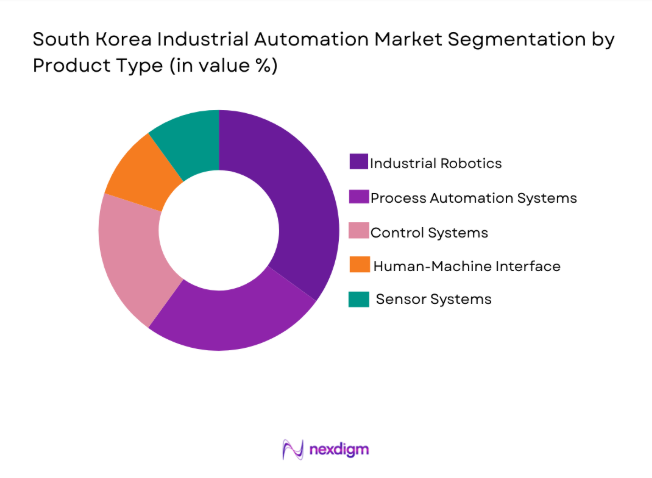
The South Korea industrial automation market is segmented by product type into industrial robotics, process automation systems, control systems, human-machine interface (HMI) systems, and sensor systems. Recently, industrial robotics has dominated the market share due to its increasing adoption in manufacturing and automotive sectors. With advancements in robotic technology, such as collaborative robots (cobots) and AI integration, these systems offer enhanced efficiency, flexibility, and cost savings, leading to widespread implementation. As industries shift towards automation to meet rising production demands, robotics stands out as the key enabler for scaling operations.
By Platform Type
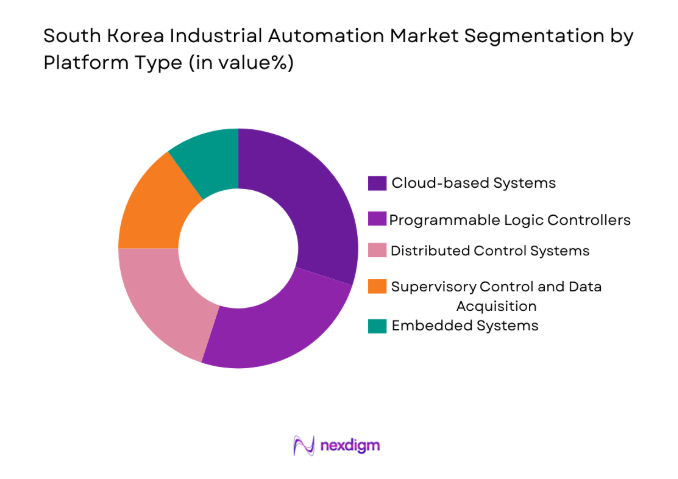
The South Korea industrial automation market is segmented by platform type into programmable logic controllers (PLC), distributed control systems (DCS), supervisory control and data acquisition (SCADA) systems, embedded systems, and cloud-based systems. Recently, cloud-based systems have gained dominance due to their scalability and ease of integration. These platforms enable real-time data analysis, remote monitoring, and system management, improving operational efficiency. The growing adoption of IoT and AI-driven solutions further drives the shift towards cloud-based platforms, helping manufacturers optimize resources and enhance connectivity.
Competitive Landscape
The competitive landscape in the South Korea industrial automation market is characterized by both established global players and innovative local companies. Market consolidation is ongoing, with major players acquiring smaller tech firms to expand their automation portfolios. The influence of global companies, combined with South Korea’s technological advancements and government support, strengthens the overall competitive dynamics.
| Company Name | Establishment Year | Headquarters | Technology Focus | Market Reach | Key Products | Revenue | Additional Parameter |
| Hyundai Robotics | 2002 | Seoul, South Korea | ~ | ~ | ~ | ~ | ~ |
| Samsung Electronics | 1969 | Seoul, South Korea | ~ | ~ | ~ | ~ | ~ |
| LG Electronics | 1958 | Seoul, South Korea | ~ | ~ | ~ | ~ | ~ |
| ABB | 1988 | Zurich, Switzerland | ~ | ~ | ~ | ~ | ~ |
| Rockwell Automation | 1903 | Milwaukee, USA | ~ | ~ | ~ | ~ | ~ |
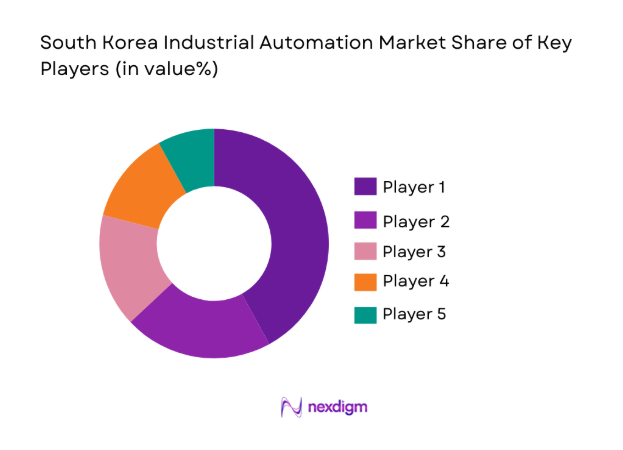
South Korea Industrial Automation Market Analysis
Growth Drivers
Technological Advancements in Robotics
The rapid development of robotics technology is one of the primary drivers of the South Korea industrial automation market. Robotic systems are increasingly integrated into manufacturing processes, particularly in the automotive and electronics industries. Innovations such as collaborative robots (cobots) that work alongside human workers and AI-driven robots that enhance operational efficiency are contributing significantly to market growth. These advancements enable manufacturers to automate complex tasks, reduce human error, and lower operational costs. With robots becoming more flexible and affordable, their adoption rate is expected to rise sharply, driving growth in the market. The increasing focus on improving productivity and maintaining competitiveness in global markets further fuels the demand for robotics solutions. This trend, combined with government incentives supporting automation, is expected to lead to significant market expansion. Robotic technologies are also expanding into new industries, including pharmaceuticals and food production, which were previously reliant on manual labor, ensuring broad adoption across the economy.
Rising Demand for Automation in Manufacturing
As industries strive to enhance production efficiency and meet global competitive standards, the demand for automation solutions has surged. Automation in manufacturing allows for streamlined processes, reduced downtime, and enhanced precision. In South Korea, this is particularly noticeable in the automotive and semiconductor industries, where high output and precision are essential. The rise in consumer demand for faster and more cost-effective production of high-quality products is pushing manufacturers to adopt automation technologies. Additionally, automation helps to mitigate labor shortages and the risk of human error, allowing for more consistent and reliable manufacturing processes. This demand across various sectors, particularly in the manufacturing and electronics industries, will continue to drive the growth of the industrial automation market.
Market Challenges
High Initial Capital Investment
One of the major challenges for the South Korea industrial automation market is the high initial capital investment required to implement automation systems. While automation offers long-term cost savings, the upfront cost of purchasing and integrating robotic systems, control systems, and other automation technologies can be prohibitive for small and medium-sized enterprises. Many businesses are hesitant to make such large investments without guaranteed short-term returns, limiting the overall market penetration of automation solutions. This challenge is particularly pronounced in industries with tight margins, where businesses prioritize reducing costs and improving efficiency but lack the capital to invest in expensive technology upfront. Additionally, the complexity involved in integrating new systems into existing infrastructure further increases the overall cost of adoption. As a result, businesses must evaluate the financial viability of automation systems, weighing initial investments against long-term savings. Governments and financial institutions are increasingly offering funding and tax incentives to address this challenge, but the high cost remains a significant barrier.
Integration of Legacy Systems
A significant challenge for businesses adopting industrial automation is the integration of new systems with existing legacy infrastructure. Many companies still rely on outdated machinery and control systems that are not compatible with modern automation technologies. The complexity of integrating these old systems with new robotic solutions, AI-driven software, and IoT platforms can lead to significant delays, additional costs, and operational disruptions. This issue is particularly prevalent in industries where legacy systems are deeply ingrained in the production process, and the switch to fully automated systems requires careful planning, system upgrades, and significant downtime, impacting overall productivity.
Opportunities
Government Support for Industry 4.0 Initiatives
The South Korean government’s commitment to Industry 4.0 and digital transformation presents a significant opportunity for the industrial automation market. With initiatives aimed at modernizing manufacturing facilities, increasing productivity, and improving workforce efficiency, the government is heavily investing in automation and smart factory programs. These initiatives are designed to foster technological innovation, reduce dependency on manual labor, and maintain South Korea’s competitiveness in global markets. By supporting the adoption of advanced technologies such as AI, IoT, and robotics, the government is creating a favorable environment for the growth of the automation market. This presents an opportunity for businesses in the automation sector to expand their offerings and provide innovative solutions to meet the demand from manufacturers looking to upgrade their facilities. Furthermore, public-private partnerships are becoming more common, encouraging investments in automation infrastructure and reducing the financial burden on companies.
Expanding Applications of Artificial Intelligence and Machine Learning
The integration of artificial intelligence (AI) and machine learning (ML) with automation technologies presents a significant opportunity for the South Korean market. AI and ML are being used to enhance decision-making processes, optimize production workflows, and improve predictive maintenance capabilities in automated systems. This integration allows manufacturers to monitor equipment health in real-time, predict failures before they occur, and optimize production schedules for maximum efficiency. AI-driven automation not only improves operational performance but also reduces human intervention, making processes more streamlined and cost-effective. As AI technology continues to evolve and become more accessible, its application in industrial automation will expand, driving further growth in the market.
Future Outlook
The South Korea industrial automation market is poised for steady growth in the coming years. Expected technological advancements in AI, robotics, and IoT are set to revolutionize manufacturing and other industries. Government support for digital transformation, combined with rising demand for productivity enhancement, will continue to fuel market expansion. The increasing adoption of smart factories, coupled with cost-effective automation solutions, will drive demand across various sectors. This growing shift towards automation will be further strengthened by regulations aimed at improving industrial efficiency and safety.
Major Players
- Hyundai Robotics
- Samsung Electronics
- LG Electronics
- ABB
- Rockwell Automation
- Fanuc Corporation
- Siemens AG
- Mitsubishi Electric
- Yaskawa Electric Corporation
- KUKA Robotics
- Bosch Rexroth
- Emerson Electric Co.
- National Instruments
- Schneider Electric
- Honeywell International
Key Target Audience
- Investments and venture capitalist firms
- Government and regulatory bodies
- Manufacturing and automotive industries
- Electronics and semiconductor companies
- Pharmaceutical and food industries
- Automation technology providers
- System integrators
Research Methodology
Step 1: Identification of Key Variables
This step involves identifying the primary factors that impact the industrial automation market, such as technological advancements, market demand, and regulatory influences.
Step 2: Market Analysis and Construction
In this phase, a detailed analysis is conducted to evaluate the current market landscape, competition, and market segmentation. Data is gathered through secondary research and expert insights.
Step 3: Hypothesis Validation and Expert Consultation
At this stage, the initial hypothesis formed from secondary research is validated through consultations with industry experts, including manufacturers and technology providers.
Step 4: Research Synthesis and Final Output
The final step synthesizes the gathered data into a comprehensive market report, summarizing key findings, trends, and future forecasts.

- Executive Summary
- Research Methodology (Definitions, Scope, Industry Assumptions, Market Sizing Approach, Primary & Secondary Research Framework, Data Collection & Verification Protocol, Analytic Models & Forecast Methodology, Limitations & Research Validity Checks)

- Market Definition and Scope
- Value Chain & Stakeholder Ecosystem
- Regulatory / Certification Landscape
- Sector Dynamics Affecting Demand
- Strategic Initiatives & Infrastructure Growth

- Growth Drivers
Increased Adoption of Industry 4.0 Technologies
Rising Demand for Automation in Manufacturing
Government Support for Digital Transformation - Market Challenges
High Initial Investment Costs
Integration of Legacy Systems
Cybersecurity Risks - Market Opportunities
Growing Demand for Robotics in Manufacturing
Integration of Artificial Intelligence with Automation
Expansion of Smart Factories - Trends
Shift Towards Cloud-based Automation Solutions
Rising Use of Artificial Intelligence in Industrial Processes - Government Regulations
- SWOT Analysis
- Porter’s Five Forces

- By Market Value, 2020-2025
- By Installed Units, 2020-2025
- By Average System Price, 2020-2025
- By System Complexity Tier, 2020-2025

- By System Type (In Value%)
Industrial Robotics
Process Automation Systems
Control Systems
Human-Machine Interface (HMI) Systems
Sensor Systems - By Platform Type (In Value%)
Programmable Logic Controllers (PLC)
Distributed Control Systems (DCS)
Supervisory Control and Data Acquisition (SCADA) Systems
Embedded Systems
Cloud-based Systems - By Fitment Type (In Value%)
On-premise Solutions
Cloud-based Solutions
Modular Solutions
Integrated Solutions - By End User Segment (In Value%)
Manufacturing
Automotive
Electronics & Semiconductor
Food & Beverage
Pharmaceutical

- Market Share Analysis
- Cross Comparison Parameters (System Type, Platform Type, End User Segment, Fitment Type, Market Value, Installed Units, System Complexity Tier)
- SWOT Analysis of Key Competitors
- Pricing & Procurement Analysis
- Key Players
Samsung Electronics
Hyundai Robotics
LS Industrial Systems
Rockwell Automation
Yokogawa Electric Corporation
KUKA Robotics
Siemens AG
Mitsubishi Electric
ABB
Fanuc Corporation
Schneider Electric
Honeywell International
Bosch Rexroth
Emerson Electric Co.
National Instruments

- Manufacturers’ Increasing Focus on Efficiency
- Automotive Sector’s Investment in Automation
- Electronics Industry’s Adoption of Robotics
- Pharmaceutical Industry’s Demand for Precise Automation

- Forecast Market Value, 2026-2035
- Forecast Installed Units, 2026-2035
- Price Forecast by System Tier, 2026-2035
- Future Demand by Platform, 2026-2035


 Request a Sample
 Ask for Customization
 Get a Quote
 Enquire Now