
 Download PDF
 Download PDF
Market Overview
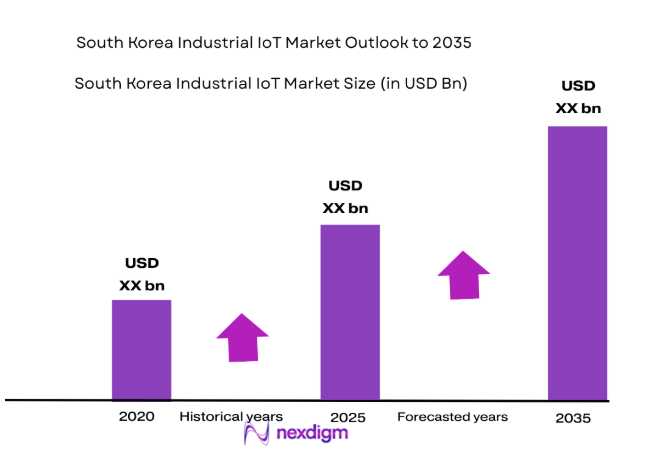
The South Korea Industrial IoT market is expected to witness strong growth driven by the increasing demand for automation, smart manufacturing, and the integration of AI and IoT technologies. The market size, based on recent historical assessments, is valued at USD ~ billion. Major sectors such as automotive, electronics, and manufacturing are rapidly adopting these technologies to improve operational efficiency, reduce downtime, and enhance productivity. The government’s focus on smart city initiatives and Industry 4.0 has been instrumental in creating a favorable environment for IoT adoption. Moreover, the development of connected devices and real-time data analytics further bolsters the market’s expansion.
Key cities such as Seoul, Busan, and Incheon dominate the market due to their advanced infrastructure and the presence of leading technology companies like Samsung Electronics and SK hynix. These cities are also central to South Korea’s industrial strategy, fostering innovation in areas like smart factories and automated supply chains. Seoul’s role as a technological hub, coupled with government policies supporting digital transformation, has cemented its position as a key driver for IoT adoption. The concentration of businesses in these regions accelerates the growth of the Industrial IoT market across the country.
Market Segmentation
By Product Type
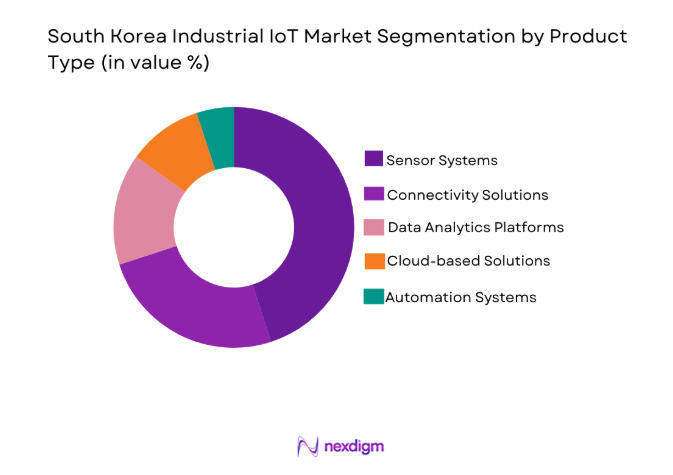
The South Korea Industrial IoT market is segmented by product type into sensor systems, connectivity solutions, data analytics platforms, cloud-based solutions, and automation systems. Sensor systems are the dominant sub-segment, as they enable real-time data collection for predictive maintenance and efficiency improvements. Connectivity solutions ensure seamless communication between devices, while data analytics platforms provide actionable insights from the data. Cloud-based solutions and automation systems further integrate IoT into industrial operations, enhancing flexibility and streamlining processes.
By Platform Type
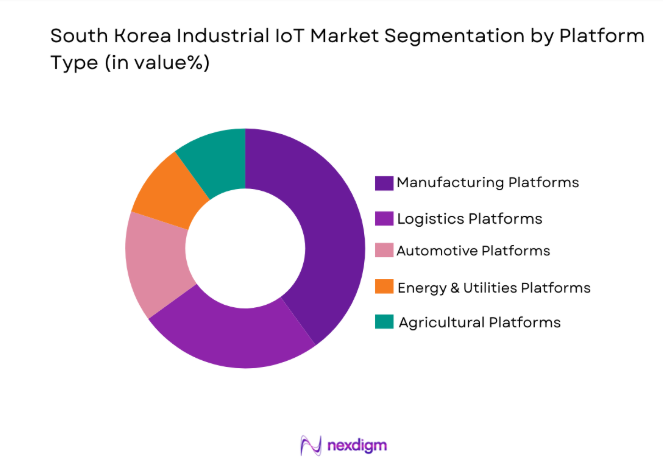
The market is segmented by platform type into manufacturing platforms, logistics platforms, automotive platforms, energy and utilities platforms, and agricultural platforms. Manufacturing platforms dominate due to widespread IoT adoption in smart factories for improved efficiency. Logistics platforms leverage IoT for real-time tracking and automated inventory management. Automotive platforms focus on connected vehicles and fleet management. Energy and utilities platforms use IoT for smart grid management, while agricultural platforms adopt IoT for precision farming and environmental monitoring.
Competitive Landscape
The competitive landscape of the South Korea Industrial IoT market is characterized by the presence of several global and local players driving technological advancements. These companies focus on product innovations, partnerships, and acquisitions to maintain competitive advantages. Leading players include Samsung Electronics, LG Electronics, and SK hynix, which significantly influence the market with their IoT-integrated product portfolios and strong regional presence. The market is also witnessing a wave of consolidation, with companies collaborating to develop end-to-end solutions for industries such as manufacturing, logistics, and automotive.
| Company Name | Establishment Year | Headquarters | Technology Focus | Market Reach | Key Products | Revenue (USD Billion) | IoT Device Integration Focus |
| Samsung Electronics | 1938 | Seoul, Korea | ~ | ~ | ~ | ~ | ~ |
| LG Electronics | 1958 | Seoul, Korea | ~ | ~ | ~ | ~ | ~ |
| SK hynix | 1983 | Icheon, Korea | ~ | ~ | ~ | ~ | ~ |
| Hyundai Heavy Industries | 1972 | Ulsan, Korea | ~ | ~ | ~ | ~ | ~ |
| Doosan Infracore | 1937 | Seoul, Korea | ~ | ~ | ~ | ~ | ~ |
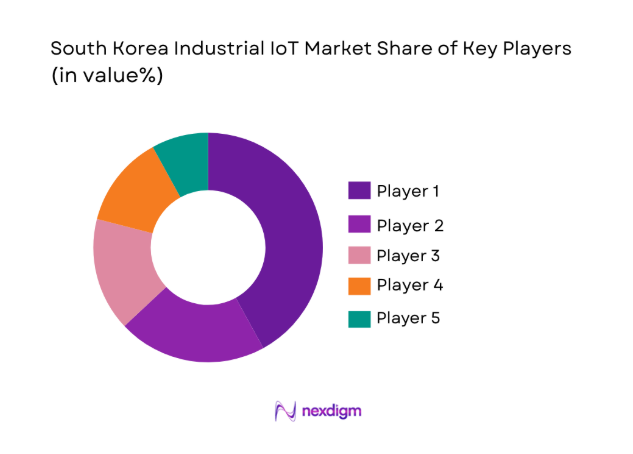
South Korea Industrial IoT Market Analysis
Growth Drivers
Government Support for Digital Transformation
South Korea’s government has become a pivotal force in the widespread adoption of Industrial IoT. The country’s proactive stance on smart manufacturing, Industry 4.0, and automation across various industries is reflected in a series of supportive policies and funding programs. For instance, the “Smart Factory Roadmap” has laid out a clear and strategic path for industries to modernize their operations by adopting IoT technologies, with the government offering financial incentives and tax rebates to businesses that invest in digital transformation. These initiatives are designed to stimulate IoT adoption in the manufacturing sector and beyond. The government’s commitment to developing smart cities also aligns with the expansion of IoT, creating an ecosystem where connected solutions can thrive. Furthermore, South Korea is heavily investing in research and development, which accelerates technological advancements in IoT. This support is fundamental in helping businesses modernize and stay competitive on the global stage. The government’s continuous focus on innovation within the IoT sector positions South Korea as a global leader in this field, ensuring sustained growth for Industrial IoT technologies.
Technological Advancements in AI and Robotics
Technological progress in AI and robotics is a driving force behind the growth of the Industrial IoT market in South Korea. The integration of AI with IoT systems allows businesses to leverage the power of real-time data processing and intelligent decision-making, significantly improving operational efficiency. In industries like automotive, electronics, and logistics, the combination of AI with IoT solutions optimizes manufacturing processes by enabling predictive maintenance and reducing costly downtimes. AI systems, by analyzing vast amounts of data from connected devices, can anticipate issues before they occur, which helps businesses optimize resources and avoid expensive repairs. Moreover, the rise of robotics, particularly collaborative robots (cobots) and autonomous systems, is revolutionizing the industrial sector. These robots work alongside human workers to improve productivity and efficiency while reducing the potential for human error. The development of autonomous systems that perform repetitive or hazardous tasks further enhances workplace safety and operational effectiveness. These advancements are pushing the demand for IoT solutions higher, as companies in South Korea seek to automate and enhance their processes through cutting-edge technologies.
Market Challenges
High Initial Capital Investment
One of the most significant barriers to the widespread adoption of Industrial IoT in South Korea is the high initial capital investment required to set up IoT infrastructure. While the long-term benefits, such as enhanced efficiency, improved productivity, and reduced maintenance costs, are well established, many small and medium-sized enterprises (SMEs) face considerable challenges in financing these upfront costs. Sensors, connectivity solutions, data analytics platforms, and the integration of these components can involve substantial financial outlay. For businesses operating on tighter budgets, these initial costs can make it difficult to justify the investment. This challenge is particularly pronounced in industries where the ROI from IoT solutions is not immediately apparent, or where the upfront costs are seen as a significant financial risk. Furthermore, the need for skilled personnel to manage, maintain, and integrate these systems adds another layer of expense, making it harder for smaller businesses to capitalize on IoT opportunities. These financial challenges may slow down the overall adoption of Industrial IoT, especially among SMEs who are reluctant to commit to expensive long-term technology investments without a clear and immediate return on investment.
Cybersecurity Risks and Vulnerabilities
The rise of interconnected IoT devices across various industries in South Korea has significantly increased the exposure to cybersecurity risks. As IoT devices become more integrated into critical industrial operations, they create multiple potential entry points for cyberattacks. These attacks can disrupt operations, compromise sensitive data, and cause significant financial losses. Many IoT devices in industrial environments are still vulnerable due to inadequate security protocols, leaving them susceptible to hacking and unauthorized access. The potential for breaches in critical infrastructure, such as manufacturing plants, energy grids, and logistics systems, is a growing concern. The increasing volume of data flowing between devices and systems makes it an attractive target for cybercriminals. Additionally, regulatory compliance for data protection, privacy, and secure IoT networks is becoming stricter, which presents an additional challenge for businesses. Companies must invest in advanced cybersecurity measures and specialized expertise to safeguard their IoT networks, which can be both time-consuming and costly. Given the scale and severity of these threats, many businesses are hesitant to fully embrace IoT technologies without stronger guarantees for data protection and network security.
Opportunities
Expansion of Smart Manufacturing Solutions
The demand for smart manufacturing solutions is one of the most significant opportunities for the Industrial IoT market in South Korea. As industries seek to modernize and automate their operations, the need for IoT-enabled solutions such as advanced sensors, real-time monitoring systems, and automated production lines is increasing. These technologies allow manufacturers to optimize their operations by providing real-time data on production processes, machine performance, and product quality. With the adoption of IoT, businesses can reduce downtime through predictive maintenance, minimize energy consumption, and improve product consistency. The South Korean government’s focus on Industry 4.0, along with significant investments in automation and technology, provides a fertile ground for the growth of smart manufacturing solutions. As South Korea is already a global leader in manufacturing, industries such as automotive, electronics, and textiles will continue to adopt and expand their use of IoT technologies. By integrating IoT into manufacturing, businesses can streamline their operations, cut operational costs, and improve overall production efficiency, making smart manufacturing a vital opportunity for growth in the market.
Rising Demand for 5G and Connected Devices
The rollout of 5G technology presents a major opportunity for the South Korean Industrial IoT market. 5G offers higher speeds, reduced latency, and more robust connectivity, which are critical factors for enabling real-time data transmission and communication in IoT applications. With 5G’s ability to handle massive volumes of data, industries can now implement even more sophisticated IoT systems that require fast, uninterrupted data flow. This is particularly advantageous for applications in industries like logistics, transportation, and manufacturing, where real-time tracking, automation, and remote monitoring are crucial. The next generation of connected devices, such as autonomous vehicles, industrial robots, and drones, will benefit from the speed and connectivity provided by 5G, further fueling the demand for IoT solutions. As industries continue to adopt 5G-enabled IoT systems, South Korea’s role as one of the early adopters of 5G technology positions it to lead the charge in IoT development. This transition will drive demand for connected devices and real-time solutions, pushing the South Korean Industrial IoT market to new heights.
Future Outlook
The future of South Korea’s Industrial IoT market looks promising, with expected continued growth driven by technological advancements and government support for digital transformation. The integration of AI, robotics, and 5G will further fuel the market, enabling businesses to adopt more efficient and intelligent IoT solutions. Over the next five years, South Korea is expected to maintain its position as a leader in IoT innovation, particularly in sectors such as manufacturing, logistics, and smart cities. The focus on sustainability and energy-efficient solutions will also play a significant role in shaping the future of the market.
Major Players
- Samsung Electronics
- LG Electronics
- SK hynix
- Hyundai Heavy Industries
- Doosan Infracore
- LS Industrial Systems
- Hanwha Q Cells
- Posco ICT
- KT Corporation
- SK Telecom
- Naver Corporation
- Hyosung TNS
- CJ Logistics
- Daewoo Engineering & Construction
- Kolon Industries
Key Target Audience
- Investments and venture capitalist firms
- Government and regulatory bodies
- Manufacturing companies
- Logistics and transportation firms
- Automotive and electronics manufacturers
- Energy and utilities companies
- Smart city developers
Research Methodology
Step 1: Identification of Key Variables
This step involves identifying the primary variables driving the South Korea Industrial IoT market, such as technology trends, regulatory frameworks, and industry adoption rates.
Step 2: Market Analysis and Construction
This phase includes the collection and analysis of data on market size, growth rates, and segmentation from reputable sources, followed by the construction of detailed market models.
Step 3: Hypothesis Validation and Expert Consultation
The initial hypotheses are validated through expert consultations and interviews with industry leaders to ensure accuracy and market relevance.
Step 4: Research Synthesis and Final Output
The final output synthesizes all collected data, providing comprehensive insights into the South Korea Industrial IoT market, including key drivers, challenges, opportunities, and competitive dynamics.

- Executive Summary
- Research Methodology (Definitions, Scope, Industry Assumptions, Market Sizing Approach, Primary & Secondary Research Framework, Data Collection & Verification Protocol, Analytic Models & Forecast Methodology, Limitations & Research Validity Checks)

- Market Definition and Scope
- Value Chain & Stakeholder Ecosystem
- Regulatory / Certification Landscape
- Sector Dynamics Affecting Demand
- Strategic Initiatives & Infrastructure Growth

- Growth Drivers
Government Support for Digital Transformation
Technological Advancements in AI and Robotics
Rise of Smart Manufacturing Solutions - Market Challenges
High Initial Capital Investment
Cybersecurity Risks and Vulnerabilities
Technological Integration Barriers - Market Opportunities
Expansion of Smart Manufacturing Solutions
Rising Demand for 5G and Connected Devices
Emerging IoT Applications in Agriculture - Trends
Increased Use of AI in Industrial IoT
Integration of 5G Technology in Industrial Applications - Government Regulations
Data Protection and Privacy Regulations
Government Incentives for Smart Manufacturing
Industrial IoT Safety Standards - SWOT Analysis
- Porter’s Five Forces

- By Market Value, 2020-2025
- By Installed Units, 2020-2025
- By Average System Price, 2020-2025
- By System Complexity Tier, 2020-2025

- By System Type (In Value%)
Sensor Systems
Connectivity Solutions
Data Analytics Platforms
Cloud-based Solutions
Automation Systems - By Platform Type (In Value%)
Manufacturing Platforms
Logistics Platforms
Automotive Platforms
Energy & Utilities Platforms
Agricultural Platforms - By Fitment Type (In Value%)
On-premise Solutions
Cloud-based Solutions
Hybrid Solutions
Integrated Solutions - By End User Segment (In Value%)
Manufacturing Sector
Logistics & Transportation
Energy & Utilities

- Market Share Analysis
- Cross Comparison Parameters (System Type, Platform Type, Procurement Channel, End User Segment, Fitment Type, Technology Adoption, Regional Presence)
- SWOT Analysis of Key Competitors
- Pricing & Procurement Analysis
- Key Players
Samsung Electronics
LG Electronics
SK hynix
Hyundai Heavy Industries
Doosan Infracore
LS Industrial Systems
Hanwha Q Cells
Posco ICT
KT Corporation
SK Telecom
Naver Corporation
Hyosung TNS
CJ Logistics
Daewoo Engineering & Construction
Kolon Industries

- Increasing Demand for Automation in Manufacturing
- Growing Adoption of IoT in Logistics and Supply Chains
- Government Agencies’ Role in IoT Regulation
- Private Sector’s Investment in IoT Technologies

- Forecast Market Value, 2026-2035
- Forecast Installed Units, 2026-2035
- Price Forecast by System Tier, 2026-2035
- Future Demand by Platform, 2026-2035


 Request a Sample
 Ask for Customization
 Get a Quote
 Enquire Now