

 Download PDF
 Download PDF
Market Overview
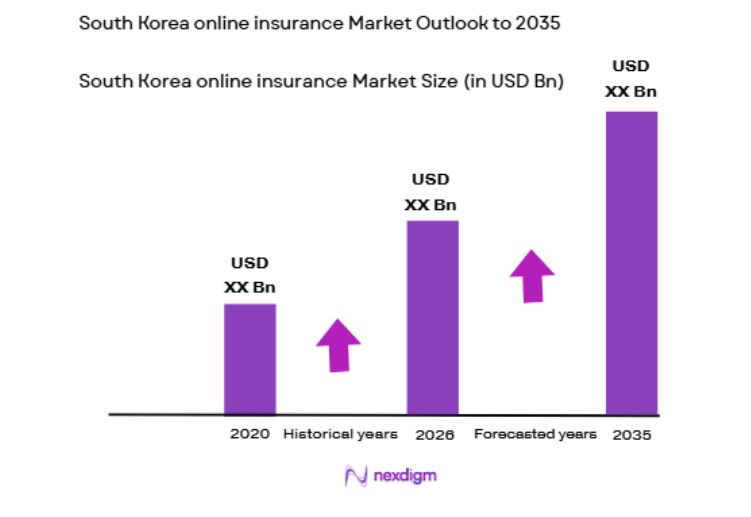
South Korea online insurance market reached approximately USD ~ billion in digital written premiums, based on a recent historical assessment by national financial supervisory statistics and insurer disclosures. Expansion is driven by high broadband penetration, mobile-first financial behavior, and insurer investment in direct-to-consumer digital channels. Health, life, and auto policies dominate online uptake as comparison platforms and embedded insurance models reduce acquisition costs and streamline underwriting through electronic know-your-customer and data-linked risk scoring.
Seoul and Gyeonggi province lead the South Korea online insurance market due to dense urban populations, concentration of digital insurers, and advanced fintech ecosystems enabling seamless onboarding and claims processing. Busan and Incheon follow with strong logistics, port economies, and aging demographics supporting health and protection product demand through online channels. Nationwide dominance reflects universal digital identity infrastructure, interoperable payment rails, and regulatory encouragement of non-face-to-face financial services across metropolitan and secondary cities.
Market Segmentation
By Product Type
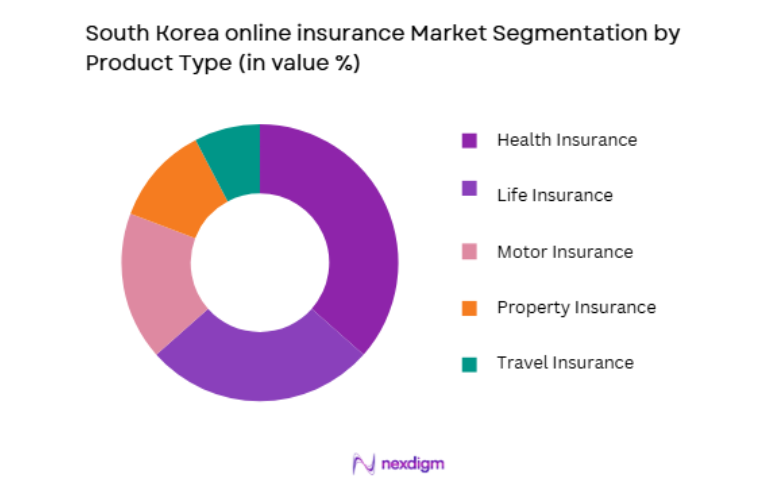
South Korea online insurance market is segmented by product type into life insurance, health insurance, motor insurance, property insurance, and travel insurance. Recently, health insurance has a dominant market share due to factors such as rising medical expenditure awareness, preventive care adoption, and employer-linked supplemental coverage migration to digital purchase journeys. Consumers increasingly prefer modular outpatient and critical illness riders purchasable via apps, supported by wearable data integration and simplified underwriting rules. Insurers prioritize health offerings online because claims digitization and telemedicine partnerships reduce servicing costs and improve retention.
By Distribution Channel
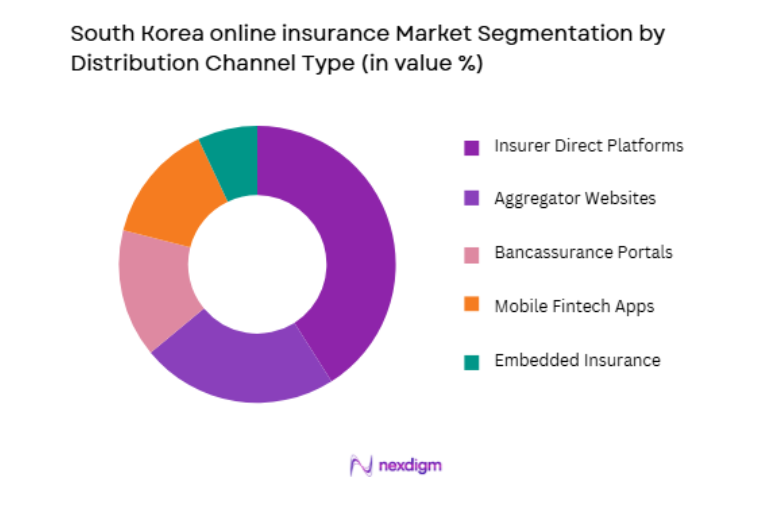
South Korea online insurance market is segmented by distribution channel into insurer direct platforms, aggregator websites, bancassurance portals, mobile fintech apps, and embedded insurance partnerships. Recently, insurer direct platforms have a dominant market share due to factors such as brand trust, integrated servicing, and exclusive digital-only pricing unavailable through intermediaries. Large insurers invest heavily in proprietary apps offering quote-to-claim continuity, loyalty ecosystems, and personalized risk dashboards, encouraging repeat purchases within the same environment. Regulatory clarity on non-face-to-face sales and electronic signatures supports direct issuance at scale, while advanced analytics enable targeted cross-sell of riders and renewals. Aggregators and fintech apps remain influential discovery channels, yet final conversion often occurs on insurer platforms where underwriting data access and product configuration are richer.
Competitive Landscape
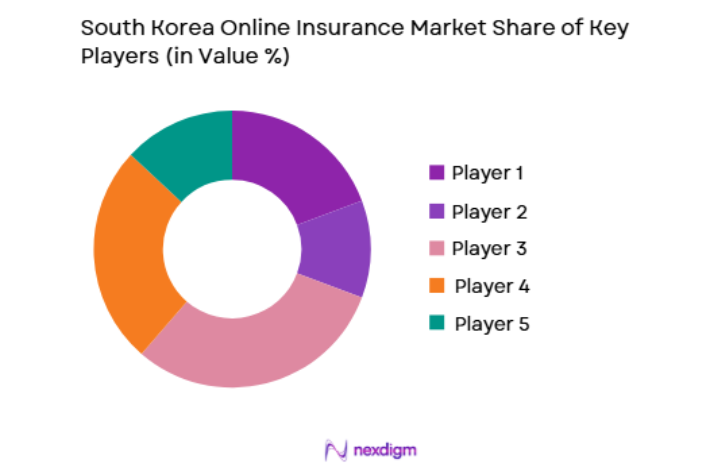
The South Korea online insurance market is moderately consolidated, led by incumbent life and non-life insurers that have digitized distribution and servicing while retaining strong capital bases and brand equity. Major players compete on user experience, pricing analytics, and ecosystem integration with healthcare, mobility, and payments. New digital-first entrants and fintech partnerships intensify price transparency and accelerate product modularization, but incumbents maintain reach through omnichannel migration of existing policyholders into online environments.
| Company Name | Establishment Year | Headquarters | Technology Focus | Market Reach | Key Products | Revenue | Digital Policy Issuance Rate |
| Samsung Life Insurance | 1957 | Seoul | ~ | ~ | ~ | ~ | ~ |
| Kyobo Life Insurance | 1958 | Seoul | ~ | ~ | ~ | ~ | ~ |
| Hanwha Life | 1946 | Seoul | ~ | ~ | ~ | ~ | ~ |
| DB Insurance | 1962 | Seoul | ~ | ~ | ~ | ~ | ~ |
| Hyundai Marine & Fire | 1955 | Seoul | ~ | ~ | ~ | ~ | ~ |
South Korea Online Insurance Market Analysis
Growth Drivers
Mobile-First Consumer Finance Behavior and Digital Identity Infrastructure
South Korea’s near-universal smartphone usage and deeply embedded mobile payments culture have normalized high-value financial transactions on handheld devices, creating a receptive environment for online insurance purchase and servicing journeys that mirror banking and commerce experiences. Government-supported digital identity frameworks and secure electronic signature standards allow insurers to complete know-your-customer, consent, and policy issuance without physical interaction, reducing onboarding friction and compressing acquisition timelines across product categories. Consumers accustomed to real-time app ecosystems expect instant quotes, transparent pricing, and on-demand policy management, prompting insurers to invest in intuitive interfaces, conversational agents, and automated underwriting that deliver immediate coverage confirmation. Data portability across healthcare, mobility, and financial platforms enables richer risk assessment and personalization, strengthening perceived value of tailored policies accessible through mobile dashboards. Younger cohorts entering the workforce prefer self-service purchasing over agent-led sales, while existing policyholders migrate to digital servicing for renewals and endorsements, expanding online premium volumes organically. Insurers benefit from lower distribution costs and higher cross-sell conversion when policyholders remain within proprietary apps integrated with wellness, driving, or home monitoring services.
Health Ecosystem Integration and Preventive Insurance Models
South Korea’s advanced healthcare system, widespread electronic medical records, and growing consumer interest in preventive wellness create fertile conditions for digitally distributed health insurance products that link coverage to lifestyle monitoring and care navigation services. Insurers partner with hospitals, telemedicine providers, and wearable device platforms to embed risk assessment and ongoing engagement into policyholder experiences, enabling dynamic pricing, reward-based adherence programs, and proactive claims management delivered entirely online. Consumers perceive added utility when insurance apps aggregate appointments, medication reminders, and health metrics alongside policy benefits, encouraging purchase and retention through direct digital channels rather than traditional intermediaries. Regulatory openness to electronic medical data linkage, with appropriate consent, supports automated underwriting and faster claims adjudication, improving satisfaction and trust in online health policies. Aging demographics and chronic disease prevalence heighten demand for supplemental coverage addressing outpatient costs, critical illness, and long-term care, categories well suited to modular digital configuration and renewal.
Market Challenges
Stringent Data Privacy Regulation and Consumer Trust Sensitivities
South Korea enforces rigorous personal information protection standards governing collection, storage, and cross-platform use of financial and health data, imposing compliance complexity on insurers seeking to leverage analytics and ecosystem integrations within online insurance offerings. Consent management, data minimization, and breach liability requirements elevate operational costs and slow deployment of personalized underwriting models that depend on continuous data flows from wearables, healthcare providers, and mobility services. High public awareness of privacy risks amplifies reputational exposure from any incident, compelling insurers to prioritize security architecture and conservative data practices that may limit innovation pace in digital channels. Interoperability constraints across institutions and evolving regulatory interpretations create uncertainty for partnerships central to embedded and ecosystem insurance models.
Legacy Distribution Structures and Agent Channel Cannibalization Risks
South Korea’s insurance industry historically relies on extensive tied-agent and broker networks that remain influential in life and long-term protection products, creating strategic tension as insurers expand direct online channels that could erode intermediary relationships and commission economics. Internal channel conflict can slow product digitization, limit exclusive online pricing, and constrain marketing investment in direct platforms to avoid alienating agents who control significant existing policyholder bases. Complex legacy policy administration systems designed for agent-mediated sales complicate seamless online configuration, underwriting, and servicing, requiring costly core modernization before full digital migration can occur. Incentive realignment across distribution partners demands organizational change management and careful transition planning to preserve retention while shifting acquisition toward lower-cost online pathways.
Opportunities
Embedded Insurance Across Mobility, E-Commerce, and Smart Home Platforms
South Korea’s dense digital commerce and mobility ecosystems provide scalable entry points for contextual insurance offers integrated at the moment of need, such as ride-hailing trip coverage, parcel protection at checkout, and device or home sensor-linked policies, all transacted online without separate acquisition journeys. Platform operators seek new revenue streams and user retention levers, making them receptive partners for insurers that can supply modular APIs, real-time underwriting, and automated claims within host applications. Consumers benefit from convenience and relevance when protection is bundled with core services they already use, improving take-up among segments less likely to shop proactively for insurance. Data generated by platform interactions enhances risk selection and pricing precision, supporting sustainable unit economics for micro-duration or usage-based products distributed digitally.
AI-Driven Personalization and Usage-Based Insurance Expansion
Advances in artificial intelligence, telematics, and behavioral analytics enable insurers to tailor premiums and coverage dynamically based on real-time risk indicators captured through vehicles, wearables, and smart environments, aligning price with individual behavior and encouraging safer or healthier outcomes through feedback loops delivered online. South Korean consumers demonstrate high adoption of connected devices and willingness to engage with quantified-self applications, supporting participation in usage-based motor and wellness-linked health insurance programs accessible via insurer apps. Personalized dashboards translating data into actionable insights strengthen perceived value and engagement, increasing conversion and retention in direct digital channels. Insurers gain competitive differentiation and improved loss experience by selecting and incentivizing lower-risk behaviors, allowing reinvestment into attractive online pricing. Regulatory acceptance of telematics and consented health data use, within privacy safeguards, legitimizes scalable deployment of such models.
Future Outlook
The South Korea online insurance market is expected to expand steadily as insurers deepen mobile platforms, embed coverage into everyday digital services, and scale AI-enabled underwriting. Regulatory support for non-face-to-face financial services and secure data use will continue enabling innovation while safeguarding consumers. Health and mobility ecosystems will drive product evolution toward preventive and usage-based models. Competitive pressure will accelerate core modernization and omnichannel integration, reinforcing direct digital distribution as the primary growth avenue.
Major Players
- Samsung Life Insurance
- Kyobo Life Insurance
- Hanwha Life
- DB Insurance
- Hyundai Marine & Fire
- KB Insurance
- Lotte Insurance
- AIA Korea
- NH NongHyup Life
- MetLife Korea
- Mirae Asset Life
- AXA General Insurance Korea
- BNP Paribas Cardif Korea
- Chubb Korea
- Hanwha General Insurance
Key Target Audience
- Insurance carriers
- Insurtech companies
- Digital platform operators
- Investments and venture capitalist firms
- Government and regulatory bodies
- Healthcare providers
- Automotive and mobility companies
- E-commerce companies
Research Methodology
Step 1: Identification of Key Variables
Core variables included digital written premiums, online policy issuance rates, product mix, channel share, and ecosystem partnerships. Regulatory provisions on electronic consent, data linkage, and non-face-to-face sales were mapped. Consumer adoption indicators such as smartphone penetration and app engagement were incorporated.
Step 2: Market Analysis and Construction
National supervisory statistics, insurer financial disclosures, and industry association publications were synthesized to quantify digital premium volumes. Segmentation by product and channel was constructed from company reports and platform data. Competitive positioning was assessed through technology deployment and distribution metrics.
Step 3: Hypothesis Validation and Expert Consultation
Findings were cross-checked with practitioners in underwriting, digital distribution, and compliance across leading insurers and insurtech firms. Assumptions on ecosystem integration and usage-based models were validated against pilot outcomes and regulatory guidance. Divergences were reconciled through iterative review.
Step 4: Research Synthesis and Final Output
Quantitative and qualitative insights were integrated into structured market sections aligned with outlook requirements. Tables and narratives were harmonized for consistency with verified statistics and observed trends. The final report was edited for analytical coherence and policy relevance.

- Executive Summary
- Research Methodology (Definitions, Scope, Industry Assumptions, Market Sizing Approach, Primary & Secondary Research Framework, Data Collection & Verification Protocol, Analytic Models & Forecast Methodology, Limitations & Research Validity Checks)

- Market Definition and Scope
- Value Chain & Stakeholder Ecosystem
- Regulatory / Certification Landscape
- Sector Dynamics Affecting Demand

- Growth Drivers
High digital adoption and mobile-first financial services behavior
Strong insurtech innovation and platform ecosystem partnerships
Regulatory support for non-face-to-face insurance sales channels - Market Challenges
Intense price competition reducing digital policy margins
Complex product structures limiting fully digital advisory
Data privacy and cybersecurity compliance requirements - Market Opportunities
AI-driven underwriting and personalized policy pricing
Embedded insurance within mobility and e-commerce platforms
On-demand and usage-based digital insurance products - Trends
Platform-based insurance distribution via super apps
Real-time digital claims processing and automation - Government Regulations
- SWOT Analysis
- Porter’s Five Forces

- By Market Value, 2020-2025
- By Installed Units, 2020-2025
- By Average System Price, 2020-2025
- By System Complexity Tier, 2020-2025

- By System Type (In Value%)
Online Life Insurance
Online Health Insurance
Online Motor Insurance
Online Travel Insurance
Online Pet Insurance - By Platform Type (In Value%)
Mobile Insurance Apps
Web Direct Insurance Portals
Super App Insurance Integrations
Aggregator and Comparison Platforms
Insurtech Partnership Platforms - By Fitment Type (In Value%)
Direct-to-Consumer Online
Embedded Insurance
Digital Bancassurance
Aggregator-led Distribution - By End User Segment (In Value%)
Individual Consumers
Young Digital-native Adults
Families and Households

- Market Share Analysis
- Cross Comparison Parameters (Product Type, Distribution Channel, Digital Platform Capability, Customer Segment Focus, Pricing Model, Underwriting Automation Level, Claims Processing Speed, Ecosystem Partnerships, Data Utilization Maturity, Regulatory Compliance Readiness)
- SWOT Analysis of Key Competitors
- Pricing & Procurement Analysis
- Key Players
Samsung Life Insurance
Samsung Fire & Marine Insurance
Kyobo Life Insurance
Hanwha Life Insurance
Hanwha General Insurance
DB Insurance
Hyundai Marine & Fire Insurance
KB Insurance
Shinhan Life Insurance
NH NongHyup Life Insurance
NH NongHyup Property & Casualty
MetLife Korea
AIA Korea
AXA General Insurance Korea
LINA Korea

- Young consumers preferring app-based insurance purchase journeys
- Families adopting bundled digital protection products
- Self-employed workers using flexible online coverage options
- Small firms purchasing simplified digital business insurance

- Forecast Market Value, 2026-2035
- Forecast Installed Units, 2026-2035
- Price Forecast by System Tier, 2026-2035
- Future Demand by Platform, 2026-2035


 Request a Sample
 Ask for Customization
 Get a Quote
 Enquire Now