
 Download PDF
 Download PDF
Market Overview
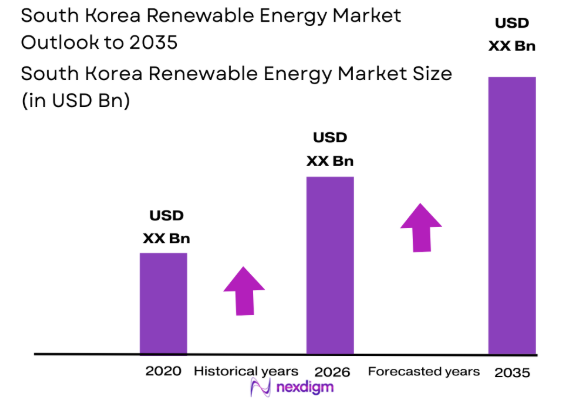
The South Korea renewable energy market is experiencing significant growth, driven by the government’s strong commitment to decarbonizing the energy sector. The market size is expected to reach approximately USD ~ billion, propelled by the increasing demand for clean energy solutions and enhanced by policies targeting renewable energy adoption. With support for solar, wind, and hydrogen energy systems, the sector continues to attract significant investments, boosting both large-scale and residential renewable energy projects. Government initiatives, including subsidies and financial incentives, support the market’s continued growth trajectory.
South Korea is one of the leading countries in the renewable energy sector, with major cities like Seoul and Busan spearheading the transition towards cleaner energy sources. The country’s dominance in renewable energy adoption is driven by government initiatives, favorable regulatory environments, and a strong commitment to achieving sustainability goals. South Korea’s large industrial base, including its automotive and manufacturing sectors, plays a critical role in driving demand for renewable energy solutions, positioning it as a key player in the Asia-Pacific region.
Market Segmentation
By System Type
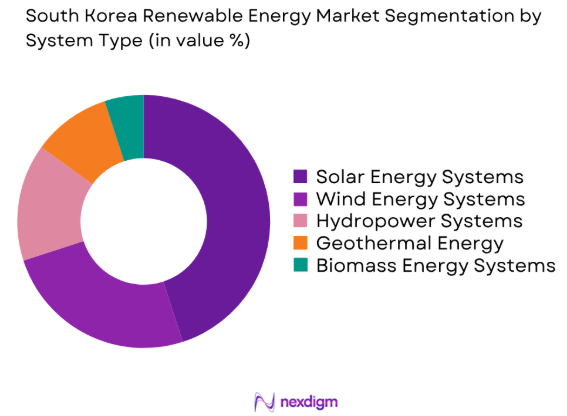
The South Korea renewable energy market is segmented by system type into solar, wind, hydropower, geothermal, and biomass energy systems. Recently, solar energy systems have a dominant market share due to their cost-effectiveness, technological advancements, and government incentives encouraging widespread adoption. Solar energy’s scalability and efficiency make it a preferred choice for both residential and commercial applications. Moreover, the declining cost of solar panels has further strengthened its position in the market.
By Platform Type
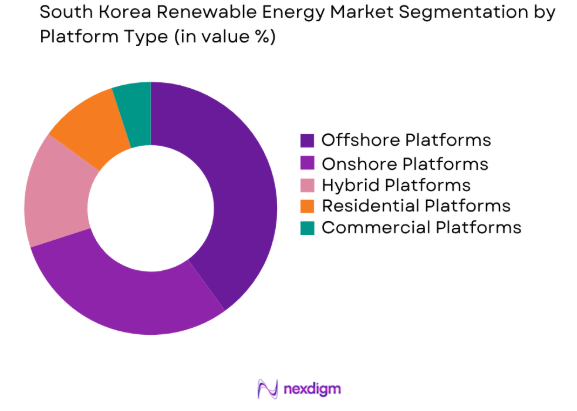
The market is segmented by platform type into onshore, offshore, hybrid, residential, and commercial platforms. Offshore platforms have recently captured the largest market share due to South Korea’s robust offshore wind potential. Offshore wind farms benefit from higher energy yields and are aligned with national strategies aimed at enhancing renewable energy generation capacity. Their adoption is expected to grow further as technologies improve, and regulatory frameworks continue to support their development.
Competitive Landscape
The South Korea renewable energy market is highly competitive, with major players focusing on technological innovation and the expansion of renewable energy infrastructure. Leading companies are increasingly investing in solar and wind energy solutions while collaborating with government entities to meet clean energy targets. The market also experiences consolidation, with large players merging and forming strategic partnerships to leverage economies of scale and enhance market reach. Major players are focused on developing innovative energy storage solutions to complement renewable energy generation.
| Company Name | Establishment Year | Headquarters | Technology Focus | Market Reach | Key Products | Revenue | Market-Specific Parameter |
| Samsung C&T Corporation | 1938 | Seoul | ~ | ~ | ~ | ~ | ~ |
| LG Electronics | 1958 | Seoul | ~ | ~ | ~ | ~ | ~ |
| Hanwha Q CELLS | 2012 | Seoul | ~ | ~ | ~ | ~ | ~ |
| SK Innovation | 1953 | Seoul | ~ | ~ | ~ | ~ | ~ |
| Hyundai Electric & Energy Systems | 1985 | Seoul | ~ | ~ | ~ | ~ | ~ |
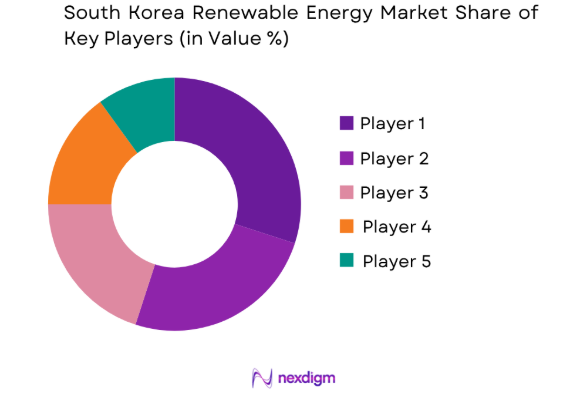
South Korea Renewable Energy Market Analysis
Growth Drivers
Government Support for Renewable Energy
Government support for renewable energy plays a critical role in driving South Korea’s market growth. The government has made strong commitments to reduce reliance on fossil fuels and meet international climate goals, positioning renewable energy as a key part of its energy strategy. Financial incentives, tax breaks, and subsidies for solar, wind, and other renewable energy projects have made investments in these sectors more attractive. These policies are backed by long-term energy plans that prioritize sustainable energy sources and aim to reduce greenhouse gas emissions. As the government continues to promote clean energy adoption through various initiatives, it fosters market expansion and ensures a more sustainable energy future for the country.
Technological Advancements in Renewable Energy
Technological advancements in renewable energy technologies are a significant growth driver for South Korea’s market. As a global leader in innovation, particularly in solar and wind energy, the country’s investments in research and development are enhancing the efficiency of solar panels and wind turbines. These improvements are making renewable technologies more cost-competitive and appealing to investors. Furthermore, advancements in energy storage solutions help address intermittency challenges, enhancing grid reliability and enabling more widespread adoption of renewables. The combined effect of these technological innovations and cost reductions is accelerating the deployment of renewable energy systems, further driving growth across South Korea’s clean energy sector.
Market Challenges
High Initial Capital Investment
A major challenge for South Korea’s renewable energy market is the high initial capital investment required for large-scale projects. While the cost of renewable energy technologies has decreased, the upfront expenses related to installation, infrastructure, and grid integration remain significant. These financial hurdles can deter smaller businesses from entering the market and may slow the development of renewable energy projects, particularly in rural or remote regions. Moreover, securing financing for such projects, especially for emerging technologies like offshore wind, remains difficult. The substantial initial costs and the complexity of financing contribute to delays in scaling up renewable energy adoption across the country.
Regulatory and Compliance Barriers
The renewable energy market in South Korea also encounters regulatory and compliance challenges. Despite strong government support, the complexity of regulations surrounding renewable energy projects can slow market growth. The permitting process for wind and solar installations is often lengthy, requiring adherence to various legal and environmental regulations before projects can proceed. These regulatory hurdles can delay the development of renewable energy infrastructure, impacting the overall pace of market expansion. As a result, project timelines are frequently extended, which may deter potential investors and hinder the swift transition to a cleaner energy future. Overcoming these challenges is essential for accelerating market growth.
Opportunities
Expansion of Offshore Wind Energy
The expansion of offshore wind energy represents a major opportunity for South Korea’s renewable energy market. With its long coastline and favorable wind conditions, the country is ideally suited to increase its offshore wind capacity. The government has set ambitious targets to develop offshore wind farms, which are expected to play a significant role in meeting the country’s clean energy needs. Additionally, advancements in floating wind turbine technology, capable of operating in deeper waters, further boost the potential for offshore wind development. As this technology matures and becomes more cost-effective, it will serve as a key driver in expanding South Korea’s renewable energy capacity, positioning the country as a leader in offshore wind.
Energy Storage Solutions and Grid Integration
The growth of energy storage solutions and advancements in grid integration present a significant opportunity for South Korea’s renewable energy market. As solar and wind energy become more prevalent, the need for efficient energy storage systems to manage intermittency issues is increasingly critical. South Korea has made substantial investments in energy storage technologies, including advanced batteries and grid management systems, to address these challenges. By integrating these solutions, the country can enhance grid stability, support the integration of higher shares of renewable energy, and promote broader adoption of clean energy technologies. This development will not only ensure a more reliable energy system but also accelerate South Korea’s transition to a sustainable energy future.
Future Outlook
The South Korea renewable energy market is poised for significant growth in the coming years, driven by technological advancements, increasing government support, and a shift towards more sustainable energy solutions. The market is expected to see continued investments in solar, wind, and hydrogen energy systems, with offshore wind energy projects leading the way. Additionally, energy storage technologies will play a crucial role in addressing the intermittency challenges associated with renewable energy sources, enabling greater integration into the national grid. As regulatory frameworks evolve, and public and private sector investments continue to grow, South Korea will solidify its position as a leader in the renewable energy market.
Major Players
- Samsung C&T Corporation
- LG Electronics
- Hanwha Q CELLS
- SK Innovation
- Hyundai Electric & Energy Systems
- Doosan Heavy Industries & Construction
- Korea Electric Power Corporation (KEPCO)
- POSCO Energy
- Kyocera Corporation
- Siemens Gamesa Renewable Energy
- Vestas Wind Systems
- Goldwind
- Envision Group
- China National Offshore Oil Corporation (CNOOC)
- Sungrow Power Supply Co.
Key Target Audience
- Investments and venture capitalist firms
- Government and regulatory bodies
- Energy production companies
- Renewable energy developers
- Large-scale commercial solar and wind operators
- Residential energy system adopters
- Utility companies
- Environmental and sustainability organizations
Research Methodology
Step 1: Identification of Key Variables
Identify critical factors affecting the renewable energy market, such as government policies, technological advancements, and market demands.
Step 2: Market Analysis and Construction
Conduct a detailed analysis of the market size, trends, and key drivers to structure the report and build market models.
Step 3: Hypothesis Validation and Expert Consultation
Validate the hypothesis with expert opinions and feedback from industry leaders, analysts, and market specialists.
Step 4: Research Synthesis and Final Output
Synthesize all research findings, ensuring accuracy and consistency before preparing the final report for publication.

- Executive Summary
- Research Methodology (Definitions, Scope, Industry Assumptions, Market Sizing Approach, Primary & Secondary Research Framework, Data Collection & Verification Protocol, Analytic Models & Forecast Methodology, Limitations & Research Validity Checks)

- Market Definition and Scope
- Value Chain & Stakeholder Ecosystem
- Regulatory / Certification Landscape
- Sector Dynamics Affecting Demand
- Strategic Initiatives & Infrastructure Growth

- Growth Drivers
Government Support for Renewable Energy
Technological Advancements in Renewable Energy
Growing Energy Security Concerns - Market Challenges
High Capital Investment in Renewable Projects
Regulatory and Compliance Barriers
Grid Infrastructure and Integration Issues - Market Opportunities
Increased Private Sector Investment
Technological Innovation in Energy Storage
Expansion of Offshore Wind Energy - Trends
Shift Towards Green Hydrogen Solutions
Integration of AI and IoT in Renewable Systems
Increase in Smart Grid Deployments
Government Regulations - Swot Analysis
- Porter’s Five Force

- By Market Value, 2020-2025
- By Installed Units, 2020-2025
- By Average System Price, 2020-2025
- By System Complexity Tier, 2020-2025

- By System Type (In Value%)
Solar Energy Systems
Wind Energy Systems
Hydropower Systems
Geothermal Energy Systems
Biomass Energy Systems - By Platform Type (In Value%)
Onshore Platforms
Offshore Platforms
Hybrid Platforms
Residential Platforms
Commercial Platforms - By Fitment Type (In Value%)
On-premise Solutions
Cloud-based Solutions
Hybrid Solutions
Modular Solutions
Integrated Solutions - By End User Segment (In Value%)
Government & Public Sector
Private Sector
Energy Producers
Manufacturing Industry
Residential Sector - By Procurement Channel (In Value%)
Direct Procurement
Government Tenders
Private Sector Procurement
Online Bidding Platforms
Third-party Distributors

- Market Share Analysis
- Cross Comparison Parameters (System Type, Platform Type, Procurement Channel, End User Segment, Fitment Type, Technology Focus, Energy Storage Solutions, Government Regulations, Geographic Region, Market Size)
- SWOT Analysis of Key Competitors
- Pricing & Procurement Analysis
- Porter’s Five Forces
Key Players
Samsung C&T Corporation
LG Electronics
Hanwha Q CELLS
SK Innovation
Hyundai Electric & Energy Systems
Doosan Heavy Industries & Construction
Korea Electric Power Corporation (KEPCO)
POSCO Energy
Kyocera Corporation
Siemens Gamesa Renewable Energy
Vestas Wind Systems
Goldwind
Envision Group
China National Offshore Oil Corporation (CNOOC)
Sungrow Power Supply Co.

- Energy Producers’ Adoption of Renewables
- Government Initiatives to Promote Green Energy
- Private Sector Investments in Solar & Wind
- Residential Energy Systems Adoption

- Forecast Market Value, 2026-2035
- Forecast Installed Units, 2026-2035
- Price Forecast by System Tier, 2026-2035
- Future Demand by Platform, 2026-2035


 Request a Sample
 Ask for Customization
 Get a Quote
 Enquire Now