
 Download PDF
 Download PDF
Market Overview
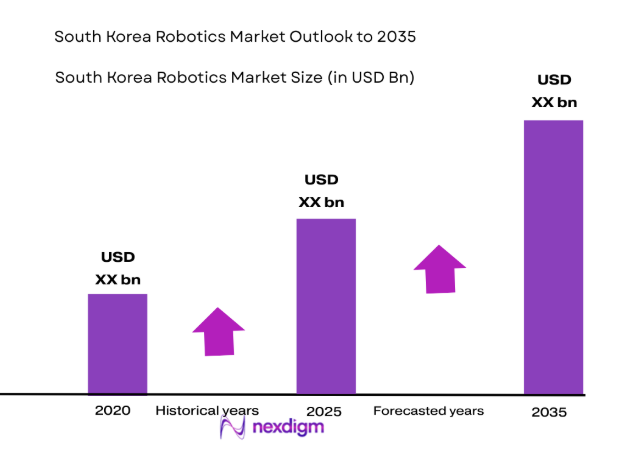
The South Korea robotics market has witnessed significant growth, driven by increasing automation demand across various industries, including manufacturing, healthcare, and logistics. The market size is valued at approximately USD ~ billion, with the rapid adoption of robotics technologies such as collaborative robots (cobots) and autonomous mobile robots (AMRs). Factors such as advancements in artificial intelligence (AI), the rise of Industry 4.0, and government support for digital transformation initiatives have played a crucial role in the market’s growth.
South Korea has emerged as a global leader in robotics, owing to its advanced technological infrastructure and strong manufacturing base. The country’s dominance is attributed to the presence of major robotics companies like Hyundai Robotics and Doosan Robotics, as well as strategic initiatives aimed at promoting innovation. Additionally, cities such as Seoul and Busan have become hubs for robotics development, benefiting from government funding, a skilled workforce, and strong R&D capabilities. These factors collectively contribute to South Korea’s leading position in the global robotics market.
Market Segmentation
By Product Type
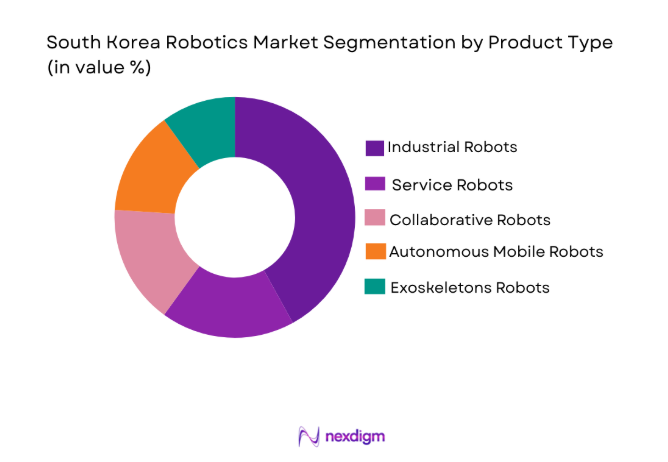
The South Korea robotics market is segmented by product type into industrial robots, service robots, collaborative robots (cobots), autonomous mobile robots (AMRs), and exoskeletons. Recently, industrial robots have dominated the market share due to the growing demand for automation in industries such as automotive, electronics, and consumer goods manufacturing. The shift towards smart factories and increased investments in robotic solutions for production processes are major factors driving the adoption of industrial robots. This sub-segment is expected to maintain its leadership as industries continue to embrace automation to improve efficiency and reduce labor costs.
By Platform Type
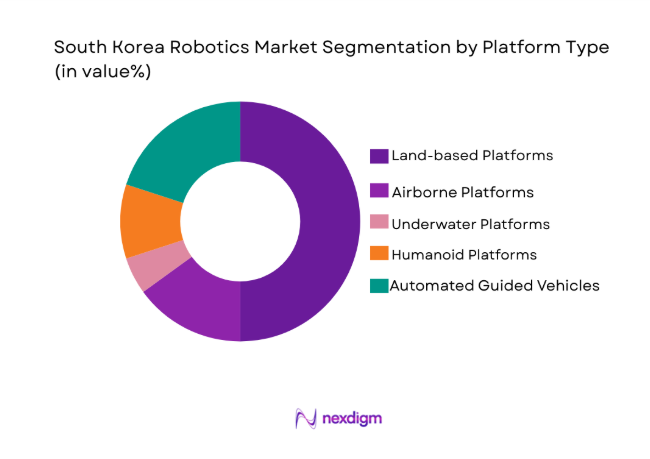
The South Korea robotics market is segmented by platform type into land-based platforms, airborne platforms, underwater platforms, humanoid platforms, and automated guided vehicles (AGVs). Land-based platforms, particularly those used in warehouses and factories for material handling, dominate the market. The increasing demand for AGVs in logistics, warehouses, and automated manufacturing environments, combined with the advancement of AI and IoT technologies, has significantly boosted the adoption of land-based platforms. These platforms’ ability to optimize supply chain operations and reduce manual labor is a key driver of their market share.
Competitive Landscape
The South Korea robotics market is highly competitive, with major players driving technological advancements and market consolidation. Large multinational companies, as well as local robotics firms, are engaged in continuous R&D to innovate and capture a larger market share. The presence of key players such as Hyundai Robotics and Doosan Robotics, along with emerging companies in the robotics space, has intensified competition. This competitive environment has led to partnerships, mergers, and acquisitions aimed at expanding product portfolios and technological capabilities, ensuring robust market growth.
| Company Name | Establishment Year | Headquarters | Technology Focus | Market Reach | Key Products | Revenue (USD) | Innovation Index |
| Hyundai Robotics | 2015 | Seoul, South Korea | ~ | ~ | ~ | ~ | ~ |
| Doosan Robotics | 2017 | Seoul, South Korea | ~ | ~ | ~ | ~ | ~ |
| Samsung Robotics | 2003 | Seoul, South Korea | ~ | ~ | ~ | ~ | ~ |
| LG Electronics | 1958 | Seoul, South Korea | ~ | ~ | ~ | ~ | ~ |
| ABB Robotics | 1988 | Zurich, Switzerland | ~ | ~ | ~ | ~ | ~ |
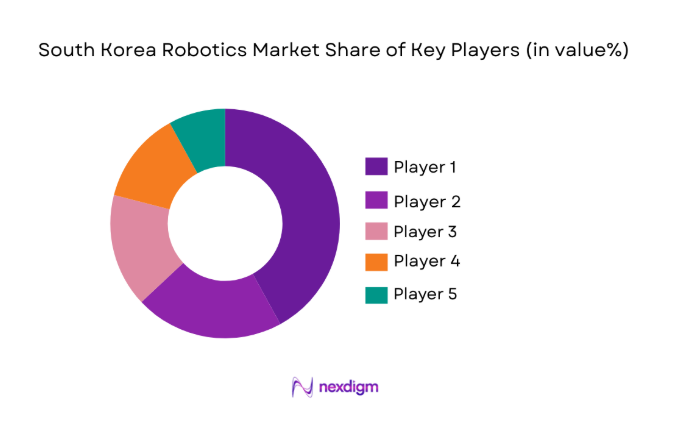
South Korea Robotics Market Analysis
Growth Drivers
Technological Advancements in AI and Robotics
The integration of AI and machine learning into robotics systems has significantly boosted the functionality and versatility of robotic solutions. These advancements enable robots to perform complex tasks autonomously, improving efficiency and reducing errors in manufacturing and service industries. AI-driven systems such as collaborative robots (cobots) and autonomous mobile robots (AMRs) are capable of adapting to dynamic environments and learning from experiences, which has increased their adoption across various sectors. As industries, especially automotive, electronics, and logistics, continue to embrace Industry 4.0, the need for advanced robotics solutions powered by AI is expected to drive further market growth. AI integration allows for better decision-making and predictive maintenance, making robotic systems more intelligent, flexible, and cost-effective. The continuous evolution of AI technologies and their integration into robotics systems ensures that AI will remain a key growth driver in the South Korean market.
Government Initiatives Supporting Robotics Innovation
The South Korean government has played a crucial role in fostering robotics innovation by investing in infrastructure and providing incentives for automation adoption. Various national programs, such as the “K-Robot Industry Roadmap,” have been implemented to promote robotics development in sectors like manufacturing, healthcare, and logistics. These initiatives include financial support for R&D, tax incentives for robotics companies, and funding for smart factory projects. As a result, the South Korean government has successfully created a favorable environment for robotics growth, encouraging both domestic and foreign investments in the sector. The government’s focus on digital transformation and the integration of robotics into industrial applications further solidifies the market’s expansion. This strong governmental support, coupled with its forward-thinking policies, is expected to continue driving the growth of the South Korea robotics market in the coming years.
Market Challenges
High Initial Investment Costs
One of the major challenges hindering the widespread adoption of robotics solutions in South Korea is the high initial investment required for robotics systems. While the long-term benefits of automation, such as improved productivity and cost savings, are well recognized, the upfront costs of purchasing and implementing robots can be prohibitively expensive for small and medium-sized enterprises (SMEs). The cost of industrial robots, collaborative robots, and automated guided vehicles (AGVs) remains a significant barrier to entry for many businesses. Additionally, the need for specialized infrastructure, integration with existing systems, and employee training adds to the overall financial burden. This challenge is particularly evident in industries with tight profit margins, where businesses must carefully evaluate the ROI of robotic investments. To overcome this challenge, financial incentives, subsidies, and government support programs are necessary to make robotics more accessible to a broader range of industries. However, despite these efforts, the initial capital expenditure remains a considerable challenge in the South Korea robotics market.
Complex Regulatory Requirements
The South Korea robotics market faces challenges related to regulatory requirements, particularly in terms of safety standards and certification processes. As robots are increasingly integrated into various sectors, ensuring that they meet stringent safety and quality standards becomes crucial. Compliance with local and international regulations, such as ISO 10218 for industrial robots and IEC 61508 for functional safety, requires manufacturers to invest significant resources in testing, certification, and regulatory approvals. The complexity of navigating these regulatory frameworks can be a barrier for small and medium-sized robotics companies, particularly those entering new markets or introducing innovative technologies. The lack of standardized regulations for emerging technologies, such as autonomous robots and AI-powered systems, further complicates the regulatory landscape. These challenges may result in delays in product launches, higher compliance costs, and potential legal issues for companies operating in the South Korea robotics market. Addressing these regulatory hurdles will be critical for sustaining the growth and innovation of the market.
Opportunities
Expansion in Healthcare Robotics
The healthcare sector in South Korea presents significant opportunities for robotics companies, driven by the increasing demand for robotic systems in surgical procedures, elderly care, and rehabilitation. South Korea has one of the most advanced healthcare systems in the world, with cutting-edge medical technologies and a high rate of healthcare spending. Robotic systems are being used to assist in minimally invasive surgeries, providing greater precision and reducing recovery times. Additionally, robots are playing an increasing role in elderly care, helping with mobility, monitoring, and even companionship. As the population ages and the need for healthcare services grows, robotics offers a solution to address labor shortages and improve care efficiency. The South Korean government’s investment in healthcare infrastructure and technology further supports this growth. Healthcare robotics is expected to become one of the fastest-growing sub-segments of the robotics market in South Korea, providing ample opportunities for companies specializing in medical robotics solutions.
Technological Advancements in Autonomous Vehicles
Autonomous vehicles (AVs) and robotics are closely linked, with robotics playing a vital role in the development of AVs, particularly in the logistics, transport, and defense sectors. In South Korea, the rise of smart cities and the increasing focus on automation are driving the adoption of AVs for transportation and delivery purposes. Robotics technologies such as autonomous mobile robots (AMRs) and drones are being integrated into logistics and last-mile delivery systems, enabling faster, more efficient transportation of goods. The South Korean government’s support for smart city initiatives and its focus on sustainable, high-tech solutions are expected to accelerate the adoption of AVs. As AV technologies continue to evolve, they will create new opportunities for robotics companies to innovate and expand their product offerings. This opportunity aligns with global trends in autonomous transportation, and South Korea’s leadership in robotics positions it to capitalize on the growing demand for AV solutions.
Future Outlook
The South Korea robotics market is poised for continued growth, with advancements in AI, automation, and government support driving innovation across industries. Over the next five years, technological developments in robotics, coupled with rising demand for automation in manufacturing, healthcare, and logistics, will create ample growth opportunities. Regulatory support for smart factories and infrastructure development will further enhance market dynamics, positioning South Korea as a leader in robotics innovation. However, challenges such as high initial costs and complex regulatory frameworks must be addressed for the market to fully realize its potential.
Major Players
- Hyundai Robotics
- Doosan Robotics
- Samsung Robotics
- LG Electronics
- ABB Robotics
- KUKA Robotics
- Yaskawa Electric Corporation
- FANUC Corporation
- Universal Robots
- Panasonic Corporation
- Epson Robots
- Staubli Robotics
- Omron Corporation
- Denso Wave
- Robot System Products
Key Target Audience
- Investments and venture capitalist firms
- Government and regulatory bodies
- Robotics manufacturers
- Healthcare providers
- Logistics and transportation companies
- Manufacturing companies
- Automation technology developers
Research Methodology
Step 1: Identification of Key Variables
The first step involves identifying the key variables that drive the market, including technological advancements, regulatory frameworks, and consumer demand patterns.
Step 2: Market Analysis and Construction
A comprehensive analysis of the market structure, segmentation, and competition is conducted, followed by the construction of a detailed market model based on collected data.
Step 3: Hypothesis Validation and Expert Consultation
Hypotheses about the market’s dynamics are tested through expert consultations with industry leaders, robotics companies, and regulators to validate the findings.
Step 4: Research Synthesis and Final Output
The data and insights gathered from various sources are synthesized into a final report, including market forecasts, trends, and growth opportunities.

- Executive Summary
- Research Methodology (Definitions, Scope, Industry Assumptions, Market Sizing Approach, Primary & Secondary Research Framework, Data Collection & Verification Protocol, Analytic Models & Forecast Methodology, Limitations & Research Validity Checks)

- Market Definition and Scope
- Value Chain & Stakeholder Ecosystem
- Regulatory / Certification Landscape
- Sector Dynamics Affecting Demand
- Strategic Initiatives & Infrastructure Growth

- Growth Drivers
Technological Advancements in AI and Robotics
Government Initiatives Supporting Robotics Integration
Growing Demand for Automation in Manufacturing - Market Challenges
High Initial Investment Costs
Complex Regulatory Requirements
Limited Availability of Skilled Workforce - Market Opportunities
Expansion in Healthcare Robotics
Growth in Autonomous Vehicle Robotics
Technological Advancements in Robotics for Agriculture - Trends
Integration of AI in Robotics Systems
Increased Adoption of Collaborative Robots (Cobots) - Government Regulations
- SWOT Analysis
Porter’s Five Forces

- By Market Value, 2020-2025
- By Installed Units, 2020-2025
- By Average System Price, 2020-2025
- By System Complexity Tier, 2020-2025

- By System Type (In Value%)
Industrial Robots
Service Robots
Collaborative Robots (Cobots)
Autonomous Mobile Robots (AMRs)
Exoskeletons - By Platform Type (In Value%)
Land-based Platforms
Airborne Platforms
Underwater Platforms
Humanoid Platforms
Automated Guided Vehicles (AGVs) - By Fitment Type (In Value%)
On-premise Solutions
Cloud-based Solutions
Hybrid Solutions
Integrated Solutions - By End User Segment (In Value%)
Manufacturing
Healthcare
Logistics
Defense
Agriculture

- Market Share Analysis
- Cross Comparison Parameters (System Type, Platform Type, End User Segment, Fitment Type, Procurement Channel, Technology, System Complexity Tier)
- SWOT Analysis of Key Competitors
- Pricing & Procurement Analysis
- Key Players
Samsung Electronics
LG Electronics
Hyundai Robotics
Hanwha Robotics
Doosan Robotics
KUKA Robotics
ABB Robotics
FANUC Corporation
Yaskawa Electric Corporation
Denso Wave
Universal Robots
Staubli Robotics
Omron Corporation
Epson Robots
Panasonic Corporation

- Increasing Automation in Manufacturing Sectors
- Adoption of Robotics in Healthcare for Elderly Care
- Logistics Companies Integrating Robotics for Efficiency
- Growth in Agricultural Robotics for Precision Farming

- Forecast Market Value, 2026-2035
- Forecast Installed Units, 2026-2035
- Price Forecast by System Tier, 2026-2035
- Future Demand by Platform, 2026-2035


 Request a Sample
 Ask for Customization
 Get a Quote
 Enquire Now