

 Download PDF
 Download PDF
Market Overview
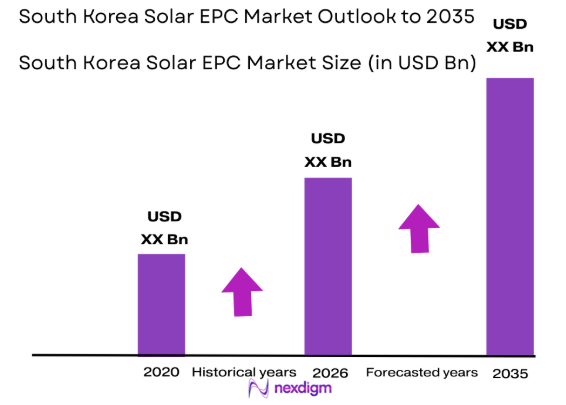
The market for solar energy in South Korea has grown rapidly due to increased government focus on renewable energy, backed by substantial investments. Based on a recent historical assessment, the solar EPC market is estimated to reach USD ~ billion by the end of the year, driven by expanding infrastructure and government incentives. The continued adoption of solar energy in residential, commercial, and utility-scale applications is expected to push this figure even higher, as solar power becomes an integral part of South Korea’s energy strategy.
Key regions such as Seoul and Gyeonggi Province dominate the solar EPC market due to their robust infrastructure and high energy demands. The government’s favorable policies, such as subsidies and tax incentives, encourage both residential and commercial sectors to invest in solar solutions. These regions benefit from established grid systems and are focal points for renewable energy integration. South Korea’s commitment to increasing its renewable energy capacity has positioned it as a leader in the Asian market.
Market Segmentation
By Product Type
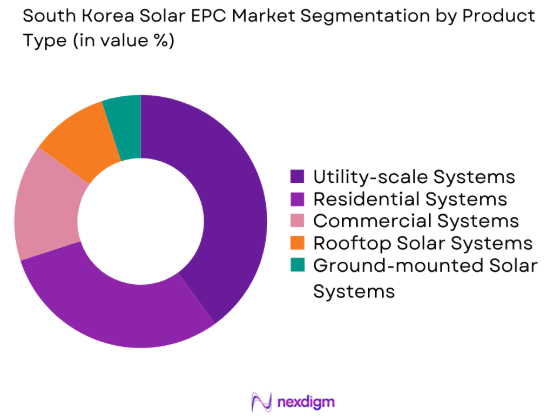
The South Korea solar EPC market is segmented by product type into utility-scale systems, residential systems, commercial systems, rooftop solar systems, and ground-mounted solar systems. Recently, utility-scale systems have been dominant in terms of market share, driven by large government-led projects and the nation’s need for a stable renewable energy infrastructure. These large-scale solar projects are supported by favorable policies, financing options, and the ongoing push for energy independence, making utility-scale systems the preferred choice for many developers and companies in the market.
By Platform Type
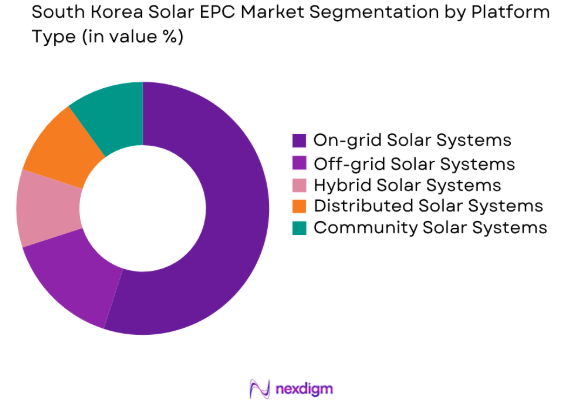
The South Korea solar EPC market is also segmented by platform type into on-grid systems, off-grid systems, hybrid systems, distributed systems, and community solar systems. Recently, on-grid solar systems have gained a dominant market share due to their ability to efficiently connect with the national grid. On-grid systems provide cost-effective energy management, which makes them attractive for both residential and commercial sectors. The push for energy efficiency, coupled with government initiatives for reducing fossil fuel dependence, has made on-grid systems a leading solution in South Korea’s solar energy market.
Competitive Landscape
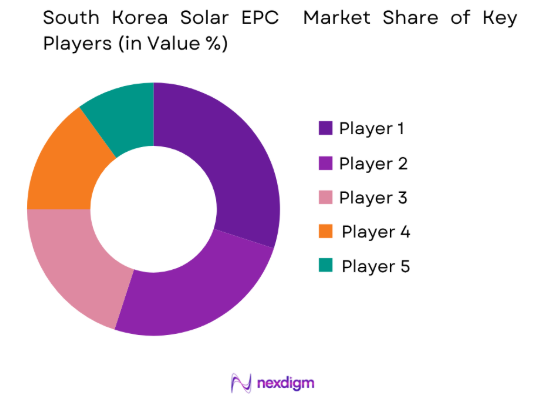
The South Korean solar EPC market is highly competitive, with many players vying for market share, particularly in the utility-scale segment. Major firms such as Samsung C&T Corporation and Hyundai Engineering & Construction have established a strong presence, leveraging their technological capabilities and expansive infrastructure projects. The competitive landscape is further intensified by favorable government policies that encourage the growth of solar energy and incentivize foreign and local firms to enter the market. The consolidation of market players is expected to continue as companies seek to scale up their operations and enhance technological offerings.
| Company Name | Establishment Year | Headquarters | Technology Focus | Market Reach | Key Products | Revenue | Additional Parameter |
| Samsung C&T Corporation | 1938 | Seoul, South Korea | ~ | ~ | ~ | ~ | ~ |
| Hyundai Engineering & Construction | 1947 | Seoul, South Korea | ~ | ~ | ~ | ~ | ~ |
| Daewoo Engineering & Construction | 1973 | Seoul, South Korea | ~ | ~ | ~ | ~ | ~ |
| GS E&C | 1969 | Seoul, South Korea | ~ | ~ | ~ | ~ | ~ |
| Hanwha Q CELLS | 2012 | Seoul, South Korea | ~ | ~ | ~ | ~ | ~ |
South Korea Solar EPC Market Analysis
Growth Drivers
Government Support for Solar Energy
Government support for solar energy through incentives and subsidies has been a key growth driver in South Korea. The country’s long-term renewable energy goals and tax incentives have made solar energy more accessible for businesses and individuals, lowering the initial cost of installation. These financial incentives help reduce barriers to entry, making it easier for both the private sector and public organizations to invest in solar solutions. With government-backed initiatives promoting the expansion of clean energy, there has been a steady increase in solar adoption. This support continues to foster market growth, making solar energy a more viable and attractive option for diverse sectors across South Korea.
Technological Advancements in Solar EPC
Advancements in solar technology, such as more efficient panels and improved energy storage solutions, have significantly contributed to the market’s growth. These innovations help reduce costs and enhance system performance, positioning solar power as a more competitive alternative to traditional energy sources. As new technologies continue to emerge, the South Korean solar EPC market is poised for further expansion. Breakthroughs in solar panel efficiency and energy storage will lower installation costs, increase overall energy efficiency, and facilitate better integration with the existing power grid. These advancements will make solar energy increasingly viable, supporting its wider adoption across various sectors in South Korea.
Market Challenges
High Initial Capital Investment
A major challenge facing the South Korean solar EPC market is the high initial capital investment required for large-scale solar projects. Despite the long-term savings that solar power offers, the upfront costs for equipment, installation, and system integration remain significant barriers for both developers and consumers. While government incentives have helped alleviate some of these financial burdens, the high initial investment still poses a considerable challenge. Smaller companies and individual households, in particular, may be deterred from adopting solar energy solutions due to the substantial capital required. This financial obstacle limits market growth, especially in the residential and small-scale commercial sectors, where lower budgets make it harder to justify large upfront investments.
Regulatory and Permitting Delays
Regulatory challenges and permitting delays continue to hinder solar EPC projects in South Korea. Obtaining the required approvals for large-scale installations, especially utility-scale projects, can be a lengthy process, often delayed by the need for significant infrastructure development. These delays not only extend project timelines but also increase overall costs, affecting the growth of the solar energy sector. Additionally, the complexity of environmental regulations and stringent safety standards can further slow development, particularly in certain regions. These regulatory obstacles create a more challenging environment for solar developers, potentially limiting the speed at which new projects can be implemented across the country.
Opportunities
Integration with Energy Storage Systems
The integration of solar systems with energy storage technologies offers a key growth opportunity for the market. Advances in battery storage enable solar power to be stored for use during non-sunny periods, enhancing reliability and reducing grid dependency. As the demand for smart grids and energy management solutions increases, developers have a significant opportunity to offer integrated solar and storage systems, ensuring a steady power supply across various sectors. This integration is becoming more crucial as the demand for sustainable and reliable energy solutions grows. With the focus on clean energy, the combination of solar and storage will play an essential role in shaping future energy landscapes.
Expanding Residential and Commercial Solar Market
The growing demand for residential and commercial solar systems presents a significant opportunity in South Korea. As environmental concerns rise and energy costs continue to increase, more homeowners and businesses are turning to solar energy solutions. Government incentives, along with falling installation costs, have made solar systems more accessible, driving adoption across residential and commercial sectors. Additionally, the shift towards distributed energy resources is expected to further fuel demand, as more individuals and companies seek to reduce their carbon footprint while gaining energy independence. This trend will likely accelerate as consumers increasingly prioritize sustainability and cost savings in their energy choices.
Future Outlook
The South Korean solar EPC market is poised for continued growth over the next five years. Driven by technological advancements, government support, and rising consumer demand for renewable energy, the market is set to expand, especially in the residential and utility-scale sectors. Ongoing advancements in solar technology and energy storage systems will further enhance the viability and adoption of solar solutions, making them an integral part of South Korea’s clean energy infrastructure.
Major Players
- Samsung C&T Corporation
- Hyundai Engineering & Construction
- Daewoo Engineering & Construction
- GS E&C
- Hanwha Q CELLS
- SK Innovation
- Doosan Heavy Industries & Construction
- POSCO International
- Korea Electric Power Corporation (KEPCO)
- LS Industrial Systems
- Hyundai Electric & Energy Systems
- LG Electronics
- Hanwha Energy
- SOLTEC
- Sunrun
Key Target Audience
- Investments and venture capitalist firms
- Government and regulatory bodies
- Renewable energy developers
- EPC contractors
- Industrial energy consumers
- Commercial energy managers
- Utility-scale developers
- Energy consultants
Research Methodology
Step 1: Identification of Key Variables
This step involves identifying key market drivers, constraints, and variables that influence market dynamics.
Step 2: Market Analysis and Construction
This phase involves collecting data on market size, technology trends, and segment performance through primary and secondary research.
Step 3: Hypothesis Validation and Expert Consultation
Expert consultations validate the hypotheses formed during the initial research, providing insights into emerging market trends.
Step 4: Research Synthesis and Final Output
The final step involves synthesizing the research findings into a comprehensive market report, ensuring clarity and accuracy.

- Executive Summary
- Research Methodology (Definitions, Scope, Industry Assumptions, Market Sizing Approach, Primary & Secondary Research Framework, Data Collection & Verification Protocol, Analytic Models & Forecast Methodology, Limitations & Research Validity Checks)

- Market Definition and Scope
- Value Chain & Stakeholder Ecosystem
- Regulatory / Certification Landscape
- Sector Dynamics Affecting Demand
- Strategic Initiatives & Infrastructure Growth

- Growth Drivers
Increase in Government Incentives
Technological Advancements in Solar Energy
Rising Demand for Renewable Energy - Market Challenges
High Initial Capital Investment
Regulatory Barriers and Compliance Issues
Technical and Installation Challenges - Market Opportunities
Integration with Energy Storage Systems
Emerging Demand for Smart Solar Solutions
Government-backed Solar Initiatives - Trends
Rise of Solar Energy in Residential Sectors
Technological Innovations in Solar Panel Efficiency
Growing Focus on Solar-powered Infrastructure - Government Regulations
- SWOT Analysis of Key Competitors
- Porter’s Five Forces

- By Market Value, 2020-2025
- By Installed Units, 2020-2025
- By Average System Price, 2020-2025
- By System Complexity Tier, 2020-2025

- By System Type (In Value%)
Utility-scale Solar Systems
Residential Solar Systems
Commercial Solar Systems
Rooftop Solar Systems
Ground-mounted Solar Systems - By Platform Type (In Value%)
On-grid Solar Systems
Off-grid Solar Systems
Hybrid Solar Systems
Distributed Solar Systems
Community Solar Systems - By Fitment Type (In Value%)
Roof-mounted Solutions
Ground-mounted Solutions
Carport Solutions
Floating Solar Solutions
Hybrid Solutions - By End User Segment (In Value%)
Commercial Sector
Residential Sector
Industrial Sector
Government Sector
Utility Sector - By Procurement Channel (In Value%)
Direct Procurement
Private Sector Procurement
Government Tenders
Online Procurement
Third-party Distributors

- Market Share Analysis
- Cross Comparison Parameters (System Type, Platform Type, Procurement Channel, End User Segment, Fitment Type, Technology Integration, Project Scale, Geographic Reach, Financing Models, Government Support)
- SWOT Analysis of Key Competitors
- Pricing & Procurement Analysis
- Key Players
Samsung C&T Corporation
Hyundai Engineering & Construction
Daewoo Engineering & Construction
GS E&C
Korea Electric Power Corporation
Hanwha Q CELLS
LG Electronics
SK Innovation
Doosan Heavy Industries & Construction
POSCO International
KEPCO KPS
Soltec Energías Renovables
Lotte Engineering & Construction
Sungrow Power Supply Co., Ltd.
Trina Solar

- Increased Adoption in Commercial Sectors
- Government’s Role in Solar Procurement
- Technological Integration in Residential Sectors
- Solar Energy’s Role in Achieving Carbon Reduction Targets

- Forecast Market Value, 2026-2035
- Forecast Installed Units, 2026-2035
- Price Forecast by System Tier, 2026-2035
- Future Demand by Platform, 2026-2035


 Request a Sample
 Ask for Customization
 Get a Quote
 Enquire Now