

 Download PDF
Market Overview
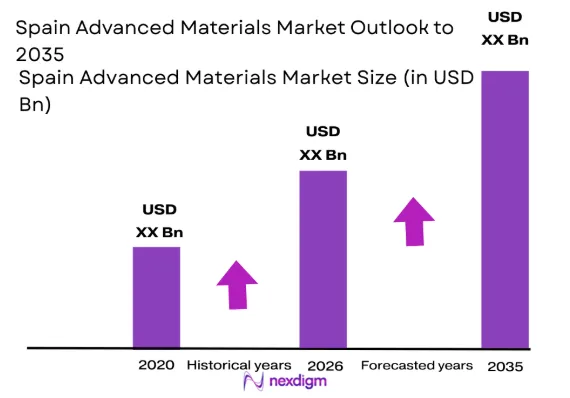
The Spain Advanced Materials market size is expected to reach USD ~ billion, driven by the rising demand for high-performance materials across various industries such as automotive, aerospace, and electronics. The market is propelled by innovations in material technologies like nanomaterials, composites, and advanced polymers. These materials are increasingly used in lightweight applications, energy-efficient systems, and sustainable construction, further enhancing market growth. Government initiatives and investments in research and development are fueling the adoption of advanced materials, contributing to market expansion.
The market is dominated by regions with advanced manufacturing capabilities, particularly Madrid and Barcelona, which are key hubs for automotive and aerospace industries. These cities benefit from well-established infrastructure, skilled labor, and proximity to key European markets. Furthermore, Spain’s commitment to sustainability and green technology initiatives has supported the growth of the advanced materials market, making it a leader in Europe for materials used in renewable energy and construction. The synergy between local industries and the government’s focus on innovation drives the market’s leadership in these cities.
Market Segmentation
By Product Type
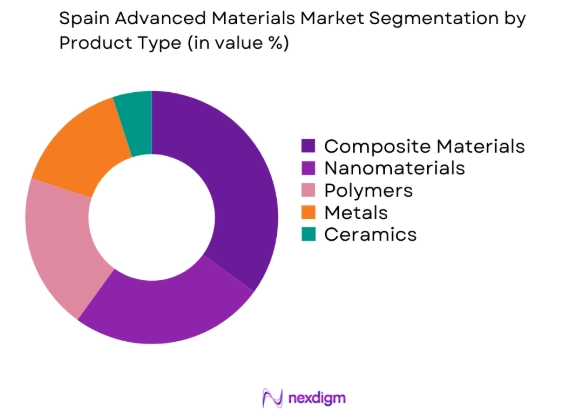
The Spain Advanced Materials market is segmented by product type into composite materials, nanomaterials, polymers, metals, and ceramics. Recently, composite materials have dominated the market due to the increasing need for lightweight, durable materials in industries such as aerospace and automotive. The demand for composite materials is driven by their high strength-to-weight ratio, which contributes to energy efficiency and sustainability in manufacturing. Moreover, advancements in manufacturing processes, such as 3D printing, have further fueled the growth of composite materials in Spain.
By Platform Type
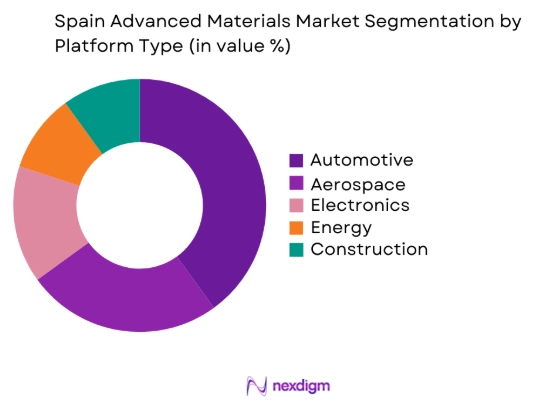
The Spain Advanced Materials market is segmented by platform type into automotive, aerospace, electronics, energy, and construction. Automotive has a dominant market share due to the shift towards electric vehicles (EVs) and the increasing demand for lightweight and durable materials that enhance fuel efficiency. The growth in the electric vehicle sector in Spain has spurred demand for advanced materials, particularly composites and polymers. Furthermore, stringent environmental regulations are encouraging the use of sustainable materials in automotive manufacturing, reinforcing the dominance of this segment.
Competitive Landscape
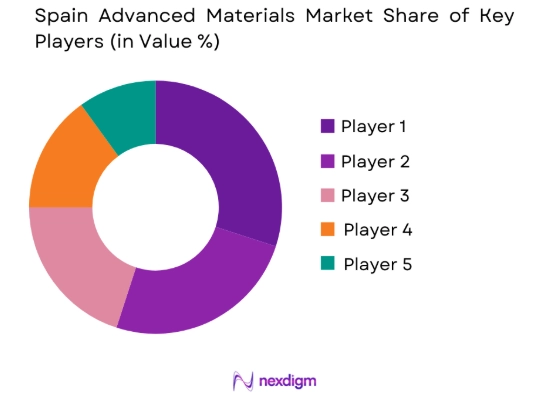
The competitive landscape of the Spain Advanced Materials market is characterized by strong consolidation, with major players constantly innovating and expanding their product portfolios. The competition is intensified by the growing demand for sustainable and high-performance materials, prompting companies to invest heavily in R&D. Major players are expanding their operations through partnerships, joint ventures, and acquisitions to stay ahead in the market. This competitive intensity is reflected in the growing number of collaborations between material suppliers and end-user industries, driving innovation and product diversification.
| Company Name | Establishment Year | Headquarters | Technology Focus | Market Reach | Key Products | Revenue (USD Billion) | Additional Parameter |
| ArcelorMittal | 2006 | Luxembourg | ~ | ~ | ~ | ~ | ~ |
| BASF SE | 1865 | Germany | ~ | ~ | ~ | ~ | ~ |
| 3M | 1902 | USA | ~ | ~ | ~ | ~ | ~ |
| Saint-Gobain | 1665 | France | ~ | ~ | ~ | ~ | ~ |
| Toray Industries | 1926 | Japan | ~ | ~ | ~ | ~ | ~ |
Spain Advanced Materials Market Analysis
Growth Drivers
Technological Advancements in Material Science
Technological advancements in material science have played a significant role in the growth of the Spain Advanced Materials market. Innovations such as nanomaterials and high-performance composites have transformed industries like aerospace, automotive, and electronics. These new materials offer enhanced strength, reduced weight, and superior durability, addressing the growing demand for energy-efficient and environmentally friendly solutions. As Spain continues to invest in R&D, particularly in sustainable manufacturing processes, these advancements are expected to drive significant growth in the market. Furthermore, the integration of advanced technologies, such as 3D printing and AI, is enabling the creation of customized materials, further expanding market opportunities.
Sustainability Initiatives in Manufacturing
Another key growth driver is the increasing focus on sustainability in manufacturing. Spain’s commitment to reducing carbon emissions and promoting green technologies has led to the adoption of advanced materials that contribute to more energy-efficient and environmentally friendly products. Industries like automotive and construction are shifting towards lightweight, recyclable, and eco-friendly materials to comply with stringent environmental regulations. The Spanish government’s support for renewable energy and sustainable infrastructure projects is fostering the demand for advanced materials, particularly in sectors like construction and energy. As sustainability continues to be a priority, the advanced materials market in Spain is set to expand significantly.
Market Challenges
High Production Costs
One of the major challenges facing the Spain Advanced Materials market is the high production costs associated with developing and manufacturing these materials. Advanced materials often require specialized raw materials and manufacturing techniques that are more expensive compared to traditional materials. For instance, the production of composite materials and nanomaterials involves complex processes such as chemical vapor deposition and high-temperature treatments, which contribute to increased production costs. This can hinder the widespread adoption of advanced materials, especially in price-sensitive industries. Moreover, the need for specialized equipment and skilled labor adds to the overall cost, limiting the accessibility of advanced materials for small and medium-sized enterprises.
Supply Chain Disruptions
Supply chain disruptions have become a significant challenge for the Spain Advanced Materials market, particularly in light of global crises like the COVID-19 pandemic and geopolitical tensions. The market heavily relies on the global supply of raw materials, such as rare earth metals and specialized chemicals, which are often sourced from a limited number of suppliers. Any disruption in the supply chain can lead to shortages, price volatility, and delays in production. These challenges can impact the timely delivery of advanced materials to industries like automotive, aerospace, and electronics, which require a steady and reliable supply of high-performance materials. Companies in the Spain Advanced Materials market must adapt to these uncertainties by diversifying their supplier base and implementing contingency plans.
Opportunities
Growth of Electric Vehicles
The growing demand for electric vehicles (EVs) presents a significant opportunity for the Spain Advanced Materials market. EVs require advanced materials, particularly lightweight composites and high-performance polymers, to improve fuel efficiency and range. The Spanish government’s support for EV adoption, along with the country’s strong automotive industry, creates a favorable environment for the growth of advanced materials in the EV sector. As more automakers transition to electric powertrains, the demand for materials that enhance battery performance, reduce weight, and improve energy efficiency is expected to surge. This trend presents a lucrative opportunity for companies in Spain to develop and supply advanced materials tailored for the EV market.
Adoption of Advanced Materials in Construction
The growing demand for sustainable construction materials presents a significant opportunity for the Spain Advanced Materials market. The Spanish construction sector is shifting towards eco-friendly, energy-efficient materials to comply with stringent environmental regulations. Materials such as high-performance concrete, insulation solutions, and sustainable composites are increasingly sought after for their ability to reduce energy consumption and enhance building durability. With Spain’s ongoing investments in green building projects and smart city initiatives, the demand for these advanced materials is expected to rise. This trend will drive further growth in the market as these materials become integral to both residential and commercial construction projects, promoting sustainability in the built environment.
Future Outlook
Over the next five years, the Spain Advanced Materials market is expected to experience steady growth, driven by technological advancements, sustainability initiatives, and the expansion of key industries such as automotive, aerospace, and construction. The increasing demand for high-performance, energy-efficient materials in electric vehicles, renewable energy solutions, and green building projects will play a pivotal role in shaping market trends. Additionally, the growing focus on circular economy principles and sustainable manufacturing practices will foster innovation in material science, creating new opportunities for market players.
Major Players
- ArcelorMittal
- BASF SE
- 3M
- Saint-Gobain
- Toray Industries
- Dow Inc.
- Alcoa Corporation
- Hexcel Corporation
- Solvay
- SABIC
- Evonik Industries
- Reliance Industries
- BASF
- LG Chem
- Mitsubishi Chemical
Key Target Audience
- Investments and venture capitalist firms
- Government and regulatory bodies
- Automotive manufacturers
- Aerospace companies
- Electronics manufacturers
- Construction firms
- Renewable energy companies
- Material suppliers
Research Methodology
Step 1: Identification of Key Variables
The identification of key variables such as product types, market trends, and regional demand factors helps shape the market analysis framework.
Step 2: Market Analysis and Construction
The market analysis includes segmenting the market based on product types, platform types, and end-user industries, among others.
Step 3: Hypothesis Validation and Expert Consultation
Consultation with industry experts and validation of market assumptions ensures the accuracy and relevance of the research findings.
Step 4: Research Synthesis and Final Output
The final report synthesis consolidates the collected data, analysis, and insights into a comprehensive, actionable market report.

- Executive Summary
- Research Methodology (Definitions, Scope, Industry Assumptions, Market Sizing Approach, Primary & Secondary Research Framework, Data Collection & Verification Protocol, Analytic Models & Forecast Methodology, Limitations & Research Validity Checks)

- Market Definition and Scope
- Value Chain & Stakeholder Ecosystem
- Regulatory / Certification Landscape
- Sector Dynamics Affecting Demand
- Strategic Initiatives & Infrastructure Growth

- Growth Drivers
Rising Demand for Lightweight Materials
Technological Advancements in Material Science
Increased Investments in Sustainable Production - Market Challenges
High Material Cost
Supply Chain Disruptions
Regulatory Compliance Barriers - Market Opportunities
Development of Smart Materials
Expansion of Eco-Friendly Material Solutions
Collaborations with Tech Innovators - Trends
Shift Toward Sustainable Materials
Advancements in Nanotechnology
Growth of Additive Manufacturing - Government Regulations
- SWOT Analysis of Key Competitors
- Porter’s Five Forces

- By Market Value, 2020-2025
- By Installed Units, 2020-2025
- By Average System Price, 2020-2025
- By System Complexity Tier, 2020-2025

- By System Type (In Value%)
Composite Materials
Nanomaterials
Polymers
Metals
Ceramics - By Platform Type (In Value%)
Automotive
Aerospace
Electronics
Energy
Construction - By Fitment Type (In Value%)
In-house Manufacturing
Outsourced Production
Modular Systems
Pre-fabricated Solutions
Integrated Systems - By End User Segment (In Value%)
Manufacturers
Construction Firms
Automotive Industries
Electronics Producers
Energy Companies - By Procurement Channel (In Value%)
Direct Procurement
Third-Party Suppliers
Online Marketplaces
Distributors
B2B Platforms

- Market Share Analysis
- Cross Comparison Parameters (Product Type, Platform Type, Procurement Channel, End User Segment, Fitment Type, Material Type, Manufacturing Process, Distribution Channel, Market Reach, Product Customization)
- SWOT Analysis of Key Competitors
- Pricing & Procurement Analysis
- Key Players
ArcelorMittal
BASF SE
3M
Saint-Gobain
Toray Industries
Dow Inc.
Alcoa Corporation
Hexcel Corporation
Solvay
SABIC
Evonik Industries
Reliance Industries
BASF
LG Chem
Mitsubishi Chemical

- Growing Demand in Automotive Manufacturing
- Emerging Trends in Sustainable Construction
- Adoption of Smart Electronics
- Increased Need for Energy-Efficient Solutions

- Forecast Market Value, 2026-2035
- Forecast Installed Units, 2026-2035
- Price Forecast by System Tier, 2026-2035
- Future Demand by Platform, 2026-2035


 Request a Sample
 Ask for Customization
 Get a Quote
 Enquire Now