

 Download PDF
 Download PDF
Market Overview
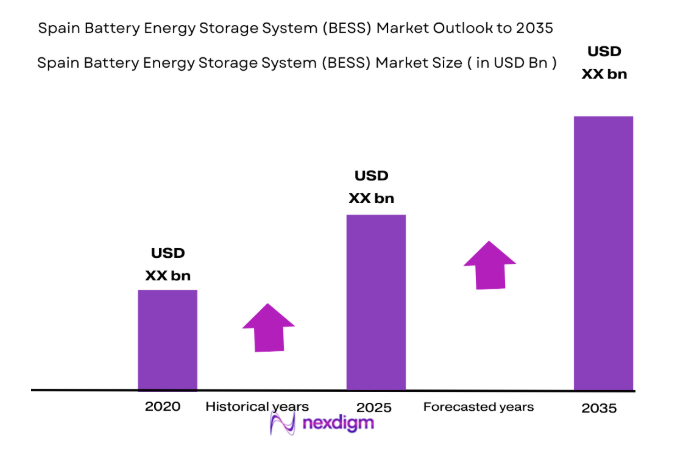
The Spain Battery Energy Storage System (BESS) market is experiencing significant growth driven by the increasing demand for renewable energy integration and the adoption of energy storage solutions. According to recent historical assessments, the market is valued at approximately USD ~ billion in 2024. Factors such as the ongoing energy transition, favorable government policies, and technological advancements in battery storage technologies are fueling the demand for energy storage systems. The rising need for grid stability, frequency regulation, and the integration of intermittent renewable energy sources such as solar and wind is also driving market growth.
Spain is one of the leading countries in the European Union with significant investments in renewable energy sources and energy storage solutions. The country’s energy policies, along with robust infrastructure development and government incentives, position Spain as a key market for BESS. Madrid and Barcelona are the dominant regions due to their advanced energy grids and high adoption rates of renewable energy systems. Additionally, Spain’s commitment to achieving net-zero emissions by 2050 further strengthens the role of energy storage in the country’s energy transition strategy.
Market Segmentation
By Product Type:
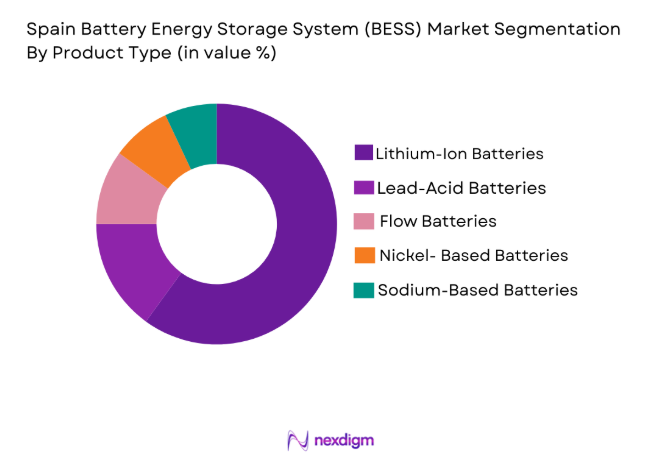
Spain’s BESS market is segmented by product type into lithium-ion batteries, lead-acid batteries, flow batteries, nickel-based batteries, and sodium-based batteries. Lithium-ion batteries are dominating the market due to their high energy density, longer lifespan, and cost-efficiency compared to other types. With decreasing costs and increasing demand for electric vehicles and renewable energy integration, lithium-ion technology continues to hold the largest market share. These batteries offer the best combination of performance and economic viability, making them the preferred choice for both residential and commercial energy storage systems.
By Platform Type:
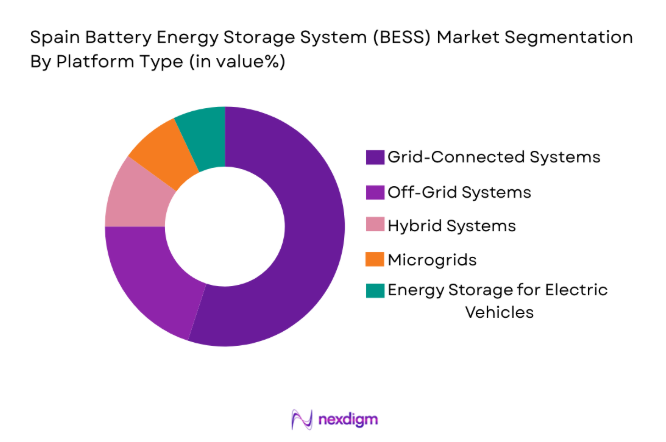
Spain’s Battery Energy Storage System (BESS) market is segmented by platform type into grid-connected systems, off-grid systems, hybrid systems, microgrids, and energy storage for electric vehicles (EVs). Grid-connected systems dominate due to their ability to stabilize the grid by storing excess energy and releasing it during low production periods. This integration is crucial for renewable energy adoption and energy security. Government policies and incentives further support the growth of grid-connected systems in Spain’s BESS market.
Competitive Landscape
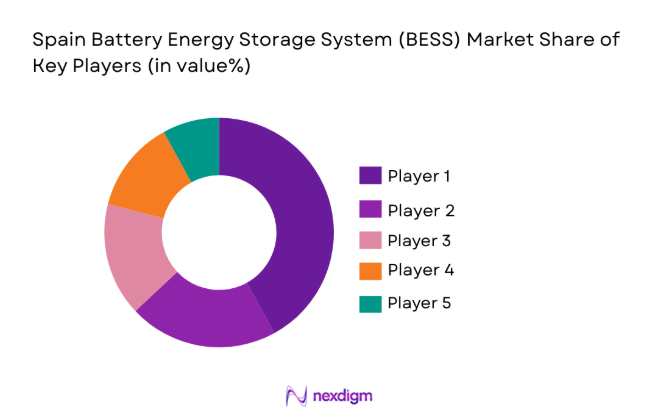
The competitive landscape of Spain’s BESS market is marked by a strong presence of global players alongside regional innovators. The market is becoming increasingly consolidated as major companies continue to acquire smaller players to strengthen their market position. These key players dominate through technological advancements, strategic collaborations, and a robust distribution network. As the demand for energy storage systems continues to rise, innovation in battery technology and expansion into new regions are pivotal strategies for market leaders.
| Company Name | Establishment Year | Headquarters | Technology Focus | Market Reach | Key Products | Revenue | Market-Specific Parameter |
| Siemens AG | 1847 | Munich, Germany | ~ | ~ | ~ | ~ | ~ |
| ABB Ltd. | 1988 | Zurich, Switzerland | ~ | ~ | ~ | ~ | ~ |
| Schneider Electric | 1836 | Rueil-Malmaison, France | ~ | ~ | ~ | ~ | ~ |
| LG Chem | 1947 | Seoul, South Korea | ~ | ~ | ~ | ~ | ~ |
| Tesla, Inc. | 2003 | Palo Alto, USA | ~ | ~ | ~ | ~ | ~ |
Spain Battery Energy Storage System (BESS) Market Analysis
Growth Drivers
Government Incentives:
Government incentives are one of the most significant growth drivers in the Spain Battery Energy Storage System (BESS) market. Spain has introduced a range of policy measures aimed at reducing carbon emissions and increasing the adoption of renewable energy sources. These policies include tax rebates, subsidies for energy storage systems, and grants for the development of renewable energy infrastructure. These initiatives have made energy storage solutions more affordable, facilitating wider adoption across residential, commercial, and industrial sectors. Additionally, the government’s commitment to achieving net-zero emissions by 2050 underscores the importance of energy storage in meeting renewable energy targets. As Spain aims to transition to a green economy, the demand for BESS will continue to grow, driven by these favorable regulatory policies. Furthermore, the integration of energy storage with solar and wind power generation is encouraged, enabling Spain to address the challenges of intermittency in renewable energy. This continued governmental support will be a major contributor to the market’s growth in the coming years.
Technological Advancements in Battery Storage:
Technological advancements in battery storage technologies are also driving the growth of Spain’s BESS market. The development of high-performance lithium-ion batteries with greater energy densities, longer lifespans, and faster charging times is transforming the storage industry. In particular, innovations such as solid-state batteries, which promise even higher efficiencies and safety compared to conventional lithium-ion technologies, are gaining attention. These advancements have made BESS more viable and cost-effective, encouraging widespread adoption. The decreased cost of battery storage solutions has also played a pivotal role in making energy storage more accessible to a wider range of consumers. As battery technology continues to evolve, energy storage systems will become more efficient and cheaper, further driving their integration into Spain’s energy infrastructure. Additionally, the emergence of grid-scale storage solutions and improved grid management capabilities are key enablers of energy security and stability, enhancing the adoption of BESS in the country. This technological progress is expected to sustain and accelerate the demand for BESS systems across various sectors.
Market Challenges
High Initial Capital Costs:
One of the major challenges facing the Spain Battery Energy Storage System (BESS) market is the high initial capital cost of energy storage solutions. Despite significant reductions in the cost of lithium-ion batteries over the past decade, the upfront investment required for large-scale energy storage systems remains substantial. This presents a barrier for many potential customers, especially in the residential and small commercial sectors. Although the long-term savings from reduced energy costs and increased energy independence can offset the initial investment, the high capital expenditure still deters many potential buyers. Financial barriers are particularly significant for small-to-medium enterprises (SMEs) and residential customers who may not have access to the necessary financing. Government subsidies and financial incentives are crucial to alleviating this challenge, but not all market players can access these benefits, making cost a critical limiting factor. Overcoming this challenge will require further technological advancements that can lower production costs and financing solutions that make energy storage more affordable for all users.
Regulatory and Compliance Barriers:
The regulatory landscape for energy storage systems in Spain presents several challenges. The country’s energy policies are evolving rapidly to support the integration of renewable energy and the adoption of energy storage technologies. However, complex and changing regulations, particularly related to energy storage installation, grid connections, and safety certifications, can delay project implementation. The regulatory framework often lacks clarity, making it difficult for companies to navigate and obtain the necessary approvals. Furthermore, regulations governing energy storage vary between regions, creating inconsistency across the country. These regulatory barriers not only create delays but also increase operational costs for energy storage developers. To mitigate these challenges, clear, consistent, and supportive policies are needed at both the national and regional levels. Moreover, standardization of safety and certification protocols will be essential in reducing barriers to market entry and accelerating the deployment of BESS solutions.
Opportunities
Expansion of Renewable Energy Integration:
The ongoing expansion of renewable energy sources presents a significant opportunity for the Spain Battery Energy Storage System (BESS) market. As Spain seeks to increase its reliance on solar and wind energy, energy storage solutions will become critical in stabilizing the grid and ensuring a continuous power supply. The integration of BESS with renewable energy systems will address the issue of intermittency by storing excess energy generated during peak production times and releasing it when production is low. This capacity for balancing supply and demand will make BESS a vital component in Spain’s energy infrastructure. The Spanish government’s ambitious renewable energy targets, coupled with its commitment to carbon neutrality by 2050, will further drive the need for energy storage systems. By integrating energy storage with solar and wind farms, Spain can improve grid efficiency, reduce reliance on fossil fuels, and enhance energy security. The continued growth of the renewable energy sector in Spain will directly impact the demand for BESS solutions, presenting a significant opportunity for market players to capitalize on the growing demand for grid-scale storage systems. This market opportunity is poised to drive future growth as Spain leads Europe in clean energy innovation.
Development of Smart Grid Technologies:
The development of smart grid technologies is another key opportunity for the Spain Battery Energy Storage System (BESS) market. Smart grids enable the real-time monitoring and management of electricity distribution, which can optimize energy usage and improve grid stability. As Spain continues to modernize its energy infrastructure, the integration of energy storage with smart grids will allow for more efficient use of renewable energy resources and a better balance between energy supply and demand. BESS plays a crucial role in smart grid operations by providing backup storage during power outages, enabling demand response, and facilitating the integration of electric vehicles (EVs) into the grid. The combination of smart grids and BESS will improve energy management, reduce costs, and enable more efficient use of renewable energy, thus supporting Spain’s sustainability goals. This synergy between energy storage and smart grid technologies presents an exciting opportunity for market growth, as both sectors are set to expand in the coming years.
Future Outlook
The future outlook for Spain’s Battery Energy Storage System (BESS) market is positive, with steady growth expected over the next five years. Continued technological advancements in battery storage, along with supportive government policies, will drive further adoption across residential, commercial, and industrial sectors. Increasing integration of renewable energy, along with Spain’s focus on achieving carbon neutrality by 2050, will accelerate the demand for energy storage systems. The development of smart grids and improvements in energy management technologies will create a more efficient and sustainable energy infrastructure, enhancing the role of BESS in the country’s energy transition.
Major Players
• Siemens AG
• ABB Ltd.
• Schneider Electric
• LG Chem
• Samsung SDI
• BYD Co. Ltd.
• Tesla, Inc.
• Sungrow Power Supply Co., Ltd.
• Fluence Energy
• Eos Energy Enterprises
• VARTA AG
• Exide Technologies
• EDF Renewables
• Enel Green Power
• Saft Groupe S.A.
Key Target Audience
• Investments and venture capitalist firms
• Government and regulatory bodies
• Renewable energy project developers
• Energy storage system manufacturers
• Electric utility companies
• Infrastructure development firms
• Large-scale commercial and industrial users
• System integrators
Research Methodology
Step 1: Identification of Key Variables
Identification of critical market drivers, restraints, opportunities, and emerging trends through primary and secondary data sources.
Step 2: Market Analysis and Construction
Comprehensive analysis of market segments, value chain, and competitive landscape. Identification of key players and trends.
Step 3: Hypothesis Validation and Expert Consultation
Expert consultations and validation of market hypotheses through interviews with industry professionals and experts.
Step 4: Research Synthesis and Final Output
Synthesis of research findings, development of actionable insights, and final report preparation.

- Executive Summary
- Research Methodology
(Definitions, Scope, Industry Assumptions, Market Sizing Approach, Primary & Secondary Research Framework, Data Collection & Verification Protocol, Analytic Models & Forecast Methodology, Limitations & Research Validity Checks)

- Market Definition and Scope
- Value Chain & Stakeholder Ecosystem
- Regulatory / Certification Landscape
- Sector Dynamics Affecting Demand
- Strategic Initiatives & Infrastructure Growth

- Growth Drivers
Government Policies Promoting Renewable Energy
Declining Cost of Battery Storage Technologies
Increasing Demand for Energy Security and Grid Stability
Integration of Renewable Energy Sources into the Grid
Technological Advancements in Energy Storage Systems - Market Challenges
High Initial Investment and Capital Expenditure
Limited Availability of Raw Materials for Battery Production
Regulatory and Compliance Barriers
Energy Storage System Efficiency Limitations
Environmental and Disposal Issues Related to Batteries - Market Opportunities
Growing Investment in Renewable Energy Storage Solutions
Expansion of Electric Vehicles and Their Integration with BESS
Partnerships Between Energy Providers and Tech Companies for Smart Grids - Trends
Increase in Use of Lithium-Ion Batteries
Shift Toward Integrated and Hybrid Energy Storage Solutions
Rising Popularity of Off-Grid Systems for Remote Locations
Deployment of BESS for Frequency Regulation and Load Management
Technological Developments in Battery Recycling and Sustainability - Government Regulations & Defense Policy
Energy Storage Policy and Regulations
Government Funding and Grants for Energy Storage Systems
Incentives for Solar + Storage System Installations - SWOT Analysis
Stakeholder and Ecosystem Analysis
Porter’s Five Forces Analysis
Competition Intensity and Ecosystem Mapping

- By Market Value, 2020-2025
- By Installed Units, 2020-2025
- By Average System Price, 2020-2025
- By System Complexity Tier, 2020-2025

- By System Type (In Value%)
Lithium-Ion Batteries
Lead-Acid Batteries
Flow Batteries
Nickel-Based Batteries
Sodium-Based Batteries - By Platform Type (In Value%)
Grid-Connected Systems
Off-Grid Systems
Hybrid Systems
Microgrids
Energy Storage for Electric Vehicles (EVs) - By Fitment Type (In Value%)
On-Premise Solutions
Cloud-Based Solutions
Modular Solutions
Integrated Solutions
Custom-Built Solutions - By EndUser Segment (In Value%)
Utility Companies
Commercial & Industrial
Residential
Energy Providers
Government & Defense - By Procurement Channel (In Value%)
Direct Procurement
Government Tenders
Private Sector Procurement
Online Bidding Platforms
Third-party Distributors - By Material / Technology (in Value%)
Lithium-Ion Technology
Vanadium Flow Technology
Lead-Acid Technology
Sodium-Ion Technology
Solid-State Batteries

- Market structure and competitive positioning
Market share snapshot of major players
CrossComparison Parameters (System Type, Platform Type, EndUser Segment, Procurement Channel, Material/Technology)
SWOT Analysis of Key Competitors
Pricing & Procurement Analysis - Key Players
Siemens AG
ABB Ltd.
Schneider Electric
LG Chem
Samsung SDI
BYD Co. Ltd.
Tesla, Inc.
Sungrow Power Supply Co., Ltd.
Fluence Energy
Eos Energy Enterprises
VARTA AG
Exide Technologies
EDF Renewables
Enel Green Power
Saft Groupe S.A.

- Increasing Adoption of Energy Storage by Utilities for Grid Stability
- Rising Demand for Storage Solutions in the Commercial Sector
- Growth of Residential Energy Storage Solutions for Solar Power Integration
- Government’s Role in Promoting Energy Storage Adoption in Defense Sectors

- Forecast Market Value, 2026-2035
- Forecast Installed Units, 2026-2035
- Price Forecast by System Tier, 2026-2035
- Future Demand by Platform, 2026-2035


 Request a Sample
 Ask for Customization
 Get a Quote
 Enquire Now