

 Download PDF
 Download PDF
Market Overview
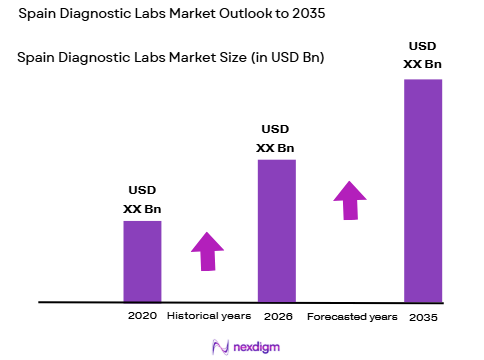
The Spain diagnostic labs market is valued at approximately USD ~ billion based on a recent historical assessment. The market is driven by increasing healthcare demand, the rise in chronic diseases, and advancements in diagnostic technologies. The need for accurate and early disease detection, coupled with the expansion of healthcare infrastructure and government initiatives, has fueled the growth of diagnostic labs in Spain. Additionally, private and public sector investments in diagnostic services are playing a pivotal role in market expansion.
The dominant cities in Spain’s diagnostic labs market are Madrid, Barcelona, and Valencia. Madrid, being the capital, is home to many large diagnostic laboratories, research institutions, and hospitals that provide a wide range of medical testing services. Barcelona follows with its strong presence in medical research and development, including diagnostic labs that cater to both national and international patients. Valencia also plays a vital role, with multiple diagnostic centers expanding their services and increasing their patient base due to a growing demand for specialized healthcare.
Market Segmentation
By Testing Type
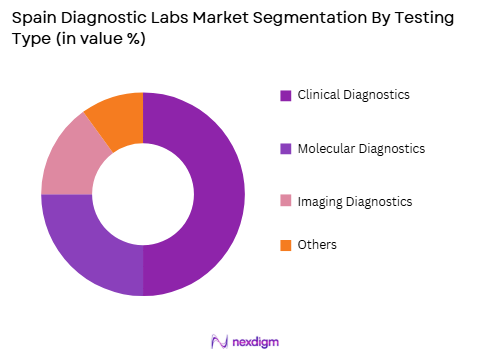
The Spain diagnostic labs market is segmented by testing type into clinical diagnostics, molecular diagnostics, imaging diagnostics, and others. Recently, clinical diagnostics have dominated the market share due to their broad application in healthcare settings, ranging from routine blood tests to more complex diagnostics like pathology. The rise in chronic diseases, especially cardiovascular diseases, diabetes, and cancer, has driven the demand for clinical diagnostic services. Additionally, advancements in diagnostic technologies, such as automated blood analysis and point-of-care testing, have further fueled the growth of clinical diagnostics in Spain.
By End-User
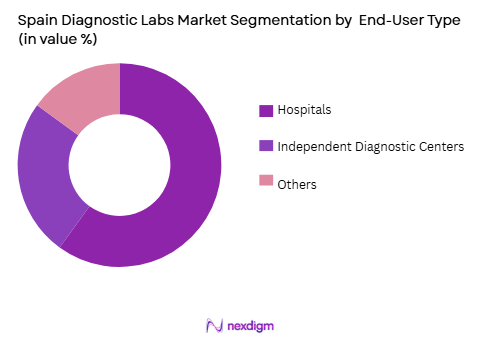
The Spain diagnostic labs market is segmented by end-user into hospitals, independent diagnostic centers, and others. Recently, hospitals have dominated the market share due to their central role in providing diagnostic services across multiple specialties. Hospitals in Spain have integrated advanced diagnostic labs, such as imaging systems, molecular diagnostics, and pathology departments, into their routine operations to meet the increasing demand for disease detection. The increasing emphasis on early disease diagnosis, the rise in chronic disease incidences, and government investments in healthcare infrastructure further contribute to the dominance of hospitals in the diagnostic labs market.
Competitive Landscape
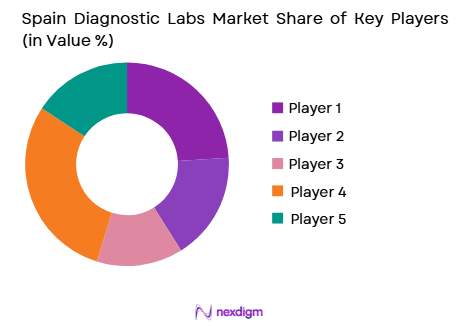
The competitive landscape of Spain’s diagnostic labs market is characterized by a mix of local players and international companies. Large diagnostic lab chains are consolidating their market position through acquisitions and partnerships with healthcare providers. The focus is on providing a wide range of diagnostic services, improving test accuracy, and adopting cutting-edge technologies such as molecular diagnostics and AI-based imaging. Major players are competing to expand their market share by offering advanced, cost-effective testing solutions and improving accessibility in both urban and rural areas.
| Company Name | Establishment Year | Headquarters | Technology Focus | Market Reach | Key Products | Revenue | Additional Parameter |
| Grupo Quirónsalud | 1999 | Madrid, Spain | ~ | ~ | ~ | ~ | ~ |
| Labcorp | 1969 | Burlington, USA | ~ | ~ | ~ | ~ | ~ |
| B. Braun Melsungen | 1839 | Melsungen, Germany | ~ | ~ | ~ | ~ | ~ |
| Echevarne | 1985 | Barcelona, Spain | ~ | ~ | ~ | ~ | ~ |
| Synlab | 1966 | Barcelona, Spain | ~ | ~ | ~ | ~ | ~ |
Spain Diagnostic Labs Market Analysis
Growth Drivers
Increase in Chronic Diseases
One of the primary growth drivers for Spain’s diagnostic labs market is the increasing prevalence of chronic diseases such as cardiovascular diseases, diabetes, and cancer. These conditions require regular monitoring and early detection, which drives the demand for diagnostic testing services. As Spain’s population ages, the incidence of chronic diseases continues to rise, further escalating the need for efficient and accurate diagnostic services. The growing awareness among patients and healthcare providers about the importance of early diagnosis is propelling the adoption of diagnostic tests. This trend is expected to continue, contributing to sustained demand for diagnostic services across the country. Additionally, Spain’s healthcare system is increasingly focused on preventive care, and diagnostic labs play a critical role in this shift, ensuring that conditions are identified before they progress.
Government Healthcare Initiatives
Another key growth driver is the Spanish government’s support for healthcare initiatives, particularly those aimed at improving healthcare infrastructure and accessibility. Spain has made significant investments in expanding its healthcare facilities, including diagnostic labs, to meet the rising demand for medical services. Public-private partnerships have further facilitated the development of diagnostic centers and testing facilities, especially in underserved regions. The Spanish government has also been increasing funding for the adoption of digital health solutions, including diagnostic technology, to improve healthcare delivery. These initiatives have made diagnostic services more accessible to the population, driving growth in the diagnostic labs market. As healthcare policies continue to evolve, there will be ongoing support for diagnostic labs, boosting market expansion.
Market Challenges
Regulatory Compliance and Standardization
One of the key challenges in Spain’s diagnostic labs market is the need to comply with stringent regulatory standards and ensure the standardization of diagnostic procedures. Spain’s healthcare system follows strict regulations regarding the approval, certification, and operation of diagnostic labs to ensure patient safety and test accuracy. However, maintaining compliance with these standards can be time-consuming and costly for smaller diagnostic centers, limiting their ability to expand or modernize. Additionally, regulatory differences between Spain’s autonomous communities can create inconsistencies in the operation of diagnostic labs, leading to inefficiencies and challenges for both service providers and patients. The complexity of the regulatory landscape poses a significant barrier to the smooth functioning and expansion of the diagnostic labs market.
High Operational Costs
The high operational costs associated with running diagnostic labs is another challenge faced by the market. Diagnostic labs require significant investment in advanced equipment, technology, and highly trained personnel. The cost of acquiring and maintaining diagnostic tools, such as imaging systems, molecular diagnostic machines, and laboratory instruments, can be prohibitively high, especially for smaller facilities. Furthermore, diagnostic labs must invest in research and development to stay competitive and offer the latest diagnostic technologies. These high operational costs often lead to higher prices for diagnostic services, making it more difficult for patients in lower-income brackets to access essential tests. In addition, the reimbursement rates for diagnostic services may not always cover the full cost of the tests, putting pressure on diagnostic labs to operate efficiently while maintaining quality standards.
Opportunities
Integration of AI and Automation in Diagnostics
The integration of artificial intelligence (AI) and automation into diagnostic procedures presents a significant opportunity for Spain’s diagnostic labs market. AI-powered diagnostic tools, such as image recognition software, have the potential to greatly improve the accuracy and speed of diagnoses, especially in imaging diagnostics like radiology and pathology. Automation in diagnostic labs can also streamline processes, reduce human error, and increase operational efficiency. The growing interest in AI-driven diagnostic solutions, particularly for detecting diseases such as cancer, cardiovascular conditions, and neurological disorders, offers a unique opportunity for diagnostic labs to enhance their services. By adopting these technologies, diagnostic labs can provide faster results and improve patient outcomes, creating a competitive advantage in the market.
Growing Demand for Preventive Healthcare
The growing focus on preventive healthcare presents an opportunity for diagnostic labs to expand their services. Preventive care, including early disease detection through regular diagnostic tests, is becoming increasingly popular among the Spanish population. The shift toward preventive care is driven by rising health awareness, an aging population, and the increasing prevalence of lifestyle diseases. As patients seek to identify potential health risks early on, there is a growing demand for routine diagnostic tests, including blood tests, screenings, and imaging. Diagnostic labs that offer comprehensive preventive healthcare services, such as wellness check-ups and early-stage disease screenings, will be well-positioned to tap into this growing demand, driving market growth in the coming years.
Future Outlook
The future outlook for Spain’s diagnostic labs market is highly positive, with continued growth expected in the next five years. The demand for diagnostic testing services will be driven by the increasing prevalence of chronic diseases, the aging population, and the growing focus on preventive healthcare. Technological advancements, particularly in AI, automation, and molecular diagnostics, will further enhance the capabilities of diagnostic labs, improving patient outcomes and operational efficiency. The Spanish government’s ongoing support for healthcare infrastructure and its emphasis on digitizing the healthcare system will also contribute to the market’s expansion. As the market continues to evolve, diagnostic labs that embrace innovation and improve accessibility will be key players in Spain’s healthcare sector.
Major Players
- Grupo Quirónsalud
- Labcorp
- B. Braun Melsungen
- Echevarne
- Synlab
- Roche Diagnostics
- Siemens Healthineers
- Abbott Laboratories
- Thermo Fisher Scientific
- GE Healthcare
- BioMérieux
- Illumina
- Quest Diagnostics
- RIMSA
- Laboratorio Dr. Esteve
Key Target Audience
- Investments and venture capitalist firms
- Government and regulatory bodies
- Healthcare providers
- Hospitals and clinics
- Pharmaceutical companies
- Medical device manufacturers
- Insurance providers
- Medical research organizations
Research Methodology
Step 1: Identification of Key Variables
Key variables such as market size, growth drivers, challenges, and technological trends are identified through primary and secondary research.
Step 2: Market Analysis and Construction
Comprehensive data is collected and analyzed using statistical models to build accurate market forecasts.
Step 3: Hypothesis Validation and Expert Consultation
Insights and assumptions are validated through consultations with industry experts to ensure the accuracy of the findings.
Step 4: Research Synthesis and Final Output
The final report synthesizes all data, providing a comprehensive analysis of Spain’s diagnostic labs market, including growth drivers, challenges, and opportunities.

- Executive Summary
- Research Methodology (Definitions, Scope, Industry Assumptions, Market Sizing Approach, Primary & Secondary Research Framework, Data Collection & Verification Protocol, Analytic Models & Forecast Methodology, Limitations & Research Validity Checks)

- Market Definition and Scope
- Value Chain & Stakeholder Ecosystem
- Regulatory / Certification Landscape
- Sector Dynamics Affecting Demand

- Growth Drivers
Increasing Incidences of Chronic Diseases
Technological Advancements in Diagnostic Equipment
Growing Healthcare Investments by Government - Market Challenges
High Operational and Maintenance Costs
Regulatory Compliance and Certification Challenges
Lack of Skilled Technicians - Market Opportunities
Expansion of Point-of-Care Diagnostics
Rise in Demand for Personalized Diagnostics
Technological Advancements in Genetic Testing - Trends
Integration of AI and Machine Learning in Diagnostics
Shift Towards Minimally Invasive Diagnostic Methods - Government Regulations
- SWOT Analysis
- Porter’s Five Forces

- By Market Value, 2020-2025
- By Installed Units, 2020-2025
- By Average System Price, 2020-2025
- By System Complexity Tier, 2020-2025

- By System Type (In Value%)
Clinical Labs
Pathology Labs
Genetic Testing Labs
Microbiology Labs
Immunoassay Labs - By Platform Type (In Value%)
Automated Diagnostic Platforms
Manual Diagnostic Platforms
Hybrid Diagnostic Platforms
Cloud-based Diagnostic Platforms - By Fitment Type (In Value%)
On-premise Solutions
Cloud-based Solutions
Hybrid Solutions
Integrated Solutions - By End User Segment (In Value%)
Hospitals
Private Diagnostic Centers
Public Healthcare Providers

- Market Share Analysis
- Cross Comparison Parameters (System Type, Platform Type, Procurement Channel, End User Segment, Fitment Type, Technological Integration, Market Penetration, Regulatory Compliance, Data Security, Service Availability)
- SWOT Analysis of Key Competitors
- Pricing & Procurement Analysis
- Key Players
Laboratorios Clínicos Valdés
Laboratorio Dr. Bédard
Laboratorios Reig Jofré
Grupo Echevarne
Laboratorio Laba
Eurofins
Laboratorio Clínico López
Laboratorio Biolab
Centros de Diagnóstico Borrás
Laboratorios Ochoa
Laboratorios Aragó
Grupo Envera
Laboratorios de Salud
Laboratorio Antón
Laboratorio Sanitas

- Hospitals Increasing Diagnostic Services
- Private Diagnostic Centers Adopting Advanced Technologies
- Public Healthcare Expanding Diagnostic Access
- Research Institutions Fostering Innovation in Diagnostics

- Forecast Market Value, 2026-2035
- Forecast Installed Units, 2026-2035
- Price Forecast by System Tier, 2026-2035
- Future Demand by Platform, 2026-2035


 Request a Sample
 Ask for Customization
 Get a Quote
 Enquire Now