

 Download PDF
 Download PDF
Market Overview
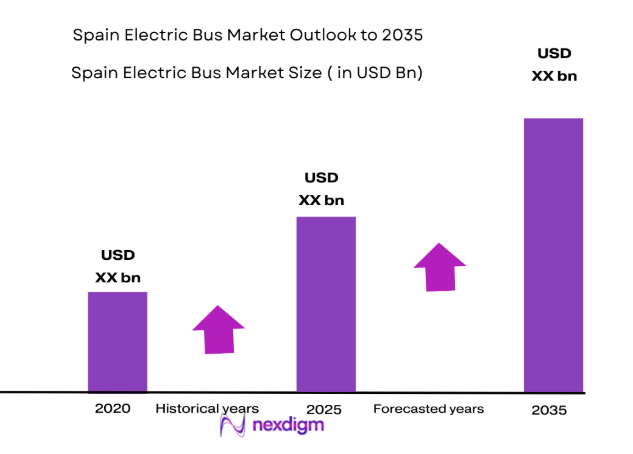
The Spain electric bus market is growing rapidly, driven by increasing demand for sustainable and eco-friendly transportation options. Based on a recent historical assessment, the market is valued at approximately USD ~ billion, with continuous investments from both government and private sectors. Key drivers of this market include government incentives for cleaner transport, urbanization, and the rising need for reduced carbon emissions. The transition to electric buses aligns with Spain’s broader goals to combat climate change and improve air quality, which has spurred the adoption of electric buses in cities across the country.
Cities such as Madrid, Barcelona, and Valencia are leading the adoption of electric buses due to their commitment to sustainability and their active role in reducing urban pollution. These regions have seen substantial investments in electric bus fleets, driven by government policies and environmental targets. Madrid, for instance, has implemented a comprehensive strategy for public transportation electrification, while Barcelona and Valencia have also made significant strides in integrating electric buses into their public transport systems. The dominance of these cities is due to their infrastructure development, regulatory support, and high levels of public sector engagement.
Market Segmentation
By Product Type:
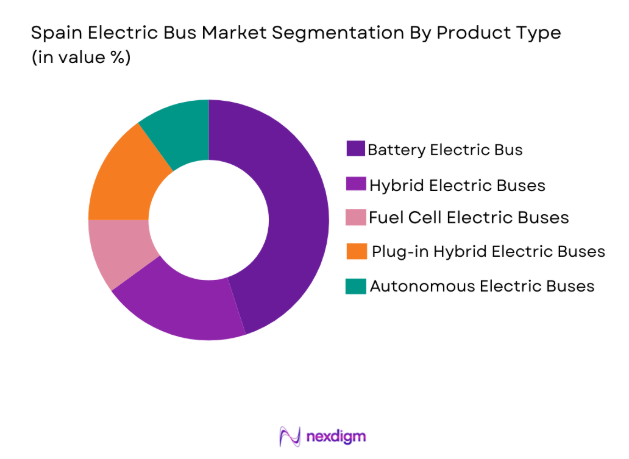
Spain electric bus market is segmented by product type into battery electric buses, hybrid electric buses, fuel cell electric buses, plug-in hybrid electric buses, and autonomous electric buses. Recently, battery electric buses have a dominant market share due to factors such as government incentives for zero-emission vehicles, cost-effective operations, and a growing charging infrastructure. These buses offer longer driving ranges, lower operating costs, and have seen improved battery technology, making them the preferred option for public transport operators across the country.
By Platform Type:
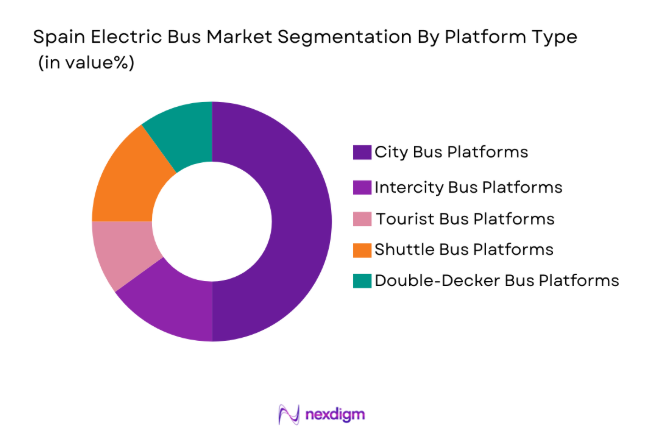
The Spain electric bus market is segmented by platform type into city bus platforms, intercity bus platforms, tourist bus platforms, shuttle bus platforms, and double-decker bus platforms. Recently, city bus platforms have a dominant market share due to the increasing demand for sustainable urban mobility solutions, which is further supported by stringent emission norms in major cities like Madrid and Barcelona. These cities have recognized the need for clean transport systems, and the adoption of electric buses in city platforms is a crucial step in addressing environmental challenges and providing efficient public transportation.
Competitive Landscape
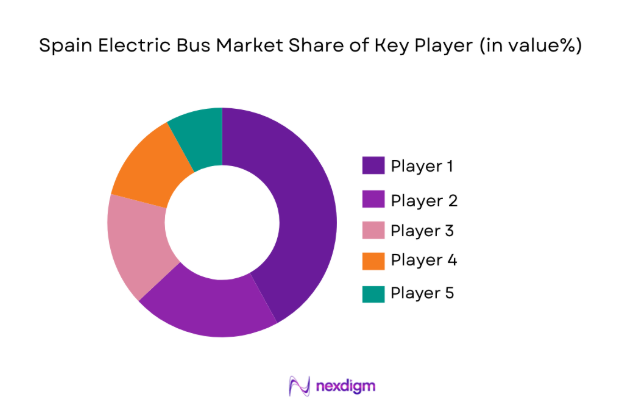
The competitive landscape of the Spain electric bus market is characterized by a blend of international and local players, driving consolidation through strategic partnerships, mergers, and acquisitions. Major players have a significant influence on the market, with key manufacturers like Scania and Volvo Buses shaping the market dynamics. These companies are leveraging advanced technologies, including battery optimization and energy-efficient systems, to expand their market share. As the market matures, consolidation is expected to continue, especially in the areas of manufacturing and charging infrastructure.
| Company Name | Establishment Year | Headquarters | Technology Focus | Market Reach | Key Products | Revenue | Additional Parameter |
| Scania | 1891 | Södertälje, Sweden | ~ | ~ | ~ | ~ | ~ |
| Volvo Buses | 1927 | Gothenburg, Sweden | ~ | ~ | ~ | ~ | ~ |
| BYD | 1995 | Shenzhen, China | ~ | ~ | ~ | ~ | ~ |
| Mercedes-Benz | 1926 | Stuttgart, Germany | ~ | ~ | ~ | ~ | ~ |
| Solaris Bus & Coach | 1996 | Bolechowo, Poland | ~ | ~ | ~ | ~ | ~ |
Spain Electric Bus Market Analysis
Growth Drivers
Government Incentives for Sustainable Transport:
Government incentives play a pivotal role in the growth of the Spain electric bus market. These incentives, including grants, subsidies, and tax exemptions, are designed to promote the adoption of zero-emission buses. Public authorities, both at the national and local levels, are increasingly providing financial support to public transport operators who switch to electric buses. This is in line with Spain’s commitment to reducing its carbon footprint and complying with European Union environmental regulations. These incentives reduce the initial investment costs associated with electric buses, making them more affordable for operators. Furthermore, the Spanish government has set ambitious targets for electric vehicle adoption, and the public transport sector is central to achieving these goals. The expansion of electric bus fleets in cities like Madrid and Barcelona is an example of how government incentives are fostering growth in the electric bus market. By encouraging the transition to electric buses, these incentives are helping to create a more sustainable urban mobility ecosystem, contributing to cleaner air, reduced greenhouse gas emissions, and lower fuel consumption.
Technological Advancements in Battery Systems:
Technological advancements in battery technology have significantly contributed to the growth of the Spain electric bus market. Improvements in battery energy density, charging speed, and overall efficiency have made electric buses more viable and cost-effective for public transportation operators. Innovations such as solid-state batteries and enhanced lithium-ion batteries offer longer ranges and faster charging times, addressing some of the key concerns surrounding electric buses. These technological advancements make electric buses a more attractive option for city transport networks that require long-distance travel and minimal downtime. As battery prices continue to decrease, the overall cost of ownership for electric buses is expected to decline, further accelerating market growth. Additionally, advancements in wireless charging systems and fast-charging infrastructure are making it easier for operators to deploy electric buses in cities with busy transit schedules. With the ongoing development of new battery technologies, Spain’s electric bus market is well-positioned for continued growth and transformation.
Market Challenges
High Initial Investment Costs for Electric Buses:
One of the main challenges hindering the growth of the Spain electric bus market is the high initial capital investment required for electric buses. While the total cost of ownership of electric buses is lower in the long term due to reduced operational and maintenance costs, the upfront cost remains a significant barrier for public and private transport operators. Electric buses are considerably more expensive than traditional diesel-powered buses, primarily due to the cost of batteries, which make up a large portion of the overall cost. Even with government incentives and subsidies, the high capital expenditure required for electric buses can be a deterrent, especially for smaller operators who may have limited access to funding. This challenge is further compounded by the need for investment in supporting infrastructure, such as charging stations, which also require significant financial outlay. While long-term savings may offset the initial cost, the financial burden of adopting electric buses remains a significant challenge for the market, especially for operators in smaller cities or rural areas.
Integration of Electric Buses into Existing Infrastructure:
Integrating electric buses into existing public transportation systems presents another challenge for Spain’s electric bus market. Many cities in Spain have legacy bus fleets that rely on diesel or natural gas, and transitioning to electric buses requires significant changes to infrastructure and operational processes. For example, electric buses require charging stations, which must be strategically located and integrated into the city’s transportation network. In addition to the financial cost of building the necessary charging infrastructure, there are operational challenges associated with electric bus fleets, such as fleet management, charging schedules, and the compatibility of electric buses with existing bus stops and depots. Furthermore, the lack of uniform charging standards across different bus manufacturers and operators can complicate the deployment of electric buses in public transport fleets. As a result, the integration of electric buses into existing transport infrastructure requires careful planning, investment, and coordination between various stakeholders, including city authorities, bus manufacturers, and transport operators.
Opportunities
Expansion of Charging Infrastructure in Urban Areas:
One of the significant opportunities in the Spain electric bus market lies in the expansion of charging infrastructure, particularly in urban areas. With the increasing adoption of electric buses, there is a growing demand for fast-charging stations and grid systems capable of supporting the energy needs of electric vehicles. This creates a valuable opportunity for both public and private stakeholders to invest in charging infrastructure that can meet the needs of electric bus fleets. Cities like Madrid, Barcelona, and Valencia are already investing heavily in the installation of charging stations to support the growing fleet of electric buses. The expansion of charging infrastructure will not only support the current demand for electric buses but also facilitate future growth as more cities look to adopt zero-emission public transport solutions. Moreover, the development of a widespread charging network would reduce range anxiety for bus operators and improve the efficiency of electric bus operations. The expansion of charging infrastructure also opens up opportunities for partnerships between electric bus manufacturers, energy providers, and charging infrastructure companies, creating a more robust and integrated ecosystem for sustainable urban mobility.
Development of Autonomous Electric Buses:
Another promising opportunity for Spain’s electric bus market is the development and deployment of autonomous electric buses. The integration of autonomous technology into electric buses offers significant potential for improving the efficiency and cost-effectiveness of public transport systems. Autonomous electric buses can operate on fixed routes, improving the reliability and punctuality of public transport services. Additionally, these buses can reduce labor costs associated with human drivers and increase safety by minimizing human error. The technology is already being tested in various cities around the world, and Spain is poised to follow suit. Major cities like Madrid and Barcelona have expressed interest in deploying autonomous electric buses in the near future. The development of autonomous electric buses aligns with Spain’s broader goals to innovate in the field of mobility and sustainability, offering an opportunity to revolutionize urban transport. As the technology matures and regulatory frameworks are established, autonomous electric buses could become a key component of Spain’s future public transport systems.
Future Outlook
The Spain electric bus market is expected to witness steady growth over the next five years, driven by increasing demand for sustainable public transport solutions and favorable government policies. Technological advancements in battery systems and charging infrastructure will further improve the feasibility of electric buses, making them more cost-effective for public transport operators. Additionally, growing urbanization and stricter emission regulations will fuel the adoption of electric buses in cities across Spain. As government incentives continue to support electric mobility and the infrastructure required for it expands, the market is set to experience continued expansion. Furthermore, the integration of autonomous electric buses presents an exciting opportunity for the evolution of Spain’s transport networks.
Major Players
- Scania
- Volvo Buses
- BYD
- Mercedes-Benz
- Solaris Bus & Coach
- MAN Truck & Bus
- New Flyer
- Proterra
- Alexander Dennis
- Vossloh Kiepe
- Cummins
- Siemens Mobility
- XCMG
- Alstom
- Navya
Key Target Audience
- Investments and venture capitalist firms
- Government and regulatory bodies
- Public transport operators
- Electric bus manufacturers
- Charging infrastructure developers
- Bus fleet managers
- Automotive technology providers
- Environmental NGOs
Research Methodology
Step 1: Identification of Key Variables
The identification of key variables involves understanding the essential drivers, barriers, and trends within the market, focusing on factors such as government incentives, technological innovations, and consumer behavior.
Step 2: Market Analysis and Construction
Market analysis and construction involve the collection and analysis of both primary and secondary data sources to build a comprehensive market model.
Step 3: Hypothesis Validation and Expert Consultation
Hypothesis validation involves consulting industry experts and stakeholders to confirm the accuracy of initial market assumptions and adjust the analysis accordingly.
Step 4: Research Synthesis and Final Output
This step includes synthesizing the gathered data into a cohesive market report, finalizing conclusions and recommendations based on the analysis conducted.

- Executive Summary
- Research Methodology
(Definitions, Scope, Industry Assumptions, Market Sizing Approach, Primary & Secondary Research Framework, Data Collection & Verification Protocol, Analytic Models & Forecast Methodology, Limitations & Research Validity Checks)

- Market Definition and Scope
- Value Chain & Stakeholder Ecosystem
- Regulatory / Certification Landscape
- Sector Dynamics Affecting Demand
- Strategic Initiatives & Infrastructure Growth

- Growth Drivers
Government Incentives for Clean Transport
Technological Advancements in Battery Systems
Rising Demand for Sustainable Urban Mobility
Expansion of Charging Infrastructure
Favorable Government Regulations on Emissions - Market Challenges
High Initial Capital Investment
Lack of Charging Infrastructure in Rural Areas
Battery Disposal and Recycling Issues
Integration with Existing Public Transport Systems
Operational Efficiency in Cold Climates - Market Opportunities
Increase in Adoption of Autonomous Electric Buses
Growth in Cross-border Electric Bus Networks
Expansion of Electric Bus Fleets in Emerging Cities - Trends
Increase in Electrification of Urban Public Transport
Technological Innovations in Charging Stations
Rise of Renewable Energy Integration for Charging
Focus on Reducing Total Cost of Ownership
Use of Artificial Intelligence in Fleet Management - Government Regulations & Defense Policy
EU Emissions Reduction Targets for Urban Transport
National Clean Bus Programs
Subsidies for Charging Infrastructure Development - SWOT Analysis
Stakeholder and Ecosystem Analysis
Porter’s Five Forces Analysis
Competition Intensity and Ecosystem Mapping

- By Market Value, 2020-2025
- By Installed Units, 2020-2025
- By Average System Price, 2020-2025
- By System Complexity Tier, 2020-2025

- By System Type (In Value%)
Battery Electric Buses
Hybrid Electric Buses
Fuel Cell Electric Buses
Plug-in Hybrid Electric Buses
Autonomous Electric Buses - By Platform Type (In Value%)
City Bus Platforms
Intercity Bus Platforms
Tourist Bus Platforms
Shuttle Bus Platforms
Double-Decker Bus Platforms - By Fitment Type (In Value%)
On-road Fitment
Off-road Fitment
Integrated Fitment
Custom Fitment
Hybrid Fitment - By EndUser Segment (In Value%)
Public Transport Operators
Private Bus Companies
Government Agencies
Tourism Industry
Logistics Operators - By Procurement Channel (In Value%)
Direct Procurement
Public Procurement Tenders
Private Sector Procurement
Online Bidding Platforms
Leasing Companies - By Material / Technology (in Value%)
Lithium-Ion Batteries
Solid-State Batteries
Electric Drive Systems
Battery Management Systems
Hydrogen Fuel Cell Systems

- Market structure and competitive positioning
Market share snapshot of major players
CrossComparison Parameters (System Type, Platform Type, Procurement Channel, EndUser Segment, Fitment Type)
SWOT Analysis of Key Competitors
Pricing & Procurement Analysis - Key Players
Scania
Volvo Buses
BYD
Iveco
Mercedes-Benz
Solaris Bus & Coach
MAN Truck & Bus
New Flyer
Proterra
Alexander Dennis
Vossloh Kiepe
Cummins
Siemens Mobility
XCMG
Alstom

- Increased Adoption by Public Transport Operators
- Private Sector’s Shift to Sustainable Transport
- Tourism Industry’s Embrace of Electric Buses
- Government’s Role in Funding Fleet Transitions

- Forecast Market Value, 2026-2035
- Forecast Installed Units, 2026-2035
- Price Forecast by System Tier, 2026-2035
- Future Demand by Platform, 2026-2035


 Request a Sample
 Ask for Customization
 Get a Quote
 Enquire Now