
 Download PDF
 Download PDF
Market Overview
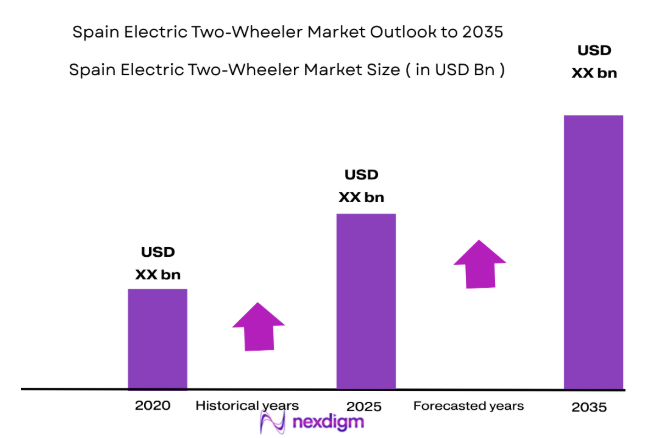
The Spain Electric Two-Wheeler Market has been experiencing significant growth, driven by increased demand for sustainable mobility solutions. The market size has expanded due to government incentives, advancements in battery technology, and a rising focus on reducing urban traffic congestion. The adoption of electric two-wheelers has been bolstered by consumer preference for eco-friendly alternatives and cost-effective transportation. In recent assessments, the market value reached USD ~ billion, reflecting robust demand and government-backed initiatives supporting electric vehicles.
Spain has emerged as a key player in the electric two-wheeler market, with major cities like Madrid, Barcelona, and Valencia leading the way. These cities have fostered strong growth due to their commitment to reducing carbon emissions and improving urban mobility infrastructure. Factors such as increasing adoption of electric vehicles, the presence of favorable policies, and investments in charging infrastructure have enabled these regions to dominate. Spain’s urban areas remain the focal point of the electric two-wheeler revolution, paving the way for future market expansion.
Market Segmentation
By Product Type:
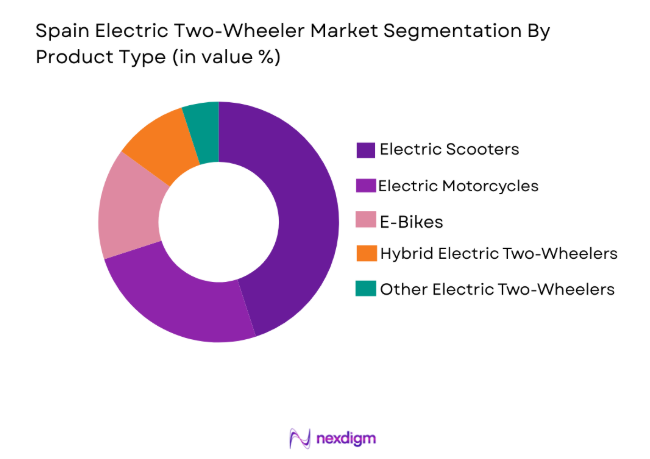
Spain Electric Two-Wheeler market is segmented by product type into electric scooters, electric motorcycles, e-bikes, hybrid electric two-wheelers, and other electric two-wheelers. Recently, electric scooters have emerged as the dominant sub-segment, owing to their affordability, convenience for short-distance commuting, and growing popularity among urban commuters. The demand for electric scooters is driven by rising environmental awareness, government incentives, and increasing urban congestion. These vehicles offer an effective solution for navigating crowded cities, while their lower cost compared to electric motorcycles makes them a preferred choice. The continuous improvement in battery technologies, which enhances the range and performance of these vehicles, further accelerates their adoption.
By Platform Type:
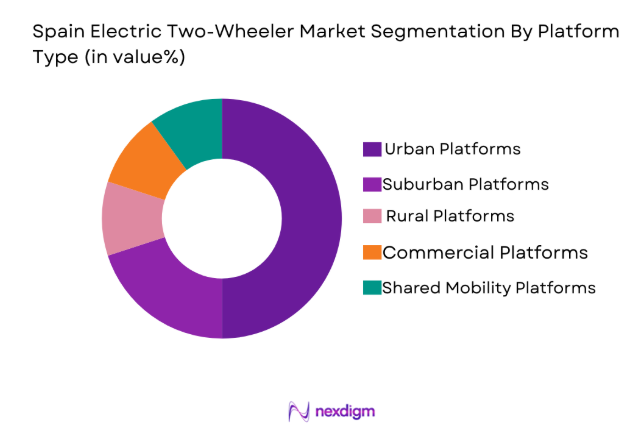
Spain Electric Two-Wheeler market is segmented by platform type into urban platforms, suburban platforms, rural platforms, commercial platforms, and shared mobility platforms. The dominant sub-segment in this market is urban platforms, driven by increasing urbanization, traffic congestion, and the push for greener, more efficient transportation options. Urban platforms are particularly popular due to their suitability for short-distance commuting and the growing number of electric two-wheeler charging stations in cities like Madrid and Barcelona. As governments implement policies to reduce emissions and improve urban mobility, the demand for electric two-wheelers in urban environments continues to rise. Urban platforms offer the perfect environment for electric two-wheelers, given the dense population and high demand for efficient, low-emission transport options, making them the leading choice for consumers and fleet operators.
Competitive Landscape
The competitive landscape of the Spain Electric Two-Wheeler market is characterized by the presence of both established international players and emerging local companies. With the rising demand for electric two-wheelers, consolidation is underway as companies strive to expand their product portfolios and strengthen their market position. Major players are influencing the market with innovations in electric mobility, while regulatory support encourages investments in sustainable transportation solutions. The increasing competition and investments are expected to drive further advancements in battery technologies and charging infrastructure.
| Company Name | Establishment Year | Headquarters | Technology Focus | Market Reach | Key Products | Revenue | Additional Market Parameter |
| Honda Motor Co., Ltd. | 1948 | Japan | ~ | ~ | ~ | ~ | ~ |
| Yamaha Motor Co., Ltd. | 1953 | Japan | ~ | ~ | ~ | ~ | ~ |
| Hero Electric | 2007 | India | ~ | ~ | ~ | ~ | ~ |
| Piaggio Group | 1884 | Italy | ~ | ~ | ~ | ~ | ~ |
| Ather Energy | 2013 | India |
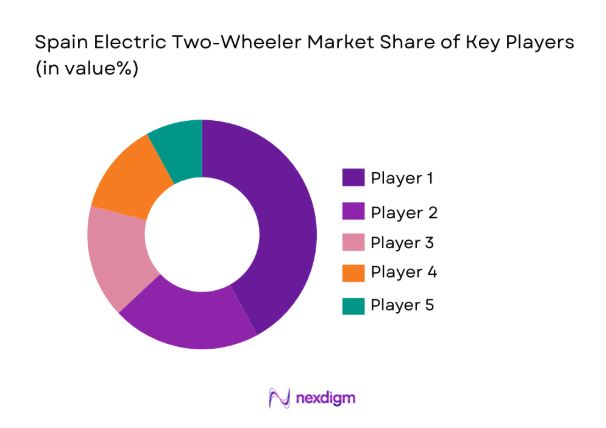
Spain Electric Two-Wheeler Market Analysis
Growth Drivers
Government Incentives:
Government incentives have played a pivotal role in the growth of the Spain Electric Two-Wheeler market, particularly in urban centers. Various policies, such as tax rebates, purchase subsidies, and exemption from registration fees, have made electric two-wheelers more accessible to a broader consumer base. In addition to these financial incentives, the government’s commitment to reducing carbon emissions and promoting cleaner transportation solutions has resulted in a more favorable regulatory environment for electric vehicles. Municipalities and local authorities have further supported the transition to electric mobility by developing better infrastructure, such as charging stations and parking facilities. These efforts contribute to the increasing demand for electric two-wheelers and make the shift to green transportation easier for consumers. The growth of the market is expected to continue, driven by these favorable government policies that encourage both the adoption of electric two-wheelers and the growth of related infrastructure. The increasing push for sustainability in the European Union, along with national environmental goals, ensures that government support will remain a key driver of market growth in the coming years.
Technological Advancements:
Technological advancements in battery technologies have significantly contributed to the growth of the Spain Electric Two-Wheeler market. Improved battery efficiency, reduced charging times, and increased battery life have made electric two-wheelers more practical and cost-effective for consumers. Innovations such as solid-state batteries and fast-charging technologies are expected to further enhance the performance of electric vehicles and reduce operational costs. These advancements not only make electric two-wheelers more accessible to the general public but also enhance the overall user experience. Furthermore, the development of smart charging systems and integration with mobile apps for battery monitoring is adding value to the ownership experience. As battery technology continues to evolve, it is expected that electric two-wheelers will become increasingly attractive compared to traditional vehicles, further boosting market growth. This technological progress, combined with consumer demand for energy-efficient and eco-friendly transportation, is accelerating the adoption of electric two-wheelers in Spain.
Market Challenges
High Initial Purchase Costs:
One of the significant barriers to widespread adoption of electric two-wheelers in Spain is the high initial purchase cost, which remains higher than that of conventional gasoline-powered vehicles. Despite the decreasing cost of batteries over time, electric two-wheelers are still perceived as expensive compared to their fossil fuel counterparts. This price disparity can discourage many consumers from making the switch to electric two-wheelers, particularly in price-sensitive markets. While government subsidies and tax rebates help alleviate some of the costs, the upfront price remains a major hurdle. Additionally, the need for consumers to purchase charging equipment or access to public charging stations adds another financial consideration. For the market to grow more rapidly, it is essential that manufacturers continue to reduce production costs, improve economies of scale, and make electric two-wheelers more affordable for the average consumer. Furthermore, efforts to increase consumer awareness of the long-term savings on fuel and maintenance costs associated with electric vehicles will play a key role in overcoming this challenge.
Limited Charging Infrastructure:
The limited availability of charging infrastructure is another challenge impeding the growth of the Spain Electric Two-Wheeler market. While large cities such as Madrid and Barcelona are gradually improving the availability of charging stations, many rural and suburban areas still lack sufficient infrastructure. Consumers may hesitate to purchase electric two-wheelers if they are unsure of where they can charge their vehicles, particularly in regions with limited public charging stations. The availability of fast-charging stations is another area of concern, as consumers demand more convenient charging options that do not require lengthy wait times. To address this challenge, both private and public sectors must collaborate to expand and upgrade the charging infrastructure across the country, especially in underserved regions. As the charging infrastructure network improves, consumers will be more inclined to adopt electric two-wheelers, thus driving market growth.
Opportunities
Expansion of Electric Two-Wheeler Fleets for Shared Mobility:
One of the significant opportunities in the Spain Electric Two-Wheeler market is the growing demand for shared mobility solutions. Electric scooters and bikes are increasingly being used in urban areas for short-term rentals, often through mobile applications, making them more accessible to a wider range of users. The rise of shared mobility platforms such as Lime, Bird, and Circ has already contributed to the expansion of electric two-wheelers in urban areas, offering convenient, eco-friendly transportation for short trips. These services are expected to grow in popularity, driven by factors such as urbanization, traffic congestion, and environmental concerns. Furthermore, as cities continue to promote the use of green transport solutions, the demand for electric two-wheelers for shared mobility purposes is expected to increase. The introduction of regulatory frameworks that support the integration of electric vehicles into shared mobility systems will further accelerate market growth. As more consumers adopt shared electric two-wheelers, the market will witness a surge in demand for electric two-wheelers, contributing to the growth of the overall market.
Technological Integration with IoT for Fleet Management:
Another key opportunity lies in the integration of electric two-wheelers with Internet of Things (IoT) technology for fleet management. IoT-enabled systems provide real-time data on vehicle performance, location, battery life, and usage patterns, enabling fleet operators to optimize their operations. By incorporating smart sensors and analytics into electric two-wheelers, fleet operators can track the condition of the vehicles and manage maintenance schedules more effectively, reducing downtime and increasing the lifespan of the vehicles. Additionally, IoT solutions can improve user experience by providing riders with real-time information on the nearest available vehicle, battery status, and route optimization. As IoT technology continues to evolve, the integration of smart systems into electric two-wheelers will drive the adoption of electric mobility, offering a competitive edge to fleet operators and further expanding the market. This technological integration is expected to boost the efficiency and scalability of electric two-wheeler fleets, creating a new avenue for market growth.
Future Outlook
The Spain Electric Two-Wheeler Market is expected to continue its growth trajectory over the next five years, driven by advancements in battery technology, government incentives, and increasing consumer demand for sustainable transport solutions. The adoption of electric two-wheelers will be supported by expanding charging infrastructure, favorable regulations, and rising environmental awareness. Technological innovations such as smart mobility solutions, improved battery life, and IoT integration will further enhance the user experience, leading to increased adoption. Spain’s commitment to reducing carbon emissions and promoting green transportation will ensure continued market growth, particularly in urban areas.
Major Players
- Honda Motor Co., Ltd.
- Yamaha Motor Co., Ltd.
- Hero Electric
- Piaggio Group
- Ather Energy
- TVS Motor Company
- Greaves Electric Mobility
- Super Soco
- Kymco
- Oki Electric
- Revolt Motors
- NIU Technologies
- BMW Motorrad
- Vespa
- Bajaj Auto Ltd.
Key Target Audience
- Investments and venture capitalist firms
- Government and regulatory bodies
- Electric vehicle manufacturers
- Urban mobility service providers
- Fleet management companies
- Battery technology suppliers
- Charging infrastructure providers
- Public transportation agencies
Research Methodology
Step 1: Identification of Key Variables
The first step in the research methodology involves identifying the key variables affecting the Spain Electric Two-Wheeler market, such as market demand, regulatory factors, and technological trends.
Step 2: Market Analysis and Construction
Next, a thorough market analysis is conducted using both primary and secondary data sources to build a comprehensive understanding of the market’s dynamics and forecast future growth.
Step 3: Hypothesis Validation and Expert Consultation
Expert consultations are held with industry stakeholders, including manufacturers, government agencies, and analysts, to validate the hypotheses formed in earlier stages and refine the findings.
Step 4: Research Synthesis and Final Output
The final output is synthesized by combining data insights, expert opinions, and market analysis to provide a clear, actionable report on the Spain Electric Two-Wheeler market.

- Executive Summary
- Research Methodology
(Definitions, Scope, Industry Assumptions, Market Sizing Approach, Primary & Secondary Research Framework, Data Collection & Verification Protocol, Analytic Models & Forecast Methodology, Limitations & Research Validity Checks)

- Market Definition and Scope
- Value Chain & Stakeholder Ecosystem
- Regulatory / Certification Landscape
- Sector Dynamics Affecting Demand
- Strategic Initiatives & Infrastructure Growth

- Growth Drivers
Government Subsidies and Incentives
Shift to Sustainable Mobility Solutions
Advancements in Battery Technologies
Increasing Urban Congestion and Traffic
Growing Awareness of Environmental Issues - Market Challenges
High Initial Purchase Costs
Limited Charging Infrastructure
Technological Barriers in Battery Efficiency
Lack of Standardization and Regulations
Consumer Perception of Electric Two-Wheelers - Market Opportunities
Expansion of EV Charging Networks
Integration of Smart Mobility Solutions
Growth in E-commerce and Delivery Services - Trends
Shift Towards Shared Mobility Models
Increased Investment in Charging Infrastructure
Rising Demand for Last-Mile Electric Solutions
Technological Advancements in Battery Recycling
Rising Popularity of Electric Delivery Fleets - Government Regulations & Defense Policy
Government Tax Rebates for Electric Vehicles
Regulations Supporting Zero-Emission Mobility
Incentives for Green and Sustainable Transport - SWOT Analysis
Stakeholder and Ecosystem Analysis
Porter’s Five Forces Analysis
Competition Intensity and Ecosystem Mapping

- By Market Value, 2020-2025
- By Installed Units, 2020-2025
- By Average System Price, 2020-2025
- By System Complexity Tier, 2020-2025

- By System Type (In Value%)
Electric Scooters
Electric Motorcycles
E-Bikes
Hybrid Electric Two-Wheelers
Other Electric Two-Wheelers - By Platform Type (In Value%)
Urban Platforms
Suburban Platforms
Rural Platforms
Commercial Platforms
Shared Mobility Platforms - By Fitment Type (In Value%)
Factory-Fitted Electric Two-Wheelers
Retrofit Electric Conversion Kits
Modular Electric Two-Wheelers
Integrated Electric Systems
Customized Electric Two-Wheelers - By EndUser Segment (In Value%)
Individual Consumers
Fleet Operators
Government & Municipalities
Tourism & Rental Services
Logistics & Delivery Services - By Procurement Channel (In Value%)
Direct Sales
Dealer Networks
Online Sales Platforms
Government Procurement
Business-to-Business Procurement - By Material / Technology (in Value%)
Lithium-Ion Batteries
Lead-Acid Batteries
Solid-State Batteries
Electric Drive Systems
Power Electronics & Charging Infrastructure

- Market structure and competitive positioning
Market share snapshot of major players
CrossComparison Parameters (Price, System Type, Platform Type, Fitment Type, Technology)
SWOT Analysis of Key Competitors
Pricing & Procurement Analysis - Key Players
Honda Motor Co., Ltd.
Yamaha Motor Co., Ltd.
Bajaj Auto Ltd.
Hero Electric
TVS Motor Company
Ather Energy
Piaggio Group
NIU Technologies
Kymco
Greaves Electric Mobility
Okinawa Autotech
Super Soco
Vespa
BMW Motorrad
Rivigo

- Increased Adoption Among Urban Consumers
- Fleet Operators Seeking Cost-Effective Solutions
- Government-Backed Initiatives Driving Public Sector Demand
- Expansion of Electric Two-Wheelers in Delivery and Logistics

- Forecast Market Value, 2026-2035
- Forecast Installed Units, 2026-2035
- Price Forecast by System Tier, 2026-2035
- Future Demand by Platform, 2026-2035


 Request a Sample
 Ask for Customization
 Get a Quote
 Enquire Now