
 Download PDF
 Download PDF
Market Overview
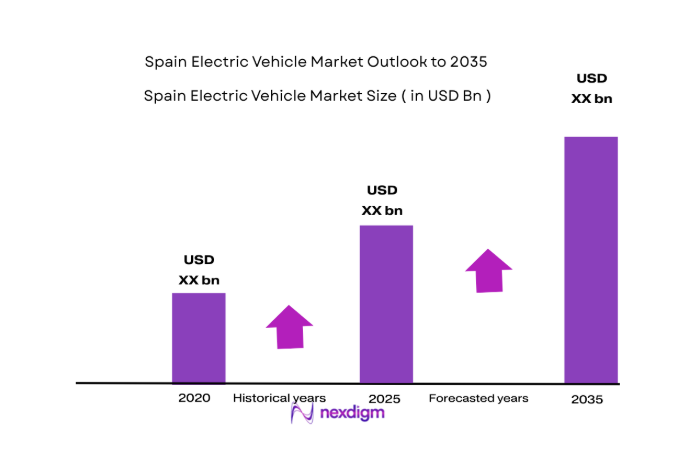
The Spain Electric Vehicle market, based on a recent historical assessment, is valued at approximately USD ~ billion. This growth is driven by substantial government incentives, including subsidies and tax breaks, which have made electric vehicles more affordable. The demand for EVs has been significantly boosted by advancements in battery technology, providing longer driving ranges and faster charging times. Furthermore, investments in the expansion of charging infrastructure are contributing to the market’s growth, facilitating wider adoption of electric vehicles across Spain.
Spain’s dominance in the electric vehicle sector is mainly attributed to cities like Madrid and Barcelona, where strong government policies, such as low-emission zones and subsidies for EV buyers, have fostered adoption. Additionally, Spain’s strategic focus on renewable energy and sustainable transportation solutions has bolstered its position as a leader in the European EV market. The country’s commitment to expanding its charging network and incentivizing the transition to electric vehicles will continue to drive market expansion.
Market Segmentation
By Product Type
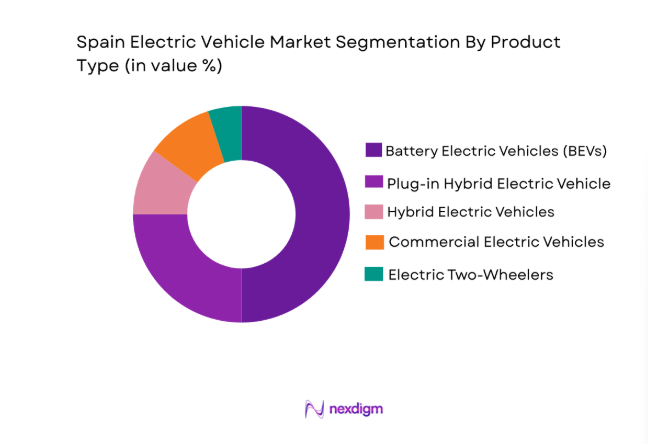
The Spain Electric Vehicle market is segmented by product type into Battery Electric Vehicles (BEVs), Plug-in Hybrid Electric Vehicles (PHEVs), Hybrid Electric Vehicles (HEVs), Commercial Electric Vehicles, and Electric Two-Wheelers. BEVs dominate the market due to increasing consumer demand and advancements in battery technology, which have improved range and charging speed. Spain’s growing charging infrastructure has further accelerated BEV adoption, making them the preferred choice for consumers seeking a zero-emission solution
By Platform Type
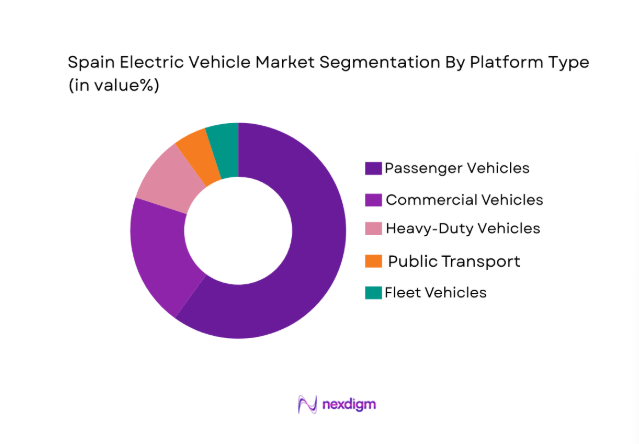
The Spain Electric Vehicle market is segmented by platform type into passenger vehicles, commercial vehicles, heavy-duty vehicles, public transport, and fleet vehicles. Passenger vehicles dominate the market, driven by strong consumer demand, government incentives, and improved infrastructure. Commercial vehicles are gaining traction due to cost-saving benefits, particularly in logistics. Public transport is evolving with electric buses, while fleet vehicles are being increasingly electrified to meet sustainability and operational cost reduction goals.
Competitive Landscape
The competitive landscape of the Spain Electric Vehicle market is characterized by the strong presence of both global and regional players. The market is experiencing consolidation with major manufacturers expanding their electric vehicle portfolios and investing in EV infrastructure. Leading automotive brands have ramped up their efforts to offer innovative electric vehicle solutions. These players are further collaborating with government bodies to establish efficient charging networks, fueling competition in the rapidly growing electric vehicle sector.
| Company Name | Establishment Year | Headquarters | Technology Focus | Market Reach | Key Products | Revenue | R&D Investment (%) |
| Volkswagen Group | 1937 | Wolfsburg, Germany | ~ | ~ | ~ | ~ | ~ |
| Tesla Inc. | 2003 | Palo Alto, USA | ~ | ~ | ~ | ~ | ~ |
| BMW Group | 1916 | Munich, Germany | ~ | ~ | ~ | ~ | ~ |
| Renault Group | 1899 | Boulogne-Billancourt, France | ~ | ~ | ~ | ~ | ~ |
| Hyundai Motor Group | 1967 | Seoul, South Korea | ~ | ~ | ~ | ~ | ~ |
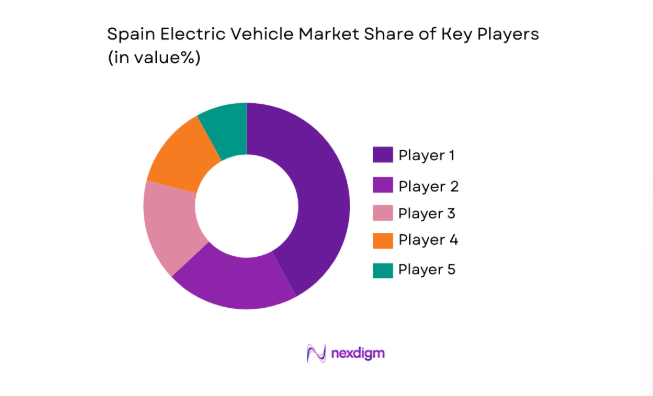
Spain Electric Vehicle Market Analysis
Growth Drivers
Government Incentives for Electric Vehicles
Government incentives play a pivotal role in driving the Spain Electric Vehicle market. Spain’s national and regional governments have implemented policies aimed at reducing carbon emissions by encouraging the adoption of electric vehicles. These incentives include tax breaks, subsidies for consumers, and funding for infrastructure development such as charging stations. These measures have significantly lowered the initial cost of electric vehicles, making them more affordable for consumers. Furthermore, the growing global trend towards sustainability aligns with Spain’s long-term environmental objectives, thus fueling the market’s expansion. The introduction of low-emission zones in urban areas also enhances the attractiveness of EVs by offering financial and regulatory benefits for EV owners. The government’s vision of promoting clean energy technologies and achieving carbon neutrality provides a stable policy framework that continues to drive the EV market forward. As the policies become more refined, additional investments in electric vehicle manufacturing and infrastructure are expected, fostering continued growth. The market will also benefit from the anticipated increased allocation of funds toward the electrification of public transport, which further supports EV adoption in Spain.
Technological Advancements in Battery and Charging Infrastructure
Technological advancements in battery technology and electric vehicle charging infrastructure are key growth drivers for the Spain Electric Vehicle market. As battery technologies improve, the cost of EV batteries has decreased, and energy efficiency has significantly increased, providing consumers with longer ranges and faster charging times. Spain’s EV market has benefited from the global shift towards lithium-ion batteries, which offer higher energy density and lower costs compared to older battery types. Moreover, rapid developments in fast-charging networks have alleviated one of the primary concerns of electric vehicle owners—the time required for charging. Spain’s growing network of charging stations across major cities and highways ensures that EV owners can travel longer distances with confidence. The government’s investment in ultra-fast charging infrastructure and the use of renewable energy sources to power charging stations are essential factors contributing to the market’s growth. As charging infrastructure becomes more widespread and accessible, consumer adoption of EVs is expected to increase significantly. These technological improvements also enhance the overall consumer experience and support Spain’s commitment to sustainable mobility solutions.
Market Challenges
High Initial Cost of Electric Vehicles
Despite the strong incentives offered by the Spanish government, the high initial cost of electric vehicles remains a significant challenge for widespread adoption. While electric vehicles tend to have lower operational costs due to savings on fuel and maintenance, the upfront cost is still a barrier for many consumers. Battery technology is the largest contributor to the cost of electric vehicles, and while advancements have been made in reducing these costs, they remain a critical concern for price-sensitive buyers. The cost of batteries accounts for a significant portion of the overall vehicle price, and as battery prices are expected to decrease in the coming years, the overall affordability of EVs may still take time to catch up. This challenge is particularly pronounced in the lower-income demographic, where the price gap between electric vehicles and traditional combustion engine vehicles is significant. Moreover, the resale value of electric vehicles is still uncertain in comparison to traditional vehicles, making consumers hesitant to switch to EVs. As EV production scales up and economies of scale are realized, these costs may decrease, but the current high prices remain an obstacle to achieving mass adoption.
Limited Charging Infrastructure in Rural Areas
One of the significant barriers to the widespread adoption of electric vehicles in Spain is the insufficient charging infrastructure in rural and remote areas. While major cities like Madrid and Barcelona boast a growing number of charging stations, rural areas still lack adequate coverage, creating range anxiety for potential EV buyers. EV owners in these regions often face difficulties in finding reliable charging points, limiting the convenience of owning an electric vehicle. This discrepancy between urban and rural charging networks exacerbates the divide in electric vehicle adoption, with urban residents benefiting from better infrastructure and rural residents being left behind. To address this challenge, further investment is needed to expand the charging network across Spain, particularly in less populated regions. Without this expansion, the growth of the EV market in rural Spain may be stunted, preventing the country from achieving its full sustainability potential. Government initiatives and private-sector collaborations are essential to ensuring that charging infrastructure reaches all areas, promoting equitable access to electric vehicles.
Opportunities
Development of Electric Vehicle Charging Networks
One of the key opportunities in the Spain Electric Vehicle market is the development and expansion of charging networks, particularly in underserved areas. The Spanish government has already made significant investments in charging infrastructure in urban centers, but there is still a considerable gap in rural regions. Expanding the network of fast-charging stations and ensuring their availability along major highways and in residential areas can encourage more consumers to transition to electric vehicles. The opportunity lies in developing a comprehensive charging infrastructure that can accommodate the growing number of EVs on the road. Additionally, private companies have started exploring partnerships with public institutions to fund the installation of charging stations, creating a new business model for infrastructure development. The incorporation of renewable energy sources in charging stations will further enhance the appeal of EVs, as consumers become more conscious of the environmental impact of their choices. This opportunity not only boosts the EV market but also contributes to Spain’s broader goals of sustainability and carbon reduction. With the development of a robust, accessible, and sustainable charging infrastructure, Spain can become a leading nation in the adoption of electric vehicles, setting an example for other countries in Europe.
Emerging Demand for Commercial Electric Vehicles
Another significant opportunity in the Spain Electric Vehicle market is the growing demand for commercial electric vehicles. The commercial sector, including logistics and transportation services, is increasingly adopting electric vehicles as part of efforts to reduce carbon footprints and comply with stricter emissions regulations. Companies in Spain are beginning to recognize the long-term cost savings that come with switching to electric trucks and vans, including lower operational costs and reduced fuel dependency. Additionally, as the country’s electric vehicle infrastructure continues to expand, commercial operators are finding it easier to switch to electric fleets. The demand for electric commercial vehicles is being fueled by a combination of government incentives, regulatory pressure, and the desire for cleaner transport solutions. The logistics and delivery sectors are expected to be the main drivers of this trend, as companies look to improve efficiency and reduce their environmental impact. With an increasing number of municipalities adopting low-emission zones, electric commercial vehicles are becoming an essential part of Spain’s transportation ecosystem, offering opportunities for growth in both public and private sectors.
Future Outlook
The Spain Electric Vehicle market is poised for strong growth over the next five years, driven by technological advancements, regulatory support, and increased demand for sustainable transportation. As the charging infrastructure expands, adoption rates for electric vehicles are expected to rise, particularly in urban areas. Technological innovations in battery efficiency and charging speed will continue to enhance the consumer experience, while government policies will further incentivize the switch to electric mobility. Spain’s ambitious environmental goals and the push for low-emission zones will contribute to the growth of the market. Additionally, the integration of renewable energy sources into the charging infrastructure will further drive adoption as consumers and businesses seek greener alternatives. These factors combined will position Spain as a leader in the European electric vehicle market, setting the stage for continued expansion and innovation.
Major Players
- Volkswagen Group
- Tesla Inc.
- BMW Group
- Renault Group
- Ford Motor Company
- Nissan Motor Co.
- Hyundai Motor Group
- Kia Corporation
- PSA Group (Peugeot, Citroën)
- Mercedes-Benz AG
- Audi AG
- Stellantis
- BYD Auto
- Seat S.A.
- LG Chem
Key Target Audience
- Investments and venture capitalist firms
- Government and regulatory bodies
- Electric vehicle manufacturers
- Charging infrastructure developers
- Commercial fleet operators
- Public transport authorities
- Environmental NGOs
- Automotive component suppliers
Research Methodology
Step 1: Identification of Key Variables
The research process begins by identifying critical factors impacting the market, including product types, end-user segments, and technological developments.
Step 2: Market Analysis and Construction
Comprehensive analysis of the market landscape is conducted, including segmentation, trends, and forecasting, based on historical and current data.
Step 3: Hypothesis Validation and Expert Consultation
Hypotheses formed during analysis are validated with industry experts, ensuring accuracy and relevance to the current market conditions.
Step 4: Research Synthesis and Final Output
The research findings are synthesized into a comprehensive report, providing valuable insights for stakeholders across the market.

- Executive Summary
- Research Methodology (Definitions, Scope, Industry Assumptions, Market Sizing Approach, Primary & Secondary Research Framework, Data Collection & Verification Protocol, Analytic Models & Forecast Methodology, Limitations & Research Validity Checks)

- Market Definition and Scope
- Value Chain & Stakeholder Ecosystem
- Regulatory / Certification Landscape
- Sector Dynamics Affecting Demand
- Strategic Initiatives & Infrastructure Growth

- Growth Drivers
Government Incentives for EV Purchases
Advancements in Battery Technology
Environmental Awareness and Sustainability Goals
Expansion of Charging Infrastructure
Cost Reduction in Electric Vehicle Manufacturing - Market Challenges
Insufficient Charging Infrastructure in Rural Areas
High Initial Cost of Electric Vehicles
Limited Consumer Awareness
Battery Disposal and Recycling Challenges
Regulatory Hurdles in EV Manufacturing - Market Opportunities
Development of Fast-Charging Stations
Partnerships Between EV Manufacturers and Technology Providers
Growing Demand for EVs in Commercial Fleets - Trends
Increase in Adoption of EVs for Public Transport
Shift Toward Green and Sustainable Mobility Solutions
Integration of AI in EV Charging Solutions
Rise of EV Car Sharing Programs
Growing Use of Renewable Energy in Charging Networks - Government Regulations & Defense Policy
EV Tax Incentives and Subsidies
Emission Reduction Regulations
Support for Charging Infrastructure Development - SWOT Analysis
- Stakeholder and Ecosystem Analysis
- Porter’s Five Forces Analysis
- Competition Intensity and Ecosystem Mapping

- By Market Value, 2020-2025
- By Installed Units, 2020-2025
- By Average System Price, 2020-2025
- By System Complexity Tier, 2020-2025

- By System Type (In Value%)
Battery Electric Vehicles (BEVs)
Plug-in Hybrid Electric Vehicles (PHEVs)
Hybrid Electric Vehicles (HEVs)
Commercial Electric Vehicles
Electric Two-Wheelers - By Platform Type (In Value%)
Passenger Vehicles
Commercial Vehicles
Heavy-Duty Vehicles
Public Transport
Fleet Vehicles - By Fitment Type (In Value%)
OEM Solutions
Aftermarket Solutions
Custom Fit Solutions
Retrofitting Services
Integrated Fitment Solutions - By End User Segment (In Value%)
Consumers
Fleet Operators
Commercial Enterprises
Government & Public Transport Authorities
Ride-Sharing Services

- Market structure and competitive positioning
Market share snapshot of major players - Cross Comparison Parameters (System Type, Platform Type, Procurement Channel, End User Segment, Fitment Type)
- SWOT Analysis of Key Competitors
- Pricing & Procurement Analysis
- Key Players
Volkswagen Group
Tesla Inc.
BMW Group
Renault Group
Ford Motor Company
Nissan Motor Co.
Hyundai Motor Group
Kia Corporation
PSA Group (Peugeot, Citroën)
Mercedes-Benz AG
Audi AG
Stellantis
BYD Auto
Seat S.A.
LG Chem
Spain Electric Vehicle Market Future Size, 2026-2035
Forecast Market Value, 2026-2035
Forecast Installed Units, 2026-2035
Price Forecast by System Tier, 2026-2035
Future Demand by Platform, 2026-2035

- Consumers’ Shift Toward Environmentally Friendly Vehicles
- Government Investment in EV Fleets for Public Transport
- Fleet Operators’ Focus on Cost Reduction
- Growing Integration of Electric Vehicles in Ride-Sharing

- Forecast Market Value, 2026-2035
- Forecast Installed Units, 2026-2035
- Price Forecast by System Tier, 2026-2035
- Future Demand by Platform, 2026-2035


 Request a Sample
 Ask for Customization
 Get a Quote
 Enquire Now