
 Download PDF
 Download PDF
Market Overview
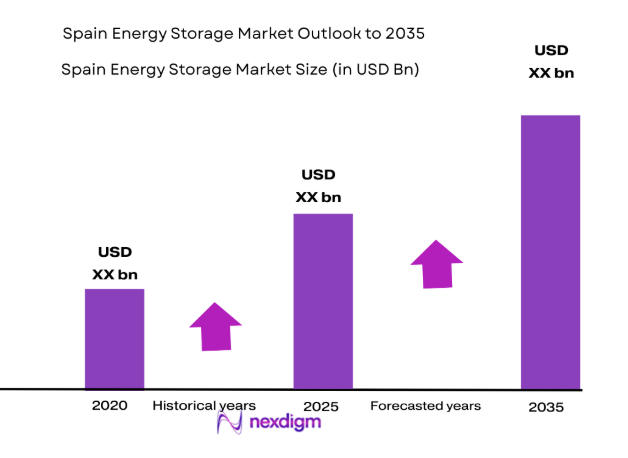
The Spain Energy Storage Market is driven by increasing energy demands, the growing integration of renewable energy, and the need for grid stability. The market size has been expanding, with substantial investments in storage solutions to support the energy transition. Recent assessments indicate the market is valued at USD ~ billion, backed by national policies promoting clean energy storage and efficient energy management systems. These factors have contributed to a significant surge in storage capacity, with Spain focusing on energy security and sustainability in its energy strategy.
Dominant players in the Spain Energy Storage Market are mainly concentrated in regions with advanced infrastructure and favorable government policies. Cities like Madrid, Barcelona, and Valencia lead the charge due to their proximity to renewable energy projects and high demand for energy storage. These regions benefit from substantial government incentives, a strong industrial base, and growing demand for energy-efficient solutions. Additionally, proximity to Europe’s larger energy networks and integration with other countries further strengthens Spain’s position as a key player in the energy storage landscape.
Market Segmentation
By Product Type
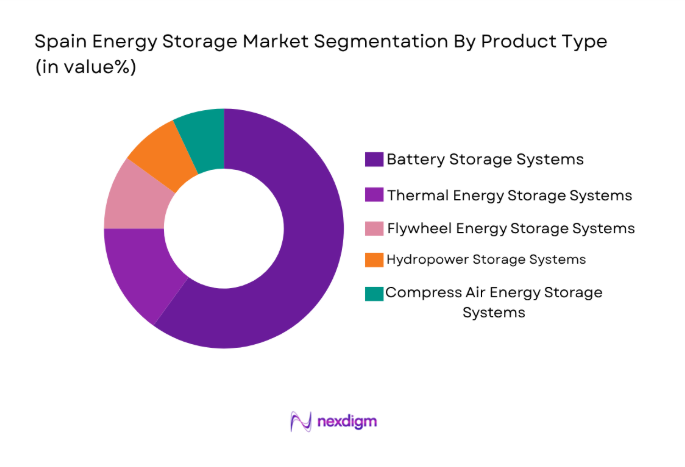
Spain’s energy storage market is segmented by product type into several sub-segments. Currently, the dominant sub-segment in this market is Battery Storage Systems, which has captured significant market share. This is due to their high efficiency, scalability, and decreasing costs. As the demand for renewable energy continues to rise, these systems are increasingly preferred due to their ability to store energy produced by solar and wind, making them critical for grid stability. In addition, ongoing technological advancements in battery chemistry and efficiency have helped to lower production costs, boosting the demand for battery storage solutions.
By Platform Type
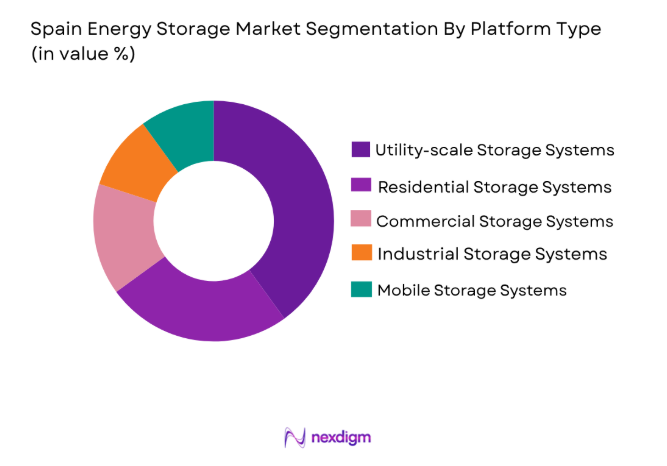
The platform type sub-segment in the Spain energy storage market includes Residential Storage Systems, Commercial Storage Systems, Industrial Storage Systems, Utility-Scale Storage Systems, and Mobile Storage Systems. Currently, the dominant sub-segment is Utility-Scale Storage Systems, driven by their large-scale capacity and integration with national energy grids. The demand for these systems is spurred by the increasing need for energy storage solutions to ensure grid reliability and support the growing use of intermittent renewable energy sources like wind and solar. Their ability to balance supply and demand at a national level has made them a key player in Spain’s energy strategy.
Competitive Landscape
The Spain Energy Storage Market is highly competitive, with several large players actively investing in technological advancements to capture market share. The consolidation in the industry is evident as key players collaborate with government bodies and utilities to implement energy storage solutions. Major players also influence market trends by introducing innovative storage technologies and systems designed to improve energy efficiency.
| Company Name | Establishment Year | Headquarters | Technology Focus | Market Reach | Key Products | Revenue | Strategic Alliances |
| Siemens AG | 1847 | Munich, Germany | ~ | ~ | ~ | ~ | ~ |
| Tesla | 2003 | Palo Alto, USA | ~ | ~ | ~ | ~ | ~ |
| Schneider Electric | 1836 | Rueil-Malmaison, France | ~ | ~ | ~ | ~ | ~ |
| ABB | 1883 | Zurich, Switzerland | ~ | ~ | ~ | ~ | ~ |
| Enel Green Power | 2008 | Rome, Italy | ~ | ~ | ~ | ~ | ~ |
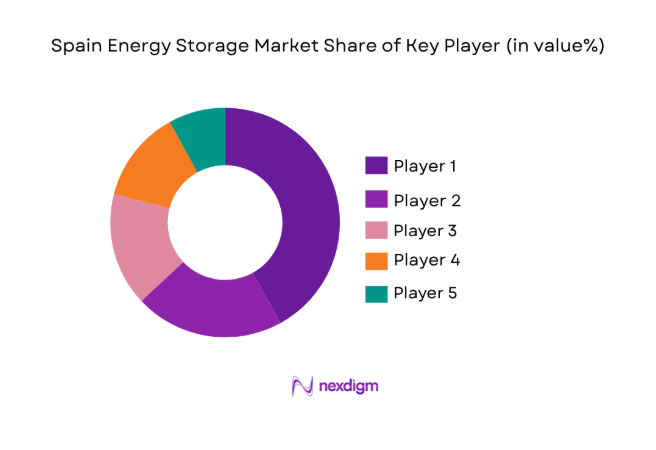
Spain Energy Storage Market Analysis
Growth Drivers
Government Incentives for Energy Transition
The Spanish government has been at the forefront of supporting renewable energy initiatives, including energy storage systems. Several subsidies and tax benefits have been introduced to encourage the adoption of energy storage technologies, which is crucial for integrating intermittent renewable sources like solar and wind into the grid. Additionally, Spain’s commitment to reducing its carbon footprint aligns with the European Union’s broader sustainability goals, fostering growth in energy storage adoption across residential, commercial, and industrial sectors. Growth Driver 2 Name: Technological Advancements in Battery Storage: Recent technological innovations, especially in lithium-ion battery systems, have significantly reduced costs while enhancing the efficiency and scalability of energy storage solutions. These improvements have made battery storage a preferred choice for residential, commercial, and industrial applications, which can now afford larger-scale deployments. Additionally, advancements in battery lifecycle management and recycling technologies have further supported the growth of battery storage in Spain, addressing previous concerns regarding sustainability and operational costs.
Market Challenges
High Initial Investment Costs
One of the main challenges faced by the Spain Energy Storage Market is the high upfront cost of installing energy storage systems. Despite the long-term savings on energy bills and the benefits of energy security, the initial capital investment required for systems such as battery storage is significant. This financial barrier remains a crucial factor in hindering widespread adoption, particularly among smaller businesses and residential consumers. Governments have implemented incentives, but additional financial barriers persist, especially for smaller-scale players. Challenge 2 Name: Regulatory and Interconnection Barriers: The regulatory environment for energy storage systems in Spain remains complex, with grid connection rules and standards not fully aligned with new energy storage technologies. This regulatory uncertainty, combined with the complexity of obtaining the necessary permits for large-scale energy storage installations, slows down market adoption. Furthermore, discrepancies in policies between regional authorities and the national government complicate the development of energy storage infrastructure, creating additional hurdles for stakeholders in the market.
Opportunities
Expanding Smart Grid Initiatives
As Spain seeks to modernize its energy infrastructure, the integration of smart grids offers significant opportunities for energy storage market players. Smart grids can manage the flow of electricity more efficiently and offer real-time energy usage data, making them ideal for incorporating energy storage systems. With the Spanish government’s push for digitalization in the energy sector, there is a rising demand for innovative solutions that combine energy storage and grid management, creating growth opportunities for market players. Opportunity 2 Name: Increasing Demand for Energy Independence: Growing consumer awareness and rising electricity prices are driving demand for energy storage systems, particularly in residential and commercial sectors. Homeowners and businesses are increasingly seeking energy independence through solar power and battery storage solutions. The desire for self-sufficiency and protection against grid outages has led to an uptick in demand for energy storage systems, and this trend is expected to continue as energy security becomes a top priority in Spain’s energy policy.
Future Outlook
The future outlook for the Spain Energy Storage Market is highly positive, with significant growth expected in the next five years. Technological advancements in battery storage, along with government initiatives to promote energy storage as part of the renewable energy transition, will drive market expansion. Increasing demand for grid reliability, energy security, and the integration of renewable energy will further accelerate the adoption of storage systems, positioning Spain as a leader in Europe’s clean energy transition.
Major Players
- Siemens AG
- Tesla
- Schneider Electric
- ABB
- Enel Green Power
- General Electric
- LG Chem
- AES Energy Storage
- Vestas
- First Solar
- BYD Company
- LG Energy Solutions
- RWE Group
- SunPower
- Fluence
Key Target Audience
- Investments and venture capitalist firms
- Government and regulatory bodies
- Energy utilities
- Commercial businesses
- Industrial organizations
- Residential consumers
- Energy system developers
Research Methodology
Step 1: Identification of Key Variables
Key variables such as market size, growth trends, and competitive dynamics are identified based on primary and secondary data sources.
Step 2: Market Analysis and Construction
An in-depth analysis of the energy storage market is conducted to assess segments, growth drivers, and challenges, constructing the market model.
Step 3: Hypothesis Validation and Expert Consultation
Consultations with industry experts and stakeholders validate hypotheses regarding technological advancements and market growth potential.
Step 4: Research Synthesis and Final Output
The research findings are synthesized into a comprehensive report, providing actionable insights and strategic recommendations for stakeholders.

- Executive Summary
- Research Methodology (Definitions, Scope, Industry Assumptions, Market Sizing Approach, Primary & Secondary Research Framework, Data Collection & Verification Protocol, Analytic Models & Forecast Methodology, Limitations & Research Validity Checks)

- Market Definition and Scope
- Value Chain & Stakeholder Ecosystem
- Regulatory / Certification Landscape
- Sector Dynamics Affecting Demand
- Strategic Initiatives & Infrastructure Growth

- Growth Drivers
Government Initiatives for Renewable Integration
Advances in Energy Storage Technology
Rising Demand for Grid Stabilization Solutions - Market Challenges
High Capital Investment for Storage Systems
Technological Limitations in Efficiency
Regulatory Barriers to Widespread Adoption - Market Opportunities
Integration of Energy Storage with Renewable Energy Projects
Expansion of Smart Grid Technologies
Development of Advanced Battery Storage Solutions - Trends
Increased Adoption of Lithium-Ion Batteries
Growing Role of Energy Storage in Decarbonization - Government Regulations
- SWOT Analysis
- Porter’s Five Forces

- By Market Value, 2020-2025
- By Installed Units, 2020-2025
- By Average System Price, 2020-2025
- By System Complexity Tier, 2020-2025

- By System Type (In Value%)
Battery Storage Systems
Thermal Energy Storage Systems
Flywheel Energy Storage Systems
Hydropower Storage Systems
Compressed Air Energy Storage Systems - By Platform Type (In Value%)
Residential Storage Systems
Commercial Storage Systems
Industrial Storage Systems
Utility-Scale Storage Systems
Mobile Storage Systems - By Fitment Type (In Value%)
On-grid Storage Solutions
Off-grid Storage Solutions
Hybrid Storage Solutions
Modular Storage Solutions - By End User Segment (In Value%)
Residential
Commercial & Industrial
Utilities

- Market Share Analysis
- Cross Comparison Parameters (System Type, Platform Type, End User Segment, Fitment Type, Procurement Channel, Material/Technology, Geographic Region)
- SWOT Analysis of Key Competitors
- Pricing & Procurement Analysis
- Key Players
Siemens AG
NextEra Energy
Schneider Electric
Tesla
LG Chem
Samsung SDI
Vestas Wind Systems
First Solar
General Electric
E.ON SE
Enel Green Power
EDF Energy
Sonnen GmbH
AES Energy Storage
BYD Company Ltd

- Increased Investment from Residential Users
- Rising Demand in Commercial and Industrial Sectors
- Utilities Driving Large-Scale Adoption
- Technological Advancements Shaping Consumer Preferences

- Forecast Market Value, 2026-2035
- Forecast Installed Units, 2026-2035
- Price Forecast by System Tier, 2026-2035
- Future Demand by Platform, 2026-2035


 Request a Sample
 Ask for Customization
 Get a Quote
 Enquire Now