

 Download PDF
 Download PDF
Market Overview
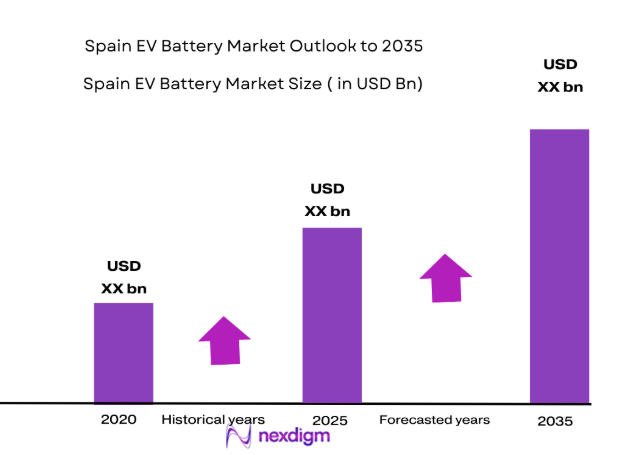
The Spain EV Battery market has seen significant growth in recent assessments, with the overall market size reaching several billion ~ USD. This growth is largely driven by Spain’s push toward sustainable energy solutions and the growing adoption of electric vehicles (EVs) across the country. Increasing government incentives, along with an expanding EV charging infrastructure, have significantly contributed to the market’s expansion. The demand for advanced EV batteries is expected to continue rising, as automakers and energy firms shift towards more sustainable solutions. Based on recent assessments, the market value is projected to be approximately USD ~ billion, bolstered by both domestic and international investments.
Dominant cities in Spain, such as Madrid, Barcelona, and Valencia, have driven the expansion of the EV battery market, as these urban centers have rapidly adopted electric mobility solutions. Spain’s strong infrastructure investments in clean energy, coupled with local government policies, position it as a leading player in the electric vehicle transition. Madrid is at the forefront, providing a conducive environment for both manufacturers and consumers, with a significant increase in electric vehicle adoption driven by infrastructure growth and government incentives. These cities lead due to their large population density, a growing number of public-private partnerships, and their role in meeting Spain’s sustainability goals.
Market Segmentation
By Product Type:
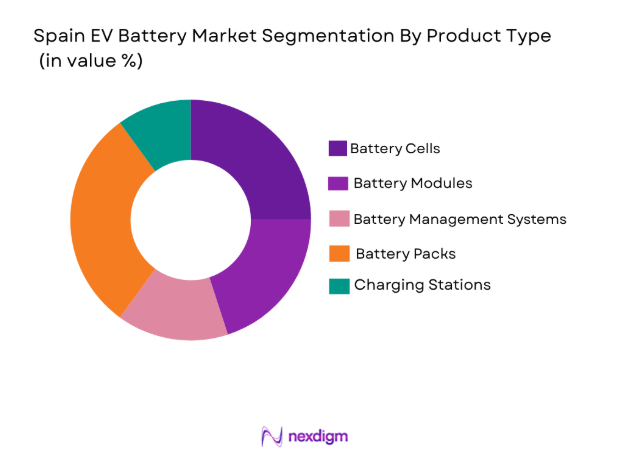
Spain EV Battery market is segmented by product type into battery cells, battery modules, battery management systems, battery packs, and charging stations. Recently, battery packs have a dominant market share due to their critical role in providing energy storage and driving the growth of the electric vehicle segment. The shift towards larger, more efficient packs with longer ranges has made them more attractive to consumers and manufacturers alike. This segment has benefited from advances in battery chemistries and cost reduction, enabling more affordable and long-lasting solutions for EV manufacturers. Furthermore, as more vehicles move to full electric platforms, battery packs become increasingly important in ensuring the reliability and performance of EVs.
By Platform Type:
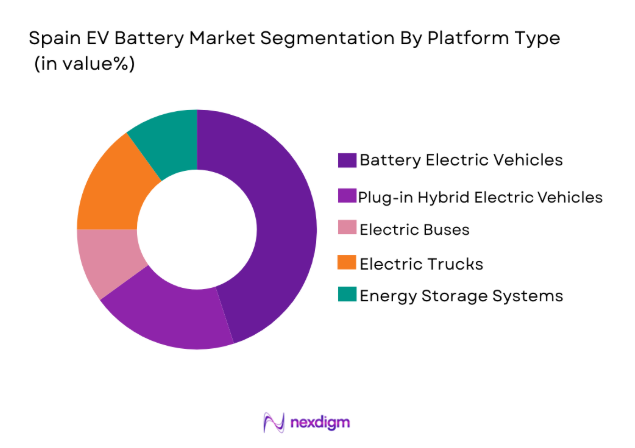
Spain EV Battery market is segmented by platform type into battery electric vehicles (BEVs), plug-in hybrid electric vehicles (PHEVs), electric buses, electric trucks, and energy storage systems. Recently, battery electric vehicles (BEVs) have seen dominant market share due to factors such as growing consumer preference for zero-emission vehicles, expanded charging infrastructure, and the strong push for sustainability. BEVs are seen as the most viable solution for reducing carbon emissions, and the increasing availability of affordable EV models has spurred significant growth in this segment. As more automakers pivot toward electric-only models and as range anxiety decreases with improved battery technologies, the demand for BEVs continues to lead the market.
Competitive Landscape
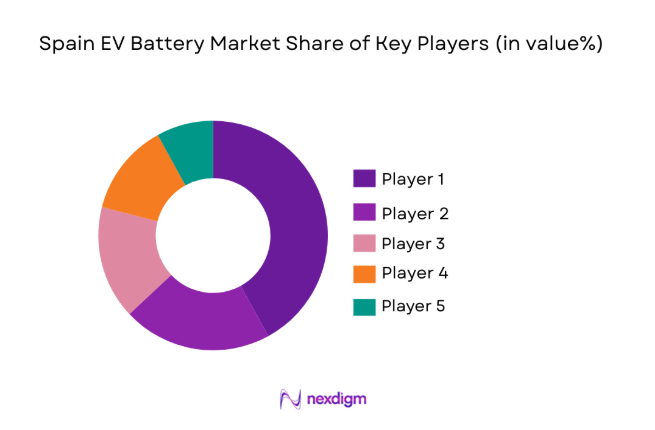
The Spain EV Battery market is highly competitive, with several major players leading the charge in technology development and market penetration. These players are focusing on strategic mergers, acquisitions, and partnerships to bolster their market share. The competition is driven by advances in battery efficiency, cost reduction, and a strong demand for electric vehicles. Companies are also focusing on enhancing their technological capabilities in battery recycling, solid-state batteries, and improving battery life. The market remains fragmented but poised for consolidation as companies continue to scale their operations and innovations to meet the rising demand.
| Company Name | Establishment Year | Headquarters | Technology Focus | Market Reach | Key Products | Revenue | Sustainability Initiatives |
| Tesla | 2003 | USA | ~ | ~ | ~ | ~ | ~ |
| Panasonic | 1918 | Japan | ~ | ~ | ~ | ~ | ~ |
| BYD | 1995 | China | ~ | ~ | ~ | ~ | ~ |
| LG Energy Solution | 2020 | South Korea | ~ | ~ | ~ | ~ | ~ |
| CATL | 2011 | China | ~ | ~ | ~ | ~ | ~ |
Spain EV Battery Market Analysis
Growth Drivers
Government Support for EV Adoption:
Government policies have been a key driver in the growth of the Spain EV Battery market. Spain’s commitment to achieving net-zero emissions by 2050 has catalyzed significant investments in green energy technologies, including electric vehicles (EVs) and associated infrastructure. A variety of incentives such as tax credits, grants, and financial support programs have been implemented to encourage both consumers and automakers to adopt EVs. These initiatives have reduced the financial barriers to EV adoption, making them more attractive to the general public. Furthermore, the government’s push for stricter emission regulations has created a favorable environment for the growth of EV battery technologies, with automakers increasingly transitioning to electric vehicle platforms. As battery efficiency improves and production costs decrease, these policies will continue to stimulate demand for EV batteries. The significant role of the government in facilitating the EV ecosystem is an ongoing trend that is expected to accelerate, contributing to further market growth. Additionally, Spain’s inclusion in the European Union’s Green Deal and the associated financial backing has strengthened its position as a leader in the EV battery market. Government-driven initiatives have also contributed to increased infrastructure investment, further propelling the demand for advanced battery technologies.
Technological Advancements in Battery Efficiency:
Technological advancements in battery efficiency have been a major factor in the expansion of the Spain EV Battery market. Innovations in lithium-ion battery technologies, such as improved energy density and longer cycle life, have significantly enhanced the performance and affordability of EVs. The introduction of solid-state batteries, which offer greater energy efficiency, has been a game changer in the sector, making EVs more attractive to consumers by providing longer driving ranges with shorter charging times. Advances in the manufacturing processes of batteries have reduced costs, enabling mass adoption of EVs. Additionally, the development of fast-charging technology has addressed one of the key barriers to EV adoption, providing consumers with greater convenience and flexibility. These technological developments have prompted a shift towards more sustainable energy solutions, where EVs equipped with cutting-edge batteries play a key role. As research continues in areas like next-generation materials, such as graphene and silicon-based anodes, Spain is poised to benefit from the commercial viability of these advanced technologies. Such advancements not only increase the range and reduce charging time but also reduce the environmental impact of battery production, aligning with Spain’s broader sustainability goals.
Market Challenges
High Battery Production Costs:
High production costs for EV batteries continue to be a significant challenge for the Spain EV Battery market. Despite substantial advancements in battery technology, the materials used in EV batteries, such as lithium, cobalt, and nickel, remain expensive. This increases the cost of manufacturing batteries and subsequently raises the price of electric vehicles. While economies of scale are expected to lower these costs in the future, the high upfront costs of batteries remain a barrier to widespread adoption of EVs. Furthermore, fluctuations in the prices of raw materials can destabilize the market, making it difficult for manufacturers to predict and manage production costs. Although battery recycling technologies are being developed to recover valuable materials, it is unlikely that they will provide a sufficient supply to lower costs in the short term. This challenge is compounded by the need for significant investment in battery production facilities, which requires substantial capital outlay. Additionally, Spain’s EV manufacturers must contend with global competition from countries with lower manufacturing costs, such as China, which could hinder domestic growth. The high cost of battery production not only affects vehicle manufacturers but also impacts consumers, who are forced to pay higher prices for EVs compared to traditional internal combustion engine vehicles.
Supply Chain Constraints for Key Materials:
Supply chain constraints for key materials have been another major challenge impacting the Spain EV Battery market. As demand for electric vehicles and energy storage systems continues to rise, so does the competition for essential raw materials such as lithium, cobalt, and nickel, which are crucial for manufacturing high-performance batteries. The limited availability of these resources and the geographic concentration of their supply in specific regions, such as Australia, Chile, and the Democratic Republic of Congo, creates vulnerabilities in the supply chain. The reliance on international suppliers increases the risk of supply disruptions, which could delay production timelines and inflate material costs. These supply chain issues are further exacerbated by geopolitical tensions and trade barriers, which could hinder access to critical materials. Moreover, environmental concerns over the mining of these materials have led to stricter regulations in some regions, further complicating sourcing efforts. Battery manufacturers in Spain are increasingly turning to alternative materials and more sustainable production methods, but these alternatives have yet to be scaled up to meet the growing demand. Until solutions to these supply chain constraints are found, the market may face continued challenges in scaling up EV production to meet both domestic and global demand.
Opportunities
Growing Demand for Electric Commercial Vehicles:
The growing demand for electric commercial vehicles (ECVs) presents a significant opportunity for the Spain EV Battery market. With increasing pressure on businesses to reduce their carbon footprints and meet sustainability targets, there has been a rising adoption of electric trucks, buses, and vans in Spain. The transition to electric commercial fleets is expected to be supported by government incentives aimed at reducing emissions in the logistics and transportation sectors. Spain’s urban centers, such as Madrid and Barcelona, are seeing a shift towards electric buses and delivery trucks, driven by local government policies that promote clean energy solutions. The growing focus on last-mile delivery services, coupled with the cost savings of operating electric fleets, positions the commercial sector as a key growth driver for EV battery demand. Additionally, improvements in battery technologies, such as faster charging and longer ranges, are making electric commercial vehicles more feasible for operators. As Spain’s logistics industry undergoes electrification, battery manufacturers are exploring ways to scale production to meet the increasing demand for larger, more durable batteries capable of powering electric trucks and buses. This growing trend is expected to expand the market significantly over the next few years, with opportunities for both domestic and international players to capture a share of the burgeoning electric commercial vehicle market.
Rise in Battery Recycling Initiatives:
The rise in battery recycling initiatives presents a unique opportunity for the Spain EV Battery market. As the number of electric vehicles increases, so does the need for efficient and sustainable recycling methods for spent batteries. Spain is making strides in establishing a circular economy for batteries, with several companies investing in research and development of battery recycling technologies. This opportunity is particularly relevant as the country seeks to align with EU regulations that mandate higher recycling rates for lithium-ion batteries. The recycling of critical materials like lithium, cobalt, and nickel helps reduce dependence on mining, lowers production costs, and minimizes the environmental impact of battery disposal. As battery recycling technologies mature, Spain is likely to see a reduction in the cost of battery production, benefiting both manufacturers and consumers. In addition, battery recycling presents an opportunity for Spain to position itself as a leader in sustainable battery solutions, driving innovation and creating jobs in the recycling sector. As these initiatives gain momentum, the Spain EV Battery market is expected to experience sustained growth, fueled by the increasing demand for sustainable practices across the supply chain.
Future Outlook
The Spain EV Battery market is expected to experience significant growth over the next five years, driven by continued technological advancements in battery efficiency and government support for electric vehicles. With the increase in electric vehicle adoption and infrastructure development, demand for EV batteries will rise, fostering innovation and competition. Spain’s commitment to sustainability and its alignment with European Union climate goals will further accelerate the shift towards electric mobility, positioning the country as a leader in the global EV battery market.
Key Players
- Tesla
- BYD
- Panasonic
- LG Energy Solution
- CATL
- Samsung SDI
- Northvolt
- Sonnen
- SK Innovation
- Eaton
- BMW Group
- Volkswagen Group
- Renesas Electronics
- Fiat Chrysler Automobiles
- Daimler AG
Key Target Audience
- Investments and venture capitalist firms
- Government and regulatory bodies
- EV manufacturers
- Battery manufacturers
- Automotive suppliers
- Electric vehicle fleet operators
- Infrastructure developers
- Private equity firms
Research Methodology
Step 1: Identification of Key Variables
Identify key market variables like demand patterns, technological trends, and regulatory impacts.
Step 2: Market Analysis and Construction
Analyze historical data and current trends to create a comprehensive market model.
Step 3: Hypothesis Validation and Expert Consultation
Validate market assumptions through expert consultations and industry surveys.
Step 4: Research Synthesis and Final Output
Synthesize research findings into a final, actionable market report.

- Executive Summary
- Research Methodology
(Definitions, Scope, Industry Assumptions, Market Sizing Approach, Primary & Secondary Research Framework, Data Collection & Verification Protocol, Analytic Models & Forecast Methodology, Limitations & Research Validity Checks)

- Market Definition and Scope
- Value Chain & Stakeholder Ecosystem
- Regulatory / Certification Landscape
- Sector Dynamics Affecting Demand
- Strategic Initiatives & Infrastructure Growth

- Growth Drivers
Government Support for EV Adoption
Technological Advancements in Battery Efficiency
Demand for Sustainable Transportation Solutions
Decline in Battery Production Costs
Rising Consumer Awareness on Environmental Impact - Market Challenges
High Initial Cost of EV Batteries
Limited Battery Recycling Infrastructure
Supply Chain Bottlenecks for Key Materials
Limited Public Charging Infrastructure
Concerns Over Battery Life and Performance - Market Opportunities
Growing Popularity of Fast-Charging Stations
Expansion of Electric Public Transport Systems
Government Incentives for EV Battery Manufacturers - Trends
Advances in Battery Recycling Technology
Increased Investment in EV Charging Infrastructure
Focus on Sustainable Battery Manufacturing
Rise in Energy Storage Systems Integration
Growth of Vehicle-to-Grid Technology - Government Regulations & Defense Policy
EU Battery Directive Compliance
Spain’s National Energy and Climate Plan
Incentives for Local EV Battery Manufacturing - SWOT Analysis
- Stakeholder and Ecosystem Analysis
- Porter’s Five Forces Analysis
- Competition Intensity and Ecosystem Mapping

- By Market Value, 2020-2025
- By Installed Units, 2020-2025
- By Average System Price, 2020-2025
- By System Complexity Tier, 2020-2025

- By System Type (In Value%)
Battery Cells
Battery Modules
Battery Management Systems
Battery Packs
Charging Stations - By Platform Type (In Value%)
Battery Electric Vehicles (BEVs)
Plug-in Hybrid Electric Vehicles (PHEVs)
Electric Buses
Electric Trucks
Energy Storage Systems - By Fitment Type (In Value%)
OEM Integration
Aftermarket Solutions
Portable Solutions
Fast-Charging Solutions
Fleet Solutions - By EndUser Segment (In Value%)
Automobile Manufacturers
Energy Providers
Fleet Operators
Consumers
Government and Public Sector - By Procurement Channel (In Value%)
Direct Procurement
Government Contracts
Private Sector Procurement
Online Bidding
Third-party Distributors - By Material / Technology (In Value%)
Lithium-Ion Batteries
Solid-State Batteries
Nickel-Metal Hydride (NiMH) Batteries
Lithium Iron Phosphate (LiFePO4)
Graphene-based Batteries

- Market structure and competitive positioning
Market share snapshot of major players
CrossComparison Parameters (System Type, Platform Type, Procurement Channel, EndUser Segment, Fitment Type)
SWOT Analysis of Key Competitors
Pricing & Procurement Analysis - Key Players
Tesla
BYD
Panasonic
LG Energy Solution
CATL
Samsung SDI
Northvolt
Sonnen
SK Innovation
Eaton
BMW Group
Volkswagen Group
Renesas Electronics
Fiat Chrysler Automobiles
Daimler AG

- Rising Consumer Demand for Electric Vehicles
- Automobile Manufacturers’ Shift to Electric Mobility
- Fleet Operators’ Integration of EV Solutions
- Government’s Role in Supporting EV Infrastructure

- Forecast Market Value, 2026-2035
- Forecast Installed Units, 2026-2035
- Price Forecast by System Tier, 2026-2035
- Future Demand by Platform, 2026-2035


 Request a Sample
 Ask for Customization
 Get a Quote
 Enquire Now