
 Download PDF
 Download PDF
Market Overview
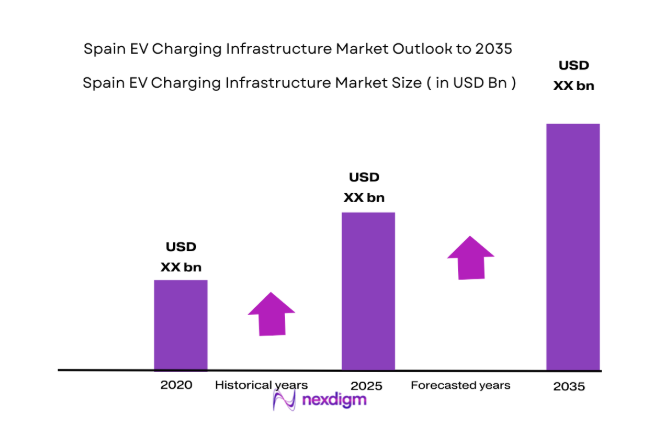
The Spain EV Charging Infrastructure market has witnessed significant growth, driven by the rising adoption of electric vehicles and the Spanish government’s commitment to reducing carbon emissions. The total market value in recent historical assessments stands at approximately USD ~ billion, with the growth propelled by government incentives, including subsidies, rebates, and tax exemptions for electric vehicle adoption. This has led to a sharp increase in the installation of both residential and public charging stations. The infrastructure is expected to continue expanding, with a focus on fast and ultra-fast charging stations. The market benefits from ongoing investments in renewable energy, making it an essential part of Spain’s sustainability goals. Additionally, improvements in battery technology and the integration of renewable energy sources in charging stations have reduced overall costs, further driving the market.
Spain’s market dominance is supported by urban areas such as Madrid and Barcelona, where the concentration of electric vehicles and charging infrastructure is the highest. The Spanish government has created an environment conducive to infrastructure development by implementing favorable policies and incentivizing private companies to invest in EV infrastructure. Cities with a strong public transport network are leading in terms of adoption rates, largely due to the integration of electric buses and commercial fleets. Additionally, the presence of key international players such as Tesla and local companies like Iberdrola has further boosted infrastructure expansion. With increasing support from both public and private sectors, Spain remains one of the leaders in EV infrastructure development in Europe
Market Segmentation
By Product Type
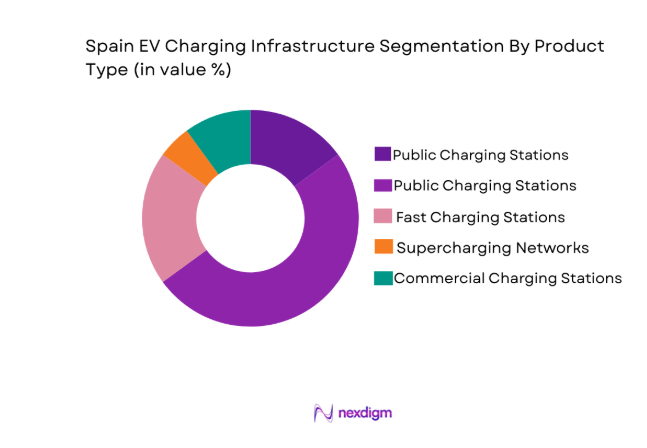
Spain EV Charging Infrastructure market is segmented by product type into public charging stations, home charging solutions, workplace charging infrastructure, fast charging systems, and ultra-fast charging systems. The public charging stations sub-segment dominates the market due to increasing consumer demand for accessible charging infrastructure. With the growing number of electric vehicles on the road, more charging points in public spaces are required. This trend is fueled by urbanization and the development of new electric vehicle models that cater to city commuters. Furthermore, public charging stations benefit from government incentives, which make them more affordable to install and maintain. Increased consumer awareness, coupled with the demand for reliable charging solutions, has made public charging stations the dominant sub-segment.
By Platform Type
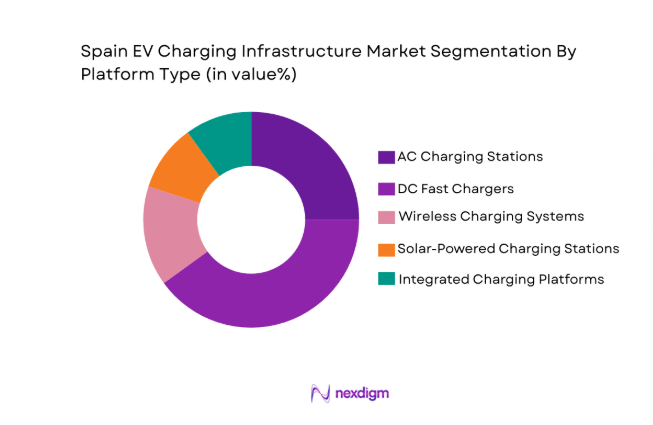
The Spain EV Charging Infrastructure market is segmented by platform type into AC Charging Stations, DC Fast Chargers, Wireless Charging Systems, Solar-Powered Charging Stations, and Integrated Charging Platforms. DC Fast Chargers dominate the market due to their ability to provide rapid charging, which is a significant advantage for electric vehicle users, especially in urban areas and along highways. The increasing demand for quick and convenient charging solutions has driven the expansion of DC Fast Chargers, allowing vehicles to recharge up to 80% in a short period. Additionally, government policies and incentives have supported the installation of these fast chargers in strategic locations, such as high-traffic areas and rest stops. With advancements in battery technology and the expansion of the EV fleet, the demand for fast-charging infrastructure continues to rise, ensuring the sustained dominance of this sub-segment.
Competitive Landscape
The Spain EV Charging Infrastructure market is highly competitive, with numerous players actively involved in expanding their networks and technological offerings. Market consolidation is evident as larger companies acquire smaller players to strengthen their market presence and expand their geographic reach. Major players are leveraging advancements in charging technology, such as ultra-fast chargers and integrated solutions. These developments ensure a more sustainable and efficient charging experience for users. The competitive landscape is also shaped by partnerships with government bodies and private firms, focusing on infrastructure growth.
| Company Name | Establishment Year | Headquarters | Technology Focus | Market Reach | Key Products | Revenue | Market-Specific Parameter |
| Iberdrola | 1992 | Spain | ~ | ~ | ~ | ~ | ~ |
| Endesa | 1944 | Spain | ~ | ~ | ~ | ~ | ~ |
| Ferrovial | 1952 | Spain | ~ | ~ | ~ | ~ | ~ |
| Wallbox | 2015 | Spain | ~ | ~ | ~ | ~ | ~ |
| ChargePoint | 2007 | USA | ~ | ~ | ~ | ~ | ~ |
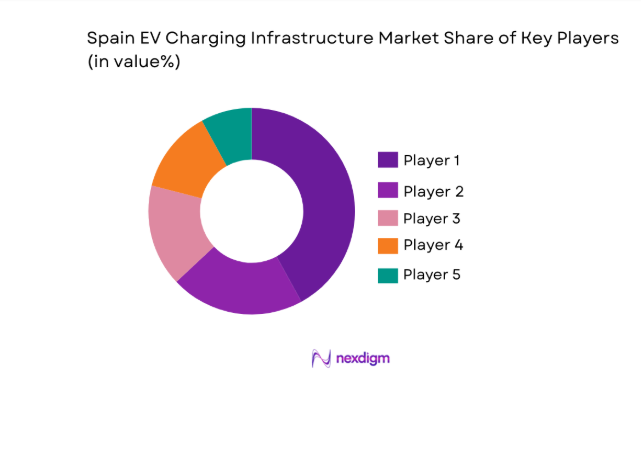
Spain EV Charging Infrastructure Market Analysis
Growth Drivers
Government Support for EV Adoption
Spain has seen significant growth in the electric vehicle sector due to government incentives for both consumers and businesses. Programs such as tax rebates, grants, and subsidies have been instrumental in making electric vehicles more affordable. These initiatives have lowered the financial barriers for individuals and organizations looking to adopt electric vehicles. In addition, Spain has set ambitious goals for reducing greenhouse gas emissions, making the transition to electric mobility a critical component of the country’s sustainability strategy. These factors, combined with a greater focus on renewable energy sources, have contributed to the expansion of EV infrastructure, driving market growth. Increased investment in public charging infrastructure ensures widespread accessibility, particularly in urban areas. The government’s ongoing commitment to green initiatives also creates a favorable regulatory environment, further fostering growth in the sector. As these policies continue to evolve, they will support further adoption of electric vehicles and the necessary infrastructure. This growth driver has provided the foundation for the ongoing development of Spain’s EV charging network, ensuring that the country remains a leader in sustainable transportation.
Technological Advancements in Charging Infrastructure
Technological advancements in charging infrastructure have played a crucial role in the growth of the Spain EV Charging Infrastructure market. Innovations such as ultra-fast charging systems and wireless charging solutions have enhanced the user experience, making it more convenient and efficient to charge electric vehicles. The development of smart grids and integration with renewable energy sources has further bolstered the infrastructure’s efficiency, providing users with cleaner energy options. Advances in battery technology have also contributed to the growth, as improved battery life and faster charging speeds have reduced concerns about range anxiety and charging time. Furthermore, the increasing integration of IoT-based solutions allows for real-time monitoring and optimization of charging stations, improving their overall performance. These innovations not only benefit consumers but also allow businesses and governments to better manage and maintain their charging networks. As charging stations become more interconnected and intelligent, the market will continue to benefit from these technological advancements, driving further growth.
Market Challenges
High Initial Installation Costs
One of the key challenges facing the Spain EV Charging Infrastructure market is the high initial cost of installation. Despite government incentives and subsidies, the cost of setting up public charging stations and infrastructure remains a significant barrier, particularly for small businesses or startups. This financial hurdle can delay the expansion of charging networks in underserved or rural areas. While the long-term benefits of a robust charging network outweigh the initial investment, many companies and municipalities face difficulty securing the necessary capital to fund such projects. The ongoing development of ultra-fast and high-capacity charging systems further increases the complexity and cost of installation, posing a challenge to the overall growth of the market. Furthermore, high installation costs can lead to delays in the implementation of critical charging infrastructure in growing urban areas, where demand for charging stations is rapidly increasing. Reducing these costs through technological innovations, public-private partnerships, and government support will be essential for the continued growth of Spain’s EV charging network.
Interoperability Issues Across Charging Networks
Interoperability remains a challenge in the Spain EV Charging Infrastructure market. Despite the growth of charging stations, various operators and network providers use different systems and technologies, which can create compatibility issues for users. This lack of standardization means that EV owners may struggle to find compatible charging points, leading to frustration and limited access to charging stations. As a result, users may face difficulties in planning their routes, particularly in less urbanized regions. The fragmented nature of the market also slows down the development of a cohesive and nationwide charging network. To overcome these challenges, operators must collaborate to ensure compatibility across different networks. Efforts to standardize charging protocols and improve communication between charging stations will help alleviate these issues, providing a more seamless experience for EV owners and boosting the market’s overall growth.
Opportunities
Growth in the Number of Electric Vehicles on the Road
The rapid increase in the number of electric vehicles (EVs) on the road presents a significant opportunity for the Spain EV Charging Infrastructure market. As more consumers and businesses make the switch to electric mobility, the demand for a reliable and widespread charging network will continue to rise. With the government’s push towards green mobility, electric vehicle sales are expected to surge, leading to higher demand for both residential and public charging solutions. The growth in the number of EVs is likely to be driven by both economic factors, such as lower operating costs for electric vehicles, and environmental concerns, as more consumers opt for cleaner modes of transportation. This rise in EV adoption will directly translate to an increased need for charging infrastructure, creating opportunities for market players to expand their offerings and capture a larger share of the market. Moreover, the expansion of the EV fleet will likely stimulate the development of new technologies, such as ultra-fast charging systems, further enhancing the overall user experience.
Development of Ultra-Fast Charging Stations
The increasing demand for faster charging times presents an opportunity for the development of ultra-fast charging stations across Spain. As electric vehicles become more common, the need for quick and efficient charging solutions will become more pressing. Ultra-fast chargers, which can charge vehicles in under 30 minutes, are an attractive option for both consumers and businesses. These charging stations provide a significant advantage in reducing downtime for EV owners, especially for those who rely on their vehicles for commercial purposes or long-distance travel. The expansion of ultra-fast charging networks will help address the current limitations of traditional charging stations, which can take hours to charge a vehicle fully. Moreover, the rise of ultra-fast charging stations will support the broader adoption of electric vehicles by reducing range anxiety and offering a more convenient charging experience. As more infrastructure is developed to support ultra-fast charging, the market will continue to grow, driven by both consumer demand and technological advancements.
Future Outlook
The future outlook for Spain’s EV charging infrastructure market remains positive, with strong growth expected in the coming years. Technological advancements, particularly in ultra-fast charging, are set to enhance the overall user experience and drive further adoption of electric vehicles. Regulatory support will continue to play a key role in expanding charging networks, especially in underserved regions. Additionally, the rising demand for sustainable transportation and green energy solutions will contribute to increased investment in charging infrastructure. Spain is well-positioned to remain a leader in the European EV charging market, with significant opportunities for innovation and expansion.
Major Players
- Iberdrola
- Endesa
- Ferrovial
- Wallbox
- ChargePoint
- Siemens
- Schneider Electric
- ABB
- EVBox
- Circontrol
- BP Chargemaster
- Enel X
- Eaton
- Tesla
- Iberostar
Key Target Audience
- Investments and venture capitalist firms
- Government and regulatory bodies
- Electric vehicle manufacturers
- Energy and utility companies
- Charging infrastructure developers
- Fleet operators and managers
- Private and public sector investors
- Automotive supply chain partners
Research Methodology
Step 1: Identification of Key Variables
The first step involves identifying the key variables influencing the market, such as government policies, technological advancements, and market trends. This ensures that the research accurately reflects the factors driving market growth and challenges.
Step 2: Market Analysis and Construction
Comprehensive market analysis is conducted using primary and secondary data sources to construct a clear picture of market size, trends, and dynamics. The analysis includes segmentation by product type, platform, fitment type, and more.
Step 3: Hypothesis Validation and Expert Consultation
We validate our market hypotheses through consultations with industry experts and stakeholders. This helps refine our understanding of market drivers, challenges, and future opportunities.
Step 4: Research Synthesis and Final Output
The final research output synthesizes the gathered data and insights into a cohesive report, which includes market sizing, forecasts, competitive landscape, and growth drivers. This output ensures that stakeholders have actionable insights for decision-making.

- Executive Summary
- Research Methodology (Definitions, Scope, Industry Assumptions, Market Sizing Approach, Primary & Secondary Research Framework, Data Collection & Verification Protocol, Analytic Models & Forecast Methodology, Limitations & Research Validity Checks)

- Market Definition and Scope
- Value Chain & Stakeholder Ecosystem
- Regulatory / Certification Landscape
- Sector Dynamics Affecting Demand
- Strategic Initiatives & Infrastructure Growth

- Growth Drivers
Government subsidies for EV adoption
Rising demand for sustainable transport solutions
Technological advancements in charging infrastructure
Expansion of the electric vehicle market
Increased consumer awareness of eco-friendly mobility - Market Challenges
High initial installation costs
Limited charging infrastructure in rural areas
Interoperability issues across charging networks
Slow pace of regulatory alignment
Infrastructure investment in urban areas outpacing rural growth - Market Opportunities
Growth in the number of electric vehicles on the road
Development of ultra-fast charging stations
Integration of renewable energy sources with charging infrastructure - Trends
Increase in demand for ultra-fast charging solutions
Integration of solar power with EV charging stations
Shift towards wireless and inductive charging
Growing importance of public-private partnerships
Advancements in smart grid integration with charging stations - Government Regulations & Defense Policy
Supportive policies for renewable energy and EV infrastructure
Stricter emission norms driving electric mobility
Government incentives for EV adoption and charging infrastructure development - SWOT Analysis
- Stakeholder and Ecosystem Analysis
- Porter’s Five Forces Analysis
- Competition Intensity and Ecosystem Mapping

- By Market Value, 2020-2025
- By Installed Units, 2020-2025
- By Average System Price, 2020-2025
- By System Complexity Tier, 2020-2025

- By System Type (In Value%)
Public Charging Stations
Home Charging Solutions
Workplace Charging Infrastructure
Fast Charging Systems
Ultra-Fast Charging Systems - By Platform Type (In Value%)
AC Charging Stations
DC Fast Chargers
Wireless Charging Systems
Solar-Powered Charging Stations
Integrated Charging Platforms - By Fitment Type (In Value%)
On-site Installation
Off-site Installation
Modular Charging Units
Portable Charging Units
Centralized Charging Systems - By End User Segment (In Value%)
Residential Users
Commercial Fleets
Public Transport Operators
EV Charging Operators
Private Sector / Retail - By Procurement Channel (In Value%)
Direct Procurement
Private Sector Procurement
Public Tenders
Partnerships and Collaborations
Distribution Networks

- Market structure and competitive positioning
Market share snapshot of major players - Cross Comparison Parameters (System Type, Platform Type, Procurement Channel, End User Segment, Fitment Type)
- SWOT Analysis of Key Competitors
- Pricing & Procurement Analysis
- Key Players
Iberdrola
Endesa
Ferrovial
Iberostar
EVBox
Tesla
ChargePoint
Siemens
Schneider Electric
ABB
Wallbox
Circontrol
BP Chargemaster
Enel X
Eaton

- Residential consumers’ growing demand for home charging stations
- Public sector push for city-wide EV charging infrastructure
- Commercial fleet owners transitioning to electric fleets
- Retailers and private sector firms investing in charging infrastructure

- Forecast Market Value, 2026-2035
- Forecast Installed Units, 2026-2035
- Price Forecast by System Tier, 2026-2035
- Future Demand by Platform, 2026-2035


 Request a Sample
 Ask for Customization
 Get a Quote
 Enquire Now