

 Download PDF
Market Overview
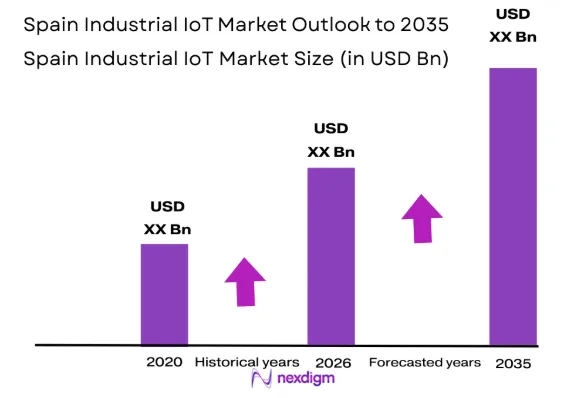
The Spain Industrial IoT market has been growing steadily, driven by increasing industrial automation and demand for connected solutions in various sectors such as manufacturing, energy, and logistics. The market size, based on recent assessments, stands at approximately USD ~ billion, supported by government investments and advancements in connectivity and sensor technologies. The adoption of IoT solutions is further driven by the need for real-time data collection, predictive maintenance, and enhanced operational efficiency across industries.
Spain, being a hub for manufacturing and logistics in Europe, is witnessing rapid integration of Industrial IoT solutions across its industries. Cities like Madrid, Barcelona, and Valencia are leading the charge due to their strong industrial infrastructure, high-tech sectors, and support from both government initiatives and private sector investments. The country’s push for digital transformation in its manufacturing base, alongside strong regional networks, facilitates its dominance in the Industrial IoT space.
Market Segmentation
By System Type
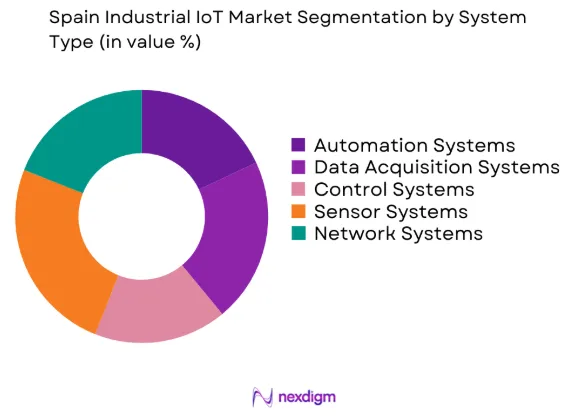
The Spain Industrial IoT market is segmented by system type into automation systems, data acquisition systems, control systems, sensor systems, and network systems. Recently, sensor systems have gained dominant market share due to increasing demand across sectors such as manufacturing, agriculture, and logistics. Factors driving this dominance include advancements in sensor technology, increasing demand for real-time monitoring, and enhanced operational efficiency. These systems are crucial for capturing data, providing insights, and enabling decision-making across industries.
By Platform Type
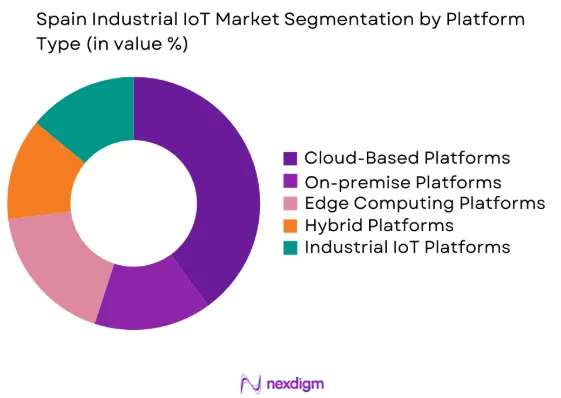
The Spain Industrial IoT market is segmented by platform type into cloud-based platforms, on-premise platforms, edge computing platforms, hybrid platforms, and industrial IoT platforms. Cloud-based platforms are leading the market share, as they provide scalable, cost-efficient, and flexible solutions for industries seeking to connect multiple systems and devices. The widespread adoption of cloud infrastructure in Spain, coupled with the need for seamless data integration and processing, has contributed to the growing demand for these platforms.
Competitive Landscape
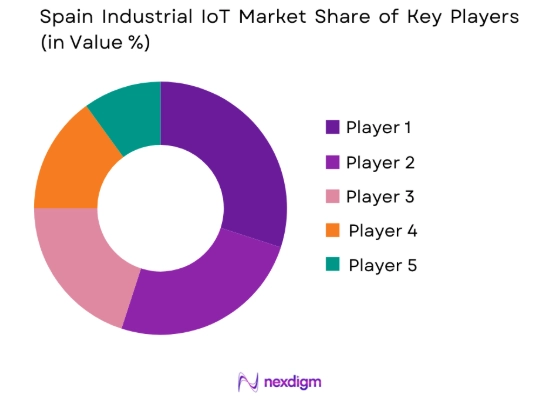
The competitive landscape in the Spain Industrial IoT market is characterized by significant market consolidation, with several key players taking dominant positions due to their technological expertise, brand recognition, and strategic partnerships. Major players have been collaborating with governments and industrial giants to lead in IoT solutions, data analytics, and predictive maintenance technologies. The market is competitive, with both global and regional players striving for innovation and operational efficiency to stay ahead.
| Company Name | Establishment Year | Headquarters | Technology Focus | Market Reach | Key Products | Revenue | Additional Parameter |
| Siemens | 1847 | Munich, Germany | ~ | ~ | ~ | ~ | ~ |
| Schneider Electric | 1836 | Rueil-Malmaison, France | ~ | ~ | ~ | ~ | ~ |
| Cisco Systems | 1984 | San Jose, USA | ~ | ~ | ~ | ~ | ~ |
| ABB | 1988 | Zurich, Switzerland | ~ | ~ | ~ | ~ | ~ |
| Microsoft | 1975 | Redmond, USA | ~ | ~ | ~ | ~ | ~ |
Spain Industrial IoT Market Analysis
Growth Drivers
Technological Advancements in Connectivity
The rapid advancements in connectivity technologies such as 5G, Wi-Fi 6, and LPWAN have significantly propelled the growth of the Spain Industrial IoT market. These technologies enable faster, more reliable communication between IoT devices, which is crucial for applications in industries like manufacturing, logistics, and energy. As the need for seamless data flow across networks grows, the integration of advanced connectivity solutions has become a pivotal growth driver. The adoption of these technologies enhances operational efficiency, reduces downtime, and supports real-time decision-making, driving the market’s expansion. Moreover, the ongoing rollout of 5G networks is expected to further accelerate IoT implementation by offering higher bandwidth and reduced latency.
Government Support and Initiatives for IoT Development
Another key growth driver in the Spain Industrial IoT market is the strong government support for digital transformation initiatives. The Spanish government has been actively encouraging the adoption of IoT solutions through various funding programs, grants, and regulatory frameworks aimed at enhancing the industrial base. This push for digitalization is evident in initiatives such as the Spain Digital Agenda and the national industrial modernization program, which focus on integrating IoT solutions into manufacturing and infrastructure. Additionally, the increasing emphasis on sustainable and smart cities aligns with the demand for industrial IoT, as governments aim to improve energy efficiency, optimize operations, and foster innovation in key industrial sectors.
Market Challenges
High Implementation Costs
One of the major challenges facing the Spain Industrial IoT market is the high upfront costs associated with implementing IoT systems. The installation of sensors, data acquisition systems, network infrastructure, and platforms can be expensive, particularly for small and medium-sized enterprises (SMEs) that lack sufficient capital. While IoT solutions offer long-term cost savings through improved efficiency and predictive maintenance, the initial investment can be prohibitive. This financial burden often deters businesses from adopting IoT solutions, especially in the face of economic uncertainty or competition from larger, more well-capitalized players. The need for specialized expertise and training for implementation further adds to the overall costs, which is a key challenge for market growth.
Data Security and Privacy Concerns
With the increasing reliance on IoT systems comes heightened concerns regarding data security and privacy. Industrial IoT devices are vulnerable to cyberattacks and data breaches, which can have severe consequences for business operations, intellectual property, and customer trust. The need for robust cybersecurity measures is paramount, as the risk of data theft, sabotage, or system malfunctions can disrupt critical operations in industries such as manufacturing, energy, and healthcare. Moreover, stringent data protection regulations like GDPR in the European Union add an additional layer of complexity, requiring businesses to ensure compliance and invest in secure infrastructure to protect sensitive data. As cyber threats continue to evolve, the challenge of safeguarding IoT networks and devices remains a critical concern for the market.
Opportunities
Integration of AI and Machine Learning
The integration of AI and ML with IoT systems offers substantial opportunities for the Spain Industrial IoT market. AI and ML empower IoT devices to autonomously analyze and act on data, improving operational efficiency, minimizing downtime, and optimizing predictive maintenance. These technologies are used particularly beneficial in industries like manufacturing, where production efficiency and equipment reliability are crucial. As AI and IoT converge, new possibilities emerge, such as autonomous systems and advanced analytics, further enhancing resource management. This synergy will drive the adoption of AI-enabled IoT solutions, providing businesses with a competitive edge by automating decision-making and improving overall operational performance.
Expansion in Renewable Energy Sector
The growing demand for sustainable energy solutions presents an excellent opportunity for the Spain Industrial IoT market. The integration of IoT solutions in the renewable energy sector, such as solar and wind energy, enables more efficient energy generation, storage, and distribution. IoT systems can monitor real-time performance, optimize energy usage, and reduce waste, making them essential for the expansion of renewable energy infrastructure. Spain’s commitment to reducing carbon emissions and increasing renewable energy capacity creates an ideal environment for the adoption of IoT solutions that improve the efficiency and scalability of renewable energy operations. This trend offers significant growth potential for IoT providers targeting the renewable energy sector.
Future Outlook
Over the next five years, the Spain Industrial IoT market is expected to experience robust growth, driven by technological advancements, government initiatives, and increasing demand for automation and real-time data processing. The rise of AI, edge computing, and 5G technologies will further enhance the capabilities of IoT systems, creating new opportunities for industries to optimize their operations. Additionally, the renewable energy sector’s focus on sustainability will accelerate IoT adoption. The market will also benefit from favorable regulatory support and growing industrial IoT infrastructure investments. Overall, the future outlook for the Spain Industrial IoT market remains highly promising.
Major Players
- Siemens
- Schneider Electric
- Honeywell
- Cisco Systems
- GE Digital
- ABB
- Microsoft
- Bosch
- SAP
- Intel
- Oracle
- Rockwell Automation
- Emerson
- Hitachi Vantara
- PTC
Key Target Audience
- Investments and venture capitalist firms
- Government and regulatory bodies
- Manufacturing companies
- Energy and utility companies
- Transportation and logistics firms
- Healthcare organizations
- Agricultural companies
- Technology providers
Research Methodology
Step 1: Identification of Key Variables
This step involves identifying critical variables influencing the market, including key drivers, challenges, technologies, and trends.
Step 2: Market Analysis and Construction
This phase focuses on gathering and analyzing historical data, conducting industry surveys, and segmenting the market to build a comprehensive model.
Step 3: Hypothesis Validation and Expert Consultation
Hypotheses regarding market trends, drivers, and challenges are validated through consultations with industry experts, manufacturers, and end-users.
Step 4: Research Synthesis and Final Output
The final output synthesizes insights into actionable recommendations and predictions for market growth and trends, ensuring comprehensive coverage.

- Executive Summary
- Research Methodology (Definitions, Scope, Industry Assumptions, Market Sizing Approach, Primary & Secondary Research Framework, Data Collection & Verification Protocol, Analytic Models & Forecast Methodology, Limitations & Research Validity Checks)

- Market Definition and Scope
- Value Chain & Stakeholder Ecosystem
- Regulatory / Certification Landscape
- Sector Dynamics Affecting Demand
- Strategic Initiatives & Infrastructure Growth

- Growth Drivers
Technological Advancements in Connectivity
Rising Demand for Automation in Manufacturing
Increasing Adoption of Predictive Maintenance - Market Challenges
High Implementation Costs
Cybersecurity Concerns
Regulatory Compliance and Standardization - Market Opportunities
Integration of AI and Machine Learning
Growing Adoption in Small & Medium Enterprises
Expansion in Renewable Energy Sector - Trends
Shift Towards Edge Computing
Integration of 5G in Industrial IoT
Development of Smart Factories - Government Regulations
- SWOT Analysis of Key Competitors
- Porter’s Five Forces

- By Market Value, 2020-2025
- By Installed Units, 2020-2025
- By Average System Price, 2020-2025
- By System Complexity Tier, 2020-2025

- By System Type (In Value%)
Automation Systems
Data Acquisition Systems
Control Systems
Sensor Systems
Network Systems - By Platform Type (In Value%)
Cloud-Based Platforms
On-premise Platforms
Edge Computing Platforms
Hybrid Platforms
Industrial IoT Platforms - By Fitment Type (In Value%)
Fixed Systems
Portable Systems
Embedded Systems
Integrated Systems
Modular Systems - By End User Segment (In Value%)
Manufacturing
Energy & Utilities
Transportation & Logistics
Healthcare
Agriculture - By Procurement Channel (In Value%)
Direct Procurement
Third-party Distributors
Government Tenders
Online Platforms
Private Sector Procurement

- Market Share Analysis
- Cross Comparison Parameters (System Type, Platform Type, Procurement Channel, End User Segment, Fitment Type, Technology Adoption, Market Penetration, Geographic Reach, Product Lifecycle, Cost Structure)
- SWOT Analysis of Key Competitors
- Pricing & Procurement Analysis
- Key Players
Siemens
Schneider Electric
Honeywell
Rockwell Automation
Cisco Systems
GE Digital
IBM
ABB
Microsoft
Bosch
SAP
Intel
Oracle
Parker Hannifin
Emerson

- Increased Automation in Manufacturing
- Adoption of IoT in Transportation Logistics
- IoT for Smart Agriculture
- Use of IoT in Healthcare Systems

- Forecast Market Value, 2026-2035
- Forecast Installed Units, 2026-2035
- Price Forecast by System Tier, 2026-2035
- Future Demand by Platform, 2026-2035


 Request a Sample
 Ask for Customization
 Get a Quote
 Enquire Now