

 Download PDF
 Download PDF
Market Overview
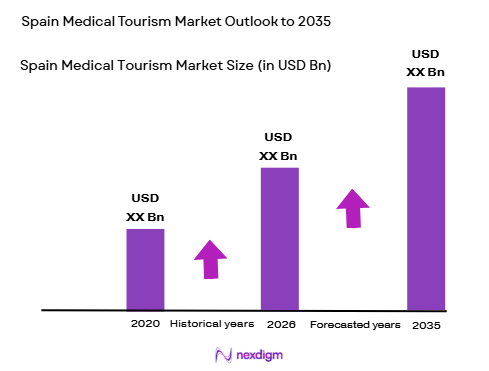
The Spain medical tourism market is valued at approximately USD ~ billion based on a recent historical assessment. Spain’s strong healthcare system, highly skilled medical professionals, and modern healthcare infrastructure contribute significantly to the market’s growth. The country’s appeal as a medical tourism destination is bolstered by competitive pricing for high-quality services, especially in cosmetic surgery, dental procedures, fertility treatments, and orthopedic surgeries. Additionally, the Spanish government’s support for the healthcare sector continues to drive growth.
Cities such as Madrid, Barcelona, and Valencia are dominant in Spain’s medical tourism market due to their advanced medical infrastructure, renowned hospitals, and international reputation for quality care. Madrid is a key hub, offering state-of-the-art medical facilities, while Barcelona, known for its innovation in medical technologies and research, attracts many international patients seeking specialized treatments. Valencia also contributes significantly to medical tourism, with its growing number of internationally recognized healthcare providers offering competitive treatment options.
Market Segmentation
By Treatment Type
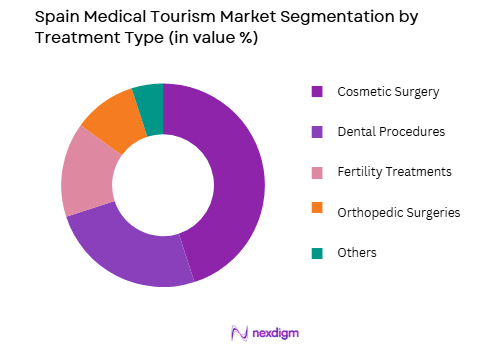
Spain’s medical tourism market is segmented by treatment type into cosmetic surgery, dental procedures, fertility treatments, orthopedic surgeries, and others. Recently, cosmetic surgery has dominated the market share due to its increasing popularity among international patients seeking affordable yet high-quality procedures. Spain is renowned for its highly skilled cosmetic surgeons and modern facilities, particularly in cities like Madrid and Barcelona. Patients seeking procedures such as facelifts, liposuction, and breast augmentation are drawn to Spain due to competitive pricing and excellent patient care. Additionally, the high standards of medical care and the availability of cutting-edge technologies in Spain have contributed to its dominance in cosmetic surgery for medical tourists.
By Source Country
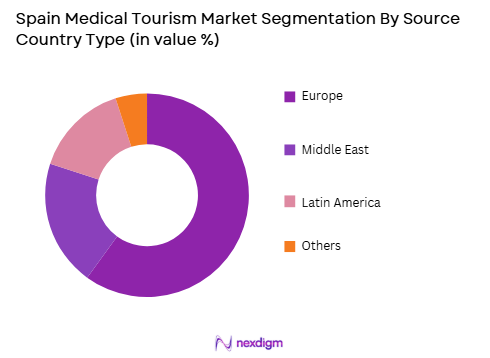
The Spain medical tourism market is segmented by source country into Europe, the Middle East, Latin America, and others. Recently, patients from Europe have dominated the market share due to Spain’s proximity and the ease of access via low-cost flights. Countries like the UK, Germany, and France have seen a high influx of medical tourists to Spain, particularly for cosmetic, dental, and fertility treatments. Spain’s competitive pricing, combined with its high-quality healthcare services, makes it an attractive destination for Europeans seeking medical procedures that are often more expensive in their home countries. The strong presence of well-established hospitals and healthcare providers further contributes to Spain’s appeal as a leading medical tourism destination in Europe.
Competitive Landscape
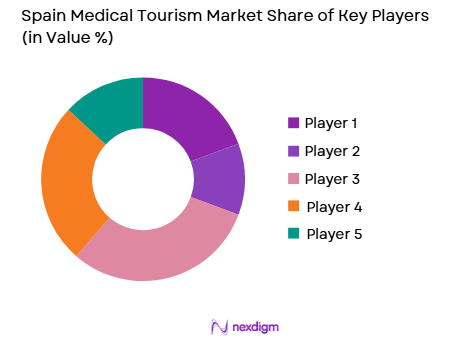
The competitive landscape of Spain’s medical tourism market is characterized by a mix of well-established local healthcare providers and international hospitals offering specialized medical treatments. The market is highly competitive, with hospitals and clinics constantly innovating to attract international patients. Leading Spanish healthcare providers are offering a wide range of services, from cosmetic surgery to fertility treatments, and are leveraging digital marketing to attract patients from Europe, the Middle East, and Latin America. The market is seeing increasing partnerships between hospitals and travel agencies to provide medical tourism packages, including accommodation and post-treatment care.
| Company Name | Establishment Year | Headquarters | Technology Focus | Market Reach | Key Products | Revenue | Additional Parameter |
| Quirónsalud | 1999 | Madrid, Spain | ~ | ~ | ~ | ~ | ~ |
| Sanitas | 1954 | Madrid, Spain | ~ | ~ | ~ | ~ | ~ |
| Vithas | 1993 | Valencia, Spain | ~ | ~ | ~ | ~ | ~ |
| Clínica Universidad de Navarra | 1958 | Pamplona, Spain | ~ | ~ | ~ | ~ | ~ |
| DKV Seguros | 1999 | Zaragoza, Spain | ~ | ~ | ~ | ~ | ~ |
Spain Medical Tourism Market Analysis
Growth Drivers
High-Quality Medical Services at Competitive Prices
One of the primary growth drivers for Spain’s medical tourism market is the availability of high-quality medical services at competitive prices compared to other European and Western countries. Spain is home to a number of internationally recognized healthcare providers that offer advanced treatments such as cosmetic surgery, dental procedures, and orthopedic surgeries at significantly lower costs than in countries like the UK, France, and the USA. This cost advantage, combined with the country’s excellent healthcare infrastructure and skilled medical professionals, makes Spain an attractive destination for medical tourists seeking affordable yet high-quality healthcare solutions. The affordability of medical treatments in Spain, especially for Europeans, continues to drive growth in the medical tourism sector. Moreover, Spain’s healthcare system maintains high standards of care and follows stringent European Union regulations, ensuring that international patients receive world-class medical services.
Rising Demand for Cosmetic and Dental Procedures
The rising demand for cosmetic and dental procedures is another significant growth driver for Spain’s medical tourism market. Spain is recognized as a top destination for cosmetic surgery, attracting patients from across Europe and beyond. The country offers a wide range of cosmetic procedures, including facelifts, rhinoplasty, liposuction, and breast augmentation, at a fraction of the cost compared to other countries. Similarly, dental tourism in Spain is growing due to the availability of high-quality dental care at affordable prices. Spain’s dental clinics offer cutting-edge treatments such as dental implants, veneers, and orthodontics, making the country an attractive destination for patients seeking cosmetic dental care. The increasing popularity of aesthetic treatments and the affordability of medical and dental procedures are contributing to the rapid growth of Spain’s medical tourism market.
Market Challenges
Regulatory and Legal Barriers
One of the challenges facing Spain’s medical tourism market is navigating the regulatory and legal barriers associated with medical tourism services. While Spain has a well-regulated healthcare system, there are complexities surrounding the certification of medical professionals and healthcare facilities for international patients. Foreign patients seeking medical treatment in Spain must ensure that the hospitals and clinics they choose meet specific standards and regulations. Additionally, some international insurance providers may not cover medical procedures performed in Spain, complicating the financial aspects of medical tourism. The legal and regulatory framework for medical tourism services is still evolving in Spain, which can create uncertainty for both patients and healthcare providers. Overcoming these regulatory barriers is essential to ensuring the continued growth of Spain’s medical tourism market.
Language and Cultural Differences
Language and cultural differences can pose challenges for both patients and healthcare providers in Spain’s medical tourism market. Although Spain’s medical professionals generally speak English, language barriers can still exist, especially in smaller clinics or rural areas. Effective communication between patients and healthcare providers is crucial for the success of medical treatments and for ensuring patient satisfaction. Additionally, cultural differences may affect the expectations of medical tourists, particularly in terms of treatment procedures, post-treatment care, and overall experience. Spain’s medical tourism sector must continue to focus on improving communication and cultural sensitivity to ensure a positive experience for international patients.
Opportunities
Growth of Medical Tourism Packages
The growth of medical tourism packages that combine treatment with travel and leisure activities presents a significant opportunity for Spain’s medical tourism market. Many medical tourists are not only seeking high-quality treatments but also looking for an opportunity to experience Spain’s culture, history, and scenic locations. Medical tourism providers in Spain are increasingly offering all-inclusive packages that combine medical treatments with accommodation, transportation, and leisure activities, creating a seamless experience for international patients. These packages are particularly appealing to patients from Europe, the Middle East, and Latin America, who are seeking both affordable healthcare and a vacation. The ability to combine medical care with tourism experiences enhances Spain’s attractiveness as a medical tourism destination, presenting opportunities for growth in the sector.
Expansion of Telemedicine and Remote Consultations
The expansion of telemedicine and remote consultations offers a promising opportunity for Spain’s medical tourism market. With advancements in telehealth technologies, patients from abroad can now consult with Spanish healthcare providers before traveling to the country for treatment. This remote consultation service provides patients with convenience and enables them to make informed decisions about their treatment options. Telemedicine also allows for better post-treatment follow-up and monitoring, enhancing patient satisfaction. Spain’s healthcare providers are increasingly adopting telemedicine to reach international patients and provide pre- and post-treatment care remotely, thereby increasing the accessibility of medical services for medical tourists. The growth of telemedicine in Spain is expected to further boost the country’s position as a leading medical tourism destination.
Future Outlook
The future outlook for Spain’s medical tourism market is optimistic, with steady growth expected over the next five years. The increasing demand for high-quality, affordable healthcare services, particularly in cosmetic surgery and dental procedures, will continue to drive market expansion. The Spanish government’s support for the healthcare sector, along with advancements in telemedicine and digital health solutions, will further enhance Spain’s appeal to international patients. Additionally, the growth of medical tourism packages that combine healthcare with travel experiences will create new opportunities for the industry. With its competitive pricing and world-class healthcare facilities, Spain is poised to remain a top destination for medical tourists in Europe and beyond.
Major Players
- Quirónsalud
- Sanitas
- Vithas
- Clínica Universidad de Navarra
- DKV Seguros
- Hospital Universitario La Paz
- Fresenius Medical Care
- Doctoralia
- Clínica de la Mujer
- Hospital Clínic Barcelona
- Hospital General de Valencia
- Recoletas Red Asistencial
- IMED Hospitales
- Grupo HLA
- Hospital Universitario Ramón y Cajal
Key Target Audience
- Investments and venture capitalist firms
- Government and regulatory bodies
- Healthcare providers
- Hospitals and clinics
- Pharmaceutical companies
- Medical device manufacturers
- Insurance providers
- Medical research organizations
Research Methodology
Step 1: Identification of Key Variables
Key variables such as market size, growth drivers, technological trends, and challenges are identified through primary and secondary research methods.
Step 2: Market Analysis and Construction
Comprehensive market data is collected and analyzed using statistical models to construct accurate market forecasts.
Step 3: Hypothesis Validation and Expert Consultation
Insights and assumptions are validated through consultations with industry experts to ensure the reliability of the findings.
Step 4: Research Synthesis and Final Output
The final report synthesizes all data, providing a comprehensive analysis of Spain’s medical tourism market, including growth drivers, challenges, and opportunities.

- Executive Summary
- Research Methodology (Definitions, Scope, Industry Assumptions, Market Sizing Approach, Primary & Secondary Research Framework, Data Collection & Verification Protocol, Analytic Models & Forecast Methodology, Limitations & Research Validity Checks)

- Market Definition and Scope
- Value Chain & Stakeholder Ecosystem
- Regulatory / Certification Landscape
- Sector Dynamics Affecting Demand

- Growth Drivers
High-Quality Healthcare at Competitive Prices
Government Promotion of Medical Tourism
Advancements in Medical Technology - Market Challenges
Regulatory and Licensing Barriers
Language and Cultural Barriers
Perception of Medical Risks - Market Opportunities
Expansion in Non-surgical Treatments
Medical Tourism for Wellness Services
Increase in Dental and Cosmetic Surgery Tourism - Trends
Rising Popularity of Wellness Tourism
Increasing Acceptance of Telemedicine in Medical Tourism - Government Regulations
- SWOT Analysis
- Porter’s Five Forces

- By Market Value, 2020-2025
- By Installed Units, 2020-2025
- By Average System Price, 2020-2025
- By System Complexity Tier, 2020-2025

- By System Type (In Value%)
Cosmetic Surgery
Orthopedic Surgery
Cardiac Surgery
Dental Procedures
Fertility Treatments - By Platform Type (In Value%)
Medical Tourism Agencies
Online Platforms
Direct Hospital Referrals
Third-party Facilitators - By Fitment Type (In Value%)
Complete Treatment Packages
Pre-treatment Services
Post-treatment Services
Travel and Accommodation Services - By End User Segment (In Value%)
International Patients
Domestic Patients
Insurance Providers

- Market Share Analysis
- Cross Comparison Parameters (System Type, Platform Type, Procurement Channel, End User Segment, Fitment Type, Service Quality, Market Penetration, Regulatory Compliance, Cost Efficiency, Patient Satisfaction)
- SWOT Analysis of Key Competitors
- Pricing & Procurement Analysis
- Key Players
Hospital Alemão Oswaldo Cruz
Fleury Group
DGLAB
Hospital de Câncer de Barretos
Aché Laboratórios Farmacêuticos
Rede D’Or São Luiz
Centrinho
Clinica São Vicente
Sirius Health
Brazilian Health Services
Hospital Israelita Albert Einstein
Grupo Sabin
Oswaldo Cruz Foundation
Grupo São João
Beneficência Portuguesa de São Paulo

- International Patients Seeking Affordable Healthcare
- Insurance Providers Facilitating Medical Tourism
- Domestic Patients Opting for High-Quality Services

- Forecast Market Value, 2026-2035
- Forecast Installed Units, 2026-2035
- Price Forecast by System Tier, 2026-2035
- Future Demand by Platform, 2026-2035


 Request a Sample
 Ask for Customization
 Get a Quote
 Enquire Now