
 Download PDF
 Download PDF
Market Overview
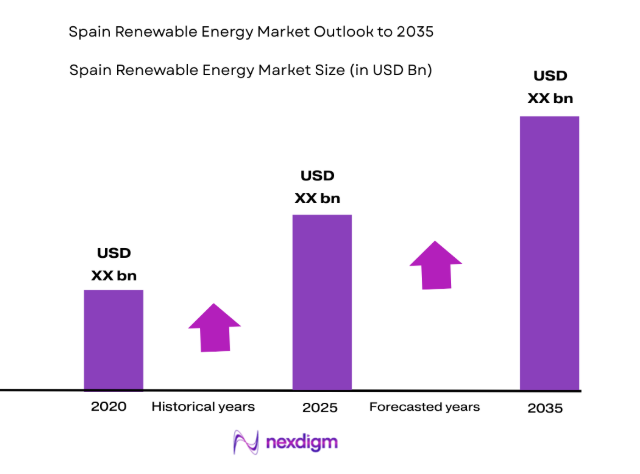
The Spain Renewable Energy market size is significant, driven by robust governmental policies, economic incentives, and increasing investments in green energy solutions. In recent years, the market has seen a surge in renewable energy adoption, supported by Spain’s ambitious targets for reducing carbon emissions and increasing the share of renewable energy in the national grid. As of the most recent assessment, the market’s size is valued in USD ~ billion, reflecting substantial growth and ongoing development within the renewable energy sector. Key drivers include government subsidies, technological advancements, and the increasing demand for clean energy sources.
Spain remains one of the key players in the European renewable energy sector, with major contributions from regions like Catalonia, Andalusia, and Castile and León. The country’s dominance in renewable energy is fueled by its favorable geographic conditions, such as abundant sunshine and strong wind resources, which make it ideal for solar and wind power generation. Additionally, Spain’s renewable energy sector benefits from its close alignment with European Union green energy policies, providing a competitive edge in the global renewable energy market.
Market Segmentation
By Product Type
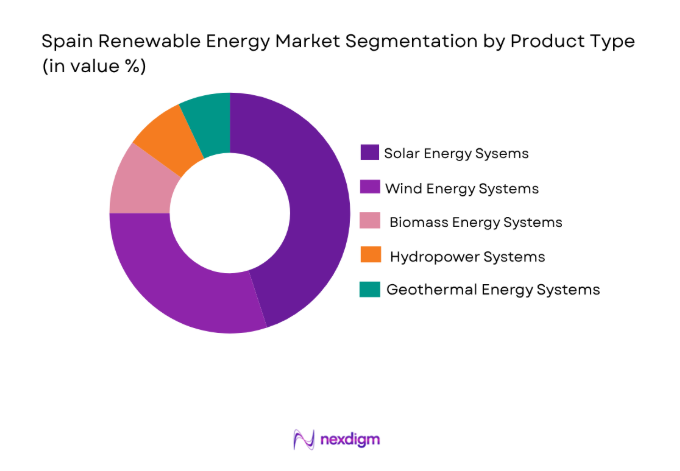
Spain Renewable Energy market is segmented by product type into solar, wind, biomass, hydro, and geothermal energy systems. The solar energy segment has a dominant market share due to favorable climatic conditions and the country’s substantial investment in solar infrastructure. The demand for solar energy systems has been rising steadily, driven by declining installation costs, high efficiency, and government support for solar power projects. The combination of abundant sunshine, affordability, and policy incentives makes solar energy the preferred choice for residential and commercial applications.
By Platform Type
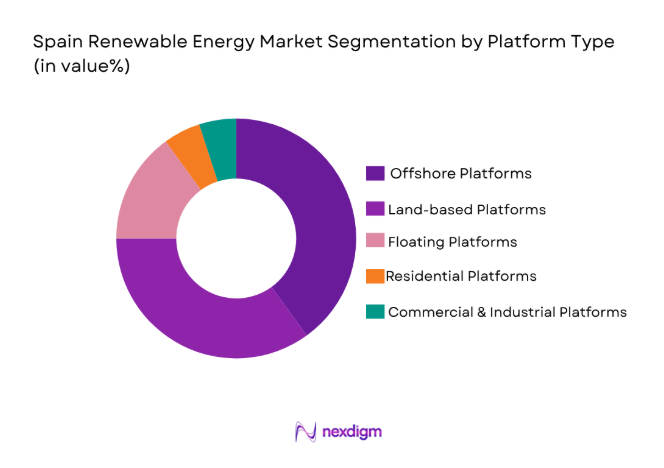
The market is segmented by platform type into land-based platforms, offshore platforms, floating platforms, residential platforms, and commercial & industrial platforms. Offshore platforms dominate the market share, particularly in regions like Galicia and the Balearic Islands, where wind energy generation is a key area of focus. Spain’s push for offshore wind energy development, supported by technological advances in turbine design and floating platform capabilities, is driving the rapid growth of this segment. The move to expand offshore installations is also supported by government incentives and private sector partnerships.
Competitive Landscape
The competitive landscape of the Spain Renewable Energy market is characterized by a high level of innovation and consolidation. Major players dominate the market, with established companies investing heavily in expanding their renewable energy portfolios. Companies like Iberdrola and Acciona Energía lead the market, leveraging their strong brand presence and technological advancements in both wind and solar energy. Market consolidation is observed through mergers and acquisitions, as well as partnerships between government bodies and private firms to accelerate renewable energy adoption.
| Company Name | Establishment Year | Headquarters | Technology Focus | Market Reach | Key Products | Revenue (USD Billion) | Technology Investment (%) |
| Iberdrola | 1992 | Bilbao, Spain | ~ | ~ | ~ | ~ | ~ |
| Acciona Energía | 2002 | Madrid, Spain | ~ | ~ | ~ | ~ | ~ |
| Siemens Gamesa | 1976 | Zamudio, Spain | ~ | ~ | ~ | ~ | ~ |
| Endesa | 1944 | Madrid, Spain | ~ | ~ | ~ | ~ | ~ |
| Solaria | 2002 | Madrid, Spain | ~ | ~ | ~ | ~ | ~ |
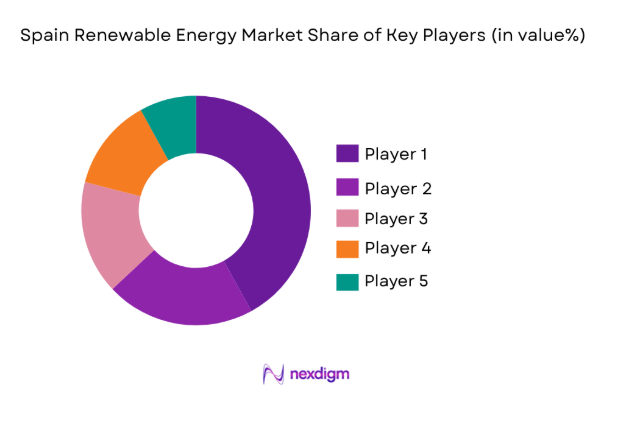
Spain Renewable Energy Market Analysis
Growth Drivers
Government Policy Support
The Spanish government’s commitment to expanding renewable energy has been a key driver in the market’s growth. This is evidenced by the introduction of various subsidies, tax incentives, and grants designed to make renewable energy more accessible to both businesses and consumers. With long-term energy goals and a focus on reducing carbon emissions, the Spanish government has also streamlined permitting processes and simplified regulations, making it easier for developers to invest in renewable energy projects. These measures have made Spain one of the leading renewable energy markets in Europe. The Spanish government’s green energy policies align with the European Union’s renewable energy objectives, fostering collaboration and attracting foreign investments. In addition to renewable energy-specific financial incentives, Spain has committed to reducing its carbon footprint by targeting a significant share of renewable energy in its total energy mix. This ambitious push is expected to continue to drive the market’s expansion over the coming years, making Spain a key player in Europe’s energy transition. This ongoing governmental backing ensures both large and small-scale energy producers can access the necessary capital to develop and expand their renewable energy portfolios.
Technological Advancements in Energy Storage
Energy storage technology has made significant strides in Spain, which has helped overcome the intermittent nature of renewable energy generation. The development of more efficient and cost-effective battery storage solutions has been crucial in supporting the growth of wind and solar power. These advancements have allowed for better integration of renewable energy into the national grid, thereby improving energy reliability and reducing dependence on conventional power sources. As energy storage costs continue to decrease, Spain is well-positioned to leverage these technologies in its energy transition. The implementation of advanced energy storage solutions like lithium-ion batteries and emerging solid-state technologies plays a key role in stabilizing the grid by storing excess energy produced during peak generation times and releasing it when demand increases. Moreover, the Spanish government has heavily invested in R&D and provided funding for large-scale energy storage projects, which further supports the integration of renewable sources into the energy mix. The technological evolution in energy storage is expected to drive Spain’s renewable energy capacity in the future, facilitating the country’s shift towards more sustainable and efficient energy solutions.
Market Challenges
High Initial Investment in Infrastructure
One of the main challenges in Spain’s renewable energy market is the significant upfront cost required for the development of renewable energy infrastructure. While the operating costs of renewable energy systems are generally lower than traditional energy systems, the capital investment required for solar panels, wind turbines, and associated infrastructure can be a major barrier for new entrants. Financing such large-scale projects can be difficult, particularly for smaller companies, and despite government incentives, the initial capital remains a key challenge for the industry. The financial hurdles tied to setting up renewable energy infrastructure, including installation, operation, and maintenance, often require long-term planning and large-scale investments, which can discourage private investors. These initial costs are also compounded by land acquisition costs, regulatory compliance, and grid integration expenses, making it difficult for startups or smaller enterprises to compete with larger, more established players. In addition, the long return-on-investment timelines associated with renewable energy projects can make it a risky proposition for some investors, further exacerbating the financial challenges.
Intermittency and Grid Integration
The intermittent nature of renewable energy generation presents a challenge in terms of grid integration. Solar and wind energy production can fluctuate depending on weather conditions, and this inconsistency can lead to power shortages or excess energy during periods of high generation. Spain is working towards solving this issue by upgrading its grid systems and integrating more energy storage solutions, but this remains a challenge for ensuring a stable and reliable energy supply from renewable sources. The need for flexible and efficient grid infrastructure has never been greater, as integrating increasing amounts of renewable energy into the system requires balancing fluctuations in energy generation. As a result, Spain is focusing on improving grid flexibility and storage solutions to accommodate the variable nature of renewable energy. While progress has been made in creating smart grids, the country still faces challenges regarding the synchronization of decentralized renewable energy sources with traditional, centralized power systems. Addressing this grid integration challenge will be pivotal in ensuring the long-term reliability and efficiency of Spain’s energy transition.
Opportunities
Expansion of Offshore Wind Farms
Spain has vast potential for offshore wind energy, particularly along its coastline. With technological advancements in floating wind turbines and the government’s increasing support for offshore projects, there is a significant opportunity for the market to expand in this area. The development of offshore wind farms can help Spain meet its renewable energy targets and reduce dependence on fossil fuels, while creating jobs and boosting the economy. The country’s geographic advantages, combined with EU funding and initiatives, make this a highly promising opportunity. Spain’s offshore wind resources are among the best in Europe, and its coastal areas offer ideal conditions for wind power generation. Offshore wind farms could generate substantial power, providing reliable energy to both the domestic and export markets. Additionally, the development of floating wind turbines allows for deeper offshore locations where traditional turbines would be unfeasible. As Spain continues to embrace offshore wind energy, these projects are expected to become a cornerstone of its renewable energy strategy, driving sustainable economic growth and enhancing Spain’s role in the European energy market.
Increased Demand for Energy Storage Solutions
As renewable energy generation continues to rise, there is an increasing need for energy storage solutions to stabilize supply and demand. Spain’s energy storage market presents a huge opportunity, particularly as innovations in battery technology and other storage solutions continue to lower costs. By improving storage capabilities, Spain can ensure more reliable energy supply, enhance the integration of renewables into the grid, and reduce dependency on fossil fuels. Additionally, energy storage systems can be a crucial component of smart grid technology, offering a market-driven opportunity for Spain. The growth of Spain’s energy storage sector will be driven by the need to manage fluctuations in renewable energy production, such as solar and wind, ensuring that excess energy generated during peak times is stored and utilized during periods of lower generation. The development of more affordable, scalable, and efficient storage systems is vital to maintaining the stability of the grid and meeting the increasing demand for renewable energy. As the market matures, energy storage solutions will not only enhance the performance of existing renewable energy projects but also contribute to the country’s overall energy transition, enabling the widespread deployment of clean energy solutions
Future Outlook
The future of Spain’s renewable energy market is expected to be marked by continued growth, with advancements in both technology and infrastructure. The government is likely to remain a major player in driving this growth through its renewable energy targets and incentives. Technological developments, particularly in energy storage and offshore wind energy, will also play a pivotal role in shaping the future landscape of the market. With strong demand for clean energy, Spain is poised to continue its leadership in the renewable energy transition over the next several years.
Major Players
- Iberdrola
- Acciona Energía
- Siemens Gamesa
- Endesa
- Solaria
- Grenergy Renovables
- Duro Felguera
- Naturgy
- EDF Renewables
- Vestas
- Enel Green Power
- Exelon
- First Solar
- JinkoSolar
- GE Renewable Energy
Key Target Audience
- Investments and venture capitalist firms
- Government and regulatory bodies
- Renewable energy developers
- Commercial and industrial energy consumers
- Private equity firms
- Renewable technology manufacturers
- Energy solution providers
Research Methodology
Step 1: Identification of Key Variables
This step involves determining the key factors that drive the renewable energy market, such as government policies, technological advancements, and demand for sustainable energy sources.
Step 2: Market Analysis and Construction
In this stage, the market size, growth trends, and future projections are calculated based on both primary and secondary data sources, providing a comprehensive view of the current landscape.
Step 3: Hypothesis Validation and Expert Consultation
Industry experts and market participants are consulted to validate assumptions and hypotheses, ensuring that the analysis reflects the latest trends and developments in the market.
Step 4: Research Synthesis and Final Output
The final research output synthesizes all collected data and insights into a coherent report, presenting actionable findings and recommendations for stakeholders in the renewable energy market.

- Executive Summary
- Research Methodology (Definitions, Scope, Industry Assumptions, Market Sizing Approach, Primary & Secondary Research Framework, Data Collection & Verification Protocol, Analytic Models & Forecast Methodology, Limitations & Research Validity Checks)

- Market Definition and Scope
- Value Chain & Stakeholder Ecosystem
- Regulatory / Certification Landscape
- Sector Dynamics Affecting Demand
- Strategic Initiatives & Infrastructure Growth

- Growth Drivers
Government Incentives and Policy Support
Technological Advancements in Energy Storage
Increasing Energy Demand and Sustainability Concerns - Market Challenges
High Initial Capital Investment
Regulatory and Policy Barriers
Intermittency and Grid Integration Issues - Market Opportunities
Growth in Energy Storage Technologies
Emerging Smart Grid Solutions
Increase in Renewable Energy Investments - Trends
Rise in Hybrid Renewable Energy Systems
Focus on Energy Efficiency in Renewable Solutions - Government Regulations
Carbon Emissions Reduction Targets
Feed-in Tariffs and Renewable Energy Subsidies
Renewable Energy Standards and Certification - SWOT Analysis
- Porter’s Five Forces

- By Market Value, 2020-2025
- By Installed Units, 2020-2025
- By Average System Price, 2020-2025
- By System Complexity Tier, 2020-2025

- By System Type (In Value%)
Wind Energy Systems
Solar Energy Systems
Biomass Energy Systems
Hydropower Systems
Geothermal Energy Systems - By Platform Type (In Value%)
Land-based Platforms
Offshore Platforms
Floating Platforms
Residential Platforms
Commercial & Industrial Platforms - By Fitment Type (In Value%)
On-grid Solutions
Off-grid Solutions
Hybrid Solutions
Integrated Solutions - By End User Segment (In Value%)
Residential Users
Commercial & Industrial Users
Government & Public Sector Users

- Market Share Analysis
- Cross Comparison Parameters (System Type, Platform Type, Procurement Channel, End User Segment, Fitment Type, Market Value, Installed Units)
- SWOT Analysis of Key Competitors
- Pricing & Procurement Analysis
- Key Players
Iberdrola
Acciona Energía
Siemens Gamesa
Endesa
Solaria
Grenergy Renovables
Duro Felguera
Naturgy
EDF Renewables
Vestas
Enel Green Power
Exelon
First Solar
JinkoSolar
GE Renewable Energy

- Residential Users’ Shift Towards Sustainable Energy
- Increased Commercial & Industrial Investments in Renewable Solutions
- Government’s Role in Renewable Energy Deployment
- Private Sector and Technological Firms Collaborating on Energy Solutions

- Forecast Market Value, 2026-2035
- Forecast Installed Units, 2026-2035
- Price Forecast by System Tier, 2026-2035
- Future Demand by Platform, 2026-2035


 Request a Sample
 Ask for Customization
 Get a Quote
 Enquire Now