
 Download PDF
 Download PDF
Market Overview
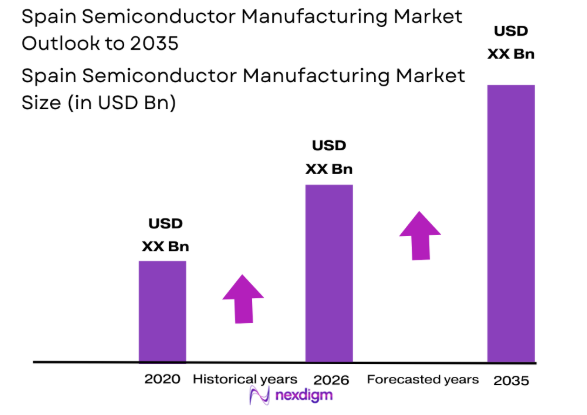
The Spain Semiconductor Manufacturing market in Spain has witnessed a steady rise, with the market size USD ~ billion. The growth is driven by the increasing demand for semiconductors in diverse sectors, such as automotive, consumer electronics, and industrial applications. Strong investments in research and development, along with government support for technological advancements, are expected to continue driving the market forward. The expansion of the automotive and electronics industries, along with the rising demand for connected devices, further fuels the market’s growth.
Spain remains a key player in Europe for semiconductor manufacturing, with cities like Barcelona and Madrid leading the charge due to their robust infrastructure and technology ecosystem. The country benefits from strategic alliances with global semiconductor companies, enabling it to attract substantial investments. Moreover, Spain’s favorable regulatory framework and its integration into European Union supply chains provide a competitive edge in the market. The government’s initiatives to promote digitalization and support industries like electric vehicles also bolster Spain’s dominance in the sector.
Market Segmentation
By Product Type
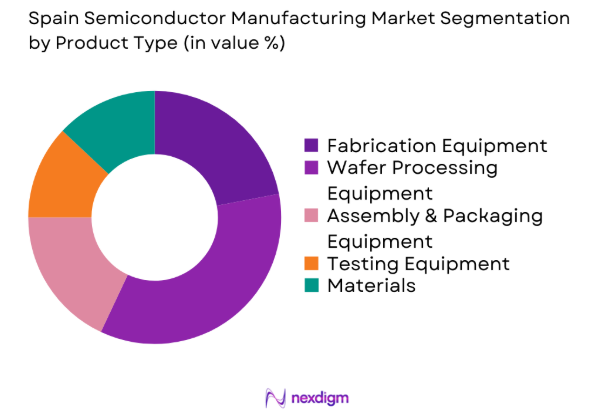
The Spain Semiconductor Manufacturing market in Spain is segmented by product type into fabrication equipment, wafer processing equipment, assembly and packaging equipment, testing equipment, and materials. Wafer processing equipment has a dominant market share, driven by the increasing adoption of semiconductor technologies across various industries. Factors such as demand patterns for miniaturized and high-performance devices, as well as advancements in wafer processing technologies, are contributing to the growing prominence of this sub-segment.
By End-User Segment
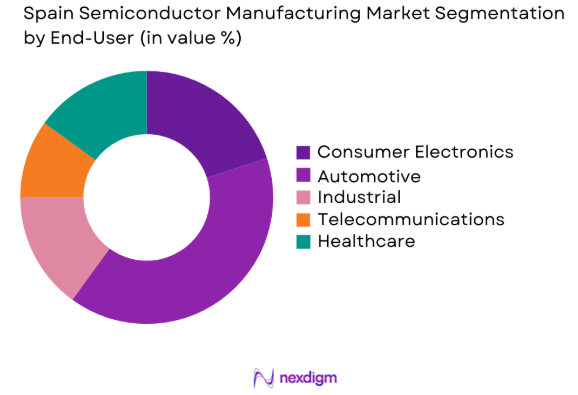
The Spain Semiconductor Manufacturing market in Spain is segmented by end-user industry into consumer electronics, automotive, industrial, telecommunications, and healthcare. The automotive industry holds a dominant market share, largely due to the increasing demand for semiconductors in electric vehicles and autonomous driving systems. With the rapid advancement of automotive technology, including the integration of AI and IoT, the demand for semiconductors in this sector continues to grow, driving the expansion of the market.
Competitive Landscape
The semiconductor manufacturing market in Spain is highly competitive, with several global players holding significant influence. The industry sees consolidation through strategic partnerships, mergers, and acquisitions, as companies look to leverage emerging technologies and expand their geographical reach. Major players dominate the market with advanced technologies, strong brand presence, and substantial investments in R&D, leading to increased market competition and innovation.
| Company Name | Establishment Year | Headquarters | Technology Focus | Market Reach | Key Products | Revenue | Additional Parameter |
| Intel | 1968 | USA | ~ | ~ | ~ | ~ | ~ |
| TSMC | 1987 | Taiwan | ~ | ~ | ~ | ~ | ~ |
| Samsung Electronics | 1969 | South Korea | ~ | ~ | ~ | ~ | ~ |
| GlobalFoundries | 2009 | USA | ~ | ~ | ~ | ~ | ~ |
| Micron Technology | 1978 | USA | ~ | ~ | ~ | ~ | ~ |
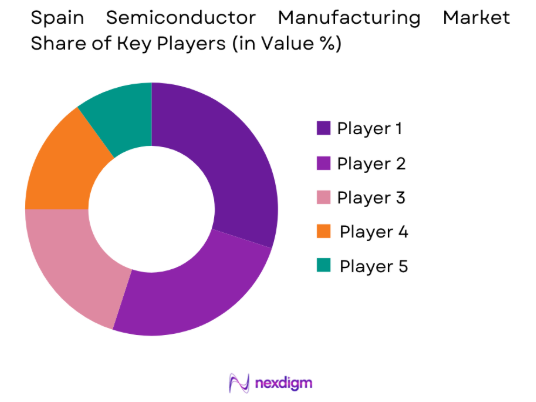
Spain Semiconductor Manufacturing Market Analysis
Growth Drivers
Technological Advancements in Semiconductor Manufacturing
The rapid evolution of semiconductor technologies, particularly the shift to smaller, more powerful chips, is driving Spain’s semiconductor manufacturing market. With rising demand from industries like automotive, telecommunications, and consumer electronics for higher performance and energy-efficient components, Spain’s manufacturers are adopting advanced fabrication processes such as 7nm and 5nm technologies. These innovations enable the production of smaller, faster, and more efficient chips, increasing demand for semiconductor equipment and materials. Additionally, the integration of AI and machine learning in semiconductor design is fostering innovation and efficiency. Supported by government investment in R&D, including quantum computing, Spain is positioned to remain a leader in European semiconductor manufacturing, alongside global players like TSMC and Intel.
Rising Demand for Electric Vehicles (EVs)
The growing demand for electric vehicles (EVs) is a major growth driver for Spain’s semiconductor manufacturing market. As the automotive industry shifts toward electric and autonomous vehicles, advanced semiconductors are essential for power management, battery systems, and advanced driver-assistance systems (ADAS). Spain’s established automotive sector and strong infrastructure position it well to meet the rising demand for automotive semiconductors. With increasing investments from automakers and tech companies in EV production, there will be a surge in demand for semiconductors, especially in power semiconductors, sensors, and microcontrollers. Spain’s focus on clean energy and sustainable transportation further strengthens the semiconductor market, supporting both local manufacturers and global suppliers in the region.
Market Challenges
Supply Chain Disruptions
Supply chain disruptions are a significant challenge for Spain’s semiconductor manufacturing market. Global events, such as the COVID-19 pandemic, have exposed vulnerabilities in sourcing critical materials like silicon, rare earth metals, and specialty chemicals. These disruptions, coupled with geopolitical tensions, have caused production delays and increased material costs. As a key hub for semiconductor manufacturing in Europe, Spain faces slower delivery times and limited access to advanced production technologies. Companies relying on just-in-time systems or overseas suppliers are particularly vulnerable, affecting their ability to meet demand. To overcome this, Spain’s semiconductor industry must diversify supply sources and invest in robust infrastructure to strengthen supply chains and maintain production efficiency.
Technological Integration and Interoperability Issues
The integration of new technologies into existing semiconductor manufacturing processes poses a challenge for Spain’s market. As demand for advanced chips increases, manufacturers must update their equipment and materials to support technologies like 5G, AI, and IoT. However, legacy systems often struggle with compatibility issues, hindering seamless integration of new technologies. For instance, older tools may not support the advanced production processes needed for smaller, more efficient chips. To overcome this, manufacturers must heavily invest in R&D while maintaining the efficiency of existing facilities. Balancing innovation with cost-effectiveness is challenging, especially given the rapid pace of technological advancements, requiring constant updates to stay globally competitive.
Opportunities
Expansion of 5G Infrastructure
The rollout of 5G networks offers a major opportunity for Spain’s semiconductor manufacturing market. As 5G technology is set to transform sectors like telecommunications, healthcare, and automotive, the demand for semiconductors to support 5G infrastructure is expected to surge. Spain, a key player in the European telecommunications market, stands to benefit from the global shift towards 5G adoption. Semiconductor manufacturers in the country will be crucial in supplying chips for 5G base stations, network equipment, and end-user devices such as smartphones and connected vehicles. With the European Union’s focus on 5G infrastructure and technological investments, Spain can capture a significant market share by advancing in 5G chipsets, materials, and testing equipment, further strengthening its position in the global semiconductor market.
Collaborations Between Semiconductor Companies and Startups
Spain’s semiconductor manufacturing market can benefit greatly from increased collaborations between established companies and startups. Startups often bring innovative technologies and fresh ideas, which can enhance the capabilities of larger semiconductor firms. For instance, partnerships with AI and IoT startups could lead to the development of chips optimized for emerging applications like edge computing and autonomous systems. These collaborations can accelerate the commercialization of new technologies, shortening time to market and boosting Spain’s competitiveness in the semiconductor sector. By promoting collaboration, Spain can strengthen its position as a leader in next-generation semiconductor technologies, attracting both local and international investments. This ecosystem fosters innovation and further drives growth in the market.
Future Outlook
The future outlook for Spain’s semiconductor manufacturing market is positive, with significant growth expected over the next five years. Technological advancements, such as the rise of 5G and electric vehicles, are likely to drive demand for advanced semiconductor solutions. The increasing focus on sustainability and clean energy is also expected to boost demand for semiconductors in industries such as automotive and telecommunications. With strong government support for R&D and a favorable regulatory environment, Spain is well-positioned to become a leader in the European semiconductor market.
Major Players
- Intel
- TSMC
- Samsung Electronics
- GlobalFoundries
- Micron Technology
- STMicroelectronics
- Qualcomm
- NXP Semiconductors
- Broadcom
- Infineon Technologies
- Texas Instruments
- Analog Devices
- ASML
- Applied Materials
- KLA Corporation
Key Target Audience
- Investments and venture capitalist firms
- Government and regulatory bodies
- Semiconductor manufacturers
- Automotive companies
- Telecommunication providers
- Industrial automation firms
- Healthcare technology providers
- Consumer electronics companies
Research Methodology
Step 1: Identification of Key Variables
The first step involves identifying the key variables that drive the semiconductor manufacturing market, including technology advancements, demand from key industries, and regulatory influences.
Step 2: Market Analysis and Construction
This step focuses on analyzing historical market data, identifying growth trends, and segmenting the market into relevant categories such as product types, end-users, and geographical regions.
Step 3: Hypothesis Validation and Expert Consultation
Expert opinions and insights are gathered from industry leaders, semiconductor manufacturers, and government bodies to validate assumptions and refine market models.
Step 4: Research Synthesis and Final Output
The final step involves synthesizing all gathered data, applying analytical models, and presenting the findings in a comprehensive report, which is then reviewed for accuracy.

- Executive Summary
- Research Methodology (Definitions, Scope, Industry Assumptions, Market Sizing Approach, Primary & Secondary Research Framework, Data Collection & Verification Protocol, Analytic Models & Forecast Methodology, Limitations & Research Validity Checks)

- Market Definition and Scope
- Value Chain & Stakeholder Ecosystem
- Regulatory / Certification Landscape
- Sector Dynamics Affecting Demand
- Strategic Initiatives & Infrastructure Growth

- Growth Drivers
Growing Demand for Consumer Electronics
Technological Advancements in Semiconductor Materials
Expansion of Automotive Electronics
Increasing Investments in Semiconductor R&D - Market Challenges
High Capital Investments in Manufacturing Facilities
Supply Chain Disruptions and Material Shortages
Regulatory Barriers in the European Union
Technological Complexity in Advanced Manufacturing - Market Opportunities
Integration of AI in Semiconductor Manufacturing
Collaborations Between Semiconductor Companies and Startups
Expansion in Electric Vehicle Semiconductor Market - Trends
Rise in 5G Semiconductor Manufacturing
Integration of AI and Machine Learning in Production
Shift Towards Sustainable and Green Semiconductor Manufacturing - Government Regulations
- SWOT Analysis of Key Competitors
- Porter’s Five Forces

- By Market Value, 2020-2025
- By Installed Units, 2020-2025
- By Average System Price, 2020-2025
- By System Complexity Tier, 2020-2025

- By System Type (In Value%)
Semiconductor Fabrication Equipment
Wafer Processing Equipment
Assembly & Packaging Equipment
Testing Equipment
Materials - By Platform Type (In Value%)
Silicon-based Platforms
Compound Semiconductor Platforms
Organic Semiconductor Platforms
Photonic Semiconductor Platforms
Advanced Packaging Platforms - By Fitment Type (In Value%)
On-premise Solutions
Cloud-based Solutions
Hybrid Solutions
Modular Solutions
Integrated Solutions - By End User Segment (In Value%)
Consumer Electronics
Automotive Industry
Industrial Automation
Telecommunication
Healthcare - By Procurement Channel (In Value%)
Direct Procurement
Government Tenders
Private Sector Procurement
Online Bidding Platforms
Third-party Distributors

- Market Share Analysis
- Cross Comparison Parameters (System Type, Platform Type, Procurement Channel, End User Segment, Fitment Type, Market Share, Technological Advancements, R&D Investments, Pricing Strategies, Geographic Reach)
- SWOT Analysis of Key Competitors
- Pricing & Procurement Analysis
- Key Players
Intel
TSMC
Samsung Electronics
GlobalFoundries
Micron Technology
ASML
SK hynix
Broadcom
Qualcomm
NXP Semiconductors
STMicroelectronics
Infineon Technologies
Texas Instruments
Analog Devices
Advanced Micro Devices

- Demand for Automotive Semiconductors
- Growth of Consumer Electronics Industry
- Rise of IoT in Industrial Applications
- Increasing Demand for Healthcare Devices

- Forecast Market Value, 2026-2035
- Forecast Installed Units, 2026-2035
- Price Forecast by System Tier, 2026-2035
- Future Demand by Platform, 2026-2035


 Request a Sample
 Ask for Customization
 Get a Quote
 Enquire Now