

 Download PDF
 Download PDF
Market Overview
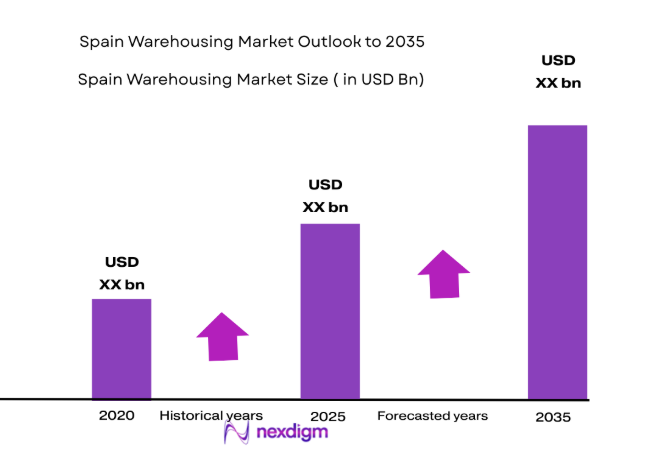
Based on a recent historical assessment, the Spain Warehousing Market generated approximately USD ~ billion in revenue, according to logistics infrastructure evaluations published by the Spanish Ministry of Transport, Mobility and Urban Agenda and supported by industrial real estate data from CBRE Spain. Market expansion is strongly driven by rapid digital commerce adoption, modernization of logistics corridors, and increasing third-party logistics outsourcing among retailers and manufacturers. Large fulfillment facilities, automated storage technologies, and integrated logistics parks across national transportation networks significantly strengthen the operational capacity of Spain’s warehousing ecosystem.
Spain’s warehousing infrastructure is concentrated around major logistics hubs including Madrid, Barcelona, Valencia, Zaragoza, and Seville, where strong transportation connectivity and industrial activity support large distribution facilities. Madrid functions as the country’s central logistics hub due to its geographic location and dense highway network linking major consumption markets. Barcelona and Valencia maintain strategic importance because of large maritime ports that facilitate international trade. Zaragoza’s Plaza logistics platform and growing intermodal rail connections further reinforce the region’s position within national supply chain networks.
Market Segmentation
By Product Type
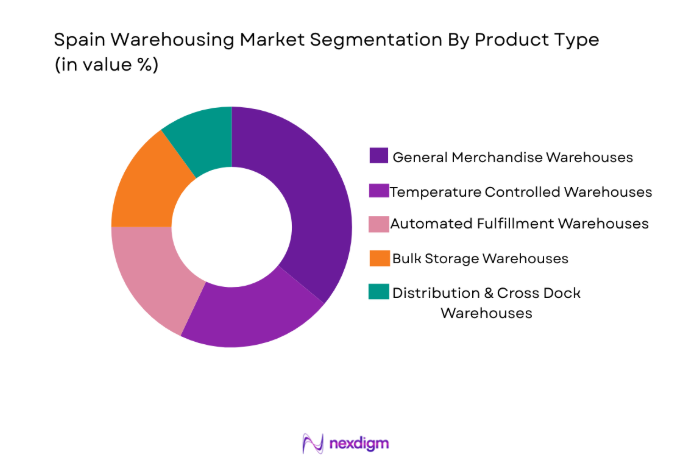
Spain Warehousing Market is segmented by product type into general merchandise warehouses, temperature-controlled warehouses, automated fulfillment warehouses, bulk storage warehouses, and distribution & cross-dock warehouses. Recently, general merchandise warehouses has a dominant market share due to factors such as strong retail distribution demand, high consumer goods inventory requirements, and the widespread presence of retail distribution centers across Spain. Large national retailers and third-party logistics operators rely heavily on high-capacity general storage warehouses for inventory consolidation and order distribution. These facilities support large volumes of packaged consumer goods including electronics, apparel, household products, and packaged food items. Their operational flexibility allows logistics providers to manage both store replenishment and online order fulfillment through integrated warehouse management systems and nationwide distribution networks.
By Platform Type
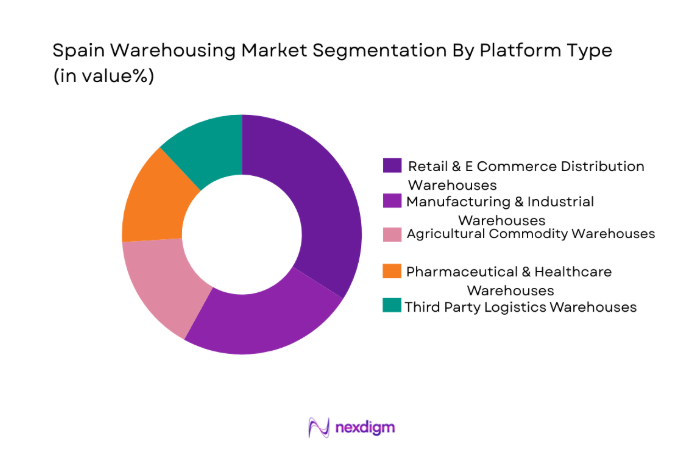
Spain Warehousing Market is segmented by platform type into retail & e-commerce distribution warehouses, manufacturing & industrial warehouses, agricultural commodity warehouses, pharmaceutical & healthcare warehouses, and third-party logistics warehouses. Recently, retail & e-commerce distribution warehouses has a dominant market share due to factors such as rapid growth in digital retail transactions, expansion of fulfillment infrastructure, and increasing consumer demand for fast parcel delivery services. Large e-commerce platforms operate centralized fulfillment hubs near major metropolitan areas to accelerate order processing and distribution. Logistics providers also establish regional distribution centers to connect online retail warehouses with urban delivery networks. Continuous expansion of omnichannel retail logistics systems further strengthens the operational importance of these facilities within Spain’s national warehousing infrastructure.
Competitive Landscape
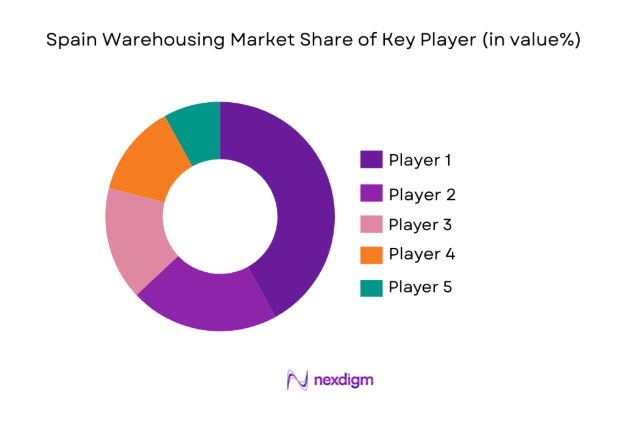
The Spain Warehousing Market demonstrates moderate consolidation with several global logistics real estate developers and third-party logistics operators controlling a significant portion of large distribution facilities. Industrial real estate investment firms and logistics infrastructure developers actively expand warehouse portfolios near major logistics corridors to support rising e-commerce fulfillment demand. Strategic partnerships between logistics providers, real estate developers, and retail companies further strengthen competitive positioning. Continuous investments in automated warehouse technologies and smart logistics infrastructure allow major operators to enhance operational efficiency and maintain competitive advantage across Spain’s rapidly evolving distribution ecosystem.
| Company Name | Establishment Year | Headquarters | Technology Focus | Market Reach | Key Products | Revenue | Warehouse Capacity Focus |
| Prologis | 1983 | USA | ~ | ~ | ~ | ~ | ~ |
| Goodman Group | 1989 | Australia | ~ | ~ | ~ | ~ | ~ |
| Segro | 1920 | UK | ~ | ~ | ~ | ~ | ~ |
| Logicor | 2012 | UK | ~ | ~ | ~ | ~ | ~ |
| Merlin Properties | 2014 | Spain | ~ | ~ | ~ | ~ | ~ |
Spain Warehousing Market Analysis
Growth Drivers
Expansion of E-Commerce Fulfillment Infrastructure Across Spain
Rapid expansion of digital commerce platforms across Spain significantly strengthens demand for advanced warehousing infrastructure capable of supporting high volume order fulfillment and nationwide parcel distribution networks. Online retail marketplaces process extremely large volumes of consumer transactions involving electronics clothing household products and groceries that require efficient inventory storage and packaging operations. Retail companies increasingly depend on automated fulfillment centers equipped with robotics enabled sorting systems and warehouse management software designed to accelerate order processing efficiency. Logistics providers therefore invest heavily in large scale distribution facilities located near major metropolitan regions including Madrid Barcelona and Valencia. Continuous growth in mobile commerce participation further expands online retail order volumes handled by warehouse facilities across national supply chains. Retail companies also adopt omnichannel distribution strategies where warehouses support both store replenishment and direct consumer deliveries. Development of micro fulfillment facilities within urban areas strengthens last mile logistics operations by reducing delivery distances. Increasing investments in warehouse automation technologies including automated storage retrieval systems and predictive demand analytics further enhance operational productivity across Spain’s logistics infrastructure.
Growth of Export Oriented Manufacturing and European Trade Logistics Networks
Spain maintains a strong position within European manufacturing and export supply chains which significantly increases demand for warehousing infrastructure capable of supporting complex logistics operations. Automotive manufacturing industries located across Catalonia and Valencia generate large volumes of industrial components and finished vehicles requiring extensive distribution storage networks. Agricultural production regions across Andalusia and Castilla-La Mancha also generate significant commodity volumes requiring warehousing before shipment to international markets. Major seaports including Barcelona Valencia and Algeciras handle extremely high cargo volumes connecting Spain with European Asian and American trade routes. Logistics operators therefore establish large distribution warehouses near port terminals and intermodal transportation corridors supporting cargo consolidation and export logistics coordination. Manufacturers also require warehouse facilities to manage inventory storage of intermediate goods used in industrial production processes. Cross border trade integration within the European Union further increases freight volumes handled by Spanish logistics infrastructure. As international trade activity expands across manufacturing and agricultural sectors the need for large scale warehousing facilities continues increasing across Spain’s supply chain ecosystem.
Market Challenges
Limited Availability of Industrial Land Near Major Logistics Corridors
Rapid growth of logistics infrastructure development across Spain significantly increases demand for large industrial land parcels capable of supporting high capacity warehouse facilities located near transportation corridors. However limited availability of suitable land near major metropolitan regions including Madrid and Barcelona creates operational challenges for logistics developers attempting to construct new distribution centers. Industrial land located close to highway networks intermodal rail terminals and urban consumption markets becomes increasingly scarce due to urban expansion and competing commercial real estate development projects. Logistics companies therefore face rising acquisition costs when securing strategically located industrial sites for warehouse construction. Environmental zoning regulations and municipal land use planning policies also restrict expansion of logistics parks in certain regions. As a result developers frequently shift warehouse development projects toward secondary logistics corridors located further from major consumption centers. This geographic shift may increase transportation distances and operational logistics costs for distribution networks. Infrastructure congestion near existing logistics corridors also complicates large scale industrial land development. These constraints create long term planning challenges for warehousing developers attempting to expand national logistics capacity.
Rising Construction Costs and Automation Investment Requirements
Development of modern warehouse facilities requires significant capital investment due to rising construction material costs advanced automation technologies and specialized logistics infrastructure requirements. Large fulfillment centers require high ceiling buildings reinforced floor structures robotics enabled storage systems and complex warehouse management software platforms designed to manage extremely high order volumes. Logistics developers must therefore allocate substantial financial resources to build technologically advanced warehouse facilities capable of supporting modern distribution operations. Construction costs also increase due to energy efficient building standards and sustainability regulations governing industrial infrastructure projects across Spain. Integration of robotics automated storage retrieval systems and artificial intelligence driven inventory management platforms further raises investment requirements for logistics operators. Smaller logistics providers often face financial constraints when attempting to adopt advanced warehouse automation technologies required to remain competitive within modern logistics ecosystems. Maintenance and system integration costs associated with advanced warehouse technologies also increase operational expenditures over time. These financial challenges create barriers for smaller market participants attempting to expand within Spain’s evolving warehousing industry.
Opportunities
Expansion of Smart Logistics Parks and Integrated Distribution Corridors
Development of large scale smart logistics parks across Spain creates substantial opportunities for warehouse developers logistics providers and infrastructure investors participating in the national distribution ecosystem. Government supported infrastructure initiatives encourage development of integrated logistics corridors connecting industrial production zones with port terminals airports and intermodal rail networks. These logistics hubs integrate warehousing facilities transportation terminals and advanced digital supply chain management systems within centralized industrial platforms. Smart logistics parks enable companies to consolidate inventory storage cargo handling and distribution operations within strategically located logistics clusters. Integration of digital warehouse technologies including automated inventory monitoring predictive demand analytics and robotics enabled material handling further enhances operational efficiency across these logistics parks. Major logistics developers therefore expand investment in integrated logistics infrastructure capable of supporting growing domestic consumption and export trade volumes. International logistics investors also recognize the strategic importance of Spain as a gateway between European and global trade routes. Continuous development of smart logistics parks therefore presents significant long term growth opportunities for warehousing infrastructure across Spain.
Growth of Temperature Controlled Logistics Supporting Food and Pharmaceutical Supply Chains
Increasing demand for temperature sensitive product distribution across food processing pharmaceutical manufacturing and biotechnology industries significantly expands opportunities within Spain’s cold chain warehousing segment. Pharmaceutical products vaccines biologic medicines and specialty drugs require strict temperature controlled storage conditions to maintain product stability and regulatory compliance during distribution. Healthcare providers pharmacies and pharmaceutical manufacturers therefore depend on specialized refrigerated warehouses capable of maintaining validated temperature ranges throughout storage and handling operations. Food supply chains also require temperature controlled warehouses to preserve the quality of frozen meat seafood dairy products fruits and vegetables during transportation and distribution. Expansion of organized retail food distribution networks across Spain further strengthens demand for refrigerated logistics infrastructure connecting producers with supermarkets and restaurants. Logistics providers increasingly invest in advanced cold storage warehouses equipped with temperature monitoring systems and energy efficient refrigeration technologies. Export oriented food industries also require reliable cold storage infrastructure before shipping perishable agricultural products to international markets. These factors collectively create strong growth opportunities for temperature controlled warehousing infrastructure across Spain.
Future Outlook
The Spain warehousing market is expected to maintain strong development momentum as logistics infrastructure continues expanding across major distribution corridors. Growing digital commerce adoption and increasing retail fulfillment requirements will continue stimulating investments in automated warehouses and smart logistics parks. Integration of robotics, artificial intelligence driven inventory systems, and advanced warehouse management platforms will further improve operational productivity across logistics networks. Government infrastructure programs and international trade expansion will also support long-term demand for high-capacity warehouse facilities nationwide.
Major Players
- Prologis
- Goodman Group
- Segro
- Logicor
- GLP Europe
- P3 Logistic Parks
- Panattoni Europe
- Montepino Logistics
- Merlin Properties
- VGP Group
- CBRE Investment Management
- Blackstone Logistics Properties
- Hillwood Europe
- Frasers Property Industrial
- Hines
Key Target Audience
- Logistics Infrastructure Investors
- Industrial Real Estate Developers
- E-commerce and Retail Companies
- Third Party Logistics Providers
- Manufacturing and Export Companies
- Investments and Venture Capitalist Firms
- Government and Regulatory Bodies
Research Methodology
Step 1: Identification of Key Variables
Key variables influencing the Spain Warehousing Market were identified through evaluation of logistics infrastructure capacity, distribution networks, industrial real estate development, and e-commerce fulfillment demand. Market drivers, regulatory factors, and logistics investment patterns were analyzed to establish core research variables guiding the study.
Step 2: Market Analysis and Construction
Market data was constructed using industrial real estate statistics, logistics infrastructure capacity indicators, and supply chain activity across Spain. Public infrastructure data, logistics industry reports, and trade statistics were used to structure a comprehensive representation of the national warehousing ecosystem.
Step 3: Hypothesis Validation and Expert Consultation
Industry experts including logistics infrastructure developers, supply chain managers, and industrial real estate specialists were consulted to validate analytical assumptions and confirm operational dynamics influencing warehouse demand across major logistics corridors.
Step 4: Research Synthesis and Final Output
All validated insights were synthesized into structured analytical frameworks describing market size, segmentation, competitive dynamics, and infrastructure development trends shaping the Spain Warehousing Market.

- Executive Summary
- Research Methodology (Definitions, Scope, Industry Assumptions, Market Sizing Approach, Primary & Secondary Research Framework, Data Collection & Verification Protocol, Analytic Models & Forecast Methodology, Limitations & Research Validity Checks)

- Market Definition and Scope
- Value Chain & Stakeholder Ecosystem
- Regulatory / Certification Landscape
- Sector Dynamics Affecting Demand
- Strategic Initiatives & Infrastructure Growth

- Growth Drivers
Rapid Expansion of E Commerce Fulfillment Infrastructure Across Spanish Retail Networks
Growth of Export Oriented Manufacturing and Agricultural Supply Chains Requiring Storage Infrastructure
Increasing Investments in Automated Warehouse Technologies and Smart Logistics Systems - Market Challenges
Limited Availability of Large Industrial Land Parcels Near Major Urban Logistics Corridors
Rising Construction and Real Estate Development Costs for Modern Warehouse Facilities
Operational Complexity in Integrating Automation Systems within Existing Warehousing Infrastructure - Market Opportunities
Expansion of Smart Logistics Parks and Integrated Distribution Corridors Across Spain
Rising Demand for Temperature Controlled Storage Supporting Food and Pharmaceutical Supply Chains
Growth of Third Party Logistics Outsourcing Among Retail and Manufacturing Enterprises - Trends
Adoption of Robotics Enabled Automated Storage and Retrieval Systems in Large Fulfillment Centers
Development of Urban Micro Fulfillment Centers Supporting Rapid Last Mile Delivery - Government Regulations
Industrial Land Use Planning and Logistics Infrastructure Development Policies
Cold Chain Compliance Standards for Food and Pharmaceutical Warehousing
Environmental Sustainability Regulations for Energy Efficient Warehouse Construction - SWOT Analysis
- Porter’s Five Forces

- By Market Value, 2020-2025
- By Installed Units, 2020-2025
- By Average System Price, 2020-2025
- By System Complexity Tier, 2020-2025

- By System Type (In Value%)
General Merchandise Warehousing Facilities
Temperature Controlled Warehousing Facilities
Automated Fulfillment Warehouses
Bulk Storage Warehousing Facilities
Distribution and Cross Dock Warehousing Centers - By Platform Type (In Value%)
Retail and E Commerce Distribution Warehouses
Industrial and Manufacturing Warehouses
Agricultural Commodity Storage Warehouses
Pharmaceutical and Healthcare Warehouses
Third Party Logistics Warehousing Platforms - By Fitment Type (In Value%)
Standalone Warehousing Facilities
Integrated Logistics Parks
Urban Micro Fulfillment Centers
Multitenant Distribution Warehouses - By End User Segment (In Value%)
Retail and E Commerce Companies
Manufacturing and Industrial Firms
Third Party Logistics Providers

- Market Share Analysis
- Cross Comparison Parameters (Warehouse Capacity, Automation Level, Temperature Control Capability, Geographic Coverage, Client Industry Focus, Logistics Integration Services, Technology Adoption Level)
- SWOT Analysis of Key Competitors
- Pricing & Procurement Analysis
- Key Players
Prologis
Goodman Group
Segro
Logicor
GLP Europe
P3 Logistic Parks
Panattoni Europe
Monte Pino Logistics
Merlin Properties
VGP Group
CBRE Investment Management
Blackstone Logistics Properties
Hillwood Europe
Frasers Property Industrial
Hines

- Retail and E Commerce Companies Increasingly Outsource
- Inventory Storage and Fulfillment Operations to Professional Logistics Providers
- Manufacturing Industries Require Large Distribution Warehouses for Managing Domestic and Export Supply Chains
- Third Party Logistics Providers Operate Multiclient Warehousing Facilities Supporting Integrated Distribution Networks
- Food and Pharmaceutical Companies Depend on Temperature Controlled Warehousing Infrastructure for Product Integrity

- Forecast Market Value, 2026-2035
- Forecast Installed Units, 2026-2035
- Price Forecast by System Tier, 2026-2035
- Future Demand by Platform, 2026-2035


 Request a Sample
 Ask for Customization
 Get a Quote
 Enquire Now