

 Download PDF
Market Overview
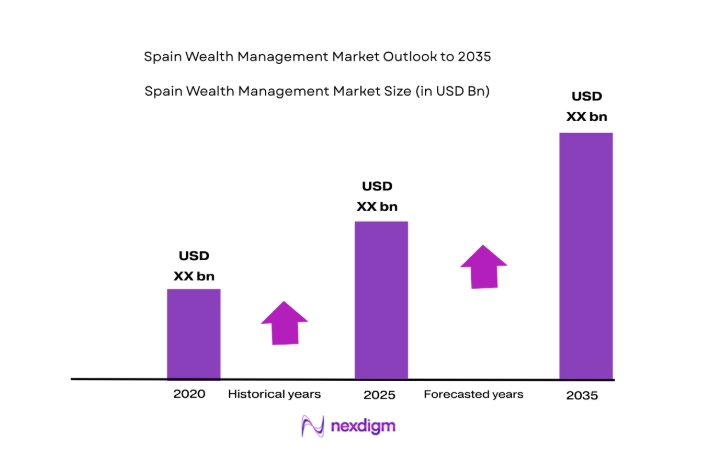
The Spain wealth management market has seen significant growth, driven by an increasing affluent population and growing demand for personalized financial services. With advancements in digital wealth management platforms and an expanding array of investment options, the market size is expected to continue to rise. Based on a recent historical assessment, the market was valued at approximately USD ~ billion, with wealth management services expanding across various sectors, including estate planning and asset management.
Spain’s wealth management dominance is largely attributed to its developed financial infrastructure and increasing demand from high-net-worth individuals. Madrid and Barcelona serve as the key hubs, supported by their established financial centers, regulatory frameworks, and ease of access to international markets. The growing interest in sustainable investments and digital platforms has further solidified Spain’s position as a leading destination for wealth management services, with both domestic and international wealth management firms focusing on these regions.
Market Segmentation
By Product Type
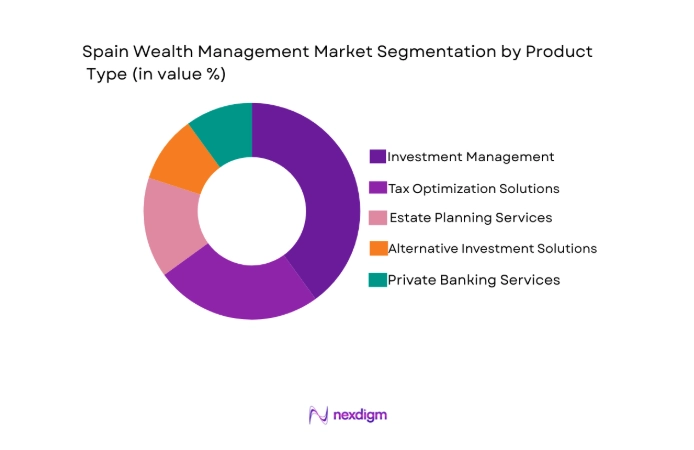
The Spain wealth management market is segmented by product type into investment management, tax optimization solutions, estate planning services, alternative investment solutions, and private banking services. Investment management has gained a dominant market share due to factors such as an increasing number of affluent individuals seeking high-return opportunities, along with a growing preference for diversified portfolios. The growth of technology-enabled investment platforms has further fueled this dominance by offering accessible, real-time investment tools that cater to the needs of high-net-worth individuals.
By Platform Type
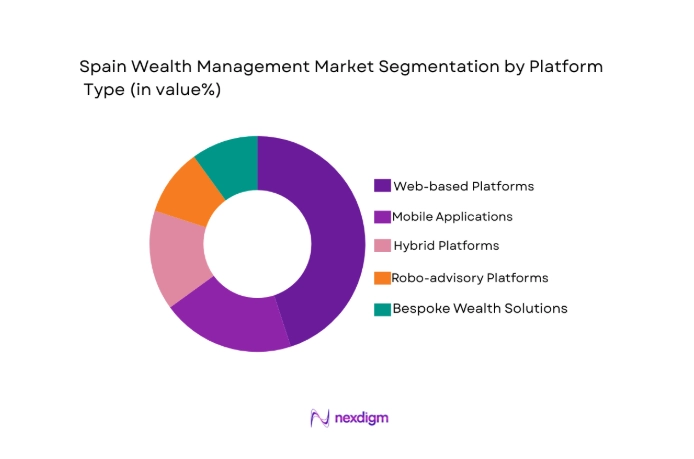
The Spain wealth management market is segmented by platform type into web-based platforms, mobile applications, hybrid platforms, robo-advisory platforms, and bespoke wealth solutions. Web-based platforms currently dominate the market, driven by their ease of access, low-cost offerings, and the widespread adoption of internet services by affluent clients. These platforms enable clients to access and manage a wide range of wealth management services in a seamless manner, contributing significantly to the market’s growth and client acquisition strategies.
Competitive Landscape
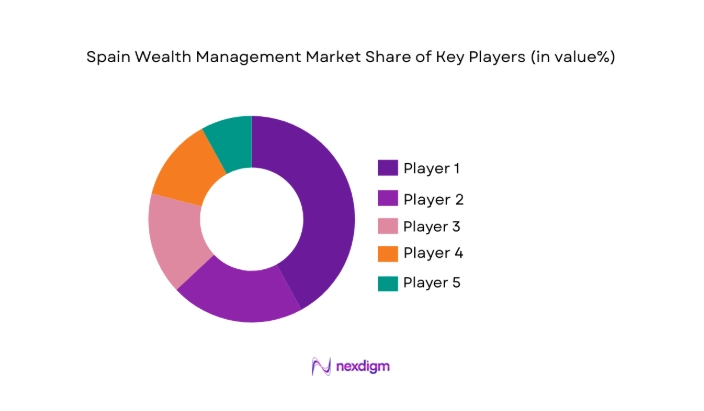
The Spain wealth management market is characterized by intense competition, with consolidation seen through mergers and acquisitions by large global financial players. The influence of major players such as Santander Private Banking and BBVA Wealth Management shapes the industry, setting trends in digitalization and the adoption of fintech solutions. These players dominate key market areas by offering diversified portfolios, personalized services, and superior customer support.
| Company Name | Establishment Year | Headquarters | Technology Focus | Market Reach | Key Products | Revenue (USD) | Market-Specific Parameter |
| Santander Private Banking | 1857 | Madrid, Spain | ~ | ~ | ~ | ~ | ~ |
| BBVA Wealth Management | 1857 | Bilbao, Spain | ~ | ~ | ~ | ~ | ~ |
| CaixaBank Wealth Management | 1904 | Barcelona, Spain | ~ | ~ | ~ | ~ | ~ |
| Banco Sabadell | 1881 | Sabadell, Spain | ~ | ~ | ~ | ~ | ~ |
| Bankinter Private Banking | 1965 | Madrid, Spain | ~ | ~ | ~ | ~
|
~ |
Spain Wealth Management Market Analysis
Growth Drivers
Increasing Affluent Population
The Spain wealth management market is being driven by the rise in affluent individuals, especially among millennials and professionals in urban areas. As these individuals accumulate wealth through entrepreneurship, tech industry growth, and high-paying jobs, the demand for sophisticated wealth management services has surged. This demographic shift is accelerating the adoption of personalized wealth management solutions and investment tools that cater to the unique needs of high-net-worth clients. Furthermore, as wealth transfers between generations, there is an increased focus on estate planning, which has further propelled demand for wealth management services. This rise in affluence, combined with increased financial literacy, has paved the way for wealth managers to offer more specialized services, thereby expanding the market. Wealth management services are no longer limited to traditional banking products but now include sustainable investment strategies and cross-border portfolio management, driving further growth.
Technological Advancements in Wealth Management
Another key driver for Spain’s wealth management sector is the rapid integration of technology, particularly in the form of robo-advisory platforms, AI-powered analytics, and mobile applications. These technological advancements have made wealth management services more accessible, efficient, and personalized, catering to the modern consumer’s demand for instant and transparent financial solutions. Investors now benefit from automated portfolio management, real-time insights, and personalized financial recommendations, which have revolutionized the way wealth is managed. Furthermore, AI-driven investment strategies have enhanced portfolio performance, leading to greater customer satisfaction and retention. As more individuals seek to manage their finances online, the demand for user-friendly platforms with advanced technological features has surged, driving the growth of digital wealth management in Spain.
Market Challenges
Regulatory and Compliance Challenges
One of the primary challenges facing the Spain wealth management market is the complex regulatory environment, particularly in relation to wealth transfers, taxation, and compliance. The financial regulatory landscape in Spain is subject to frequent changes, which often creates uncertainty for wealth management firms and their clients. For example, recent tax reforms and compliance requirements for cross-border investments have added to the administrative burden for both wealth managers and their clients. The lack of clarity around certain regulations can deter foreign investors from entering the Spanish market, affecting wealth management firms that rely on international clientele. Additionally, data protection laws have become more stringent, requiring firms to invest in cybersecurity infrastructure to ensure the safety of client data, which increases operational costs.
Intensifying Competition from Global Players
The Spain wealth management market is also challenged by increased competition from global wealth management firms entering the local market. These international firms often have greater resources, a more diverse service offering, and a global client base, making it difficult for local firms to compete. Moreover, global players tend to have a more established reputation and a larger network of high-net-worth individuals, which further strengthens their market position. Local wealth management firms face the dual challenge of differentiating themselves in a crowded market while adapting to the technological advancements and investment trends introduced by these global competitors. The market is becoming increasingly consolidated, which may limit opportunities for smaller, independent firms to grow and innovate.
Opportunities
Expansion of Digital Wealth Management Platforms
The rise of digital wealth management platforms presents a significant growth opportunity in Spain. As technology continues to evolve, the demand for accessible, transparent, and low-cost wealth management solutions has increased, especially among younger investors. Digital platforms, such as robo-advisors and AI-powered investment tools, are democratizing wealth management by allowing individuals to access sophisticated financial services with lower fees and minimum investments. As more individuals, particularly millennials, move away from traditional wealth managers in favor of tech-driven solutions, the market for digital platforms is expected to grow exponentially. Furthermore, these platforms are often more agile and can quickly integrate new technologies and services, enabling them to adapt to changing market conditions and client needs. Wealth management firms that embrace digital solutions are well-positioned to attract a broader range of clients, particularly those who prioritize convenience and innovation in their financial services.
Growth in Sustainable and ESG Investments
Another key opportunity for Spain’s wealth management market lies in the rising demand for sustainable and ESG (Environmental, Social, and Governance) investments. With growing awareness about climate change, social responsibility, and corporate governance, high-net-worth individuals are increasingly seeking investment opportunities that align with their values. This shift is driving the demand for sustainable investment products, including green bonds, ESG funds, and impact investing. As a result, wealth managers who specialize in sustainable investment solutions are well-positioned to cater to this growing segment of affluent investors. Moreover, Spain has become a leading market for green investments in Europe, supported by favorable regulatory policies and an increasing commitment to sustainability at the corporate level. Wealth managers who can provide tailored ESG investment solutions will gain a competitive edge in the Spanish market.
Future Outlook
The future outlook for the Spain wealth management market is promising, with continued growth expected driven by increasing wealth among affluent individuals and the rising demand for personalized, digital wealth management solutions. Technological advancements will play a critical role, with more firms adopting AI and blockchain to enhance client offerings and improve operational efficiencies. Additionally, government initiatives focused on promoting sustainable investments and regulatory support will further stimulate market growth. With increasing interest in ESG investing, Spain is likely to see a surge in demand for wealth management services that incorporate environmental and social considerations into portfolio strategies.
Major Players
- Santander Private Banking
- BBVA Wealth Management
- CaixaBank Wealth Management
- Bankinter Private Banking
- Banco Sabadell
- Rothschild & Co
- JPMorgan Private Bank
- Goldman Sachs Private Wealth Management
- Morgan Stanley Wealth Management
- UBS Wealth Management
- Citi Private Bank
- HSBC Private Banking
- RBC Wealth Management
- Deutsche Bank Wealth Management
- Julius Baer Wealth Management
Key Target Audience
- Investments and venture capitalist firms
- Government and regulatory bodies
- High-net-worth individuals
- Family offices
- Private banks and financial institutions
- Wealth management firms
- Institutional investors
- Corporate finance departments
Research Methodology
Step 1: Identification of Key Variables
Identify the key drivers, challenges, and opportunities affecting the Spain wealth management market through primary and secondary research.
Step 2: Market Analysis and Construction
Analyze market trends, growth patterns, and segmentation factors based on historical data and expert opinions.
Step 3: Hypothesis Validation and Expert Consultation
Validate hypotheses and gather insights from industry experts and market participants to ensure accuracy.
Step 4: Research Synthesis and Final Output
Compile data, analyze findings, and synthesize the research into a final comprehensive report with actionable insights.

- Executive Summary
- Research Methodology (Definitions, Scope, Industry Assumptions, Market Sizing Approach, Primary & Secondary Research Framework, Data Collection & Verification Protocol, Analytic Models & Forecast Methodology, Limitations & Research Validity Checks)

- Market Definition and Scope
- Value Chain & Stakeholder Ecosystem
- Regulatory / Certification Landscape
- Sector Dynamics Affecting Demand
- Strategic Initiatives & Infrastructure Growth

- Growth Drivers
Increased Affluent Population in Spain
Technological Advancements in Wealth Management Solutions
Rising Demand for Personalized Investment Strategies
Government Initiatives to Encourage Wealth Management Services
Growing Popularity of Sustainable and ESG Investments - Market Challenges
Regulatory Uncertainty in Financial Markets
Complexity in Taxation and Wealth Transfer Laws
Competition from Global Wealth Management Firms
Increased Demand for Customization in Wealth Solutions
Cybersecurity and Data Privacy Concerns - Market Opportunities
Expansion of Digital Wealth Management Platforms
Growth in Cross-border Wealth Management Services
Partnerships with Fintech Startups for Innovation - Trends
Adoption of Robo-Advisors and Automated Portfolio Management
Rising Interest in Sustainable Investment Products
Growth in Direct-to-Consumer Wealth Management Platforms
Integration of Artificial Intelligence in Wealth Advisory
Increased Focus on Estate Planning Solutions - Government Regulations & Defense Policy
Wealth Transfer Taxation Reforms
Regulation of Cross-border Financial Services
Data Privacy and Security Regulations in Wealth Management - SWOT Analysis
- Stakeholder and Ecosystem Analysis
- Porter’s Five Forces Analysis
- Competition Intensity and Ecosystem Mapping

- By Market Value, 2020-2025
- By Installed Units, 2020-2025
- By Average System Price, 2020-2025
- By System Complexity Tier, 2020-2025

- By System Type (In Value%)
Investment Management
Tax Optimization Solutions
Estate and Wealth Transfer Planning
Alternative Investment Solutions
Private Banking Services - By Platform Type (In Value%)
Web-based Platforms
Mobile Applications
Hybrid Platforms
Robo-Advisory Platforms
Bespoke Wealth Solutions - By Fitment Type (In Value%)
On-Premise Solutions
Cloud-based Solutions
Integrated Solutions
Modular Systems
Custom Wealth Solutions - By End User Segment (In Value%)
High Net-Worth Individuals
Institutional Investors
Family Offices
Private Banks
Wealth Management Firms

- Market structure and competitive positioning
Market share snapshot of major players - Cross Comparison Parameters (System Type, Platform Type, Procurement Channel, End User Segment, Fitment Type)
- SWOT Analysis of Key Competitors
- Pricing & Procurement Analysis
- Key Players
Santander Private Banking
BBVA Wealth Management
CaixaBank Wealth Management
Bankinter Private Banking
Banco Sabadell
Kutxabank Wealth Management
Rothschild & Co
JPMorgan Private Bank
Goldman Sachs Private Wealth Management
Morgan Stanley Wealth Management
UBS Wealth Management
Citi Private Bank
HSBC Private Banking
RBC Wealth Management
Deutsche Bank Wealth Management

- Rising Interest in Financial Products for Affluent Individuals
- Private Banks’ Growing Focus on Wealth Management Services
- Institutional Investors’ Shift Toward Tailored Wealth Solutions
- Increasing Engagement of Family Offices in Investment Strategies

- Forecast Market Value, 2026-2035
- Forecast Installed Units, 2026-2035
- Price Forecast by System Tier, 2026-2035
- Future Demand by Platform, 2026-2035


 Request a Sample
 Ask for Customization
 Get a Quote
 Enquire Now