

 Download PDF
 Download PDF
Market Overview
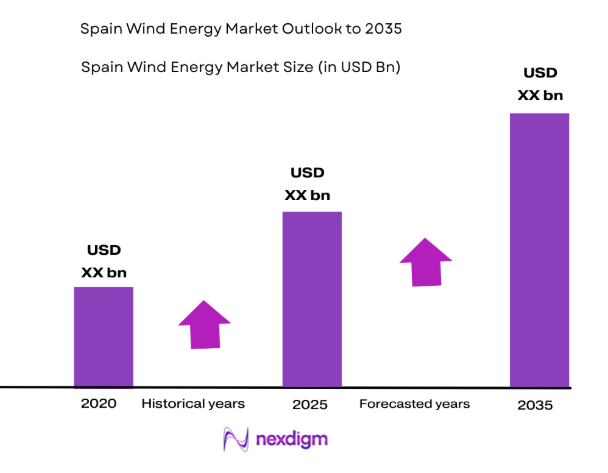
The Spain Wind Energy market is experiencing robust growth, driven by government policies and environmental targets. The market size in 2024 is valued at approximately USD ~ billion. The growth is propelled by Spain’s ambitious renewable energy goals, such as achieving 20% renewable energy by 2030, and increased investments in wind energy infrastructure. Technological advancements in turbine efficiency and the government’s ongoing subsidies and incentives for wind energy projects have also fueled this expansion.
Dominant countries like Spain lead the market due to their favorable regulatory environment and advanced infrastructure. The country’s consistent commitment to reducing carbon emissions and increasing renewable energy capacity places it at the forefront. Strategic locations along the Spanish coastline and favorable wind patterns make Spain an attractive destination for wind energy projects. The country’s progress is supported by local and international collaborations, making it a competitive player in the global wind energy sector.
Market Segmentation
By Product Type
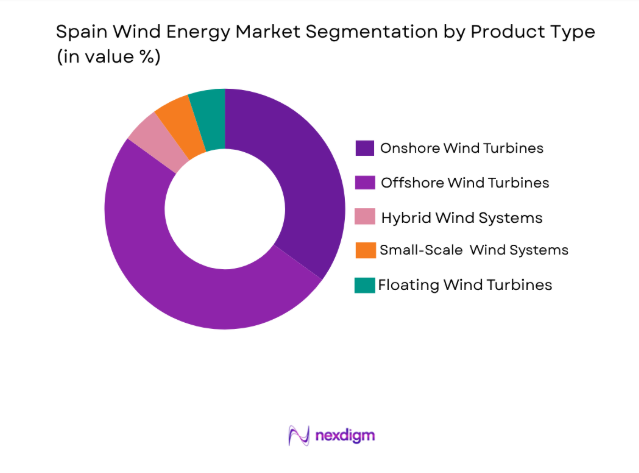
The Spain Wind Energy market is segmented by product type into onshore, offshore, hybrid, small-scale, and floating wind turbines. Recently, offshore wind turbines have captured a dominant market share due to Spain’s extensive coastline and the strategic push by the government for offshore wind development. Offshore turbines are increasingly preferred due to their higher energy output, advanced technology, and reduced land use requirements, particularly in coastal areas where wind speeds are higher and more consistent.
By Platform Type
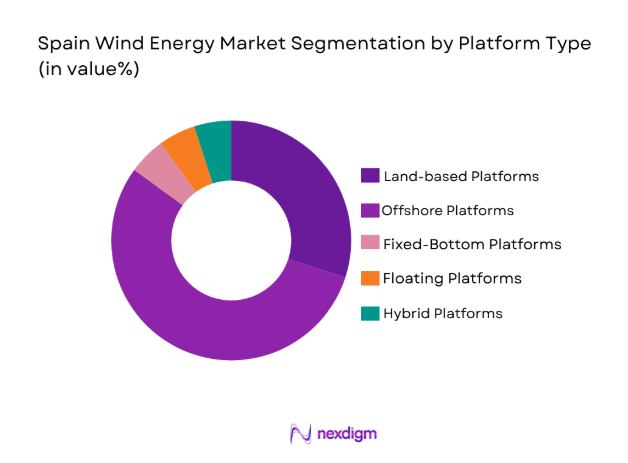
The Spain Wind Energy market is segmented by platform type into land-based platforms, offshore platforms, fixed-bottom platforms, floating platforms, and hybrid platforms. Offshore platforms dominate the market due to Spain’s expansive coastlines and favorable wind conditions, driving the demand for high-capacity offshore wind farms. These platforms are ideal for harnessing the abundant wind energy available along the coast, offering higher efficiency and scale compared to land-based systems.
Competitive Landscape
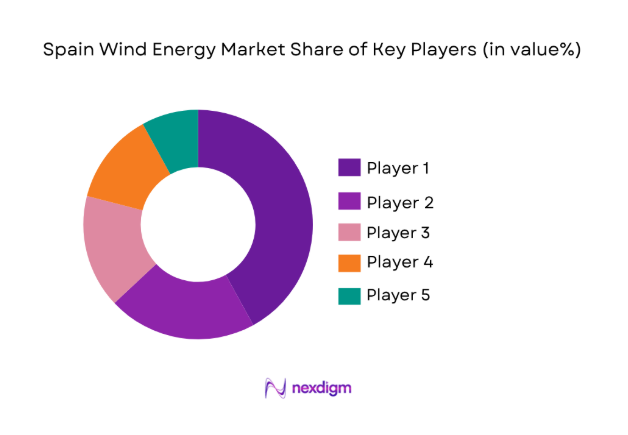
The competitive landscape of the Spain Wind Energy market is highly dynamic, with consolidation happening among major players, supported by strategic mergers, acquisitions, and investments. Spain’s strong regulatory environment attracts both domestic and international players, and technological advancements in wind turbine manufacturing have intensified competition. Key players such as Iberdrola, Siemens Gamesa, and Vestas dominate the sector, with new entrants focused on offshore projects.
| Company Name | Establishment Year | Headquarters | Technology Focus | Market Reach | Key Products | Revenue (USD Billion) | Market-specific Parameter |
| Iberdrola | 1992 | Bilbao, Spain | ~ | ~ | ~ | ~ | ~ |
| Siemens Gamesa | 1976 | Zamudio, Spain | ~ | ~ | ~ | ~ | ~ |
| Vestas | 1945 | Aarhus, Denmark | ~ | ~ | ~ | ~ | ~ |
| Acciona Energia | 1997 | Madrid, Spain | ~ | ~ | ~ | ~ | ~ |
| Nordex | 1985 | Hamburg, Germany | ~ | ~ | ~ | ~ | ~ |
Spain Wind Energy Market Analysis
Growth Drivers
Government Incentives for Renewable Energy
Government incentives for renewable energy have been one of the most significant drivers for the growth of Spain’s wind energy market. These incentives come in the form of subsidies, tax credits, and grants that help reduce the financial burden on companies investing in wind energy infrastructure. Spain’s government is committed to achieving its renewable energy targets, including generating 20% of energy from renewables by 2030. The availability of long-term incentives has helped attract both domestic and international players into the wind energy market, facilitating the expansion of wind farms across the country. Moreover, the growing trend of carbon reduction and environmental sustainability is aligned with Spain’s renewable energy goals, further promoting wind energy as a reliable and eco-friendly alternative. By offering such support, the Spanish government has ensured that renewable energy projects, especially wind energy, are economically viable, making them a key contributor to the nation’s energy transition.
Technological Advancements in Wind Turbines
Technological advancements in wind turbines have greatly improved the efficiency and competitiveness of Spain’s wind energy sector. Over the years, innovations in turbine design, including larger and more efficient blades, have allowed for greater energy capture in varying wind conditions. These advancements are especially crucial for offshore wind projects, which have the potential to generate much higher energy outputs than onshore turbines. Technological developments, such as floating wind turbines, have also opened up new areas for wind energy generation, particularly in deeper offshore locations that were previously inaccessible. Furthermore, improvements in digital technologies, such as predictive maintenance and advanced data analytics, have enhanced the operational efficiency of wind farms. These technologies enable better monitoring and management of wind turbines, resulting in reduced downtime and operational costs. As Spain continues to embrace technological innovation, the country is positioning itself as a leader in wind energy technology, which, in turn, drives the growth of the wind energy market.
Market Challenges
High Initial Investment for Offshore Projects
One of the most significant challenges faced by the Spain Wind Energy market is the high initial investment required for offshore wind projects. Offshore wind turbines are expensive to install due to the complex nature of offshore logistics and the need for specialized installation equipment. Furthermore, the infrastructure required to support offshore turbines, such as underwater cables and subsea platforms, adds to the upfront capital costs. This challenge is particularly significant for smaller companies or those new to the industry, as the financial requirements can be a barrier to entry. While offshore wind projects are highly profitable in the long term, the initial capital outlay remains a major hurdle, slowing the rate at which new projects are launched. To mitigate these costs, many companies are seeking public-private partnerships and financial support from the government, but the high capital investment is still a limiting factor in the rapid expansion of offshore wind energy.
Grid Integration and Storage Issues
As the Spain Wind Energy market grows, the challenge of integrating wind power into the national grid becomes more prominent. Wind energy is intermittent, meaning that electricity generation is dependent on weather conditions, creating fluctuations in energy supply. Integrating this variable energy source into Spain’s grid requires sophisticated grid management systems to ensure that supply matches demand. Additionally, the current grid infrastructure in Spain is not always capable of handling the large-scale integration of renewable energy without causing disruptions or inefficiencies. To address this, significant investments in grid infrastructure and energy storage technologies are needed. Energy storage solutions, such as large-scale battery systems, are being explored to store excess energy generated during peak wind periods, but these technologies are still evolving and can be expensive to deploy. Without further advancements in both grid infrastructure and storage capacity, Spain may face challenges in fully harnessing the potential of wind energy.
Opportunities
Expansion of Offshore Wind Projects
The expansion of offshore wind projects represents one of the most promising opportunities in the Spain Wind Energy market. Spain’s extensive coastline, coupled with strong wind resources, makes the country an ideal location for offshore wind farms. Offshore wind has become an increasingly viable energy source as technological advancements, such as floating wind turbines, allow for installation in deeper waters. Spain is already home to several offshore wind projects, and the government has designated additional areas for future development. These projects not only provide a substantial source of clean energy but also help diversify Spain’s energy mix, making the country less reliant on traditional fossil fuels. Additionally, offshore wind farms have the potential to create significant economic benefits through job creation, local economic stimulation, and increased investment in renewable energy technologies. With regulatory support and continued technological advancements, the offshore wind sector in Spain is poised for significant growth in the coming years.
Advancements in Floating Wind Turbine Technology
Floating wind turbine technology presents a unique opportunity for Spain to lead the way in offshore wind energy generation. Floating turbines, unlike traditional fixed-bottom turbines, can be deployed in deeper waters where wind conditions are optimal. This opens up vast new areas for offshore wind development that were previously inaccessible. Spain’s coastline is ideal for the deployment of floating wind farms, and several pilot projects are already underway. These floating turbines are equipped with advanced technology that allows them to remain stable in rough sea conditions, making them a more flexible and adaptable solution for offshore wind energy generation. As the cost of floating turbines continues to decrease, their adoption in Spain is expected to grow rapidly, contributing to the country’s renewable energy goals and providing a sustainable source of clean energy. This technology could also enable Spain to export offshore wind energy to other European countries, further cementing its role as a leader in renewable energy
Future Outlook
The future of the Spain Wind Energy market appears highly promising with consistent growth trends. The market is expected to expand as technological advancements continue to drive down costs, particularly in offshore wind energy, which holds significant potential. Regulatory support from both the Spanish government and the European Union will continue to play a vital role in facilitating this growth. Furthermore, as environmental concerns increase and the demand for sustainable energy sources rises, Spain is likely to remain a leader in the global wind energy market, attracting investments and technological collaborations to meet its renewable energy targets.
Major Players
- Iberdrola
- Siemens Gamesa
- Acciona Energia
- Vestas Wind Systems
- Nordex
- General Electric Renewable Energy
- Enel Green Power
- EDP Renewables
- Ørsted
- Senvion
- Suzlon Energy
- GE Renewable Energy
- RES Group
- EDF Renewables
- Alstom
Key Target Audience
- Investments and venture capitalist firms
- Government and regulatory bodies
- Utility companies
- Independent power producers
- Renewable energy project developers
- Offshore wind technology manufacturers
- Commercial and industrial end-users
Research Methodology
Step 1: Identification of Key Variables
This step involves identifying the key variables that impact the market, including technological developments, regulatory changes, and demand shifts. It sets the stage for a comprehensive understanding of the market drivers and barriers.
Step 2: Market Analysis and Construction
Market analysis is conducted by examining historical data, current market conditions, and future projections. This helps in constructing an accurate market model that reflects the dynamics of the industry.
Step 3: Hypothesis Validation and Expert Consultation
Experts in the wind energy sector are consulted to validate the hypotheses developed during the market analysis. This ensures that the findings are credible and aligned with industry trends.
Step 4: Research Synthesis and Final Output
The final output synthesizes all the research findings into a comprehensive report, providing insights into market size, trends, and growth opportunities for key stakeholders in the wind energy industry.

- Executive Summary
- Research Methodology (Definitions, Scope, Industry Assumptions, Market Sizing Approach, Primary & Secondary Research Framework, Data Collection & Verification Protocol, Analytic Models & Forecast Methodology, Limitations & Research Validity Checks)

- Market Definition and Scope
- Value Chain & Stakeholder Ecosystem
- Regulatory / Certification Landscape
- Sector Dynamics Affecting Demand
- Strategic Initiatives & Infrastructure Growth

- Growth Drivers
Government Incentives for Renewable Energy
Technological Advancements in Wind Turbines
Growing Demand for Clean Energy
Strong Environmental Policy Support
Rising Investments in Offshore Wind Projects - Market Challenges
High Capital Expenditure for Offshore Projects
Grid Integration and Storage Challenges
Regulatory Hurdles and Permitting Delays
Dependence on Weather Conditions
Competition from Other Renewable Sources - Market Opportunities
Expansion of Offshore Wind Projects
Integration of Hybrid Energy Systems
Advancements in Floating Wind Turbine Technology - Trends
Integration of AI and IoT in Wind Energy Systems
Rising Focus on Energy Storage Solutions - Government Regulations
Government Funding and Grants for Wind Energy
EU Regulations on Renewable Energy Targets
Subsidy Programs for Wind Energy Installations - SWOT Analysis
- Porter’s Five Forces

- By Market Value, 2020-2025
- By Installed Units, 2020-2025
- By Average System Price, 2020-2025
- By System Complexity Tier, 2020-2025

- By System Type (In Value%)
Onshore Wind Energy Systems
Offshore Wind Energy Systems
Hybrid Wind Systems
Small-Scale Wind Systems
Floating Wind Turbines - By Platform Type (In Value%)
Land-Based Platforms
Offshore Platforms
Fixed-Bottom Platforms
Floating Platforms
Hybrid Platforms - By Fitment Type (In Value%)
Onshore Fitment Solutions
Offshore Fitment Solutions
Semi-Submersible Fitment Solutions
Floating Offshore Fitment Solutions - By End User Segment (In Value%)
Utility Companies
Independent Power Producers
Government and Public Sector
Commercial and Industrial Sectors

- Market Share Analysis
- Cross Comparison Parameters (System Type, Platform Type, Procurement Channel, EndUser Segment, Fitment Type, Market Value, Installed Units)
- SWOT Analysis of Key Competitors
- Pricing & Procurement Analysis
- Key Players
Iberdrola
Siemens Gamesa
Acciona Energia
Vestas Wind Systems
Nordex
General Electric Renewable Energy
Enel Green Power
EDP Renewables
Ørsted
Senvion
Suzlon Energy
GE Renewable Energy
RES Group
EDF Renewables
Alstom

- Increased Demand for Wind Energy from Utilities
- Public Sector’s Role in Expanding Renewable Energy
- Growing Commercial Adoption of Wind Energy Solutions
- Private Sector Investments in Green Energy Technologies

- Forecast Market Value, 2026-2035
- Forecast Installed Units, 2026-2035
- Price Forecast by System Tier, 2026-2035
- Future Demand by Platform, 2026-2035


 Request a Sample
 Ask for Customization
 Get a Quote
 Enquire Now