
 Download PDF
 Download PDF
Market Overview
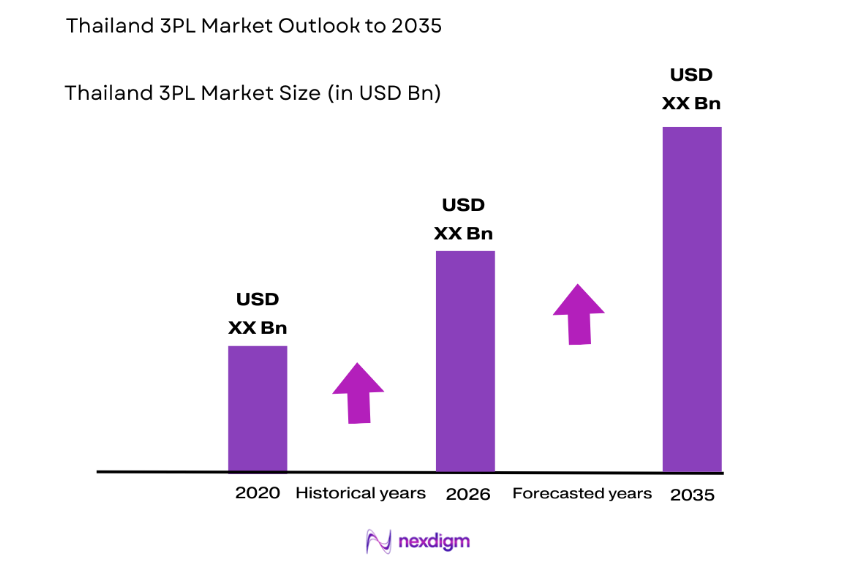
Thailand’s 3PL market is valued at approximately USD ~ billion based on a recent historical assessment, driven by increasing manufacturing exports, rapid e commerce growth, and the expansion of supply chain outsourcing across key industrial sectors. Investments in logistics infrastructure, including warehouses, distribution centers, and transportation networks, strengthen the operational capabilities of third-party logistics providers. Growing demand for cost-efficient and technologically integrated logistics solutions from automotive, electronics, and consumer goods sectors further accelerates market adoption, while rising urbanization supports last-mile delivery and distribution efficiency.
Major 3PL operations are concentrated in Bangkok, Chonburi, and Ayutthaya due to strategic proximity to industrial estates, ports, and airports facilitating national and international supply chain operations. Bangkok serves as the primary logistics hub with extensive road and air connectivity supporting both domestic and cross-border operations. Chonburi, home to the Eastern Seaboard industrial zone, facilitates export-oriented manufacturing logistics. Ayutthaya’s central location enables efficient distribution to northern and central Thailand. These cities attract major 3PL providers seeking operational efficiency, access to high-volume manufacturing clusters, and integration with global supply chains.
Market Segmentation
By Service Type
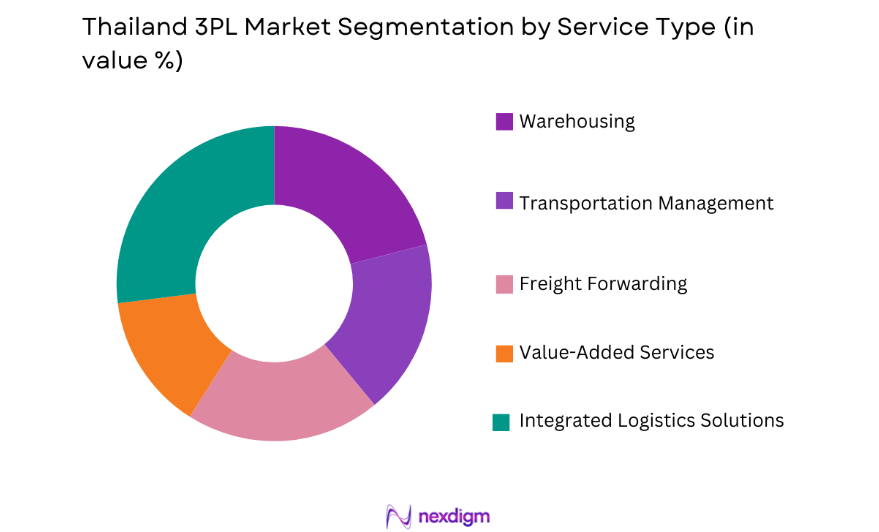
Thailand 3PL Market is segmented by product type into warehousing, transportation management, freight forwarding, value-added services, and integrated logistics solutions. Recently, integrated logistics solutions have a dominant market share due to factors such as demand patterns, brand presence, infrastructure availability, or consumer preference. Manufacturers increasingly outsource end-to-end supply chain operations to 3PL providers capable of managing procurement, warehousing, distribution, and freight forwarding under a single platform. Integrated services reduce operational complexity, lower costs, and enhance scalability for multi-channel distribution. Major industrial sectors, including automotive, electronics, and FMCG, rely on integrated logistics solutions to manage national and international supply chains efficiently. Technology-enabled platforms, real-time tracking, and centralized management systems further strengthen the adoption of integrated logistics services.
By End User Industry
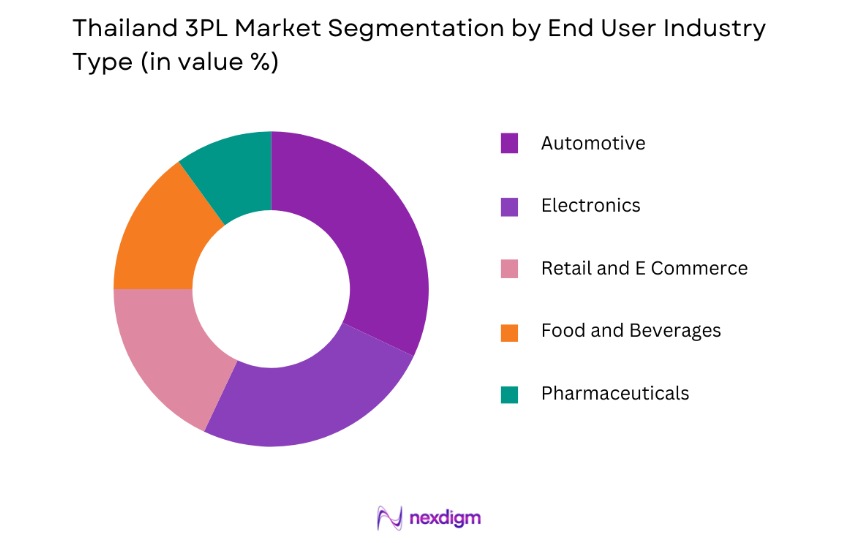
Thailand 3PL Market is segmented by product type into automotive, electronics, retail and e commerce, food and beverages, and pharmaceuticals. Recently, automotive has a dominant market share due to factors such as demand patterns, brand presence, infrastructure availability, or consumer preference. Thailand’s automotive manufacturing sector relies heavily on outsourced supply chain management, including inbound component delivery, just-in-time inventory management, and outbound finished vehicle distribution. 3PL providers offer specialized transportation, warehousing, and inventory solutions tailored for automotive manufacturers to ensure efficiency, reduce lead times, and meet export demand. Strategic placement of warehouses near industrial zones and ports optimizes supply chain operations. Integration of advanced logistics software and real-time monitoring supports high-volume production schedules. Automotive demand drives investment in scalable 3PL operations, reinforcing the industry’s leading role within Thailand’s logistics ecosystem.
Competitive Landscape
The Thailand 3PL market is moderately consolidated with international logistics companies and domestic operators competing across warehousing, transportation, and integrated supply chain services. Major players focus on service integration, technology adoption, and strategic industrial partnerships. Competitive dynamics are shaped by investments in distribution hubs, IT-enabled logistics platforms, and cross-border connectivity to support manufacturers and e commerce operators. Strategic alliances with multinational corporations and regional supply chain networks enhance market presence and operational scale.
| Company Name | Establishment Year | Headquarters | Technology Focus | Market Reach | Key Products | Revenue | Warehouse Capacity (sqm) |
| DHL Supply Chain | 1969 | Germany | ~ | ~ | ~ | ~ | ~ |
| Kuehne + Nagel | 1890 | Switzerland | ~ | ~ | ~ | ~ | ~ |
| DB Schenker | 1872 | Germany | ~ | ~ | ~ | ~ | ~ |
| CEVA Logistics | 2007 | Switzerland | ~ | ~ | ~ | ~ | ~ |
| Agility Logistics | 1979 | Kuwait | ~ | ~ | ~ | ~ | ~ |
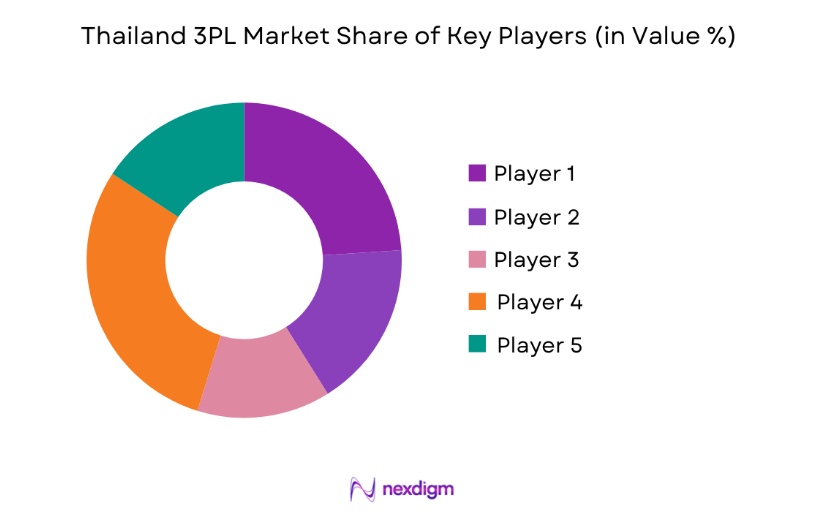
Thailand 3PL Market Analysis
Growth Drivers
Expansion of Automotive Manufacturing Supply Chains and Export-Oriented Logistics
Thailand 3PL Market experiences robust growth driven by the expansion of automotive manufacturing supply chains and export-oriented production clusters. Manufacturers increasingly outsource end-to-end logistics services, including component sourcing, inbound and outbound transportation, warehousing, and finished vehicle distribution, to 3PL providers. The Eastern Seaboard industrial corridor and Bangkok-Chonburi-Ayutthaya clusters serve as primary operational hubs. 3PL providers utilize advanced IT systems, real-time tracking, and fleet management technologies to ensure timely delivery and maintain just-in-time inventory systems. Growing export demand from ASEAN, Europe, and North America strengthens logistics volumes. Strategic partnerships between 3PL operators and automotive OEMs reduce supply chain complexity, improve operational efficiency, and lower costs. Investments in automated warehousing, integrated transportation networks, and digital freight management support high-volume production schedules. Industry collaboration ensures compliance with international standards and regulatory requirements. The growth of automotive exports stimulates capital investment in logistics infrastructure, enhancing market competitiveness and driving sustained 3PL demand.
Rapid Growth of E Commerce and Omnichannel Retail Distribution Networks
Thailand 3PL Market benefits significantly from the rapid growth of e commerce and omnichannel retail distribution networks, which create consistent demand for logistics outsourcing services. Digital marketplaces, online retailers, and omnichannel brands rely on 3PL providers for inventory management, last-mile delivery, and order fulfillment. Urban population density in Bangkok, Chiang Mai, and Phuket supports efficient last-mile distribution and high-volume parcel processing. Investments in automated sorting centers, micro fulfillment hubs, and route optimization technologies increase delivery speed and operational efficiency. 3PL operators integrate IT-enabled platforms for real-time tracking, order management, and customer notifications to meet growing consumer expectations. Collaboration with e commerce platforms and retail chains ensures reliable delivery, inventory visibility, and supply chain coordination. Technology adoption improves scalability and operational flexibility, allowing providers to handle seasonal peaks and high order volumes. Strategic expansion of regional distribution hubs enhances coverage and reduces transit times. Government initiatives promoting digital economy development facilitate efficient e commerce logistics. The convergence of online retail growth, digital platforms, and urban logistics infrastructure drives sustained demand for 3PL services in Thailand.
Market Challenges
High Operational Costs and Infrastructure Constraints
Thailand 3PL Market faces challenges from high operational costs and infrastructure limitations, particularly in warehousing, transportation, and urban distribution networks. Rising labor costs, fuel expenses, and vehicle maintenance increase overall service costs for providers. Limited availability of modern logistics facilities near industrial clusters constrains storage and distribution capacity. Urban congestion in Bangkok and regional industrial zones affects last-mile delivery efficiency. 3PL operators must invest in fleet management, route optimization, and warehouse automation to mitigate cost pressures. Expansion into secondary cities requires careful planning due to insufficient infrastructure. Government regulatory requirements and customs compliance further complicate operations. These operational and infrastructure constraints may slow service expansion, affect profitability, and challenge scalability. Investments in modern logistics parks, automation, and regional hubs partially alleviate challenges. Integration of technology improves operational efficiency and reduces manual intervention. Market competition intensifies the need for cost-effective service delivery while maintaining quality standards. Strategic collaboration with industrial estates enhances access to logistics facilities. Providers require robust planning to maintain service reliability amid infrastructure bottlenecks. Capital-intensive investments in warehouses and fleet expansion are essential to overcome operational limitations. Technological integration improves inventory management, shipment tracking, and route optimization, partially addressing cost challenges. The combination of high operational expenditure and infrastructure constraints remains a structural challenge affecting market growth. Continuous optimization of processes is necessary to maintain competitiveness. Expansion planning must consider infrastructure availability, labor skill sets, and regulatory compliance. Strategic location of distribution hubs enhances operational efficiency and mitigates logistical bottlenecks.
Intense Competition and Market Fragmentation
Thailand 3PL Market experiences high competition and fragmentation among domestic and international logistics providers. Multiple players offering similar services create price pressure and margin challenges. Large multinational companies dominate high-value industrial logistics, while smaller local operators compete in regional or specialized segments. Providers invest in technology, service differentiation, and strategic partnerships to maintain market positioning. Market fragmentation leads to challenges in customer retention and service consistency across national coverage. Aggressive pricing strategies affect profitability, necessitating operational efficiency. Technology adoption and digital platforms help differentiate services and streamline operations. The competitive landscape requires continual innovation in warehousing, transportation, and value-added services. Providers focus on specialized logistics, e commerce fulfillment, and industry-specific solutions to maintain a competitive edge. Strategic alliances and partnerships with manufacturers and retailers enhance market reach. Investment in automated sorting, fleet expansion, and real-time tracking strengthens operational capability. Competition drives efficiency improvements and service quality enhancements across the sector. Providers must balance cost pressures with service reliability to retain customers. Consolidation trends among large players may increase market concentration, impacting competition. Market fragmentation necessitates continuous investment in infrastructure, technology, and human resources. Differentiation through service quality, speed, and reliability is key to sustaining growth. Continuous monitoring of competitor strategies informs strategic decision-making. Provider diversification into integrated solutions and value-added services mitigates market fragmentation risks.
Opportunities
Expansion of Regional Distribution Hubs and Industrial Logistics Parks
Thailand 3PL Market presents opportunities through the development of regional distribution hubs and industrial logistics parks to enhance national supply chain efficiency. Strategic hub placement in industrial corridors reduces transportation time and cost while improving service reliability. 3PL providers benefit from co-located warehousing, cross-docking, and inventory management capabilities. These hubs support multi-sector operations, including automotive, electronics, and FMCG logistics. Investment in infrastructure, automated storage systems, and digital logistics platforms enhances operational scalability. Collaboration with manufacturers and e commerce operators ensures efficient inbound and outbound logistics. Expansion of regional hubs supports growth in secondary cities, enhancing national coverage. The development of logistics parks facilitates integrated supply chain solutions, improving throughput capacity. Government support and industrial estate development policies encourage private investment. Technological integration in hub operations improves real-time tracking, inventory visibility, and workflow management. Strategic planning ensures alignment with manufacturing and retail distribution patterns. Hubs optimize route planning and fleet utilization, reducing operational inefficiencies. Enhanced connectivity with ports, airports, and road networks strengthens logistics integration. Investment in regional facilities provides long-term operational stability. Multi-user logistics parks enable cost-sharing and economies of scale. Hubs enable quick adaptation to market demand fluctuations. The expansion of distribution infrastructure supports e commerce and industrial growth simultaneously. Regional logistics parks increase service reliability, reduce lead times, and foster market expansion. Strategic hub networks strengthen Thailand 3PL Market competitiveness and operational resilience.
Integration of Advanced Technology and Digital Supply Chain Solutions
Thailand 3PL Market benefits from adopting advanced technology and digital supply chain solutions, creating opportunities for enhanced efficiency, visibility, and service quality. Implementation of warehouse management systems, automated sorting, and AI-powered route optimization improves operational efficiency. Real-time tracking platforms allow clients to monitor shipments and inventory levels. Digital integration with manufacturer and retailer systems ensures seamless order fulfillment and supply chain coordination. Predictive analytics support demand forecasting, resource allocation, and capacity planning. Mobile applications and customer engagement tools enhance service transparency and satisfaction. Investment in robotics, IoT-enabled monitoring, and cloud-based platforms enables scalable operations. Technology adoption reduces operational errors, increases throughput, and supports high-volume logistics. Integration with e commerce platforms enables efficient last-mile delivery management. Digital supply chain solutions improve collaboration between stakeholders and strengthen reliability. Automated material handling enhances warehouse productivity and operational precision. Data analytics optimizes fleet management, route planning, and inventory control. Advanced technology adoption ensures compliance with industry standards and regulatory requirements. Implementation of smart logistics platforms enables cost efficiency and performance monitoring. Digital supply chain solutions facilitate integration across national and regional networks. Adoption of AI and machine learning supports operational flexibility and continuous improvement. Technology integration enhances competitiveness and positions 3PL providers for sustained growth. Digital transformation fosters innovation, efficiency, and customer satisfaction in Thailand 3PL Market.
Future Outlook
Thailand 3PL Market is expected to experience steady growth over the next five years driven by expanding industrial output, e commerce penetration, and government-supported logistics infrastructure development. Investments in digital supply chain solutions, automated warehouses, and regional distribution hubs will enhance service efficiency. Increased demand from automotive, electronics, and retail sectors will continue driving market expansion. Technology adoption and strategic partnerships with manufacturers and e commerce platforms will strengthen operational capabilities. Regulatory support for logistics and infrastructure projects will facilitate market scalability.
Major Players
- DHL Supply Chain
- Kuehne + Nagel
- DB Schenker
- CEVA Logistics
- Agility Logistics
- Kerry Logistics
- Yusen Logistics
- Nippon Express
- Toll Group
- CJ Logistics
- Sinotrans Logistics
- Expeditors International
- Schenker (Thailand)
- Panalpina
- DHL Global Forwarding
Key Target Audience
- Logistics and supply chain companies
- Automotive manufacturers and suppliers
- Electronics and industrial companies
- Retail and e commerce operators
- Food and beverage distributors
- Investments and venture capitalist firms
- Government and regulatory bodies
Research Methodology
Step 1: Identification of Key Variables
Key variables including industrial output, export volumes, e commerce growth, urban logistics infrastructure, transportation networks, and technology adoption are identified to determine market drivers and constraints.
Step 2: Market Analysis and Construction
Market analysis uses shipment volumes, 3PL service revenues, warehouse capacities, and industrial cluster data to construct the market framework and segmentation.
Step 3: Hypothesis Validation and Expert Consultation
Research assumptions are validated through consultations with 3PL operators, supply chain managers, logistics consultants, and government trade authorities to confirm market trends.
Step 4: Research Synthesis and Final Output
Collected data, expert insights, and industry reports are synthesized into a comprehensive market analysis detailing size, segmentation, growth drivers, challenges, and opportunities for Thailand 3PL Market.

- Executive Summary
- Research Methodology (Definitions, Scope, Industry Assumptions, Market Sizing Approach, Primary & Secondary Research Framework, Data Collection & Verification Protocol, Analytic Models & Forecast Methodology, Limitations & Research Validity Checks)

- Market Definition and Scope
- Value Chain & Stakeholder Ecosystem
- Regulatory / Certification Landscape
- Sector Dynamics Affecting Demand

- Growth Drivers
Rising E-commerce Adoption and Online Retail Expansion
Government Support for Logistics Infrastructure Development
Integration of Digital Technologies and Real-Time Tracking Systems - Market Challenges
High Capital Investment Requirements for Advanced Logistics
Fragmented Logistics Providers Across Regions
Regulatory Compliance for Cross-Border Transport - Market Opportunities
Expansion of Cold Chain Logistics for Perishables
Adoption of AI-Driven Route Optimization and Automation
Partnerships Between 3PL Providers and E-commerce Companies - Trends
Use of Autonomous Vehicles in Delivery Operations
Integration of IoT and Data Analytics in Supply Chain Management - Government Regulations
Licensing and Transportation Compliance
Customs and Cross-Border Trade Regulations
Public-Private Logistics Initiatives - SWOT Analysis
- Porter’s Five Forces

- By Market Value, 2020-2025
- By Installed Units, 2020-2025
- By Average System Price, 2020-2025
- By System Complexity Tier, 2020-2025

- By System Type (In Value%)
Transportation and Fleet Management
Warehouse Management Systems
Inventory and Order Management
Cold Chain Logistics Solutions
E-commerce Fulfillment Solutions - By Platform Type (In Value%)
Land Transport Platforms
Air Freight Platforms
Maritime Shipping Platforms
Integrated Multimodal Platforms - By Fitment Type (In Value%)
On-premise 3PL Solutions
Cloud-based 3PL Solutions
Hybrid 3PL Solutions
Modular Logistics Solutions - By End User Segment (In Value%)
E-commerce Retailers
Manufacturing Companies
Food and Beverage Companies

- Market Share Analysis
- Cross Comparison Parameters (System Type, Platform Type, Fitment Type, End User Segment, Technology Integration, Automation Level, Geographic Coverage)
- SWOT Analysis of Key Competitors
- Pricing & Procurement Analysis
- Key Players
Siam 3PL Logistics
DHL Supply Chain Thailand
Kerry Logistics Thailand
SCG Logistics
JWD InfoLogistics
DB Schenker Thailand
Nippon Express Thailand
UPS Thailand
FedEx Thailand
Thai Airways Cargo
Yusen Logistics Thailand
Panus Assembly Systems
Thai Post Logistics
CEVA Logistics Thailand
Expeditors Thailand

- Growing Demand for Timely and Flexible Delivery Services
- Manufacturers Outsourcing Logistics Operations to 3PL Providers
- Retailers Expanding Direct-to-Consumer Fulfillment
- Food and Beverage Companies Requiring Temperature-Controlled Solutions

- Forecast Market Value, 2026-2035
- Forecast Installed Units, 2026-2035
- Price Forecast by System Tier, 2026-2035
- Future Demand by Platform, 2026-2035


 Request a Sample
 Ask for Customization
 Get a Quote
 Enquire Now