
 Download PDF
Market Overview
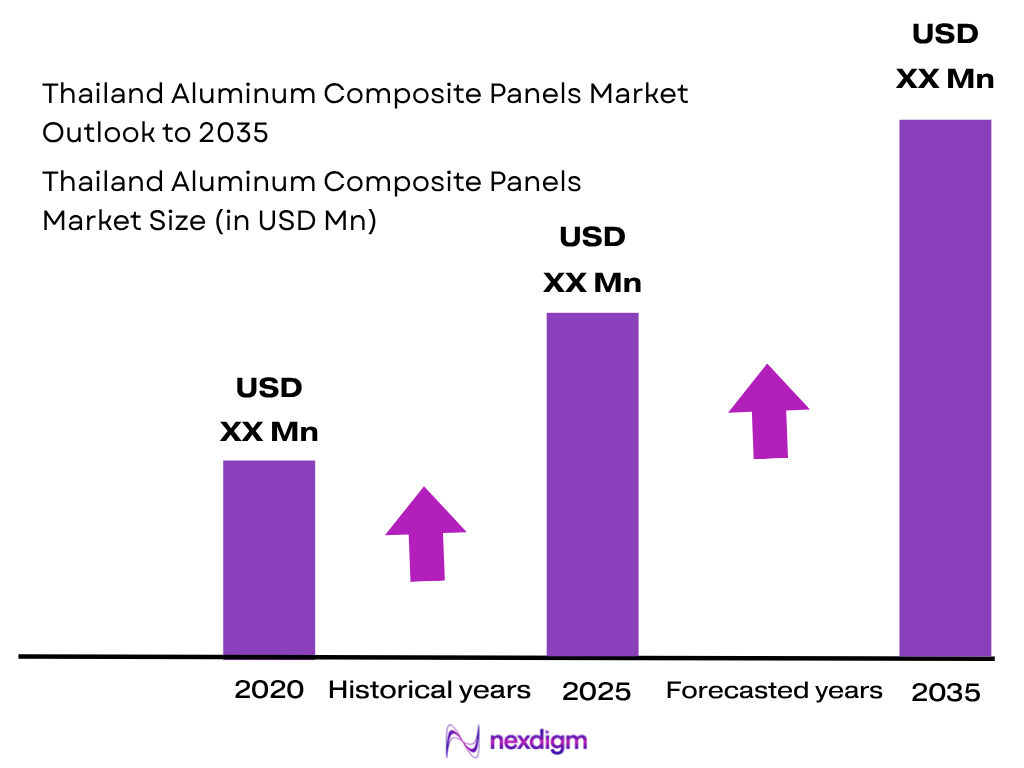
The Thailand aluminum composite panels market is valued at USD ~ billion in 2024, supported by construction expansion, commercial infrastructure development, residential condominium projects, tourism-related investments, and increasing demand for modern façade systems. The market growth is influenced by Thailand’s construction sector recovery, urban development, and expansion of commercial buildings requiring lightweight cladding materials. Thailand recorded a GDP of approximately USD 512 billion in 2023, according to World Bank data, reflecting the country’s economic base supporting infrastructure and real estate investments. The adoption of aluminum composite panels is increasing due to durability, corrosion resistance, lightweight properties, and suitability for tropical climatic conditions.
The Thailand aluminum composite panels market is concentrated in Bangkok, Chonburi, Rayong, Phuket, and Chiang Mai, driven by commercial construction, tourism infrastructure, industrial development, and urban expansion. Bangkok dominates due to extensive high-rise condominium construction, office buildings, shopping malls, and transportation infrastructure projects requiring advanced façade materials. Chonburi and Rayong benefit from industrial development and Eastern Economic Corridor investments, increasing demand for commercial and industrial building applications. Phuket experiences demand from hospitality developments, resorts, and tourism-related construction. Chiang Mai contributes through residential and commercial projects. These regions have strong ACP demand due to the presence of developers, construction companies, architects, and established building material distribution networks.
Market Segmentation
By Application Type
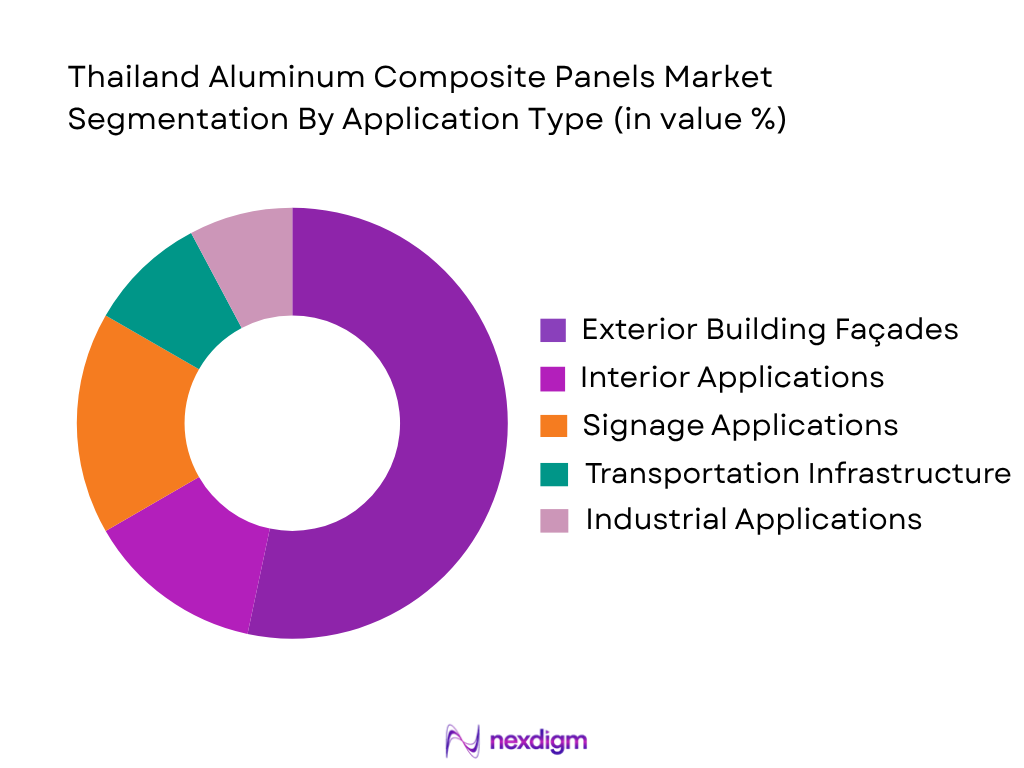
Thailand aluminum composite panels market is segmented by application type into exterior building façades, interior applications, signage applications, transportation infrastructure, and industrial applications. Recently, exterior building façades hold a dominant position in Thailand aluminum composite panels market under the application segmentation, due to increasing construction of condominiums, commercial buildings, shopping malls, and hospitality projects. ACP panels are widely selected for exterior applications because they provide lightweight installation, aesthetic flexibility, weather resistance, and compatibility with modern architectural designs. Bangkok’s high-rise construction activities and tourism-related developments across Phuket and other urban regions continue to support façade applications. Developers and architects increasingly prefer ACP solutions for creating visually attractive building exteriors while maintaining durability in Thailand’s tropical climate conditions. Growing adoption of premium finishes, including metallic and customized textures, further strengthens demand for exterior façade ACP systems.
By Core Material Type
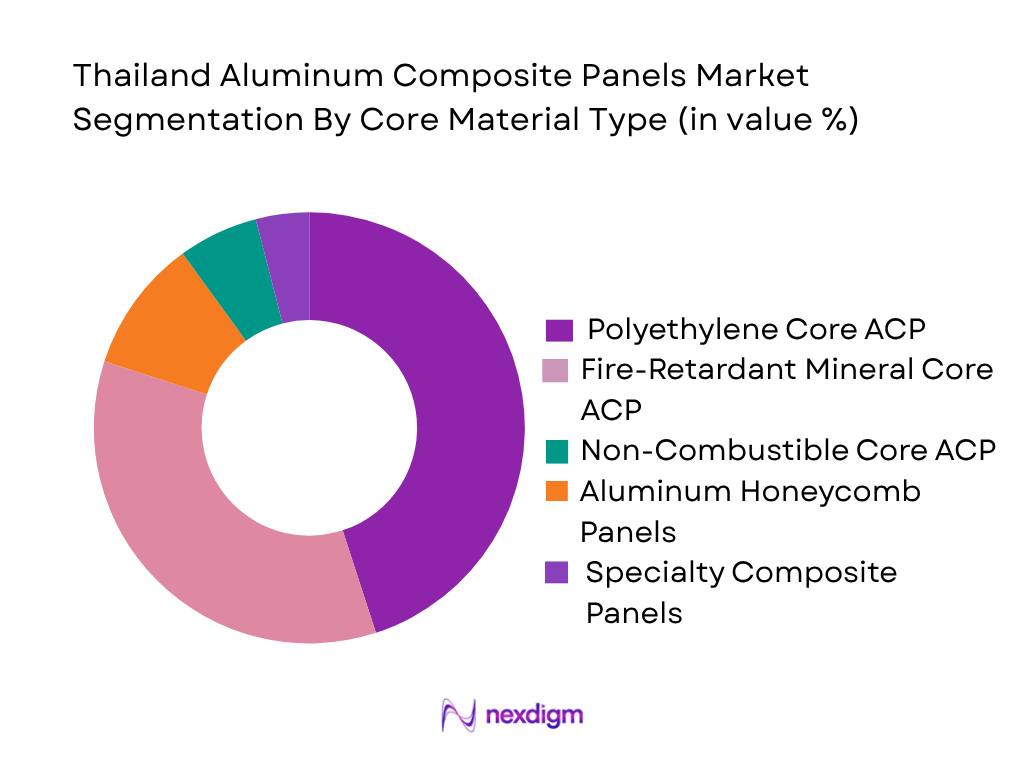
Thailand aluminum composite panels market is segmented by core material type into polyethylene core ACP, fire-retardant mineral core ACP, non-combustible core ACP, aluminum honeycomb panels, and specialty composite panels. Currently, polyethylene core aluminum composite panels represent the leading segment, supported by cost efficiency, availability, lightweight characteristics, and widespread usage in commercial buildings, retail spaces, and signage applications. PE core panels have historically been preferred due to easier fabrication, installation convenience, and competitive pricing. However, fire-retardant mineral core ACP solutions are gaining adoption in high-rise buildings, airports, hotels, and institutional projects due to increasing attention toward building safety standards. Thailand’s growing commercial infrastructure and modern construction projects are gradually encouraging demand for higher-performance ACP products. Manufacturers are increasingly expanding fire-resistant product offerings to meet evolving construction requirements and provide safer façade solutions.
Competitive Landscape
The Thailand aluminum composite panels market includes international manufacturers, regional suppliers, and construction material companies supplying ACP solutions for commercial buildings, residential projects, hospitality developments, and infrastructure applications. The competitive environment is influenced by product quality, fire safety compliance, coating technology, customization capability, distribution strength, and project execution experience. Leading companies compete by offering advanced façade solutions, premium finishes, fire-retardant panels, and technical support for architects, contractors, and developers.
| Company | Establishment Year | Headquarters | ACP Product Portfolio | Fire-Retardant ACP Capability | Coating Technology | Manufacturing Capability | Distribution Network | Key Applications |
| Alucobond / 3A Composites | 1969 | Switzerland | ~ | ~ | ~ | ~ | ~ | ~ |
| Alpolic / Mitsubishi Chemical | 1995 | Japan | ~ | ~ | ~ | ~ | ~ | ~ |
| Alubond USA | 1992 | UAE | ~ | ~ | ~ | ~ | ~ | ~ |
| Alstrong Enterprises | 2001 | India | ~ | ~ | ~ | ~ | ~ | ~ |
| Eurobond Industries | 2002 | India | ~ | ~ | ~ | ~ | ~ | ~ |
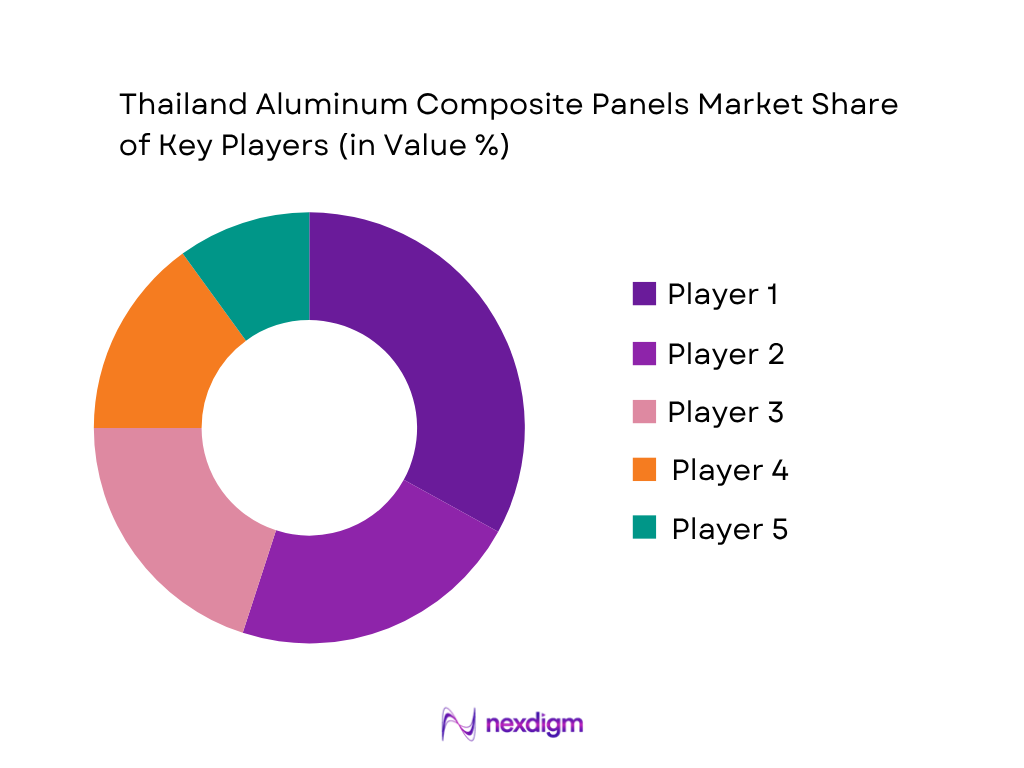
Thailand Aluminum Composite Panels Market Analysis
Growth Drivers
Expansion of Thailand Construction Sector and Urban Development Supporting Aluminum Composite Panel Adoption
The Thailand aluminum composite panels market is supported by continuous urban development, commercial construction, condominium projects, tourism infrastructure, and industrial expansion. The construction sector remains a key contributor to Thailand’s economy, supported by government infrastructure spending and private real estate investment. Thailand recorded a GDP of approximately USD 512 billion in 2023, according to World Bank economic indicators, demonstrating the economic capacity supporting building and infrastructure development. Thailand’s population reached approximately 71.7 million people in 2024, according to World Bank demographic data, creating sustained demand for residential buildings, commercial facilities, and urban infrastructure. Aluminum composite panels are increasingly used in Thailand’s construction industry due to their lightweight structure, corrosion resistance, easy installation, and suitability for tropical weather conditions. Bangkok continues to experience significant demand due to high-rise condominiums, office buildings, retail complexes, and mixed-use developments. The Eastern Economic Corridor, covering Chonburi, Rayong, and Chachoengsao, continues to attract industrial investments, increasing demand for warehouses, factories, and commercial buildings requiring durable exterior materials. The expansion of urban infrastructure, transportation facilities, and public buildings is increasing the application of ACP panels for façades, interiors, and signage systems. Growing adoption of modern architectural designs and demand for aesthetically attractive building exteriors are further encouraging developers and architects to integrate ACP solutions into construction projects.
Tourism Infrastructure Expansion and Hospitality Development Increasing Demand for Premium ACP Solutions
Thailand’s strong tourism sector and hospitality infrastructure development are major contributors to aluminum composite panel demand, particularly for hotels, resorts, shopping destinations, entertainment complexes, and mixed-use developments. According to Thailand’s Ministry of Tourism and Sports, the country welcomed approximately 35.5 million international visitors in 2024, supporting continued investments in hotels, resorts, retail spaces, and tourism-related infrastructure. Tourism activity contributes significantly to construction demand in locations such as Bangkok, Phuket, Pattaya, and Chiang Mai, where developers require modern façade materials for premium hospitality projects. Thailand’s GDP reached approximately USD 512 billion in 2023, according to World Bank data, reflecting economic activity supported by service sectors including tourism, construction, and real estate. Aluminum composite panels are preferred in hospitality projects because they provide customized architectural finishes, weather resistance, lightweight installation, and compatibility with modern building designs. Hotels and resorts increasingly require visually appealing exteriors that withstand Thailand’s high humidity, rainfall, and tropical climate conditions. The expansion of airports, transportation hubs, and tourism facilities is creating additional applications for ACP systems. Premium hospitality projects are increasingly adopting fire-retardant ACP solutions, advanced coating technologies, and customized surface finishes to improve building aesthetics and safety compliance. Increasing investment in tourism infrastructure modernization continues to support demand for high-quality aluminum composite panel solutions.
Market Challenges
Weather Conditions and Durability Requirements Affecting Aluminum Composite Panel Performance
The Thailand aluminum composite panels market faces challenges related to tropical climatic conditions, including high humidity, heavy rainfall, heat exposure, and coastal environmental effects. Thailand experiences significant climatic variation, with many regions receiving annual rainfall exceeding 1,500 millimeters, according to climate data from Thailand’s Meteorological Department, creating durability requirements for exterior building materials. Aluminum composite panels used in façades must withstand moisture exposure, ultraviolet radiation, temperature changes, and potential corrosion in coastal areas such as Phuket, Pattaya, and eastern industrial regions. These environmental conditions increase demand for advanced coating technologies, including PVDF coatings and protective surface treatments, but also increase product selection complexity for developers and contractors. Thailand’s coastal and tourism infrastructure projects require materials capable of maintaining appearance and structural performance over long service periods. The increasing use of ACP systems in hotels, condominiums, shopping malls, and commercial buildings requires manufacturers to provide products with improved weather resistance and quality certification. Improper installation practices, inadequate sealing, and selection of low-quality panels can affect façade performance and increase maintenance requirements. Construction companies and developers are therefore focusing on reliable suppliers with technical expertise, product warranties, and experience in tropical climate applications. These durability considerations create challenges for low-cost ACP manufacturers competing against premium suppliers offering higher-performance solutions.
Raw Material Supply Dependence and Price Fluctuations Impacting ACP Manufacturing
The Thailand aluminum composite panels market is affected by fluctuations in aluminum prices, coating material availability, polymer core supply, and dependence on international raw material networks. Aluminum is the primary component of ACP production, and global supply conditions influence manufacturing costs and operational planning. According to the International Aluminium Institute, global primary aluminum production exceeded 70 million tonnes in 2024, highlighting the scale and competitiveness of the international aluminum supply chain. Thailand has domestic aluminum processing capabilities, but many ACP manufacturers depend on imported aluminum sheets, coating chemicals, and specialized production materials for premium products. The country imported approximately USD 269 billion worth of goods in 2023, according to World Bank trade indicators, reflecting Thailand’s integration with international supply networks. Imported manufacturing inputs can expose ACP producers to currency fluctuations, transportation disruptions, and international commodity changes. Demand for customized ACP products, including metallic finishes, wood textures, stone patterns, and digital printing, increases dependence on specialized coating technologies and imported components. Small and medium manufacturers may face difficulties maintaining consistent inventory and controlling production costs during periods of supply uncertainty. Companies operating in the Thailand ACP market increasingly need diversified sourcing strategies, stronger supplier relationships, and improved inventory management systems to maintain reliable product availability for construction projects.
Market Opportunities
Increasing Adoption of Fire-Retardant and Sustainable ACP Solutions Creating Future Growth Opportunities
The Thailand aluminum composite panels market has significant opportunities through increasing adoption of fire-retardant, sustainable, and high-performance ACP solutions across commercial, residential, and infrastructure projects. Building safety requirements and growing awareness among developers are encouraging the transition toward safer façade materials with improved fire performance. Thailand’s construction industry is increasingly focusing on modern building standards, particularly for high-rise condominiums, commercial buildings, hotels, and public infrastructure projects. Thailand’s urban population reached approximately 36 million people in 2024, according to World Bank urbanization indicators, increasing demand for modern residential and commercial spaces requiring advanced construction materials. Sustainable construction practices are also gaining importance as developers adopt materials that support energy efficiency, durability, and environmental performance. Aluminum composite panels containing recycled aluminum components and advanced coatings are gaining attention among architects and project developers. The growth of green building initiatives and environmentally responsible construction practices creates opportunities for manufacturers offering recyclable and durable ACP solutions. Fire-retardant ACP products are expected to gain stronger adoption in high-rise buildings, airports, hospitals, and institutional facilities where safety compliance is critical. Manufacturers investing in advanced core technologies, improved coating systems, and certified product solutions can benefit from changing customer preferences toward safer and sustainable façade materials.
Smart City Development and Infrastructure Modernization Supporting Advanced ACP Applications
Thailand’s smart city initiatives, infrastructure modernization programs, and urban redevelopment projects are creating new opportunities for aluminum composite panel applications. Government investment in transportation infrastructure, industrial development zones, and urban facilities is increasing demand for modern façade and cladding materials. Thailand’s Eastern Economic Corridor continues to attract industrial investments, supporting development of manufacturing facilities, logistics centers, and commercial infrastructure requiring durable building materials. According to Thailand’s National Economic and Social Development Council, infrastructure development remains an important component of economic planning, supporting transportation, industrial, and urban development initiatives. Bangkok’s population exceeded 10 million residents in the metropolitan region in 2024, according to local demographic estimates, creating continued demand for residential towers, commercial buildings, and public infrastructure. Aluminum composite panels are increasingly used in airports, railway facilities, metro stations, business parks, and retail developments due to their lightweight properties and architectural flexibility. Thailand’s expanding digital economy and industrial sectors are also contributing to demand for modern office buildings and technology-related facilities requiring premium façade solutions. Increasing adoption of prefabricated construction methods and customized architectural designs is creating opportunities for ACP manufacturers offering specialized products. The modernization of public spaces, transportation facilities, and commercial developments is expected to expand ACP applications beyond traditional building cladding into advanced architectural and infrastructure projects.
Future Outlook
Over the next decade, the Thailand aluminum composite panels market is expected to witness steady growth driven by urban development, condominium construction, tourism infrastructure expansion, and increasing adoption of modern façade materials. Demand for fire-retardant ACP solutions, sustainable construction materials, and customized architectural finishes is expected to increase. Expansion of commercial buildings, industrial facilities, airports, and hospitality projects will create additional opportunities for ACP manufacturers. The transition toward advanced façade systems and lightweight construction materials will further support market development.
Major Players
- Alucobond / 3A Composites
- Alpolic / Mitsubishi Chemical Group
- Alubond USA
- Alstrong Enterprises India Pvt Ltd
- Eurobond Industries Pvt Ltd
- Aludecor
- Alstone Industries Pvt Ltd
- Mulk Holdings
- Alucoil
- Arconic Architectural Products
- Yaret Industrial Group
- Goodsense Technology Co., Ltd.
- Jyi Shyang Industrial Co., Ltd.
- Seven Aluminium Composite Panel
- 3A Composites Asia Pacific
Key Target Audience
- Aluminum Composite Panel Manufacturers and Suppliers
- Façade Contractors and Architectural Cladding Companies
- Real Estate Developers and Construction Companies
- Building Material Distributors and Fabricators
- Investments and Venture Capitalist Firms (Bangkok Bank InnoHub, SCB 10X, Krungsri Finnovate)
- Government and Regulatory Bodies (Department of Public Works and Town & Country Planning, Ministry of Industry Thailand, Thai Industrial Standards Institute, Ministry of Transport Thailand)
- Hospitality Developers and Hotel Operators
- Infrastructure and Transportation Project Developers
Research Methodology
Step 1: Identification of Key Variables
The initial phase involves developing an ecosystem map covering aluminum suppliers, ACP manufacturers, construction companies, façade contractors, architects, developers, and regulatory authorities operating in Thailand. Extensive desk research is conducted using industry databases, government publications, construction information, and company-level data to identify major market variables. This step establishes the foundation for understanding product categories, demand drivers, supply capabilities, and application trends.
Step 2: Market Analysis and Construction
This phase involves analyzing historical market information related to ACP consumption, construction activities, product adoption, application penetration, and regional demand patterns. The assessment evaluates exterior façade usage, interior applications, signage demand, core material preferences, and coating technology adoption. Market estimates are developed by analyzing supply-side production capabilities and demand-side construction requirements.
Step 3: Hypothesis Validation and Expert Consultation
Market assumptions are validated through discussions with ACP manufacturers, distributors, façade contractors, construction companies, and industry stakeholders. These consultations provide insights into procurement behavior, product specifications, regulatory requirements, installation challenges, and competitive strategies. Expert feedback is incorporated to strengthen market understanding and validate industry observations.
Step 4: Research Synthesis and Final Output
The final stage integrates primary and secondary research findings to create a comprehensive assessment of the Thailand aluminum composite panels market. Data collected from manufacturers, distributors, contractors, and project stakeholders is analyzed using bottom-up and top-down approaches. The final report provides segmentation analysis, competitive benchmarking, market trends, and strategic recommendations.

- Executive Summary
- Research Methodology (Market Definition and Scope, Thailand Aluminum Composite Panels Market Classification, Aluminum Composite Panel Product Mapping, Polyethylene Core ACP Assessment, Fire-Retardant ACP Evaluation, Mineral Core ACP Analysis, Aluminum Honeycomb Panel Assessment, Aluminum Skin Thickness Evaluation, PVDF Coating Technology Analysis, Polyester Coating Assessment, FEVE Coating Evaluation, Nano Coating Technology Assessment, Metallic Finish ACP Analysis, Wood Finish ACP Evaluation, Stone Texture ACP Assessment, Digital Printed ACP Analysis, Surface Treatment Assessment, Exterior Façade Application Mapping, Interior Decoration Application Assessment, Signage Application Evaluation, Transportation Infrastructure Application Analysis, Commercial Building Demand Assessment, Residential Construction Demand Assessment, Hospitality Sector Demand Assessment, Industrial Building Application Assessment, Domestic Production Capability Assessment, Import Dependency Evaluation, Distribution Channel Assessment, Supply-Side Assessment, Demand-Side Assessment)

- Definition and Scope
- Thailand Aluminum Composite Panels Industry Evolution and Development of Architectural Façade Systems, High-Rise Building Cladding Solutions, Commercial Real Estate Applications, Shopping Mall Exterior Systems, Hospitality Building Façades, Residential Condominium Cladding Solutions, Fire-Retardant ACP Systems, PVDF Coated Panel Technology, Decorative Interior ACP Applications, Advertising and Signage Panel Solutions, Transportation Infrastructure Cladding, Sustainable Aluminum Composite Materials, Lightweight Building Envelope Solutions, Advanced Surface Finishing Technologies, Digital Printed ACP Applications
- Aluminum Composite Panels Value Chain Analysis
- Aluminum Composite Panels Supply Chain Analysis
- Aluminum Sheet Suppliers, Aluminum Producers, Polymer Core Material Suppliers, Mineral Core Suppliers, Coating Chemical Manufacturers, Paint and Resin Suppliers, ACP Manufacturers, Panel Fabricators, Façade Contractors, Architectural Consultants, Real Estate Developers, Construction Companies, Building Material Distributors, Signage Companies, Industrial Project Developers, Government Infrastructure Developers

- Growth Drivers (Commercial Real Estate Expansion, Condominium Construction Growth, Tourism Infrastructure Development, Shopping Mall Expansion, Urbanization Trends, Demand for Modern Façade Systems, Hospitality Construction Growth, Transportation Infrastructure Development, Lightweight Construction Material Adoption, Premium Architectural Design Demand)
- Market Challenges (Extreme Weather Exposure, High Humidity Conditions, Fire Safety Compliance Requirements, Competition from Alternative Cladding Materials, Raw Material Price Fluctuations, Dependence on Imported ACP Components, Installation Quality Issues, Low-Cost Product Competition, Product Standardization Challenges, Maintenance Requirements)
- Market Opportunities (Fire-Retardant ACP Adoption, Green Building Material Demand, Sustainable Aluminum Solutions, Smart City Infrastructure Development, Tourism Facility Modernization, Premium Condominium Projects, Airport Expansion Projects, Advanced Coating Technologies, Customized Architectural Panels, Energy-Efficient Building Envelope Solutions)
- Market Trends (Increasing Fire-Resistant Panel Usage, Premium PVDF Coating Adoption, Customized Façade Designs, Wood and Stone Finish Demand, Sustainable Construction Materials, Digital Printed ACP Growth, Lightweight Building Systems, Modular Construction Integration, Advanced Surface Treatment Technologies, High-Durability Exterior Panels)
- Government Regulations and Standards (Thai Building Control Act Requirements, Fire Safety Regulations, Industrial Product Standards, Thai Industrial Standards Institute Requirements, Building Material Certification Standards, Green Building Guidelines, Construction Safety Regulations, Environmental Compliance Requirements, Import Quality Standards)
- SWOT Analysis
- Porter’s Five Forces Analysis
- PESTLE Analysis
- Stakeholder Ecosystem
- Competition Ecosystem

- By Market Value (2020-2025)
- By Volume Consumption (2020-2025)
- By Installed Surface Area (2020-2025)
- By Average Selling Price per Square Meter (2020-2025)
- By Exterior Façade ACP Consumption Volume (2020-2025)
- By Interior Cladding ACP Consumption Volume (2020-2025)
- By Signage and Advertising ACP Consumption Volume (2020-2025)
- By Fire-Retardant ACP Consumption Volume (2020-2025)
- By Commercial Building ACP Consumption Volume (2020-2025)
- By Residential Building ACP Consumption Volume (2020-2025)

- By Core Material Type (In Value %)
Polyethylene (PE) Core Aluminum Composite Panels
Fire-Retardant Mineral Core Aluminum Composite Panels
Non-Combustible Core Aluminum Composite Panels
Aluminum Honeycomb Core Panels
Specialty Composite Core Panels - By Coating Technology Type (In Value %)
PVDF Coated Aluminum Composite Panels
Polyester Coated Aluminum Composite Panels
FEVE Coated Aluminum Composite Panels
Nano Coated Aluminum Composite Panels
Anodized Aluminum Surface Panels
Decorative Laminated ACP Panels - By Application Type (In Value %)
Exterior Building Façades
Commercial Building Exteriors
High-Rise Condominium Façades
Shopping Mall Exteriors
Hotel and Resort Façades
Corporate Office Buildings
Interior Applications
Interior Wall Cladding
Ceiling Panels
Partition Systems
Decorative Interior Panels - By Building Type (In Value %)
Commercial Buildings
Office Buildings
Shopping Centers
Business Parks
Residential Buildings
High-Rise Condominiums
Luxury Housing Projects
Apartment Buildings
Hospitality Buildings
Hotels
Resorts
Entertainment Facilities - By End User Type (In Value %)
Real Estate Developers
Construction Contractors
Façade Fabricators
Architectural Firms
Building Material Distributors
Advertising and Signage Companies
Infrastructure Project Developers - By Region (In Value %)
Bangkok Metropolitan Region
Chonburi
Rayong
Phuket
Chiang Mai
Nonthaburi
Rest of Thailand

- Market Share of Major Players (By Thailand Revenue, Aluminum Composite Panel Product Portfolio, ACP Manufacturing Capacity, Fire-Retardant ACP Capability, PVDF Coating Technology, Surface Finish Range, Distribution Network Coverage, Domestic Manufacturing Presence, Import Capability, Commercial Project Portfolio, Residential Construction Experience, Hospitality Project Experience, Technical Support Capability, Customization Capability)
- Cross Comparison Parameters (Fire-Retardant Core Technology Capability, Aluminum Skin Thickness Range, PVDF Coating Durability Performance, Weather Resistance Capability, Surface Finish Customization Range, Distribution Network Strength, High-Rise Building Project Experience, Technical Installation Support Capability)
- SWOT Analysis of Major Player
- Competitive Positioning Matrix
- Aluminum Composite Panel Technology and Architectural Application Benchmarking
- Thailand Climate Durability and Weather Resistance Assessment
- Thailand Distribution Network and Architectural Specification Capability Assessment
- Detailed Profiles of Major Companies
Alubond USA
Alucobond / 3A Composites
Alpolic / Mitsubishi Chemical Group
Alstrong Enterprises India Pvt Ltd
Eurobond Industries Pvt Ltd
Aludecor
Alstone Industries Pvt Ltd
Mulk Holdings
Alucoil
Arconic Architectural Products
Yaret Industrial Group
Goodsense Technology Co., Ltd.
Jyi Shyang Industrial Co., Ltd.
Seven Aluminium Composite Panel
3A Composites Asia Pacific

- Architectural Specification Assessment
- Real Estate Developer Demand Analysis
- Construction Contractor Requirement Assessment
- Façade Fabricator Analysis
- Hospitality Sector Demand Assessment
- Retail Infrastructure Demand Analysis
- Industrial Building Demand Assessment
- Building Owner Requirement Assessment

- By Market Value (2026-2035)
- By Volume Consumption (2026-2035)
- By Installed Surface Area (2026-2035)
- By Average Selling Price per Square Meter (2026-2035)
- By Exterior Façade ACP Consumption Volume (2026-2035)
- By Interior Cladding ACP Consumption Volume (2026-2035)
- By Signage and Advertising ACP Consumption Volume (2026-2035)
- By Fire-Retardant ACP Consumption Volume (2026-2035)
- By Commercial Building ACP Consumption Volume (2026-2035)
- By Residential Building ACP Consumption Volume (2026-2035)


 Request a Sample
 Ask for Customization
 Get a Quote
 Enquire Now