

 Download PDF
 Download PDF
Market Overview
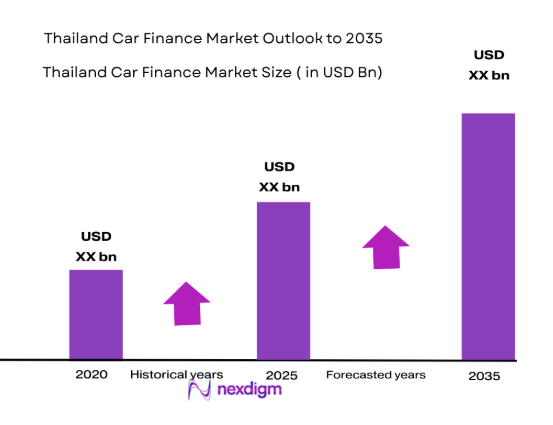
The Thailand Car Finance market is a significant part of the country’s automotive and financial sectors. Based on a recent historical assessment, the market size is driven by the rising demand for automobiles, the expansion of financing options, and the growing middle class. Car finance products, including loans and leases, have gained popularity due to lower interest rates and flexible terms. Financial institutions and dealerships are increasingly offering tailored car financing solutions to cater to diverse consumer needs, further driving market growth. The market size for this segment in 2024 is valued at USD ~ billion, with ongoing growth anticipated.
Thailand’s dominance in the car finance market is driven by its strong automotive industry and banking sector. Key cities such as Bangkok and Chiang Mai serve as hubs for car dealerships and financial institutions, promoting both retail and commercial car financing. The increasing number of car buyers, coupled with government incentives for automotive purchases, has contributed to the market’s growth. The well-established infrastructure and consumer trust in financing institutions in Thailand make it a prominent player in Southeast Asia, with continued dominance expected in the coming years.
Market Segmentation
By Product Type:
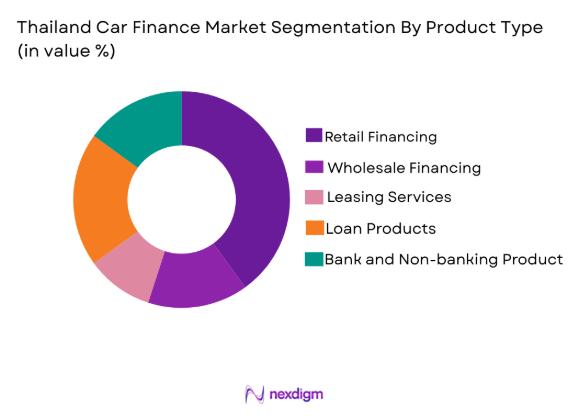
Thailand Car Finance market is segmented by product type into retail financing, wholesale financing, leasing services, loan products, and bank and non-banking financial products. Recently, retail financing has dominated the market share due to rising demand from individual consumers, availability of easy access to car loans, and favorable interest rates. Retail financing solutions such as personal loans for car purchases have gained popularity as they offer flexibility, affordability, and convenience for consumers. Furthermore, the growing presence of automotive dealers providing in-house financing options has contributed to this dominance.
By Platform Type:
The market is also segmented by platform type, which includes online platforms, traditional bank channels, dealership financing programs, third-party financing, and peer-to-peer lending platforms. Online platforms have emerged as a dominant sub-segment due to the rapid shift towards digital financial solutions. Factors such as consumer preference for convenience, quick processing times, and lower interest rates have made online car financing platforms increasingly popular. The convenience of comparing multiple financing options online has further encouraged the adoption of these platforms, leading to their growth in market share.

Competitive Landscape
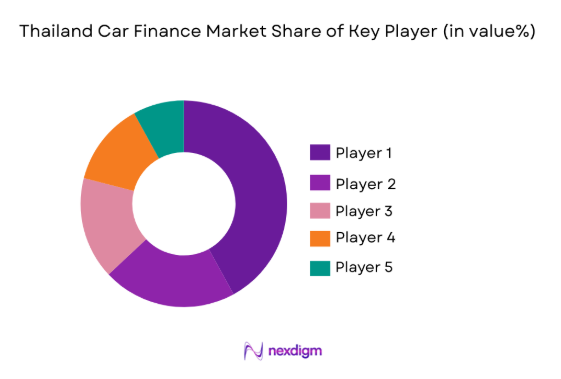
The competitive landscape of the Thailand Car Finance market is characterized by a blend of traditional banks, non-bank financial institutions, and digital finance platforms. Consolidation is evident, as larger banks have expanded their car finance offerings, while newer fintech companies have made inroads into the market with online and peer-to-peer lending solutions. Major players have built strong partnerships with car dealerships, enhancing their market position and customer reach. The market’s competitiveness continues to rise with the increasing number of players offering innovative financing products.
| Company Name | Establishment Year | Headquarters | Technology Focus | Market Reach | Key Products | Revenue | Additional Parameter |
| Siam Commercial Bank | 1904 | Bangkok | ~ | ~ | ~ | ~ | ~ |
| Kasikornbank | 1945 | Bangkok | ~ | ~ | ~ | ~ | ~ |
| TISCO Bank | 1969 | Bangkok | ~ | ~ | ~ | ~ | ~ |
| Thanachart Bank | 1945 | Bangkok | ~ | ~ | ~ | ~ | ~ |
| Bank of Ayudhya | 1945 | Bangkok | ~ | ~ | ~ | ~ | ~ |
Thailand Car Finance Market Analysis
Growth Drivers
Increasing Consumer Demand for Cars:
The increasing consumer demand for cars in Thailand is a primary driver of the car finance market. This demand is fueled by the growing middle-class population, which has more disposable income to spend on vehicles. Thailand’s expanding automotive industry has led to an increase in car ownership, especially among younger generations. The country’s robust economic growth, supported by a strong manufacturing base and a thriving tourism sector, further boosts consumer spending power. With the automotive sector being one of the country’s key drivers, financing options are essential to meet the rising demand for cars. The availability of affordable car loans and flexible financing schemes has enabled a broader section of the population to access vehicles, thereby driving growth in the car finance market. Furthermore, as consumer preferences shift towards personal car ownership, this trend is expected to continue over the next several years, driving demand for auto loans and car financing services.
Government Support for Car Purchases:
The Thai government’s support for car purchases has significantly contributed to the growth of the car finance market. Various initiatives such as tax rebates, subsidies, and incentives for electric vehicle (EV) buyers have spurred car sales, and by extension, the car finance market. The government’s focus on promoting eco-friendly cars, including hybrid and electric vehicles, has created a new avenue for financing solutions tailored to these segments. As part of the broader push for green technologies, electric vehicle financing is gaining traction, presenting new opportunities for lenders. The government’s efforts to develop infrastructure, including charging stations for EVs, further support the growth of financing products specifically designed for electric and hybrid vehicles. This policy-backed growth, along with the economic stimulus efforts to support the automotive sector, ensures that car finance remains a vital industry in Thailand’s economic landscape.
Market Challenges
High Interest Rates on Car Loans:
One of the significant challenges facing the car finance market in Thailand is the high interest rates associated with car loans. Despite government efforts to provide incentives, the cost of financing remains high due to the relatively high interest rates offered by banks and financial institutions. This makes it difficult for some consumers, especially those in the lower-income brackets, to access affordable financing options. The higher the interest rate, the higher the total cost of ownership for the vehicle, which can deter potential buyers. Additionally, the risk associated with auto loans, particularly in a market that has seen fluctuations in consumer income and loan repayment rates, makes financial institutions hesitant to reduce interest rates. This challenge is exacerbated by the limited competition in some segments of the financing market, leading to fewer alternatives for consumers seeking lower-cost options. Therefore, the high interest rates remain a key challenge that must be addressed for sustained growth in the car finance sector.
Consumer Debt Levels and Loan Defaults:
Another challenge in the Thailand car finance market is the rising levels of consumer debt and the increasing number of loan defaults. As more individuals take on car loans, the level of personal debt has been steadily rising, leading to concerns about the ability of consumers to meet their repayment obligations. Loan defaults can be particularly damaging to lenders, as they affect their financial stability and ability to offer loans in the future. The economic uncertainties stemming from global trade tensions and local political instability have contributed to consumers’ growing inability to repay loans, especially in cases where borrowers overestimate their financial capabilities. As a result, financial institutions must navigate a delicate balance between offering loans to increase market penetration and ensuring that they do not face high default rates that could negatively impact their business operations. Stricter regulations on loan origination and underwriting standards are expected to be introduced as a response to mitigate this risk.
Opportunities
Expansion of Electric Vehicle Financing:
The rise of electric vehicles (EVs) presents a significant opportunity for the car finance market in Thailand. With the Thai government actively supporting the adoption of EVs through subsidies and tax breaks, there is an increasing demand for financing options specifically tailored to electric and hybrid vehicles. This creates new opportunities for financial institutions to offer specialized loans and lease programs that cater to the unique needs of EV consumers. Additionally, the growing environmental consciousness among consumers has led to an increase in the number of individuals and businesses looking to purchase green vehicles. By offering attractive interest rates and favorable loan terms for EVs, financial institutions can tap into this emerging market, aligning their offerings with government policies that encourage the adoption of clean energy solutions. The demand for EV financing is expected to rise, making it a key opportunity for lenders to differentiate themselves in a rapidly evolving automotive market.
Digital Transformation of Car Financing Platforms:
The ongoing digital transformation of the car finance industry in Thailand is an exciting opportunity for market participants. With more consumers turning to digital platforms to manage their financial needs, including car loans, there is significant potential for financial institutions to innovate by offering fully online financing solutions. Online car loan platforms are gaining traction due to their ease of use, transparency, and faster processing times. This shift towards digital lending platforms allows consumers to access car financing from the comfort of their homes, reducing the time and effort required to apply for loans. Financial institutions that invest in digital platforms can streamline their processes, lower operational costs, and reach a wider audience. As consumers increasingly demand digital solutions for their financial transactions, car finance providers that embrace these platforms will have a competitive edge in a growing market.
Future Outlook
The future outlook of the Thailand Car Finance market over the next five years is positive, with expectations for steady growth. Technological advancements such as AI in loan processing and the rise of digital platforms will streamline operations and enhance consumer experiences. Regulatory support, including government incentives for electric vehicle purchases, will continue to drive demand for car financing, particularly in the EV segment. With the growing middle class and increased availability of affordable financing options, the market will see a sustained rise in car ownership, supported by favorable economic conditions and a shift towards greener vehicle alternatives.
Major Players
- Siam Commercial Bank
- Kasikornbank
- TISCO Bank
- Thanachart Bank
- Bank of Ayudhya
- Krungthai Bank
- Bangkok Bank
- Bank of Thailand
- Toyota Leasing (Thailand)
- Mitsubishi Motors (Thailand)
- Thai Commercial Leasing
- Honda Leasing (Thailand)
- Nissan Motor (Thailand)
- Isuzu Finance (Thailand)
- MG Finance Thailand
Key Target Audience
- Investments and venture capitalist firms
- Government and regulatory bodies
- Car dealerships
- Vehicle manufacturers
- Commercial fleet operators
- Digital financial platforms
- Traditional financial institutions
- Automotive technology firms
Research Methodology
Step 1: Identification of Key Variables
Identify the main variables that influence the Thailand car finance market, including market drivers, challenges, and opportunities.
Step 2: Market Analysis and Construction
Analyze and construct the market by evaluating historical data, current trends, and growth forecasts.
Step 3: Hypothesis Validation and Expert Consultation
Validate market hypotheses by consulting industry experts, financial institutions, and automotive stakeholders.
Step 4: Research Synthesis and Final Output
Synthesize all collected data into a comprehensive report, presenting findings and actionable insights for stakeholders.

- Executive Summary
- Research Methodology (Definitions, Scope, Industry Assumptions, Market Sizing Approach, Primary & Secondary Research Framework, Data Collection & Verification Protocol, Analytic Models & Forecast Methodology, Limitations & Research Validity Checks)

- Market Definition and Scope
- Value Chain & Stakeholder Ecosystem
- Regulatory / Certification Landscape
- Sector Dynamics Affecting Demand
- Strategic Initiatives & Infrastructure Growth

- Growth Drivers
Increasing Car Ownership Among Middle-Class Consumers
Expansion of Electric Vehicle Options in Financing
Rising Affordability Through Flexible Loan Schemes
Supportive Government Policies for EV Financing
Adoption of Digital Platforms for Loan Processing - Market Challenges
High Interest Rates Affecting Loan Accessibility
Lack of Trust in Digital Financial Platforms
Economic Uncertainty Impacting Consumer Loan Affordability
Challenges in Financing for Used Car Market
Limited Awareness of EV Financing Options - Market Opportunities
Introduction of Green Car Financing Products
Growth in Commercial Vehicle Financing
Partnerships Between Banks and Dealerships for Integrated Solutions - Trends
Rise of Digital and Mobile Financing Platforms
Shift Toward Financing Electric and Hybrid Vehicles
Integration of AI in Loan Processing Systems
Increasing Popularity of Long-Term Car Leasing
Growth in Auto Financing for Commercial Fleets - Government Regulations & Defense Policy
Government Incentives for Electric Vehicle Purchases
Stricter Regulations on Vehicle Emissions
Financial Subsidies for First-Time Car Buyers - SWOT Analysis
- Stakeholder and Ecosystem Analysis
- Porter’s Five Forces Analysis
- Competition Intensity and Ecosystem Mapping

- By Market Value, 2020-2025
- By Installed Units, 2020-2025
- By Average System Price, 2020-2025
- By System Complexity Tier, 2020-2025

- By System Type (In Value%)
Retail Financing
Wholesale Financing
Leasing Services
Loan Products
Bank and Non-Banking Financial Products - By Platform Type (In Value%)
Online Platforms
Traditional Bank Channels
Dealership Financing Programs
Third-Party Financing
Peer-to-Peer Lending Platforms - By Fitment Type (In Value%)
New Car Financing
Used Car Financing
Electric Vehicle Financing
Commercial Vehicle Financing
Hybrid Financing Options - By EndUser Segment (In Value%)
Individual Consumers
Car Dealerships
Commercial Fleet Operators
Car Rental and Leasing Companies
Banks and Financial Institutions - By Procurement Channel (In Value%)
Direct Loan Procurement
Bank Loans
Online Loan Platforms
Dealership Financing
Government Subsidized Loan Schemes - By Material / Technology (In Value%)
Digital Loan Processing Systems
Vehicle Tracking Technology
Automated Loan Approval Systems
Telematics-Enabled Financing
Blockchain-Based Financing Solutions

- Market structure and competitive positioning
- Market share snapshot of major players
- CrossComparison Parameters (Platform Type, Fitment Type, EndUser Segment, Procurement Channel, System Type)
- SWOT Analysis of Key Competitors
- Pricing & Procurement Analysis
- Key Players
Bangkok Bank
Siam Commercial Bank
Krungthai Bank
Kiatnakin Phatra Bank
Bank of Ayudhya
TISCO Bank
Kasikornbank
Thanachart Bank
Government Savings Bank
Maybank
Standard Chartered Bank
Toyota Leasing (Thailand)
Mitsubishi Motors (Thailand)
Thai Commercial Leasing
Bank of Thailand

- Rising Middle-Class Consumers Seeking Car Ownership
- Growing Preference for Flexible Financing Plans
- Increased Demand for Car Leasing Among Businesses
- Shift Toward EV Financing Among Environmentally Conscious Consumers

- Forecast Market Value, 2026-2035
- Forecast Installed Units, 2026-2035
- Price Forecast by System Tier, 2026-2035
- Future Demand by Platform, 2026-2035


 Request a Sample
 Ask for Customization
 Get a Quote
 Enquire Now