
 Download PDF
Market Overview
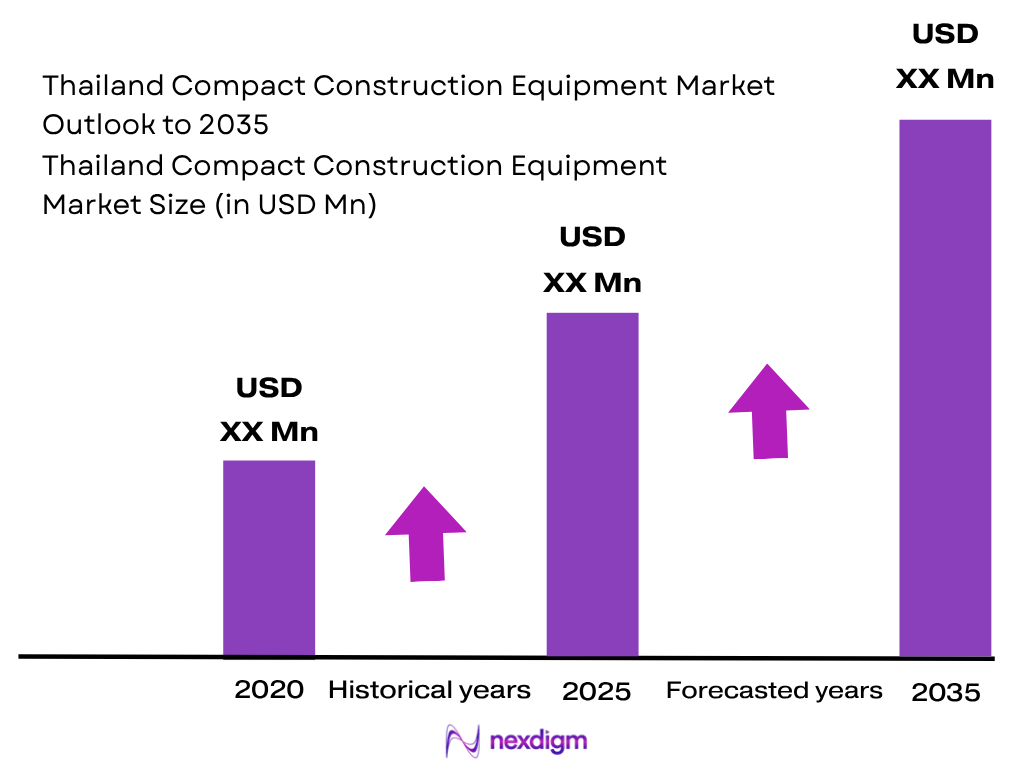
The Thailand Compact Construction Equipment Market is valued at approximately ~USD XX million, with the corresponding preceding-period value at approximately ~USD XX million. Demand is supported by construction, utility works, industrial development and small-site excavation activity. Official construction statistics recorded 304,200 permitted building constructions in the earlier comparable period, while the subsequent period recorded 265,764 building constructions, including 5,369 industrial and factory buildings, creating an extensive addressable application base for compact excavators, loaders and related equipment.
Bangkok Metropolitan Region, Central Thailand and the Eastern Economic Corridor encompassing Chon Buri, Rayong and Chachoengsao represent important demand centers for compact construction equipment. Bangkok and its surrounding provinces recorded 52,661 building constructions, while the Central and Eastern regions recorded 13,000 and 45,603, respectively. The Eastern Economic Corridor is additionally supported by industrial estates, logistics infrastructure, ports, airport development and advanced manufacturing investment, making compact excavation, loading, trenching and material-handling equipment particularly relevant.
Market Segmentation
By Equipment Type
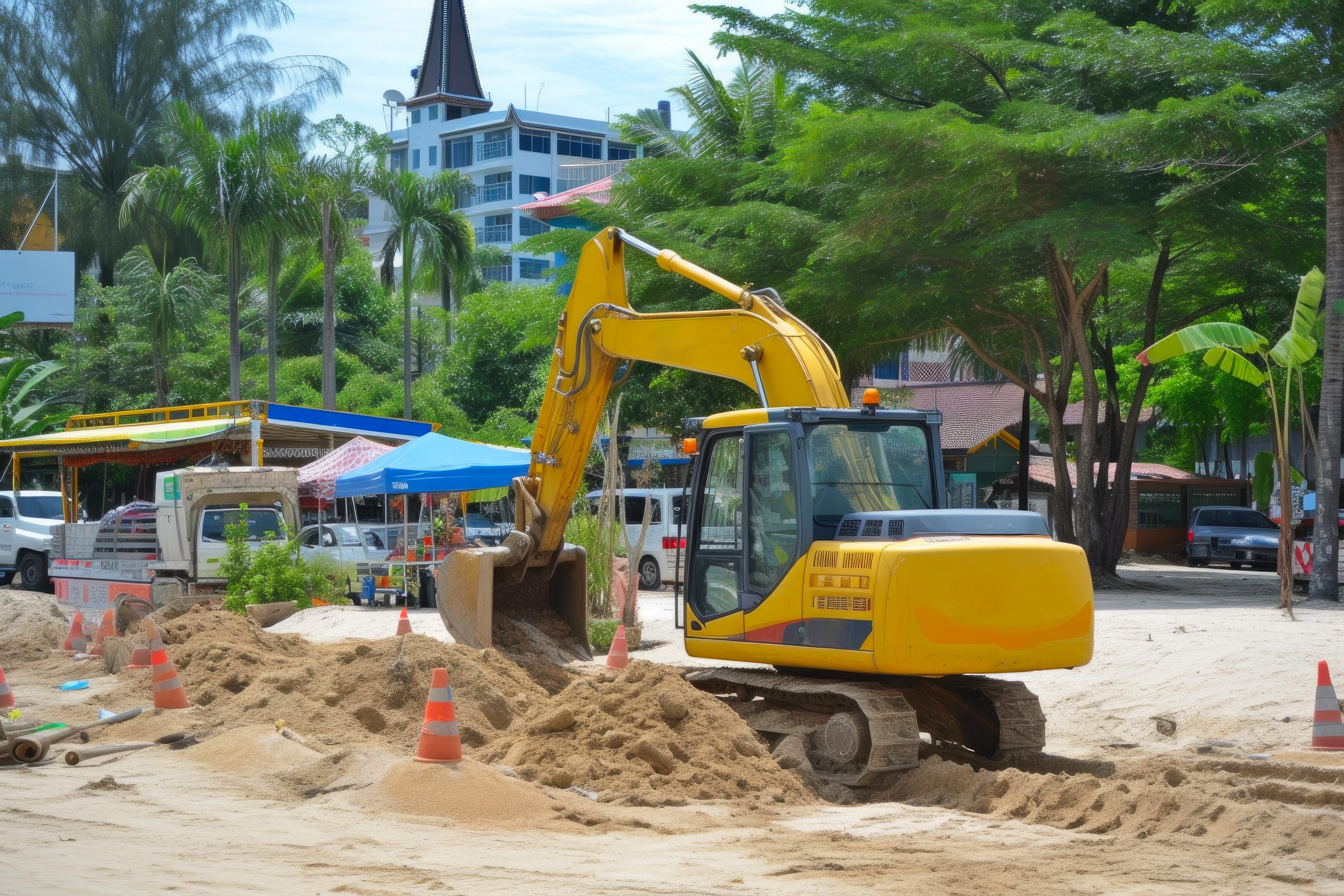
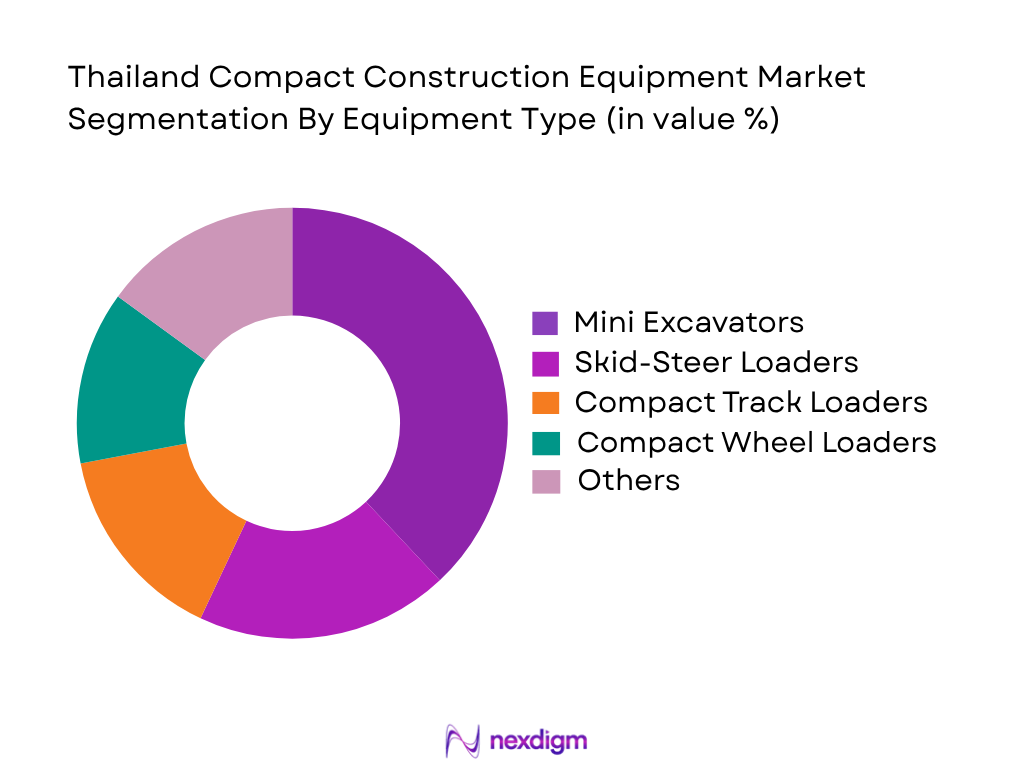
The Thailand Compact Construction Equipment Market is segmented by equipment type into mini excavators, skid-steer loaders, compact track loaders, compact wheel loaders, backhoe loaders and other compact equipment. Mini excavators hold the dominant market position because their small operating footprint, transportability and hydraulic versatility make them suitable for urban excavation, drainage, landscaping, utility installation and small construction sites. Thailand also has established availability of compact excavators across several equipment classes. For example, Siam Kubota offers its U008 mini excavator at 1,010 kilograms, while JCB’s Thailand portfolio includes machines ranging from the 3.5-tonne 35Z to larger compact excavators such as the 5,112-kilogram 51R. This broad equipment range allows contractors to select machines according to access width, digging depth, hydraulic requirement and jobsite conditions. Skid-steer and compact track loaders remain important where attachment versatility and loading capability are priorities.
By Application
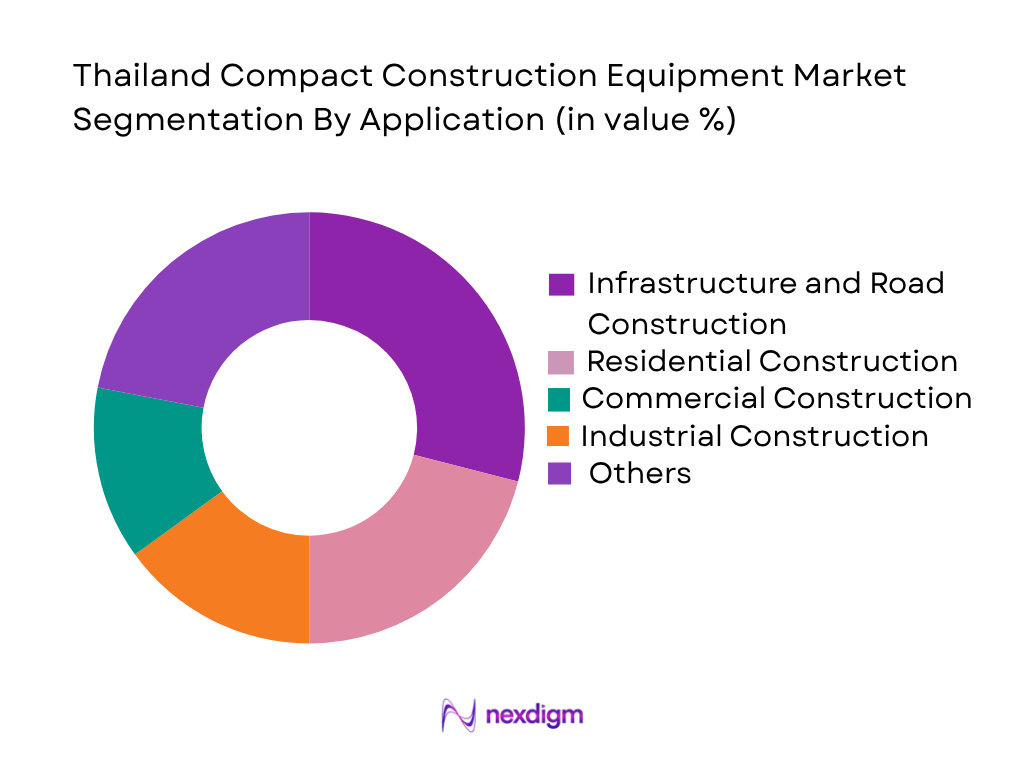
The Thailand Compact Construction Equipment Market is segmented by application into residential construction, commercial construction, infrastructure and road construction, utility works, industrial construction, landscaping, agriculture and municipal applications. Infrastructure and road construction represents the leading application segment, reflecting Thailand’s continued development of transportation, logistics and utility infrastructure. The EEC’s flagship infrastructure portfolio includes the high-speed rail linking three airports, Laem Chabang Port Phase 3, Map Ta Phut Industrial Port Phase 3, and U-Tapao Airport and Eastern Aviation City. Compact excavators and loaders are useful within such wider infrastructure ecosystems for trenching, drainage, landscaping, utility installation, site preparation and supporting works where full-sized earthmoving equipment is impractical. Residential and commercial construction also creates substantial demand. Thailand recorded 188,461 building permits and 256,994 building constructions in the latest official annual construction series, demonstrating the scale of sites potentially requiring small earthmoving and material-handling machinery.
Competitive Landscape
The Thailand Compact Construction Equipment Market includes global construction-equipment OEMs and specialized compact-equipment manufacturers competing through equipment breadth, dealer coverage, hydraulic performance, attachment compatibility, reliability and after-sales service. Caterpillar, Komatsu, Kubota, Bobcat and JCB have portfolios relevant to compact construction applications. Competition increasingly extends beyond basic machine specifications toward telematics, hydraulic attachment capability, fuel efficiency, operator comfort, service availability and lower-emission powertrains.
| Company | Established | Headquarters | Key Compact Equipment | Core Technology | Attachment Capability | Compact Equipment Focus | Technology Direction | After-Sales Strength |
| Caterpillar | 1925 | Irving, Texas, USA | ~ | ~ | ~ | ~ | ~ | ~ |
| Komatsu | 1921 | Tokyo, Japan | ~ | ~ | ~ | ~ | ~ | ~ |
| Kubota | 1890 | Osaka, Japan | ~ | ~ | ~ | ~ | ~ | ~ |
| Bobcat Company | 1958 | West Fargo, North Dakota, USA | ~ | ~ | ~ | ~ | ~ | ~ |
| JCB | 1945 | Rocester, Staffordshire, UK | ~ | ~ | ~ | ~ | ~ | ~ |
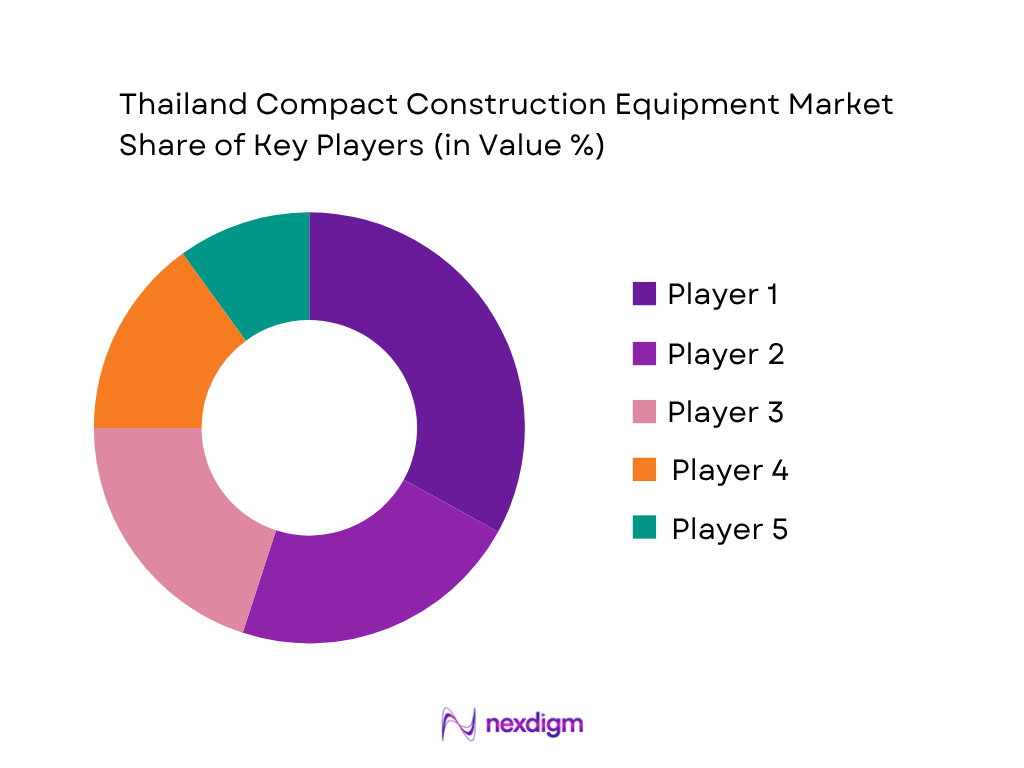
Thailand Compact Construction Equipment Market Analysis
Growth Drivers
Accelerating Public Infrastructure and Civil Construction Activity
Thailand’s expanding infrastructure pipeline is creating a substantial operating base for mini excavators, compact wheel loaders, skid-steer loaders, compact track loaders and other machines used for trenching, grading, drainage, road development and site preparation. Thailand’s fiscal budget for 2024 totaled THB 3.48 trillion, including THB 717.7 billion allocated to investment expenditure. During the first nine months of 2024, public investment reached THB 806.8 billion, including THB 631.8 billion in public construction investment and THB 175.0 billion in public-equipment investment. In the third quarter alone, public construction investment reached THB 280.8 billion, indicating substantial activity across transportation, water management and civil infrastructure. Thailand also recorded 16,826 permitted civil-engineering constructions during 2024, creating numerous distributed worksites where compact equipment can complement conventional heavy machinery. Additionally, 256,994 building constructions covering 52.1 million square meters were recorded across the country. These projects generate recurring requirements for excavation, backfilling, utility installation, drainage, material movement and landscaping. Compact machines are particularly suited to urban and constrained construction environments because their smaller operating footprint enables contractors to work around existing buildings, utilities and traffic corridors. Increasing infrastructure activity also creates opportunities for specialized attachments such as hydraulic breakers, augers, trenchers and grapples. Growing project dispersion across metropolitan and provincial locations can further strengthen rental-fleet utilization, dealer service requirements and replacement demand for versatile compact construction machinery.
Industrial Investment and Factory Construction Supporting Equipment Utilization
Thailand’s industrial expansion is strengthening demand for compact construction machinery used in factory development, industrial-estate construction, utility installation, drainage systems, landscaping and manufacturing-facility expansion. Investment-promotion applications reached THB 1.14 trillion during 2024, reflecting substantial capital deployment across strategically important industries. Digital-sector applications included 150 projects representing THB 243.3 billion, while electronics and electrical-appliance applications comprised 407 projects representing THB 231.7 billion. Such developments are particularly relevant to compact construction equipment because data centers, semiconductor facilities, electronics plants and supporting industrial infrastructure require site preparation, trenching, foundations and utility networks. Thailand recorded 5,369 industrial and factory building constructions during 2024, including 2,506 units in Eastern Thailand, reinforcing the importance of the country’s eastern manufacturing corridor. Domestic machinery sales at constant 2010 prices reached THB 72,562.3 million in December 2024, while capital-goods imports reached USD 4,867.6 million. Factory construction creates opportunities for mini excavators and compact loaders during both greenfield development and subsequent facility modifications. Their maneuverability is particularly valuable around existing production buildings, warehouses and internal roads. Industrial expansion also increases requirements for equipment rental, maintenance services, replacement parts and specialized attachments. Continued investment in electronics, digital infrastructure and advanced manufacturing therefore broadens the customer base available to compact-equipment manufacturers and distributors operating in Thailand.
Market Challenges
Weakness in Building Construction Restricting Near-Term Equipment Utilization
Thailand’s compact construction equipment industry faces pressure from softer building activity because residential and commercial projects represent important deployment environments for mini excavators, skid-steer loaders and compact wheel loaders. Thailand recorded 188,461 building permits and 256,994 new building constructions during 2024. Total new building-construction area stood at 52.1 million square meters, compared with 60.852 million square meters in the preceding annual period, indicating reduced physical construction volume available to equipment operators. Residential construction remained the largest component, making housing development particularly important for machines used in excavation, foundation preparation, drainage, landscaping and utility connections. Bangkok recorded approximately 3.655 million square meters of new construction area, while surrounding provinces recorded 12.217 million square meters. The private construction investment index stood at 101.4 in December 2024, compared with 104.9 earlier in the second half of the year, while the four-month moving average of permitted construction area reached 5,860.9 thousand square meters. Weaker construction pipelines can encourage smaller contractors to postpone purchases and operate existing machines for longer periods. Dealers may consequently face slower fleet replacement and greater customer preference for rentals or used equipment. Equipment manufacturers must therefore emphasize machine versatility, utilization rates, aftermarket availability and attachment compatibility to remain relevant when customers are cautious about capital-equipment purchases.
Dependence on Imported Machinery and Capital Equipment Creates Supply-Side Exposure
Thailand’s compact construction equipment ecosystem remains exposed to international machinery and component flows because many mini excavators, skid-steer loaders, compact track loaders and specialized machines are supplied through global OEM and distributor networks. Imports of machinery and equipment reached approximately THB 167,787.9 million on a seasonally adjusted basis in a late-2024 reporting period, while capital-goods imports reached USD 4,867.6 million at constant 2010 prices in December 2024. This dependence can expose distributors and contractors to overseas manufacturing schedules, shipping availability, component shortages and longer replacement-part lead times. Domestic machinery and equipment sales reached approximately THB 297,228.3 million in the corresponding broader machinery series, illustrating the considerable machinery requirements of Thailand’s industrial economy. Thailand’s nominal GDP stood at approximately THB 18.603 trillion during 2024, providing a large economic base but also creating extensive requirements for imported capital equipment across competing industries. Compact equipment additionally depends on hydraulic systems, engines, electronic controllers, undercarriage components and specialized attachments that require reliable supply networks. Any disruption can extend machine downtime at active construction sites. Dealers therefore need adequate inventories of filters, hydraulic components, tracks, tires, buckets and service parts. Expanding local technical support, parts warehousing and preventive-maintenance capabilities can become increasingly important competitive factors as Thailand’s compact-equipment installed base develops.
Market Challenges
Eastern Thailand Industrial Development Creating a Larger Compact-Equipment Application Base
Eastern Thailand represents an important opportunity for compact construction equipment because continued industrial development generates requirements for earthmoving, trenching, utilities, factory extensions, drainage, landscaping and material handling. Eastern Thailand recorded 45,603 permitted building constructions during 2024, including 38,526 residential buildings, 2,056 commercial buildings and 2,506 industrial and factory buildings. Industrial construction is especially relevant for compact excavators and loaders because these machines can operate within existing plants and constrained industrial-estate sites where conventional heavy machinery may face maneuverability limitations. Thailand’s broader investment pipeline further supports equipment utilization, with investment-promotion applications reaching THB 1.14 trillion during 2024. This included THB 231.7 billion across 407 electronics and electrical-appliance projects and THB 243.3 billion across 150 digital-sector projects. Such projects require foundations, underground utilities, drainage networks, access roads and supporting civil works. Thailand’s nominal GDP reached approximately THB 18.603 trillion, providing a substantial economic foundation for industrial capital formation. Expansion around Chonburi, Rayong and neighboring provinces can encourage dealers to establish additional service workshops, mobile-maintenance teams and parts inventories. Rental operators can also position compact fleets closer to industrial clusters, reducing transportation distances and improving utilization. Demand may increasingly favor versatile machines capable of supporting both initial construction and recurring maintenance within operating industrial facilities.
Equipment Rental, Attachments and Multi-Purpose Machines Expanding Addressable Demand
Thailand’s large number of geographically distributed construction projects creates an opportunity for rental fleets and attachment-driven compact equipment capable of completing multiple tasks using a single power unit. The country recorded 256,994 new building constructions, 4,081 addition and alteration projects, and 16,826 permitted civil-engineering constructions during 2024. Civil-engineering activity included roads, railways, bridges, dams, drainage works, parking facilities and other infrastructure, creating diverse operating environments for compact excavators and loaders. Thailand additionally recorded 5,369 industrial and factory building constructions, expanding potential demand for machines capable of working within restricted industrial sites. Domestic machinery sales at constant 2010 prices reached THB 72,562.3 million in December 2024, while capital-goods imports reached USD 4,867.6 million during the same reporting month. Rental models can enable smaller contractors to access equipment without maintaining dedicated fleets for intermittent projects. Attachment compatibility further improves machine utilization because one skid-steer or compact track loader can operate buckets, breakers, augers, trenchers, sweepers and grapples. Mini excavators can similarly support excavation, demolition and utility installation through interchangeable tools. Growing project fragmentation across cities and provinces can support regional rental depots, mobile servicing and short-duration leasing. This structure creates opportunities for manufacturers and distributors to generate recurring activity through equipment rental partnerships, attachment sales, spare parts, preventive maintenance and fleet-management services.
Future Outlook
Over the forecast period, the Thailand Compact Construction Equipment Market is expected to develop alongside infrastructure modernization, industrial investment, urban construction and greater contractor emphasis on machine versatility. Compact excavators should remain central to demand because they combine excavation performance with access to constrained sites. Rental penetration, attachment-based machine utilization, telematics and battery-electric models are also expected to influence procurement decisions.
The EEC provides an important structural opportunity. Its development plan targets THB 500 billion of actual investment across 2023-2027, while major transportation projects cover rail, ports and aviation infrastructure. These investments can generate supporting requirements for excavation, drainage, utilities, landscaping and site maintenance.
Major Players
- Caterpillar Inc.
- Komatsu Ltd.
- Kubota Corporation
- SANY Group
- Hitachi Construction Machinery Co., Ltd.
- Kobelco Construction Machinery Co., Ltd.
- Volvo Construction Equipment
- JCB
- Bobcat Company
- Yanmar Holdings Co., Ltd.
- Takeuchi Manufacturing Co., Ltd.
- XCMG Group
- Zoomlion Heavy Industry Science & Technology Co., Ltd.
- HD Hyundai Construction Equipment
- LiuGong Machinery Co., Ltd.
Key Target Audience
- Compact Construction Equipment Manufacturers and OEMs
- Construction Equipment Importers and Authorized Distributors
- Construction and Infrastructure Contractors
- Construction Equipment Rental and Leasing Companies
- Component, Hydraulic System and Attachment Manufacturers
- Infrastructure Developers and Industrial Estate Developers
- Investments and Venture Capitalist Firms
- Government and Regulatory Bodies (Ministry of Transport, Department of Public Works and Town & Country Planning, Thai Industrial Standards Institute, Eastern Economic Corridor Office of Thailand)
Research Methodology
Step 1: Identification of Key Variables
The initial phase involves mapping Thailand’s compact construction equipment ecosystem, covering OEMs, importers, distributors, rental fleets, contractors, attachment suppliers, component manufacturers and end users. Secondary research identifies critical variables such as equipment type, operating weight, engine power, installed fleet, replacement demand, imports, rental utilization, application mix and dealer coverage.
Step 2: Market Analysis and Construction
Historical market development is assessed through construction activity, equipment availability, machinery imports, infrastructure activity and relevant end-user indicators. Top-down analysis evaluates construction and infrastructure demand, while bottom-up analysis considers equipment categories, supplier activity, distribution channels and application-level requirements. The two approaches are reconciled to construct the market framework.
Step 3: Hypothesis Validation and Expert Consultation
Market hypotheses are validated through structured primary discussions and computer-assisted telephone interviews with equipment dealers, contractors, rental companies, fleet managers, component suppliers and industry professionals. These consultations are designed to verify purchasing patterns, equipment utilization, replacement cycles, attachment requirements, service expectations and competitive positioning across Thailand.
Step 4: Research Synthesis and Final Output
The final stage triangulates secondary statistics, company information and primary industry inputs. Market estimates are checked against equipment-category demand, construction activity and supply-side indicators. Findings are then structured across market size, segmentation, competitive landscape, growth drivers, challenges, opportunities and forecast assumptions to produce the final Thailand Compact Construction Equipment Market assessment.

- Executive Summary
- Research Methodology (Market Definition and Scope, Compact Equipment Classification, Equipment Weight-Class Mapping, Mini Excavator Assessment, Skid-Steer Loader Assessment, Compact Track Loader Assessment, Compact Wheel Loader Assessment, Backhoe Loader Assessment, Compact Telehandler Assessment, Engine Power Classification, Operating Weight Assessment, Rated Operating Capacity Analysis, Bucket Capacity Assessment, Attachment Compatibility Assessment, Hydraulic System Evaluation, Equipment Utilization Analysis, New Equipment Sales Assessment, Used Equipment Assessment, Rental Fleet Assessment, Dealer and Distributor Mapping, After-Sales Service Assessment, Spare Parts Availability Analysis, Import Dependency Assessment, Demand-Side Assessment, Supply-Side Assessment, Top-Down Market Sizing, Bottom-Up Market Sizing, Primary Industry Interviews, Data Triangulation, Forecasting Framework)

- Definition and Scope
- Thailand Compact Construction Equipment Industry Evolution and Development of Mini Excavators, Skid-Steer Loaders, Compact Track Loaders, Compact Wheel Loaders, Backhoe Loaders, Compact Telehandlers, Small Earthmoving Equipment, Urban Construction Machinery, Agricultural Construction Equipment, Utility Construction Machinery, Landscaping Equipment, Road Maintenance Equipment and Battery-Electric Compact Equipment
- Compact Construction Equipment Value Chain Analysis
- Compact Construction Equipment Supply Chain Analysis
- OEMs, Component Manufacturers, Engine Suppliers, Hydraulic System Suppliers, Undercarriage Manufacturers, Attachment Manufacturers, Equipment Importers, Authorized Distributors, Independent Dealers, Rental Companies, Used Equipment Dealers, Spare Parts Suppliers, Service Centers, Contractors and End Users

- Growth Drivers (Urban Infrastructure Development, Residential Construction Activity, Eastern Economic Corridor Development, Road and Utility Construction, Expansion of Industrial Estates, Growing Mini Excavator Adoption, Agricultural Mechanization, Increased Equipment Rental Penetration, Demand for Maneuverable Equipment in Confined Jobsites)
- Market Challenges (Dependence on Imported Equipment, Foreign Exchange Exposure, High Equipment Acquisition Requirements, Used Machinery Competition, Spare Parts Availability, Skilled Operator Shortage, Maintenance and Downtime Risks, Fragmented Dealer Coverage, Financing Constraints for Small Contractors)
- Market Opportunities (Battery-Electric Compact Equipment, Mini Excavator Penetration, Compact Equipment Rental Fleet Expansion, Utility Construction Applications, Industrial Estate Development, Attachment-Based Equipment Utilization, Telematics-Enabled Fleet Management, Used Equipment Refurbishment, Agricultural and Landscaping Applications)
- Market Trends (Zero-Tail-Swing Mini Excavators, Battery-Electric Compact Machines, Advanced Hydraulic Systems, Quick-Coupler Attachments, Equipment Telematics, Remote Fleet Monitoring, Fuel-Efficient Engines, Operator-Assistance Systems, Compact Machine Rental Adoption, Multi-Purpose Attachment Utilization)
- Government Regulations and Standards (Thai Industrial Standards Institute Requirements, Machinery Safety Standards, Equipment Import Requirements, Occupational Safety Requirements, Construction Site Safety Regulations, Engine Emission Requirements, Noise Regulations, Equipment Registration Requirements, Environmental Compliance Requirements)
- SWOT Analysis
- Porter’s Five Forces Analysis
- PESTLE Analysis
- Stakeholder Ecosystem
- Competition Ecosystem

- By Market Value (2020-2025)
- By New Equipment Sales Volume (2020-2025)
- By Installed Equipment Fleet (2020-2025)
- By Mini Excavator Sales Volume (2020-2025)
- By Skid-Steer and Compact Track Loader Sales Volume (2020-2025)
- By Compact Wheel Loader Sales Volume (2020-2025)
- By Backhoe Loader Sales Volume (2020-2025)
- By Rental Fleet Units (2020-2025)
- By Imported Compact Equipment Units (2020-2025)
- By Used Compact Equipment Transactions (2020-2025)
- By Equipment Utilization Level (2020-2025)

- By Equipment Type (In Value %)
Mini Excavators
Skid-Steer Loaders
Compact Track Loaders
Compact Wheel Loaders
Backhoe Loaders
Compact Telehandlers
Mini Dumpers
Compact Trenchers
Other Compact Construction Equipment - By Application (In Value %)
Residential Construction
Commercial Construction
Road and Highway Construction
Utility Installation and Maintenance
Industrial Construction
Landscaping and Grounds Maintenance
Agricultural Infrastructure
Municipal Works
Demolition and Site Preparation
Material Handling - By End-User (In Value %)
General Contractors
Civil Engineering Contractors
Residential Developers
Infrastructure Contractors
Utility Contractors
Equipment Rental Companies
Agricultural Operators
Industrial Facility Operators
Municipal Authorities
Landscaping Contractors - By Attachment Type (In Value %)
General-Purpose Buckets
Hydraulic Breakers
Augers
Grapples
Trenchers
Fork Attachments
Compactors
Brush Cutters
Grading Attachments
Special-Purpose Attachments - By Region (In Value %)
Bangkok Metropolitan Region
Central Thailand
Eastern Thailand
Northern Thailand
Northeastern Thailand
Southern Thailand
Chonburi
Rayong
Samut Prakan
Pathum Thani
Rest of Thailand

- Market Share of Major Players (Thailand Equipment Revenue, Unit Sales, Mini Excavator Sales, Compact Loader Sales, Dealer Network, Rental Fleet Presence, Equipment Portfolio, Installed Base, After-Sales Coverage)
- Cross Comparison Parameters (Mini Excavator Operating Weight Range, Engine Power Range, Rated Operating Capacity, Hydraulic Flow Capability, Attachment Compatibility, Dealer and Service Network Coverage, Telematics Capability, Electric Compact Equipment Portfolio)
- SWOT Analysis of Major Players
- Competitive Positioning Matrix
- Compact Equipment Product Benchmarking
- Mini Excavator Technology Benchmarking
- Compact Loader Technology Benchmarking
- Dealer and Distribution Network Assessment
- After-Sales and Spare Parts Benchmarking
- Equipment Rental and Used Machinery Competitive Assessment
- Major Companies
Caterpillar Inc.
Komatsu Ltd.
Kubota Corporation
SANY Group
Hitachi Construction Machinery Co., Ltd.
Kobelco Construction Machinery Co., Ltd.
Volvo Construction Equipment
JCB
Bobcat Company
Yanmar Holdings Co., Ltd.
Takeuchi Manufacturing Co., Ltd.
XCMG Group
Zoomlion Heavy Industry Science & Technology Co., Ltd.
HD Hyundai Construction Equipment
LiuGong Machinery Co., Ltd.

- Contractor Equipment Requirement Assessment
- Mini Excavator Requirement Assessment
- Skid-Steer and Compact Track Loader Requirement Assessment
- Equipment Purchase Decision Analysis
- Rental versus Ownership Assessment
- Attachment Utilization Assessment
- After-Sales Requirement Assessment
- Equipment Productivity Assessment
- Used Equipment Requirement Assessment
- Technology Adoption Assessment

- By Market Value (2026-2035)
- By New Equipment Sales Volume (2026-2035)
- By Installed Equipment Fleet (2026-2035)
- By Mini Excavator Sales Volume (2026-2035)
- By Skid-Steer and Compact Track Loader Sales Volume (2026-2035)
- By Compact Wheel Loader Sales Volume (2026-2035)
- By Battery-Electric Compact Equipment Volume (2026-2035)
- By Rental Fleet Units (2026-2035)
- By Used Compact Equipment Transactions (2026-2035)
- By Attachment Demand (2026-2035)


 Request a Sample
 Ask for Customization
 Get a Quote
 Enquire Now