

 Download PDF
 Download PDF
Market Overview
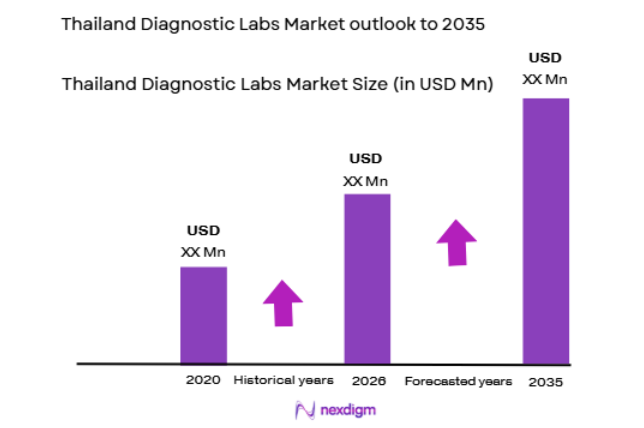
Based on a recent historical assessment, the Thailand Diagnostic Labs Market is valued at approximately USD ~ million. The market is driven by increasing healthcare demand, a rising incidence of chronic diseases, advancements in diagnostic technologies, and government initiatives aimed at improving healthcare accessibility. The market benefits from the growing adoption of advanced diagnostic techniques, such as molecular diagnostics, imaging, and laboratory automation. These factors contribute to the continuous expansion of diagnostic labs in Thailand, meeting both local and international healthcare needs.
Bangkok is the dominant city in the Thailand Diagnostic Labs Market, hosting the majority of the country’s advanced healthcare infrastructure. The city is home to numerous medical institutions, including private and public hospitals, diagnostic centers, and research facilities, which use state-of-the-art diagnostic technologies. The government’s focus on improving healthcare infrastructure and accessibility, coupled with the availability of skilled medical professionals, makes Bangkok a hub for diagnostic services in Thailand. Its central role in healthcare delivery has solidified the city’s dominance in the market.
Market Segmentation
By Test Type
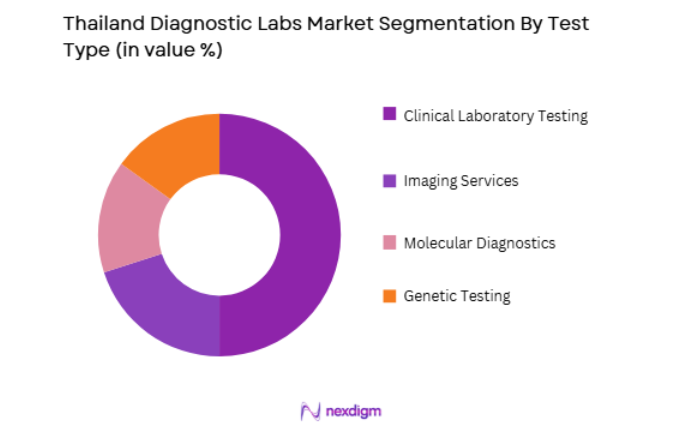
Thailand Diagnostic Labs market is segmented by test type into Clinical Laboratory Testing, Imaging Services, Molecular Diagnostics, and Genetic Testing. Recently, Clinical Laboratory Testing has a dominant market share due to its extensive use in the diagnosis of a wide range of diseases. Clinical lab tests, including blood tests, urine tests, and microbiological tests, form the foundation of diagnostic processes in hospitals and clinics across Thailand. These tests are essential for the diagnosis and monitoring of common conditions like infections, diabetes, and cardiovascular diseases, driving their high demand. The increasing prevalence of chronic conditions, coupled with the growing awareness of preventive healthcare, has led to a surge in the number of clinical tests conducted. Furthermore, advancements in laboratory automation and quality control measures have increased the efficiency and accuracy of clinical lab tests, contributing to their dominance in the market.
By End User
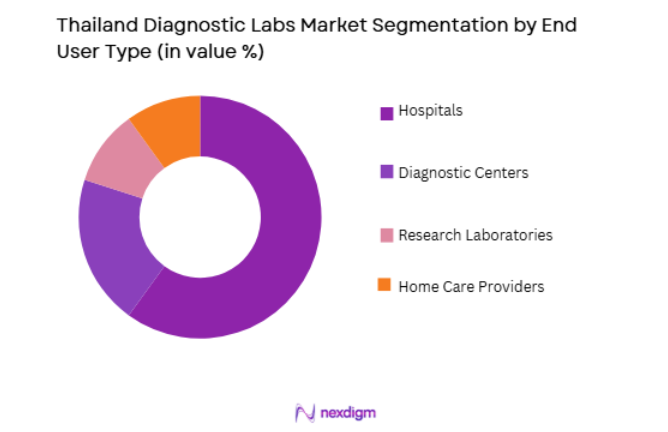
Thailand Diagnostic Labs market is segmented by end user into Hospitals, Diagnostic Centers, Research Laboratories, and Home Care Providers. Recently, Hospitals have a dominant market share due to their critical role in providing a wide range of diagnostic services. Hospitals in Thailand serve as the primary healthcare providers, offering diagnostic testing as part of their comprehensive medical services. The high demand for diagnostic tests, especially for patients with chronic conditions or acute illnesses, makes hospitals a major end user of diagnostic lab services. Additionally, hospitals are increasingly investing in advanced diagnostic equipment, such as MRI machines, CT scanners, and laboratory automation systems, to improve diagnostic accuracy and patient care. As the healthcare system in Thailand continues to modernize and expand, hospitals will remain central to the growth of the diagnostic labs market.
Competitive Landscape
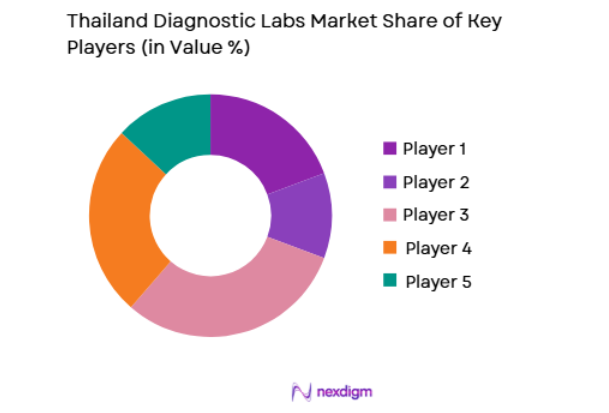
The Thailand Diagnostic Labs Market is competitive, with both local and international companies providing diagnostic testing services. The market is characterized by a mix of private and public sector players, with leading hospitals and diagnostic centers expanding their offerings to meet the growing demand for advanced diagnostic solutions. Key players in the market are focusing on technological innovations, such as the adoption of AI-driven diagnostics, molecular diagnostics, and laboratory automation to enhance service delivery. Consolidation is expected as larger players seek to expand their networks and service offerings to capture a larger share of the growing market.
| Company Name | Establishment Year | Headquarters | Technology Focus | Market Reach | Key Products | Revenue | Market-Specific Parameter |
| Bangkok Hospital Group | 1972 | Bangkok | ~ | ~ | ~ | ~ | ~ |
| Rangsit University Hospital | 2002 | Rangsit | ~ | ~ | ~ | ~ | ~ |
| Vejthani Hospital | 1994 | Bangkok | |||||
| Bumrungrad International | 1980 | Bangkok | |||||
| Srinakarin Hospital | 1980 | Bangkok |
Thailand Diagnostic Labs Market Analysis
Growth Drivers
Government Initiatives in Healthcare Infrastructure
Government Initiatives in Healthcare Infrastructure are a key growth driver for the Thailand Diagnostic Labs Market. The Thai government has been making significant investments in healthcare infrastructure to enhance healthcare access and service quality across the country. As part of its effort to improve healthcare delivery, the government has been focusing on expanding diagnostic facilities, both in urban and rural areas. The introduction of national healthcare schemes, such as the Universal Health Coverage scheme, has increased the demand for diagnostic services, enabling a larger section of the population to access diagnostic testing. Additionally, government subsidies and funding for the establishment of modern diagnostic labs have further fueled market growth. The ongoing development of healthcare infrastructure in Thailand supports the expansion of diagnostic services, driving the growth of diagnostic labs across the country.
Advancements in Diagnostic Technologies
Advancements in Diagnostic Technologies have significantly contributed to the growth of the Thailand Diagnostic Labs Market. Innovations in molecular diagnostics, genetic testing, and imaging technologies have enhanced the accuracy and speed of diagnostic testing, improving the overall healthcare delivery process. The increasing availability of advanced diagnostic equipment, such as MRI and CT scanners, has made it easier for healthcare providers to perform more accurate and timely diagnoses. Furthermore, the integration of AI and machine learning in diagnostic processes is expected to further enhance diagnostic accuracy, optimize laboratory workflows, and reduce human errors. The adoption of these advanced technologies in diagnostic labs is driving demand for high-tech diagnostic equipment, fueling market growth in Thailand.
Market Challenges
High Operational Costs for Diagnostic Labs
High Operational Costs for Diagnostic Labs represent a significant challenge to the growth of the Thailand Diagnostic Labs Market. The establishment and maintenance of diagnostic labs require substantial capital investment in advanced diagnostic equipment, laboratory automation, and infrastructure. Additionally, the high costs associated with procuring reagents and consumables, maintaining laboratory facilities, and hiring specialized staff can place financial strain on diagnostic labs, particularly smaller providers. These operational costs can lead to higher prices for diagnostic tests, making healthcare services less affordable for certain segments of the population. For smaller diagnostic centers and private healthcare providers, the high costs of implementing and maintaining state-of-the-art diagnostic technology can be a barrier to market entry. Overcoming these financial challenges will be critical for sustaining growth in the diagnostic labs market in Thailand.
Regulatory and Accreditation Compliance
Regulatory and Accreditation Compliance is another significant challenge faced by the Thailand Diagnostic Labs Market. Diagnostic labs in Thailand must adhere to stringent regulations set by the government and international health organizations to ensure the quality and safety of diagnostic testing services. Compliance with regulations such as ISO 15189 for laboratory testing and adherence to data privacy laws are essential to maintain the credibility and safety of diagnostic services. Additionally, diagnostic labs must regularly undergo accreditation processes, which can be time-consuming and costly. The complexity of the regulatory environment and the need to maintain ongoing compliance with evolving standards can create operational challenges for diagnostic labs, particularly smaller providers that may lack the resources to meet these requirements.
Opportunities
Growing Demand for Preventive Healthcare
Growing Demand for Preventive Healthcare presents a significant opportunity for the Thailand Diagnostic Labs Market. As the population becomes more health-conscious and preventive care gains traction, diagnostic labs are seeing increased demand for screening tests and routine health checks. With the rising prevalence of chronic diseases such as diabetes, hypertension, and cardiovascular disease, individuals are increasingly seeking early diagnosis and preventive healthcare services. Diagnostic labs play a crucial role in detecting health conditions at an early stage, helping patients take proactive measures to manage their health. The rising awareness of the benefits of early detection and prevention, coupled with government initiatives to promote preventive healthcare, creates a growing market for diagnostic testing services in Thailand. As a result, diagnostic labs are well-positioned to capitalize on the increasing demand for preventive healthcare solutions.
Integration of Digital Health Solutions in Diagnostics
Integration of Digital Health Solutions in Diagnostics offers significant growth opportunities for the Thailand Diagnostic Labs Market. The growing adoption of digital health solutions, such as telemedicine platforms, electronic health records (EHR), and health information exchanges (HIE), presents an opportunity for diagnostic labs to expand their services and integrate with broader healthcare systems. The integration of digital health technologies enables diagnostic labs to improve the accuracy and efficiency of diagnostic testing, streamline data sharing, and enhance collaboration between healthcare providers. Additionally, the use of AI and machine learning technologies in diagnostic labs can improve diagnostic accuracy and optimize workflows, enhancing service delivery. As Thailand’s healthcare system becomes more digitized, diagnostic labs that adopt digital health solutions will have a competitive advantage, driving market growth.
Future Outlook
The Thailand Diagnostic Labs Market is expected to continue expanding in the coming years, driven by advancements in diagnostic technologies, growing demand for preventive healthcare, and increasing government investments in healthcare infrastructure. The integration of digital health solutions and the adoption of AI-based diagnostic tools will further drive the growth of the market, enhancing the accuracy, efficiency, and accessibility of diagnostic testing services. With rising healthcare needs and the growing focus on early diagnosis and disease prevention, the diagnostic labs market in Thailand is poised for sustained growth.
Major Players
- Bangkok Hospital Group
- Rangsit University Hospital
- Vejthani Hospital
- Bumrungrad International
- Aetna Healthcare
- Srinakarin Hospital
- Almedic Hospital
- Siriraj Hospital
- King Chulalongkorn Memorial Hospital
- Chulabhorn Hospital
- Samitivej Sukhumvit Hospital
- Ramkhamhaeng Hospital
- Bangkok Chain Hospital
- Phyathai Hospitals
- Piyavate Hospital
Key Target Audience
- Investments and venture capitalist firms
- Government and regulatory bodies
- Hospital operators
- Healthcare infrastructure developers
- Medical device manufacturers
- Pharmaceutical companies
- Healthcare IT providers
- Insurance companies
Research Methodology
Step 1: Identification of Key Variables
Key market variables, such as healthcare demand, diagnostic test adoption rates, technological advancements, and government healthcare policies, were identified to assess the market’s drivers and challenges.
Step 2: Market Analysis and Construction
Market analysis was conducted by examining diagnostic testing demand, healthcare facility requirements, patient demographics, and government healthcare funding across Thailand.
Step 3: Hypothesis Validation and Expert Consultation
Market assumptions were validated through consultations with healthcare providers, diagnostic lab operators, industry experts, and government officials to confirm emerging trends and market growth drivers.
Step 4: Research Synthesis and Final Output
The final report synthesized data from primary and secondary sources, combining expert insights, market data, and government initiatives to assess the Thailand Diagnostic Labs Market.

- Executive Summary
- Research Methodology (Definitions, Scope, Industry Assumptions, Market Sizing Approach, Primary & Secondary Research Framework, Data Collection & Verification Protocol, Analytic Models & Forecast Methodology, Limitations & Research Validity Checks)

- Market Definition and Scope
- Value Chain & Stakeholder Ecosystem
- Regulatory / Certification Landscape
- Sector Dynamics Affecting Demand

- Growth Drivers
Government Investments in Healthcare Infrastructure
Rising Demand for Advanced Diagnostic Procedures
Increased Awareness and Screening for Chronic Diseases - Market Challenges
High Capital Investment in Advanced Diagnostic Equipment
Regulatory Challenges and Certification Requirements
Lack of Skilled Labor for Operating Advanced Diagnostic Equipment - Market Opportunities
Technological Advancements in Diagnostic Tools
Growing Demand for Point-of-care Diagnostic Solutions
Partnerships Between Laboratories and Healthcare Providers - Trends
Adoption of AI and Machine Learning in Diagnostics
Shift Towards Preventive and Personalized Healthcare - Government Regulations
- SWOT Analysis
- Porter’s Five Forces

- By Market Value, 2020-2025
- By Installed Units, 2020-2025
- By Average System Price, 2020-2025
- By System Complexity Tier, 2020-2025

- By System Type (In Value%)
Clinical Chemistry Analyzers
Hematology Analyzers
Molecular Diagnostic Equipment
Immunoassay Analyzers
Urinalysis Equipment - By Platform Type (In Value%)
Automated Diagnostic Platforms
Manual Diagnostic Platforms
Point-of-care Diagnostic Systems
Laboratory Information Management Systems (LIMS)
Cloud-based Diagnostic Solutions - By Fitment Type (In Value%)
Standalone Diagnostic Systems
Integrated Diagnostic Systems
Modular Diagnostic Solutions
Portable Diagnostic Solutions - By End User Segment (In Value%)
Hospitals
Diagnostic Laboratories
Research and Academic Institutions
Government Health Agencies

- Market Share Analysis
- Cross Comparison Parameters (System Type, Platform Type, End User Segment, Fitment Type, Procurement Channel, Technological Integration, Service Delivery Model, Market Penetration, Diagnostic Accuracy, Product Lifecycle)
- SWOT Analysis of Key Competitors
- Pricing & Procurement Analysis
- Key Players
Pathology Asia Holdings
Roche Diagnostics
Siemens Healthineers
Abbott Laboratories
Thermo Fisher Scientific
SYNLAB International
Quest Diagnostics
LabCorp
Bio-Rad Laboratories
PerkinElmer
GE Healthcare
Medtronic
Hewlett Packard Enterprise
Sysmex Corporation
Beckman Coulter

- Increasing Adoption of Advanced Diagnostic Tools by Hospitals
- Government Focus on Expanding Diagnostic Testing
- Diagnostic Laboratories’ Role in Disease Prevention
- Research Institutions Driving Innovation in Diagnostics

- Forecast Market Value, 2026-2035
- Forecast Installed Units, 2026-2035
- Price Forecast by System Tier, 2026-2035
- Future Demand by Platform, 2026-2035


 Request a Sample
 Ask for Customization
 Get a Quote
 Enquire Now