

 Download PDF
 Download PDF
Market Overview
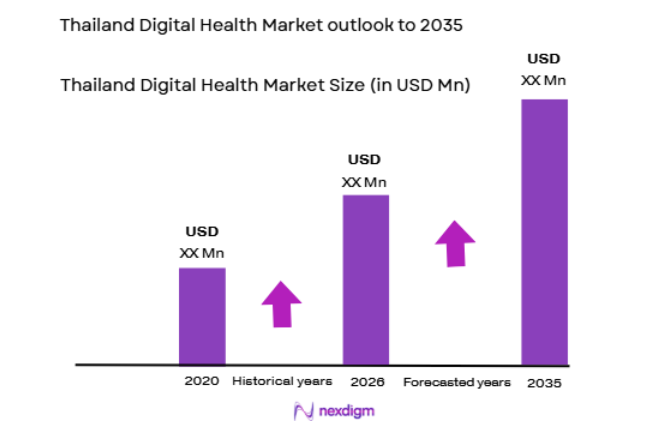
Based on a recent historical assessment, the Thailand Digital Health Market is valued at approximately USD ~ million. The market’s growth is driven by the increasing demand for digital health technologies, such as telemedicine platforms, electronic health records (EHR), mobile health applications, and remote monitoring systems. The government’s focus on improving healthcare access, efficiency, and patient outcomes, as well as the rising adoption of digital solutions across hospitals, clinics, and healthcare institutions, is contributing to the market’s expansion.
Bangkok is the dominant city in the Thailand Digital Health Market, being the central hub for digital health innovation and adoption. The city houses most of the country’s healthcare infrastructure, including advanced hospitals, clinics, and medical centers, where digital health solutions are widely integrated. Government initiatives and investments in digital health infrastructure are concentrated in Bangkok, driving the growth of the market. As the capital, Bangkok benefits from its well-developed technological infrastructure, which supports the implementation of telemedicine, digital health records, and other digital health services, leading to its dominance in the market.
Market Segmentation
By Product Type
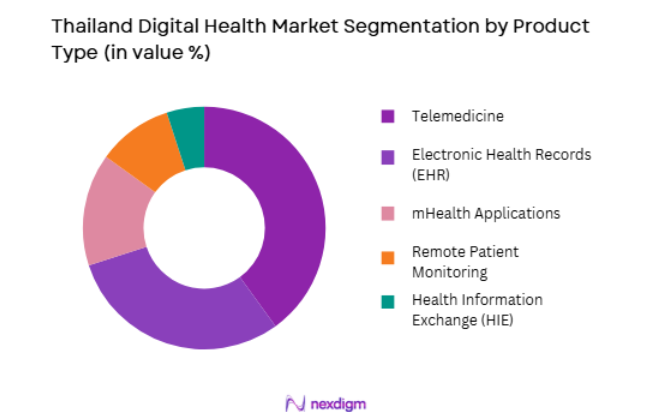
Thailand Digital Health market is segmented by product type into Telemedicine, Electronic Health Records (EHR), mHealth Applications, Remote Patient Monitoring, and Health Information Exchange (HIE). Recently, Telemedicine has a dominant market share due to factors such as the growing demand for remote healthcare services, advancements in telecommunications infrastructure, and government initiatives promoting digital health services. The COVID-19 pandemic played a key role in accelerating the adoption of telemedicine in Thailand as patients and healthcare providers sought safe, accessible, and efficient alternatives to in-person consultations. Telemedicine platforms enable healthcare providers to offer remote consultations, diagnosis, and follow-up care, making healthcare services more accessible, especially in rural areas. The government’s efforts to integrate telemedicine into the healthcare system, coupled with increasing awareness among the population, have further fueled its growth in the market. As more healthcare providers adopt telemedicine services, this sub-segment is expected to continue dominating the market.
By End User
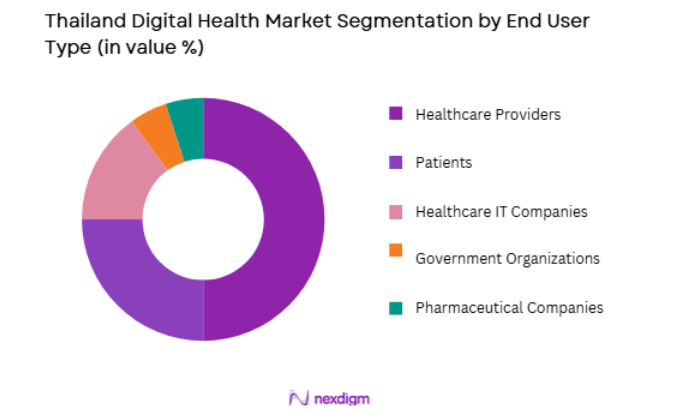
Thailand Digital Health market is segmented by end user into Healthcare Providers, Patients, Healthcare IT Companies, Government Organizations, and Pharmaceutical Companies. Recently, Healthcare Providers have a dominant market share due to the increasing adoption of digital health solutions to improve patient care and operational efficiency. Healthcare providers, including hospitals, clinics, and private practices, are integrating digital health platforms such as telemedicine and electronic health records into their existing systems to provide more efficient, personalized, and accessible care. The Thai government has been supporting healthcare providers in adopting these technologies through funding programs and regulatory frameworks that make it easier for institutions to invest in digital health solutions. Healthcare providers are also leveraging digital platforms to manage patient data, improve diagnosis accuracy, and enhance patient communication, further contributing to their dominance in the digital health market.
Competitive Landscape
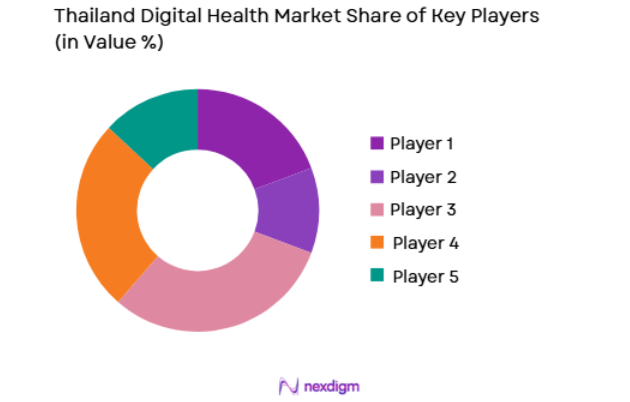
The Thailand Digital Health Market is highly competitive, with both local and international companies offering a variety of digital health solutions. Key players in the market include healthcare technology providers, telemedicine platforms, EHR solution providers, and mobile health application developers. The market is characterized by increasing collaboration between public and private sectors to drive digital health adoption across the country. As digital health solutions become more integral to Thailand’s healthcare system, key players are focusing on innovation, user experience, and developing scalable platforms to capture the growing demand. Government support and investment in healthcare infrastructure further foster competition, driving continuous growth in the sector.
| Company Name | Establishment Year | Headquarters | Technology Focus | Market Reach | Key Products | Revenue | Market-Specific Parameter |
| Krungthai Healthcare | 2015 | Bangkok | ~ | ~ | ~ | ~ | ~ |
| Ascella Health Systems | 2012 | Bangkok | ~ | ~ | ~ | ~ | ~ |
| Bumrungrad International | 1980 | Bangkok | ~ | ~ | ~ | ~ | ~ |
| Aetna Healthcare | 2008 | Bangkok | ~ | ~ | ~ | ~ | ~ |
| Siemens Healthineers | 1847 | Munich, Germany | ~ | ~ | ~ | ~ | ~ |
Thailand Digital Health Market Analysis
Growth Drivers
Government Support for Digital Health Adoption
Government Support for Digital Health Adoption is a key growth driver in the Thailand Digital Health Market. The Thai government has made substantial investments in digital health infrastructure, particularly in the adoption of telemedicine, electronic health records (EHR), and health information exchange (HIE) systems. The government’s support has created a conducive environment for the expansion of digital health services, especially as part of efforts to improve healthcare accessibility and efficiency. As part of the country’s digital transformation strategy, the government has been actively promoting digital health solutions among healthcare providers by offering subsidies, regulatory support, and the establishment of national standards for telemedicine and EHR systems. The push to improve healthcare outcomes through digital solutions is expected to continue driving the growth of the digital health market in Thailand, especially in rural and underserved areas where telemedicine can help address healthcare access challenges.
Technological Advancements in Telemedicine and Digital Health Solutions
Technological Advancements in Telemedicine and Digital Health Solutions have fueled the rapid growth of the Thailand Digital Health Market. Innovations in telemedicine platforms, mobile health applications, and remote monitoring devices are transforming the healthcare landscape in Thailand. The rise in the use of artificial intelligence (AI), big data analytics, and cloud computing in healthcare has enhanced the capabilities of digital health solutions, enabling healthcare providers to offer more personalized and accurate care. Moreover, advancements in telemedicine have improved the delivery of healthcare services, allowing patients to access medical consultations, follow-up care, and specialist advice remotely. As these technologies continue to evolve, they enable healthcare providers to offer high-quality care to a larger population while reducing costs and improving efficiency. With the increasing use of digital health tools, Thailand is set to witness even more growth in the digital health sector.
Market Challenges
Regulatory and Data Privacy Concerns
Regulatory and Data Privacy Concerns present a significant challenge to the growth of the Thailand Digital Health Market. The adoption of digital health solutions requires healthcare providers to handle sensitive patient data, which raises concerns about data security, privacy, and compliance with regulations. Thailand’s healthcare data privacy laws, while improving, may still present challenges for healthcare providers in ensuring that they meet regulatory standards for data protection. The integration of telemedicine and EHR systems also requires compliance with national and international healthcare regulations, such as the Health Insurance Portability and Accountability Act (HIPAA) in the U.S., making it necessary for companies to implement stringent security protocols. These regulatory hurdles can slow down the adoption of digital health solutions, especially among smaller healthcare providers with limited resources for compliance.
High Implementation Costs for Healthcare Providers
High Implementation Costs for Healthcare Providers is another challenge hindering the widespread adoption of digital health solutions in Thailand. The costs associated with the integration of telemedicine platforms, EHR systems, and other digital health technologies can be significant. Healthcare providers must invest in the required infrastructure, training staff, and maintaining systems over time, which can be financially burdensome, especially for smaller clinics and hospitals. While the government provides some support through grants and funding programs, the high initial costs can limit the ability of smaller providers to adopt these technologies. As a result, there may be disparities in digital health adoption between large hospitals and smaller healthcare providers, which could hinder the overall growth of the digital health market in Thailand.
Opportunities
Expansion of Telemedicine Services in Rural Areas
Expansion of Telemedicine Services in Rural Areas presents a significant opportunity for the Thailand Digital Health Market. Telemedicine has the potential to bridge the healthcare access gap in rural and remote areas of Thailand, where healthcare facilities may be limited. By enabling patients to consult with healthcare providers remotely, telemedicine offers a solution to address geographical barriers and reduce travel time for patients in underserved regions. The government’s efforts to improve digital connectivity in rural areas further support the growth of telemedicine services. As rural populations seek greater access to healthcare services, telemedicine will continue to play a vital role in providing essential healthcare solutions, enhancing the overall healthcare infrastructure in Thailand.
Rise in Preventive Healthcare and Wellness
Rise in Preventive Healthcare and Wellness presents a significant opportunity for the Thailand Digital Health Market. As the population becomes more health-conscious and preventive healthcare gains popularity, digital health solutions are increasingly being adopted for wellness monitoring, fitness tracking, and disease prevention. Mobile health applications, fitness trackers, and remote monitoring devices are empowering individuals to monitor their health in real time, promoting healthy lifestyles and early detection of health issues. The shift toward preventive healthcare is expected to drive demand for digital health technologies that enable individuals to track and manage their health effectively. The growth in health-conscious consumers presents a lucrative opportunity for digital health providers to expand their offerings, especially in areas such as wellness apps, chronic disease management, and health monitoring systems.
Future Outlook
The Thailand Digital Health Market is expected to experience significant growth, driven by government support, technological advancements, and rising demand for digital health solutions. Telemedicine adoption will continue to grow, particularly in rural areas, where access to healthcare is limited. As digital health tools evolve, the integration of AI, big data, and mobile health applications will enhance patient care, optimize healthcare services, and improve operational efficiencies. The market will also benefit from growing consumer interest in preventive healthcare, creating new opportunities for digital health providers.
Major Players
- Krungthai Healthcare
- Ascella Health Systems
- Bumrungrad International
- Aetna Healthcare
- Siemens Healthineers
- GE Healthcare
- Philips Healthcare
- Cerner Corporation
- Medtronic
- Allscripts Healthcare
- Teladoc Health
- VitelMed
- Samsung Medison
- Zain Telemedicine
- Aster DM Healthcare
Key Target Audience
- Investments and venture capitalist firms
- Government and regulatory bodies
- Healthcare IT providers
- Digital health technology developers
- Healthcare system integrators
- Medical device manufacturers
- Pharmaceutical companies
- Insurance companies
Research Methodology
Step 1: Identification of Key Variables
Key market variables, such as telemedicine adoption rates, government initiatives, healthcare infrastructure, and technological advancements, were identified to assess the market’s drivers and challenges.
Step 2: Market Analysis and Construction
Market analysis was conducted by examining healthcare facility needs, population health trends, digital health adoption patterns, and government healthcare policies across Thailand.
Step 3: Hypothesis Validation and Expert Consultation
Market assumptions were validated through consultations with healthcare providers, technology developers, and industry experts to confirm emerging trends and market growth drivers.
Step 4: Research Synthesis and Final Output
The final report synthesized data from primary and secondary sources, combining expert insights, market data, and government initiatives to assess the Thailand Digital Health Market.

- Executive Summary
- Research Methodology (Definitions, Scope, Industry Assumptions, Market Sizing Approach, Primary & Secondary Research Framework, Data Collection & Verification Protocol, Analytic Models & Forecast Methodology, Limitations & Research Validity Checks)

- Market Definition and Scope
- Value Chain & Stakeholder Ecosystem
- Regulatory / Certification Landscape
- Sector Dynamics Affecting Demand

- Growth Drivers
Government Initiatives Supporting Digital Health
Rising Healthcare Awareness Among Consumers
Adoption of AI and Big Data in Healthcare - Market Challenges
Data Privacy and Security Concerns
Lack of Healthcare IT Infrastructure in Rural Areas
Technological Integration Barriers - Market Opportunities
Increasing Demand for Remote Healthcare Services
Partnerships Between Healthcare Providers and Technology Companies
Expansion of Mobile Health Solutions - Trends
Integration of AI and Machine Learning in Digital Health
Adoption of Telemedicine and Remote Monitoring Solutions - Government Regulations
- SWOT Analysis
- Porter’s Five Forces

- By Market Value, 2020-2025
- By Installed Units, 2020-2025
- By Average System Price, 2020-2025
- By System Complexity Tier, 2020-2025

- By System Type (In Value%)
Telemedicine Platforms
Remote Patient Monitoring Systems
Mobile Health Applications
Digital Therapeutics
Healthcare Wearables - By Platform Type (In Value%)
Web-Based Platforms
Mobile Applications
Cloud-Based Platforms
On-premise Solutions
Integrated Platforms - By Fitment Type (In Value%)
On-demand Solutions
Subscription-Based Solutions
Customizable Solutions
Cloud-Based Solutions - By End User Segment (In Value%)
Hospitals and Healthcare Providers
Patients
Telemedicine Service Providers
Insurance Companies

- Market Share Analysis
- Cross Comparison Parameters (System Type, Platform Type, End User Segment, Fitment Type, Procurement Channel, Technology Integration, Market Adoption Rate, Regulatory Compliance, Pricing Models, Service Delivery Models)
- SWOT Analysis of Key Competitors
- Pricing & Procurement Analysis
- Key Players
Bangkok Dusit Medical Services
Samitivej Hospitals
Praram 9 Hospital
Siam Samitivej
Thailand Ministry of Public Health
Chulalongkorn Hospital
Mahidol University Hospital
Bangkok Hospital
The Medical Council of Thailand
Vichaiyut Hospital
Bumrungrad International Hospital
Rattanakosin Hospital
Charoenkrung Pracharak Hospital
Theptarin Hospital
Phramongkutklao Hospital

- Increased Demand for Telehealth Services
- Growing Role of Healthcare Providers in Digital Health Solutions
- Consumer Demand for Healthcare Accessibility
- Telemedicine Providers’ Focus on Cost-Effective Solutions

- Forecast Market Value, 2026-2035
- Forecast Installed Units, 2026-2035
- Price Forecast by System Tier, 2026-2035
- Future Demand by Platform, 2026-2035


 Request a Sample
 Ask for Customization
 Get a Quote
 Enquire Now