
 Download PDF
Market Overview
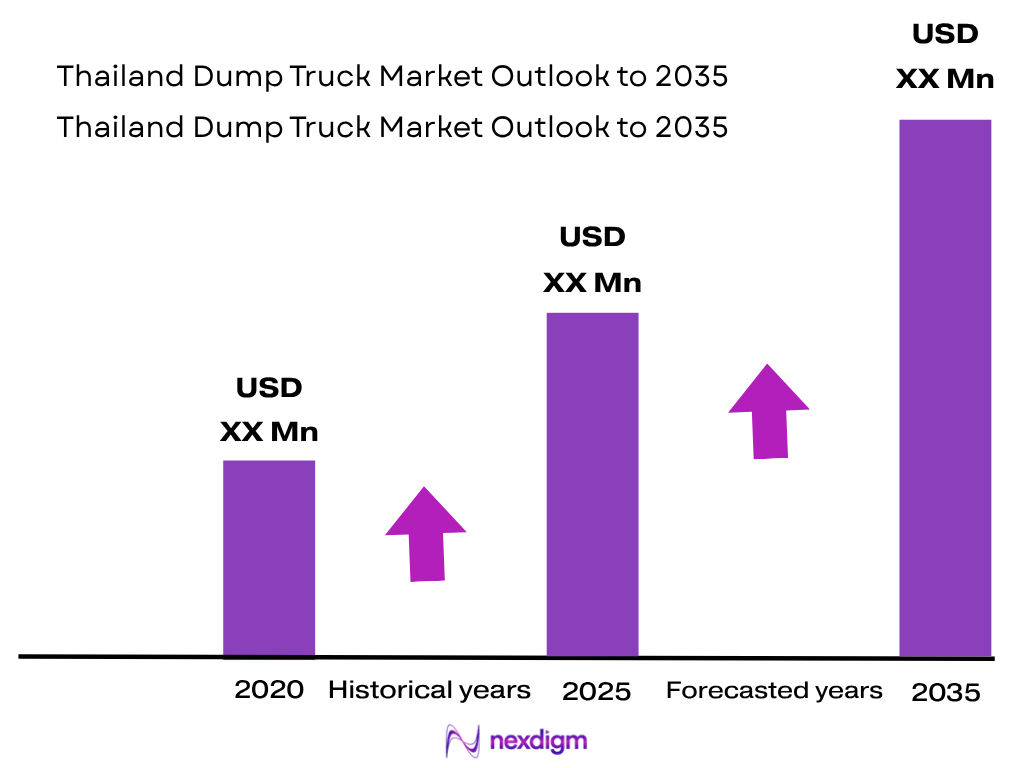
The Thailand dump truck market was valued at approximately USD ~ million in 2024, compared with USD ~98 million in 2023, supported by infrastructure development activities, quarry operations, mining transportation requirements, and construction material movement demand. The market growth is influenced by public infrastructure investments, road development projects, urban expansion, and replacement demand for aging heavy equipment fleets. Globally, dump truck demand is supported by construction and mining sector expansion, with Asia Pacific remaining a major demand region.
The Thailand dump truck market is concentrated in regions with strong construction, mining, quarrying, and industrial development activities. Bangkok and the Central Thailand region demonstrate strong demand due to large-scale infrastructure projects, urban construction, and logistics requirements. Eastern Thailand is another important market due to industrial estate development and Eastern Economic Corridor activities. Northern and Northeastern regions generate demand from quarrying, aggregate production, and mining-related transportation operations, while Southern Thailand is supported by infrastructure and material handling requirements.
Market Segmentation
By Application Industry
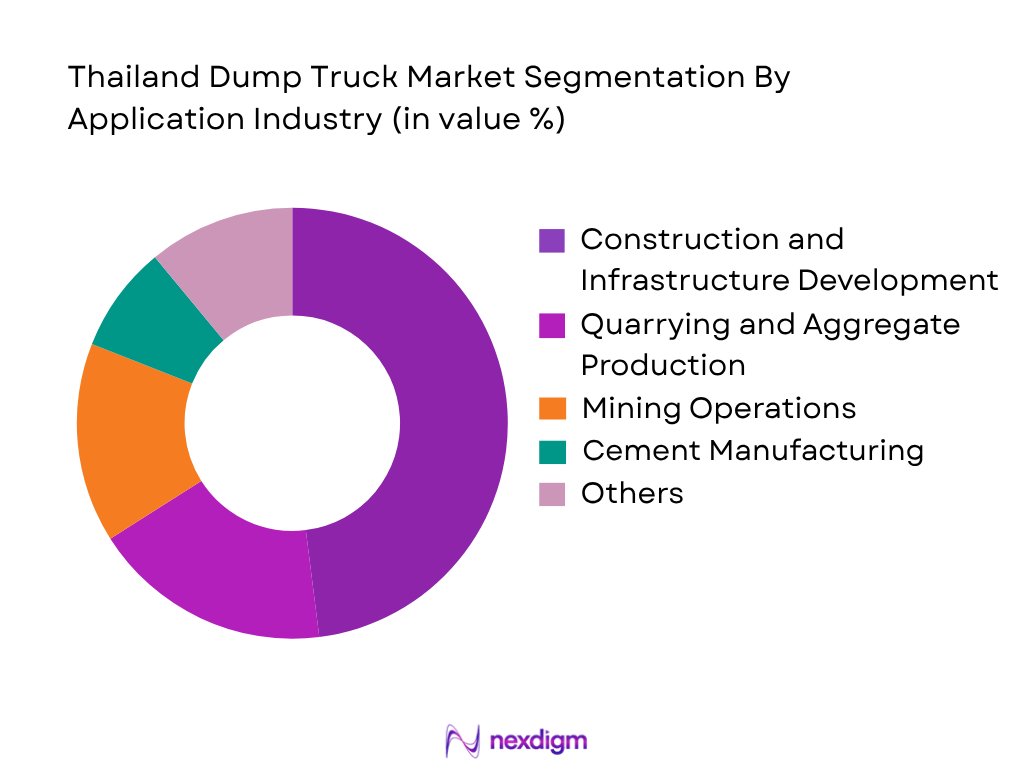
The Thailand dump truck market is segmented by application industry into construction and infrastructure development, mining operations, quarrying and aggregate production, cement manufacturing, waste management, and industrial projects. Among these segments, construction and infrastructure development holds the dominant market share in 2024, driven by Thailand’s continuous investment in transportation infrastructure, urban development, highway expansion, and public construction projects. Dump trucks are extensively used for transporting soil, sand, gravel, crushed stone, and construction materials across project sites. Large contractors and government infrastructure programs continue to create consistent demand for medium and heavy-duty dump trucks. The increasing requirement for efficient material movement and replacement of older construction fleets further strengthens this segment’s dominance.
By Truck Type
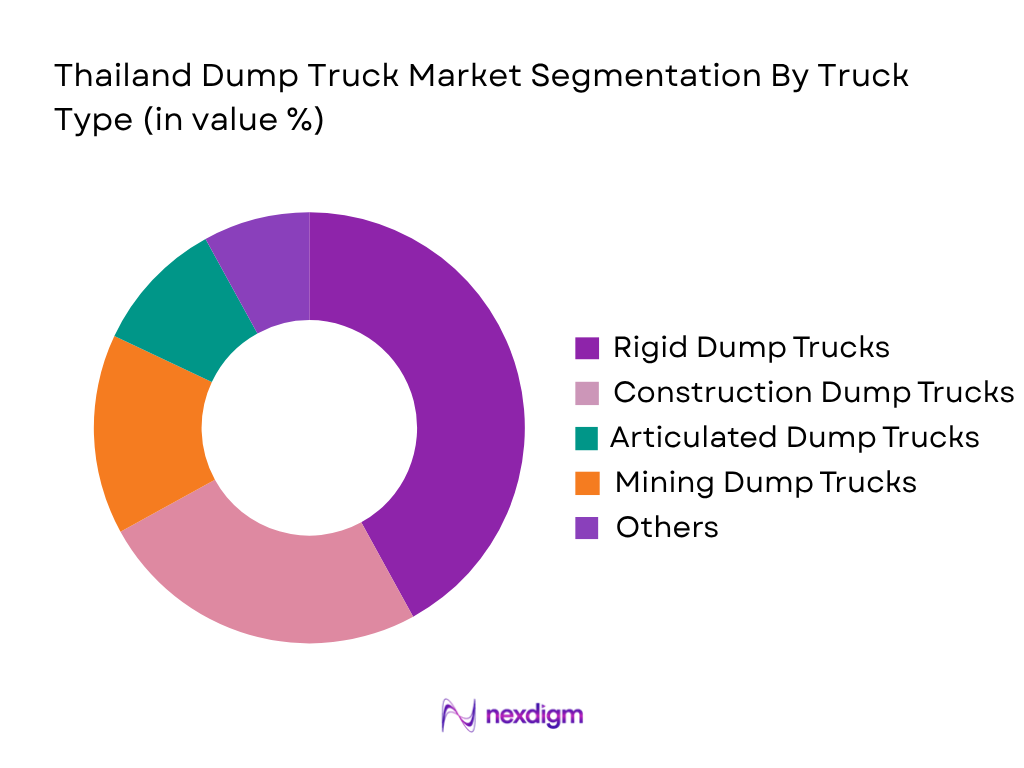
The Thailand dump truck market is segmented by truck type into rigid dump trucks, articulated dump trucks, construction dump trucks, mining dump trucks, mini dump trucks, and electric/hybrid dump trucks. Among these segments, rigid dump trucks dominate the market share in 2024, owing to their extensive utilization in construction sites, quarry operations, and large material transportation activities. Rigid dump trucks are preferred due to their high payload capacity, durability, lower operating complexity, and suitability for Thailand’s quarrying and infrastructure environments. Mining and quarry operators rely on rigid models for continuous heavy-duty hauling operations where productivity and operational efficiency are critical. The availability of established OEM support networks and spare parts infrastructure further contributes to the segment’s market leadership.
Competitive Landscape
The Thailand dump truck market is characterized by the presence of global heavy equipment manufacturers competing through extensive dealer networks, after-sales service capabilities, advanced hauling technologies, and diversified product portfolios. Leading players such as Caterpillar, Komatsu, Volvo Construction Equipment, Hitachi Construction Machinery, SANY, and XCMG maintain strong market positions due to their established construction equipment ecosystems, mining solutions, and local distribution capabilities. The competitive environment is influenced by demand from construction contractors, mining operators, quarry businesses, and infrastructure developers seeking fuel-efficient, durable, and technologically advanced dump truck solutions.
| Company | Establishment Year | Headquarters | Key Dump Truck Portfolio | Primary Application Focus | Technology Capability | Distribution Strength | After-Sales Capability | Thailand Market Position |
| Caterpillar Inc. | 1925 | Irving, USA | ~ | ~ | ~ | ~ | ~ | ~ |
| Komatsu Ltd. | 1921 | Tokyo, Japan | ~ | ~ | ~ | ~ | ~ | ~ |
| Volvo Construction Equipment | 1832 | Gothenburg, Sweden | ~ | ~ | ~ | ~ | ~ | ~ |
| Hitachi Construction Machinery | 1970 | Tokyo, Japan | ~ | ~ | ~ | ~ | ~ | ~ |
| SANY Heavy Industry | 1989 | Changsha, China | ~ | ~ | ~ | ~ | ~ | ~ |
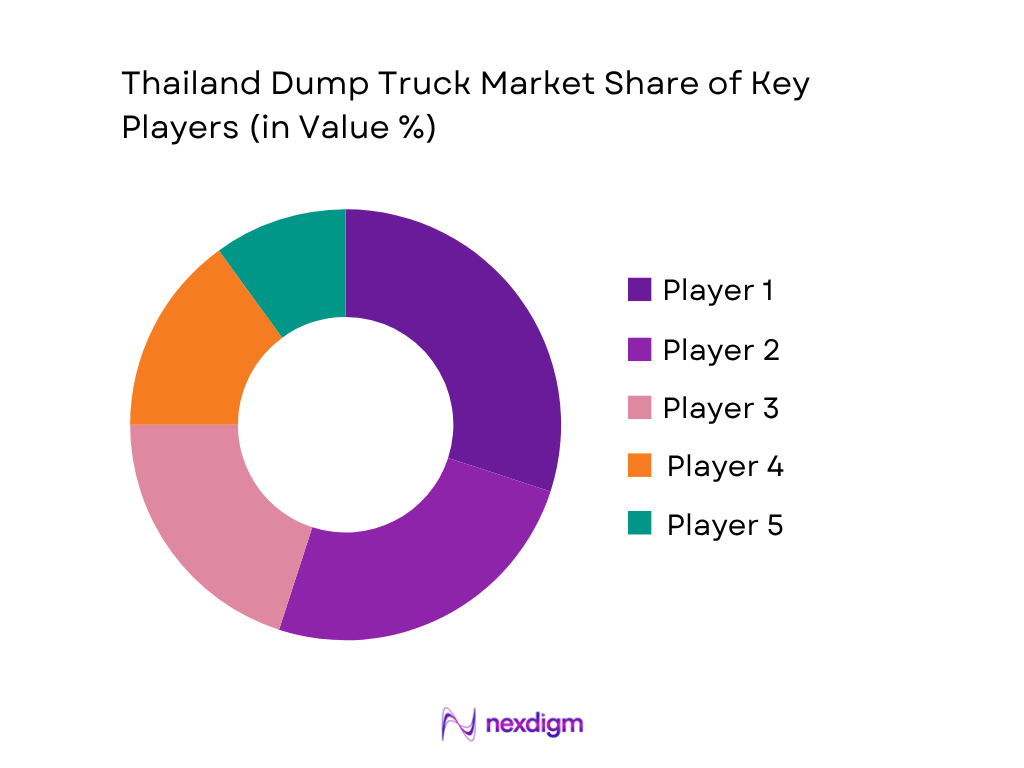
Thailand Dump Truck Market Analysis
Growth Drivers
Infrastructure Development and Public Construction Investment Expansion
Thailand’s infrastructure development activities continue to support demand for dump trucks through increased requirements for earthmoving, aggregate transportation, and construction material handling. The World Bank reported that Thailand’s economy expanded by 2.5% in 2024, supported by fiscal stimulus, improving exports, and recovering domestic activity, creating a supportive environment for construction-related equipment demand. The World Bank also reported Thailand’s GDP at USD 526.52 billion in 2024, indicating continued economic activity supporting infrastructure spending capacity. The construction-linked industrial sector remains significant, with industry including construction contributing 32.13% of GDP in 2024, according to World Bank development indicators. Government infrastructure programs, including transport corridors, road development, and industrial zone expansion, require continuous movement of soil, sand, gravel, and aggregates, directly supporting dump truck utilization. The Eastern Economic Corridor and regional infrastructure projects are increasing demand for heavy-duty hauling equipment among contractors. Rising investment activity further supports equipment procurement, with Thailand receiving investment applications worth THB 228 billion in the first quarter of 2024, according to Thailand’s investment promotion authorities. These infrastructure and industrial expansion activities create sustained requirements for dump trucks across construction, quarrying, and material transportation operations.
Expansion of Mining, Quarrying and Industrial Material Transportation Activities
The mining, quarrying, and industrial material handling sectors remain important demand generators for dump trucks in Thailand due to their requirement for continuous bulk transportation operations. Thailand’s industrial sector, including mining, manufacturing, and construction activities, contributed 32.13% of GDP in 2024, reflecting the importance of heavy industries that depend on material movement equipment. According to World Bank data, Thailand recorded GDP per capita of USD 7,346.62 in 2024, supporting industrial productivity and investment activities. Quarrying operations supplying aggregates for construction projects continue to require rigid dump trucks for transporting limestone, gravel, and other raw materials. Cement production and industrial manufacturing clusters also depend on reliable heavy transportation equipment for internal logistics and raw material movement. Thailand’s manufacturing ecosystem remains a major regional production base, encouraging industrial estate development and associated demand for heavy machinery. The expansion of industrial corridors, particularly in Eastern Thailand, increases requirements for high-capacity dump trucks capable of operating in construction and industrial environments. Equipment operators are increasingly prioritizing durable vehicles with improved productivity, supporting demand for technologically advanced dump truck solutions across mining, quarrying, and industrial applications.
Market Challenges
High Dependence on Imported Heavy Equipment and Supply Chain Exposure
Thailand’s dump truck market faces challenges due to significant dependence on imported heavy equipment, components, and specialized machinery from international manufacturers. Import reliance exposes equipment buyers to foreign exchange movements, global supply chain disruptions, and longer equipment procurement cycles. Thailand’s economy recorded GDP growth of 2.5% in 2024, but the World Bank highlighted structural constraints including slower investment growth and productivity challenges affecting long-term economic expansion. Heavy equipment users also face dependence on imported engines, transmissions, hydraulic systems, and electronic components, which can increase maintenance complexity. The country’s industrial structure includes strong manufacturing activity, but specialized heavy construction equipment production remains limited compared with global equipment manufacturing hubs. The World Bank reported that Thailand’s industry sector, including construction, represented 32.13% of GDP in 2024, highlighting the importance of industrial operations while also reflecting dependence on efficient equipment availability. Import procedures, availability of specialized spare parts, and technical servicing requirements create operational challenges for contractors and fleet operators. Companies operating large dump truck fleets must maintain access to reliable aftermarket support to minimize downtime and ensure continuous project execution.
Rising Operational Constraints Due to Fuel Consumption, Labor Availability and Technology Transition
Dump truck operators in Thailand face increasing operational challenges related to fuel dependency, skilled labor availability, and transition toward advanced equipment technologies. Heavy-duty dump trucks remain dependent on diesel fuel, making operating efficiency a critical concern for contractors and mining operators. Thailand’s economic recovery has been accompanied by structural labor challenges, with the World Bank highlighting demographic pressures and declining working-age population growth as factors affecting future productivity. The country’s GDP growth reached 2.5% in 2024, but productivity improvement remains essential for maintaining competitiveness. Advanced dump trucks equipped with telematics, automation, and electric power systems require specialized technical knowledge for operation and maintenance. The transition toward lower-emission heavy equipment creates additional requirements for charging infrastructure, workforce training, and service capabilities. Construction and mining companies must also manage productivity losses caused by equipment downtime, operator shortages, and maintenance requirements. These challenges increase the importance of fleet management systems, preventive maintenance practices, and OEM-supported service networks for maintaining operational efficiency in Thailand’s dump truck ecosystem.
Market Opportunities
Adoption of Smart Fleet Management and Advanced Dump Truck Technologies
The increasing focus on productivity improvement and operational efficiency creates opportunities for smart fleet management solutions within Thailand’s dump truck market. Construction contractors, mining operators, and quarry businesses are increasingly seeking technologies that improve equipment utilization, reduce downtime, and optimize material transportation activities. Thailand’s digital transformation environment is supported by continued economic development, with GDP reaching USD 526.52 billion in 2024, according to World Bank data. Advanced technologies such as GPS tracking, telematics, remote diagnostics, fuel monitoring, and predictive maintenance systems can improve fleet visibility and operational control. The industrial sector, including construction, mining, and manufacturing, accounted for 32.13% of GDP in 2024, creating a large base of equipment-intensive businesses that can benefit from digital fleet solutions. OEMs and technology providers have opportunities to introduce connected dump truck solutions tailored to Thailand’s construction and mining environments. The increasing complexity of large infrastructure projects and industrial developments is expected to encourage operators to adopt technology-driven equipment management approaches to improve productivity and reduce operational inefficiencies.
Growth Potential for Electric and Low-Emission Heavy Equipment Solutions
The transition toward sustainable industrial operations creates opportunities for electric and hybrid dump truck adoption in Thailand, particularly within controlled environments such as mining sites, quarries, and industrial facilities. Thailand’s industrial development strategy increasingly emphasizes technology upgrades and cleaner production systems, creating demand for lower-emission equipment solutions. The country attracted investment applications worth THB 228 billion during the first quarter of 2024, reflecting continued industrial investment momentum and opportunities for advanced machinery adoption. The World Bank reported that Thailand’s economy grew by 2.5% in 2024, supported by improving economic activity and investment recovery. Electric and hybrid dump trucks can support operators seeking improved fuel efficiency, reduced emissions, and enhanced compliance with environmental requirements. Mining and industrial operators with fixed operating routes represent suitable early adoption environments because charging infrastructure and operational planning can be managed more effectively. As equipment users increasingly evaluate lifecycle efficiency and sustainability requirements, manufacturers providing electric drivetrains, hybrid systems, and energy-efficient technologies have opportunities to expand their presence in Thailand’s heavy equipment market
Future Outlook
Over the next decade, the Thailand dump truck market is expected to demonstrate steady expansion driven by infrastructure investment, mining activity, quarrying operations, and modernization of construction fleets. Demand is expected to shift toward fuel-efficient equipment, connected fleet management solutions, and alternative powertrain technologies. Increasing emphasis on operational productivity, reduced fuel consumption, and lower maintenance costs will encourage contractors and mining operators to adopt advanced dump truck solutions.
The market will also witness increasing adoption of telematics, automation technologies, and electric or hybrid dump trucks, particularly for controlled mining and industrial applications. OEMs with strong service networks, financing solutions, and technology capabilities are expected to maintain competitive advantages.
Major Players
- Caterpillar Inc.
- Komatsu Ltd.
- Volvo Construction Equipment
- Hitachi Construction Machinery
- SANY Heavy Industry
- XCMG Group
- Liebherr Group
- Hyundai Construction Equipment
- Doosan Bobcat
- Scania
- MAN Truck & Bus
- Sinotruk
- Shacman
- FAW Group
- BelAZ
Key Target Audience
- Construction equipment manufacturers and OEMs
- Mining companies and quarry operators
- Large construction contractors and infrastructure developers
- Equipment rental and leasing companies
- Heavy equipment distributors and dealerships
- Investments and venture capitalist firms (Private Equity Firms, Infrastructure Investment Funds, Industrial Equipment Investment Funds)
- Government and regulatory bodies (Department of Land Transport Thailand, Ministry of Industry Thailand, Department of Primary Industries and Mines Thailand, Office of Transport and Traffic Policy and Planning Thailand)
- Fleet management and heavy equipment technology providers
Research Methodology
Step 1: Identification of Key Variables
The initial phase involves developing a comprehensive ecosystem map covering dump truck manufacturers, component suppliers, distributors, rental companies, construction contractors, mining operators, and government stakeholders. This process includes extensive secondary research through industry databases, equipment registration records, infrastructure development reports, and company-level information to identify critical variables influencing the Thailand dump truck market.
Step 2: Market Analysis and Construction
This phase focuses on compiling historical market information related to dump truck sales volume, installed fleet base, import activity, replacement demand, and end-user adoption patterns. Market estimation is developed through analysis of construction activity, mining production, equipment procurement trends, and supplier performance across different application segments.
Step 3: Hypothesis Validation and Expert Consultation
Market assumptions are validated through primary interviews with equipment manufacturers, authorized distributors, construction contractors, mining operators, and fleet managers. These discussions provide operational insights related to purchasing decisions, equipment utilization rates, maintenance requirements, and technology adoption trends within the Thailand dump truck ecosystem.
Step 4: Research Synthesis and Final Output
The final stage involves consolidating insights from primary and secondary research sources to develop a validated market assessment. Data points related to market size, segmentation, competitive positioning, technology trends, and future opportunities are triangulated to ensure accuracy and reliability of the Thailand dump truck market analysis.

- Executive Summary
- Research Methodology (Market Definition and Scope, Thailand Dump Truck Taxonomy, Rigid Dump Truck and Articulated Dump Truck Classification, Mining and Construction Dump Truck Categorization, Payload Capacity Assessment, Off-Highway and On-Highway Dump Truck Mapping, Heavy Equipment Fleet Assessment, Construction Activity Analysis, Mining and Quarrying Demand Assessment, OEM Shipment Assessment, Dealer and Distributor Network Analysis, Equipment Rental Fleet Assessment, Used Equipment Market Evaluation, Import and Export Analysis, Market Sizing Framework)

- Definition and Scope
- Thailand Dump Truck Industry Evolution and Heavy Equipment Development
- Dump Truck Manufacturing and Assembly Process
- Dump Truck Value Chain Analysis
- Thailand Dump Truck Supply Chain Analysis
- Engine, Transmission, Hydraulic System, Chassis, Dump Body, Tyre and Component Ecosystem Analysis
- Thailand Dump Truck Import, Distribution and Re-Export Footprint Assessment
- OEM, Authorized Dealer, Independent Heavy Equipment Dealer, Rental Company and Fleet Operator Framework

- Growth Drivers (Thailand Infrastructure Development Projects, Eastern Economic Corridor Expansion, Government Transport Infrastructure Investment, Construction Sector Growth, Mining and Quarrying Expansion, Urbanization Growth, Heavy Equipment Fleet Replacement Demand, Industrial Estate Development, Increasing Equipment Rental Adoption)
- Market Challenges (High Equipment Acquisition Cost, Dependence on Imported Dump Trucks, Foreign Exchange Exposure, Rising Maintenance Costs, Skilled Operator Shortage, Limited Local Manufacturing Capability, High Fuel Consumption, Spare Parts Availability Issues, Regulatory Compliance Requirements)
- Market Opportunities (Electric Mining Dump Trucks, Hybrid Heavy Equipment Adoption, Fleet Telematics Integration, Autonomous Haulage Technology, Equipment Rental Market Expansion, Predictive Maintenance Solutions, Used Dump Truck Refurbishment Market, Aftermarket Parts Business Growth)
- Market Trends (Fuel-Efficient Dump Truck Technologies, Telematics-Based Fleet Monitoring, Autonomous Mining Vehicles, Electric Heavy Equipment Transition, OEM Financing Solutions, Total Cost of Ownership Optimization, Digital Fleet Management, Advanced Safety Systems)
- Regulatory and Standards Landscape (Thailand Industrial Standards Institute Requirements, Department of Land Transport Regulations, Mining Act Compliance, Heavy Equipment Import Regulations, Construction Safety Standards, Emission Control Requirements, Environmental Impact Assessment Requirements, Government Infrastructure Development Policies)
- SWOT Analysis
- Porter’s Five Forces Analysis
- PESTLE Analysis
- Stakeholder Ecosystem
- Competition Ecosystem

- By Market Value (2020-2025)
- By Dump Truck Sales Volume (2020-2025)
- By Installed Dump Truck Fleet Volume (2020-2025)
- By New Dump Truck Registration Volume (2020-2025)
- By Replacement Dump Truck Demand Volume (2020-2025)
- By Import Volume and Import Value (2020-2025)
- By Average Selling Price (2020-2025)
- By Rental Fleet Revenue Contribution (2020-2025)

- By Truck Type (In Value %)
Rigid Dump Trucks
Articulated Dump Trucks
Mining Dump Trucks
Off-Highway Dump Trucks
Construction Dump Trucks
Mini Dump Trucks
Underground Mining Dump Trucks
Electric and Hybrid Dump Trucks - By Payload Capacity (In Value %)
Below 10 Tons
10–30 Tons
31–50 Tons
51–100 Tons
Above 100 Tons - By Application Industry (In Value %)
Construction and Infrastructure Development
Road and Highway Construction
Mining Operations
Quarrying and Aggregate Production
Cement Manufacturing
Industrial Estate Development
Power Generation Projects
Waste Management and Landfill Operations
Material Transportation Activities - By Fuel Type (In Value %)
Diesel-Powered Dump Trucks
Hybrid Electric Dump Trucks
Battery Electric Dump Trucks
Alternative Fuel Dump Trucks - By Ownership Model (In Value %)
Construction Contractor-Owned Fleet
Mining Company-Owned Fleet
Equipment Rental Companies
Government and Public Sector Fleet
Leasing and Financing-Based Ownership
Used Equipment Ownership - By Sales Channel (In Value %)
OEM Direct Sales
Authorized Heavy Equipment Dealers
Independent Equipment Dealers
Equipment Rental Companies
Used Equipment Market
Online Heavy Equipment Trading Platforms - By End User (In Value %)
Large Construction Companies
Small and Medium Construction Contractors
Mining Operators
Quarry Operators
Cement Producers
Government Infrastructure Agencies
Waste Management Companies - By Region (In Value %)
Central Thailand
Eastern Thailand
Northern Thailand
Northeastern Thailand
Southern Thailand
Bangkok Metropolitan Region

- Market Share of Major Players (By Revenue, Unit Sales, Truck Type, Payload Capacity, Application Industry, Distribution Channel, Fleet Ownership, Technology Adoption)
- Cross Comparison Parameters (Product Portfolio Breadth, Dump Truck Payload Capacity Range, Mining and Construction Application Coverage, Dealer and Service Network Strength, After-Sales Support Capability, Fuel Efficiency Performance, Telematics and Fleet Management Capability, Equipment Financing and Rental Support)
- SWOT Analysis of Major Players
- Pricing and Distribution Network Benchmarking
- Detailed Profiles of Major Companies
Caterpillar Inc. – Mining Dump Trucks / Construction Dump Trucks / Autonomous Haulage Systems
Komatsu Ltd. – Mining Dump Trucks / Electric Mining Trucks / Fleet Management Solutions
Volvo Construction Equipment – Articulated Dump Trucks / Construction Haulage Equipment / Electric Equipment Solutions
Hitachi Construction Machinery – Mining Dump Trucks / Hydraulic Systems / Mining Equipment Solutions
XCMG Group – Heavy Dump Trucks / Mining Equipment / Construction Machinery Portfolio
Sany Heavy Industry – Construction Dump Trucks / Mining Trucks / Equipment Solutions
Liebherr Group – Mining Dump Trucks / Large Haul Trucks / Advanced Mining Technologies
Hyundai Construction Equipment – Construction Dump Trucks / Heavy Equipment Solutions / Dealer Network
Doosan Bobcat – Compact Dump Trucks / Construction Equipment Solutions / Material Handling Equipment
Scania – Heavy-Duty Dump Trucks / Mining Transportation Solutions / Commercial Vehicle Systems
MAN Truck & Bus – Heavy Construction Trucks / Tipper Trucks / Fleet Solutions
Sinotruk – Heavy Dump Trucks / Mining Trucks / Commercial Vehicles
Shacman – Heavy-Duty Dump Trucks / Off-Road Trucks / Mining Applications
FAW Group – Heavy Trucks / Construction Vehicles / Commercial Vehicle Solutions
BelAZ – Ultra-Class Mining Dump Trucks / Quarry Haulage Equipment / Mining Transportation Solutions

- Dump Truck Buyer Segmentation
- Construction Contractor Procurement Behaviour
- Mining Operator Equipment Selection Behaviour
- Fleet Operator Purchase Decision Process
- Dump Truck Supplier Selection Criteria
- Total Cost of Ownership Assessment
- Equipment Financing and Leasing Preference Analysis
- Maintenance and Service Requirement Assessment
- Operator Productivity and Equipment Performance Evaluation
- Replacement and Repurchase Behaviour

- By Market Value (2026-2035)
- By Dump Truck Sales Volume (2026-2035)
- By Installed Dump Truck Fleet Volume (2026-2035)
- By New Dump Truck Registration Volume (2026-2035)
- By Replacement Dump Truck Demand Volume (2026-2035)
- By Import Volume and Import Value (2026-2035)
- By Average Selling Price (2026-2035)
- By Rental Fleet Revenue Contribution (2026-2035)


 Request a Sample
 Ask for Customization
 Get a Quote
 Enquire Now