
 Download PDF
 Download PDF
Market Overview
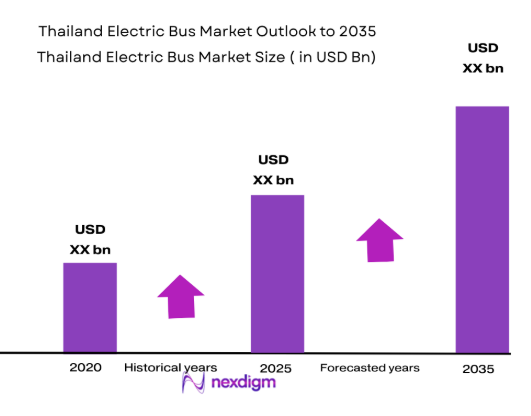
The Thailand Electric Bus market has experienced significant growth, driven by a combination of government support and the increasing demand for cleaner, more sustainable public transportation solutions. Based on a recent historical assessment, the market size is estimated to reach USD ~ billion, with the demand for electric buses being propelled by the government’s commitment to reducing urban air pollution and carbon emissions. This is further supported by government incentives such as subsidies and grants aimed at promoting the adoption of electric vehicles, along with a growing interest from the private sector in transitioning to cleaner transportation alternatives.
The market is dominated by urban centers such as Bangkok and Chiang Mai, where traffic congestion and air quality concerns are most pressing. These cities lead the adoption of electric buses due to favorable government policies and the necessity to address increasing urbanization. Additionally, the Thai government’s emphasis on infrastructure development, such as the installation of charging stations and the retrofitting of old bus fleets, has accelerated the transition to electric buses in these key areas.
Market Segmentation
By Product Type:
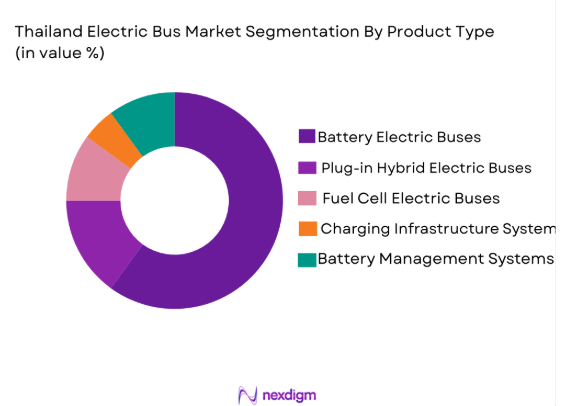
Thailand Electric Bus market is segmented by product type into Battery Electric Buses, Plug-in Hybrid Electric Buses, Fuel Cell Electric Buses, Charging Infrastructure Systems, and Battery Management Systems. The Battery Electric Bus sub-segment currently leads the market due to its higher efficiency and decreasing costs in battery technology. The growing consumer preference for zero-emission vehicles has made the fully electric bus a preferred choice for public transportation authorities and fleet operators. Additionally, continued advancements in charging infrastructure and battery longevity have made battery electric buses more viable for daily operations in densely populated urban areas.
By Platform Type:
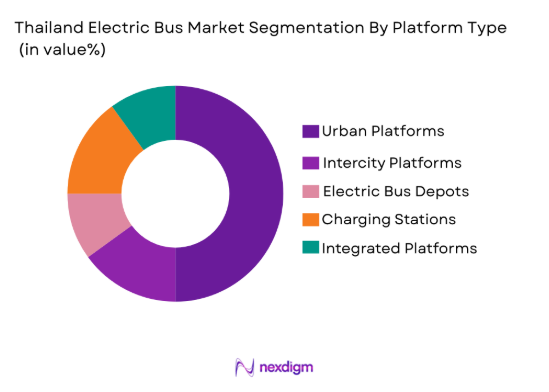
Thailand Electric Bus market is segmented by platform type into Urban Platforms, Intercity Platforms, Electric Bus Depots, Charging Stations, and Integrated Platforms. Urban Platforms currently dominate the market due to the rising urbanization of cities like Bangkok, where electric buses are increasingly viewed as a sustainable solution to air pollution and congestion. The government’s focus on cleaner urban transport, combined with the availability of charging infrastructure, further supports the adoption of electric buses in these areas.
Competitive Landscape
The competitive landscape in the Thailand Electric Bus market is characterized by both international and local players. Major players are consolidating their positions through strategic partnerships and joint ventures with local governments and transport authorities. This is driving the growth of electric bus infrastructure and adoption across the country. The influence of global players such as BYD and Volvo Buses, alongside local manufacturers, is significantly shaping market dynamics by introducing more affordable and efficient electric bus models, while expanding charging infrastructure networks.
| Company Name | Establishment Year | Headquarters | Technology Focus | Market Reach | Key Products | Revenue | Additional Parameter |
| BYD | 1995 | China | ~ | ~ | ~ | ~ | ~ |
| Proterra | 2004 | USA | ~ | ~ | ~ | ~ | ~ |
| Volvo Buses | 1927 | Sweden | ~ | ~ | ~ | ~ | ~ |
| Yutong | 1999 | China | ~ | ~ | ~ | ~ | ~ |
| Tata Motors | 1945 | India | ~ | ~ | ~ | ~ | ~ |
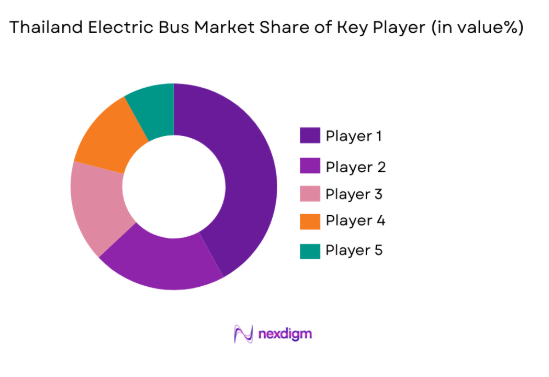
Thailand Electric Bus Market Analysis
Growth Drivers
Government Support for Green Transportation:
The Thai government’s support for electric vehicles has been a key driver in the growth of the electric bus market. With the government’s aim to reduce the environmental impact of transportation and promote cleaner, sustainable mobility, various policies and incentives have been introduced, including financial support for purchasing electric buses and installing necessary infrastructure. These measures are part of the government’s broader plan to reduce emissions and meet sustainability targets, making electric buses an attractive option for fleet operators. In addition, the public transport authorities in major cities like Bangkok have set ambitious targets to electrify their bus fleets, contributing to an overall expansion of the electric bus market. The financial incentives, coupled with growing regulatory pressure to reduce carbon footprints, have created a favorable market environment for electric buses. As the government continues to prioritize environmental sustainability, the electric bus market is expected to see consistent growth.
Private Sector Investment in Electric Bus Infrastructure:
Private sector investments in electric bus infrastructure, such as the construction of charging stations and the retrofitting of existing fleets, are playing an instrumental role in accelerating the adoption of electric buses in Thailand. As the demand for cleaner transportation grows, private companies are partnering with governments and municipalities to establish the necessary charging infrastructure, which is essential for the widespread deployment of electric buses. The increase in charging stations helps eliminate one of the major barriers to the adoption of electric buses, which is range anxiety. Private sector participation also fosters competition, which encourages innovation and cost reduction in electric bus manufacturing, further contributing to the affordability and attractiveness of electric buses. This private sector involvement is expected to continue to be a key driver of market growth, helping to transform the public transportation sector into a more sustainable model.
Market Challenges
High Initial Investment Cost:
The initial capital investment required for purchasing electric buses and establishing charging infrastructure remains one of the most significant challenges facing the market in Thailand. Despite the government’s financial incentives, the cost of electric buses is still considerably higher compared to traditional buses, particularly for smaller municipalities or private transport operators with limited budgets. The high upfront costs often deter potential buyers from making the switch to electric buses, despite the long-term savings on fuel and maintenance. Additionally, the cost of installing a comprehensive network of charging stations, necessary for the effective operation of electric buses, adds another layer of financial burden. Even though the overall operational costs of electric buses are lower, the high initial investment can be a significant deterrent, especially in a market where budgets for transportation infrastructure are already tight. As the technology matures and the cost of batteries continues to decrease, this challenge may become less pronounced, but for the time being, it remains a significant barrier to mass adoption.
Limited Charging Infrastructure:
The availability of charging infrastructure is another key challenge for the electric bus market in Thailand. While some urban areas such as Bangkok are seeing a gradual expansion of charging stations, many other regions still lack sufficient infrastructure to support widespread electric bus deployment. The limited number of charging stations creates a situation where fleet operators are hesitant to invest in electric buses, fearing that they will not be able to reliably recharge their vehicles, especially on longer routes. The lack of a nationwide network of charging stations also exacerbates issues related to range anxiety, where drivers worry that their buses might run out of power before reaching a charging point. Building a robust and expansive charging infrastructure network is essential for the future growth of the electric bus market in Thailand. Without significant investments in charging infrastructure, the market will likely struggle to reach its full potential, as fleet operators and municipalities will be hesitant to transition to electric buses.
Opportunities
Government-Backed Electric Bus Fleet Programs:
One of the key opportunities in the Thai electric bus market lies in government-backed programs that focus on fleet electrification. The Thai government has already committed to significantly increasing the number of electric buses in urban areas, particularly in major cities like Bangkok. These initiatives not only provide financial support to local transport authorities but also create a more conducive environment for the private sector to invest in electric buses. Fleet operators, especially in urban centers, are encouraged to replace their old buses with cleaner alternatives. This presents a significant opportunity for manufacturers of electric buses to partner with the government in providing these vehicles. Furthermore, these government programs often include infrastructure development projects, such as the installation of charging stations, which further enhances the attractiveness of electric buses for operators. The government’s focus on environmental sustainability and public health presents an opportunity for both established and new players in the electric vehicle market to collaborate and shape the future of Thailand’s public transport system.
Electric Bus Retrofitting Solutions:
Another promising opportunity in the Thailand Electric Bus market is the development of electric bus retrofitting solutions. As many municipalities and private fleet operators already own traditional buses, retrofitting these existing vehicles into electric ones is a cost-effective alternative to purchasing new electric buses. This market segment allows fleet operators to make the switch to electric buses at a fraction of the cost of purchasing entirely new electric buses. Retrofitting involves replacing the internal combustion engine with an electric motor and installing the necessary battery systems, which can extend the lifespan of older buses while reducing operating costs. As retrofitting technology advances and becomes more affordable, it presents an opportunity for manufacturers and service providers to enter the market with innovative solutions that offer significant cost savings. This approach also helps reduce the overall environmental impact by repurposing existing infrastructure, rather than discarding it in favor of new equipment.
Future Outlook
The electric bus market in Thailand is expected to experience robust growth over the next five years, driven by continued government incentives, advancements in electric vehicle technology, and an increasing commitment to environmental sustainability. Demand for electric buses is expected to grow in major cities due to efforts to address pollution and urban congestion. Technological developments such as longer battery life and faster charging times will further fuel market expansion, while regulatory support continues to play a pivotal role in driving adoption. The infrastructure to support electric buses, including charging stations and maintenance facilities, will likely see significant improvements, providing a solid foundation for long-term market growth.
Major Players
- BYD
- Proterra
- Volvo Buses
- Yutong
- Tata Motors
- New Flyer Industries
- NFI Group
- Alexander Dennis
- Solaris Bus & Coach
- King Long
- Mercedes-Benz Buses
- MAN Truck & Bus
- Scania
- Daimler AG
- Wrightbus
Key Target Audience
- Investments and venture capitalist firms
- Government and regulatory bodies
- Public transportation authorities
- Fleet management companies
- Bus manufacturers
- Private transportation operators
- Charging infrastructure providers
- Urban planning and development agencies
Research Methodology
Step 1: Identification of Key Variables
This step involves identifying key factors affecting the electric bus market in Thailand, such as government regulations, technological advancements, and demand patterns.
Step 2: Market Analysis and Construction
In this phase, detailed market analysis is conducted, including market sizing, segmentation, and the identification of key trends and drivers.
Step 3: Hypothesis Validation and Expert Consultation
Experts in electric vehicles and transportation infrastructure are consulted to validate hypotheses and refine insights.
Step 4: Research Synthesis and Final Output
The final research synthesis involves consolidating all findings and generating actionable insights for market participants.

- Executive Summary
- Research Methodology (Definitions, Scope, Industry Assumptions, Market Sizing Approach, Primary & Secondary Research Framework, Data Collection & Verification Protocol, Analytic Models & Forecast Methodology, Limitations & Research Validity Checks)

- Market Definition and Scope
- Value Chain & Stakeholder Ecosystem
- Regulatory / Certification Landscape
- Sector Dynamics Affecting Demand
- Strategic Initiatives & Infrastructure Growth

- Growth Drivers
Government Incentives for Green Transport Adoption
Advancements in Electric Bus Battery Technology
Rising Urbanization and Environmental Concerns
Regulatory Push for Zero-Emission Vehicles
Increasing Fuel Prices Driving Electric Vehicle Adoption - Market Challenges
High Initial Investment and Infrastructure Costs
Limited Charging Infrastructure for Widespread Adoption
Battery Life and Range Limitations
Operational and Maintenance Challenges
Concerns Over Long-Term Economic Feasibility - Market Opportunities
Government-Supported Electric Bus Initiatives
Partnerships with Private Sector for Infrastructure Development
Growing Market for Electric Bus Retrofit Solutions - Trends
Shift Towards Fully Electric Urban Public Transport
Integration of Artificial Intelligence in Fleet Management
Development of Ultra-Fast Charging Infrastructure
Increase in Hybrid Systems Adoption
Proliferation of Electric Buses in Emerging Markets - Government Regulations & Defense Policy
Incentives for Electric Vehicle Adoption
Regulations Supporting Zero-Emission Vehicle Standards
Government Policies Promoting Infrastructure Development - SWOT Analysis
- Stakeholder and Ecosystem Analysis
- Porter’s Five Forces Analysis
- Competition Intensity and Ecosystem Mapping

- By Market Value, 2020-2025
- By Installed Units, 2020-2025
- By Average System Price, 2020-2025
- By System Complexity Tier, 2020-2025

- By System Type (In Value%)
Battery Electric Buses
Plug-in Hybrid Electric Buses
Fuel Cell Electric Buses
Charging Infrastructure Systems
Battery Management Systems - By Platform Type (In Value%)
Urban Platforms
Intercity Platforms
Electric Bus Depots
Charging Stations
Integrated Platforms - By Fitment Type (In Value%)
Factory-Fitted Systems
Retrofitted Systems
Modular Systems
Dedicated Electric Bus Solutions
Hybrid Solutions - By EndUser Segment (In Value%)
Public Transportation Authorities
Private Bus Operators
Tourism & Commercial Fleet Owners
Freight and Logistics Operators
Government and Municipal Fleets - By Procurement Channel (In Value%)
Direct Procurement
Government Tenders
Private Sector Procurement
Online Bidding Platforms
Third-party Distributors - By Material / Technology (in Value%)
Lithium-ion Battery Systems
Solid-State Battery Systems
Hybrid Battery and Fuel Cell Technologies
Supercapacitor Energy Storage
Wireless Charging Technology

- Market structure and competitive positioning
- Market share snapshot of major players
- CrossComparison Parameters (System Type, Platform Type, Procurement Channel, EndUser Segment, Fitment Type)
- SWOT Analysis of Key Competitors
- Pricing & Procurement Analysis
- Key Players
BYD
Proterra
Solaris Bus & Coach
Nanjing Goldlion Electric Bus Co., Ltd.
New Flyer Industries
Volvo Buses
Yutong
King Long
Tata Motors
Wrightbus
Alexander Dennis Limited
VDL Bus & Coach
Daimler AG
MAN Truck & Bus
Hyundai Motor Group

- Rising Demand from Public Transport Operators
- Government’s Role in Promoting Electric Fleets
- Cost Sensitivity and Budget Constraints of Fleet Owners
- Adoption Rate Variability Between Urban and Rural Areas

- Forecast Market Value, 2026-2035
- Forecast Installed Units, 2026-2035
- Price Forecast by System Tier, 2026-2035
- Future Demand by Platform, 2026-2035


 Request a Sample
 Ask for Customization
 Get a Quote
 Enquire Now