

 Download PDF
 Download PDF
Market Overview
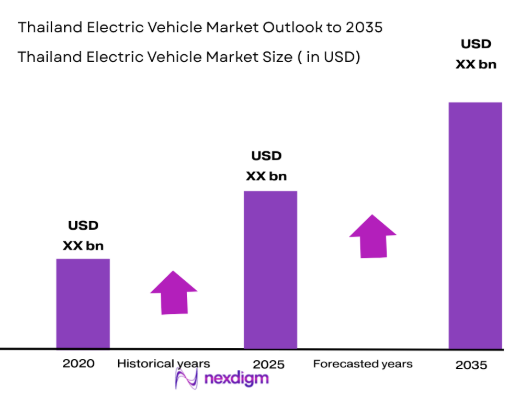
The Thailand electric vehicle (EV) market is growing significantly, driven by government policies, increased consumer awareness, and improvements in EV infrastructure. Based on a recent historical assessment, the market size is valued at over USD ~ billion, with a steady increase in demand for both electric cars and motorcycles. The shift towards cleaner energy solutions and the government’s commitment to reducing carbon emissions through incentives and subsidies for EV adoption are key drivers. The market is expected to see accelerated growth as more charging stations are installed and battery technologies improve.
Thailand has emerged as a key player in the Southeast Asian EV market, largely due to its supportive regulatory environment and investments in EV manufacturing capabilities. Cities such as Bangkok are leading the charge with infrastructure upgrades and adoption initiatives, while other regions are seeing a growing interest due to increasing government support. Thailand’s strategic location within the ASEAN region further bolsters its role as a manufacturing hub for electric vehicles, supported by investments from both local and international companies seeking to tap into the regional market.
Market Segmentation
By Product Type:
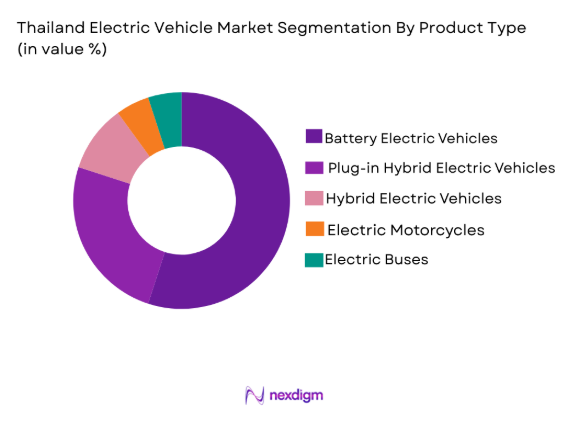
The Thailand EV market is segmented by product type into Battery Electric Vehicles (BEVs), Plug-in Hybrid Electric Vehicles (PHEVs), Hybrid Electric Vehicles (HEVs), Electric Motorcycles, and Electric Buses. Recently, BEVs have dominated the market share due to their full electrification, which appeals to consumers looking for long-range vehicles and lower operating costs. Increased availability of BEVs, along with government subsidies and incentives, has accelerated adoption, positioning BEVs as the preferred choice for both individual consumers and fleet operators. Additionally, the expanding network of charging stations and reduced battery prices are contributing factors to BEV’s dominance.
By Platform Type:
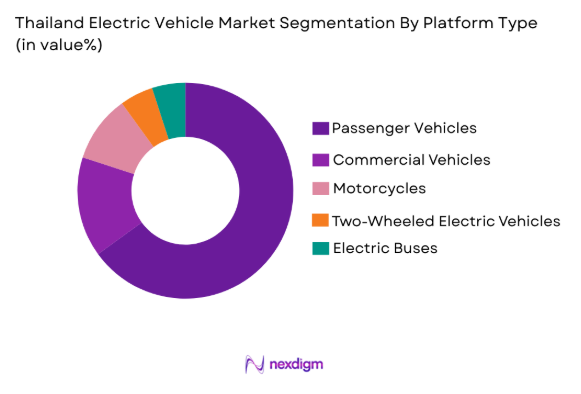
The Thailand electric vehicle market is segmented into passenger vehicles, commercial vehicles, motorcycles, two-wheeled electric vehicles, and electric buses. The passenger vehicle segment dominates, driven by rising demand from urban consumers seeking sustainable alternatives to traditional vehicles. This demand is fueled by government incentives and an expanding charging infrastructure. The commercial vehicle segment is growing as businesses transition to electric fleets to reduce operating costs and carbon emissions. Motorcycles and two-wheeled electric vehicles are popular in urban areas due to their affordability and efficiency in heavy traffic. Electric buses are gaining traction in public transport systems, supported by government initiatives to electrify mass transit. The growth in these segments reflects the increasing adoption of EVs across various transportation modes in Thailand.
Competitive Landscape
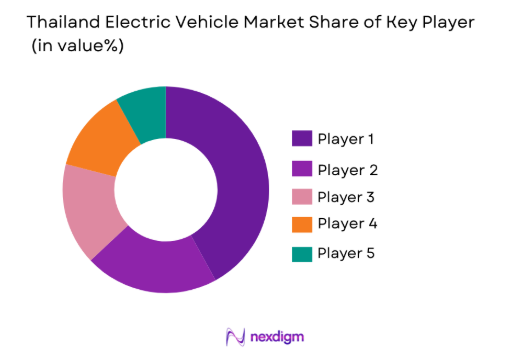
The competitive landscape of the Thailand EV market is shaped by both global automotive giants and local startups. Major players are consolidating their positions through partnerships with local manufacturers and investments in charging infrastructure. Leading companies in the market are focused on enhancing vehicle range, reducing battery costs, and expanding their EV offerings to cater to a wider demographic. Thailand’s strategic position in the ASEAN region attracts international brands looking to penetrate the growing Southeast Asian market.
| Company Name | Establishment Year | Headquarters | Technology Focus | Market Reach | Key Products | Revenue | Additional Market-Specific Parameter |
| Toyota Motor Corporation | 1937 | Japan | ~ | ~ | ~ | ~ | ~ |
| Tesla Inc. | 2003 | USA | ~ | ~ | ~ | ~ | ~ |
| BYD Company | 1995 | China | ~ | ~ | ~ | ~ | ~ |
| Honda Motor Co. Ltd. | 1946 | Japan | ~ | ~ | ~ | ~ | ~ |
| Nissan Motor Co. Ltd. | 1933 | Japan |
Thailand Electric Vehicle Market Analysis
Growth Drivers
Government Support and Incentives:
The Thai government’s strong commitment to sustainability and carbon emission reduction has played a pivotal role in driving the growth of the electric vehicle market. Government policies such as tax exemptions, incentives for both consumers and manufacturers, and subsidies for EV infrastructure development have significantly reduced the financial burden of adopting electric vehicles. These incentives not only make EVs more affordable for consumers but also encourage manufacturers to invest in the local market. With government support, the EV sector is positioned for significant growth, fostering the creation of a robust market ecosystem that includes vehicle manufacturers, charging infrastructure providers, and service providers. Additionally, the government’s focus on achieving sustainable mobility aligns with the nation’s broader environmental goals, positioning Thailand as a regional leader in electric vehicle adoption. As the government continues to refine and expand these initiatives, the market is expected to see accelerated growth, attracting more foreign investments and expanding the EV manufacturing base.
Technological Advancements in Battery and Charging Infrastructure:
Battery technology is another key driver of growth in the Thai EV market. Over recent years, there have been significant advances in battery technology, particularly in terms of energy density and the efficiency of battery management systems. These advancements enable electric vehicles to offer longer driving ranges, faster charging times, and greater affordability. Consumers are more likely to adopt EVs as these technologies reduce the limitations previously associated with range anxiety and charging delays. In parallel, the improvement in charging infrastructure plays a critical role in enhancing the EV ownership experience. The Thai government and private sector have focused on building a widespread and efficient charging network across the country. Fast-charging stations, along with home charging solutions, make it increasingly convenient for EV owners to maintain their vehicles. The integration of charging stations along highways and in urban centers helps reduce concerns about the accessibility of charging points, ensuring that consumers feel confident about the convenience of owning an EV. As the industry continues to invest in better and more accessible infrastructure, these technological advancements will likely lead to a more widespread adoption of electric vehicles in Thailand.
Market Challenges
High Initial Purchase Cost of EVs:
Despite growing interest in electric vehicles in Thailand, the high initial purchase cost remains one of the most significant barriers to adoption. While government subsidies and tax incentives do help lower the upfront costs, EVs are still considerably more expensive than traditional gasoline-powered vehicles. A large portion of the cost comes from the battery, which is a core component of electric vehicles. Although battery prices have been decreasing steadily, they still represent a major cost driver for EV manufacturers. This issue is especially critical in a price-sensitive market like Thailand, where consumers often prioritize affordability. Additionally, consumers may hesitate to make the switch to electric vehicles due to the higher cost of maintenance and repairs in the early stages of ownership, despite the long-term savings in fuel and maintenance costs. To make EVs more accessible, manufacturers will need to continue working on reducing the overall production cost through innovations in battery technology and manufacturing processes. Until these costs come down further, the high initial price tag will continue to limit the mass adoption of electric vehicles in Thailand.
Limited Charging Infrastructure:
Although progress is being made, Thailand’s EV charging infrastructure is still in its early stages, especially in rural and remote areas. While major cities like Bangkok and Chiang Mai are beginning to see a growing number of charging stations, the network remains limited in smaller towns and regions outside of urban centers. This scarcity of charging points creates a barrier for potential EV buyers, particularly those living outside large metropolitan areas who are concerned about the accessibility of charging stations. Furthermore, the speed and reliability of charging stations vary, with some stations being slower to charge and less accessible during peak usage hours. To overcome this challenge, Thailand must continue its efforts to expand and standardize its charging infrastructure. This includes increasing the number of charging stations in both urban and rural areas, as well as implementing fast-charging solutions that cater to the growing demand for convenient and quick charging options. As the country’s charging infrastructure expands and becomes more reliable, the barriers preventing consumers from fully embracing electric vehicles will gradually diminish.
Opportunities
Expansion of EV Infrastructure:
One of the most promising opportunities for the Thailand electric vehicle market is the expansion of charging infrastructure across the country. As the adoption of electric vehicles increases, the need for a comprehensive and reliable charging network becomes even more crucial. The Thai government has already committed to building a vast network of charging stations, with goals to have thousands of stations installed in both urban and rural areas. The expansion of this network is expected to reduce the range anxiety that many potential EV owners face, making it easier and more convenient to own an electric vehicle. Public-private partnerships will play a key role in this development, as private companies are encouraged to invest in charging infrastructure through government incentives and support. The deployment of high-speed charging stations along major highways will further improve the convenience of using electric vehicles for long-distance travel. By addressing the current gaps in charging infrastructure, Thailand can unlock significant growth potential in the electric vehicle market, making EVs a practical choice for more consumers.
Growth in Electric Motorcycle Segment:
The electric motorcycle segment in Thailand represents a significant growth opportunity due to the popularity of motorcycles as a primary mode of transportation in the country. With a large proportion of the population using motorcycles for commuting and delivery services, electric motorcycles offer a cleaner and more cost-effective alternative to traditional gasoline-powered models. The electric motorcycle market is particularly attractive to consumers who are looking for lower operating costs and reduced environmental impact. The government’s incentives for electric motorcycles, along with lower maintenance and fuel costs, have made them a viable option for a wide range of consumers. Additionally, electric motorcycles are well-suited for Thailand’s urban areas, where traffic congestion and environmental concerns are driving the shift toward more sustainable forms of transportation. As the market for electric motorcycles expands, manufacturers are expected to increase the variety of models available, catering to different consumer needs. The growth of this segment presents a unique opportunity for Thailand to lead the way in Southeast Asia’s transition to electric mobility, further boosting the country’s efforts to reduce carbon emissions and promote cleaner transportation solutions.
Future Outlook
The Thailand electric vehicle market is poised for substantial growth in the coming years, driven by continued government support, technological advancements, and rising consumer demand for sustainable transportation solutions. Over the next five years, EV adoption is expected to increase significantly as the government’s infrastructure initiatives take shape, and battery technology continues to improve. The market will also see expanded options for consumers, with a broader range of electric vehicles, including motorcycles, buses, and commercial fleets, entering the market. As the country moves towards greener mobility solutions, the development of affordable EVs, combined with enhanced charging networks and improved vehicle range, will catalyze wider adoption. With Thailand’s continued commitment to reducing carbon emissions and improving air quality, the electric vehicle market is set to become a key driver of the nation’s sustainable future.
Major Players
- Toyota Motor Corporation
- Tesla Inc.
- BYD Company
- Honda Motor Co. Ltd.
- Nissan Motor Co. Ltd.
- BMW AG
- Porsche AG
- Chery Automobile Co.
- LG Chem Ltd.
- CATL
- Siemens AG
- ABB Ltd.
- Hitachi Ltd.
- Hyundai Motor Group
- Kia Corporation
- Key Target Audience
- Investments and venture capitalist firms
- Government and regulatory bodies
- Electric vehicle manufacturers
- Battery manufacturers
- Charging infrastructure providers
- Public transport authorities
- Corporate fleet operators
- Auto dealerships
Research Methodology
Step 1: Identification of Key Variables
The research process begins by identifying the key variables that influence the electric vehicle market, including consumer behavior, government policies, and technological advancements in the EV sector.
Step 2: Market Analysis and Construction
Next, detailed analysis is conducted to construct the market by assessing trends, market drivers, challenges, and other critical factors that shape the market landscape.
Step 3: Hypothesis Validation and Expert Consultation
The market hypotheses are then validated by consulting experts from the automotive and electric vehicle industries to ensure the findings are based on accurate and up-to-date insights.
Step 4: Research Synthesis and Final Output
Finally, all gathered data and insights are synthesized to produce a comprehensive market report that outlines the current market conditions and future projections.

- Executive Summary
- Research Methodology (Definitions, Scope, Industry Assumptions, Market Sizing Approach, Primary & Secondary Research Framework, Data Collection & Verification Protocol, Analytic Models & Forecast Methodology, Limitations & Research Validity Checks)

- Market Definition and Scope
- Value Chain & Stakeholder Ecosystem
- Regulatory / Certification Landscape
- Sector Dynamics Affecting Demand
- Strategic Initiatives & Infrastructure Growth

- Growth Drivers
Government support and tax incentives for electric vehicles
Increasing fuel prices and environmental awareness
Rapid advancement in battery technology
Improving EV infrastructure across Thailand
Rising demand for urban mobility solutions - Market Challenges
High initial costs of electric vehicles
Limited range and charging infrastructure
Technological barriers in battery efficiency
Regulatory and policy challenges
Consumer skepticism about EV adoption - Market Opportunities
Growth in electric motorcycle adoption
Expansion of EV infrastructure projects
Partnerships with global EV manufacturers - Trends
Shift towards sustainable mobility solutions
Integration of AI and smart technologies in EVs
Increased focus on EV battery recycling and reuse
Rise in eco-conscious transportation options
Government push for green transportation initiatives - Government Regulations & Defense Policy
Tax breaks and incentives for EV buyers
Environmental regulations driving green transportation
Regulations for expanding EV charging infrastructure - SWOT Analysis
- Stakeholder and Ecosystem Analysis
- Porter’s Five Forces Analysis
- Competition Intensity and Ecosystem Mapping

- By Market Value, 2020-2025
- By Installed Units, 2020-2025
- By Average System Price, 2020-2025
- By System Complexity Tier, 2020-2025

- By System Type (In Value%)
Battery Electric Vehicles (BEVs)
Plug-in Hybrid Electric Vehicles (PHEVs)
Hybrid Electric Vehicles (HEVs)
Electric Motorcycles
Electric Buses - By Platform Type (In Value%)
Passenger Vehicles
Commercial Vehicles
Motorcycles
Two-Wheeled Electric Vehicles
Electric Buses - By Fitment Type (In Value%)
OEM Solutions
Aftermarket Solutions
Modular Systems
Integrated Systems
Customizable Solutions - By EndUser Segment (In Value%)
Individual Consumers
Public Transport Authorities
Corporate Fleets
Ride-Hailing Services
Tourism & Leisure Industry - By Procurement Channel (In Value%)
Direct Procurement
Government Procurement
Online Platforms
Third-Party Distributors
Dealerships - By Material / Technology (In Value%)
Lithium-Ion Batteries
Solid-State Batteries
Induction Motors
Charging Infrastructure
Battery Management Systems

- Market structure and competitive positioning
- Market share snapshot of major players
- CrossComparison Parameters (System Type, Platform Type, Procurement Channel, EndUser Segment, Fitment Type)
- SWOT Analysis of Key Competitors
- Pricing & Procurement Analysis
- Key Players
Toyota Motor Corporation
Tesla Inc.
BYD Company
Honda Motor Co. Ltd.
Nissan Motor Co. Ltd.
BMW AG
Porsche AG
Chery Automobile Co.
LG Chem Ltd.
CATL
Siemens AG
ABB Ltd.
Hitachi Ltd.
Hyundai Motor Group
Kia Corporation

- Growing adoption by individual consumers
- Public transport authorities investing in electric buses
- Corporate fleets focusing on sustainability
- Tourism industry turning to electric vehicles for eco-friendly travel

- Forecast Market Value, 2026-2035
- Forecast Installed Units, 2026-2035
- Price Forecast by System Tier, 2026-2035
- Future Demand by Platform, 2026-2035


 Request a Sample
 Ask for Customization
 Get a Quote
 Enquire Now