
 Download PDF
 Download PDF
Market Overview
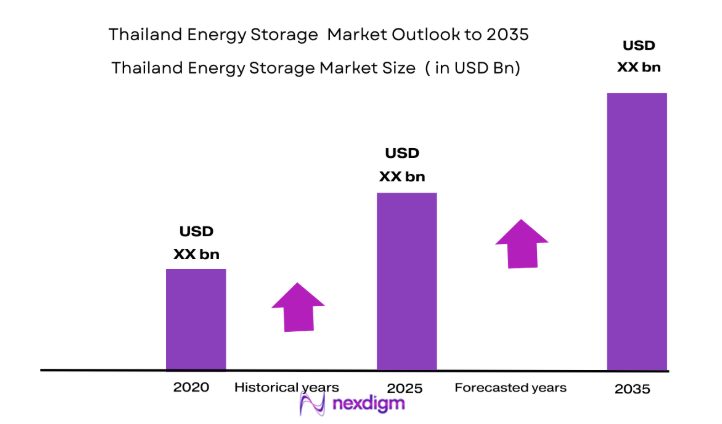
The Thailand Energy Storage Market is expected to witness substantial growth, driven by increased investments in renewable energy, particularly solar and wind, alongside the government’s push to reduce carbon emissions. Based on a recent historical assessment, the market size is projected to reach USD ~ million, with continued growth fueled by advancements in storage technologies and infrastructure development. The adoption of battery storage systems in both residential and commercial sectors is driving demand, especially as Thailand aims to integrate renewable energy into the national grid more effectively.
The market’s dominance is primarily seen in urban regions, with Bangkok and Chiang Mai being the main hubs for energy storage projects due to their industrialization and high energy demand. As Thailand’s energy sector modernizes, these cities have seen considerable investments in grid energy storage, aiming to reduce dependency on fossil fuels. Furthermore, the government’s regulatory framework and incentives, along with private sector participation, have facilitated the expansion of energy storage technologies in these regions, ensuring long-term growth and sustainability.
Market Segmentation
By System Type:
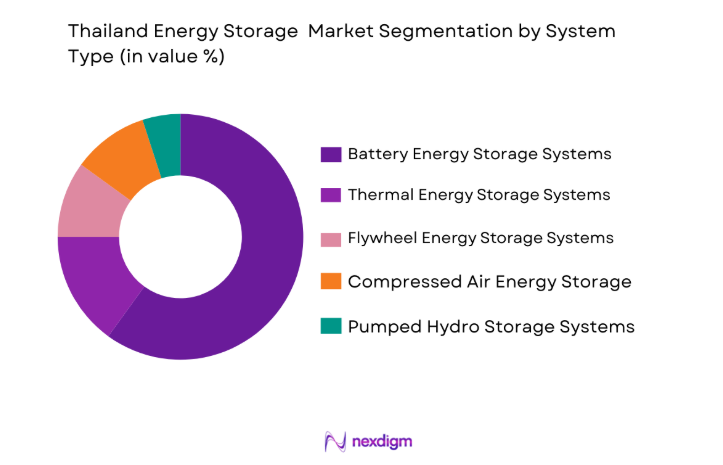
The Thailand Energy Storage Market is segmented by system type into various sub-segments, with the battery energy storage systems (BESS) currently holding a dominant market share. This dominance can be attributed to the high demand for lithium-ion batteries, which offer efficiency, scalability, and cost-effectiveness, particularly in residential and commercial applications. Furthermore, advancements in battery chemistry, enhanced energy density, and decreasing costs have contributed to the growth of this sub-segment. The continuous development of large-scale grid-connected battery storage solutions is also a key factor driving the demand for battery systems across Thailand, with both public and private entities supporting these initiatives.
By Platform Type:
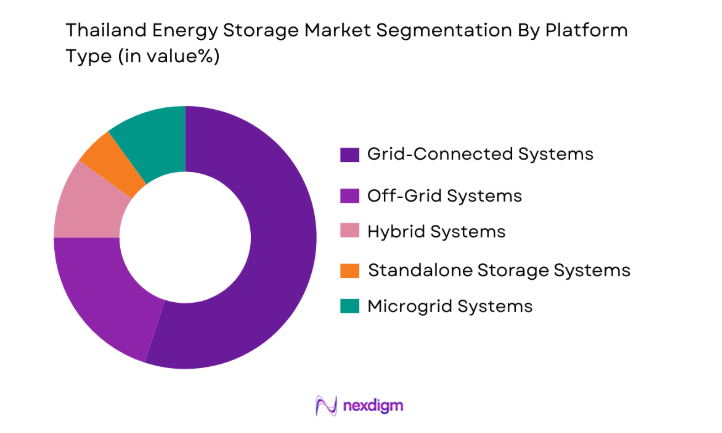
The market is segmented by platform type, with grid-connected systems leading the market share. This is primarily due to the Thai government’s renewable energy targets and the need to integrate large amounts of renewable energy into the national grid. Grid-connected systems offer the flexibility to store excess energy generated from solar and wind power during periods of low demand and release it when demand peaks. The increasing focus on sustainability and energy security has made these systems crucial in Thailand’s transition to a low-carbon economy. These platforms are also supported by policies encouraging the development of smart grid systems, which further enhances their growth prospects.
Competitive Landscape
The competitive landscape of the Thailand Energy Storage Market is characterized by consolidation, with several major players actively shaping the market through innovations and strategic partnerships. These companies are focusing on reducing storage costs, improving efficiency, and offering tailored solutions to meet the diverse energy needs of residential, commercial, and industrial sectors. The increasing demand for energy storage, coupled with government support, has intensified competition among local and international companies. Key players are also investing heavily in research and development to maintain technological leadership and meet the growing demand for cleaner, more efficient energy solutions.
| Company Name | Establishment Year | Headquarters | Technology Focus | Market Reach | Key Products | Revenue (USD) | Additional Parameter |
| Tesla | 2003 | USA | ~ | ~ | ~ | ~ | ~ |
| Siemens AG | 1847 | Germany | ~ | ~ | ~ | ~ | ~ |
| Fluence Energy | 2018 | USA | ~ | ~ | ~ | ~ | ~ |
| LG Chem | 1947 | South Korea | ~ | ~ | ~ | ~ | ~ |
| BYD Company | 1995 | China | ~ | ~ | ~ | ~ | ~ |
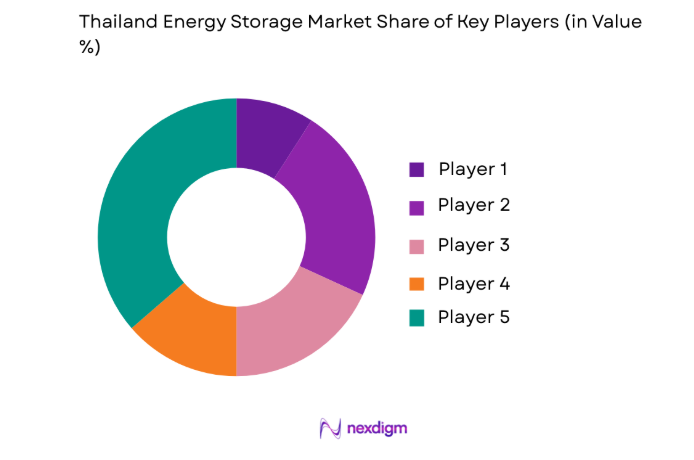
Thailand Energy Storage Market Analysis
Growth Drivers
Government Support for Renewable Energy Integration:
The Thai government has introduced several incentives, such as tax benefits and subsidies, to promote renewable energy adoption and energy storage technologies. As part of its Power Development Plan (PDP), Thailand is committed to increasing the share of renewables in its energy mix, which has directly boosted the demand for energy storage solutions to stabilize the grid and ensure efficient energy distribution. By integrating renewable energy sources like solar and wind, which are intermittent in nature, energy storage plays a vital role in smoothing energy supply and improving grid reliability. These initiatives, coupled with national and regional policies focused on reducing carbon emissions, have significantly fueled the growth of the energy storage market in Thailand. Moreover, Thailand’s strong commitment to achieving energy security and sustainability by 2030 has set a clear path for further market growth, driving continued investments in energy storage technologies across the nation.
Technological Advancements in Battery Systems:
Recent technological advancements in battery technology, particularly lithium-ion batteries, have contributed to making energy storage systems more cost-effective and efficient. The continuous improvement in battery performance, with better energy density and longer lifespans, has enhanced their attractiveness for both residential and industrial applications. Thailand’s rapid adoption of these advanced systems has been a major driver for the growth of the energy storage market. As energy storage costs continue to fall and efficiency rises, these technologies are becoming more accessible to a wider range of consumers, from utilities to businesses and individual households. Furthermore, breakthroughs in battery manufacturing and energy management systems are enabling more optimized storage solutions, which are critical for Thailand as it seeks to integrate more renewable energy into its grid.
Market Challenges
High Initial Investment and Installation Costs:
Despite the numerous benefits of energy storage solutions, the high upfront costs associated with these systems remain a significant barrier to widespread adoption. While the costs of energy storage technologies, particularly batteries, have decreased over the years, they are still considered high for many potential adopters, especially in residential and smaller-scale commercial applications. The cost of installation and integration with existing infrastructure further exacerbates this challenge. The initial capital expenditure required for setting up energy storage systems is a significant concern for both private and public sector players in Thailand. As the market continues to grow, this financial challenge needs to be addressed to ensure that energy storage becomes a more feasible and scalable solution across various sectors, including the residential, commercial, and industrial segments.
Grid Integration and Interoperability Issues:
One of the primary challenges facing the Thailand Energy Storage Market is the integration of energy storage systems into the existing grid infrastructure. While the benefits of energy storage in stabilizing and optimizing the grid are clear, there are several technical challenges associated with integrating these systems effectively. These challenges include issues related to the interoperability of storage systems with existing grid management technologies, as well as the need for sophisticated software to manage storage systems in real-time. Furthermore, grid operators must ensure that the energy storage systems can respond dynamically to fluctuations in supply and demand, which requires advanced control and monitoring systems. Overcoming these integration challenges will be crucial for the long-term success of energy storage solutions in Thailand.
Opportunities
Expansion of Hybrid Energy Storage Systems:
The increasing demand for energy storage solutions in Thailand presents an opportunity for the growth of hybrid energy storage systems. These systems, which combine different storage technologies such as lithium-ion batteries with pumped hydro storage or thermal storage, can offer a more efficient and cost-effective way to store energy. Hybrid systems provide the flexibility to store energy during periods of low demand and release it when needed, thus helping to balance supply and demand on the grid. The rising interest in hybrid systems is being driven by the government’s push for more renewable energy integration and the growing need for reliable and efficient energy storage solutions. This trend is expected to continue as both public and private sector investments in energy storage technologies increase, offering a significant opportunity for market players to innovate and offer more flexible storage solutions.
Growth of Off-Grid Energy Solutions in Rural Areas:
There is significant potential for the growth of off-grid energy storage solutions in rural and remote areas of Thailand. Many regions in Thailand still lack reliable access to electricity, particularly in off-the-grid rural areas where the cost of extending traditional power lines is prohibitively expensive. Off-grid energy storage systems, including solar and wind-powered battery storage, can offer a sustainable and cost-effective solution to these energy access issues. The government’s efforts to electrify rural areas, combined with the decreasing costs of solar technology and energy storage, present an opportunity for businesses to provide these solutions to underserved communities. By focusing on off-grid energy solutions, companies can tap into a new, growing market while also contributing to the country’s renewable energy and electrification goals.
Future Outlook
The Thailand Energy Storage Market is set to expand significantly in the coming years, driven by continued government support, technological advancements, and rising energy demands. Innovations in battery storage, along with the growth of hybrid energy storage systems, will continue to shape the market. Thailand’s push to integrate renewable energy into the grid, alongside policies that promote sustainability and energy security, will foster a favorable environment for the growth of the energy storage industry. Additionally, the shift toward off-grid solutions and energy independence, particularly in rural regions, will create new opportunities for market players. The future of energy storage in Thailand looks promising, with ongoing developments ensuring a more reliable and sustainable energy infrastructure.
Major Players
- Tesla
- Siemens AG
- Fluence Energy
- LG Chem
- BYD Company
- AES Corporation
- Vestas
- General Electric
- Schneider Electric
- ABB
- Sunrun
- Mitsubishi Heavy Industries
- LG Electronics
- Panasonic
- Eaton Corporation
Key Target Audience
- Investments and venture capitalist firms
- Government and regulatory bodies
- Energy producers and utilities
- Residential consumers seeking energy independence
- Commercial and industrial businesses
- Renewable energy developers
- Energy consultants and project developers
- Large-scale energy storage system installers
Research Methodology
Step 1: Identification of Key Variables
Key variables, such as system types, technological advancements, and regulatory factors, are identified through extensive market analysis.
Step 2: Market Analysis and Construction
Comprehensive analysis of current market trends and segmentation is conducted using primary and secondary data sources.
Step 3: Hypothesis Validation and Expert Consultation
Expert opinions and interviews are conducted to validate hypotheses and ensure that the market projections are accurate.
Step 4: Research Synthesis and Final Output
The research findings are synthesized into a comprehensive report, detailing key insights, market trends, and growth forecasts.

- Executive Summary
- Research Methodology (Definitions, Scope, Industry Assumptions, Market Sizing Approach, Primary & Secondary Research Framework, Data Collection & Verification Protocol, Analytic Models & Forecast Methodology, Limitations & Research Validity Checks)

- Market Definition and Scope
- Value Chain & Stakeholder Ecosystem
- Regulatory / Certification Landscape
- Sector Dynamics Affecting Demand

- Growth Drivers
Increased Investment in Renewable Energy Projects
Government Support for Clean Energy Initiatives
Technological Advancements in Storage Solutions - Market Challenges
High Initial Investment and Capital Expenditure
Grid Integration and Interoperability Issues
Regulatory and Policy Barriers - Market Opportunities
Expansion of Hybrid Storage Systems
Increased Demand for Off-Grid Energy Solutions
Technological Advancements in Battery Efficiency - Trends
Rise in Demand for Lithium-ion Batteries
Growth in Hybrid and Off-Grid Energy Storage
Technological Integration with Smart Grids - Government Regulations
- SWOT Analysis of Key Competitors

- By Market Value, 2020-2025
- By Installed Units, 2020-2025
- By Average System Price, 2020-2025
- By System Complexity Tier, 2020-2025

- By System Type (In Value%)
Battery Energy Storage Systems
Thermal Energy Storage Systems
Flywheel Energy Storage Systems
Compressed Air Energy Storage Systems
Pumped Hydro Storage Systems - By Platform Type (In Value%)
Grid-Connected Systems
Off-Grid Systems
Hybrid Systems
Standalone Storage Systems
Microgrid Systems - By Fitment Type (In Value%)
On-premise Solutions
Cloud-based Solutions
Hybrid Solutions
Modular Solutions
Integrated Solutions - By EndUser Segment (In Value%)
Utility Providers
Commercial & Industrial
Residential Users
Renewable Energy Providers

- Market Share Analysis
- CrossComparison Parameters (System Type, Platform Type, Procurement Channel, EndUser Segment, Fitment Type)
- SWOT Analysis of Key Competitors
- Pricing & Procurement Analysis
- Porter’s Five Forces
- Key Players
Tesla
LG Chem
Samsung SDI
BYD Company
Panasonic
Fluence Energy
Siemens AG
Schneider Electric
GE Renewable Energy
VARTA AG
Sungrow Power Supply
Trina Solar
Huawei Technologies
ABB
Eaton Corporation

- Utility Providers’ Shift Towards Renewable Integration
- Government Agencies’ Role in Policy and Regulation
- Residential Adoption of Energy Storage Solutions
- Private Sector Investment in Energy Storage Systems

- Forecast Market Value, 2026-2035
- Forecast Installed Units, 2026-2035
- Price Forecast by System Tier, 2026-2035
- Future Demand by Platform, 2026-2035


 Request a Sample
 Ask for Customization
 Get a Quote
 Enquire Now