

 Download PDF
 Download PDF
Market Overview
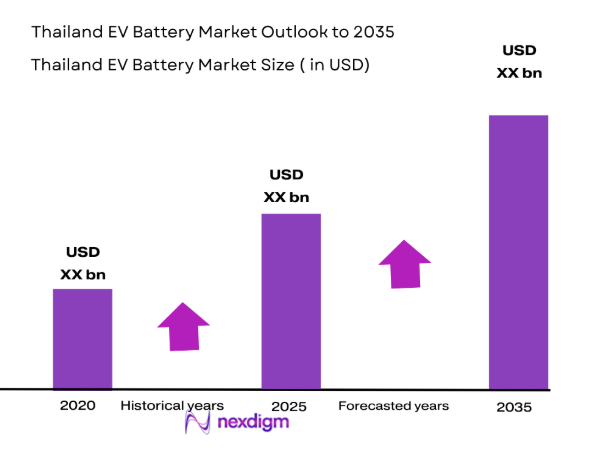
The Thailand EV battery market is currently expanding due to increasing demand for electric vehicles and government initiatives to promote cleaner transportation solutions. The market size is projected to reach approximately USD ~ billion by 2024, driven by growing investments in EV infrastructure and battery technology. Key factors fueling this growth include government incentives, such as tax breaks and subsidies, along with the rising adoption of electric vehicles across various segments, including passenger cars and public transportation. Moreover, the need for reducing carbon emissions and air pollution is further boosting market demand.
The market is dominated by major cities such as Bangkok, Chiang Mai, and Pattaya, where government policies and infrastructure investments are concentrated. These regions benefit from government-supported charging networks, incentives for EV adoption, and strong consumer awareness regarding environmental benefits. Bangkok remains the central hub for EV battery demand, supported by the city’s role as a major transportation and commercial center. Additionally, regions with established industrial bases, such as Chonburi, are also playing a significant role in the growth of the EV battery market, driven by proximity to manufacturing plants and supply chain infrastructure.
Market Segmentation
By Product Type:
Thailand EV battery market is segmented by product type into Lithium-Ion Batteries, Nickel-Metal Hydride Batteries, Solid-State Batteries, Lead-Acid Batteries, and Other Advanced Chemistries. The Lithium-Ion Battery sub-segment holds a dominant share in the market due to its high energy density, longer lifespan, and decreasing cost trends, making it the preferred choice for electric vehicles. The increased demand for longer driving ranges and fast-charging capabilities directly drives the dominance of lithium-ion batteries. Moreover, infrastructure availability, consumer preference for high-performance and efficient vehicles, and substantial investments in lithium-ion battery manufacturing are contributing to the growth of this sub-segment.
By Platform Type:
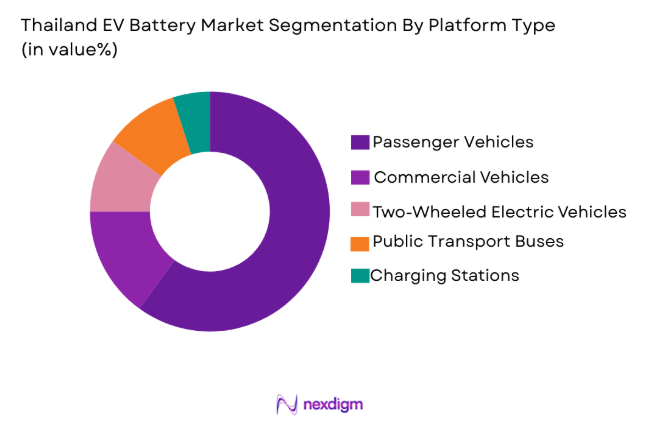
Thailand EV battery market is segmented by platform type into Passenger Vehicles, Commercial Vehicles, Two-Wheelers, Public Transport Buses, and Charging Stations. The Passenger Vehicles sub-segment dominates the market due to the growing shift towards electric cars driven by government incentives, improved battery technologies, and the expansion of charging infrastructure. As battery costs decrease and driving range increases, more consumers are adopting electric vehicles, making this sub-segment the largest. Additionally, the increasing presence of global and local automakers in the EV market further contributes to the dominance of passenger vehicles in Thailand.
Competitive Landscape
The competitive landscape of the Thailand EV battery market is characterized by the presence of global and regional players, with major players focusing on innovations in battery technologies and strategic partnerships with automakers and infrastructure providers. The market is consolidating as both established battery manufacturers and new entrants look to capitalize on Thailand’s growing demand for electric vehicles and the shift towards sustainable transportation. Partnerships with government bodies and private sector players are strengthening the market positioning of leading companies. The presence of both local and international players is intensifying competition in terms of pricing, technology, and product offerings.
| Company Name | Establishment Year | Headquarters | Technology Focus | Market Reach | Key Products | Revenue | Additional Parameter |
| CATL | 2011 | China | ~ | ~ | ~ | ~ | ~ |
| Panasonic | 1918 | Japan | ~ | ~ | ~ | ~ | ~ |
| LG Energy Solution | 2020 | South Korea | ~ | ~ | ~ | ~ | ~ |
| BYD | 1995 | China | ~ | ~ | ~ | ~ | ~ |
| SK Innovation | 1999 | South Korea | ~ | ~ | ~ | ~ | ~ |
Thailand EV Battery Market Analysis
Growth Drivers
Government Incentives for EV Adoption:
Government incentives have been one of the major drivers of the Thailand EV battery market. These incentives include subsidies and tax rebates for EV manufacturers, consumers, and infrastructure developers, making electric vehicles more affordable and accessible to a wider population. Additionally, the government’s push to reduce carbon emissions and improve air quality is fostering a supportive environment for the adoption of electric vehicles and associated battery technology. These incentives are helping accelerate the transition from traditional fuel-based vehicles to electric vehicles, stimulating the demand for EV batteries. With the introduction of policies that encourage both the production and consumption of electric vehicles, the Thai government is creating a favorable market for EV battery manufacturers. Moreover, these incentives help reduce the high initial cost of EVs and their batteries, promoting a faster shift to green mobility options. The government’s active role in expanding charging infrastructure is also playing a vital part in supporting the EV battery market’s growth.
Technological Advancements in Battery Technology:
Technological advancements in battery technology are a major factor driving the Thailand EV battery market. Over the past few years, the cost of lithium-ion batteries has steadily decreased, making EVs more affordable for consumers. Furthermore, innovations such as solid-state batteries and improvements in charging speed and energy density are expected to further increase the attractiveness of electric vehicles. These advancements are enhancing the overall performance of electric vehicles, making them more viable for long-distance travel and reducing the time needed for recharging. Battery manufacturers are also focusing on improving battery lifespan and increasing efficiency, which directly contributes to the overall growth of the EV battery market in Thailand. As technology evolves, the cost-benefit ratio of EVs continues to improve, further accelerating the market’s growth trajectory.
Market Challenges
High Initial Costs of EV Batteries:
One of the most significant challenges facing the Thailand EV battery market is the high initial cost of electric vehicle batteries. Even though prices for lithium-ion batteries have decreased over the years, they still constitute a large portion of the total cost of electric vehicles. This remains a barrier for consumers, especially in price-sensitive markets, limiting the broader adoption of electric vehicles despite favorable government incentives. The high upfront cost also impacts the affordability of electric vehicles in the mass market. Additionally, while battery prices have declined, the demand for larger capacity batteries for long-range electric vehicles continues to push costs higher. As such, there is still a need for continued research and development in battery technologies to further reduce costs while improving performance. The large-scale adoption of electric vehicles, therefore, depends on lowering the cost of batteries to make EVs more accessible to the average consumer.
Limited Charging Infrastructure:
Limited charging infrastructure remains a critical challenge for the Thailand EV battery market. While urban centers are seeing growing networks of charging stations, rural areas and remote regions still lack sufficient infrastructure to support widespread EV adoption. This discrepancy in infrastructure coverage presents a barrier for potential EV buyers who are concerned about the convenience and accessibility of charging stations. Without an extensive and reliable network of charging stations, consumers are reluctant to invest in electric vehicles, slowing down market penetration. Furthermore, the lack of fast-charging stations in key locations further discourages long-distance travel with electric vehicles. Expanding the charging network and ensuring its availability in underserved regions is crucial for the market’s growth.
Opportunities
Battery Recycling and Reuse Technologies:
One of the most promising opportunities for the Thailand EV battery market is the growth of battery recycling technologies. As the number of electric vehicles on the road increases, the demand for recycling programs and solutions that can recover valuable materials from used batteries is rising. The adoption of advanced battery recycling methods can help reduce the need for raw materials, lower production costs, and promote a circular economy within the EV industry. The expansion of battery recycling is seen as crucial in supporting the sustainability of the market, addressing concerns over the environmental impact of battery disposal, and mitigating supply chain risks associated with the sourcing of critical materials such as lithium, cobalt, and nickel. Battery recycling technologies are also expected to enhance the local supply of materials, further boosting the competitiveness of the Thai EV battery market.
Expansion in Electric Public Transportation:
Another significant opportunity lies in the expansion of electric public transportation. With the Thai government’s emphasis on reducing urban air pollution and carbon emissions, there is an increasing push to electrify public transport systems, including buses and trains. This transition offers a considerable market opportunity for EV battery manufacturers. Electric buses, for example, are gaining traction as a more sustainable alternative to traditional fuel-powered buses. This shift presents an opportunity to not only increase the demand for EV batteries but also align with national environmental goals. Additionally, government funding and partnerships with private companies to expand electric public transportation fleets will accelerate this trend, leading to long-term growth in the EV battery market.
Future Outlook
The future outlook of the Thailand EV battery market is positive, with continued growth anticipated over the next five years. The market is expected to see strong growth driven by government regulations, advancements in battery technologies, and increasing investments in EV infrastructure. The government’s support for sustainable transportation and further incentives for EV adoption will help drive demand for EV batteries. In addition, ongoing technological improvements, including the development of solid-state batteries and better recycling methods, will enhance the competitiveness of EV batteries in the market. The demand for electric vehicles is expected to increase across urban areas and public transportation sectors, further boosting the demand for EV batteries. With growing environmental awareness and expanding infrastructure, Thailand’s EV battery market is poised for substantial growth in the coming years.
Major Players
- CATL
- Panasonic
- LG Energy Solution
- BYD
- SK Innovation
- Samsung SDI
- A123 Systems
- Calb Group
- Lithium Energy Japan
- EV Battery Systems
- Farasis Energy
- Envision AESC
- BYD Auto
- Toshiba
- VARTA AG
Key Target Audience
- Investments and venture capitalist firms
- Government and regulatory bodies
- Electric vehicle manufacturers
- EV battery manufacturers
- Automotive OEMs
- Charging infrastructure providers
- Public transport agencies
- Energy storage solution providers
Research Methodology
Step 1: Identification of Key Variables
This step involves identifying the key variables impacting the Thailand EV battery market, including government incentives, consumer preferences, technological advancements, and infrastructure development.
Step 2: Market Analysis and Construction
At this stage, data is collected and analyzed to understand market trends, size, and the competitive landscape. Secondary research methods are employed to assess the historical data and current market scenario.
Step 3: Hypothesis Validation and Expert Consultation
This step includes validating the findings from secondary research through expert consultations and industry surveys to ensure accuracy and relevance.
Step 4: Research Synthesis and Final Output
After synthesizing all research findings, a comprehensive market report is developed that provides insights, forecasts, and strategic recommendations for stakeholders in the Thailand EV battery market.

- Executive Summary
- Research Methodology(Definitions, Scope, Industry Assumptions, Market Sizing Approach, Primary & Secondary Research Framework, Data Collection & Verification Protocol, Analytic Models & Forecast Methodology, Limitations & Research Validity Checks)

- Market Definition and Scope
- Value Chain & Stakeholder Ecosystem
- Regulatory / Certification Landscape
- Sector Dynamics Affecting Demand
- Strategic Initiatives & Infrastructure Growth

- Growth Drivers
Government Incentives for EV Adoption
Rising Environmental Awareness and Carbon Emissions Reduction
Technological Advancements in Battery Efficiency
Expansion of Charging Infrastructure
Government Policies Supporting Sustainable Mobility - Market Challenges
High Initial Investment and Battery Costs
Limited Charging Infrastructure in Remote Areas
Supply Chain Constraints for Battery Materials
Technological Challenges in Battery Recycling
Dependence on Imported Materials for EV Batteries - Market Opportunities
Growth in Electric Public Transportation
Battery Recycling and Reuse Technologies
Partnerships between Government and Private Sector for EV Infrastructure - Trends
Integration of AI and IoT in Battery Management Systems
Growth in Battery Leasing Models for EVs
Increase in EV Adoption in Urban Areas
Shift Towards Solid-State Batteries
Expansion of EV Charging Networks and Fast-Charging Technologies - Government Regulations & Defense Policy
EV Production and Tax Incentives
Battery Safety Regulations and Standards
Government Funding for Research and Development - SWOT Analysis
- Stakeholder and Ecosystem Analysis
- Porter’s Five Forces Analysis
- Competition Intensity and Ecosystem Mapping

- By Market Value, 2020-2025
- By Installed Units, 2020-2025
- By Average System Price, 2020-2025
- By System Complexity Tier, 2020-2025

- By System Type (In Value%)
Lithium-Ion Batteries
Nickel-Metal Hydride Batteries
Solid-State Batteries
Lead-Acid Batteries
Other Advanced Chemistries - By Platform Type (In Value%)
Passenger Vehicles
Commercial Vehicles
Two-Wheelers
Public Transport Buses
Charging Stations - By Fitment Type (In Value%)
OEM Batteries
Aftermarket Batteries
Battery Leasing
Battery Swap Solutions
Integrated EV Battery Systems - By EndUser Segment (In Value%)
Automotive Manufacturers
Battery Manufacturers
Public Transport Operators
EV Charging Providers
Retail & E-commerce Companies - By Procurement Channel (In Value%)
Direct Procurement
Online Platforms
Third-Party Distributors
Government Tenders
Private Sector Procurement - By Material / Technology (in Value%)
Lithium-Ion Technology
Solid-State Battery Technology
Advanced Materials (Graphene, Silicon)
Battery Recycling Technologies
Energy Management Systems

- Market structure and competitive positioning
- Market share snapshot of major players
- CrossComparison Parameters (System Type, Platform Type, Procurement Channel, EndUser Segment, Fitment Type)
- SWOT Analysis of Key Competitors
- Pricing & Procurement Analysis
- Key Players
Tesla
LG Chem
CATL
Samsung SDI
BYD
Panasonic
SK Innovation
Gotion High-Tech
Contemporary Amperex Technology
Hitachi Chemical
Farasis Energy
Envision AESC
Mitsubishi Electric
Toshiba
LG Energy Solution

- Automotive Manufacturers’ Shift to EV Production
- Battery Manufacturers’ Focus on Cost-Reduction Technologies
- Public Transport Operators’ Transition to Electric Fleets
- Retail Sector’s Role in EV Battery Adoption

- Forecast Market Value, 2026-2035
- Forecast Installed Units, 2026-2035
- Price Forecast by System Tier, 2026-2035
- Future Demand by Platform, 2026-2035


 Request a Sample
 Ask for Customization
 Get a Quote
 Enquire Now