
 Download PDF
Market Overview
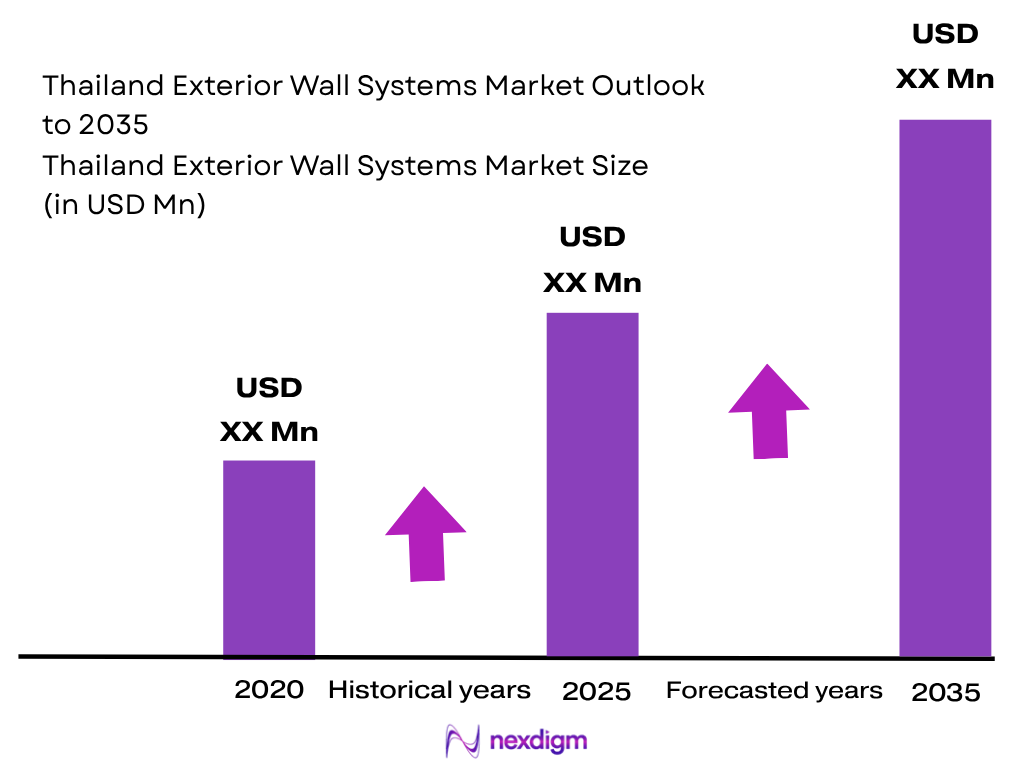
The Thailand Exterior Wall Systems Market is valued at ~USD XX billion based on the 2024 market assessment, with demand supported by residential construction, commercial development, hospitality projects, industrial facilities and infrastructure investment. Thailand recorded approximately 307,000 new private housing units in 2024, while construction activity remained concentrated around Bangkok and major economic corridors. Exterior wall demand is further supported by requirements for thermal control, weather resistance, solar protection and increasingly energy-efficient building envelopes across Thailand’s tropical climate.
Bangkok and the surrounding metropolitan area represent the principal demand centre for Thailand Exterior Wall Systems Market because of its concentration of high-rise residential, office, retail, hospitality and mixed-use developments. The Eastern Economic Corridor, particularly Chon Buri, Rayong and Chachoengsao, provides another important construction base through industrial estates, logistics facilities, commercial development and infrastructure projects. Thailand recorded 28.5 million international tourist arrivals in 2024, supporting hotel and hospitality construction, while Bangkok remained the country’s principal commercial and tourism hub.
Market Segmentation
By System Type
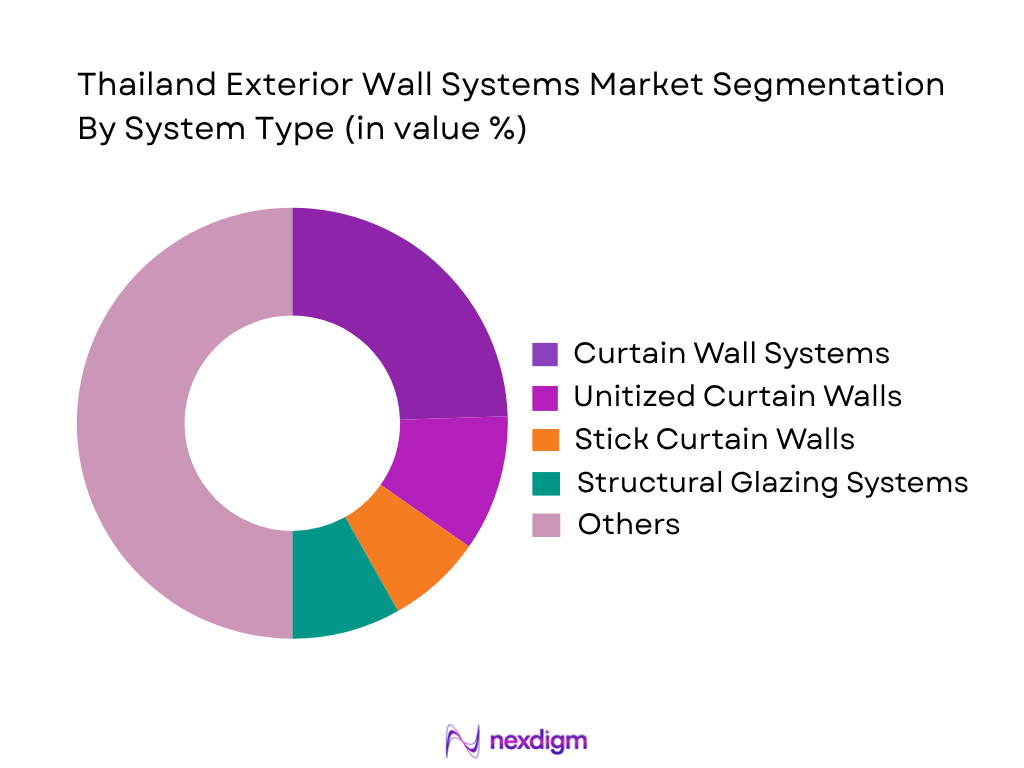
The Thailand Exterior Wall Systems Market is segmented by system type into curtain wall systems, unitized curtain walls, stick curtain walls, structural glazing systems, semi-unitized facade systems, aluminium cladding systems, aluminium composite panel cladding, metal cladding systems, stone cladding systems, rainscreen and ventilated facade systems, insulated exterior wall systems, and precast and GRC exterior wall systems. Curtain wall systems are expected to represent the leading sub-segment because they are extensively incorporated into Bangkok’s high-rise offices, condominiums, hotels, shopping centres and mixed-use developments. Unitized systems are gaining importance where developers prioritize faster installation and factory-controlled fabrication. Aluminium cladding and ACP systems remain widely used for opaque facade sections, architectural detailing and commercial buildings. Structural glazing supports premium architectural designs, while insulated, rainscreen and ventilated systems address Thailand’s heat, humidity and rainfall conditions. The combination of vertical urban development, commercial construction and hospitality investment supports sustained demand for glazed and opaque facade assemblies.
By Application
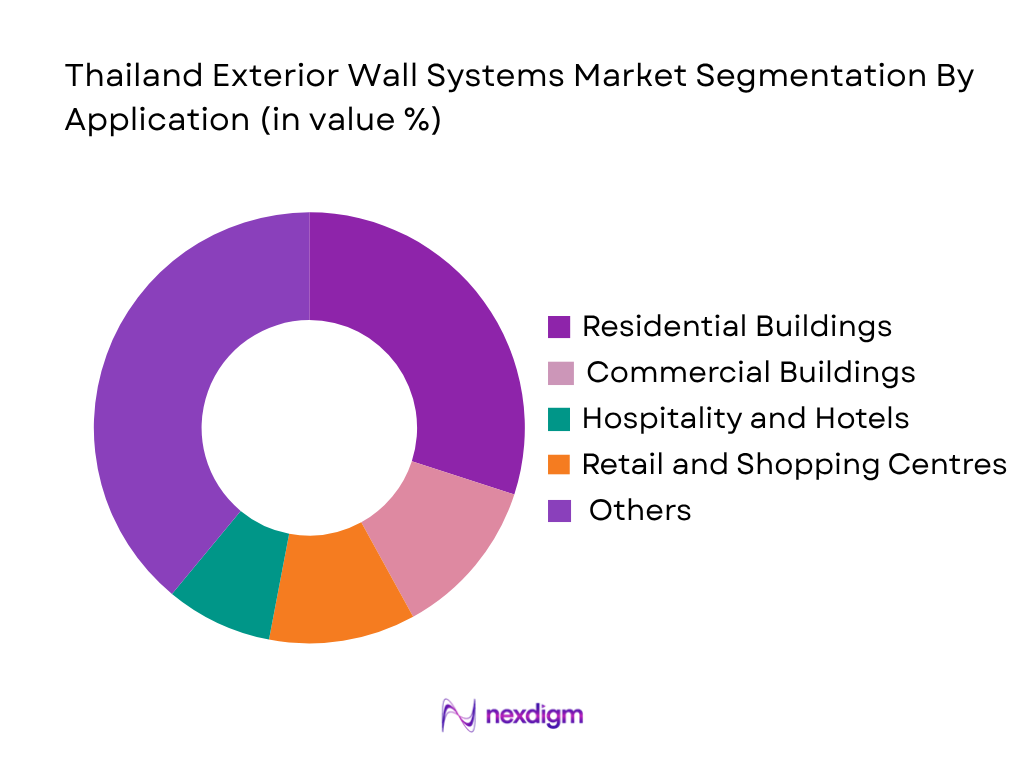
The Thailand Exterior Wall Systems Market is segmented by application into residential buildings, commercial buildings, hospitality and hotels, retail and shopping centres, office buildings, healthcare facilities, educational buildings, industrial and logistics buildings, airports and transportation infrastructure, government and institutional buildings, mixed-use developments and entertainment and cultural developments. Residential buildings are expected to represent the leading application because Thailand’s condominium and high-rise housing developments generate recurring requirements for curtain walls, architectural glazing, aluminium cladding, balcony systems and opaque facade assemblies. Bangkok’s dense urban structure supports vertical residential construction, while the Eastern Economic Corridor generates additional requirements for industrial, logistics and employee-housing developments. Hospitality is also significant because Thailand recorded approximately 28.5 million international tourist arrivals in 2024, supporting hotel renovation and new-build activity. Commercial, retail and mixed-use developments require extensive glazed facades and architectural cladding, while healthcare, education, transport and government projects provide demand for durable and performance-oriented envelope systems.
Competitive Landscape
The Thailand Exterior Wall Systems Market includes domestic facade manufacturers, aluminium and glass processors, building-material producers and international facade-system suppliers. Competition is shaped by system engineering capability, fabrication capacity, architectural glass processing, project execution experience, compliance with Thai building requirements, and relationships with developers, architects and main contractors. Companies with capabilities spanning curtain walls, aluminium systems, glazing, cladding and installation can participate across multiple building segments.
| Company | Establishment Year | Headquarters | Curtain Wall Capability | Aluminium Capability | Architectural Glass Capability | Cladding Portfolio | Project Execution | Aftermarket Support |
| Thai Metal Aluminium Co., Ltd. | 1974 | Thailand | ~ | ~ | ~ | ~ | ~ | ~ |
| TOSTEM THAI Co., Ltd. | 1998 | Thailand | ~ | ~ | ~ | ~ | ~ | ~ |
| YKK AP (Thailand) Co., Ltd. | 1992 | Thailand | ~ | ~ | ~ | ~ | ~ | ~ |
| Bangkok Glass Public Company Limited | 1974 | Thailand | ~ | ~ | ~ | ~ | ~ | ~ |
| Saint-Gobain Thailand | 1999 | Thailand | ~ | ~ | ~ | ~ | ~ | ~ |
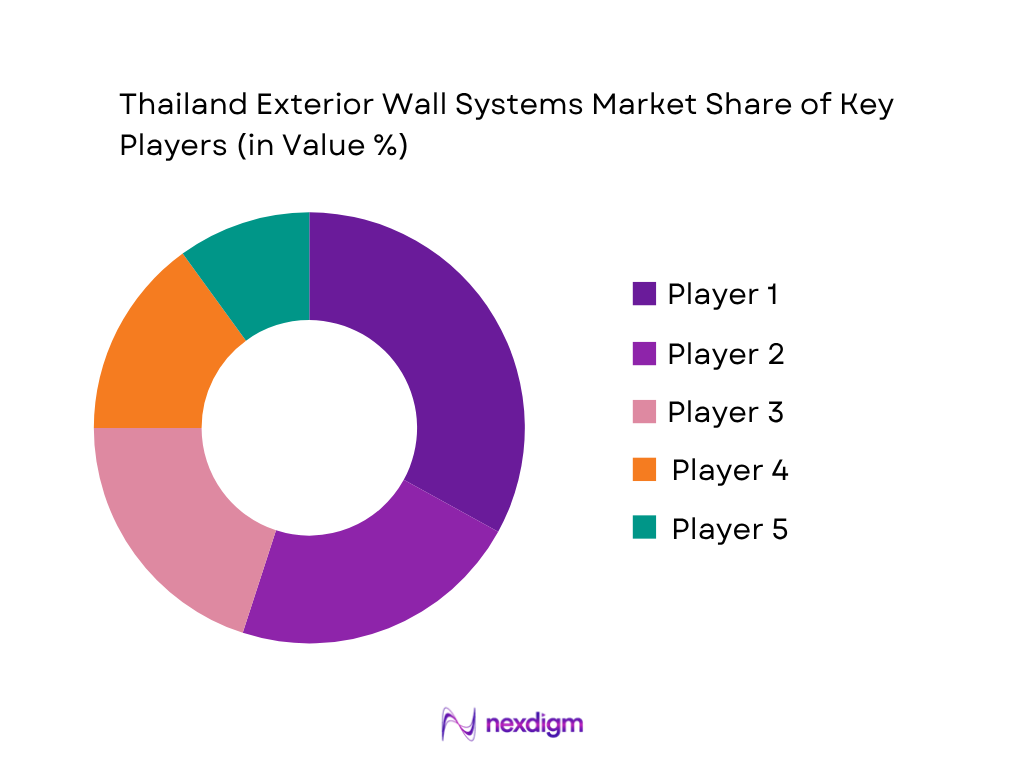
Thailand Exterior Wall Systems Market Analysis
Growth Drivers
Construction and Building Development Activity
The Thailand Exterior Wall Systems Market is supported by continuing construction activity across residential, commercial, industrial and mixed-use developments. Thailand recorded 188,461 new-building construction permits, 256,994 new construction units and approximately 52.10 million sq. m. of new building construction area in 2024. NSO Thailand Bangkok generated approximately 4.90 million sq. m. of new construction area, while the surrounding metropolitan provinces contributed approximately 13.75 million sq. m., creating a concentrated requirement for curtain walls, architectural glazing, aluminium cladding, ACP, insulated wall systems and other facade assemblies. NSO Thailand Thailand also recorded 4,979 civil-engineering construction projects in 2024, indicating additional infrastructure-related building activity. NSO Thailand The scale of construction supports demand for both complete facade packages and individual components including aluminium profiles, architectural glass, insulation, sealants, anchors and cladding substructures. High-rise residential and commercial projects require extensive glazed and opaque envelope systems, while industrial and logistics facilities generate requirements for insulated panels and metal cladding. The combination of new-build activity and additions or alterations, which reached approximately 2.82 million sq. m. in 2024, also creates opportunities for replacement facades, refurbishment and building-envelope upgrades. NSO Thailand
Tourism, Hospitality and Commercial Development
Tourism and hospitality development provides another important demand base for the Thailand Exterior Wall Systems Market because hotels, resorts, retail centres, entertainment facilities and mixed-use developments require substantial facade packages. Thailand welcomed 35,047,501 international visitors from January 1 to December 27, 2024, generating more than THB 1.8 trillion in tourism revenue. International airline seat capacity reached approximately 47 million seats, representing an additional 26% from the previous year. TAT Newsroom This activity supports continued investment in hotels, resorts, restaurants, retail properties and tourism-oriented mixed-use developments. National Statistical Office construction data also identifies hotel and commercial building activity within Thailand’s permitted construction base, supporting requirements for curtain walls, structural glazing, architectural glass, aluminium cladding, rainscreen assemblies and weather-resistant facade components. NSO Thailand Bangkok functions as a major commercial and hospitality development centre, while Phuket, Pattaya, Chiang Mai and other tourism destinations create regional demand for facade systems. Hospitality buildings require durable exterior envelopes because facades must withstand Thailand’s heat, humidity, rainfall and solar exposure while maintaining architectural appearance. This creates demand for solar-control glazing, corrosion-resistant aluminium, durable coatings, high-performance sealants and water-management systems.
Market Challenges
Construction Activity Volatility and Uneven Project Pipeline
The Thailand Exterior Wall Systems Market faces fluctuations in construction activity because facade demand is closely connected to building approvals, project financing and execution schedules. National Statistical Office data shows that new-building permits declined from 208,741 in 2023 to 188,461 in 2024, while new construction units declined from 300,021 to 256,994. New construction area decreased from approximately 60.85 million sq. m. to 52.10 million sq. m. over the same period. NSO Thailand At the same time, additions and alterations increased to 3,395 permits and approximately 2.82 million sq. m. of construction area, providing some support for refurbishment-oriented facade demand. NSO Thailand IMF data records Thailand’s real GDP growth at 2.7% in 2024, compared with 1.9% in 2023, while gross fixed investment growth was only 0.1% in 2024. IMF eLibrary These conditions can create uneven procurement schedules for facade manufacturers and installation contractors. Large commercial, industrial, hospitality and infrastructure projects can offset weaker segments, but project concentration may increase exposure to individual development delays. Suppliers therefore need flexibility across curtain walls, cladding, glazing, insulation, architectural systems and retrofit applications to manage fluctuations in construction demand.
Climate Exposure and Building-Envelope Performance Requirements
Thailand’s tropical climate creates demanding operating conditions for exterior wall systems because intense solar exposure, humidity, heavy rainfall and wind-driven water can affect architectural glazing, aluminium cladding, ACP, sealants, coatings and facade joints. Thailand recorded approximately 52.10 million sq. m. of new building construction area in 2024, while additions and alterations represented another approximately 2.82 million sq. m., creating a substantial installed base requiring long-term envelope performance. NSO Thailand Bangkok alone recorded approximately 4.90 million sq. m. of new construction area, while surrounding provinces recorded approximately 13.75 million sq. m. NSO Thailand Hospitality assets face additional operational requirements because Thailand received more than 35 million international visitors during 2024, increasing utilization of hotels, resorts and tourism facilities. TAT Newsroom Facade suppliers consequently need to address water tightness, thermal control, solar heat gain, corrosion resistance, drainage, sealant durability and structural performance. These requirements increase engineering and installation complexity, particularly for high-rise buildings and large glazed facades. Poor detailing or material selection can lead to water ingress, coating deterioration, sealant failure and increased maintenance requirements. Consequently, facade engineering, testing, installation quality and material durability remain important considerations for developers and contractors.
Market Opportunities
Facade Retrofit, Renovation and Building-Envelope Upgrades
The Thailand Exterior Wall Systems Market has opportunities in facade renovation, replacement glazing, cladding refurbishment and building-envelope performance upgrades. Thailand recorded 3,395 permits for building additions and alterations in 2024, compared with 3,175 in 2023, while associated construction area reached approximately 2.82 million sq. m. NSO Thailand This provides a measurable construction base for replacement windows, curtain-wall refurbishment, aluminium cladding replacement, sealant renewal, architectural-glass upgrades and improvements to facade insulation. Existing offices, hotels, retail properties, residential buildings and institutional assets can require modernization as building envelopes age or owners seek improved thermal and solar performance. The opportunity is particularly relevant to hospitality assets because Thailand welcomed 35,047,501 international visitors in 2024 and generated more than THB 1.8 trillion in tourism revenue. TAT Newsroom Building owners can use renovation projects to improve architectural appearance while addressing solar heat gain, water penetration and weather resistance without completely reconstructing the building. Relevant solutions include Low-E and solar-control glazing, thermally improved aluminium systems, rainscreen cladding, insulated exterior assemblies, replacement curtain-wall components, durable coatings and high-performance sealants. Retrofit demand therefore provides facade contractors and material suppliers with an additional revenue opportunity beyond new construction.
High-Performance and Climate-Responsive Facade Systems
The Thailand Exterior Wall Systems Market presents opportunities for high-performance facade technologies designed around solar exposure, heat transfer, moisture management and building-envelope durability. Thailand recorded 52.10 million sq. m. of new building construction area in 2024, providing a substantial base for solar-control glazing, insulated panels, thermally improved aluminium, ventilated facades and rainscreen systems. NSO Thailand Bangkok and surrounding metropolitan provinces represented approximately 18.64 million sq. m. of new construction area, creating concentrated opportunities for advanced facade solutions in high-rise residential, commercial, office and mixed-use developments. NSO Thailand Thailand’s real GDP expanded 2.7% in 2024, while gross domestic investment represented 20.8% of GDP, according to the IMF, providing a macroeconomic base for ongoing investment in productive and built assets. IMF eLibrary High-performance systems can support developers seeking improved thermal control, weather resistance and lifecycle durability. Relevant technologies include unitized curtain walls, Low-E architectural glass, thermally improved aluminium profiles, insulated exterior wall systems, ventilated facades, solar-shading systems and durable facade coatings. The opportunity consequently extends beyond individual materials toward integrated building-envelope packages addressing structural, thermal, solar, water and durability requirements.
Future Outlook
The Thailand Exterior Wall Systems Market is expected to develop alongside continued urban construction, commercial real-estate investment, hospitality development and industrial expansion. Demand is likely to increasingly emphasize thermal performance, solar control, weather resistance and durable facade materials suited to Thailand’s tropical environment. Unitized curtain walls, high-performance glazing, ventilated facades and prefabricated facade components are positioned to gain greater relevance as project developers seek improved construction efficiency and building-envelope performance. The Eastern Economic Corridor, Bangkok metropolitan development and tourism-oriented construction are expected to remain important demand centres.
Major Players
- Thai Metal Aluminium Co., Ltd.
- TOSTEM THAI Co., Ltd.
- YKK AP (Thailand) Co., Ltd.
- Bangkok Glass Public Company Limited
- Thai-Asahi Glass Co., Ltd.
- Guardian Industries Thailand
- Saint-Gobain Thailand
- SCG Smart Living
- Siam Cement Group
- Kingspan Thailand
- Sika (Thailand) Limited
- Schüco Thailand
- Aluform (Thailand) Co., Ltd.
- Boonthavorn Ceramic Co., Ltd.
- JSP Industries Co., Ltd.
Key Target Audience
- Real Estate Developers and Property Development Companies
- Facade Contractors and Building-Envelope Specialists
- Aluminium, Glass and Cladding Manufacturers
- Main Contractors and Construction Companies
- Architectural and Facade Engineering Procurement Teams
- Investments and Venture Capitalist Firms
- Government and Regulatory Bodies (Department of Public Works and Town & Country Planning, Ministry of Industry, Thai Industrial Standards Institute)
- Building Material Distributors and Specialized Facade Suppliers
Research Methodology
Step 1: Identification of Key Variables
The initial phase involves mapping the Thailand Exterior Wall Systems ecosystem across facade manufacturers, aluminium extruders, architectural glass processors, cladding suppliers, facade contractors, developers, architects and main contractors. Secondary research is used to establish system classifications, application categories, construction activity indicators and project-development variables relevant to Thailand’s building-envelope industry.
Step 2: Market Analysis and Construction
Historical market information is compiled across curtain walls, structural glazing, aluminium cladding, ACP, metal cladding, insulated systems, rainscreen systems and GRC/GFRC facades. The analysis incorporates installation area, construction activity, building type, application, regional development and project pipeline indicators to construct the market database and establish demand relationships.
Step 3: Hypothesis Validation and Expert Consultation
Market hypotheses are validated through consultations with facade contractors, system manufacturers, architectural glass processors, aluminium fabricators, developers, architects and procurement specialists. Discussions focus on system selection, project specifications, fabrication capacity, installation requirements, material sourcing, performance standards and competitive dynamics across Thailand’s major construction centres.
Step 4: Research Synthesis and Final Output
The final research framework integrates bottom-up company and project assessments with top-down construction indicators and external-wall installation assumptions. Data is cross-checked across system type, application and regional demand categories to improve consistency, while expert inputs are used to validate market structure, competitive positioning and future demand drivers.

- Executive Summary
- Research Methodology (Market Definitions and Assumptions, Thailand Exterior Wall Systems Market Classification, Building-Envelope Scope, Facade System Mapping, Curtain Wall Assessment, Structural Glazing Assessment, Unitized Facade Assessment, Stick Curtain Wall Assessment, Aluminium Cladding Assessment, Aluminium Composite Panel Assessment, Metal Cladding Assessment, Stone Cladding Assessment, Rainscreen Facade Assessment, Ventilated Facade Assessment, Insulated Exterior Wall Assessment, Architectural Glass Assessment, GRC and GFRC Facade Assessment, Ceramic and Terracotta Cladding Assessment, Thermal Performance Assessment, OTTV and RTTV Assessment, Solar Control Assessment, Fire Performance Assessment, Wind-Load Assessment, Water-Tightness Assessment, Acoustic Performance Assessment, Corrosion Resistance Assessment, Humidity and Monsoon Exposure Assessment, Supply-Side Assessment, Demand-Side Assessment, Top-Down Market Sizing, Bottom-Up Market Sizing, Primary Industry Interviews, Construction Project Pipeline Assessment, Data Triangulation, Forecasting Framework)

- Definition and Scope
- Thailand Building-Envelope Industry Evolution and Development of Curtain Wall Systems, Unitized Facades, Stick Curtain Walls, Structural Glazing, Aluminium Cladding, Aluminium Composite Panel Cladding, Metal Cladding, Stone Cladding, Glass Facades, GRC and GFRC Facades, Rainscreen Systems, Ventilated Facades, Insulated Wall Systems, High-Performance Glazing, Solar-Control Facades, Prefabricated Facade Systems, Sustainable Exterior Wall Technologies
- Exterior Wall Systems Value Chain Analysis
- Exterior Wall Systems Supply Chain Analysis
- Aluminium Extrusion Suppliers, Architectural Glass Manufacturers, ACP Manufacturers, GRC and GFRC Manufacturers, Insulation Material Suppliers, Sealant and Adhesive Suppliers, Steel and Structural Component Suppliers, Facade System Providers, Facade Engineering Companies, Facade Contractors, Fabrication Facilities, Installation Contractors, Main Contractors, Real Estate Developers, Architects, Consultants, Building Material Distributors, Building Testing and Certification Providers

- Growth Drivers (Bangkok High-Rise Development, Eastern Economic Corridor Investment, Commercial Real Estate Development, Residential Condominium Construction, Hospitality and Tourism Development, Industrial Estate Expansion, Infrastructure Development, Mixed-Use Development, Premium Architectural Facade Demand, Building Energy Efficiency Requirements, Urban Redevelopment, Data Centre Development)
- Market Challenges (High Installation Complexity, Skilled Facade Installer Requirements, Tropical Heat and Humidity Exposure, Heavy Rainfall and Monsoon Conditions, Corrosion Risk, Imported Material Dependency, Project Execution Delays, Fire-Safety Compliance Requirements, Facade Maintenance Requirements, Material and Component Supply Constraints)
- Market Opportunities (High-Performance Curtain Walls, Energy-Efficient Glazing, Unitized Facade Adoption, Sustainable Cladding Systems, Building Retrofit and Facade Renovation, EEC Industrial and Commercial Development, Luxury Hospitality Projects, GRC and GFRC Architectural Facades, Green Building Materials, Solar-Control Facades, Ventilated Facade Systems, Smart Facade Technologies)
- Market Trends (Unitized Curtain Wall Adoption, High-Performance Low-E Glass, Thermally Broken Aluminium Systems, Sustainable Cladding Materials, GRC and GFRC Architectural Systems, Rainscreen Facades, Integrated Solar Shading, Prefabricated Facade Components, Digital Facade Engineering, BIM-Based Facade Coordination, Smart Building Envelopes, Lightweight Cladding, High-Durability Coatings)
- Government Regulations and Standards (Thai Building Control Act, Ministerial Building Regulations, TIS Curtain Wall Standard, Building Energy Code, OTTV Requirements, RTTV Requirements, External Wall Material Requirements, Fire and Life Safety Requirements, Glazing Safety Requirements, Wind-Load Requirements, Building Permit Requirements, Facade Material Testing and Certification Requirements) SWOT Analysis
- Porter’s Five Forces Analysis
- PESTLE Analysis
- Stakeholder Ecosystem
- Construction and Facade Project Ecosystem

- By Market Value (2020-2025)
- By Exterior Wall Systems Installation Area (2020-2025)
- By Curtain Wall Installation Area (2020-2025)
- By Cladding Installation Area (2020-2025)
- By Architectural Glass Installation Area (2020-2025)
- By Aluminium Facade Installation Volume (2020-2025)
- By GRC and GFRC Facade Installation Area (2020-2025)
- By Insulated Wall System Installation Area (2020-2025)
- By Residential Exterior Wall System Installation Area (2020-2025)

- By System Type (In Value %)
Curtain Wall Systems
Unitized Curtain Walls
Stick Curtain Walls
Structural Glazing Systems
Semi-Unitized Facade Systems
Aluminium Cladding Systems
Aluminium Composite Panel Cladding
Metal Cladding Systems
Stone Cladding Systems
Rainscreen and Ventilated Facade Systems
Insulated Exterior Wall Systems
Precast and GRC Exterior Wall Systems - By Material Type (In Value %)
Aluminium
Architectural Glass
Aluminium Composite Panels
Steel
Natural Stone
Ceramic and Terracotta
GRC and GFRC
Insulation Materials
Concrete and Precast Materials
Other Facade Materials - By Application (In Value %)
Residential Buildings
Commercial Buildings
Hospitality and Hotels
Retail and Shopping Centres
Office Buildings
Healthcare Facilities
Educational Buildings
Industrial and Logistics Buildings
Airports and Transportation Infrastructure
Government and Institutional Buildings
Mixed-Use Developments
Entertainment and Cultural Developments - By Building Height (In Value %)
Low-Rise Buildings
Mid-Rise Buildings
High-Rise Buildings
Super High-Rise Buildings
Skyscrapers - By Region (In Value %)
Bangkok Metropolitan Region
Central Thailand
Eastern Economic Corridor
Eastern Thailand
Northern Thailand
Northeastern Thailand
Southern Thailand
Western Thailand

- Market Share of Major Players (By Thailand Revenue, Facade Project Value, Curtain Wall Installation Capacity, Aluminium Fabrication Capacity, Architectural Glass Processing Capacity, Cladding Portfolio, Unitized Facade Capability, GRC and GFRC Capability, High-Rise Project Portfolio, Regional Project Coverage, Green Building Capability, Facade Engineering Capability, Installation Capacity, Aftermarket and Maintenance Support)
- Cross Comparison Parameters (Curtain Wall System Portfolio Breadth, Unitized Facade Manufacturing Capability, Architectural Glass Processing Capability, Aluminium Fabrication Capacity, High-Performance Glazing Capability, Facade Engineering and Design Capability, High-Rise and Complex Project Execution Capability, Green Building and Energy-Efficiency Compliance)
- SWOT Analysis of Major Players
- Competitive Positioning Matrix
- Major Companies
Thai Metal Aluminium Co., Ltd.
Aluform (Thailand) Co., Ltd.
Bangkok Glass Public Company Limited
TOSTEM THAI Co., Ltd.
YKK AP (Thailand) Co., Ltd.
JSP Industries Co., Ltd.
Thai-Asahi Glass Co., Ltd.
Guardian Industries Thailand
Saint-Gobain Thailand
SCG Smart Living
Siam Cement Group
Boonthavorn Ceramic Co., Ltd.
Kingspan Thailand
Sika (Thailand) Limited
Schüco Thailand

- Real Estate Developer Facade Requirement Assessment
- Main Contractor Procurement Assessment
- Facade Contractor Project Requirement Analysis
- Architect and Design Specification Assessment
- Commercial Building Envelope Requirement Assessment
- Residential High-Rise Facade Requirement Assessment
- Hospitality Facade Requirement Assessment
- Industrial Estate and Factory Facade Requirement Assessment
- Infrastructure and Transportation Facade Assessment

- By Market Value (2026-2035)
- By Exterior Wall Systems Installation Area (2026-2035)
- By Curtain Wall Installation Area (2026-2035)
- By Cladding Installation Area (2026-2035)
- By Architectural Glass Installation Area (2026-2035)
- By Aluminium Facade Installation Volume (2026-2035)
- By GRC and GFRC Facade Installation Area (2026-2035)
- By Insulated Wall System Installation Area (2026-2035)
- By Residential Exterior Wall System Installation Area (2026-2035)


 Request a Sample
 Ask for Customization
 Get a Quote
 Enquire Now