

 Download PDF
Market Overview
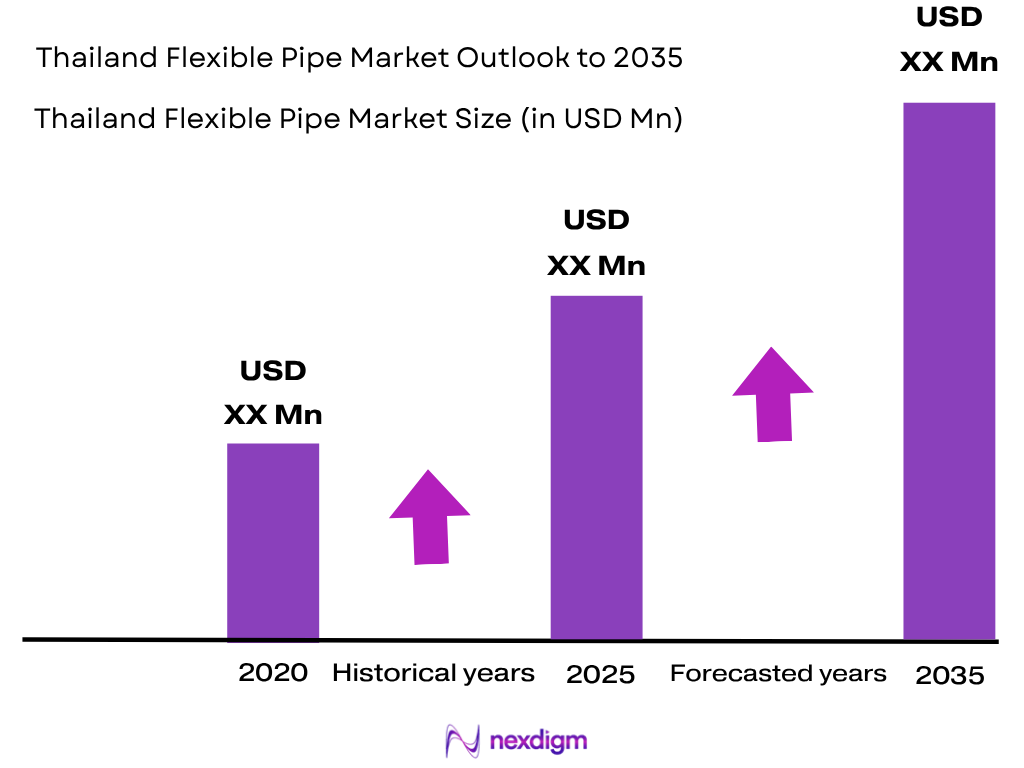
Thailand flexible pipe market refers to the demand for engineered flexible pipeline systems used for offshore oil & gas production, subsea transportation, industrial fluid transfer, water infrastructure, and emerging energy applications. These systems include reinforced thermoplastic pipes, composite flexible pipes, bonded and unbonded flexible pipes designed for high-pressure, corrosion-resistant, and dynamic offshore environments. The market is closely linked with Thailand’s offshore energy ecosystem, particularly activities in the Gulf of Thailand, where flexible pipes support production risers, flowlines, jumpers, and field maintenance requirements. (IndexBox)
The market structure is primarily influenced by offshore oil and gas operators, engineering procurement and construction companies, subsea service providers, and marine infrastructure developers. Thailand’s offshore flexible pipe demand remains concentrated around mature offshore fields requiring replacement, redevelopment, and life-extension solutions rather than large-scale greenfield developments. Flexible pipe systems are increasingly preferred for applications requiring faster installation, lower corrosion risk, and operational flexibility compared with conventional rigid pipeline systems.
Market Segmentation
By Application Type
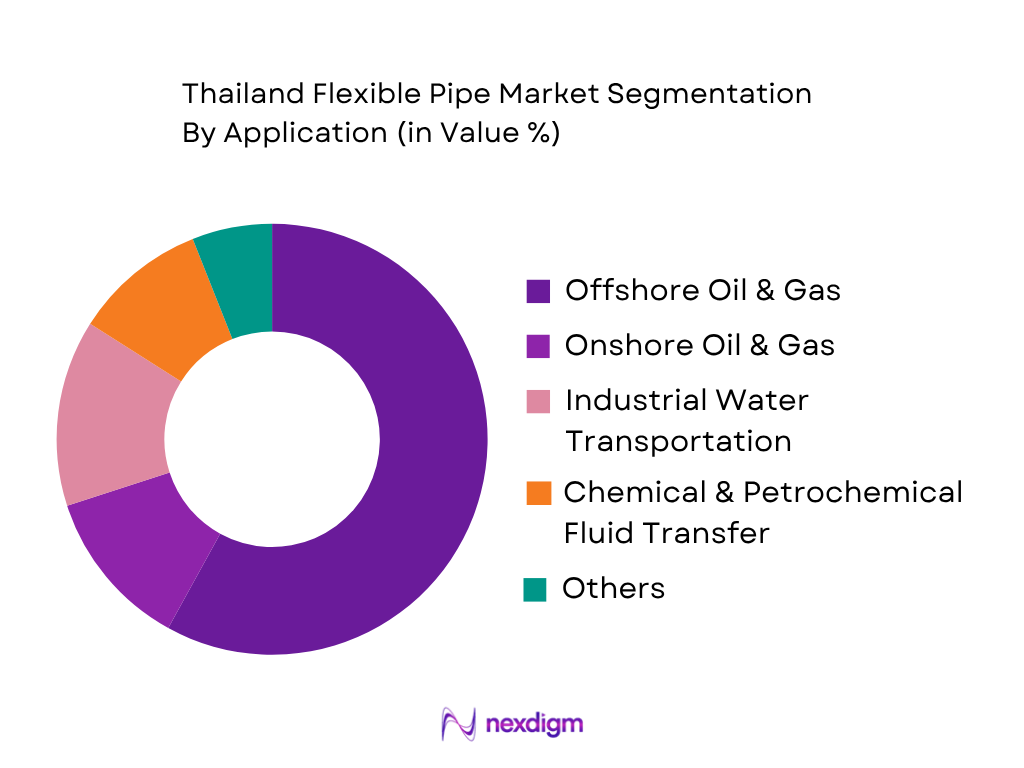
Thailand flexible pipe market is segmented by application into offshore oil & gas, onshore oil & gas, industrial water transportation, chemical and petrochemical fluid transfer, and renewable energy infrastructure. Offshore oil & gas represents the dominant application segment due to the country’s established offshore production ecosystem in the Gulf of Thailand and continuous requirement for subsea production support. Flexible pipes are extensively used in dynamic risers, subsea flowlines, water injection systems, and gas transportation applications because they provide resistance against corrosion, fatigue, and seabed movement. Thailand’s offshore operations are concentrated around mature fields where replacement and redevelopment activities require flexible pipeline solutions. PTTEP remains a major offshore operator, supporting demand for advanced pipeline systems. Thailand’s offshore flexible pipe market is therefore strongly connected with field extension programs, offshore maintenance activities, and subsea infrastructure optimization.
By Material Type
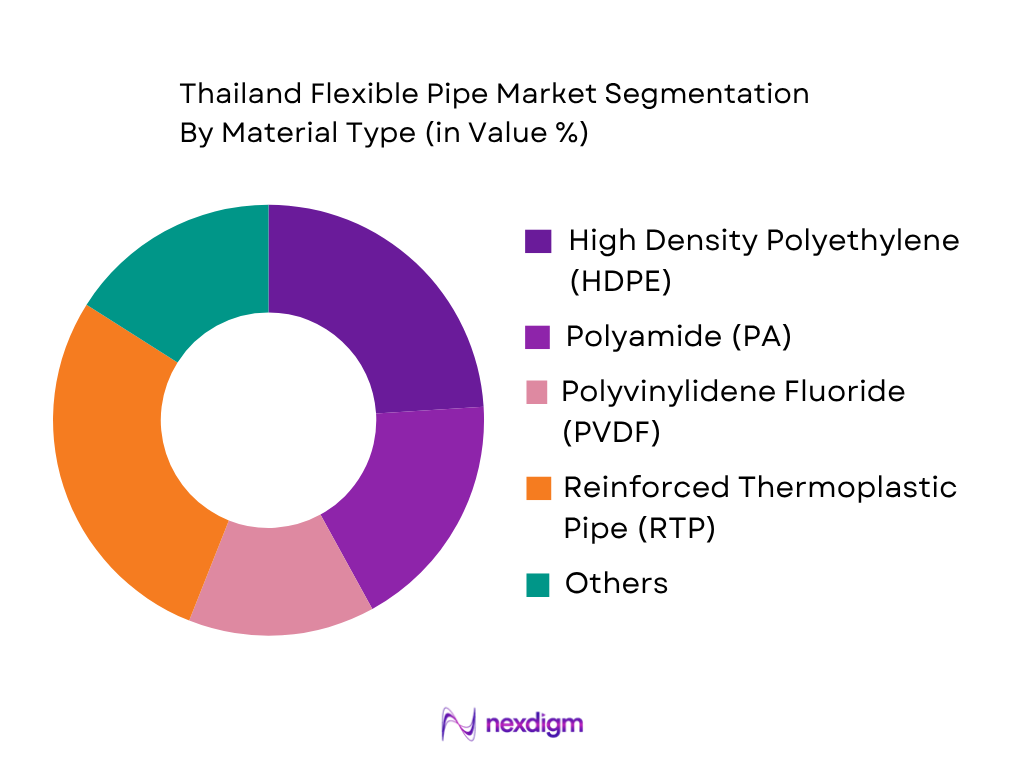
Thailand flexible pipe market is segmented by material type into HDPE, Polyamide, PVDF, Reinforced Thermoplastic Pipe, and Composite Flexible Pipe. Reinforced Thermoplastic Pipe is expected to represent a significant material category because of its increasing adoption in applications requiring lightweight construction, corrosion resistance, and easier installation compared with traditional metallic pipeline systems. RTP solutions combine thermoplastic liners with reinforcement layers to withstand pressure conditions while reducing maintenance requirements. These characteristics make RTP suitable for offshore production support, chemical transportation, and industrial applications. Thailand’s dependence on imported advanced flexible pipe technologies has encouraged operators and engineering firms to evaluate alternative composite and thermoplastic solutions that can improve lifecycle performance. The growing requirement for cost-efficient pipeline rehabilitation and replacement of aging infrastructure supports demand for RTP and composite materials within the country’s energy and industrial sectors.
Competitive Landscape
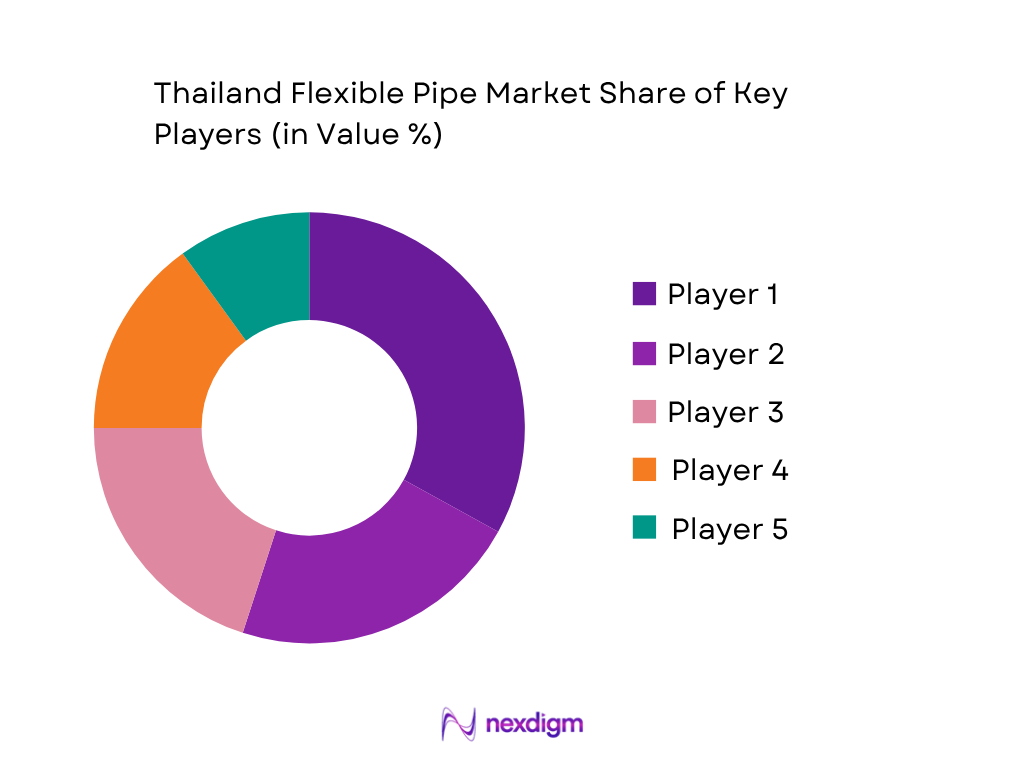
Thailand flexible pipe market is characterized by the presence of international flexible pipe manufacturers, offshore engineering companies, and subsea technology providers. The market remains technology-intensive because manufacturing requires specialized polymer formulations, reinforcement technologies, pressure testing capabilities, and offshore qualification standards. Local companies mainly participate through engineering, installation, maintenance, and service activities, while advanced flexible pipe manufacturing remains concentrated among global suppliers.
| Company | Establishment Year | Headquarters | Key Products | Offshore Capability | Material Expertise | Application Focus | Regional Presence | Service Capability |
| TechnipFMC | 2017 | United Kingdom | ~ | ~ | ~ | ~ | ~ | ~ |
| Baker Hughes | 2017 | United States | ~ | ~ | ~ | ~ | ~ | ~ |
| NOV | 1862 | United States | ~ | ~ | ~ | ~ | ~ | ~ |
| Vallourec | 1899 | France | ~ | ~ | ~ | ~ | ~ | ~ |
| Prysmian Group | 1872 | Italy | ~ | ~ | ~ | ~ | ~ | ~ |
Thailand Flexible Pipe Market Analysis
Growth Drivers
Expansion of Gulf of Thailand Offshore Production
Thailand’s offshore oil and gas ecosystem remains the primary demand contributor for flexible pipe systems due to continued production activities in the Gulf of Thailand. The country’s offshore assets require flexible risers, flowlines, and subsea connectors for production, maintenance, and field redevelopment activities. According to Thailand’s Ministry of Energy, domestic natural gas production remains a critical component of the national energy system, with natural gas contributing around 60,000 million cubic feet per month to Thailand’s energy supply chain during recent operating periods. The mature nature of offshore fields increases the requirement for replacement and upgrading of pipeline infrastructure. The Gulf of Thailand contains multiple producing fields operated through long-term offshore concessions, creating continuous demand for corrosion-resistant and flexible pipeline solutions. Flexible pipes are preferred because they can withstand dynamic offshore movement, high-pressure operating environments, and complex seabed conditions. Thailand’s GDP recorded approximately USD 512 billion in 2024, according to World Bank indicators, reflecting continued industrial activity supporting energy infrastructure investment. The combination of offshore production dependence, aging subsea assets, and the need for efficient maintenance solutions supports expansion of flexible pipe applications across Thailand’s offshore energy sector.
Increasing Subsea Maintenance Activities
Increasing subsea maintenance activities are becoming an important growth driver for Thailand’s flexible pipe market as existing offshore infrastructure requires inspection, repair, and replacement solutions. Thailand’s offshore production assets have operated for several decades, creating demand for flexible pipeline systems used in flowline replacement, subsea tiebacks, and production optimization projects. According to the Department of Mineral Fuels Thailand, the country continues to manage multiple offshore petroleum blocks in the Gulf of Thailand, requiring regular maintenance and asset integrity programs. Thailand recorded approximately 1.7 million barrels per day of oil equivalent energy consumption in 2024, according to international energy statistics, highlighting the importance of maintaining reliable energy infrastructure. Flexible pipes provide advantages in offshore maintenance because they require lower installation complexity compared with rigid steel systems and can be deployed in challenging marine environments. Additionally, Thailand’s industrial sector consumed significant quantities of natural gas, with the country importing approximately 2.5 trillion cubic feet equivalent of LNG and pipeline gas annually in recent energy reporting periods, increasing the requirement for reliable offshore-to-shore transportation systems.
Market Challenges
High Dependence on Imported Flexible Pipe Technologies
Thailand’s flexible pipe market faces challenges due to limited domestic manufacturing capability for advanced flexible pipeline systems. High-performance flexible pipes require specialized polymer layers, reinforcement materials, pressure testing facilities, and offshore qualification capabilities, which remain concentrated among international manufacturers. Thailand imports significant volumes of advanced energy equipment due to limited domestic production of complex offshore technologies. According to World Bank trade indicators, Thailand’s machinery and industrial equipment imports exceeded USD 70 billion in 2024, demonstrating the country’s dependence on imported technology solutions for industrial development. Advanced flexible pipe systems used in offshore applications require compliance with international offshore standards and extensive testing before deployment. Local companies primarily participate in installation, engineering support, and maintenance activities rather than manufacturing complete flexible pipe systems. This dependence increases project lead times, procurement complexity, and exposure to international supply chain disruptions. Developing local assembly, testing, and maintenance capabilities remains a key requirement for strengthening Thailand’s flexible pipe ecosystem.
Offshore Qualification Requirements
Stringent offshore qualification requirements represent another major challenge for Thailand’s flexible pipe market. Flexible pipeline systems used in offshore oil and gas applications must undergo extensive testing for pressure resistance, fatigue performance, chemical compatibility, and long-term operational reliability. These requirements increase development complexity and restrict participation of smaller domestic manufacturers. Thailand’s offshore petroleum industry operates under regulations managed by agencies including the Department of Mineral Fuels, requiring operators to comply with technical safety standards. Offshore projects require equipment capable of operating under demanding marine conditions, including high humidity, saltwater exposure, and dynamic movement. Thailand’s offshore sector remains concentrated around mature fields, making reliability and asset integrity critical factors during procurement decisions. The country’s industrial sector consumed approximately 36 million tonnes of oil equivalent energy in 2024, according to energy statistics, increasing pressure on operators to maintain uninterrupted energy supply. These technical requirements create barriers for local companies attempting to enter advanced flexible pipe manufacturing.
Market Opportunities
Offshore Gas Field Development
Offshore gas field development presents an opportunity for Thailand’s flexible pipe market due to continued reliance on natural gas for electricity generation and industrial applications. Flexible pipes are essential components in offshore gas production systems, including subsea flowlines, risers, and connection systems. Thailand continues to develop and maintain offshore petroleum resources in the Gulf of Thailand to support domestic energy security. According to Thailand’s Ministry of Energy, natural gas remains a major contributor to electricity generation, accounting for approximately 60% of Thailand’s power generation mix in recent energy assessments. The country’s LNG infrastructure expansion also supports future requirements for flexible pipeline technologies across offshore and marine applications. Flexible pipes provide advantages in offshore gas projects through improved corrosion resistance, reduced installation time, and suitability for complex seabed conditions. Existing offshore assets and future field development activities create opportunities for advanced flexible pipe suppliers, engineering companies, and local service providers to participate in Thailand’s energy infrastructure development.
Reinforced Thermoplastic Pipe Adoption
Reinforced Thermoplastic Pipe (RTP) adoption represents a significant opportunity in Thailand due to increasing demand for lightweight, corrosion-resistant, and lower-maintenance pipeline solutions. RTP systems are increasingly considered alternatives to conventional steel pipelines in applications requiring chemical resistance, operational flexibility, and faster installation. Thailand’s industrial sector includes petrochemical facilities, water management systems, and offshore energy operations where corrosion-resistant pipeline technologies are required. According to World Bank data, Thailand’s industrial value-added sector contributed approximately USD 160 billion in economic output in 2024, supporting demand for advanced industrial infrastructure solutions. RTP adoption can support pipeline rehabilitation projects, offshore maintenance activities, and industrial fluid transportation requirements. The technology is particularly suitable for replacing aging infrastructure where operators seek improved lifecycle performance. As Thailand continues infrastructure modernization and energy transition initiatives, RTP solutions provide opportunities for domestic service development, technology partnerships, and expansion of flexible pipeline applications beyond traditional oil and gas operations.
Future Outlook
The Thailand Flexible Pipe Market is expected to experience steady development driven by continued offshore oil and gas operations, subsea infrastructure maintenance, LNG-related investments, and increasing adoption of corrosion-resistant pipeline technologies. The market outlook is shaped by Thailand’s mature offshore energy assets, where flexible pipes are required for field redevelopment, production optimization, and replacement of aging infrastructure. Emerging applications including offshore renewable energy support systems, carbon capture infrastructure, and advanced composite pipeline solutions are expected to create additional demand avenues. Thailand’s position as an offshore engineering hub in Southeast Asia also supports opportunities for service expansion and regional project support.
Major Players
- TechnipFMC
- Baker Hughes
- NOV Inc.
- Aker Solutions
- Subsea 7
- Saipem
- McDermott International
- Vallourec
- Prysmian Group
- Trelleborg Offshore & Construction
- Strohm
- Magma Global
- Airborne Oil & Gas
- Shawcor
- PTT Exploration and Production
Key Target Audience
- Offshore Oil & Gas Operators
- Subsea Engineering and Offshore EPC Companies
- Flexible Pipe Manufacturers and Technology Providers
- Marine Installation and Offshore Service Companies
- Petrochemical and Industrial Infrastructure Developers
- Investments and Venture Capitalist Firms (Energy Infrastructure Investment Funds, Industrial Technology Investors)
- Government and Regulatory Bodies (Ministry of Energy Thailand, Department of Mineral Fuels Thailand, Energy Policy and Planning Office)
- LNG Terminal Operators and Energy Infrastructure Companies
Research Methodology
Step 1: Identification of Key Variables
The initial phase involves developing a comprehensive ecosystem map of Thailand’s flexible pipe market, covering offshore operators, EPC contractors, subsea service providers, manufacturers, material suppliers, and regulatory institutions. Secondary research is conducted to identify market drivers, application areas, material trends, and infrastructure development patterns influencing flexible pipe demand.
Step 2: Market Analysis and Construction
Historical market information is analyzed through demand-side and supply-side assessment frameworks. This stage evaluates offshore field activities, pipeline replacement requirements, industrial applications, import dependency, technology adoption, and end-user demand patterns. The market structure is developed by analyzing application segments, material categories, and project-based demand indicators.
Step 3: Hypothesis Validation and Expert Consultation
Market assumptions are validated through discussions with industry participants including offshore operators, engineering companies, pipeline specialists, and technology providers. Expert consultations provide operational insights regarding installation requirements, qualification standards, procurement processes, and technology preferences within Thailand’s flexible pipe ecosystem.
Step 4: Research Synthesis and Final Output
The final stage integrates quantitative and qualitative findings to develop a comprehensive market assessment. Information from manufacturers, operators, and infrastructure stakeholders is consolidated to validate market segmentation, competitive positioning, growth drivers, challenges, and future opportunities.

- Executive Summary
- Research Methodology (Market Definition and Scope, Market Ecosystem Mapping, Flexible Pipe Industry Classification, Market Sizing Framework, Revenue Estimation Methodology, Top-Down Market Analysis, Bottom-Up Market Assessment, Demand-Side Analysis, Supply-Side Analysis, Primary Industry Interviews, Secondary Data Validation, Data Triangulation, Forecasting Framework, Research Limitations)

- Definition and Scope
- Flexible Pipe Technology Evolution
- Thailand Offshore Energy Infrastructure Overview
- Flexible Pipe Value Chain Analysis
- Thailand Flexible Pipe Industry Ecosystem

- Growth Drivers (Expansion of Gulf of Thailand Offshore Production, Increasing Subsea Maintenance Activities, Aging Offshore Pipeline Replacement Demand, Petrochemical Infrastructure Expansion, LNG Infrastructure Development, Industrial Water Management Requirements, Rising Demand for Corrosion Resistant Pipeline Solutions, Lightweight Offshore Pipeline Adoption)
- Market Challenges (High Dependence on Imported Flexible Pipe Technologies, Limited Domestic Advanced Pipe Manufacturing Capability, Offshore Qualification Requirements, High Installation Complexity, Dependence on Specialized Polymer Materials, Competition from Steel Pipelines, Limited Local Testing Infrastructure, High Technical Expertise Requirement)
- Market Opportunities (Offshore Gas Field Development, Pipeline Rehabilitation Projects, Reinforced Thermoplastic Pipe Adoption, LNG Infrastructure Expansion, Offshore Renewable Energy Infrastructure, Hydrogen Transportation Networks, Carbon Capture and Storage Infrastructure, Local Flexible Pipe Assembly and Maintenance Capability)
- Market Trends (Advanced Composite Material Adoption, Subsea Infrastructure Modernization, Digital Pipeline Monitoring, Offshore Asset Life Extension, Corrosion Resistant Pipeline Systems, Sustainable Pipeline Solutions)
- Government Regulations and Industry Standards (Thailand Energy Regulatory Framework, Department of Mineral Fuels Regulations, Offshore Safety Standards, Marine Environmental Compliance Requirements, Pipeline Installation Guidelines, Industrial Safety Regulations)
- SWOT Analysis
- Porter’s Five Forces Analysis
- PESTLE Analysis
- Stakeholder Ecosystem Analysis

- By Market Value (2020-2025)
- By Installed Flexible Pipe Length (2020-2025)
- By Application Revenue Contribution (2020-2025)
- By Offshore and Onshore Deployment Volume (2020-2025)
- By Average Flexible Pipe Utilization Rate (2020-2025)

- By Application Type (In Value %)
Offshore Oil & Gas Production
Onshore Oil & Gas Transportation
Industrial Water Transportation
Mining and Industrial Fluid Transfer
Marine and Port Infrastructure Applications
Renewable Energy Infrastructure - By Material Type (In Value %)
High Density Polyethylene (HDPE) Flexible Pipes
Polyamide (PA) Flexible Pipes
Polyvinylidene Fluoride (PVDF) Flexible Pipes
Reinforced Thermoplastic Pipes (RTP)
Composite Flexible Pipes - By Product Type (In Value %)
Unbonded Flexible Pipes
Bonded Flexible Pipes
Flexible Risers
Flexible Flowlines
Subsea Jumpers
Intervention and Repair Flexible Pipes - By End User Industry (In Value %)
Upstream Oil & Gas Operators
Industrial Manufacturing Facilities
Water Management Authorities
Marine Engineering Companies - By Deployment Location (In Value %)
Gulf of Thailand Offshore Region
Andaman Sea Offshore Region
Industrial Coastal Zones
Port and Marine Infrastructure Areas

- Market Share Analysis of Major Players (By Application, Product Category, Material Type, Customer Segment, Offshore Deployment)
- Cross Comparison Parameters (Product Portfolio Depth, Flexible Pipe Manufacturing Capability, Offshore Qualification Experience, Maximum Pressure Handling Capability, Material Technology Capability, Regional Project Experience, Installation Service Capability, After-Sales Maintenance Support)
- SWOT Analysis of Major Players
- Detailed Profiles of Major Companies
Major Flexible Pipe Market Players
TechnipFMC
Nexans
NOV
Vallourec
Prysmian Group
Airborne Oil & Gas
Shawcor
Magma Global
Trelleborg
Parker Hannifin
ContiTech
Brugg Group
Hutchinson
SoluForce
Future Pipe Industries

- Offshore Operator Requirement Assessment
- Application-Based Demand Analysis
- Procurement Decision Analysis
- Flexible Pipe Adoption Factors
- Project Pipeline Analysis

- By Market Value (2026-2035)
- By Installed Flexible Pipe Length (2026-2035)
- By Application Revenue Contribution (2026-2035)
- By Offshore and Onshore Deployment Volume (2026-2035)
- By Average Flexible Pipe Utilization Rate (2026-2035)


 Request a Sample
 Ask for Customization
 Get a Quote
 Enquire Now