

 Download PDF
 Download PDF
Market Overview
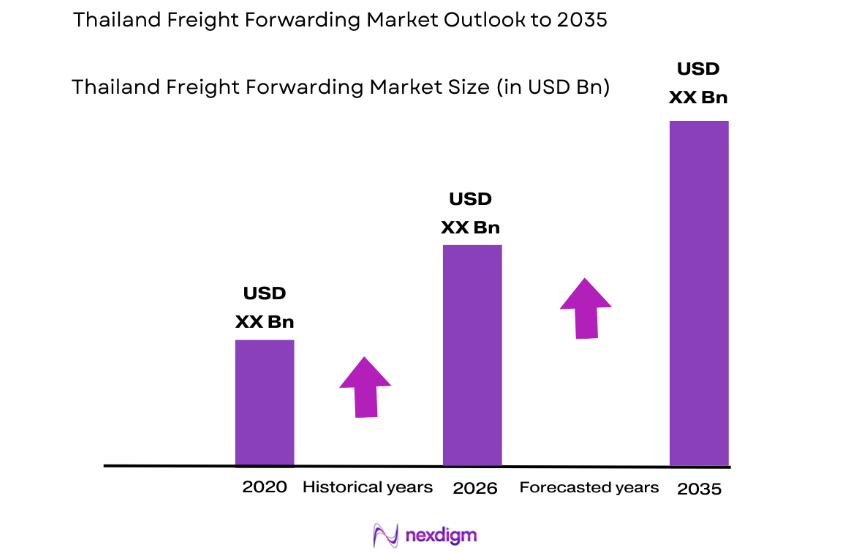
Thailand’s freight forwarding market is valued at approximately USD ~ billion based on a recent historical assessment, driven by strong industrial exports, e commerce expansion, and the increasing complexity of supply chains requiring professional logistics coordination. Investments in multimodal transportation networks, including maritime ports, airports, and road connectivity, enhance operational efficiency for freight forwarders. Rising manufacturing output in electronics, automotive, and consumer goods sectors stimulates demand for comprehensive logistics solutions that manage containerized cargo, customs clearance, and regional distribution networks.
Major freight forwarding hubs are concentrated in Bangkok, Laem Chabang, and Chiang Mai due to strategic proximity to industrial zones, ports, and airports facilitating domestic and international cargo movement. Bangkok serves as the primary hub with extensive access to international shipping routes, air cargo facilities, and road networks connecting manufacturing clusters. Laem Chabang supports export-oriented industrial logistics along the Eastern Seaboard, handling high-volume container shipments. Chiang Mai functions as a northern logistics gateway facilitating domestic and regional distribution. These cities attract leading freight forwarding operators due to infrastructure quality, connectivity, and proximity to high-demand industrial and commercial areas.
Market Segmentation
By Transport Mode
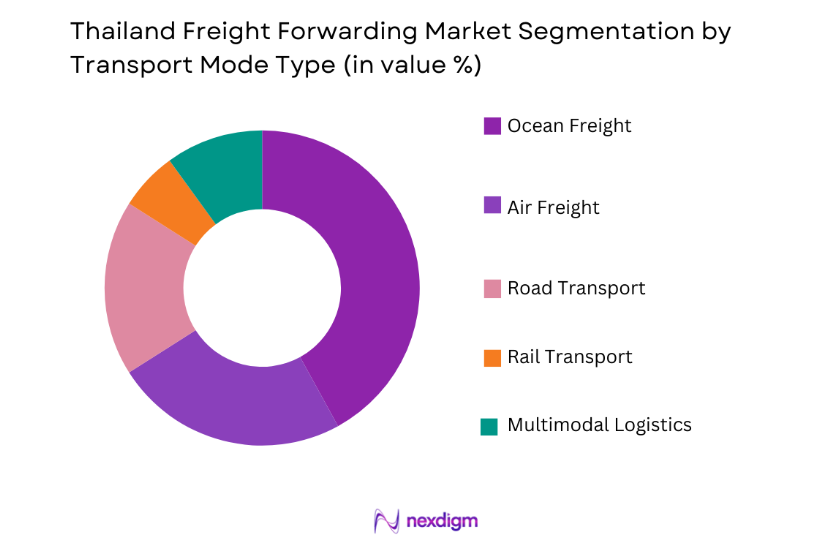
Thailand Freight Forwarding Market is segmented by Transport Mode into ocean freight, air freight, road transport, rail transport, and multimodal logistics solutions. Recently, ocean freight has a dominant market share due to factors such as demand patterns, brand presence, infrastructure availability, or consumer preference. Thailand’s export-oriented industries rely heavily on maritime shipping to move bulk and containerized goods to regional and international markets. Key ports such as Laem Chabang and Bangkok Port enable high-volume cargo handling. Freight forwarders invest in global shipping alliances, digital booking platforms, and container tracking to ensure reliability and timely deliveries. Ocean freight remains cost-efficient for large shipments, supporting manufacturing supply chains, raw material imports, and export flows. Integration with inland transportation and customs clearance services further strengthens adoption. Industrial sectors, including automotive and electronics, increasingly outsource ocean freight operations to third-party providers to manage complex international logistics efficiently. Maritime shipping provides flexibility for high-volume exports and supports Thailand’s role in global trade networks. Providers leverage route optimization and predictive scheduling to maintain operational efficiency. Ocean freight’s scalability enables handling of seasonal shipment peaks. Partnerships with shipping lines enhance service reliability. Investment in container terminal technology improves loading, unloading, and tracking efficiency. Customer demand for reliable, cost-effective international shipping drives ocean freight dominance. Global trade agreements facilitate cross-border maritime operations. Freight forwarders coordinate multimodal solutions integrating port, road, and rail services. Technological integration ensures compliance with international documentation and regulatory requirements. Ocean freight adoption remains central to Thailand Freight Forwarding Market operations due to operational efficiency, cost-effectiveness, and international connectivity.
By End User Industry
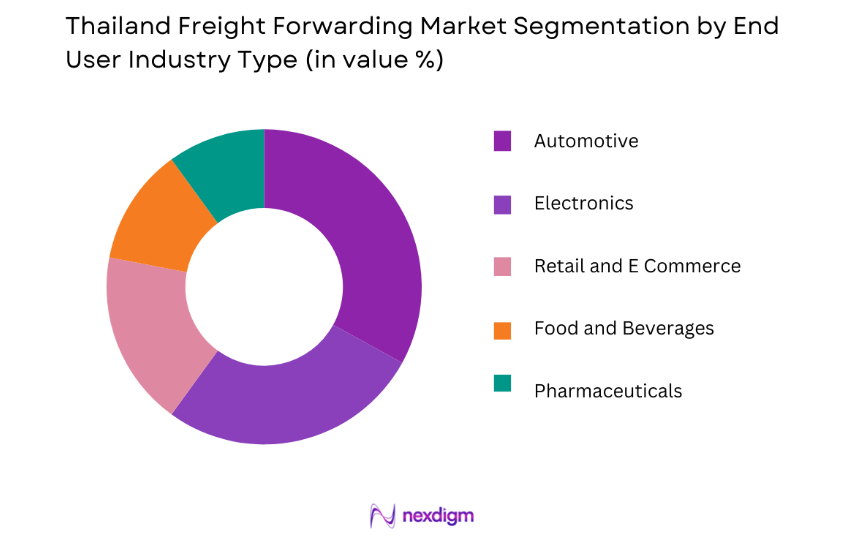
Thailand Freight Forwarding Market is segmented by product type into automotive, electronics, retail and e commerce, food and beverages, and pharmaceuticals. Recently, automotive has a dominant market share due to factors such as demand patterns, brand presence, infrastructure availability, or consumer preference. Thailand’s automotive manufacturing sector relies on freight forwarders for inbound components and outbound finished vehicle distribution. Just-in-time production models and export-oriented manufacturing require precise coordination of multimodal shipments. Freight forwarders provide container consolidation, customs clearance, and regional distribution services. Strategic warehouse placement near ports and industrial estates enhances operational efficiency. Investments in digital tracking, route optimization, and logistics software improve reliability. OEM partnerships ensure timely delivery, reducing supply chain disruptions. Integration of air, road, and ocean transport enables scalable and efficient operations. High-value automotive exports increase demand for secure and reliable logistics services. Advanced documentation and compliance solutions minimize delays at ports. Industrial clustering in Bangkok and Eastern Seaboard supports concentrated logistics operations. Collaboration with suppliers and distributors strengthens end-to-end supply chain management. Technology-enabled solutions optimize shipment planning and cost efficiency. Seasonality and production schedules are managed through predictive analytics and operational flexibility. Fleet and container management systems enhance capacity utilization. Automation in warehousing and loading improves throughput and reduces manual handling errors. Provider expertise ensures compliance with export regulations and international standards. Automotive export demand drives long-term investment and market growth.
Competitive Landscape
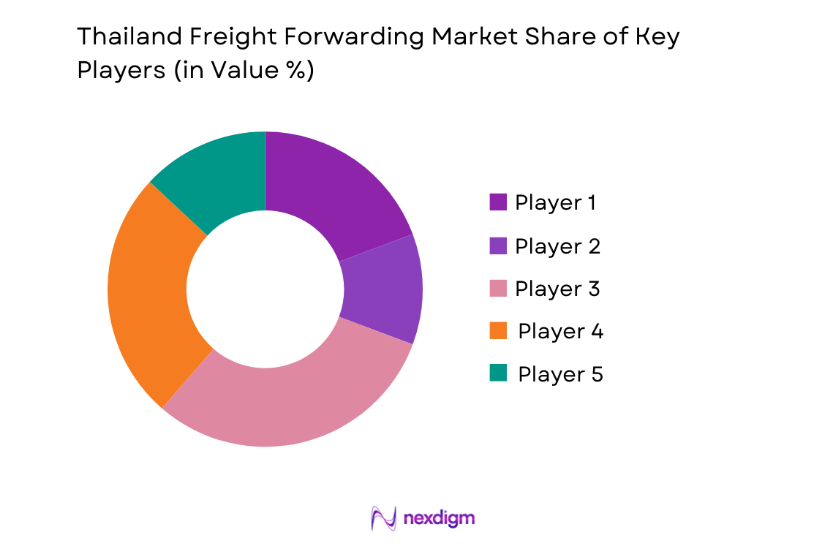
The Thailand freight forwarding market is moderately consolidated with both international and domestic operators competing through technology adoption, service reliability, and global network connectivity. Large multinational companies dominate high-volume exports, while local players serve regional industrial clusters. Strategic partnerships with manufacturers, carriers, and ports enhance operational scale. Investments in digital platforms, customs management solutions, and multimodal transport capabilities strengthen competitive positioning.
| Company Name | Establishment Year | Headquarters | Technology Focus | Market Reach | Key Products | Revenue | Container Handling Capacity |
| DHL Global Forwarding | 1969 | Germany | ~ | ~ | ~ | ~ | ~ |
| Kuehne + Nagel | 1890 | Switzerland | ~ | ~ | ~ | ~ | ~ |
| DB Schenker | 1872 | Germany | ~ | ~ | ~ | ~ | ~ |
| Nippon Express | 1937 | Japan | ~ | ~ | ~ | ~ | ~ |
| CEVA Logistics | 2007 | Switzerland | ~ | ~ | ~ | ~ | ~ |
Thailand Freight Forwarding Market Analysis
Growth Drivers
Expansion of Export-Oriented Manufacturing and Automotive Supply Chains
Thailand Freight Forwarding Market growth is primarily driven by expansion of export-oriented manufacturing sectors, especially automotive and electronics, which require complex supply chain coordination and multimodal logistics. Freight forwarders manage containerized shipments, inbound raw materials, and outbound finished products to regional and global markets. Strategic placement of warehouses near industrial clusters and ports enhances operational efficiency. Providers deploy technology-enabled platforms for shipment tracking, route optimization, and documentation management. Increased international trade agreements and partnerships with shipping lines improve reliability. Logistics operators invest in digital platforms, predictive analytics, and fleet optimization to handle high-volume shipments. Urban industrial zones, particularly in Bangkok and Eastern Seaboard, serve as hubs for distribution and storage. Integration of air, road, and maritime transport allows cost-effective and timely delivery. Manufacturers rely on forwarders to ensure just-in-time operations and minimize inventory costs. Technology facilitates real-time monitoring, predictive maintenance, and supply chain transparency. Freight forwarders coordinate regulatory compliance and customs clearance processes. Expansion of industrial output drives higher demand for professional logistics services. Operational scalability and network efficiency ensure timely response to seasonal production peaks. Collaboration with OEMs strengthens long-term contracts and service reliability. Supply chain integration with multiple transport modes reduces lead times and operational risk. Investments in automated handling and logistics software enhance throughput. Demand for secure, reliable, and flexible freight forwarding solutions continues to rise. Industry growth encourages private investment in infrastructure, workforce, and technology. Multinational and domestic operators compete to provide comprehensive logistics solutions supporting Thailand’s export economy.
Rapid Growth of E Commerce and Digital Retail Logistics Networks
Thailand Freight Forwarding Market benefits from the rapid growth of e commerce platforms and digital retail networks that generate high-frequency shipments requiring efficient domestic and cross-border logistics. Online marketplaces, retailers, and omnichannel operators rely on freight forwarders to manage parcel consolidation, transportation, and customs processing. Urban population density supports quick access to warehouses and regional hubs, enabling timely delivery. Technology adoption, including AI-powered route planning, digital tracking, and predictive analytics, improves operational efficiency. Providers integrate multimodal transport solutions, including air, road, and maritime shipments, to meet volume demands. E commerce expansion drives investment in automated sorting centers, fulfillment hubs, and fleet optimization. Partnerships with retailers enhance parcel volume predictability and service reliability. Logistics operators manage seasonal peaks and high-volume shipments efficiently through capacity planning and operational coordination. Digital platforms allow real-time tracking, reporting, and customer notifications. Integration of warehouses, distribution centers, and transport networks reduces transit times. High-frequency online orders encourage scalable solutions and infrastructure development. Providers focus on service reliability, transparency, and cost optimization to remain competitive. Growth in cross-border e commerce stimulates international freight forwarding demand. Urban and regional micro hubs support rapid last-mile delivery and supply chain efficiency. Expansion of e commerce logistics strengthens Thailand’s overall freight forwarding ecosystem. Automated documentation, customs management, and compliance systems reduce errors and improve throughput. Integration of technology and logistics operations ensures scalable, cost-effective service delivery. Rising online retail activity sustains market growth and encourages continuous infrastructure investment. Digital supply chain solutions enable efficient handling of increasing parcel volumes. Urban logistics development enhances provider competitiveness and service reliability. Technology-driven operations support flexibility, scalability, and growth in Thailand Freight Forwarding Market.
Market Challenges
Infrastructure Congestion at Ports and Urban Logistics Bottlenecks
Thailand Freight Forwarding Market faces challenges due to congestion at major ports and urban logistics bottlenecks that delay cargo handling and shipment distribution. Laem Chabang and Bangkok Port handle high container volumes, creating scheduling and operational difficulties. Limited inland connectivity and urban traffic congestion affect timely delivery to industrial estates and regional distribution hubs. Providers must implement advanced route planning, predictive analytics, and container management systems to minimize delays. Seasonal peaks exacerbate capacity constraints. Infrastructure limitations increase operational costs, fuel consumption, and labor requirements. Coordination between shippers, carriers, and port authorities is essential to maintain service reliability. Limited storage and container handling capacity create temporary bottlenecks. Expansion of regional terminals partially mitigates congestion challenges. Predictive scheduling and technology integration improve operational efficiency. Coordination with customs and regulatory authorities reduces clearance delays. Inefficient urban and port infrastructure may limit growth potential. Strategic investment in logistics infrastructure improves throughput and operational scalability. Urban and regional planning is required to optimize cargo movement. Capacity planning and fleet management are critical to maintaining operational efficiency. High congestion increases risk of missed delivery deadlines. Traffic and port bottlenecks necessitate continuous monitoring and dynamic scheduling. Logistics network efficiency depends on integration with transport infrastructure. Operational planning must account for seasonal and peak demand fluctuations.
Complex Customs Regulations and Compliance Requirements
Thailand Freight Forwarding Market is challenged by complex customs regulations and compliance requirements that affect international cargo movement. Freight forwarders must manage import/export documentation, tariff classification, and regulatory inspections. Compliance with customs and trade policies increases administrative workload and shipment lead times. Errors in documentation can result in fines, delays, or cargo seizure. Operators invest in digital customs management, automated documentation systems, and staff training to mitigate risks. Cross-border shipments require coordination with multiple authorities and shipping partners. Regulatory complexity may affect service reliability and operational scalability. High-volume exporters demand accurate and timely compliance to meet international standards. Changing trade agreements and policies require continuous monitoring. Freight forwarders must adapt to evolving customs procedures and reporting requirements. Staff proficiency in regulatory protocols is critical to maintain operational efficiency. Integration with digital platforms enhances compliance management. Coordination with clients ensures accurate documentation for smooth shipment processing. Regulatory audits necessitate robust internal controls and verification systems. Efficient customs processing supports timely delivery and customer satisfaction. Automation and technology adoption reduce human errors and improve throughput. Operational planning must account for customs clearance variability. Compliance management increases operational cost but is essential for risk mitigation. Efficient handling of regulatory requirements enhances market credibility and long-term growth. Digital tools facilitate real-time documentation verification and cross-border shipment tracking. Provider expertise in customs and regulatory processes strengthens service reliability and client trust.
Opportunities
Development of Multimodal Transport Networks and Logistics Corridors
Thailand Freight Forwarding Market presents opportunities through the development of multimodal transport networks connecting ports, airports, rail, and road infrastructure. Integrated logistics corridors reduce transit times, lower costs, and enhance service reliability for domestic and international shipments. Freight forwarders can leverage digital platforms for real-time tracking, route optimization, and inventory management. Industrial estates and export-oriented manufacturing clusters benefit from improved connectivity. Investment in modern warehouses, container yards, and intermodal terminals enhances operational capacity. Collaborative partnerships with carriers and shippers streamline operations. Technology integration supports predictive planning and efficient fleet utilization. Expansion of regional transport infrastructure increases reach to secondary cities. Multimodal solutions enhance flexibility, resilience, and scalability. Sustainable transport initiatives reduce environmental impact. Digital platforms allow centralized management across multiple transport modes. Predictive analytics improve shipment planning and delivery reliability. Integration with e commerce supply chains strengthens service adoption. Capacity expansion supports seasonal and high-volume shipments. Government policies promote corridor development and logistics efficiency. Multimodal networks enable cost-effective, timely, and secure cargo movement. Infrastructure investment improves Thailand’s global trade competitiveness. End-to-end logistics solutions enhance customer satisfaction and service quality. Network optimization reduces operational risks and enhances throughput. Strategic corridor development fosters long-term market growth.
Integration of Advanced Technology and Digital Freight Platforms
Thailand Freight Forwarding Market benefits from integration of advanced technology and digital freight platforms that enhance operational efficiency, transparency, and service reliability. AI-powered route optimization, predictive analytics, and GPS tracking improve shipment planning and reduce costs. Cloud-based platforms allow centralized control over cargo movement, documentation, and fleet management. Real-time visibility enables proactive exception handling and improved customer communication. Automation in warehouses and container handling increases throughput and reduces errors. Integration with e commerce and retail platforms streamlines supply chain operations. Data analytics support demand forecasting, capacity planning, and resource allocation. Technology enables compliance with international trade regulations and documentation standards. Digital platforms improve collaboration between carriers, freight forwarders, and clients. Fleet optimization reduces fuel consumption and operational costs. Predictive maintenance of vehicles and equipment enhances reliability. Mobile applications provide clients with real-time tracking and notifications. Digital systems support multi-modal coordination and shipment scheduling. Integration of IoT sensors ensures cargo condition monitoring. Technology adoption strengthens competitiveness and service scalability. Analytics-driven decision-making improves efficiency and operational resilience. Automation reduces human error and enhances throughput. Cloud platforms enable centralized monitoring and logistics control. Digital solutions enhance Thailand Freight Forwarding Market efficiency, scalability, and client satisfaction.
Future Outlook
Thailand Freight Forwarding Market is expected to grow steadily over the next five years due to increasing manufacturing exports, e commerce expansion, and government-supported logistics infrastructure development. Investment in multimodal transport corridors, automated warehouses, and digital freight management platforms will enhance efficiency. Growing industrial output, cross-border trade, and technology adoption will continue driving market demand. Strategic partnerships with manufacturers and e commerce operators will strengthen operational scalability and service quality. Regulatory support will facilitate streamlined freight operations and improved supply chain integration.
Major Players
- DHL Global Forwarding
- Kuehne + Nagel
- DB Schenker
- CEVA Logistics
- Nippon Express
- Agility Logistics
- Kerry Logistics
- Yusen Logistics
- Toll Group
- CJ Logistics
- Sinotrans Logistics
- Expeditors International
- Panalpina
- DB Schenker Thailand
- Linfox Thailand
Key Target Audience
- Logistics and freight forwarding companies
- Manufacturing exporters and industrial companies
- E commerce retailers and online marketplaces
- Automotive and electronics supply chain operators
- Food and beverage distributors
- Investments and venture capitalist firms
- Government and regulatory bodies
Research Methodology
Step 1: Identification of Key Variables
Key variables include export and import volumes, freight shipment volumes, industrial production, transport network efficiency, technology adoption, and regulatory compliance affecting the Thailand Freight Forwarding Market.
Step 2: Market Analysis and Construction
Market construction involves analyzing container and air cargo volumes, freight forwarding revenues, warehouse capacities, transport infrastructure, and end-user industry demand to define segmentation and market size.
Step 3: Hypothesis Validation and Expert Consultation
Research assumptions are validated through consultation with freight forwarding operators, logistics managers, industry experts, and government trade authorities to ensure accuracy of market trends and operational insights.
Step 4: Research Synthesis and Final Output
Data from secondary research, expert consultations, and industry reports is synthesized into a structured report providing comprehensive analysis of Thailand Freight Forwarding Market size, segmentation, competitive landscape, growth drivers, challenges, and opportunities.

- Executive Summary
- Research Methodology (Definitions, Scope, Industry Assumptions, Market Sizing Approach, Primary & Secondary Research Framework, Data Collection & Verification Protocol, Analytic Models & Forecast Methodology, Limitations & Research Validity Checks)

- Market Definition and Scope
- Value Chain & Stakeholder Ecosystem
- Regulatory / Certification Landscape
- Sector Dynamics Affecting Demand

- Growth Drivers
Expansion of Export-Oriented Manufacturing and Global Trade Networks
Growth in E-commerce and Cross-Border Online Retail
Investment in Digital Freight Management and Route Optimization Technologies - Market Challenges
High Infrastructure and Operational Costs for Freight Forwarders
Regulatory Compliance and Customs Clearance Complexities
Fragmented Regional Logistics Network - Market Opportunities
Adoption of IoT and AI for Freight Tracking and Optimization
Expansion of Last-Mile and Regional Distribution Services
Partnerships Between Freight Forwarders and E-commerce Platforms - Trends
Integration of Digital Freight Platforms and Automation
Use of Sustainable and Green Logistics Solutions - Government Regulations
Customs and Cross-Border Trade Regulations
Licensing and Transportation Compliance
Government Incentives for Infrastructure Development - SWOT Analysis
- Porter’s Five Forces

- By Market Value, 2020-2025
- By Installed Units, 2020-2025
- By Average System Price, 2020-2025
- By System Complexity Tier, 2020-2025

- By System Type (In Value%)
Air Freight Forwarding Services
Sea Freight Forwarding Services
Road Transport Forwarding Services
Multimodal Logistics Solutions
Courier and Express Delivery Services - By Platform Type (In Value%)
Land Transportation Platforms
Air Cargo Platforms
Maritime Shipping Platforms
Integrated Multimodal Platforms - By Fitment Type (In Value%)
On-premise Freight Management Solutions
Cloud-based Freight Management Solutions
Hybrid Logistics Solutions
Modular Transportation Platforms - By End User Segment (In Value%)
Manufacturing Companies
E-commerce Retailers
Third-Party Logistics Providers

- Market Share Analysis
- Cross Comparison Parameters (Service Type, Platform Type, Fitment Type, End User Segment, Technology Integration, Automation Level, Geographic Coverage)
- SWOT Analysis of Key Competitors
- Pricing & Procurement Analysis
- Key Players
DHL Global Forwarding Thailand
Kerry Logistics Thailand
DB Schenker Thailand
Kuehne + Nagel Thailand
UPS Supply Chain Solutions Thailand
FedEx Express Thailand
Yusen Logistics Thailand
Nippon Express Thailand
CEVA Logistics Thailand
Panus Assembly Systems
Thai Airways Cargo
Toll Group Thailand
Expeditors Thailand
Agility Logistics Thailand
Schenker Thailand

- Manufacturers Relying on Freight Forwarders for Export Shipments
- E-commerce Companies Increasing Demand for Regional Freight Services
- Third-Party Logistics Providers Expanding Service Offerings
- Retailers Outsourcing Freight Operations for Efficiency

- Forecast Market Value, 2026-2035
- Forecast Installed Units, 2026-2035
- Price Forecast by System Tier, 2026-2035
- Future Demand by Platform, 2026-2035


 Request a Sample
 Ask for Customization
 Get a Quote
 Enquire Now