
 Download PDF
Market Overview
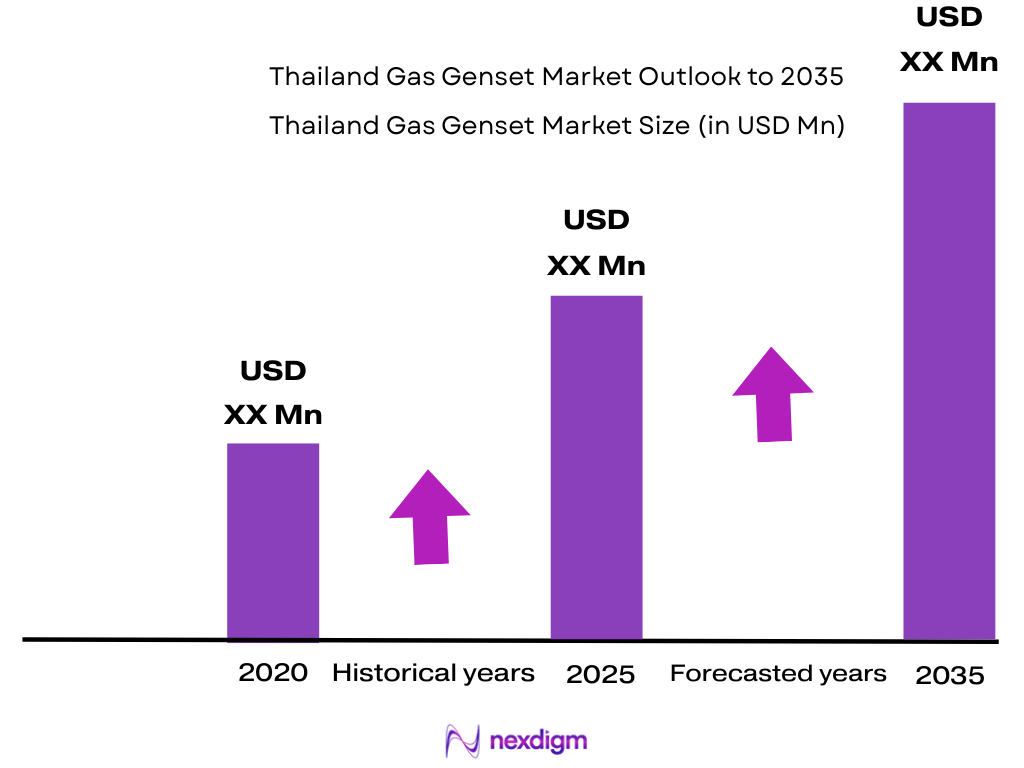
The Thailand Gas Genset Market is valued at approximately ~ million, supported by rising electricity loads, distributed commercial activity and demand for portable backup power. Thailand’s system peak electricity demand increased from 34,130.5 MW to 36,477.8 MW, while provincial electricity demand reached 156,838 GWh across 22,062,761 customers. These conditions sustain generator usage across workshops, roadside businesses, construction locations, vehicle-service operations, homes and temporary commercial applications where mobile backup electricity is required. Bangkok and the Eastern Economic Corridor, particularly Chonburi, Rayong and Chachoengsao, are the key demand centres because they concentrate automotive production, industrial facilities, construction projects, workshops and logistics operations. Thailand’s vehicle production shifted from approximately 1.83 million units to 1.47 million units, while the EEC covers more than 13,000 sq. km of industrial and infrastructure development. The concentration of automotive suppliers in central and eastern Thailand reinforces demand for portable electricity equipment supporting maintenance, fabrication and temporary operations.
Market Segmentation
By Power Output
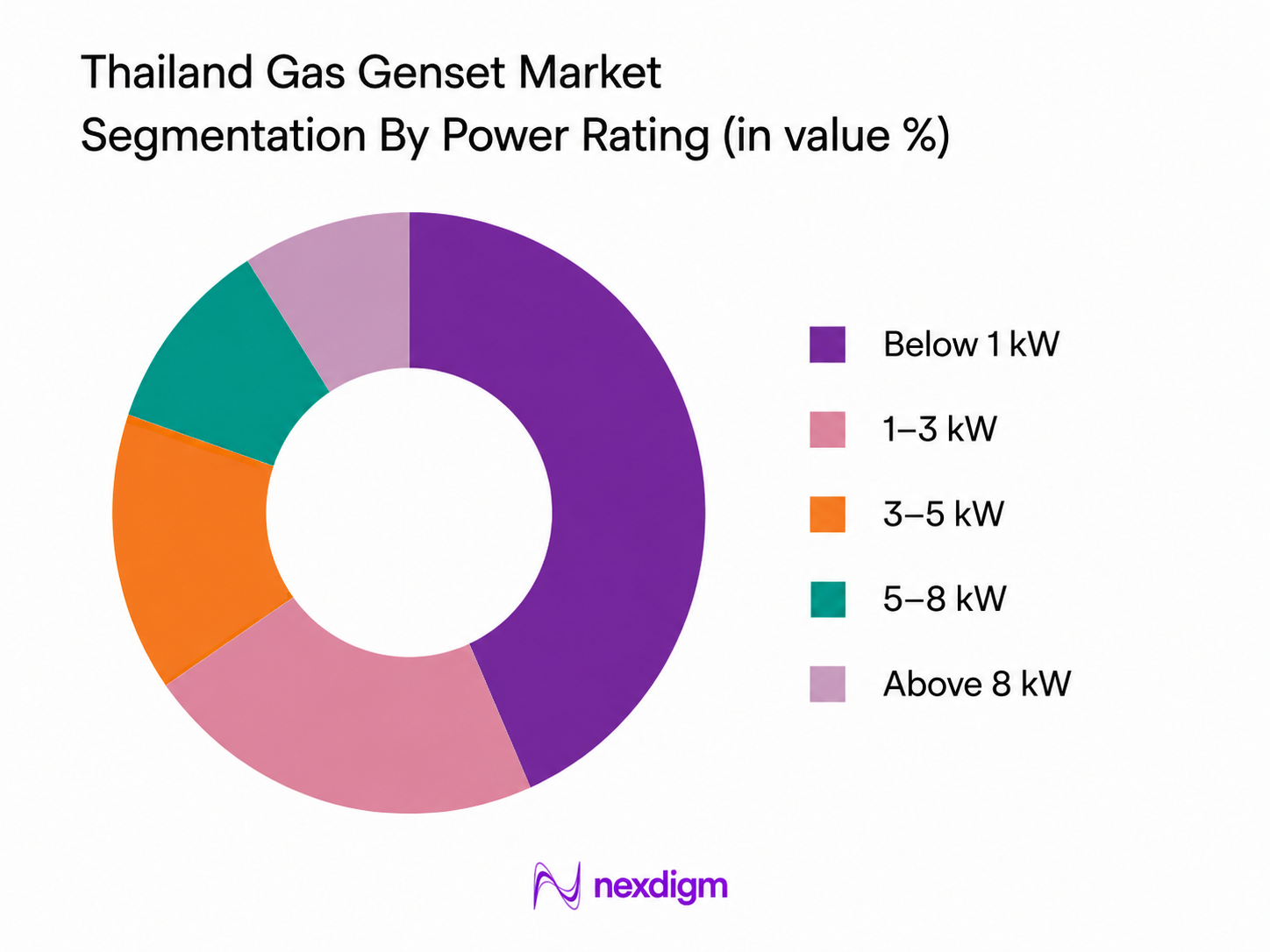
The Thailand Gas Genset Market is segmented into below 1 kW, 1–3 kW, 3–5 kW, 5–8 kW and above 8 kW gasoline generator sets. The 3–5 kW category represents the dominant subsegment because it balances portability with sufficient electrical capacity for small workshops, vehicle-repair tools, pumps, lighting, refrigeration, construction equipment and emergency household loads. This category is suitable for users who require more capability than camping-oriented inverter units without moving into heavier industrial generator architectures. Thai retail channels already carry gasoline generators around this output range, confirming active local availability. The 5–8 kW category is also commercially important because it can support multiple simultaneous loads, compressors, workshop equipment and larger emergency circuits. For automotive-oriented users, output selection is determined primarily by starting current requirements, tool load, runtime, transportability and fuel-tank capacity rather than maximum theoretical wattage alone. Retail availability through major Thai home-improvement chains has increased accessibility for contractors and independent garages.
By Application
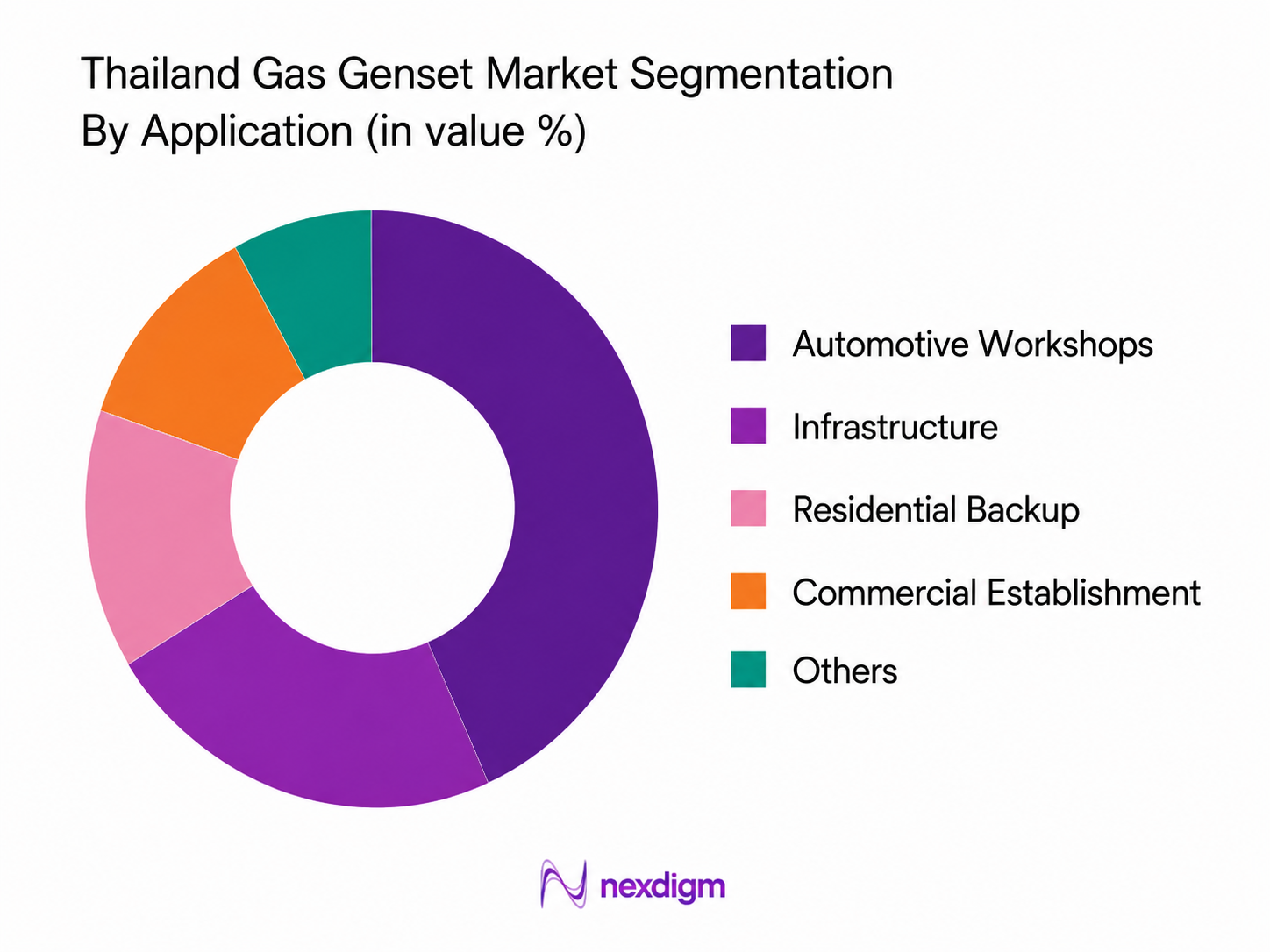
The Thailand Gas Genset Market is segmented into automotive workshops and garages, roadside service and mobile repair, construction and infrastructure, residential backup, commercial establishments, and recreational or mobile applications. Automotive workshops and construction-related temporary power constitute the leading demand segment because gasoline gensets provide immediate electricity without requiring permanent grid connections. Thailand remains a substantial automotive manufacturing and service economy, with production infrastructure concentrated in the central and eastern provinces. Generator sets are used for power tools, compressors, grinders, lights, battery chargers, diagnostic devices and emergency operations during maintenance or grid interruptions. Thailand’s electricity system is extensive and increasingly reliable, but PEA still monitors SAIFI and SAIDI outage indicators and operates distribution-system improvement programs, showing that continuity planning remains relevant for businesses dependent on uninterrupted electrical equipment. Construction and infrastructure users additionally value wheel-mounted or frame-type units that can move between temporary work locations. Smaller inverter products serve recreational, field-service and mobile applications requiring lower noise and cleaner electrical output.
Competitive Landscape
The Thailand Gas Genset Market consists of established Japanese engine and power-equipment manufacturers, international generator specialists and lower-cost regional brands distributed through tool dealers and home-improvement chains. Honda and Yamaha benefit from strong small-engine expertise and established portable-generator technologies, while ELEMAX concentrates specifically on generator equipment. International suppliers such as Generac and Briggs & Stratton bring wider backup-power portfolios, inverter technologies, transfer-switch capability and engine expertise. Local retail competition is also shaped by value-oriented brands such as SUMO, WELPRO and ROWEL offered through Thai hardware chains.
| Company | Establishment Year | Headquarters | Gasoline Generator Capability | Inverter Generator Capability | Typical Portable Output Positioning | Small-Engine Expertise | Automotive/Workshop Suitability | Distribution Approach |
| Honda Motor Co., Ltd. | 1948 | Tokyo, Japan | ~ | ~ | ~ | ~ | ~ | ~ |
| Yamaha Motor Co., Ltd. | 1955 | Iwata, Japan | ~ | ~ | ~ | ~ | ~ | ~ |
| ELEMAX / Sawafuji Electric | 1908 | Japan | ~ | ~ | ~ | ~ | ~ | ~ |
| Generac Power Systems | 1959 | Waukesha, USA | ~ | ~ | ~ | ~ | ~ | ~ |
| Briggs & Stratton | 1908 | Milwaukee, USA | ~ | ~ | ~ | ~ | ~ | ~ |
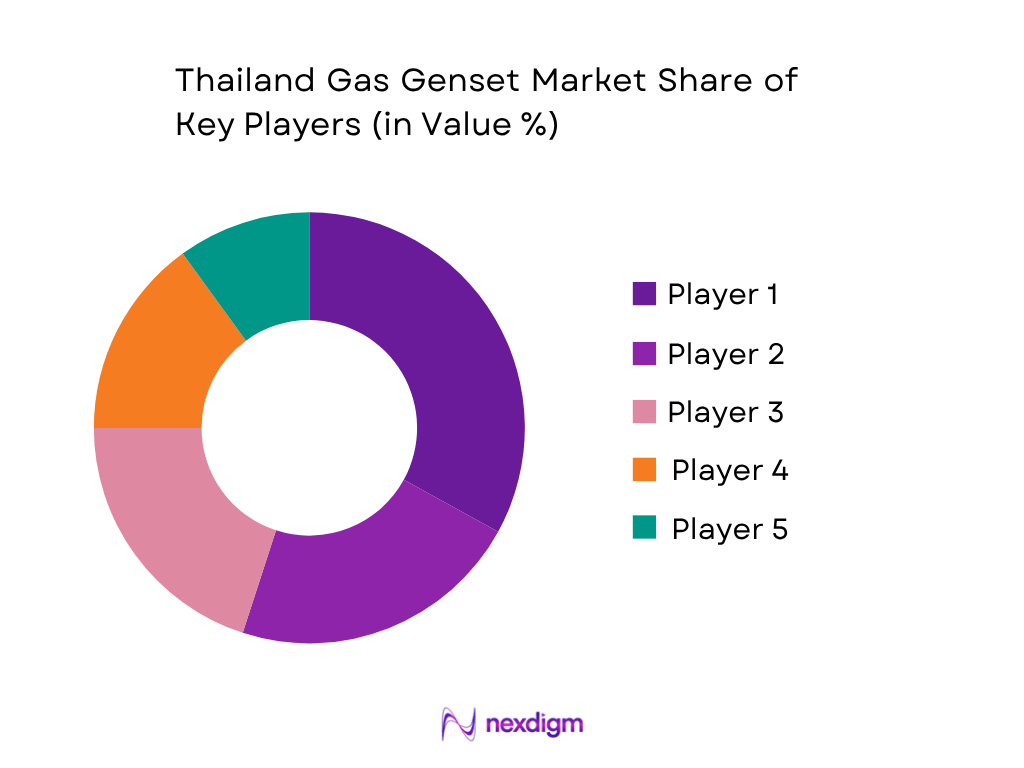
Thailand Gas Genset Market Analysis
Growth Drivers
Expansion of Automotive and Advanced Manufacturing Facilities
Thailand’s automotive manufacturing ecosystem creates a substantial operating base for gas gensets used for emergency power, production continuity, testing facilities, warehouses, component plants and utility support. The Office of Industrial Economics recorded 340,475 automobiles produced during Q4 2024, with 250,326 vehicles exported during the same quarter. Automotive-parts exports reached USD 2,638.27 million in the quarter. Beyond existing factories, the Thailand Board of Investment recorded 309 automotive and parts investment applications valued at THB 102.4 billion in 2024, showing continued capital deployment into vehicle, battery and component manufacturing. These factories operate welding systems, paint shops, compressors, robotics, ventilation systems, machining equipment and temperature-controlled production lines where an unexpected electricity interruption can affect production batches and equipment availability. Gas gensets can therefore be deployed as standby power sources or incorporated into distributed-energy and cogeneration configurations at large automotive facilities. Thailand’s broader macroeconomic scale supports this industrial demand: the International Monetary Fund recorded nominal GDP of approximately THB 18,603 billion in 2024, while World Bank data places economic output at approximately USD 577.01 billion in 2025. These figures demonstrate the economic depth supporting industrial electricity consumption and capital-intensive manufacturing. Thailand’s power system is also operating at increasingly high loads. The Electricity Generating Authority of Thailand recorded a net system peak of 36,477.80 MW on 29 April 2024, highlighting the scale of electricity requirements that manufacturing clusters must operate within. Automotive production is concentrated around Bangkok, Chonburi, Rayong, Chachoengsao, Samut Prakan and Ayutthaya, where industrial estates contain vehicle assemblers and Tier-1 and Tier-2 component suppliers. These clusters create particularly attractive conditions for stationary gas gensets because natural-gas infrastructure and industrial utility services are more accessible than in dispersed rural markets. Thailand’s Small Power Producer system further demonstrates established industrial acceptance of gas-based distributed generation. EGAT reports 9,319.875 MW of contracted SPP capacity, including 6,050 MW of cogeneration capacity, indicating that decentralized generation is already embedded within Thailand’s industrial energy architecture. Gas genset suppliers can address smaller-scale requirements beneath utility-scale cogeneration, particularly for automotive component factories, distribution centres, testing operations and industrial buildings requiring rapid backup. New electric-vehicle manufacturing does not eliminate this requirement because EV assembly and battery production remain electricity-intensive manufacturing activities. Instead, electrification changes the nature of automotive factory loads while increasing sensitivity to voltage stability, uninterrupted process control and environmental management systems. Consequently, Thailand’s established automobile-production ecosystem, large industrial investment pipeline, peak electricity demand and existing distributed-generation infrastructure collectively support continued deployment of gas-fuelled generator systems in automotive manufacturing facilities. Sources supporting these figures include the Office of Industrial Economics, Thailand Board of Investment, Electricity Generating Authority of Thailand, International Monetary Fund and World Bank.
Growing Electricity Loads and Established Natural-Gas Power Infrastructure
Rising electricity requirements across Thailand create a second structural driver for automotive gas gensets, particularly where manufacturers need resilient onsite generation to support continuous production. EGAT recorded a national system peak of 36,477.80 MW in April 2024, reflecting substantial loading on the electricity system during periods of high temperature and industrial activity. Thailand already possesses deep operational familiarity with natural-gas-based electricity generation. EGAT data for June 2026 recorded 72,558.96 GWh of electricity generated from natural gas within its reported generation mix, far exceeding 16,614.35 GWh from lignite and demonstrating that natural gas remains an established fuel for electricity production. This matters to the automotive gas genset market because maintenance capabilities, gas-handling knowledge, fuel infrastructure and industrial engineering expertise already exist within the country. EGAT also reports 6,050 MW of contracted cogeneration capacity within the Small Power Producer system, including 5,772 MW classified as firm capacity, further demonstrating the suitability of gas-based generation for industrial applications requiring dependable electricity and heat. Large automotive and component factories can use gas gensets not simply as emergency units but as part of distributed-energy systems supporting peak-load management, resilience and critical process loads. The development of additional gas-fired generation reinforces this ecosystem. EGAT reports that the Hin Kong Power Plant consists of 2 units of 700 MW each, providing 1,400 MW of contracted capacity; the first unit entered commercial operation in March 2024. Such infrastructure supports the broader natural-gas supply chain from fuel procurement through engineering and maintenance. Thailand’s macroeconomic base is sufficiently large to sustain continued industrial electricity demand. The IMF recorded nominal GDP of approximately THB 18,603 billion in 2024, and World Bank data shows approximately USD 577.01 billion of GDP in 2025, alongside GDP per capita of USD 8,056.6. Automotive manufacturers operating within this economy require dependable power for robotics, vehicle assembly, stamping, welding, paint operations, HVAC, compressed-air systems, testing laboratories and data infrastructure. A short interruption can affect automated production sequencing or require lengthy line restarting, creating a business case for onsite generation. Gas gensets can be particularly relevant where facilities have pipeline gas access or where gas-fired equipment is already used in industrial processes. Compared with intermittent renewable systems operating without storage, dispatchable gensets provide immediate power when required. They can also be integrated with solar rooftops, battery storage and energy-management systems, allowing factories to develop hybrid onsite-energy architectures rather than relying on one technology. The automotive sector’s transition toward EV manufacturing may strengthen this requirement because battery assembly, charging, thermal management and electronics manufacturing add new electricity-sensitive processes. Thailand BOI reported 309 automotive and parts investment applications with THB 102.4 billion of committed application value in 2024, widening the pool of facilities that may require backup and distributed power. The market driver is therefore not grid inadequacy alone; it is the increasing economic cost of production interruption within increasingly automated automotive plants. Sources supporting these figures include EGAT, Thailand BOI, IMF and World Bank.
Market Challenges
Strong Grid Capacity and Competition from Alternative Backup Technologies
Thailand’s gas genset market faces a structural challenge from a comparatively developed electricity system and growing availability of alternative onsite-energy technologies. EGAT has continued expanding generation and procurement capacity rather than leaving industrial facilities dependent on self-generation. The authority reports 9,319.875 MW of contracted Small Power Producer capacity, while cross-border contracted electricity capacity totals 6,234.9 MW. Additional renewable procurement includes 175 projects representing 4,852.26 MW, of which projects totalling 295 MW have already commenced electricity sales. A further procurement round selected 72 projects representing 2,145.40 MW. These capacity additions strengthen grid supply and give industrial consumers alternatives to maintaining dedicated gas gensets. Automotive factories with reliable dual-feed utility connections may therefore limit gensets to essential-load backup rather than installing units capable of supporting entire plants. Battery energy storage creates another competitive challenge, particularly for shorter outages, power-quality correction and peak shaving. Solar-plus-storage systems can address daytime manufacturing loads without direct onsite combustion, while traditional diesel gensets retain advantages where pipeline gas access is unavailable. Gas genset vendors consequently compete against utility reliability, batteries, solar, diesel generators and larger cogeneration plants simultaneously. Thailand’s changing industrial structure amplifies this technology competition. The Board of Investment recorded THB 1.14 trillion of total investment-promotion applications in 2024, with large projects concentrated in data centres, cloud services, advanced electronics and semiconductors in addition to 309 automotive and parts projects valued at THB 102.4 billion. New facilities can evaluate power architecture from the design stage and may choose battery-backed microgrids or renewable systems rather than conventional standalone gensets. The macroeconomic environment also requires careful capital allocation. The IMF placed nominal GDP at approximately THB 18,603 billion in 2024, while its latest 2026 assessment described economic activity as facing tighter domestic and external headwinds. World Bank data places Thailand’s 2025 GDP at USD 577.01 billion, illustrating the size of the economy but not guaranteeing equally strong investment across all manufacturing segments. Automotive output itself experienced weakness: the Office of Industrial Economics recorded 340,475 vehicles produced in Q4 2024, compared with 455,692 units in Q4 2023. Domestic automotive sales reached only 134,016 units in Q4 2024, increasing pressure on manufacturers to control non-essential capital expenditures. Under these conditions, a gas genset purchase must be justified by a clear operational requirement such as production-continuity risk, critical-process protection or combined heat-and-power economics. Merely offering emergency generation is increasingly insufficient. Vendors will need to demonstrate fast start-up, remote monitoring, synchronization, high electrical efficiency, emissions performance and compatibility with batteries and renewable systems. The strongest threat is therefore technological substitution rather than absence of industrial demand. Thailand possesses both large manufacturing electricity loads and a widening range of methods for serving them. Gas genset suppliers must position products as flexible components within industrial microgrids rather than standalone machines competing only with the grid. Sources supporting the analysis include EGAT, Thailand BOI, Office of Industrial Economics, IMF and World Bank.
Natural-Gas Supply Dependence and Increasing Environmental Compliance Requirements
The Thailand Gas Genset Market also faces challenges related to fuel security and tightening environmental expectations. Gas gensets offer cleaner combustion characteristics than many diesel alternatives, but their operating viability depends on dependable access to natural gas or another gaseous fuel. Thailand already uses natural gas extensively for central electricity production: EGAT reported 72,558.96 GWh of gas-fired generation in its June 2026 statistics. This extensive dependence means distributed gas gensets participate in the same national fuel ecosystem as large power plants rather than operating independently from broader gas-supply conditions. Automotive factories considering gas gensets must therefore evaluate pipeline availability, gas pressure, fuel contracting arrangements and redundancy for situations in which gas delivery is constrained. Locations inside mature eastern and central industrial corridors generally have stronger infrastructure, while facilities outside these corridors may find diesel, LPG or battery systems operationally simpler. Environmental policy creates another constraint. Thailand’s Ministry of Energy is implementing policies aimed at lowering greenhouse-gas emissions from the energy sector and increasing the use of lower-emission technologies, while EGAT is procuring substantial renewable capacity. Current procurement includes 4,852.26 MW from 175 renewable projects under one programme and another 2,145.40 MW across 72 selected projects under the additional procurement round. Automotive manufacturers, particularly multinational OEMs, are also increasingly linking plant-level energy procurement with corporate decarbonisation commitments. This can place gas gensets in a transitional position: they provide reliable dispatchable power but still emit combustion-related carbon dioxide and nitrogen oxides. Suppliers therefore need higher-efficiency engines, lean-burn combustion, advanced controls, methane management and pathways toward biogas or hydrogen blending to remain aligned with customers’ long-term energy policies. Thailand’s automotive transition adds further pressure. BOI data shows 14 manufacturers and importers participating in the EV incentive framework had registered 78,554 battery-electric cars and pickup trucks under the relevant programme by January 2024, while investments have continued into battery and EV production. Automotive factories producing zero-emission vehicles can face reputational pressure to reduce emissions from their own manufacturing operations, making conventional gas generation harder to justify unless it provides measurable resilience or efficiency benefits. At the macro level, the IMF recorded approximately THB 18,603 billion in nominal GDP in 2024, while World Bank data places 2025 GDP at USD 577.01 billion and GDP per capita at USD 8,056.6. This economic scale supports industrial energy investment but also means Thailand’s energy-transition policy affects a large manufacturing base. Gas genset suppliers consequently face a dual requirement: ensure fuel reliability while demonstrating that the equipment can operate within progressively lower-emission industrial systems. Systems capable of combined heat and power, renewable-gas utilisation, hydrogen-ready operation or integration with solar and storage are better placed than conventional gas-only standby equipment. The challenge is therefore not simply obtaining natural gas; it is maintaining the commercial relevance of gas-fired distributed generation as Thailand simultaneously expands gas infrastructure and renewable electricity. Sources supporting these figures include EGAT, Thailand Ministry of Energy, Thailand BOI, IMF and World Bank.
Market Opportunities
Hybrid Gas Genset, Battery and Solar Microgrids for Automotive Factories
A significant future opportunity lies in repositioning gas gensets from conventional emergency equipment into dispatchable components of hybrid industrial microgrids. Thailand’s automotive plants operate increasingly automated production lines that require stable electricity even as manufacturers add rooftop solar, battery storage and digital energy-management systems. Gas gensets can complement these technologies by supplying power when batteries are depleted, renewable generation is unavailable or plant loads rise suddenly. The scale of Thailand’s electricity system demonstrates the relevance of flexible capacity. EGAT recorded 36,477.80 MW of net peak demand in April 2024, while its Small Power Producer portfolio includes 9,319.875 MW of contracted capacity, of which 6,050 MW is cogeneration. This established decentralized-generation ecosystem indicates that industrial customers and energy authorities already have experience integrating non-utility-owned generation into the broader power system. The automotive investment pipeline expands the addressable base. Thailand BOI received 309 automotive and parts investment applications valued at THB 102.4 billion during 2024, while total investment-promotion applications across industries reached THB 1.14 trillion. These new projects allow energy systems to be engineered during factory development rather than retrofitted later. Gas genset companies can therefore partner with EPC contractors, industrial-estate developers, battery integrators and solar providers to design complete power-resilience systems. New automotive plants also have increasingly sophisticated electrical requirements. EV battery production, power-electronics manufacturing, robotic welding, precision machining, paint shops and automated warehousing depend on stable voltage and uninterrupted digital controls. A hybrid microgrid can divide functions across technologies: solar supplies low-emission daytime electricity, batteries handle instantaneous power-quality events, and gas gensets provide longer-duration dispatchable backup. Cogeneration configurations can further recover exhaust and cooling-system heat for process applications, hot water or absorption cooling, improving total energy utilisation. The opportunity is supported by Thailand’s macroeconomic base. The IMF recorded approximately THB 18,603 billion of nominal GDP in 2024, while World Bank data records USD 577.01 billion of GDP in 2025. Thailand therefore has sufficient industrial scale for specialized distributed-energy service providers rather than merely equipment importers. The opportunity is also strengthened by changing utility architecture. EGAT reports the Hin Kong project at 1,400 MW, alongside renewable procurement involving several thousand megawatts, meaning the national system itself is evolving toward a more diversified generation portfolio. Industrial users are likely to mirror this diversification at facility level. Gas genset suppliers can differentiate through automatic transfer systems, parallel operation, synchronization with batteries, predictive maintenance, cloud monitoring and load-optimization software. Manufacturers offering engines capable of operating on natural gas today and renewable gaseous fuels later can further protect customers against future fuel-policy changes. The growth opportunity therefore comes from selling integrated resilience, not simply generator hardware. Automotive OEMs and parts manufacturers can use hybrid gas genset systems to reduce exposure to production stoppages while maintaining flexibility as renewable capacity increases. Sources supporting these figures include EGAT, Thailand BOI, IMF and World Bank.
Automotive and EV Manufacturing Expansion in Thailand’s Eastern Industrial Corridor
Thailand’s continuing investment in automotive, battery and electric-vehicle production creates another growth opportunity for gas genset suppliers, particularly across Chonburi, Rayong and Chachoengsao in the Eastern Economic Corridor. The Thailand Board of Investment recorded 309 automotive and automotive-parts investment applications valued at THB 102.4 billion in 2024. Major battery and EV projects are adding new manufacturing sites, and the BOI has highlighted investments in vehicle plants, battery-pack production and advanced automotive components. One battery project announced in the eastern region is designed around annual capacity of 50,000 EV battery units, demonstrating how the automotive manufacturing footprint is expanding into energy-intensive component categories. The opportunity for genset suppliers arises from the electrical sensitivity of these facilities rather than from vehicle sales alone. Battery assembly and testing require controlled temperatures, ventilation, automated process equipment, quality-control systems and reliable data infrastructure. Even a short interruption can stop automated processes or trigger lengthy safety and equipment-reset procedures. Gas gensets configured for rapid synchronization and standby operation can therefore become part of factory business-continuity architecture. Conventional vehicle factories and suppliers remain equally relevant. The Office of Industrial Economics recorded 340,475 vehicles produced in Q4 2024, 250,326 vehicles exported, and automotive-parts exports worth USD 2,638.27 million. These figures show that despite cyclical weakness in domestic vehicle sales, Thailand remains a major production and export base requiring large networks of stamping, casting, plastics, tyres, electronics, transmissions and logistics suppliers. Each new Tier-1 or Tier-2 facility represents potential demand for smaller gas gensets, while OEM complexes can support higher-output multi-unit installations. Thailand’s economic scale reinforces the opportunity. The IMF recorded nominal GDP of approximately THB 18,603 billion in 2024, and the World Bank reports approximately USD 577.01 billion in GDP and USD 8,056.6 GDP per capita for 2025. Industrial-energy suppliers can therefore target a mature manufacturing ecosystem with extensive engineering capability and established international investment. Gas infrastructure is also supported by Thailand’s wider electricity system, where natural gas accounted for 72,558.96 GWh of reported EGAT generation in June 2026. This large gas-fired generation base creates familiarity with natural-gas equipment, maintenance and fuel-management practices. For genset manufacturers, the strategic opportunity is to localize products and services around automotive industrial clusters. Local spare-parts inventories, 24-hour maintenance coverage, remote engine monitoring and service-level agreements can become stronger differentiators than generator specifications alone. Suppliers can also develop sector-specific solutions for paint shops, battery facilities, parts warehouses and automated assembly operations. Equipment capable of natural gas, biogas or future hydrogen blending can address multinational manufacturers seeking resilience without locking plants permanently into conventional fossil-gas operation. As Thailand continues developing advanced automotive manufacturing, the gas genset opportunity will increasingly centre on high-reliability, lower-emission distributed power for technologically sophisticated factories, rather than basic backup generation. Sources supporting these figures include the Thailand Board of Investment, Office of Industrial Economics, EGAT, IMF and World Bank.
Future Outlook
The Thailand Gas Genset Market is expected to expand at approximately ~ CAGR during 2026–2035, with demand increasingly shifting toward efficient, compact and electronically controlled generator systems. The fundamental use case will remain temporary and emergency electricity rather than continuous large-scale generation. Inverter generators are expected to gain greater relevance because workshops and mobile service providers increasingly use electronic diagnostics, chargers, laptops and digitally controlled equipment that benefit from stable electrical output. Yamaha already maintains a dedicated portable-generator portfolio, while global portable-generator manufacturers continue to develop quieter, electronically managed products. Thailand’s electricity network will continue to strengthen, which may moderate purely outage-driven genset demand. However, PEA served more than 22 million customers with electricity demand of 156,838 GWh, while national peak requirements reached 36,477.8 MW. Higher system reliability does not remove the need for localized temporary power at construction areas, workshops, roadside operations and events where grid access itself may be unavailable.
Major Players
- Honda Motor Co., Ltd.
- Yamaha Motor Co., Ltd.
- ELEMAX / Sawafuji Electric Co., Ltd.
- Koshin Ltd.
- Generac Power Systems
- Briggs & Stratton
- Hyundai Power Products
- Champion Power Equipment
- Westinghouse Outdoor Power Equipment
- FIRMAN Power Equipment
- Pramac
- SUMO
- WELPRO
- ROWEL
- Lutian Machinery
Key Target Audience
- Gasoline genset manufacturers and assemblers
- Portable power-equipment distributors and importers
- Automotive workshops and vehicle-service chains
- Construction contractors and infrastructure developers
- Automotive OEMs, component manufacturers and industrial facilities
- Home-improvement, hardware and power-tool retail chains
- Investments and venture capitalist firms
- Government and regulatory bodies (Ministry of Energy, Energy Regulatory Commission, Provincial Electricity Authority, Metropolitan Electricity Authority, Electricity Generating Authority of Thailand, Thai Industrial Standards Institute)
Research Methodology
Step 1: Identification of Key Variables
The initial phase involves mapping the entire Thailand Gas Genset Market ecosystem, covering generator manufacturers, engine suppliers, distributors, retailers, construction contractors, workshops and end users. Research variables include rated output, maximum output, engine displacement, fuel-tank capacity, runtime, fuel consumption, inverter architecture, portability, noise, starting mechanism and outlet configuration. Demand-side variables additionally include electricity reliability, construction activity and automotive-service density.
Step 2: Market Analysis and Construction
Historical market construction evaluates gasoline-generator demand across automotive workshops, construction sites, residential backup, commercial operations and portable/mobile applications. The top-down approach uses electricity demand, construction activity, industrial concentration and automotive-sector indicators. Bottom-up calculations assess unit volumes through power bands, average operating characteristics, retail availability, replacement cycles and channel structures. PEA and EGAT data are used to validate the electricity-system environment.
Step 3: Hypothesis Validation and Expert Consultation
Initial market hypotheses are validated through CATIs and structured discussions with generator dealers, power-equipment distributors, automotive mechanics, contractors, rental businesses and industrial users. Interviews examine preferred output ranges, frequency of petrol versus diesel selection, inverter adoption, runtime expectations, serviceability, spare-parts availability and brand-selection criteria. Particular attention is given to how generator requirements differ between stationary emergency use and highly portable workshop or field-service applications.
Step 4: Research Synthesis and Final Output
The final stage triangulates retailer listings, manufacturer specifications, electricity statistics, industrial activity and primary interviews. Product portfolios from Honda, Yamaha, ELEMAX and other suppliers are compared with locally available generator models across wattage, tank size, inverter capability and application. Regional demand assumptions are verified against Bangkok and EEC industrial concentration before historical estimates and the final forecast model are consolidated.

- Executive Summary
- Research Methodology (Market Definitions and Assumptions, Gas Genset Scope Definition, Top-Down Market Sizing, Bottom-Up Unit Assessment, Gas Consumption Analysis, Power Rating Mapping, End-User Demand Assessment, Dealer and Distributor Interviews, OEM Primary Interviews, Data Triangulation, Forecasting Framework, Limitations and Future Conclusions)

- Definition and Scope
- Market Evolution and Industry Genesis
- Evolution of Gas-Based Distributed Power Generation
- Timeline of Major Gas Genset Industry Developments
- Natural Gas and LPG Availability Ecosystem

- Growth Drivers (Expansion of Automotive Manufacturing Clusters, Availability of Industrial Natural Gas Infrastructure, Need for Reliable Captive Power, Expansion of Eastern Economic Corridor Industries, Demand for Lower-Emission Backup Power)
- Market Challenges (Natural Gas Supply Dependence, Gas Pressure and Quality Variability, Higher System Engineering Complexity, Grid Reliability Reducing Runtime Requirements, Competition from Diesel Gensets and Battery Storage)
- Market Opportunities (Automotive Manufacturing Captive Power, CHP Deployment, Biogas-Fuelled Generation, Microgrid Integration, High-Efficiency Lean-Burn Engines, Gas-Battery Hybrid Systems)
- Market Trends (Transition Toward High-Efficiency Gas Engines, Remote Monitoring Adoption, CHP Integration, Dual-Fuel Capability, Predictive Maintenance, Gas Genset–Battery Hybridisation)
- Government Regulations (Energy Industry Act, Energy Regulatory Commission Licensing, Ministry of Energy Requirements, Pollution Control Department Emission Requirements, Industrial Works Department Factory Compliance, Gas Pipeline Safety Requirements)
- SWOT Analysis
- Porter’s Five Forces Analysis
- PESTLE Analysis

- By Market Value (2020-2025)
- By Unit Sales (2020-2025)
- By Installed Gas Genset Capacity (2020-2025)

- By Power Rating (In Value %)
Below 50 kW
50–100 kW
101–250 kW
251–500 kW
501–1,000 kW
Above 1,000 kW - By Fuel Type (In Value %)
Pipeline Natural Gas
Liquefied Petroleum Gas
Liquefied Natural Gas
Biogas
Landfill Gas - By Application (In Value %)
Emergency Standby Power
Prime Power
Continuous Power
Peak Shaving
Combined Heat and Power - By End User (In Value %)
Automotive Manufacturing Plants
Automotive Component Manufacturing Facilities
Vehicle Assembly Plants
Automotive Dealerships and Service Centres
Warehouses and Automotive Logistics Facilities

- Market Share of Major Players
- Cross Comparison Parameters (Gas Genset Power Range, Supported Gaseous Fuels, Electrical Efficiency, Heat Rate, CHP Capability, Emission-Control Technology, Dealer and Service Network, Remote Monitoring and Digital Control Capability)
- SWOT Analysis of Major Players
- Detailed Profiles of Major Companies
Caterpillar
Cummins
INNIO Jenbacher
MWM
Rolls-Royce Power Systems / mtu
MAN Energy Solutions
Kohler Energy
Generac Power Systems
Mitsubishi Heavy Industries
Yanmar
Wärtsilä
Doosan Enerbility
INNIO Waukesha
Guascor Energy
Himoinsa

- Gas Genset Adoption Criteria
- Power Rating Selection Behaviour
- Prime vs Standby Requirement
- Annual Operating-Hour Assessment
- Gas Availability at User Location

- By Market Value (2026-2035)
- By Unit Sales (2026-2035)
- By Installed Capacity (2026-2035)


 Request a Sample
 Ask for Customization
 Get a Quote
 Enquire Now