

 Download PDF
Market Overview
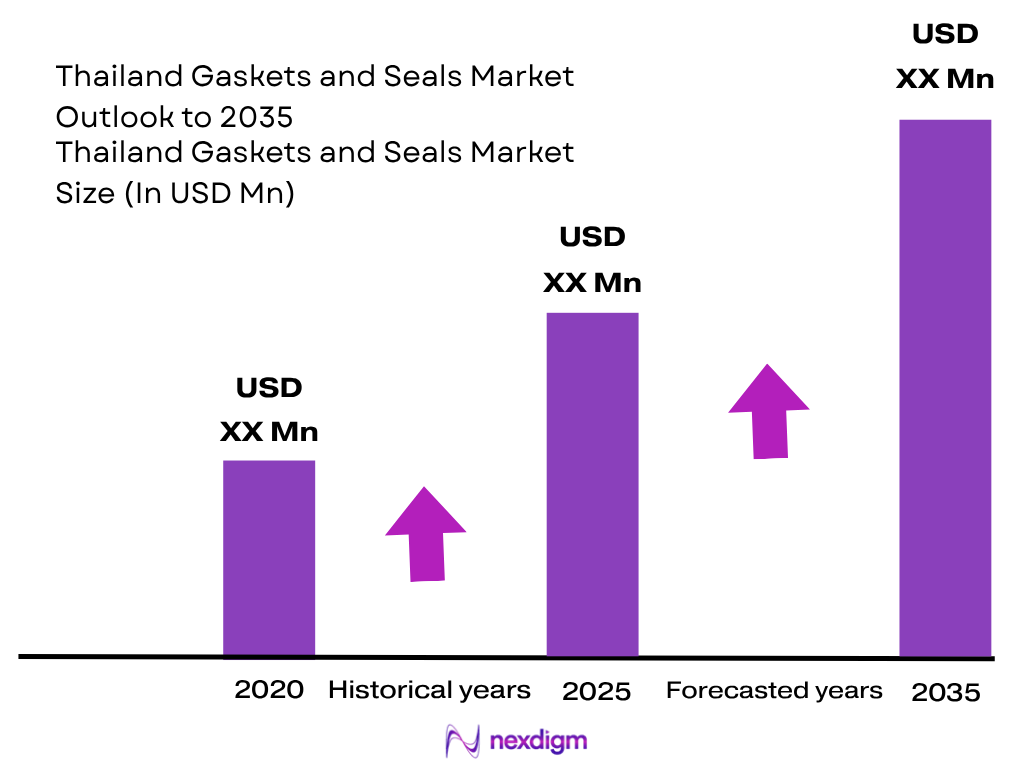
The Thailand Gaskets and Seals Market is valued at approximately USD ~ million, based on historical market assessment. Demand is supported by Thailand’s expanding industrial investment pipeline, with investment-promotion applications increasing from 2,235 projects valued at THB 846.5 billion to 3,137 projects valued at THB 1.14 trillion. Automotive and parts alone accounted for 309 projects worth THB 102.4 billion, while petrochemicals and chemicals attracted 235 projects worth THB 49.1 billion, strengthening demand for gaskets, mechanical seals, oil seals and engineered elastomers.
Rayong, Chonburi, Chachoengsao, Bangkok and Samut Prakan dominate Thailand’s gasket and seal demand because they concentrate refineries, petrochemical complexes, automotive assembly, component manufacturing, electronics and heavy industry. The EEC recorded THB 279.2 billion of provincial investment across Chonburi, Rayong and Chachoengsao, while the three provinces currently contain more than 46 designated special economic promotion zones. The broader Bangkok metropolitan industrial base includes 27,899 registered factories, reinforcing demand for industrial seals, gaskets and MRO products.
Market Segmentation
By Product Type
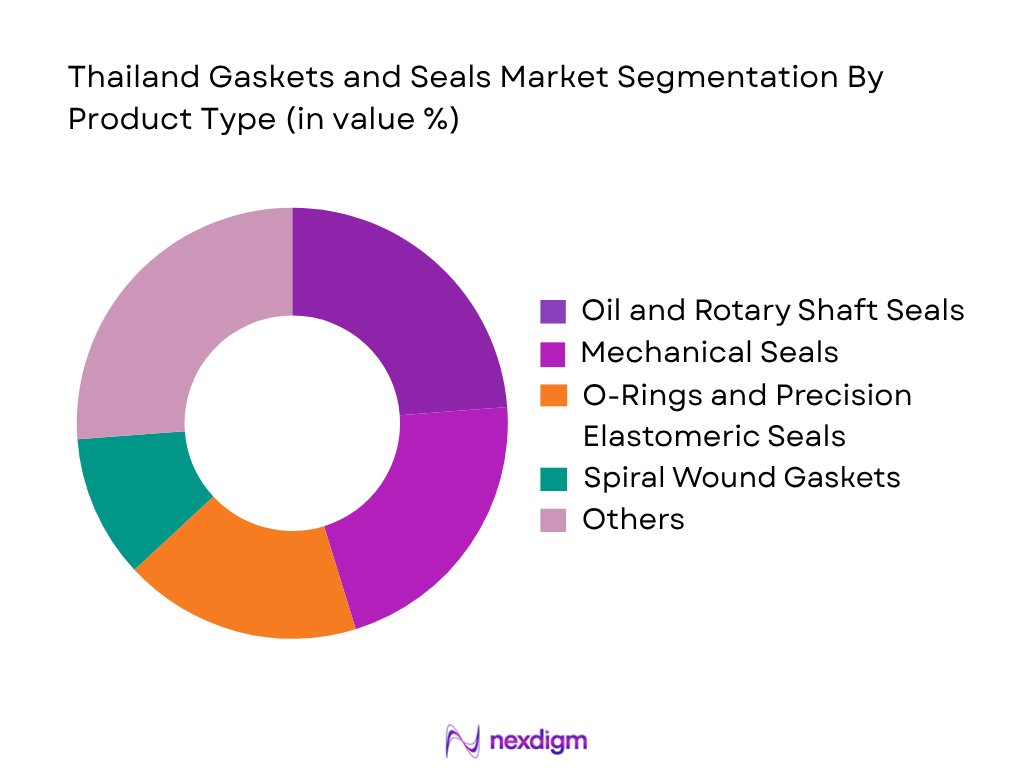
The Thailand Gaskets and Seals Market is segmented by product type into mechanical seals, oil and rotary shaft seals, O-rings and precision elastomeric seals, spiral wound gaskets, compressed fibre and sheet gaskets, hydraulic and pneumatic seals, ring type joint gaskets, Kammprofile gaskets and other specialty products. Oil and rotary shaft seals hold a dominant position because Thailand has a large automotive, motorcycle, industrial machinery and drivetrain manufacturing ecosystem. These products are extensively used in engines, transmissions, wheel hubs, gearboxes, pumps and rotating shafts. Thailand’s long-established automotive supply chain supports high-volume OEM demand, while maintenance and replacement requirements add aftermarket consumption. Mechanical seals also account for a significant portion of demand because petrochemical plants, refineries, power stations and process facilities operate large populations of pumps and compressors. The combined presence of automotive OEMs, Tier-1 component suppliers and process-industry users creates a diversified demand base spanning both standardized seals and high-performance engineered sealing systems.
By End-Use Industry
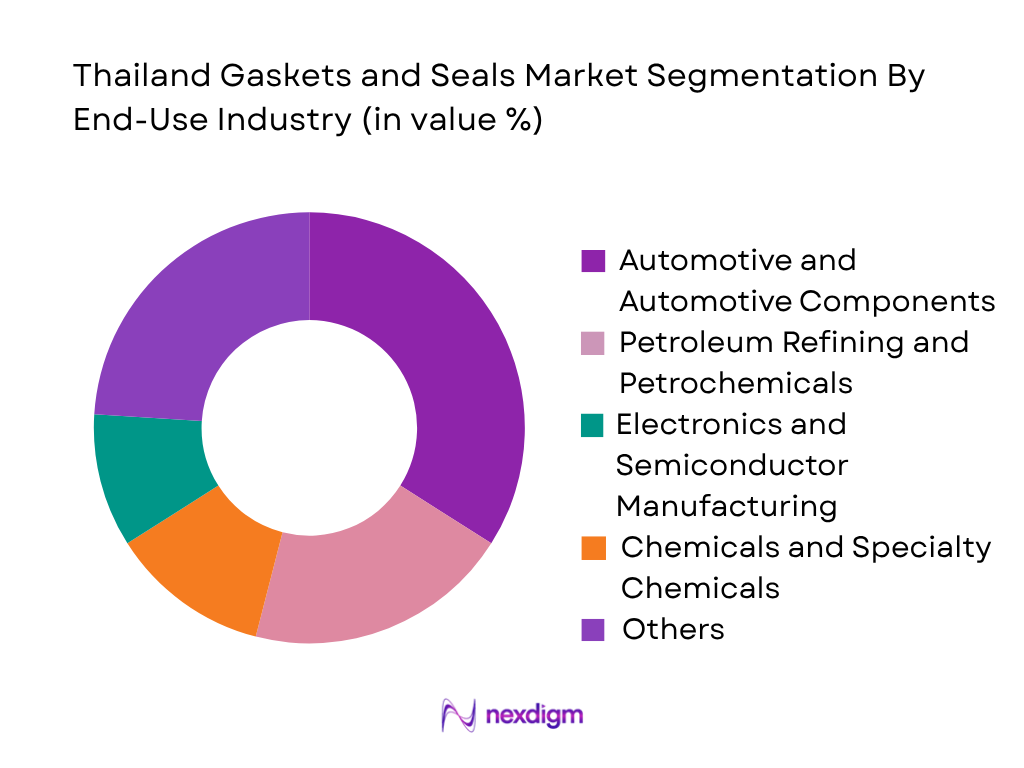
The Thailand Gaskets and Seals Market is segmented by end-use industry into automotive and automotive components, petroleum refining and petrochemicals, electronics and semiconductor manufacturing, chemicals, power generation, water treatment, food processing, industrial machinery and other manufacturing industries. Automotive and automotive components dominate the end-use segmentation because Thailand remains one of Southeast Asia’s most developed vehicle and component manufacturing bases. Seals are incorporated into engines, transmissions, drivetrains, braking systems, thermal-management circuits and electric-vehicle platforms. The sector also benefits from continued investment: the automotive and parts industry attracted 309 investment-promotion projects valued at THB 102.4 billion. Petrochemical and chemical users form another major demand pool because Map Ta Phut and Rayong host highly concentrated process infrastructure requiring spiral wound gaskets, mechanical seals, valve packing and corrosion-resistant elastomers. Electronics and semiconductor investment is simultaneously expanding, creating demand for high-purity and chemically resistant precision seals.
Competitive Landscape
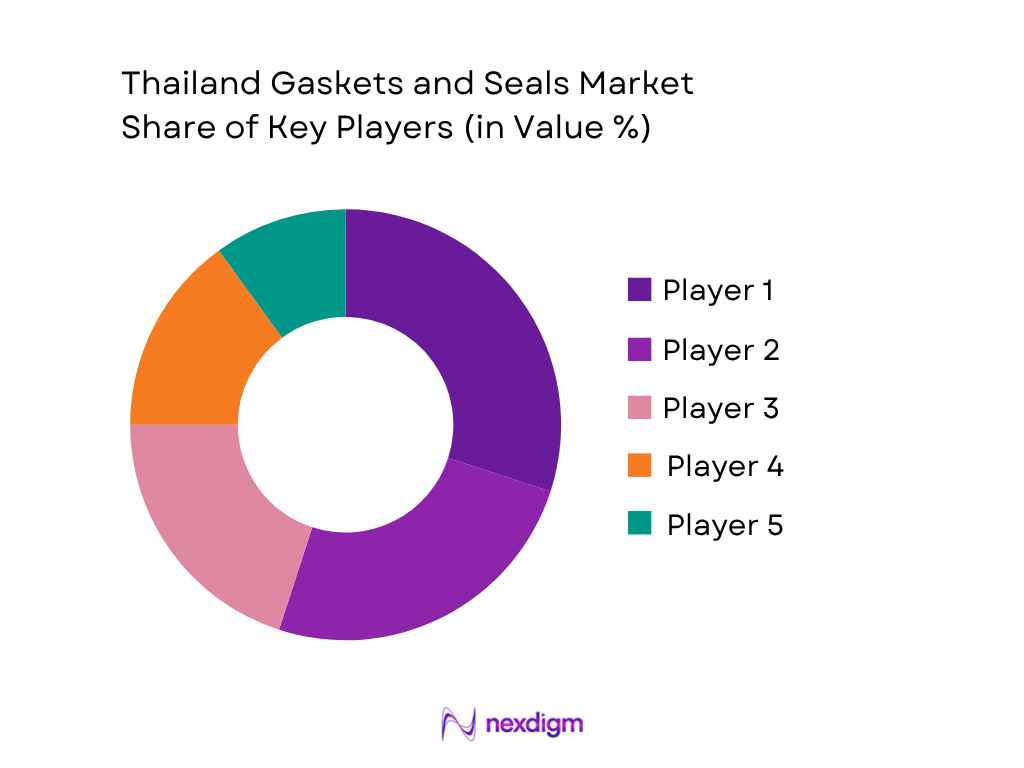
The Thailand Gaskets and Seals Market is characterized by a mix of Japanese automotive sealing specialists, European and American industrial sealing groups, local gasket converters and mechanical-seal service companies. Competition varies significantly by application. Automotive sealing is influenced by companies with established OEM relationships and local production capability, while petrochemical and refinery applications favor suppliers with API-compliant mechanical seals, engineered gasket materials and on-site service capability. Local manufacturing, technical support, repair capability and access to the Eastern Economic Corridor are important differentiators.
| Company | Establishment Year | Headquarters | Key Sealing Portfolio | Material Capability | Major Thailand Applications | Thailand Manufacturing / Presence | Repair & MRO Capability | Technical Position |
| EagleBurgmann | 2004* | Wolfratshausen, Germany | ~ | ~ | ~ | ~ | ~ | ~ |
| John Crane | 1917 | Slough, United Kingdom | ~ | ~ | ~ | ~ | ~ | ~ |
| KLINGER | 1886 | Gumpoldskirchen, Austria | ~ | ~ | ~ | ~ | ~ | ~ |
| VALQUA | 1927 | Tokyo, Japan | ~ | ~ | ~ | ~ | ~ | ~ |
| NICHIAS | 1896 | Tokyo, Japan | ~ | ~ | ~ | ~ | ~ | ~ |
Thailand Gaskets and Seals Market Analysis
Growth Drivers
Expanding Automotive, EV and Auto-Component Manufacturing Base
Thailand’s automotive manufacturing ecosystem remains a major growth driver for gaskets, oil seals, rotary shaft seals, O-rings, transmission seals, hydraulic seals, thermal-management seals and precision-moulded elastomer components. The country produced 1,468,997 motor vehicles in 2024, maintaining a substantial installed manufacturing base for sealing-intensive automotive components. More importantly, the Thailand Board of Investment recorded 309 automotive and parts investment applications valued at THB 102.4 billion in 2024, demonstrating continued capital deployment into vehicle and component production. Thailand has also attracted EV manufacturers including BYD, SAIC Motor, Great Wall Motor, Neta and GAC Aion, creating additional requirements for battery-enclosure gaskets, coolant-system O-rings, electric-drive shaft seals, connector seals and thermal-management components. The upstream material ecosystem provides further support, with Thailand producing approximately 4.79 million tonnes of natural rubber in 2024, providing a substantial domestic base for rubber compounding and elastomer manufacturing. The EV transition also creates opportunities for suppliers to shift from engine-oriented products toward sealing solutions designed for battery protection, cooling circuits, electric motors and power electronics. World Bank data record Thailand’s 2024 GDP at USD 526.52 billion, GDP per capita at USD 7,346.6, and population at 71,668,011, demonstrating the economic and manufacturing scale underpinning sustained automotive sealing demand.
Large Refining, Petrochemical and Rotating-Equipment Installed Base
Thailand’s extensive refining and petrochemical infrastructure generates recurring demand for spiral-wound gaskets, ring-type joints, Kammprofile gaskets, graphite sheets, PTFE gaskets, mechanical seals, compressor seals, valve packing and high-temperature elastomers. The Thailand Board of Investment recorded 235 petrochemical and chemical investment applications valued at THB 49.1 billion in 2024, demonstrating continued investment in process industries that operate sealing-intensive equipment. Rayong is particularly important because IRPC operates an integrated refinery and petrochemical complex with 215,000 barrels-per-day refining capacity. PTT Global Chemical subsequently reported combined crude-oil and condensate distillation capacity of approximately 280,000 barrels per day and chemical and petrochemical production capacity of 14.25 million tonnes annually in 2025. Refineries and chemical complexes operate thousands of potential sealing points across pumps, compressors, valves, reactors, pressure vessels, heat exchangers and pipelines, making replacement demand closely linked to preventive maintenance and plant turnarounds. Mechanical-seal refurbishment and gasket replacement are also essential for controlling process leakage and maintaining equipment availability. Expansion around Map Ta Phut and other Eastern Economic Corridor industrial locations strengthens this installed equipment base. World Bank data record Thailand’s 2024 GDP at USD 526.52 billion and population at 71,668,011, reinforcing the scale of the economy supporting recurring process-industry sealing consumption.
Market Challenges
Automotive Production Weakness and Rapid Powertrain Transition
Thailand’s gasket and seal suppliers face a structural challenge as conventional automotive production moderates while vehicle architectures shift toward battery-electric and electrified powertrains. Thailand produced 1,468,997 vehicles in 2024, compared with 1,834,986 vehicles in 2023, reducing production-linked requirements for traditional cylinder-head gaskets, crankshaft seals, camshaft seals, transmission seals and other internal-combustion-engine components. Production stood at only 104,878 vehicles in December 2024, illustrating pressure on conventional automotive manufacturing volumes. Simultaneously, the Thailand Board of Investment recorded 309 automotive and parts investment applications valued at THB 102.4 billion in 2024, reflecting continued investment but a changing technology mix. Battery-electric vehicles remove several traditional engine and exhaust sealing applications while introducing new requirements around battery packs, cooling loops, electric-drive units, electrical connectors and thermal-management systems. Existing gasket and seal manufacturers therefore need to redesign compounds, geometries and production processes while maintaining legacy ICE programs. Suppliers also need new qualifications from EV OEMs and Tier-1 manufacturers before entering these applications, extending commercialization cycles. World Bank data show Thailand generated USD 526.52 billion of GDP in 2024, with USD 7,346.6 GDP per capita and a population of 71,668,011, indicating that this technological transition is occurring within a large manufacturing economy where suppliers must adapt without abandoning existing industrial capacity.
Rising Technical Qualification Requirements Despite Strong Domestic Rubber Production
Thailand possesses a substantial natural-rubber ecosystem, but the country’s transition toward advanced automotive, semiconductor, petrochemical and electronics manufacturing increases demand for sealing materials that cannot be served by commodity rubber alone. Thailand produced approximately 4.79 million tonnes of natural rubber in 2024, providing significant domestic feedstock for rubber-component production. However, semiconductor equipment, aggressive chemical processes, high-temperature refining operations and high-speed rotating machinery increasingly require FKM, FFKM, engineered PTFE, flexible graphite, silicon carbide, tungsten carbide and specialty metallic sealing materials. The technical challenge is becoming more significant as advanced manufacturing investment expands. Thailand’s Board of Investment recorded 407 electronics and electrical appliance investment applications valued at THB 231.7 billion in 2024, including semiconductor machinery and silicon-carbide wafer manufacturing projects. Petrochemicals and chemicals contributed another 235 investment applications worth THB 49.1 billion, increasing the installed base of equipment requiring pressure-, temperature- and chemical-resistant sealing systems. Suppliers must therefore invest in material traceability, compound engineering, precision moulding, surface finishing, contamination control and application engineering. Product approval can also require extensive OEM and plant-level qualification before commercial adoption. World Bank data record Thailand’s 2024 GDP at USD 526.52 billion and GDP per capita at USD 7,346.6, reflecting an economy moving toward technically sophisticated manufacturing that raises entry requirements for domestic sealing suppliers.
Market Opportunities
High-Purity Sealing for Semiconductor and Advanced Electronics Manufacturing
Thailand’s accelerating semiconductor and electronics investment provides a future growth avenue for FFKM O-rings, fluoropolymer components, vacuum seals, precision elastomers and chemically resistant sealing systems. The Thailand Board of Investment recorded 407 electronics and electrical appliance investment applications valued at THB 231.7 billion in 2024, demonstrating substantial current capital deployment into electronics-related manufacturing. Investment includes high-precision semiconductor machinery, electronic components and silicon-carbide wafer manufacturing, all of which expand the installed population of vacuum equipment, fluid-delivery systems, pumps, valves and chemical-processing machinery. Momentum remained substantial in 2025, when the BOI reported 382 electrical and electronics project applications representing THB 184.1 billion during the first nine months. Semiconductor production environments require sealing products with significantly different performance characteristics from conventional industrial rubber products, including low particle generation, controlled outgassing, plasma resistance, high chemical compatibility and dimensional precision. This creates an opportunity for Thailand-based manufacturers to develop local clean manufacturing, precision moulding, fluoropolymer processing, quality testing and application-engineering capabilities. Domestic availability could also shorten replacement lead times for electronics manufacturers operating around the Eastern Economic Corridor and central industrial regions. World Bank data record Thailand’s 2024 GDP at USD 526.52 billion, GDP per capita at USD 7,346.6, and population at 71,668,011, providing the macroeconomic foundation for continued advanced-manufacturing development and associated high-performance sealing demand.
Eastern Economic Corridor MRO, Refurbishment and Local Seal-Service Expansion
The Eastern Economic Corridor provides a significant future opportunity for mechanical-seal refurbishment, gasket fabrication, emergency replacement services, industrial inventory hubs and application engineering because Rayong, Chonburi and Chachoengsao contain some of Thailand’s most sealing-intensive industrial assets. The EEC contains more than 46 special economic promotion zones, including 32 industrial-estate-type promoted zones, creating a concentrated customer base across petrochemicals, automotive manufacturing, electronics, utilities and advanced industries. Rayong’s provincial economic output stands at approximately THB 1,050,952 million, reflecting the industrial concentration surrounding Map Ta Phut and related manufacturing estates. Existing process assets provide a recurring aftermarket base: IRPC operates a 215,000-barrel-per-day refinery, while PTT Global Chemical reported approximately 280,000 barrels per day of crude-oil and condensate distillation capacity and 14.25 million tonnes of annual chemical and petrochemical production capacity in 2025. Pumps, compressors, valves, heat exchangers and pipeline flanges within these facilities require periodic seal replacement, inspection and refurbishment throughout their operating lives. Local service centres can therefore compete through shorter turnaround times, seal-face reconditioning, reverse engineering, emergency gasket cutting and locally stocked replacements. World Bank data place Thailand’s 2024 GDP at USD 526.52 billion and GDP per capita at USD 7,346.6, supporting future development of localized, technically sophisticated MRO capabilities close to EEC industrial customers.
Future Outlook
The Thailand Gaskets and Seals Market is expected to shift increasingly toward technologically advanced sealing solutions over the coming decade. Growth will be influenced by EV localization, semiconductor manufacturing, petrochemical reliability requirements, higher-performance fluoropolymers and stronger aftermarket servicing. Local production of precision elastomeric products and mechanical-seal refurbishment is also expected to become more strategically important as customers seek shorter lead times and reduced dependency on imported specialized components.
Automotive electrification will alter the product mix rather than eliminate sealing demand. Battery packs, electric drive units, thermal-management systems and cooling circuits require specialized O-rings, elastomer gaskets, shaft seals and environmental barriers. Thailand’s BOI reported 309 automotive and parts investment applications valued at THB 102.4 billion, while several global EV manufacturers have already established or announced production operations in the country. This creates opportunities for local suppliers capable of meeting OEM qualification, durability and material-performance requirements.
Major Players
- EagleBurgmann Thailand Co. Ltd.
- John Crane (Thailand) Ltd.
- KLINGER (Thailand) Co., Ltd.
- VALQUA Industries (Thailand), Ltd.
- Thai Nichias International Co., Ltd.
- NICHIAS (Thailand) Co., Ltd.
- SKF (Thailand) Ltd.
- Trelleborg Sealing Solutions
- Parker Hannifin Thailand
- Flowserve
- Garlock
- AESSEAL
- Tough Mechanic Co., Ltd.
- ASCG Invention (1991) Co., Ltd.
- SPECSEAL Co., Ltd.
Key Target Audience
- Gasket and Industrial Sealing Product Manufacturers
- Mechanical Seal and Rotating Equipment Solution Manufacturers
- Automotive OEMs and Automotive Component Manufacturers
- Petroleum Refining, Petrochemical and Chemical Operators
- Electronics and Semiconductor Component Manufacturers
- Industrial MRO, EPC and Equipment Service Providers
- Investments and Venture Capitalist Firms
- Government and Regulatory Bodies (Thailand Board of Investment, Eastern Economic Corridor Office of Thailand, Thai Industrial Standards Institute, Department of Industrial Works, Ministry of Industry)
Research Methodology
Step 1: Identification of Key Variables
The initial phase involves constructing an ecosystem map covering gasket manufacturers, mechanical-seal suppliers, automotive seal producers, precision elastomer moulders, industrial distributors, EPC companies and end-use industries within the Thailand Gaskets and Seals Market. Extensive desk research is undertaken to identify critical variables such as product consumption, installed equipment, automotive production, industrial capacity, import dependence, material usage and replacement cycles.
Step 2: Market Analysis and Construction
Historical market information is compiled using top-down and bottom-up techniques. Top-down analysis examines automotive production, petrochemical capacity, electronics investment, industrial manufacturing activity and other sealing-intensive industries. Bottom-up assessment evaluates company sales, local production, imports, mechanical-seal replacement, gasket consumption, MRO activity and distribution throughput to construct the Thailand Gaskets and Seals Market and segment-level estimates.
Step 3: Hypothesis Validation and Expert Consultation
Market hypotheses are developed and validated through computer-assisted telephone interviews with gasket manufacturers, mechanical-seal providers, automotive suppliers, distributors, maintenance contractors and industrial end users. These consultations help verify product mix, material preferences, procurement criteria, replacement cycles, OEM qualification requirements, aftermarket behavior and geographic demand patterns across Bangkok, the Eastern Economic Corridor and other industrial centers.
Step 4: Research Synthesis and Final Output
The final phase integrates primary findings with government investment statistics, industrial production data, company information and end-use sector indicators. Market estimates produced through bottom-up calculations are cross-checked against top-down demand proxies from automotive, petrochemical, electronics, chemical and industrial manufacturing sectors. This triangulation process produces the final Thailand Gaskets and Seals Market sizing, segmentation, competitive positioning and forecast framework.

- Executive Summary
- Research Methodology (Market Definition and Scope, Thailand Gaskets and Seals Market Classification, Static and Dynamic Sealing Demand Assessment, Industrial Gasket Consumption Mapping, Mechanical Seal Replacement Assessment, Automotive Seal Consumption Mapping, Domestic Gasket and Seal Manufacturing Capacity Assessment, Imported Specialty Seal Dependency Analysis, Rubber-Elastomer-Graphite-PTFE-Metallic Material Assessment, Pump-Compressor-Valve-Flange Installed Base Mapping)

- Definition and Scope
- Thailand Gaskets and Seals Industry Evolution and Development of Automotive Seals, Industrial Gaskets, Mechanical Seals, Precision Elastomer Products and Process Sealing Ecosystem
- Gasket Manufacturing, Rubber Moulding, Oil Seal Production, Precision Elastomer Processing, Mechanical Seal Assembly, Seal Repair and Industrial Distribution Industry Structure
- Thailand Gaskets and Seals Value Chain Analysis
- Thailand Gaskets and Seals Supply Chain Analysis
- Rubber and Elastomer Supplier, Graphite-PTFE Supplier, Gasket Manufacturer, Oil Seal Manufacturer, Mechanical Seal OEM, Automotive Tier Supplier, Industrial Distributor, EPC Contractor,
- MRO Provider and Industrial End-User Ecosystem Analysis
- Gaskets and Seals Integration Across Automotive and EV Manufacturing, Refining and Petrochemicals, Chemicals, Electronics and Semiconductors, Power Generation, Water Treatment, Food Processing and General Manufacturing Applications

- Growth Drivers (Large Automotive and Auto-Component Manufacturing Base, Expansion of EV and Battery Production, Refining and Petrochemical Equipment Demand, Eastern Economic Corridor Industrial Expansion, Semiconductor and Advanced Electronics Investment, Growing Rotating Equipment Installed Base, Industrial Maintenance and Shutdown Activity, Local Rubber and Elastomer Processing Capability, Pump and Compressor Reliability Requirements)
- Market Challenges (Dependence on Imported High-Specification Sealing Materials, Competition from Low-Cost Regional Suppliers, Automotive Platform Transition Toward EVs, Long Qualification Cycles for OEM Seals, High Reliability Requirements in Petrochemical Applications, Skilled Mechanical Seal Technician Availability, Specialty FFKM and Engineered Polymer Dependency, Raw Material Supply Volatility, Pressure on Local Component Suppliers to Upgrade Technology)
- Market Opportunities (EV Battery and Thermal Management Seals, Precision Automotive Elastomer Components, Semiconductor High-Purity Seals, Eastern Economic Corridor Process Industry Sealing, Mechanical Seal Repair and Refurbishment, Hydrogen and Alternative Fuel Sealing, Local FFKM and Fluoropolymer Processing, Industrial Gasket Localization, Predictive Seal Maintenance Services, ASEAN Export Expansion)
- Market Trends (EV-Compatible Seal Development, High-Performance Fluoroelastomer Adoption, Cartridge Mechanical Seals, Dry Gas Seal Technology, Low-Emission Flange Sealing, Precision-Moulded O-Rings, PTFE and Graphite Material Adoption, Local Seal Refurbishment, Condition Monitoring, Customized CNC-Cut Gaskets, High-Purity Semiconductor Sealing)
- Regulatory and Standards Landscape (Thai Industrial Standards Institute Requirements, Automotive Quality Standards, API Mechanical Seal Requirements, ASME Gasket Standards, Pressure Equipment Requirements, Petroleum and Petrochemical Plant Specifications, Hazardous Substance Requirements, Food-Grade Sealing Compliance, Automotive OEM Material Specifications, Industrial Environmental Compliance)
- SWOT Analysis
- Porter’s Five Forces Analysis
- PESTLE Analysis
- Stakeholder Ecosystem
- Competition Ecosystem

- By Market Value (2020-2025)
- By Gasket Consumption Volume (2020-2025)
- By Mechanical Seal Consumption Volume (2020-2025)
- By Oil Seal and Rotary Seal Consumption Volume (2020-2025)
- By O-Ring and Precision Elastomer Consumption Volume (2020-2025)
- By Average Selling Price (2020-2025)
- By Domestic Gasket and Seal Production Volume (2020-2025)
- By Imported Gaskets and Seals Volume (2020-2025)

- By Product Type (In Value %)
Spiral Wound Gaskets
Ring Type Joint Gaskets
Kammprofile Gaskets
Metal Jacketed Gaskets
Compressed Fibre and Sheet Gaskets
Mechanical Seals
Dry Gas Seals
Oil and Rotary Shaft Seals
O-Rings and Precision Elastomeric Seals
Hydraulic and Pneumatic Seals - By Material Type (In Value %)
Flexible Graphite
PTFE and Expanded PTFE
Compressed Non-Asbestos Fibre
Nitrile Rubber
EPDM
FKM Fluoroelastomers
FFKM Perfluoroelastomers
Silicone Rubber
Polyurethane
Stainless Steel and High-Temperature Alloys - By Equipment Application (In Value %)
Pumps
Compressors
Valves and Actuators
Flanges and Pipeline Connections
Heat Exchangers
Pressure Vessels and Reactors
Automotive Engines and Transmissions
EV Battery and Thermal Management Systems
Hydraulic Cylinders
Industrial Gearboxes and Bearings - By End-Use Industry (In Value %)
Automotive and Automotive Components
Electric Vehicle and Battery Manufacturing
Petroleum Refining
Petrochemicals and Specialty Chemicals
Electronics and Semiconductor Manufacturing
Power Generation
Water and Wastewater Treatment
Food and Beverage Processing
Pulp and Paper
Industrial Machinery and General Manufacturing - By Geographic Industrial Cluster (In Value %)
Bangkok Metropolitan Region
Chonburi
Rayong
Chachoengsao
Samut Prakan
Ayutthaya
Pathum Thani

- Market Share of Major Players (By Thailand Revenue, Gasket Consumption Volume, Mechanical Seal Consumption Volume, Automotive Seal Exposure, Refinery and Petrochemical Exposure, Local Manufacturing Footprint, Industrial Distribution Coverage, MRO and Technical Service Capability)
- Cross Comparison Parameters (Thailand Gaskets and Seals Revenue, Static-Dynamic-Automotive Sealing Portfolio Breadth, High-Temperature-High-Pressure-Chemical-Resistant Material Capability, Thailand Manufacturing-Rubber Moulding-Gasket Fabrication Capability, Automotive-EV-Refining-Petrochemical Application Coverage, Mechanical Seal Repair and Refurbishment Footprint, Thailand Inventory and Industrial Distribution Network Coverage, Application Engineering-OEM Qualification and Technical Service Capability)
- SWOT Analysis of Major Players
- Competitive Positioning Matrix
- Pricing and Sealing Product Category Benchmarking
- Detailed Profiles of Major Companies
EagleBurgmann Thailand Co. Ltd. – Mechanical Seals, Compressor Seals, Seal Supply Systems, Industrial Packings and Rotating Equipment Sealing Services
John Crane (Thailand) Ltd. – Mechanical Seals, Dry Gas Seals, Seal Support Systems, Filtration and Rotating Equipment Reliability Solutions
KLINGER (Thailand) Co., Ltd. – Metallic Gaskets, Soft Gaskets, Graphite Sealing Materials, PTFE Products and Industrial Fluid-Sealing Solutions
VALQUA Industries (Thailand), Ltd. – Joint Sheet Gaskets, Metallic Gaskets, Industrial Sealing Materials and Local Gasket Manufacturing
Thai Nichias International Co., Ltd. – Spiral Wound Gaskets, Graphite Gaskets, PTFE Gaskets, O-Rings, Packings and Fluoropolymer Sealing Products
NICHIAS (Thailand) Co., Ltd. – Automotive Sealing Components, Heat-Management Components and Vehicle Fluid-Sealing Applications
SKF (Thailand) Ltd. – Rotary Shaft Seals, Machined Seals, Bearing Seals, Hydraulic Seals and Rotating Equipment Solutions
Trelleborg Sealing Solutions – Engineered Polymer Seals, O-Rings, Hydraulic Seals, Rotary Seals and Industrial Precision Sealing Solutions
Parker Hannifin Thailand – O-Rings, Hydraulic and Pneumatic Seals, Engineered Polymer Seals and Motion-Control Sealing Products
Flowserve – Mechanical Seals, Cartridge Seals, Metal Bellows Seals, Compressor Seals and Pump-Seal Service Solutions
Garlock – Industrial Gaskets, Compression Packing, Bearing Isolators, Oil Seals and Flange-Sealing Solutions
AESSEAL – Cartridge Mechanical Seals, Gas Seals, Seal Support Systems, Bearing Protection and Pump Reliability Solutions
Tough Mechanic Co., Ltd. – Mechanical Seals, Packing Seals, Oil Seals, Pump and Valve Sealing, Cartridge Seals and Industrial Repair Services
ASCG Invention (1991) Co., Ltd. – Industrial Gaskets, Compression Packing, Industrial Sealing Products and Thailand Distribution Services
SPECSEAL Co., Ltd. – Industrial Seals, Hydraulic and Pneumatic Sealing Products, Oil Seals and Specialized Sealing Distribution

- Automotive OEM Seal Procurement Assessment
- Automotive Tier-1 and Tier-2 Sealing Requirement Assessment
- EV Manufacturer Battery and Thermal Management Sealing Assessment
- Refinery Gasket and Mechanical Seal Requirement Assessment
- Petrochemical Plant Critical Sealing Requirement Analysis
- Chemical Manufacturer Material Compatibility Assessment
- Electronics and Semiconductor High-Purity Seal Requirement Assessment
- Power Plant Pump and Turbine Sealing Assessment
- Water and Wastewater Pump Sealing Requirement Assessment
- Industrial Machinery OEM Seal Requirement Assessment

- By Market Value (2026-2035)
- By O-Ring and Precision Elastomer Consumption Volume (2026-2035)
- By Domestic Gasket and Seal Production Volume (2026-2035)
- By Imported Gaskets and Seals Volume (2026-2035)
- By Average Selling Price (2026-2035)
- By Gasket Consumption Volume (2026-2035)
- By Mechanical Seal Consumption Volume (2026-2035)
- By Oil Seal and Rotary Seal Consumption Volume (2026-2035)


 Request a Sample
 Ask for Customization
 Get a Quote
 Enquire Now