

 Download PDF
 Download PDF
Market Overview
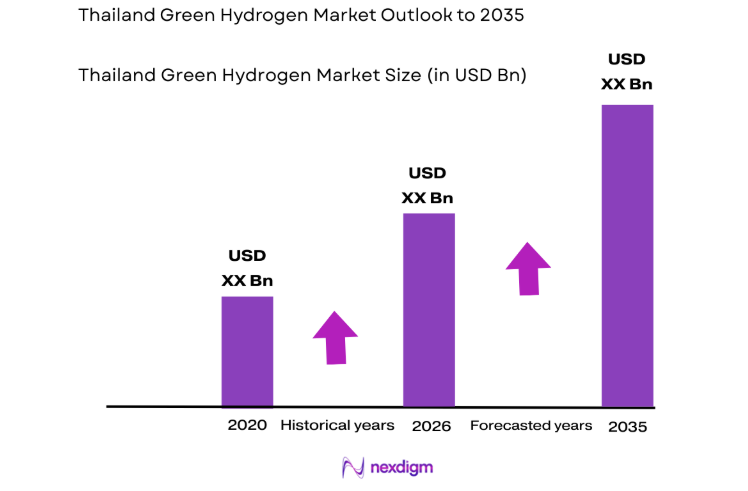
The Thailand Green Hydrogen Market is projected to reach USD ~ million based on a recent historical assessment. The market’s growth is driven by the government’s commitment to achieving net-zero emissions by 2065, supported by ambitious renewable energy targets. The increasing demand for sustainable energy solutions and global trends favoring clean technologies also play a significant role in fostering the development of green hydrogen. Moreover, technological advancements in electrolysis and falling production costs are accelerating its adoption.
Cities like Bangkok, Chonburi, and Rayong are leading the way in Thailand’s green hydrogen development due to their industrial bases and proximity to key infrastructure. These areas benefit from strong government incentives and the focus on enhancing energy security. Their growing renewable energy ambitions and increasing investments in clean energy technologies contribute to their dominance in the market, positioning them as hubs for green hydrogen production and utilization.
Market Segmentation
By Product Type
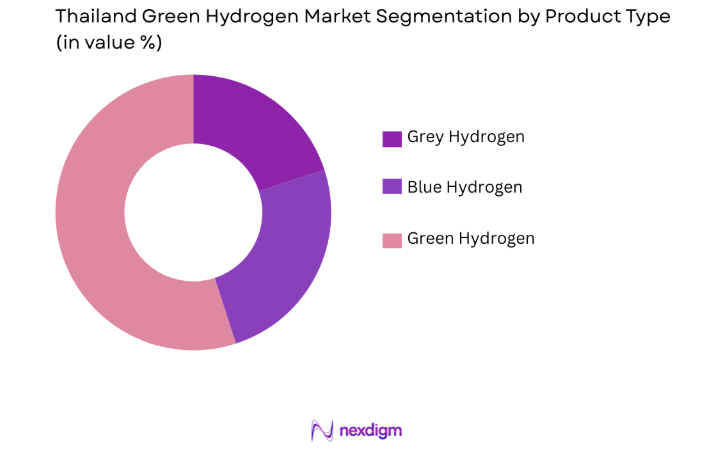
The Thailand Green Hydrogen Market is segmented by product type into grey hydrogen, blue hydrogen, and green hydrogen. The green hydrogen segment has seen rapid growth due to its alignment with Thailand’s decarbonization goals. Technological improvements in electrolysis and increasing availability of renewable energy sources, such as solar and wind, have made green hydrogen more economically viable. Its dominance is driven by favorable policies, decreasing production costs, and the nation’s focus on a sustainable energy future.
 By End-User
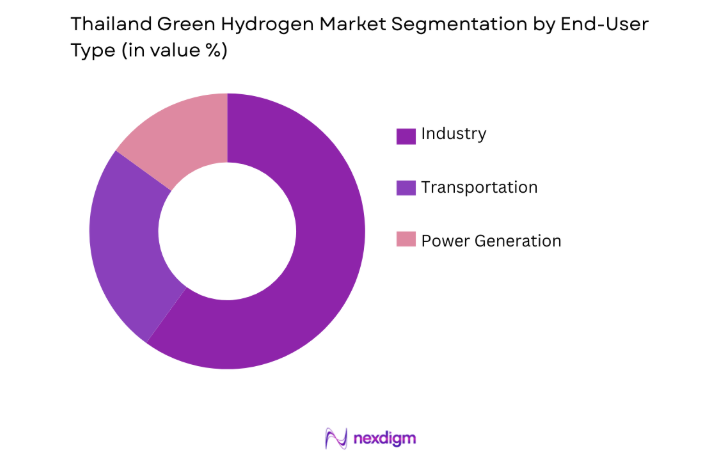
The market is segmented by end-user into industries, transportation, and power generation. The industrial sector has the largest share, as green hydrogen is increasingly used in heavy industries such as steel, chemicals, and refining to reduce carbon emissions. Green hydrogen’s role in decarbonizing industrial processes and its ability to replace fossil fuels in high-temperature applications are key drivers behind this dominance. The rapid development of hydrogen infrastructure in industrial zones is also supporting its adoption.
Competitive Landscape
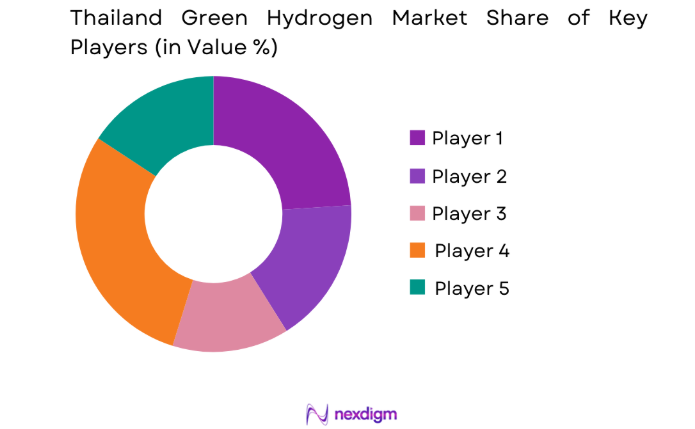
The Thailand Green Hydrogen Market is growing rapidly with participation from both local and global players. International companies like Air Liquide and Siemens Energy are entering the market, contributing advanced technology for electrolysis and hydrogen production. Local players like PTT Group and Thai Oil are actively involved in projects aimed at producing green hydrogen, collaborating with international partners. With increasing interest in green hydrogen, the market is witnessing consolidation as players strengthen their capabilities through partnerships and acquisitions.
| Company Name | Establishment Year | Headquarters | Technology Focus | Market Reach | Key Products | Revenue (USD) | Market-Specific Focus |
| Air Liquide | 1902 | France | ~ | ~ | ~ | ~ | ~ |
| Siemens Energy | 2020 | Germany | ~ | ~ | ~ | ~ | ~ |
| PTT Group | 1978 | Thailand | ~ | ~ | ~ | ~ | ~ |
| Thai Oil | 1961 | Thailand | ~ | ~ | ~ | ~ | ~ |
| Mitsubishi Heavy | 1884 | Japan | ~ | ~ | ~ | ~ | ~ |
Thailand Green Hydrogen Market Analysis
Growth Drivers
Government Policy and Support
The Thailand government plays a significant role in driving the growth of the green hydrogen market through its commitment to achieving net-zero emissions by 2065. This includes setting ambitious renewable energy targets and establishing regulatory frameworks to promote clean energy technologies, such as green hydrogen. Thailand’s hydrogen roadmap and incentives for renewable energy projects, like subsidies and tax benefits, are accelerating the transition towards green hydrogen production. The country is also prioritizing energy security and aims to reduce its reliance on fossil fuels by diversifying the energy mix. These policies and government-driven initiatives are crucial in creating a favorable environment for the green hydrogen market to thrive.
Technological Advancements in Hydrogen Production
Technological advancements in green hydrogen production are another major driver of market growth. Innovations in electrolysis technology, specifically alkaline and proton exchange membrane electrolysis, have significantly lowered the cost of hydrogen production. Additionally, the increasing efficiency of renewable energy sources, such as solar and wind, is further driving the cost reduction of green hydrogen production. The development of large-scale hydrogen production facilities and the ongoing improvement in hydrogen storage and transport technologies are enabling green hydrogen to be produced and delivered more efficiently. As these technologies continue to advance, green hydrogen will become a more cost-competitive and scalable energy source, which will further boost its market adoption in Thailand.
Market Challenges
High Production Costs
One of the major challenges faced by the Thailand green hydrogen market is the high production cost associated with electrolysis. While green hydrogen offers a clean and sustainable energy source, the production costs are significantly higher compared to conventional hydrogen produced from natural gas (grey hydrogen). Despite falling costs of renewable energy, the capital investment required for large-scale electrolysis plants, along with high operational costs, remains a significant barrier. The lack of infrastructure for hydrogen production, storage, and distribution further adds to the overall cost, limiting the widespread adoption of green hydrogen. Lowering the cost of production is crucial for making green hydrogen competitive with other forms of energy, and overcoming this challenge is necessary for the long-term growth of the market.
Regulatory and Infrastructure Gaps
Despite the government’s commitment to supporting green hydrogen, regulatory and infrastructure gaps remain a key challenge for market development. The hydrogen infrastructure in Thailand is still in its early stages, and a lack of clear regulations, standards, and incentives for hydrogen projects is slowing the pace of development. There is a need for a cohesive national strategy to develop hydrogen infrastructure, including refueling stations and pipelines. Additionally, the integration of green hydrogen into the existing energy grid requires significant upgrades, which further complicates the situation. These regulatory and infrastructure challenges must be addressed to ensure the efficient deployment of green hydrogen and to support its integration into the country’s energy system.
Opportunities
Growing Demand for Clean Energy
As Thailand increasingly focuses on reducing its carbon footprint, the demand for clean and renewable energy solutions, including green hydrogen, is on the rise. Green hydrogen offers an attractive solution to decarbonize industries, such as steel and chemical production, that are difficult to electrify. Additionally, hydrogen can play a crucial role in transportation, especially for heavy-duty vehicles like buses, trucks, and trains, where battery-electric solutions may not be feasible. The growing interest from private and public sectors in adopting sustainable energy solutions presents a significant opportunity for the green hydrogen market. Government incentives, coupled with the increasing environmental awareness of consumers and industries, will drive the demand for green hydrogen in Thailand.
Private Sector Investments and Collaboration
Another significant opportunity lies in private sector investments and collaboration with international partners. As Thailand works toward achieving its renewable energy targets, international companies specializing in hydrogen production and technology are entering the market to tap into its growth potential. Public-private partnerships, along with collaboration between technology providers and local utilities, will be instrumental in driving the development of large-scale green hydrogen projects. As the technology becomes more cost-competitive, the market will attract greater investments in production facilities and infrastructure, positioning Thailand as a leader in Southeast Asia’s hydrogen economy.
Future Outlook
The Thailand green hydrogen market is expected to experience rapid growth over the next five years, driven by government support, technological advancements, and growing demand for clean energy. The country’s push to achieve net-zero emissions and increase the share of renewable energy in its energy mix will further accelerate the development of green hydrogen. As production costs continue to decline and hydrogen infrastructure expands, green hydrogen is expected to play a key role in decarbonizing various sectors, such as industry, transportation, and power generation. With continued policy support and increasing private sector investments, Thailand is well-positioned to become a leading player in the Southeast Asian green hydrogen market.
Major Players
- Air Liquide
- Siemens Energy
- PTT Group
- Thai Oil
- Mitsubishi Heavy Industries
- Nel ASA
- Linde
- Enel Green Power
- Iberdrola
- Shell
- Acciona
- Uniper
- Green Hydrogen Systems
- Vestas
- Plug Power
Key Target Audience
- Investments and venture capitalist firms
- Government and regulatory bodies
- Hydrogen technology providers
- Hydrogen infrastructure developers
- Industrial energy consumers
- Power generation companies
- Renewable energy consultants
Research Methodology
Step 1: Identification of Key Variables
The research identifies key market variables, including regulatory support, technological advancements, and demand for green hydrogen across sectors.
Step 2: Market Analysis and Construction
Data is gathered through primary research with industry stakeholders and secondary research from credible market reports, publications, and databases.
Step 3: Hypothesis Validation and Expert Consultation
Expert consultations with industry players, government bodies, and technology providers help validate assumptions and refine the research model.
Step 4: Research Synthesis and Final Output
The final output synthesizes data from the research phases, providing an in-depth analysis of the market dynamics, growth drivers, challenges, and opportunities.

- Executive Summary
- Research Methodology (Definitions, Scope, Industry Assumptions, Market Sizing Approach, Primary & Secondary Research Framework, Data Collection & Verification Protocol, Analytic Models & Forecast Methodology, Limitations & Research Validity Checks)

- Market Definition and Scope
- Value Chain & Stakeholder Ecosystem
- Regulatory / Certification Landscape
- Sector Dynamics Affecting Demand

- Growth Drivers
Government policies supporting hydrogen adoption
Technological advancements in hydrogen production
Increasing demand for clean and sustainable energy - Market Challenges
High capital investment for infrastructure
Technological limitations in large-scale hydrogen storage
Regulatory challenges in hydrogen infrastructure - Market Opportunities
Government-funded hydrogen projects
Growing private-sector investments in hydrogen infrastructure
Collaborations between renewable energy providers and hydrogen producers - Trends
Advancements in electrolysis technology
Integration of hydrogen production with renewable energy sources - Government Regulations
National hydrogen strategies and incentives
Tax incentives and grants for green hydrogen projects
Regulatory standards for hydrogen storage and transportation - SWOT Analysis
- Porter’s Five Forces

- By Market Value, 2020-2025
- By Installed Units, 2020-2025
- By Average System Price, 2020-2025
- By System Complexity Tier, 2020-2025

- By System Type (In Value%)
Electrolysis Systems
Green Hydrogen Storage Systems
Hydrogen Distribution Systems
Hydrogen Fueling Stations
Renewable Hydrogen Production Systems - By Platform Type (In Value%)
Onshore Platforms
Offshore Platforms
Hybrid Platforms
Floating Platforms - By Fitment Type (In Value%)
Utility-scale Installations
Commercial Installations
Residential Installations
Industrial Installations - By End User Segment (In Value%)
Energy Providers
Industrial Sector
Government Sector

- Market Share Analysis
- Cross Comparison Parameters (System type, Production capacity, Platform type, End-user segment, Government policies, Fitment type, Technological maturity)
- SWOT Analysis of Key Competitors
- Pricing & Procurement Analysis
- Key Players
Air Products and Chemicals
Linde Group
Shell Hydrogen
Plug Power
Siemens Energy
Nel ASA
ITM Power
Cummins Inc.
McPhy Energy
Hydrogenics Corporation
Enel Green Power
SABIC
H2 Energy Group
Toyota Motor Corporation
Hexagon Composites

- Government initiatives to support green hydrogen
- Increased industrial demand for green hydrogen as a cleaner fuel
- Private sector interest in adopting hydrogen solutions
- Developing infrastructure for hydrogen distribution and fueling

- Forecast Market Value, 2026-2035
- Forecast Installed Units, 2026-2035
- Price Forecast by System Tier, 2026-2035
- Future Demand by Platform, 2026-2035


 Request a Sample
 Ask for Customization
 Get a Quote
 Enquire Now