
 Download PDF
Market Overview
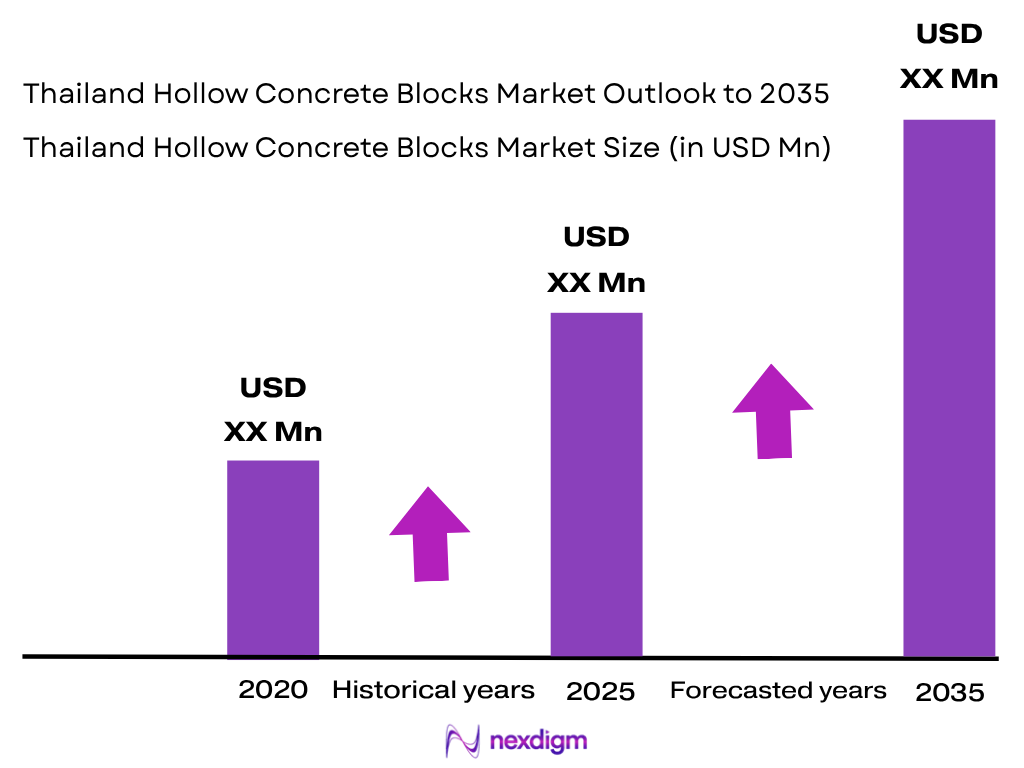
The Thailand Hollow Concrete Blocks Market is valued at approximately USD ~ million, based on historical market assessment. Construction activity remains the principal demand base, with permitted new-building floor area moving from 60.85 million square meters to 58.86 million square meters, while permitted additions and alterations covered approximately 2.87 million and 2.82 million square meters, respectively. Residential, commercial, factory and industrial construction sustains demand for conventional and higher-performance concrete masonry units.
Bangkok, its surrounding provinces and Central Thailand dominate Thailand Hollow Concrete Blocks Market demand because they combine dense housing development, commercial construction, industrial estates and extensive contractor networks. Bangkok and its vicinities accounted for approximately 18.64 million square meters of new-building construction area, compared with approximately 21.75 million square meters in the preceding period. Central Thailand recorded approximately 21.68 million square meters, supported by residential, industrial, warehouse and logistics construction.
Market Segmentation
By Product Type
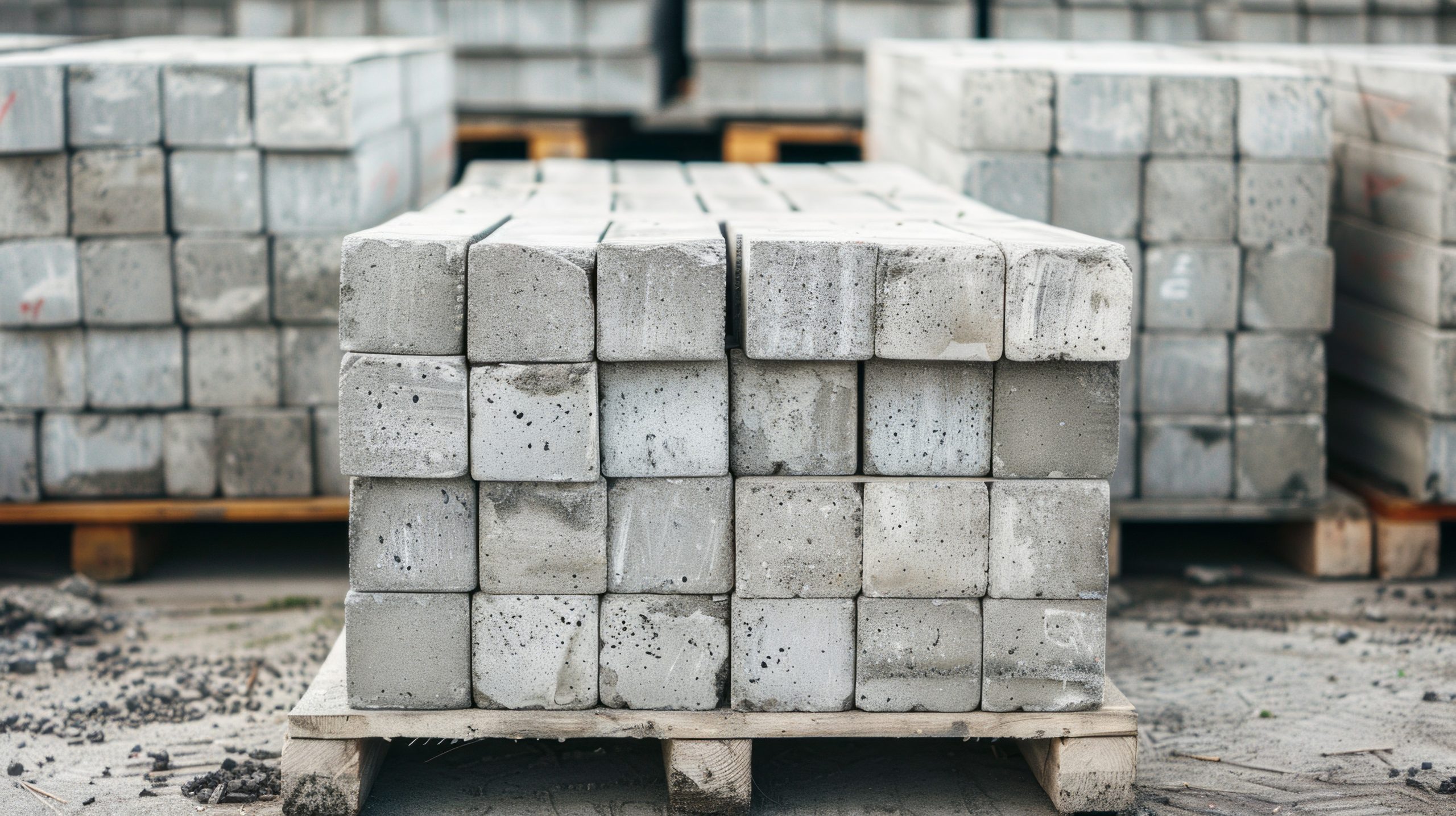
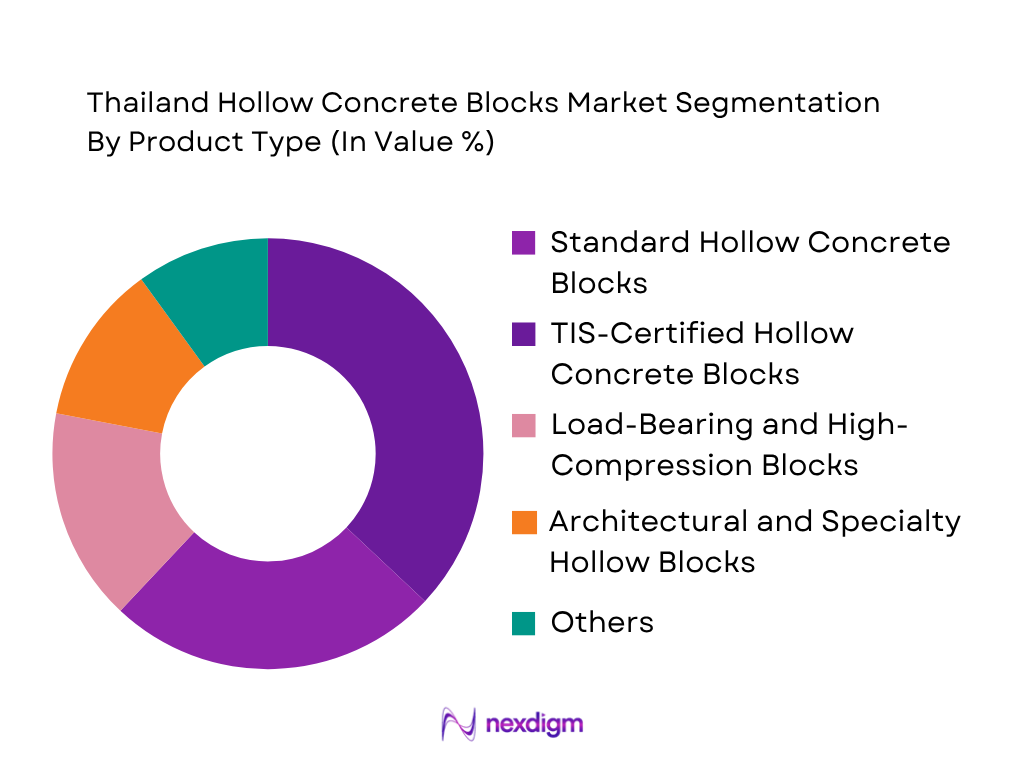
The Thailand Hollow Concrete Blocks Market is segmented into standard hollow concrete blocks, TIS-certified hollow concrete blocks, load-bearing and high-compression hollow blocks, architectural and specialty blocks, and lightweight concrete masonry alternatives. Standard and TIS-certified hollow concrete blocks collectively form the dominant product category because they address Thailand’s extensive low-rise residential, commercial, industrial and general wall-construction requirements. Established manufacturers supply standard thicknesses including 7 cm, 9 cm, 14 cm and 19 cm, allowing contractors to select products according to wall thickness and performance requirements. TIS-compliant products provide additional assurance concerning dimensions, strength and manufacturing consistency. Industrialized manufacturers increasingly use automated batching and forming machinery to achieve uniform density and geometry. High-compression and specialty blocks remain strategically important for projects requiring enhanced strength, fire resistance or architectural finishes, while lightweight alternatives increasingly compete where developers prioritize lower structural loads and faster wall installation.
By Application
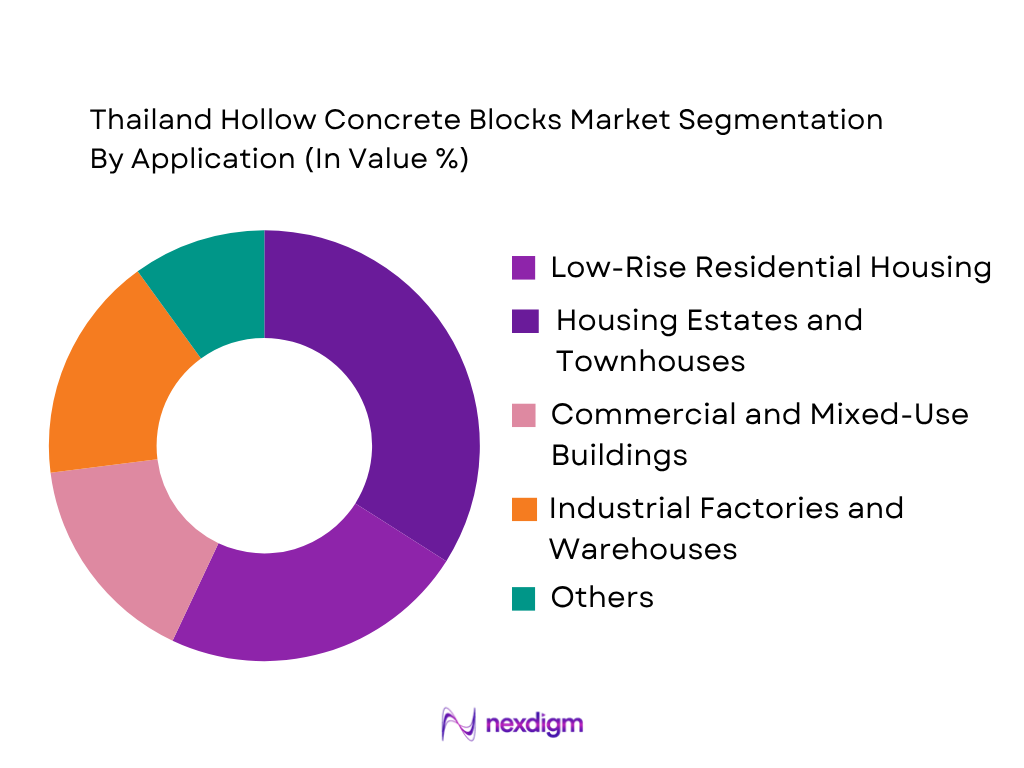
The Thailand Hollow Concrete Blocks Market is segmented into low-rise residential housing, housing estates and townhouses, commercial and mixed-use buildings, industrial factories and warehouses, and institutional, hospitality and government buildings. Low-rise residential housing and housing estates represent the dominant demand base because residential construction remains Thailand’s largest building category by number of permitted structures. Residential buildings accounted for approximately 238,025 permitted construction units in the latest annual dataset. Hollow concrete blocks are well established for partitions, exterior walls, boundary walls and general masonry in detached homes and low-rise developments. Thailand’s extensive local contractor network and availability of standardized concrete blocks support their continued use. Nevertheless, AAC blocks, lightweight masonry and precast wall systems increasingly compete in projects emphasizing thermal performance, lower dead load and installation productivity, encouraging conventional block manufacturers to improve dimensional accuracy, compressive performance and certified product availability.
Competitive Landscape
The Thailand Hollow Concrete Blocks Market combines specialist concrete-block manufacturers with diversified precast and building-material companies. Competition centers on block thickness range, TIS compliance, compressive performance, production automation, geographic delivery capability and access to residential and industrial construction projects. Specialist manufacturers such as Wongklom compete through extensive block portfolios and automated production, while diversified concrete-product companies leverage broader contractor relationships and regional manufacturing infrastructure. Lightweight and AAC suppliers create additional substitution pressure on conventional CHB manufacturers.
| Company | Establishment Year | Headquarters / Main Base | Concrete Masonry Capability | Product/Thickness Range | Standards & Quality Positioning | Manufacturing Capability | Geographic Coverage | Key Construction Exposure |
| Wongklom Co., Ltd. | N/A | Saraburi | ~ | ~ | ~ | ~ | ~ | ~ |
| PA Concrete Co., Ltd. | 1973 | Lampang | ~ | ~ | ~ | ~ | ~ | ~ |
| DCON Products PCL | 1996 | Bangkok | ~ | ~ | ~ | ~ | ~ | ~ |
| TPI Polene PCL | 1987* | Bangkok | ~ | ~ | ~ | ~ | ~ | ~ |
| SCG / CPAC | 1913** | Bangkok | ~ | ~ | ~ | ~ | ~ | ~ |
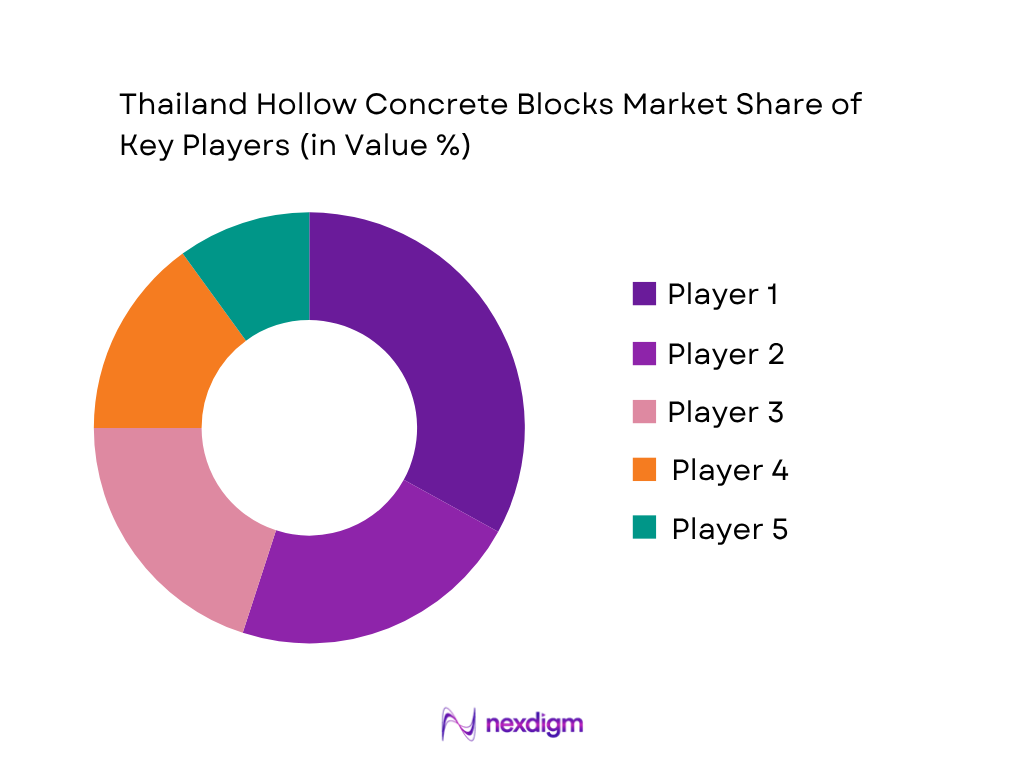
Thailand Hollow Concrete Blocks Market Analysis
Growth Drivers
Low-Rise Housing and Regional Building Construction Sustaining Hollow Block Consumption
Thailand’s extensive low-rise housing and regional construction base continues to support hollow concrete block consumption for external walls, partitions, boundary walls, utility rooms and small commercial structures. In 2024, authorities issued 188,461 new-building permits covering approximately 52.10 million square meters, while another 3,395 permits were issued for additions and alterations covering 2.824 million square meters. Residential construction remained the largest building category, with 176,651 permit recipients associated with residential projects. Geographic dispersion also supports regional block manufacturing: Central Thailand recorded 21.678 million square meters of new-building construction, Bangkok’s surrounding provinces recorded 12.217 million square meters, Southern Thailand recorded 8.247 million square meters, and Northeastern Thailand recorded 6.961 million square meters. Thailand’s 2024 nominal GDP reached USD 526.52 billion, while GDP per capita stood at USD 7,346.6, providing the macroeconomic base for construction expenditure. For hollow-block producers, this broad geographic footprint supports localized plants and dealer networks because heavy concrete masonry is economically and operationally better suited to relatively short delivery radiuses than centralized nationwide transportation.
EEC, Industrial Estates and Factory Investment Expanding Non-Residential Masonry Demand
Industrial investment is creating a second important demand pillar for Thailand’s hollow concrete block industry, particularly in Chonburi, Rayong and other Eastern Economic Corridor locations. Thailand received 2,305 investment-promotion applications worth THB 1.14 trillion in 2024, including 150 digital-sector projects worth THB 243.3 billion and 407 electronics and electrical-appliance projects worth THB 231.7 billion. Industrial-estate infrastructure already provides a large construction ecosystem: Thailand had 68 industrial estates and 1 industrial port across 16 provinces, covering 190,212 rai and accommodating 5,021 factories at the beginning of 2024. The Eastern Seaboard Industrial Estate in Rayong alone covers 8,984 rai, including 6,206 rai of general industrial land and 390 rai of free-zone land. Permitted industrial and factory construction during 2024 included quarterly floor areas of 2.291 million, 2.022 million, 2.373 million, and 1.978 million square meters. Combined with Thailand’s USD 526.52 billion nominal GDP, this industrial footprint supports hollow blocks for factory partitions, warehouses, service buildings, utility enclosures and perimeter structures.
Market Challenges
Residential Property Weakness and Falling Building Activity Constraining Conventional Block Demand
Thailand’s residential slowdown presents a direct challenge for hollow concrete block manufacturers because low-rise houses, townhouses and small residential developments are major users of conventional masonry. New-building construction area declined from 60.852 million square meters in 2023 to 52.10 million square meters in 2024, while the number of new-building permit recipients fell from 208,741 to 188,461. Bangkok also experienced weaker activity, with new-building area declining from 4.898 million square meters to 3.655 million square meters, while its surrounding provinces moved from 13.746 million square meters to 12.217 million square meters. Residential-market weakness remained visible in transactions: nationwide low-rise housing transfers totaled 107,927 units during the first half of 2024, compared with 97,444 units during the first half of 2025. Thailand’s nominal GDP stood at USD 526.52 billion in 2024, while GDP per capita was USD 7,346.6. For block producers, softer housing construction can lower plant utilization and intensify competition for contractor orders, making industrial, renovation and specialized masonry applications increasingly important for balancing exposure to the residential construction cycle.
Heavy-Product Logistics and Fragmented Regional Demand Increasing Supply Complexity
The physical characteristics of hollow concrete blocks create a significant supply-chain challenge in Thailand because high-volume masonry products require substantial truck capacity, careful loading, pallet handling and localized inventory. Demand is widely dispersed: Central Thailand recorded 21.678 million square meters of new-building construction in 2024, the Bangkok vicinities 12.217 million square meters, Southern Thailand 8.247 million square meters, Northeastern Thailand 6.961 million square meters, Northern Thailand 6.106 million square meters, and Bangkok itself 3.655 million square meters. Across the country, 256,994 new buildings were permitted during 2024, alongside 4,081 addition and alteration projects, creating thousands of geographically separated delivery destinations. Industrial development further stretches the supply network, with 68 industrial estates across 16 provinces and more than 190,212 rai of industrial-estate land recorded at the beginning of 2024. Thailand’s economy generated USD 526.52 billion in nominal GDP during the same year. For hollow-block manufacturers, these conditions favor multiple regional production bases, dealer inventories and coordinated project deliveries; long-distance transport can increase handling requirements and expose blocks to cracking, chipped edges and other transit damage.
Market Opportunities
TIS-Compliant High-Compression Blocks and Automated Production Creating Product-Upgrading Opportunities
Thailand’s movement toward standardized construction products creates an opportunity for manufacturers to expand TIS-compliant, machine-made and high-compression hollow blocks. The revised TIS 445-2566 standard covering hollow concrete blocks for concrete composite floors became effective on 5 May 2024, strengthening the formal technical framework surrounding concrete masonry. This opportunity is supported by a sizeable existing construction base: authorities recorded 188,461 new-building permit recipients, 256,994 permitted new buildings, and approximately 52.10 million square meters of new-building floor area during 2024. Additions and alterations contributed another 2.824 million square meters, creating applications where standardized masonry can be incorporated without relying exclusively on large prefabricated wall systems. Thailand’s nominal GDP reached USD 526.52 billion, while GDP per capita reached USD 7,346.6 in 2024. Automated batching, vibro-compression, controlled curing and high-pressure molding can help manufacturers improve dimensional consistency, compressive performance and production repeatability. The opportunity therefore extends beyond replacing manual manufacturing: certified high-performance blocks can address factory walls, structural masonry applications, commercial buildings and specialized projects requiring documented product characteristics and consistent batch quality.
EEC Factories, Data Centres and Industrial Estates Creating Specialized Masonry Opportunities
Thailand’s current industrial-investment pipeline provides a platform for future growth in high-performance hollow concrete blocks used in factories, warehouses, utility buildings, electrical rooms, service areas and fire-separated spaces. Investment-promotion applications reached 2,305 projects with THB 1.14 trillion of pledged investment in 2024. The digital sector accounted for 150 projects worth THB 243.3 billion, while electronics and electrical appliances accounted for 407 projects worth THB 231.7 billion, indicating substantial development of facilities requiring high-specification building envelopes and internal spaces. Industrial-estate infrastructure was already extensive at 68 estates across 16 provinces, accommodating 5,021 factories. A further example of ongoing expansion is the Hermes Industrial Estate in Chonburi, established in 2024 with a total project area of 1,231 rai, including approximately 786 rai allocated to industrial use. Industrial and factory construction floor area reached 1.978 million square meters in the fourth quarter of 2024 alone. Supported by Thailand’s USD 526.52 billion nominal GDP, this development base creates room for manufacturers to position high-compression, TIS-compliant and productivity-oriented masonry systems for industrial projects.
Future Outlook
The Thailand Hollow Concrete Blocks Market is forecast to expand at approximately ~% CAGR during 2026–2035, supported by residential construction, industrial estates, warehouses, infrastructure-linked buildings and provincial urban development. Demand will increasingly favor standardized and performance-certified masonry rather than undifferentiated commodity blocks. Manufacturers are expected to invest further in automated batching, vibro-compression, high-pressure molding and controlled quality systems. These technologies can improve dimensional consistency, compressive performance and production throughput while reducing dependence on manual manufacturing.
Major Players
- Wongklom Co., Ltd.
- DCON Products Public Company Limited
- PA Concrete Co., Ltd.
- TPI Polene Public Company Limited
- Diamond Building Products Public Company Limited
- Aerocrete (Thailand) Co., Ltd. – Air Block
- K Block Technology Co., Ltd.
- SCG Cement and Green Solutions
- CPAC Concrete Products
- Q-CON Eastern Co., Ltd.
- Siam City Cement Public Company Limited – INSEE
- INSEE Superblock Company Limited
- Superblock Public Company Limited
- Smart Concrete Public Company Limited
- Thai Concrete Products Co., Ltd.
Key Target Audience
- Hollow Concrete Block and Concrete Masonry Manufacturers
- Cement and Aggregate Producers
- Residential and Housing Estate Developers
- Industrial Estate and Warehouse Developers
- Main Contractors and Masonry Contractors
- Building Material Dealers and Distributors
- Investments and Venture Capitalist Firms
- Government and Regulatory Bodies (Thai Industrial Standards Institute, Department of Public Works and Town & Country Planning, Eastern Economic Corridor Office of Thailand, Industrial Estate Authority of Thailand)
Research Methodology
Step 1: Identification of Key Variables
The initial phase involves developing an ecosystem map covering cement and aggregate suppliers, hollow-block manufacturers, lightweight masonry manufacturers, machinery providers, building-material distributors, contractors and property developers. Market-specific variables include block thickness, structural classification, compressive performance, TIS certification, production technology, installed manufacturing capacity, regional distribution and end-user construction activity.
Step 2: Market Analysis and Construction
Historical construction activity is analyzed using both top-down and bottom-up approaches. Residential building permits, commercial construction, industrial and factory developments, regional construction area and manufacturer capabilities are evaluated. Demand is then allocated across conventional hollow blocks, TIS-certified units, high-compression blocks and specialized masonry applications.
Step 3: Hypothesis Validation and Expert Consultation
Market hypotheses are validated through computer-assisted telephone interviews with hollow-block manufacturers, cement suppliers, building-material dealers, developers, main contractors and masonry specialists. Interviews assess product specifications, preferred block thicknesses, TIS requirements, manufacturing utilization, delivery radius, contractor purchasing criteria and substitution from AAC, precast walls and lightweight systems.
Step 4: Research Synthesis and Final Output
Primary findings are triangulated with construction statistics, regulatory information, company disclosures and project-level demand indicators. Bottom-up manufacturer output is reconciled with application-level consumption across residential, commercial, industrial and institutional construction. The resulting framework establishes market segmentation, competitive positioning, demand drivers, technological developments, challenges and the long-term outlook of the Thailand Hollow Concrete Blocks Market.

- Executive Summary
- Research Methodology (Market Definitions and Assumptions, Hollow Concrete Masonry Unit Classification, Load-Bearing and Non-Load-Bearing Block Mapping, TIS-Compliant Product Mapping, Hollow Block Dimension Mapping, Compressive Strength Classification, Cement-Sand-Aggregate Input Assessment, Conventional versus Lightweight Masonry Assessment, Manufacturing Plant Mapping, Installed Production Capacity Assessment, Capacity Utilization Assessment, Residential Construction Mapping, Industrial Estate Construction Assessment, EEC Project Pipeline Assessment, Top-Down Market Sizing, Bottom-Up Manufacturer Assessment, Demand-Side Assessment, Supply-Side Assessment, Manufacturer-Contractor-Dealer Interviews, Data Triangulation, Forecasting Framework)

- Definition and Scope
- Thailand Hollow Concrete Block Industry Evolution and Development of Non-Load-Bearing Hollow Blocks, Load-Bearing Hollow Blocks, High-Compression Blocks, Lightweight Concrete Blocks, Cellular Lightweight Concrete Blocks, Architectural Blocks and Custom-Made Concrete Masonry Units
- Hollow Concrete Block Industry Value Chain Analysis
- Hollow Concrete Block Supply Chain Analysis
- Conventional Hollow Concrete Block versus Lightweight Walling System Ecosystem

- Growth Drivers (Low-Rise Housing Construction, Bangkok Metropolitan Development, Eastern Economic Corridor Industrial Construction, Industrial Estate Expansion, Warehouse and Logistics Construction, Tourism and Hospitality Development, Infrastructure Investment, Provincial Urbanization, Established Masonry Construction Practices)
- Market Challenges (Residential Property Slowdown, High Household Debt Environment, Cement and Aggregate Input Exposure, Fragmented Regional Manufacturing, Heavy Block Transportation, Product Quality Variability, Masonry Labor Requirements, Contractor Price Sensitivity, AAC Block Substitution, Lightweight Panel and Precast Wall Competition)
- Market Opportunities (TIS-Certified Hollow Blocks, High-Compression Concrete Blocks, Automated Block Manufacturing, Architectural and Textured Blocks, Industrial Estate Construction, EEC Factory and Warehouse Projects, Low-Carbon Concrete Blocks, Recycled-Aggregate Masonry Units, Lightweight Hollow Block Development, Productivity-Optimized Masonry Systems)
- Market Trends (TIS-Compliant Manufacturing, High-Compression Block Adoption, Automated Vibro-Press Production, Custom-Made Concrete Blocks, Factory Quality Control, Higher Dimensional Accuracy, Lightweight Walling Adoption, Low-Carbon Cementitious Materials, Recycled Aggregate Integration, Nationwide Factory-to-Site Distribution)
- Government Regulations and Standards (TIS 57 Concrete Masonry Requirements, TIS 58 Hollow Non-Load-Bearing Concrete Masonry Units, TIS 59 Hollow Load-Bearing Concrete Masonry Units, TIS 60 Solid Concrete Masonry Units, TIS 445 Hollow Concrete Blocks for Composite Floors, TISI Product Certification, Building Control Act Requirements, Structural Masonry Requirements, Compressive Strength Requirements, Dimensional Tolerance Requirements) TISI
- SWOT Analysis
- Porter’s Five Forces Analysis
- PESTLE Analysis
- Stakeholder Ecosystem

- By Market Value (2020-2025)
- By Hollow Concrete Block Production Volume (2020-2025)
- By Hollow Concrete Block Consumption Volume (2020-2025)
- By Number of Hollow Concrete Blocks Sold (2020-2025)
- By Non-Load-Bearing Hollow Block Volume (2020-2025)
- By Load-Bearing Hollow Block Volume (2020-2025)

- By Product Type (In Value %)
Standard Hollow Concrete Blocks
TIS-Certified Hollow Concrete Blocks
Load-Bearing Hollow Concrete Blocks
High-Compression Hollow Blocks
Architectural and Textured Hollow Blocks
Custom-Made Hollow Concrete Blocks
Specialty Concrete Masonry Units - By Block Thickness (In Value %)
7 cm Hollow Blocks
9 cm Hollow Blocks
14 cm Hollow Blocks
19 cm Hollow Blocks
Other Project-Specific Thicknesses - By Structural Function (In Value %)
Non-Load-Bearing Hollow Blocks
Load-Bearing Hollow Blocks
High-Compression Structural Blocks
Partition Wall Blocks
External Wall Blocks
Specialty Functional Blocks - By Application (In Value %)
Low-Rise Residential Housing
Housing Estates and Townhouses
Condominium and Apartment Buildings
Commercial and Mixed-Use Buildings
Industrial Factories
Warehouses and Logistics Facilities
Hospitality and Tourism Buildings
Institutional and Government Buildings - By Customer Type (In Value %)
Individual Home Builders
Residential Property Developers
Main Contractors
Masonry Contractors
Industrial Estate Developers
Factory and Warehouse Developers
Commercial and Hospitality Developers
Building Material Dealers and Distributors

- Market Share of Major Players (By Sales Value, Hollow Block Production Volume, Installed Production Capacity, Number of Manufacturing Plants, TIS-Certified Product Range, Regional Coverage, Dealer Network, Construction Project Portfolio)
- Cross Comparison Parameters (Annual Hollow Concrete Block Production Capacity, 7-19 cm Block Thickness Range, Load-Bearing and Non-Load-Bearing Product Capability, High-Compression and Specialty Block Capability, Automated Vibro-Press Manufacturing Capability, TIS Certification and Factory Quality-Control Capability, Nationwide Dealer and Project Delivery Coverage, Residential-Industrial-EEC Project Supply Portfolio)
- SWOT Analysis of Major Players (Production Scale, TIS Product Portfolio, Automation, Regional Factory Network, Dealer Coverage, Project Relationships)
- Detailed Profiles of Major Companies
Wongklom Co., Ltd. Wongklom Block
DCON Products Public Company Limited Dcon Product
PA Concrete Co., Ltd. PA Concrete
TPI Polene Public Company Limited Tpipolene
Diamond Building Products Public Company Limited ตราเพชร
Aerocrete (Thailand) Co., Ltd. – Air Block Aero Crete Th
K Block Technology Co., Ltd. K Block Technology
SCG Cement and Green Solutions
CPAC Concrete Products
Q-CON Eastern Co., Ltd.
Siam City Cement Public Company Limited – INSEE
INSEE Superblock Company Limited
Superblock Public Company Limited
Smart Concrete Public Company Limited
Thai Concrete Products Co., Ltd.

- Residential Developer Requirement Assessment
- Individual Home Builder Requirement Assessment
- Main Contractor Procurement Assessment
- Industrial Estate Developer Assessment
- EEC Factory and Warehouse Contractor Assessment
- Masonry Contractor Requirement Assessment

- By Market Value (2026-2035)
- By Hollow Concrete Block Production Volume (2026-2035)
- By Hollow Concrete Block Consumption Volume (2026-2035)
- By Number of Hollow Concrete Blocks Sold (2026-2035)
- By Non-Load-Bearing Hollow Block Volume (2026-2035)
- By Load-Bearing Hollow Block Volume (2026-2035)


 Request a Sample
 Ask for Customization
 Get a Quote
 Enquire Now
