

 Download PDF
Market Overview
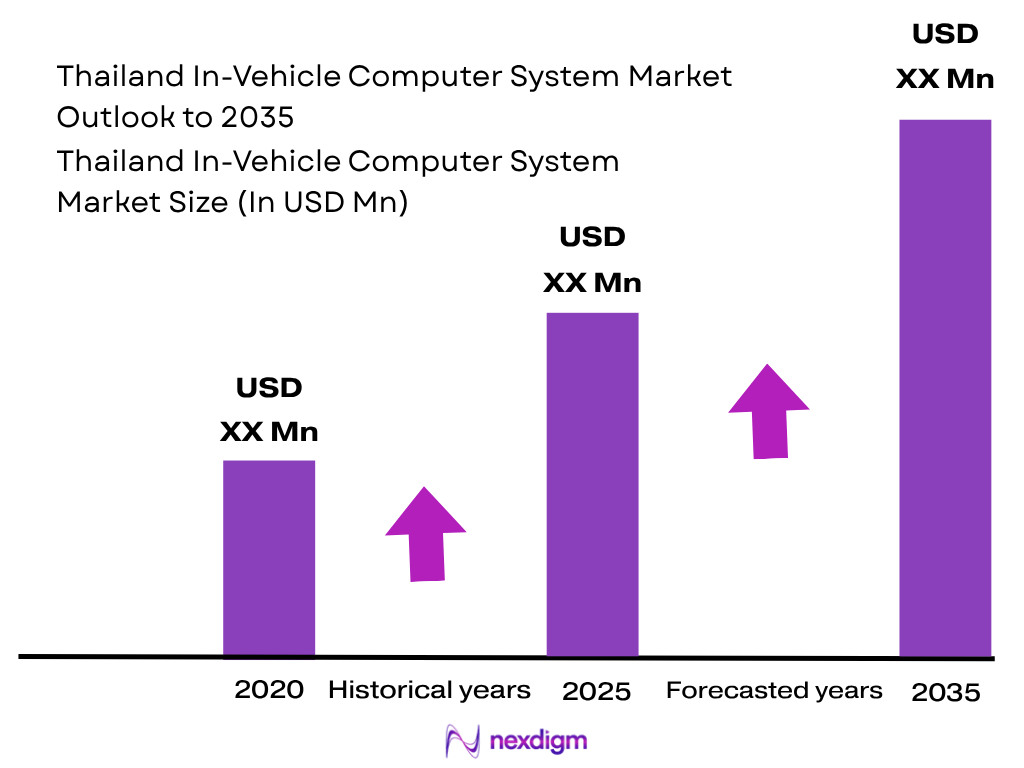
The Thailand In-Vehicle Computer System Market is valued at approximately USD ~ million, supported by the country’s transformation into a regional automotive manufacturing hub, increasing electric vehicle production, and rising integration of connected vehicle technologies. The market growth is driven by increasing adoption of digital cockpits, advanced driver assistance systems, telematics, and vehicle computing platforms. Thailand produced approximately 1.47 million vehicles, including passenger and commercial vehicles, reflecting the scale of its automotive ecosystem. The connected vehicle ecosystem is also expanding, with Thailand’s connected car market valued at approximately USD 50.7 million, supported by growing demand for intelligent mobility solutions.
The Thailand In-Vehicle Computer System Market is concentrated around major automotive manufacturing and technology clusters including Bangkok, Rayong, Chonburi, and the Eastern Economic Corridor (EEC). Bangkok dominates due to its role as the country’s commercial, technology, and mobility innovation center, while Rayong and Chonburi benefit from large-scale automotive manufacturing facilities and EV investments. Thailand’s automotive ecosystem includes global manufacturers, Tier-1 suppliers, and emerging electric vehicle producers operating within industrial zones. The EEC has become a key location for EV manufacturing investments, including advanced vehicle assembly and battery-related projects, strengthening demand for automotive computing technologies.
Market Segmentation
By Vehicle Type
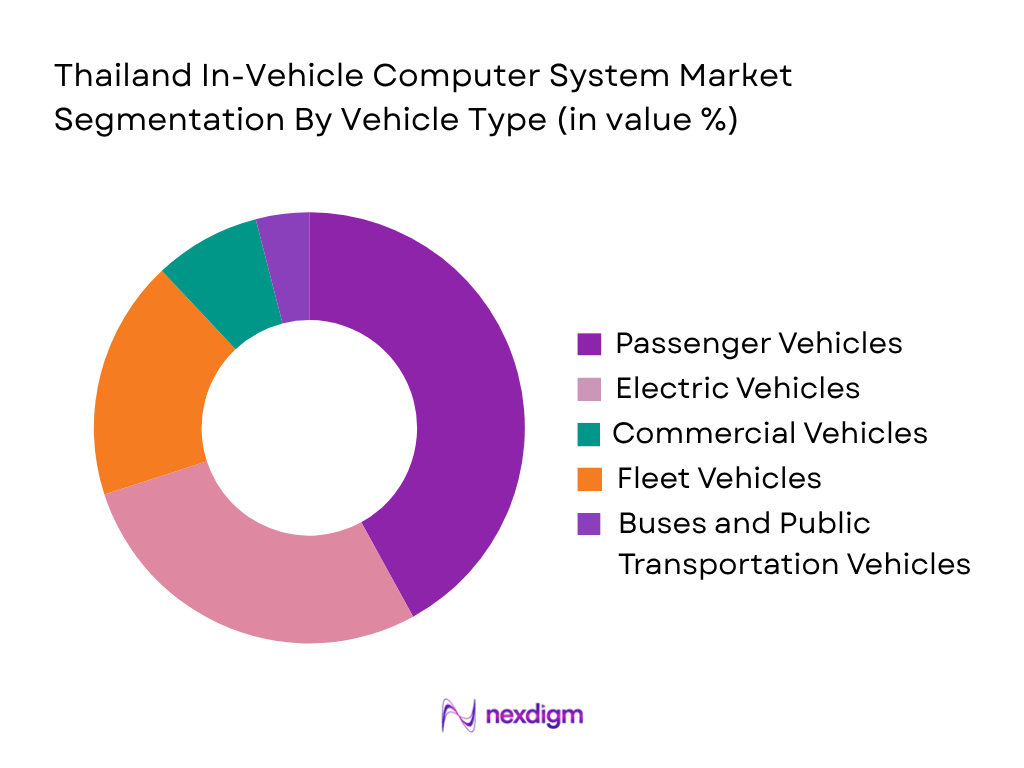
The Thailand In-Vehicle Computer System Market is segmented by vehicle type into passenger vehicles, electric vehicles, commercial vehicles, buses and public transportation vehicles, and fleet vehicles. Passenger vehicles represent the dominant segment due to Thailand’s large automotive production base, strong presence of Japanese and global automobile manufacturers, and increasing integration of advanced infotainment, connectivity, and safety systems. Electric vehicles are rapidly gaining importance as Thailand promotes EV manufacturing through investment incentives and local production initiatives. Commercial vehicles also contribute significant demand due to Thailand’s logistics industry and pickup truck manufacturing ecosystem. The growing adoption of connected fleet management systems is increasing demand for vehicle computers capable of processing telematics, route optimization, and operational data.
By Application Type
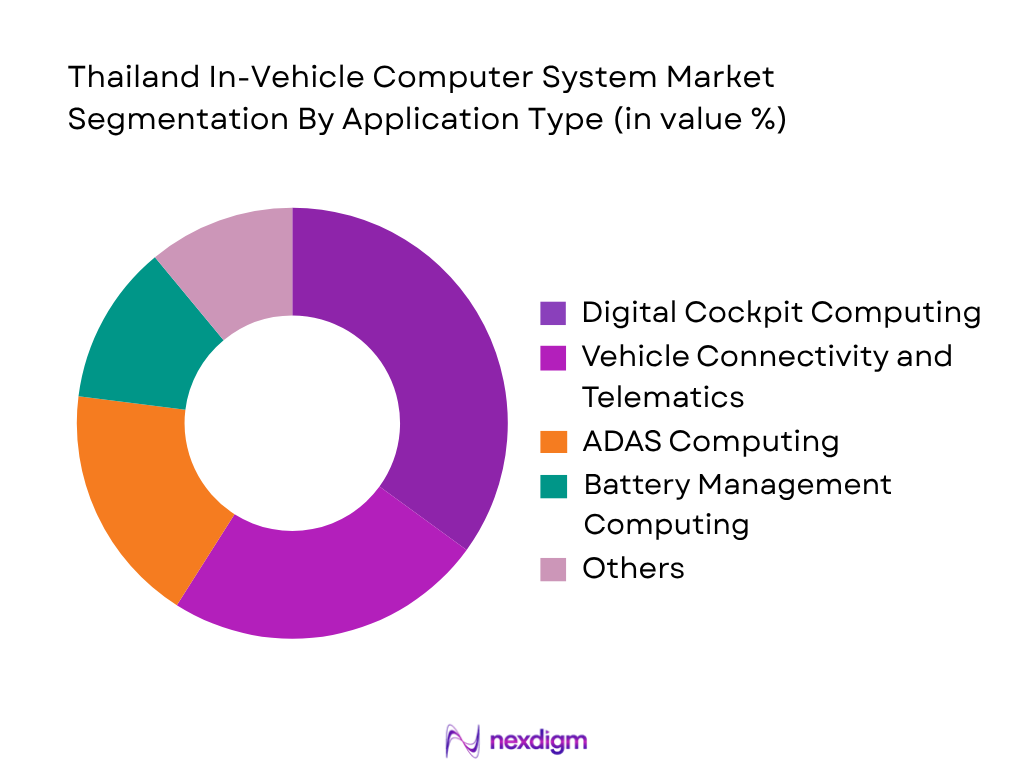
The Thailand In-Vehicle Computer System Market is segmented by application type into digital cockpit computing, ADAS computing, vehicle connectivity and telematics processing, battery management system computing, autonomous driving computing, and fleet analytics processing. Digital cockpit computing dominates the market due to increasing consumer preference for connected infotainment systems, smartphone integration, navigation, and intelligent user interfaces. Connected vehicle and telematics applications are also expanding due to commercial fleet operators requiring real-time monitoring and operational efficiency solutions. ADAS computing demand is increasing as manufacturers introduce safety technologies including adaptive cruise control, lane assistance, and automated braking systems. EV adoption is further supporting battery management and powertrain computing requirements.
Competitive Landscape
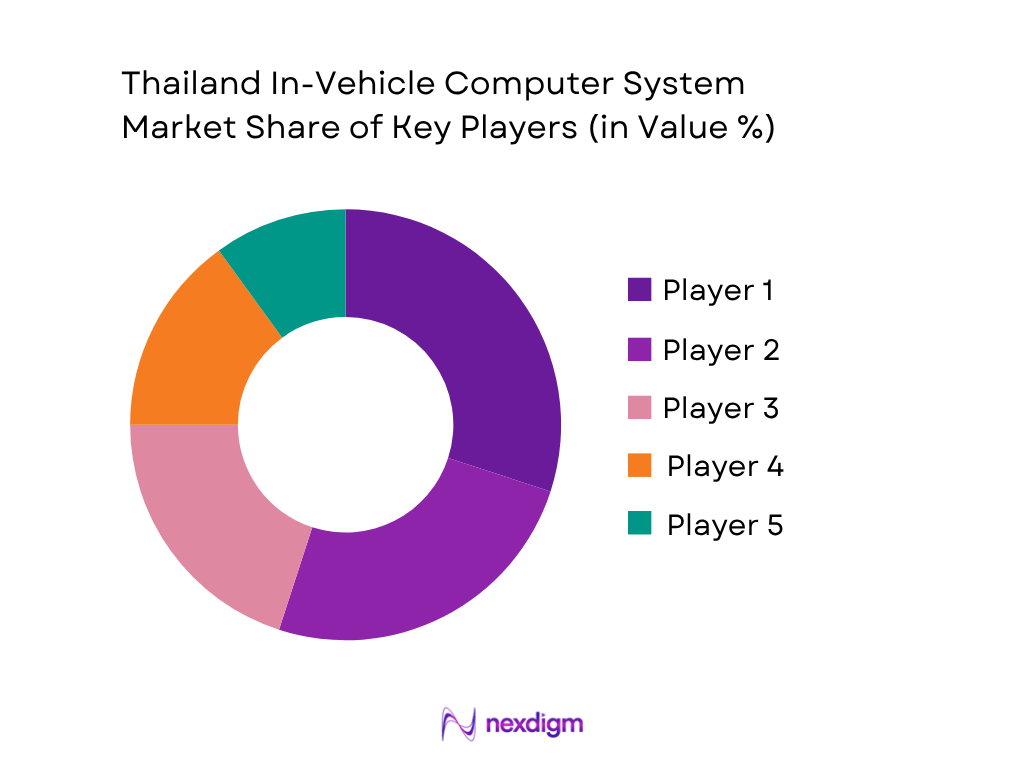
The Thailand In-Vehicle Computer System Market is characterized by competition between global semiconductor companies, automotive electronics suppliers, software technology providers, and vehicle system integrators. Major players including NVIDIA, Qualcomm, Bosch, Continental, and Renesas Electronics are strengthening their presence through automotive computing platforms, AI processors, embedded systems, and connected vehicle technologies. Thailand’s position as a regional automotive manufacturing hub attracts global technology providers seeking partnerships with OEMs and Tier-1 suppliers. The competitive environment is shaped by computing performance, software integration capabilities, cybersecurity solutions, and compatibility with electric and autonomous vehicle architectures.
| Company | Establishment Year | Headquarters | Automotive Computing Portfolio | EV Computing Capability | ADAS Technology Capability | Connected Vehicle Solutions | OEM Integration Capability | Regional Presence |
| NVIDIA | 1993 | Santa Clara, USA | ~ | ~ | ~ | ~ | ~ | ~ |
| Qualcomm | 1985 | San Diego, USA | ~ | ~ | ~ | ~ | ~ | ~ |
| Robert Bosch GmbH | 1886 | Gerlingen, Germany | ~ | ~ | ~ | ~ | ~ | ~ |
| Continental AG | 1871 | Hanover, Germany | ~ | ~ | ~ | ~ | ~ | ~ |
| Renesas Electronics | 2003 | Tokyo, Japan | ~ | ~ | ~ | ~ | ~ | ~ |
Thailand In-Vehicle Computer System Market Analysis
Growth Drivers
Expansion of Thailand Automotive Manufacturing Hub and Increasing Vehicle Electronics Integration
The Thailand In-Vehicle Computer System Market is supported by the country’s established automotive manufacturing ecosystem, which continues to encourage adoption of advanced vehicle computing platforms, embedded electronics, and connected mobility solutions. Thailand produced approximately 1.46 million motor vehicles, including passenger cars and commercial vehicles, supporting continuous demand for electronic control systems, digital cockpit solutions, and automotive computing modules. The automotive sector contributes significantly to Thailand’s industrial economy, with manufacturing representing around 27% of GDP according to World Bank economic indicators. The country exported more than 1 million vehicles, strengthening its position as a regional production base for Japanese, Chinese, and global automotive manufacturers. The presence of over 2,000 automotive suppliers supports integration of advanced electronic components into vehicle platforms. Increasing vehicle complexity, including infotainment systems, ADAS functions, telematics, and centralized computing architectures, is accelerating demand for high-performance in-vehicle computers. Thailand’s Eastern Economic Corridor (EEC) development has attracted automotive technology investments, with infrastructure supporting advanced manufacturing and electric mobility production. The combination of vehicle manufacturing scale, supplier ecosystem maturity, and technology transition toward software-defined vehicles is creating strong demand for automotive computing solutions.
Increasing Electric Vehicle Adoption and Smart Mobility Development
The Thailand In-Vehicle Computer System Market is benefiting from accelerating electric vehicle adoption and government-supported smart mobility initiatives requiring advanced computing architectures. Thailand registered more than 130,000 battery electric vehicles, plug-in hybrids, and hybrid vehicles combined during recent vehicle registration periods, reflecting increasing consumer and manufacturer movement toward electrified transportation. The Thailand Board of Investment approved multiple EV-related investment projects with production capacity exceeding 300,000 vehicles annually, supporting demand for battery management computing, power electronics processing, and connected vehicle platforms. Thailand’s national EV policy aims to strengthen domestic EV manufacturing capabilities and develop the country as an electric vehicle production hub in Southeast Asia. According to World Bank indicators, Thailand has a population exceeding 71 million people and an urbanization level above 50%, supporting increasing demand for connected mobility solutions in metropolitan areas. The expansion of charging infrastructure, digital transport services, and intelligent transportation systems is increasing the requirement for vehicle computers capable of managing energy efficiency, connectivity, and automated driving functions. As EV platforms require greater software dependency compared with conventional vehicles, demand is rising for advanced processors, domain controllers, automotive operating systems, and AI-enabled computing systems.
Market Challenges
Dependence on Imported Automotive Semiconductor Components and Advanced Computing Hardware
The Thailand In-Vehicle Computer System Market faces challenges due to dependence on imported automotive semiconductor components, processors, and advanced computing technologies required for modern vehicles. Although Thailand has a strong automotive manufacturing base, high-performance automotive chips, artificial intelligence processors, and vehicle computing platforms are largely sourced from international semiconductor ecosystems. Thailand’s electronics sector remains a major manufacturing contributor, with electrical and electronics products accounting for approximately 15% of merchandise exports according to government trade statistics. However, automotive-grade semiconductor manufacturing remains limited compared with leading semiconductor-producing economies. The global semiconductor supply chain requires specialized manufacturing capabilities for automotive processors, microcontrollers, and system-on-chip platforms, creating dependency on suppliers from Japan, Taiwan, the United States, and Europe. Thailand imported electronics components valued at billions of dollars annually, highlighting its reliance on international technology supply chains. Increasing adoption of EVs, ADAS, and connected vehicles is increasing semiconductor requirements per vehicle, making supply chain stability a critical challenge. Automotive manufacturers and Tier-1 suppliers operating in Thailand must manage component availability, technology licensing, and supply security while transitioning toward centralized vehicle computing architectures.
Complexity of Automotive Software Integration and Connected Vehicle Cybersecurity Requirements
The Thailand In-Vehicle Computer System Market faces increasing complexity due to software integration challenges, cybersecurity requirements, and the transition from traditional electronic control units toward software-defined vehicle architectures. Modern vehicles require computing platforms capable of processing data from cameras, sensors, communication modules, battery systems, and cloud-connected applications. Thailand’s digital economy continues to expand, with internet users exceeding 60 million according to digital development indicators, increasing demand for secure connected mobility ecosystems. The Cybersecurity Act framework and digital infrastructure development have increased focus on protecting connected systems from cyber risks. Vehicle computing platforms require compliance with cybersecurity standards, secure communication protocols, and continuous software updates. The integration of artificial intelligence, autonomous driving features, and connected services requires specialized engineering capabilities in embedded software, cloud computing, and automotive middleware. Thailand’s automotive workforce has strong manufacturing expertise, but advanced vehicle software development requires additional capabilities in artificial intelligence, cybersecurity, and real-time operating systems. These technological complexities increase development costs, extend integration timelines, and create challenges for OEMs and suppliers implementing next-generation computing platforms.
Market Opportunities
Expansion of Electric Vehicle Manufacturing Ecosystem and Advanced Computing Demand
The Thailand In-Vehicle Computer System Market presents significant opportunities through the expansion of the country’s electric vehicle manufacturing ecosystem and increasing requirement for intelligent vehicle computing solutions. Thailand has positioned itself as a regional EV production hub, supported by government incentives and international automotive investments. The Thailand Board of Investment reported approved EV investment projects involving production facilities, battery manufacturing, and electric drivetrain development, strengthening demand for advanced vehicle electronics. Companies developing EV platforms require computing systems for battery monitoring, thermal management, energy optimization, charging communication, and vehicle connectivity. Thailand’s automotive manufacturing sector includes more than 2,000 suppliers, creating opportunities for integration of automotive computing technologies across supply chains. The country’s industrial development strategy focuses on advanced automotive technologies, including smart vehicles and next-generation mobility solutions. Increasing deployment of EV charging networks and connected transportation systems is creating demand for processors, domain controllers, telematics systems, and automotive software platforms. The transition from mechanical vehicle systems toward digital vehicle architectures provides opportunities for technology providers offering scalable computing solutions for electric passenger vehicles, commercial fleets, and future autonomous mobility applications.
Growth of Connected Vehicle Platforms and Intelligent Transportation Infrastructure
The Thailand In-Vehicle Computer System Market has opportunities from expanding connected vehicle platforms, intelligent transportation systems, and data-driven mobility solutions. Thailand’s digital infrastructure development and increasing adoption of smart mobility technologies are encouraging automotive manufacturers to integrate advanced connectivity and computing capabilities into vehicles. The country has more than 60 million internet users, supporting consumer acceptance of connected services, cloud-based applications, and digital mobility platforms. Bangkok and other major urban areas are increasingly adopting intelligent transportation solutions, including traffic management systems, digital payment platforms, and mobility data applications. Connected vehicles require advanced in-vehicle computers capable of processing telematics information, navigation data, driver assistance functions, and vehicle-to-cloud communication. Thailand’s logistics and commercial transportation sectors provide additional opportunities for fleet management computing solutions, as businesses increasingly use real-time monitoring and operational optimization technologies. The development of 5G connectivity infrastructure further supports opportunities for vehicle-to-everything communication, autonomous mobility testing, and smart transportation applications. These developments create demand for automotive computing platforms combining hardware processing capability, cybersecurity protection, and software integration flexibility.
Future Outlook
Over the next decade, the Thailand In-Vehicle Computer System Market is expected to experience significant development driven by electric vehicle manufacturing expansion, increasing connected vehicle adoption, intelligent transportation initiatives, and the transition toward software-defined vehicle architectures. Thailand’s position as Southeast Asia’s automotive production hub is encouraging global OEMs and technology suppliers to introduce advanced vehicle computing platforms, AI-based processing systems, and connected mobility solutions. The increasing integration of ADAS, digital cockpit systems, telematics, and autonomous driving technologies will support demand for high-performance automotive computing systems. Government initiatives supporting EV manufacturing and smart mobility development are expected to accelerate adoption of advanced electronic architectures across passenger vehicles, commercial fleets, and electric mobility platforms.
Major Players
- NVIDIA – Automotive AI Computing Platforms, Autonomous Driving Computers and Vehicle Intelligence Solutions
- Qualcomm – Snapdragon Automotive Platforms, Vehicle SoCs and Connected Computing Solutions
- Intel Corporation – Automotive Computing Platforms, Artificial Intelligence Processing and Vehicle Data Solutions
- Robert Bosch GmbH – Vehicle Computers, Embedded Systems and Automotive Electronics Solutions
- Continental AG – Vehicle Computing Architecture, Digital Cockpit Systems and Software-Defined Vehicle Solutions
- Aptiv PLC – Smart Vehicle Architecture, Automotive Software and Connected Mobility Platforms
- Renesas Electronics Corporation – Automotive Microcontrollers, System-on-Chip Solutions and Embedded Computing Technologies
- NXP Semiconductors – Automotive Processors, Vehicle Networking and Secure Computing Platforms
- Texas Instruments Incorporated – Automotive Processors, Embedded Computing and Vehicle Electronics Solutions
- STMicroelectronics – Automotive Semiconductor Components and Vehicle Computing Technologies
- Tata Elxsi – Automotive Software Engineering, Digital Cockpit and Connected Vehicle Solutions
- KPIT Technologies – Automotive Software Platforms, Vehicle Operating Systems and Intelligent Mobility Solutions
- HARMAN International – Connected Vehicle Platforms, Digital Cockpit and Infotainment Computing Solutions
- Denso Corporation – Automotive Electronics, Vehicle Computing and Mobility Technology Solutions
- Mitsubishi Electric Corporation – Automotive Electronics, Vehicle Control Systems and Intelligent Mobility Solutions
Key Target Audience
- Automotive Original Equipment Manufacturers (OEMs)
- Automotive Tier-1 Electronics and System Suppliers
- Electric Vehicle Manufacturers and Battery Electric Vehicle Technology Providers
- Automotive Semiconductor and Computing Technology Companies
- Investments and Venture Capitalist Firms (Temasek Holdings, GIC Private Limited, Vertex Ventures Southeast Asia, Openspace Ventures)
- Government and Regulatory Bodies (Thailand Ministry of Transport, Thailand Board of Investment, Department of Land Transport, National Science and Technology Development Agency)
- Fleet Management and Mobility Service Providers
- Automotive Software, Telematics and Connected Vehicle Solution Providers
Research Methodology
Step 1: Identification of Key Variables
The initial phase involves constructing an ecosystem map covering all major stakeholders operating within the Thailand In-Vehicle Computer System Market. This step includes extensive desk research through automotive industry databases, government transportation publications, vehicle registration data, EV policy frameworks, semiconductor industry information, and company-level technology assessments. The objective is to identify key variables influencing market dynamics, including computing architecture adoption, vehicle electrification, connectivity penetration, automotive software development, and OEM technology integration.
Step 2: Market Analysis and Construction
In this phase, historical and current market indicators related to vehicle production, automotive electronics adoption, electric vehicle deployment, connected mobility development, and intelligent transportation infrastructure are analyzed. The assessment evaluates demand across passenger vehicles, commercial vehicles, EV platforms, fleet applications, and advanced driver assistance systems. Supply-side analysis includes evaluation of semiconductor suppliers, Tier-1 automotive technology providers, software developers, and vehicle manufacturers.
Step 3: Hypothesis Validation and Expert Consultation
Market hypotheses are developed and validated through consultations with automotive manufacturers, semiconductor companies, Tier-1 suppliers, mobility solution providers, and technology specialists. These discussions provide operational insights into vehicle computing requirements, procurement strategies, technology adoption barriers, software integration challenges, and future investment priorities within Thailand’s automotive ecosystem.
Step 4: Research Synthesis and Final Output
The final stage involves consolidating primary and secondary research findings to develop a comprehensive market assessment. Direct industry interactions are used to validate segmentation analysis, competitive positioning, technology trends, and market opportunities. The final report provides strategic insights into Thailand’s in-vehicle computing ecosystem, including growth factors, challenges, technology developments, and competitive landscape assessment.

- Executive Summary
- Research Methodology (Market Definition and Scope, Thailand In-Vehicle Computer System Classification, Automotive Computing Architecture Assessment, Vehicle Electronic Control System Mapping, Centralized Computing Platform Evaluation, Domain Controller Technology Analysis, Zonal Vehicle Architecture Assessment, Connected Vehicle Computing Framework Evaluation, Electric Vehicle Computing System Classification, Autonomous Driving Technology Application Mapping, Automotive Semiconductor Ecosystem Analysis)

- Definition and Scope
- Thailand In-Vehicle Computer System Industry Evolution and Development of Intelligent Automotive Ecosystem
- Automotive Computing Architecture, Hardware Integration and Software Platform Structure
- Thailand In-Vehicle Computer System Value Chain Analysis
- Thailand In-Vehicle Computer System Supply Chain Analysis
Automotive SoC, Vehicle Computer Hardware, ECU Consolidation, - Domain Controller, Telematics Module and Embedded Software Ecosystem Analysis
- Vehicle Computing System Integration Assessment Across Internal Combustion Engine Vehicles, Hybrid Vehicles and Electric Vehicles

- Growth Drivers (Expansion of Thailand Automotive Manufacturing Hub, Increasing Electric Vehicle Production, Growth of Connected Vehicle Adoption, Development of Eastern Economic Corridor Automotive Ecosystem, Rising ADAS Integration, Increasing Automotive Electronics Localization)
- Market Challenges (Dependence on Imported Automotive Semiconductor Components, Limited Domestic Automotive Computing Hardware Development, High Software Integration Complexity, Cybersecurity Requirements for Connected Vehicles, Vehicle Architecture Transition Challenges, High Technology Investment Requirements)
- Market Opportunities (Expansion of Electric Vehicle Manufacturing Ecosystem, Development of Smart Mobility Infrastructure, Growth of Autonomous Vehicle Testing Applications, Increasing Automotive Software Development Activities, Expansion of Vehicle Data Analytics Platforms, Growth of Regional Automotive Computing Supply Chain)
Market Trends (Software-Defined Vehicle Adoption, Centralized Vehicle Computing Architecture Development, AI-Based Automotive Processing, Digital Cockpit Expansion, Connected Fleet Management Growth, Automotive Cloud Integration, Vehicle Cybersecurity Enhancement) - Regulatory and Standards Landscape (Thailand EV 3.0 and EV 3.5 Policy Framework, Thailand Automotive Industry Development Policies, Office of Transport and Traffic Policy and Planning Smart Mobility Framework, Vehicle Type Approval Regulations, Automotive Cybersecurity Requirements, Electric Vehicle Safety Standards)
- SWOT Analysis
- Porter’s Five Forces Analysis
- PESTLE Analysis
- Stakeholder Ecosystem
- Competition Ecosystem

- By Market Value (2020-2025)
- By In-Vehicle Computer System Installation Volume (2020-2025)
- By Passenger Vehicle Computing System Deployment Volume (2020-2025)
- By Commercial Vehicle Computing System Deployment Volume (2020-2025)
- By Electric Vehicle Computing System Deployment Volume (2020-2025)
- By Connected Vehicle Computing Platform Deployment Volume (2020-2025)
- By Advanced Driver Assistance System Computing Deployment Volume (2020-2025)

- By Vehicle Type (In Value %)
Passenger Vehicles
Sedans
SUVs and Crossovers
Premium Passenger Vehicles
Electric Passenger Vehicles
Commercial Vehicles
Light Commercial Vehicles
Heavy Commercial Vehicles
Buses and Public Transport Vehicles
Fleet and Mobility Vehicles - By Computing Architecture Type (In Value %)
Centralized Vehicle Computing Systems
Domain Controller-Based Computing Systems
Cockpit Domain Controllers
ADAS Domain Controllers
Powertrain Domain Controllers
Body Control Domain Controllers
Zonal Computing Systems
Distributed ECU-Based Computing Systems
High-Performance Vehicle Computing Platforms - By Application Type (In Value %)
Digital Cockpit Computing
Advanced Driver Assistance System Computing
Vehicle Connectivity and Telematics Processing
Battery Management System Computing
Electric Powertrain Computing
Vehicle Safety and Control Processing
Autonomous Driving Computing
Fleet Management and Mobility Analytics Processing - By Processing Technology (In Value %)
Microcontroller Unit (MCU)-Based Automotive Computing
Microprocessor Unit (MPU)-Based Automotive Computing
System-on-Chip (SoC)-Based Vehicle Computing Platforms
Artificial Intelligence Accelerator-Based Computing Systems
GPU Integrated Automotive Computing Systems
Neural Processing Unit (NPU)-Enabled Vehicle Computing Platforms - By Connectivity Technology (In Value %)
4G Connected Vehicle Computing Systems
5G Enabled Automotive Computing Platforms
Vehicle-to-Vehicle (V2V) Communication Systems
Vehicle-to-Everything (V2X) Computing Platforms
Cloud Connected Vehicle Systems
Edge Computing-Based Automotive Platforms - By Software Platform (In Value %)
AUTOSAR-Based Automotive Computing Platforms
Android Automotive Operating Systems
Linux-Based Vehicle Computing Platforms
QNX Automotive Software Platforms
Proprietary OEM Vehicle Operating Systems
Automotive Middleware and Application Platforms - By Sales Channel (In Value %)
Automotive OEM Supply Network
Tier-1 Automotive Electronics Suppliers
Automotive Software Solution Providers
Fleet Management Solution Providers
Aftermarket Automotive Technology Providers
Mobility Service Platform Providers - By Region (In Value %)
Bangkok Metropolitan Region
Eastern Economic Corridor (EEC)
Central Thailand
Northern Thailand
Northeastern Thailand
Southern Thailand

- Market Share of Major Players (By Revenue, Vehicle Computing Architecture, Application Segment, Vehicle Type, OEM Partnership Network, Software Platform Integration, Semiconductor Platform Usage, Customer Segment Distribution)
- Cross Comparison Parameters (Automotive Computing Architecture Capability, Automotive SoC Integration Capability, ADAS Processing Performance, Electric Vehicle Computing System Expertise, Connected Vehicle Platform Compatibility, Automotive Software Ecosystem Strength, OEM and Tier-1 Partnership Network, Automotive Cybersecurity Capability)
- SWOT Analysis of Major Players
- Pricing and System Category Benchmarking
- Detailed Profiles of Major Companies
NVIDIA – Automotive AI Computing Platforms, Autonomous Driving Computers and Vehicle Intelligence Solutions
Qualcomm – Snapdragon Automotive Platforms, Vehicle SoCs and Connected Computing Solutions
Intel – Automotive Computing Platforms and AI-Based Vehicle Processing Technologies
Robert Bosch GmbH – Vehicle Computers, Embedded Systems and Automotive Electronics Solutions
Continental AG – Vehicle Computing Architecture, Cockpit Systems and Software-Defined Vehicle Solutions
Aptiv – Smart Vehicle Architecture, Automotive Software and Computing Platforms
Renesas Electronics – Automotive Microcontrollers, SoCs and Embedded Computing Technologies
NXP Semiconductors – Automotive Processors, Vehicle Networking and Secure Computing Platforms
Texas Instruments – Automotive Processors, Embedded Computing and Vehicle Electronics Solutions
STMicroelectronics – Automotive Semiconductor Components and Vehicle Computing Technologies
Tata Elxsi – Automotive Software Engineering, Digital Cockpit and Connected Vehicle Solutions
KPIT Technologies – Automotive Software Platforms and Intelligent Mobility Solutions
HARMAN International – Connected Vehicle Platforms, Digital Cockpit and Infotainment Computing Solutions
Denso Corporation – Automotive Electronics, Vehicle Computing and Mobility Technology Solutions
Mitsubishi Electric – Automotive Electronics, Vehicle Control Systems and Intelligent Mobility Solutions

- Passenger Vehicle Manufacturer Technology Adoption Assessment
- Electric Vehicle Manufacturer Computing System Requirements Analysis
- Commercial Vehicle Operator Technology Assessment
- Fleet Management Company Analysis
- Public Transportation Operator Analysis
- Automotive Tier-1 Supplier Ecosystem Assessment
- Connected Mobility Service Provider Analysis
- Automotive Software Developer Ecosystem Assessment
- Vehicle Owner Digital Feature Preference Analysis

- By Market Value (2026-2035)
- By In-Vehicle Computer System Installation Volume (2026-2035)
- By Passenger Vehicle Computing System Deployment Volume (2026-2035)
- By Commercial Vehicle Computing System Deployment Volume (2026-2035)
- By Electric Vehicle Computing System Deployment Volume (2026-2035)
- By Connected Vehicle Computing Platform Deployment Volume (2026-2035)
- By Autonomous Vehicle Computing System Deployment Volume (2026-2035)
- By Aftermarket Automotive Computing System Replacement Volume (2026-2035)


 Request a Sample
 Ask for Customization
 Get a Quote
 Enquire Now