

 Download PDF
Market Overview
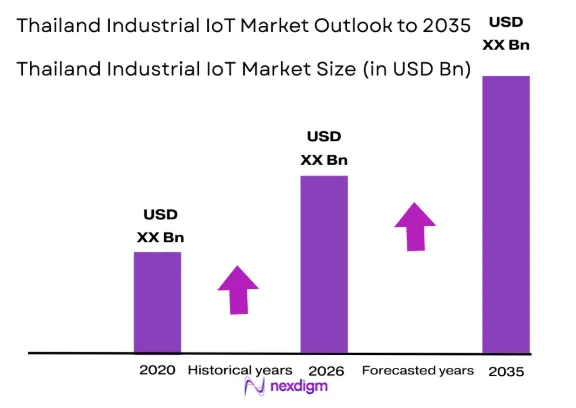
The market size for Thailand Industrial IoT is based on a recent historical assessment, driven by the increasing adoption of IoT technologies in industrial operations. The rise in automation and digitization across various sectors, such as manufacturing, automotive, and energy, has contributed significantly to this growth. The market is expanding due to the increasing demand for advanced industrial systems, predictive maintenance, and enhanced operational efficiency, projected to be valued at USD ~ billion.
Dominant regions include countries in Asia-Pacific, particularly China, Japan, and South Korea, where advanced manufacturing and government support for smart industrial ecosystems drive market growth. These regions benefit from strong infrastructure, high technology adoption rates, and government-backed initiatives like Industry 4.0, supporting the transition toward connected industrial systems. Additionally, the US and Germany lead in industrial IoT developments, driven by innovations in automation and data analytics.
Market Segmentation
By System Type
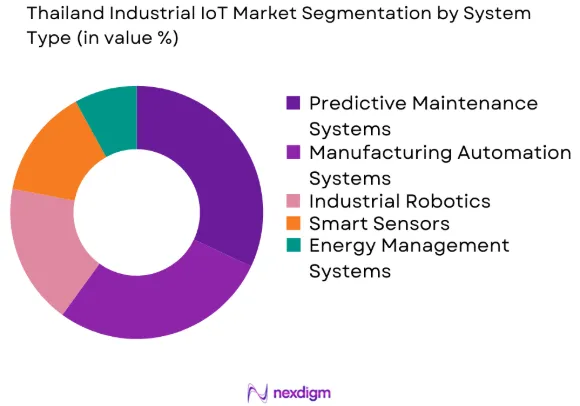
Thailand Industrial IoT market is segmented by system type into various sub-segments. Recently, predictive maintenance systems have gained significant market share due to their ability to minimize downtime and maintenance costs across industries. Demand patterns show that companies prioritize these systems to extend the lifespan of machinery and reduce unplanned outages. The growing focus on data-driven decision-making and operational efficiency further strengthens the preference for predictive maintenance.
By Platform Type
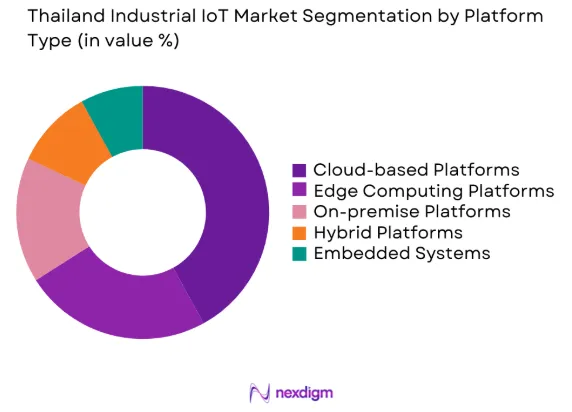
Industrial IoT market is segmented by platform type into several sub-segments. Recently, cloud-based platforms have seen a dominant market share, driven by the increasing need for scalability, flexibility, and remote access in managing industrial operations. The ease of integration, cost-effectiveness, and data storage capacity offered by cloud platforms make them highly attractive to companies adopting IoT in their operations.
Competitive Landscape
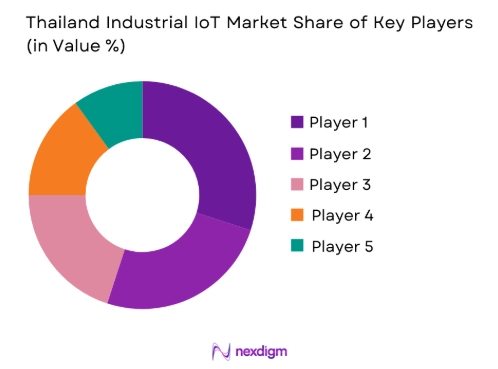
The competitive landscape in the Thailand Industrial IoT market is highly fragmented with major players continuously innovating to offer integrated solutions for various industries. The market is witnessing consolidation, with mergers and acquisitions aimed at expanding capabilities and reaching new geographies. Key players are also focusing on strategic partnerships and collaborations to strengthen their market position.
| Company Name | Establishment Year | Headquarters | Technology Focus | Market Reach | Key Products | Revenue | Additional Parameter |
| Siemens | 1847 | Germany | ~ | ~ | ~ | ~ | ~ |
| ABB | 1988 | Switzerland | ~ | ~ | ~ | ~ | ~ |
| Honeywell | 1906 | USA | ~ | ~ | ~ | ~ | ~ |
| General Electric | 1892 | USA | ~ | ~ | ~ | ~ | ~ |
| Rockwell Automation | 1903 | USA | ~ | ~ | ~ | ~ | ~ |
Thailand Industrial IoT Market Analysis
Growth Drivers
Automation Advancements
Automation technologies are a key growth driver in the Thailand Industrial IoT market. The transition toward Industry 4.0, bolstered by advancements in robotics and artificial intelligence, is increasing demand for IoT solutions that can monitor, control, and optimize industrial operations. These automated systems enhance efficiency, reduce labor costs, and enable real-time data collection for better decision-making. By integrating IoT technology into manufacturing processes, companies can streamline operations, improve product quality, and minimize downtime. As industries recognize the benefits of automation in boosting productivity and competitiveness, the adoption of IoT-driven automation solutions continues to rise, further accelerating the growth of the Industrial IoT market.
Government Support and Investments
Governments around the world are prioritizing the development of smart infrastructure, encouraging the adoption of Thailand industrial IoT solutions through various policies. Investments in smart cities, digital manufacturing, and energy management systems are accelerating the integration of IoT technologies. Policy frameworks such as Industry 4.0 in the EU, along with similar initiatives in China and India, are driving market growth by offering incentives and regulatory support for IoT implementation. These efforts help modernize industrial processes, improve energy efficiency, and support sustainable urban development. As a result, the increasing governmental push for digital transformation is significantly enhancing the adoption of IoT solutions across various sectors, fueling the growth of the Industrial IoT market globally.
Market Challenges
Data Security Concerns
As industrial operations become increasingly connected through Thailand IoT technologies, the risk of cybersecurity threats grows, making data protection a critical concern for businesses. The integration of more devices into industrial networks expands the potential attack surfaces, leaving systems vulnerable to cyberattacks. These threats can compromise sensitive data, disrupt operations, and lead to financial losses. As a result, it is essential for organizations to implement robust cybersecurity measures to safeguard their networks and ensure the integrity of industrial data. Proper encryption, access control, regular system monitoring, and vulnerability assessments are crucial to protect against data breaches and maintain operational continuity in the face of growing cybersecurity risks in IoT environments.
High Implementation Costs
A significant challenge in the Thailand Industrial IoT market is the high cost of implementation, particularly for small and medium-sized enterprises (SMEs). These businesses often face difficulties in justifying the capital expenditure required for IoT infrastructure, sensors, and system integration. The upfront investment needed for hardware, software, and the necessary connectivity infrastructure can be substantial, creating a financial barrier for SMEs. Additionally, the return on investment (ROI) from IoT adoption may take time to materialize, which can make it harder for smaller businesses to prioritize such investments. The long payback period and perceived financial risk often deter cost-sensitive organizations from embracing IoT technologies, hindering broader market adoption.
Opportunities
Expansion in Predictive Maintenance
Predictive maintenance solutions are becoming a key growth driver in the Thailand Industrial IoT market. By integrating IoT sensors, AI, and data analytics, these solutions enable businesses to foresee potential equipment failures, allowing them to take corrective actions before issues arise. This proactive approach significantly reduces downtime, enhances operational efficiency, and lowers maintenance costs. Industries such as manufacturing, automotive, and energy are increasingly adopting IoT-driven predictive maintenance to improve reliability and productivity. As more organizations recognize the benefits of minimizing unplanned outages and optimizing asset management, the demand for predictive maintenance solutions is poised to grow rapidly, contributing to the expansion of the Industrial IoT market in the coming years.
Smart Manufacturing Adoption
The growing adoption of smart manufacturing is creating significant opportunities for industrial IoT providers. Smart factories, integrated with IoT sensors and advanced AI algorithms, are transforming production processes by enabling real-time data collection, predictive maintenance, and enhanced automation. These factories allow businesses to monitor equipment performance continuously, predict failures before they occur, and optimize production efficiency. The integration of IoT technology into manufacturing is reducing costs, improving quality control, and increasing operational flexibility. As industries move toward smarter and more connected production systems, the demand for industrial IoT solutions is expected to rise, opening new avenues for growth in the market. This trend is expected to continue driving innovation and investment in industrial IoT technologies.
Future Outlook
The Thailand Industrial IoT market is expected to experience robust growth in the coming years, driven by technological advancements in automation, AI, and connectivity. Increased adoption of Industry 4.0 principles, along with favorable government policies and investments in infrastructure, will fuel market expansion. The demand for IoT-based solutions in sectors such as manufacturing, energy, and logistics will continue to rise as organizations strive to optimize operations, reduce costs, and improve efficiency.
Major Players
- Siemens
- ABB
- Honeywell
- General Electric
- Rockwell Automation
- Cisco Systems
- Mitsubishi Electric
- Bosch
- Schneider Electric
- IBM
- Emerson Electric
- Texas Instruments
- National Instruments
- Yokogawa Electric
- Huawei
Key Target Audience
- Investments and venture capitalist firms
- Government and regulatory bodies
- Industrial manufacturers
- Technology providers
- OEMs (Original Equipment Manufacturers)
- Utility companies
- Infrastructure developers
- System integrators
Research Methodology
Step 1: Identification of Key Variables
The initial step involves identifying the critical factors influencing market dynamics, including technology trends, industry requirements, and geographical growth drivers.
Step 2: Market Analysis and Construction
Comprehensive analysis is conducted to assess current market conditions, competition, and growth projections based on reliable data sources.
Step 3: Hypothesis Validation and Expert Consultation
Expert opinions are sought to validate key assumptions, ensuring that market forecasts reflect realistic industry conditions.
Step 4: Research Synthesis and Final Output
The final step synthesizes the collected data into actionable insights and a detailed market report, offering a clear understanding of future trends and opportunities.

- Executive Summary
- Research Methodology (Definitions, Scope, Industry Assumptions, Market Sizing Approach, Primary & Secondary Research Framework, Data Collection & Verification Protocol, Analytic Models & Forecast Methodology, Limitations & Research Validity Checks)

- Market Definition and Scope
- Value Chain & Stakeholder Ecosystem
- Regulatory / Certification Landscape
- Sector Dynamics Affecting Demand
- Strategic Initiatives & Infrastructure Growth

- Growth Drivers
Increase in Manufacturing Automation
Government Initiatives and Investments
Demand for Predictive Maintenance Solutions - Market Challenges
Lack of Skilled Workforce
High Implementation Costs
Data Security Concerns - Market Opportunities
Growing Demand for Smart Sensors
Expansion of IoT-driven Energy Solutions
Development of Smart Manufacturing Ecosystems - Trends
Adoption of Industry 4.0 Technologies
Integration of Artificial Intelligence with IoT
Increasing Focus on Sustainability - Government Regulations
- SWOT Analysis of Key Competitors
- Porter’s Five Forces

- By Market Value, 2020-2025
- By Installed Units, 2020-2025
- By Average System Price, 2020-2025
- By System Complexity Tier, 2020-2025

- By System Type (In Value%)
Manufacturing Automation Systems
Predictive Maintenance Systems
Industrial Robotics
Smart Sensors
Energy Management Systems - By Platform Type (In Value%)
Cloud-based Platforms
Edge Computing Platforms
On-premise Platforms
Hybrid Platforms
Embedded Systems - By Fitment Type (In Value%)
On-premise Solutions
Cloud-based Solutions
Hybrid Solutions
Modular Solutions
Integrated Solutions - By End User Segment (In Value%)
Manufacturing Industries
Automotive Sector
Oil & Gas
Electronics & Semiconductors
Energy & Utilities - By Procurement Channel (In Value%)
Direct Procurement
Government Tenders
Private Sector Procurement
Online Bidding Platforms
Third-party Distributors

- Market Share Analysis
- Cross Comparison Parameters (System Type, Platform Type, Procurement Channel, End User Segment, Fitment Type, Deployment Model, Connectivity Technology, Security Features, Pricing Strategy, Integration Capability)
- SWOT Analysis of Key Competitors
- Pricing & Procurement Analysis
- Key Players
Siemens
ABB
Honeywell
Schneider Electric
General Electric
Rockwell Automation
Mitsubishi Electric
Bosch
Emerson Electric
Cisco Systems
Huawei
National Instruments
Yokogawa Electric
Texas Instruments
IBM

- Adoption of IoT in Manufacturing
- Impact of IoT on the Automotive Sector
- Oil & Gas Industry Embracing Automation
- Energy Sector Investment in IoT Solutions

- Forecast Market Value, 2026-2035
- Forecast Installed Units, 2026-2035
- Price Forecast by System Tier, 2026-2035
- Future Demand by Platform, 2026-2035


 Request a Sample
 Ask for Customization
 Get a Quote
 Enquire Now