

 Download PDF
Market Overview
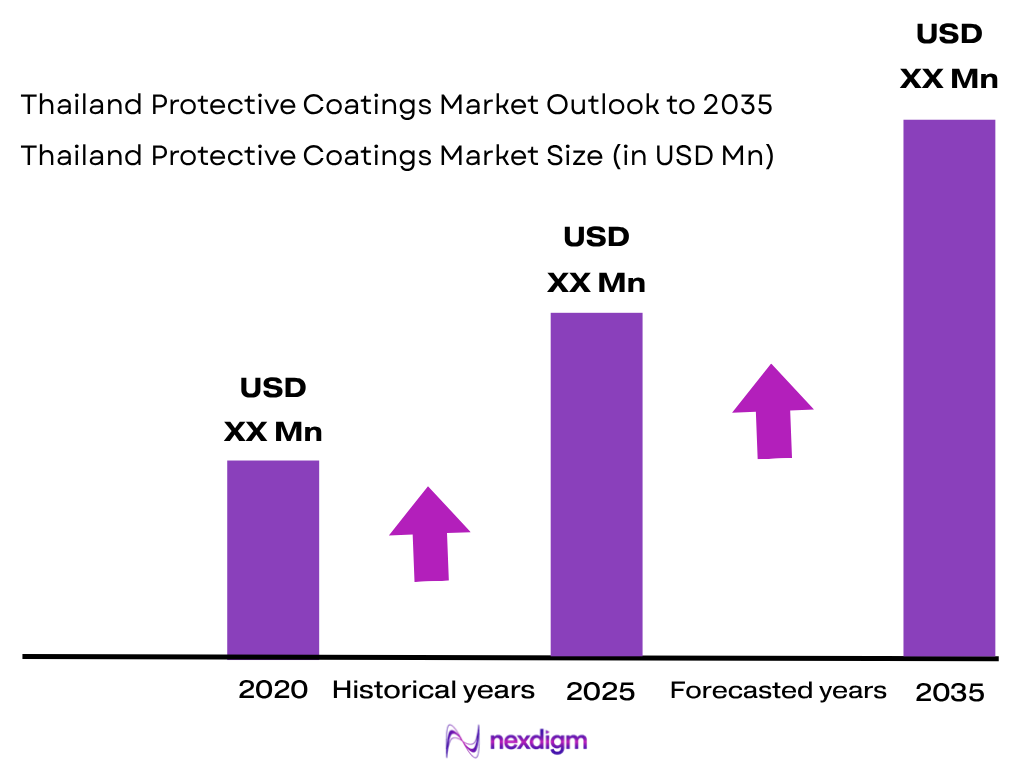
The Thailand Protective Coatings Market is valued at approximately USD ~XX million, driven by industrial construction, petrochemical infrastructure, corrosion prevention and maintenance of industrial assets. According to Thailand’s Board of Investment, investment-promotion applications increased from 2,235 projects worth THB 846.5 billion in the preceding reporting period to 3,137 projects worth THB 1.14 trillion in the subsequent period. Industrial expansion supports potential demand for protective coatings applied to storage tanks, pipelines, structural steel, manufacturing equipment and infrastructure exposed to corrosion.
Rayong, Chonburi, Chachoengsao and Greater Bangkok represent major demand centres because of concentrated petrochemical complexes, industrial estates, ports, factories and infrastructure development. The Eastern Economic Corridor Office recorded 812 investment-promotion applications worth THB 379,766 million in its earlier full-year reporting cycle. The Board of Investment subsequently recorded 235 petrochemical and chemical-sector applications worth THB 49.1 billion nationwide. These industrial investments support coating requirements for chemical-resistant equipment, marine facilities, steel structures and maintenance-intensive manufacturing assets.
Market Segmentation
By Resin Chemistry
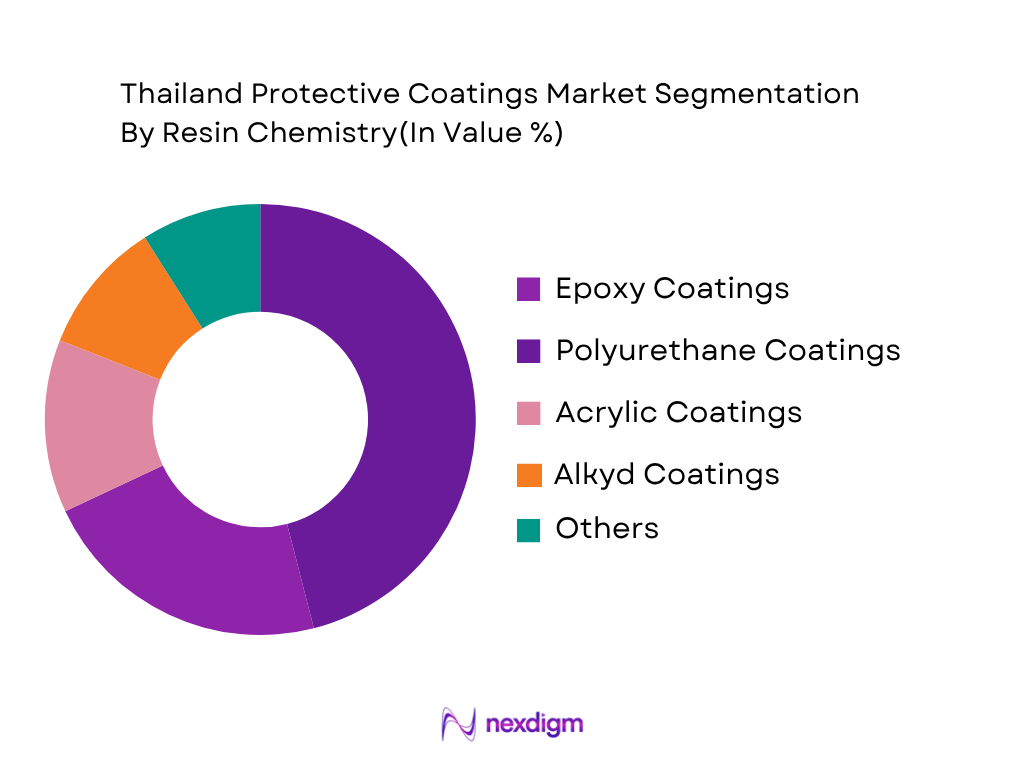
The Thailand Protective Coatings Market is segmented by resin chemistry into epoxy, polyurethane, acrylic, alkyd, polysiloxane and other specialty coatings. Epoxy coatings are treated as the dominant segment in the illustrative market model because of their suitability for petrochemical facilities, marine infrastructure, manufacturing plants, storage tanks and heavy-duty steel protection. Epoxy formulations provide strong adhesion, chemical resistance, abrasion resistance and compatibility with high-build coating systems. They are extensively used as primers, intermediate coatings and tank linings, particularly in environments exposed to moisture, chemicals and industrial contamination. Companies such as Jotun, TOA Paint and PPG offer epoxy-based industrial protection products, supporting their availability across relevant applications. Polyurethane coatings complement epoxy systems by providing weather resistance, gloss retention and ultraviolet durability. The combination of epoxy primers and polyurethane topcoats is particularly relevant for steel structures requiring both corrosion protection and long-term exterior performance.
By End-Use Industry
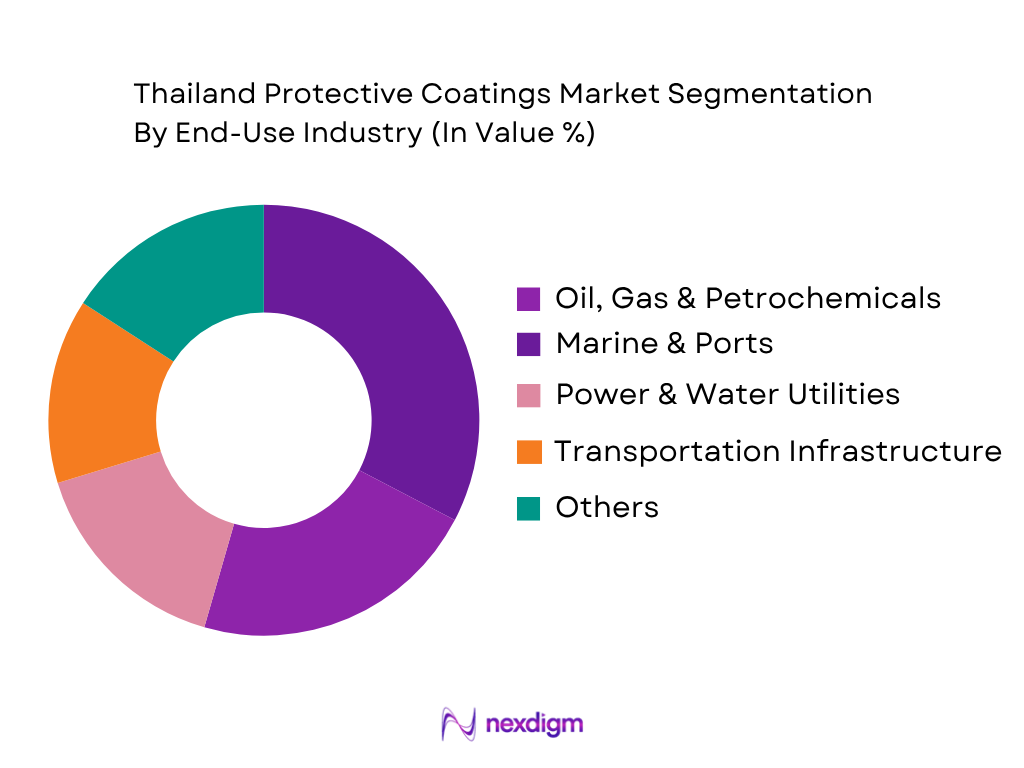
The Thailand Protective Coatings Market is segmented by end-use industry into oil, gas and petrochemicals; marine and ports; power and water utilities; transportation infrastructure; industrial manufacturing; and other applications. Oil, gas and petrochemicals represent the leading segment in the illustrative allocation, reflecting the importance of Thailand’s Eastern Seaboard industrial economy and its extensive requirements for corrosion-resistant asset protection. Petrochemical facilities utilize epoxy tank linings, zinc-rich primers, polyurethane finishes and chemical-resistant coating systems to protect storage tanks, pipelines, structural steel and processing equipment. Rayong’s Map Ta Phut industrial area is particularly relevant because industrial facilities are exposed to chemical processing conditions, coastal humidity and aggressive operating environments. Marine facilities also constitute an important application segment, requiring coatings that resist saltwater exposure and atmospheric corrosion. Infrastructure, utilities and manufacturing provide additional demand from bridges, wastewater systems, machinery, industrial buildings and maintenance projects.
Competitive Landscape
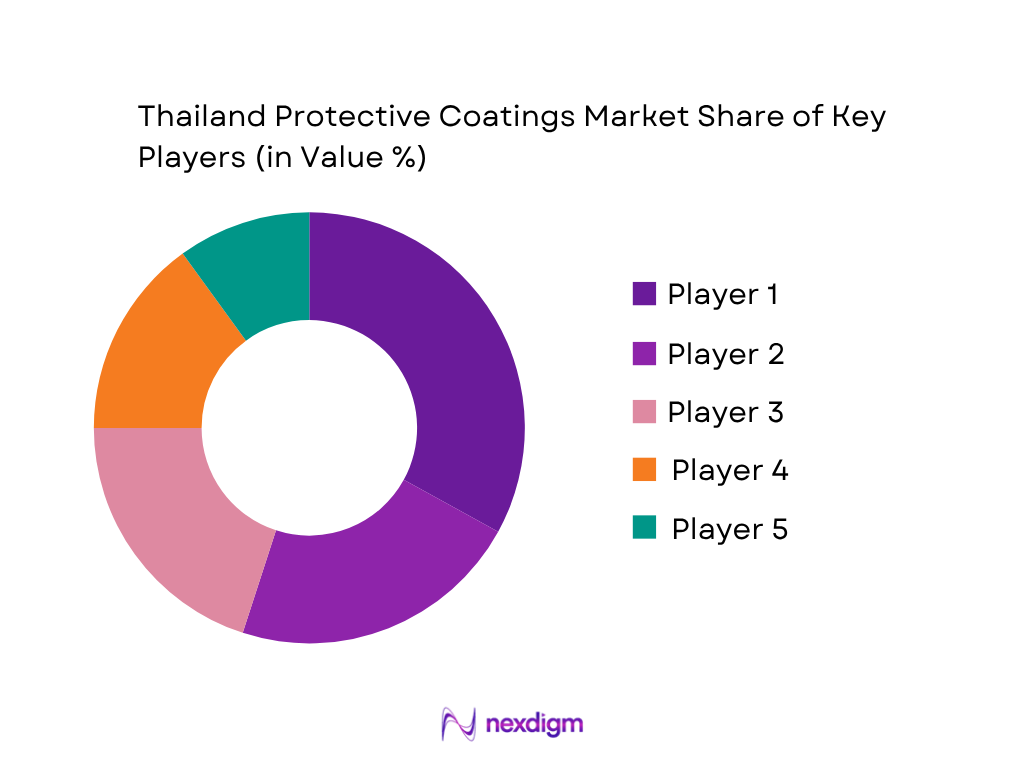
The Thailand Protective Coatings Market comprises international coating manufacturers and established domestic suppliers competing through technical performance, industrial product portfolios, regional distribution and project specification capabilities. Companies such as Jotun, AkzoNobel, TOA Paint, PPG and Hempel serve different combinations of industrial, infrastructure, marine and maintenance applications. Competition is influenced by corrosion resistance, technical certifications, product availability, contractor relationships and application support. Global suppliers offer advanced coating technologies, while domestic manufacturers benefit from established local customer networks and proximity to industrial construction projects.
| Company | Established | Headquarters | Key Coating Technologies | Major Applications | Representative Products / Brands | Thailand Market Presence | Distribution Approach | Technical Differentiation |
| Jotun | 1926 | Sandefjord, Norway | ||||||
| AkzoNobel | 1994 | Amsterdam, Netherlands | ||||||
| TOA Paint | 1964 | Samut Prakan, Thailand | ||||||
| PPG Industries | 1883 | Pittsburgh, USA | ||||||
| Hempel | 1915 | Kongens Lyngby, Denmark |
Thailand Protective Coatings Market Analysis
Growth Drivers
Expansion of Eastern Economic Corridor Industrial Development and Petrochemical Infrastructure
Thailand’s Eastern Economic Corridor is a direct demand driver for protective coatings used on factory steelwork, process vessels, piping, storage tanks and concrete floors. The National Statistical Office, drawing on Department of Industrial Works records, counted 73,710 operating industrial factories nationwide in 2024, including 12,791 in the Eastern Region. Chonburi accounted for 5,220 facilities, Rayong for 3,268 and Chachoengsao for 2,095, concentrating potential coating customers near ports, refineries and chemical manufacturing clusters. The Thailand Board of Investment registered 3,137 investment-promotion applications in 2024, including 235 in petrochemicals and chemicals, 407 in electronics and electrical appliances and 309 in automotive activities. Applications indicate proposed industrial expansion, not completed projects or coating purchases. The World Bank recorded Thailand’s 2024 gross domestic product at US$529.39 billion, providing the national economic context for industrial capital formation. New fabrication creates initial demand for zinc-rich primers, epoxy intermediate coats and polyurethane finishes. Operating facilities also require recoating during maintenance, creating recurring opportunities independent of new construction schedules. Contractors benefit from specifying consistent systems across fabrication yards, installation sites and later operation.
Expansion of Marine Infrastructure and Power Generation Facility Maintenance
Thailand’s extensive port operations and electricity system sustain demand for protective coatings exposed to salt spray, humidity, heat and industrial abrasion. The National Statistical Office, using Port Authority of Thailand figures, reported that Laem Chabang handled 9.391 million twenty-foot-equivalent containers and 98.661 million tonnes of cargo during fiscal 2024, together with 9,624 vessel calls. Such activity keeps cranes, conveyor structures, gantries, mooring fixtures, pipelines and adjacent industrial steelwork in demanding service environments where coating integrity matters. Separately, the Electricity Generating Authority of Thailand recorded 220,590.44 gigawatt-hours of net electricity generated in 2024 and net peak power demand of 36,477.80 megawatts. Generation facilities contain steel supports, tanks, cooling-water assets and processing equipment requiring appropriate corrosion-control systems. Neither cargo throughput nor power generation directly measures coating consumption; both indicate the operating scale of assets that need specification-led maintenance. Marine-exposed structures typically require compatible primers, high-build epoxy barriers and weather-resistant finishes, while power facilities may require heat-resistant and chemical-resistant systems. For suppliers, operational continuity creates a defensible case for durable coatings, documented inspection and planned recoating programmes. Procurement teams consequently evaluate corrosion classes, surface-preparation specifications, coating thickness and compatibility before authorizing industrial applications.
Market Challenges
High-Humidity Application Constraints and Surface Preparation Quality
Thailand’s climate places strict limits on when and how protective coatings can be applied, particularly on coastal steel structures and industrial plants. The Thai Meteorological Department recorded nationwide average rainfall of 1,704.4 millimetres in 2024 and an annual mean temperature of 28.5 degrees Celsius. These national figures are not measurements for individual work sites, yet they illustrate the environmental conditions that coating contractors must assess before blasting, priming and finishing. Rain, moisture condensation and elevated substrate temperatures can compromise adhesion, curing and the specified dry-film thickness when surface preparation and application controls are inadequate. Laem Chabang’s 9,624 vessel calls during fiscal 2024, reported by the Port Authority of Thailand, additionally illustrate how marine operations continue alongside difficult coating conditions. Stopping cranes, tanks or port equipment for surface preparation can be operationally disruptive, while inadequate cleaning may leave salts beneath newly applied films. Contractors must therefore monitor dew point, relative humidity, steel temperature and surface contamination at each site rather than rely on annual averages. This complexity favours documented procedures, trained inspectors, approved applicators and coating systems suited to realistic maintenance windows. Project controls require site-specific inspection and realistic recoat intervals.
Hazardous Chemical Compliance and Industrial Maintenance Shutdown Constraints
Hazardous-material management and limited maintenance windows create a distinct execution challenge for Thailand’s protective-coatings industry. The Pollution Control Department’s national pollution report recorded 24.39 million tonnes of industrial waste entering the Department of Industrial Works management system in 2024, comprising 22.76 million tonnes of non-hazardous waste and 1.63 million tonnes of hazardous waste. Those totals cover industry broadly, not coating waste specifically; they nevertheless demonstrate the scale of industrial waste oversight within which spent solvents, contaminated abrasives and certain coating residues must be managed. The National Statistical Office separately identified 73,710 operating industrial factories in 2024. Industrial customers often cannot stop production freely, making surface preparation, ventilation, waste segregation and coating cure time difficult to coordinate. The Electricity Generating Authority of Thailand’s 220,590.44 gigawatt-hours of net generation in 2024 further illustrates the operational importance of assets requiring dependable maintenance scheduling. Manufacturers and contractors face additional documentation burdens involving safety data sheets, application procedures and environmental controls. Poorly coordinated recoating can expose workers to chemicals, delay recommissioning or produce premature film failures, making technical service and disciplined project planning critical. Applicators must coordinate shutdown permits, disposal arrangements and manufacturer-defined curing requirements.
Market Opportunities
Expansion of Marine Protective Coatings and Port Infrastructure Rehabilitation
Thailand’s existing port network provides a future opportunity for marine-grade coating suppliers without relying on speculative infrastructure forecasts. According to the Port Authority of Thailand data published by the National Statistical Office, Laem Chabang processed 9.391 million twenty-foot-equivalent containers, 98.661 million tonnes of cargo and 9,624 vessel calls during fiscal 2024. Bangkok Port added 1.274 million containers and 4,164 vessel calls during the same reporting year. These operating figures reveal a substantial stock of cranes, gantries, berths, railings, pipelines, loading equipment and coastal steel structures exposed to mechanical wear and corrosive conditions. Thailand’s Meteorological Department recorded 1,704.4 millimetres of average national rainfall in 2024, reinforcing the need for site-specific moisture and surface-preparation controls. Future commercial opportunities lie in specification upgrades for zinc-rich systems, glass-flake epoxy barriers, polyurethane topcoats and immersion-resistant linings, especially during scheduled shutdowns and refurbishment. Manufacturers can differentiate through coating-condition surveys, surface-salt testing, dry-film-thickness inspection and training for approved contractors. Port activity itself is not a coating-purchase statistic; it establishes the operational asset base from which recurring maintenance opportunities may develop. Contractors able to execute modular maintenance campaigns may capture additional projects while minimizing disruption to shipping operations.
Increasing Adoption of Low-Emission Protective Coatings and Industrial Asset Recoating
Low-emission, high-solids and solvent-free protective systems offer a targeted opportunity in Thailand’s existing industrial maintenance base. The National Statistical Office documented 73,710 operating factories across Thailand in 2024, including 12,791 in the Eastern Region, where process equipment, tanks, platforms and structural steel require periodic recoating. The Pollution Control Department reported 24.39 million tonnes of industrial waste entering the official management system in 2024, including 1.63 million tonnes classified as hazardous. These are economy-wide industrial-waste figures, not evidence that coatings generated those volumes; they indicate the compliance setting in which industrial coating procurement occurs. The Electricity Generating Authority of Thailand reported 220,590.44 gigawatt-hours of net generation in 2024, underscoring another established asset base requiring maintenance. For coating manufacturers, the future opportunity is to develop low-solvent epoxy tank linings, high-solids primers, rapid-return-to-service systems and compatible polyurethane finishes for industrial operators seeking better application control. Technical support should include substrate testing, film-thickness verification, ventilation planning and waste-handling documentation. Demonstrable corrosion performance and practical site installation will matter more than environmental claims unsupported by project testing. Local stock availability and documented performance trials could strengthen supplier qualification across particularly complex petrochemical and utility facilities.
Future Outlook
The Thailand Protective Coatings Market is projected to register approximately ~X.X% CAGR during 2026–2035, supported by industrial asset maintenance, infrastructure investment and the expansion of industrial facilities. The Eastern Economic Corridor is expected to remain an important source of demand for anticorrosive coatings, marine protection systems and chemical-resistant linings. Technological developments in high-solids epoxy, waterborne coatings, advanced zinc-rich primers and durable polyurethane systems are expected to influence purchasing decisions.
Major Players
- Jotun Thailand
- AkzoNobel / International Protective Coatings
- TOA Paint (Thailand) Public Company Limited
- TOA-Chugoku Paints Company Limited
- Nippon Paint (Thailand) Company Limited
- Hempel
- PPG Coatings (Thailand) Company Limited
- The Sherwin-Williams Company
- Kansai Paint
- Chugoku Marine Paints Limited
- Beger Company Limited
- Sika Thailand
- Carboline / RPM International
- KCC Corporation
- Tikkurila / PPG
Key Target Audience
- Protective Coatings Manufacturers and Formulators
- Industrial Coatings Distributors and Importers
- Oil, Gas and Petrochemical Asset Owners
- Marine Shipyards and Port Infrastructure Operators
- EPC Contractors and Industrial Maintenance Service Providers
- Investments and Venture Capitalist Firms
- Industrial Estate Developers and Infrastructure Asset Owners
- Government and Regulatory Bodies (Thailand Board of Investment, Industrial Estate Authority of Thailand, Department of Industrial Works, Thai Industrial Standards Institute, Eastern Economic Corridor Office, Pollution Control Department)
Research Methodology
Step 1: Identification of Key Variables
The initial phase involves mapping the Thailand Protective Coatings Market ecosystem, including manufacturers, raw-material suppliers, importers, distributors, contractors and industrial asset owners. Secondary research identifies coating technologies, application requirements, end-use sectors and regional demand centres. Key variables include coating consumption intensity, substrate area, maintenance frequency, product selection and industrial investment activity.
Step 2: Market Analysis and Construction
Historical industrial investment, manufacturing activity, infrastructure development and coating consumption patterns are assessed to construct the market model. Bottom-up calculations consider coating-covered surface area, dry-film thickness, application losses, product density and maintenance intervals. A top-down assessment examines industrial coating production, imports, domestic consumption and supplier revenues to reconcile the overall market estimate.
Step 3: Hypothesis Validation and Expert Consultation
Market hypotheses are designed for validation through computer-assisted telephone interviews and structured consultations with protective-coating manufacturers, distributors, EPC contractors, asset owners and specialist applicators. These discussions examine product preferences, procurement practices, project specifications, maintenance frequency and technical performance requirements. Expert feedback would help refine the initial demand model and competitive assessment.
Step 4: Research Synthesis and Final Output
The final stage involves triangulating government investment data, company information, industrial asset activity and primary interview findings. Differences between top-down and bottom-up estimates are investigated through additional product and application-level analysis. The resulting model is intended to support market sizing, segmentation, competitive benchmarking, long-term forecasting and identification of strategic opportunities.

- Executive Summary
- Research Methodology (Market Definitions and Assumptions, Thailand Protective Coatings Market Classification, Epoxy Coating Assessment, Polyurethane Coating Assessment, Zinc-Rich Primer Assessment, Acrylic Protective Coating Assessment, Alkyd Coating Assessment, Polysiloxane Coating Assessment, Vinyl Ester Coating Assessment, High-Build Epoxy Assessment, Glass-Flake Coating Assessment, Intumescent Fireproofing Assessment, Chemical-Resistant Lining Assessment, Tank Lining Assessment, Pipeline Coating Assessment, Marine Anticorrosion Assessment, Offshore Protective Coating Assessment, Concrete Protection Assessment, ISO 12944 Corrosion Protection Classification, ISO 8501 Surface Preparation Assessment, NORSOK M-501 Assessment, AMPP Coating Standards Assessment, Thai Industrial Standards Assessment, VOC and Hazardous Chemical Compliance Assessment, Industrial Asset Maintenance Assessment, Top-Down Market Sizing, Bottom-Up Consumption Modelling, Manufacturer and Applicator Interviews, Import and Domestic Production Assessment, Data Triangulation, Forecasting Methodology)

- Definition and Scope
- Thailand Protective Coatings Industry Evolution and Development of Alkyd Anticorrosive Primers, Zinc Phosphate Primers, Zinc-Rich Epoxy Primers, High-Build Epoxy Coatings, Polyurethane Topcoats, Acrylic Protective Coatings, Epoxy Mastic Coatings, Glass-Flake Epoxy Systems, Novolac Epoxy Linings, Vinyl Ester Coatings, Polysiloxane Finishes, Waterborne Protective Coatings, Solvent-Free Epoxy Systems, Intumescent Fireproofing Coatings, Heat-Resistant Coatings, Chemical-Resistant Tank Linings, Potable Water Tank Coatings, Pipeline Protection Systems, Offshore Protective Coatings, Marine Hull Coatings and High-Durability Industrial Maintenance Systems
- Protective Coatings Value Chain Analysis
- Protective Coatings Supply Chain Analysis
- Epoxy Resin Suppliers, Polyurethane Resin Suppliers, Acrylic Resin Suppliers, Alkyd Resin Suppliers, Zinc Dust Suppliers, Zinc Phosphate Pigment Suppliers, Titanium Dioxide Suppliers, Glass-Flake Suppliers, Corrosion Inhibitor Suppliers, Solvent Suppliers, Specialty Additive Suppliers, Curing Agent Suppliers, Pigment Suppliers, Industrial Coating Manufacturers, Toll Manufacturers, Private-Label Producers, Importers, Industrial Coating Distributors, Steel Fabricators, Blasting Contractors, Coating Applicators, Shipyards, EPC Contractors, Industrial Maintenance Contractors, Asset Owners and Inspection Agencies

- Growth Drivers (Eastern Economic Corridor Industrial Development, Map Ta Phut Petrochemical Complex Maintenance, Laem Chabang Port Expansion, Offshore Oil and Gas Infrastructure, Industrial Estate Expansion, Steel Infrastructure Corrosion Protection, Power Generation Facility Maintenance, Marine Vessel Repair Activity, Water Infrastructure Development, Industrial Equipment Recoating, Coastal Humidity and Salinity Exposure, Industrial Asset Lifecycle Extension)
- Market Challenges (Epoxy Resin and Pigment Feedstock Volatility, Imported Specialty Coating Dependence, High-Humidity Application Constraints, Monsoon-Related Coating Delays, Surface Preparation Quality, Coating Adhesion Failures, Industrial Applicator Skill Shortages, Stringent Petrochemical Coating Specifications, Solvent Emission Compliance, Hazardous Chemical Handling Requirements, Industrial Maintenance Shutdown Constraints, Competitive Industrial Coating Procurement, Coating System Compatibility Risks)
- Market Opportunities (Map Ta Phut Industrial Port Protective Coatings, Laem Chabang Port Infrastructure Protection, Eastern Economic Corridor Industrial Asset Coating, Petrochemical Tank Lining Rehabilitation, Offshore Platform Maintenance, High-Solids Epoxy Coatings, Waterborne Anticorrosive Technologies, Polysiloxane Protective Systems, Industrial Floor Protection, Renewable Energy Steel Structure Protection, Fireproofing Coating Systems, Chemical-Resistant Linings, Advanced Marine Antifouling Systems, Protective Coating Localization, Asset Lifecycle Maintenance Contracts)
- Market Trends (High-Solids Epoxy Adoption, Low-VOC Protective Coating Development, Solvent-Free Tank Lining Systems, Zinc-Rich Primer Technology, Glass-Flake Coating Application, Polysiloxane Topcoat Development, Longer-Life Corrosion Protection Systems, ISO 12944 Specification Adoption, Advanced Surface Preparation Technologies, Digital Coating Thickness Inspection, Corrosion Monitoring Integration, Maintenance Recoating Optimization, Waterborne Industrial Coatings, Sustainable Coating Formulations, Performance-Based Industrial Coating Procurement)
- Government Regulations and Standards (Thai Industrial Standards Institute Requirements, Thai Industrial Standards for Paints and Coatings, Thailand Hazardous Substances Act, Department of Industrial Works Chemical Control Requirements, Pollution Control Department VOC Guidelines, Factory Environmental Compliance Requirements, Industrial Estate Authority of Thailand Environmental Regulations, ISO 12944 Corrosion Protection Standards, ISO 8501 Steel Surface Preparation Standards, ISO 8502 Surface Contaminant Testing, ISO 8503 Surface Profile Assessment, ISO 19840 Dry Film Thickness Measurement, ISO 4628 Coating Degradation Assessment, ASTM Coating Adhesion and Salt Spray Test Methods, AMPP Surface Preparation Standards, NORSOK M-501 Protective Coating Requirements, IMO Marine Coating Requirements, IMO Anti-Fouling Systems Convention, SOLAS Fire Protection Requirements)
- SWOT Analysis
- Porter’s Five Forces Analysis
- PESTLE Analysis
- Stakeholder Ecosystem

- By Market Value (2020-2025)
- By Protective Coating Consumption Volume (2020-2025)
- By Domestic Production Volume (2020-2025)
- By Imported Protective Coating Volume (2020-2025)
- By Epoxy Coating Consumption (2020-2025)
- By Polyurethane Coating Consumption (2020-2025)

- By Resin Chemistry (In Value %)
Epoxy Coatings
Polyurethane Coatings
Acrylic Coatings
Alkyd Coatings
Zinc-Rich Coatings
Polysiloxane Coatings
Vinyl Ester Coatings
Polyester Coatings
Phenolic Epoxy Coatings
Other Specialty Protective Coatings - By Product Type (In Value %)
Zinc-Rich Primers
Zinc Phosphate Primers
High-Build Epoxy Coatings
Epoxy Mastic Coatings
Polyurethane Topcoats
Epoxy Novolac Linings
Glass-Flake Epoxy Coatings
Chemical-Resistant Tank Linings
Pipeline Protective Coatings
Concrete Protective Coatings
Intumescent Fireproofing Coatings
Heat-Resistant Coatings
Marine Anticorrosive Coatings
Offshore Splash-Zone Coatings
Waterproof Protective Coatings - By Coating Technology (In Value %)
Solvent-Based Protective Coatings
Waterborne Protective Coatings
High-Solids Coatings
Solvent-Free Coatings
Powder Protective Coatings
Two-Component Reactive Coatings
Moisture-Cured Protective Coatings
Radiation-Cured Specialty Coatings - By Application (In Value %)
Structural Steel Corrosion Protection
Industrial Equipment Protection
Storage Tank Internal and External Coating
Oil and Gas Pipeline Protection
Chemical Processing Equipment Protection
Marine and Offshore Structure Protection
Bridge and Highway Steel Protection
Concrete Surface Protection
Industrial Flooring Protection
Power Plant Equipment Protection
Water and Wastewater Infrastructure Protection
Fire Protection of Structural Steel
High-Temperature Equipment Protection
Port and Jetty Structure Protection
Industrial Asset Maintenance and Recoating - By End-Use Industry (In Value %)
Oil and Gas
Petrochemicals and Chemicals
Marine and Shipbuilding
Power Generation
Water and Wastewater Treatment
Transport Infrastructure
Steel and Metal Fabrication
Industrial Manufacturing
Automotive Manufacturing Facilities
Food and Beverage Processing
Ports and Logistics
Commercial and Industrial Construction
Renewable Energy Infrastructure
Mining and Mineral Processing
Industrial Warehousing and Logistics Facilities

- Market Share of Major Players (By Thailand Revenue, Protective Coating Consumption Volume, Epoxy Coating Portfolio, Polyurethane Coating Portfolio, Zinc-Rich Primer Portfolio, Marine Protective Coatings Exposure, Petrochemical Coating Exposure, Infrastructure Protective Coatings Exposure, Local Manufacturing Capacity, Industrial Distribution Coverage, Technical Service Capability, Project Specification Approvals)
- Cross Comparison Parameters (Industrial Anticorrosive Coating Portfolio Breadth, ISO 12944 and AMPP Performance Compliance Capability, Marine and Offshore Protective Coating Technology Portfolio, Petrochemical Tank Lining and Chemical-Resistant Coating Capability, Thailand Manufacturing and Industrial Distribution Reach, Eastern Economic Corridor and Map Ta Phut Project References, Low-VOC High-Solids and Waterborne Coating Technology Capability, Technical Laboratory Coating Inspection and Applicator Training Support)
- SWOT Analysis of Major Players
- Major Companies
Jotun Thailand
AkzoNobel / International Protective Coatings
TOA Paint (Thailand) Public Company Limited
TOA-Chugoku Paints Company Limited
Nippon Paint (Thailand) Company Limited
Hempel
PPG Coatings (Thailand) Company Limited
The Sherwin-Williams Company
Kansai Paint
Chugoku Marine Paints Limited
Beger Company Limited
Sika Thailand
Carboline / RPM International
KCC Corporation
Tikkurila / PPG

- Industrial Asset Owner Requirement Assessment
- Petrochemical Operator Requirement Assessment
- Marine Shipyard Requirement Assessment
- EPC Contractor Procurement Assessment
- Steel Fabricator Requirement Assessment

- By Market Value (2026-2035)
- By Protective Coating Consumption Volume (2026-2035)
- By Domestic Production Volume (2026-2035)
- By Imported Protective Coating Volume (2026-2035)
- By Epoxy Coating Consumption (2026-2035)
- By Polyurethane Coating Consumption (2026-2035)


 Request a Sample
 Ask for Customization
 Get a Quote
 Enquire Now
